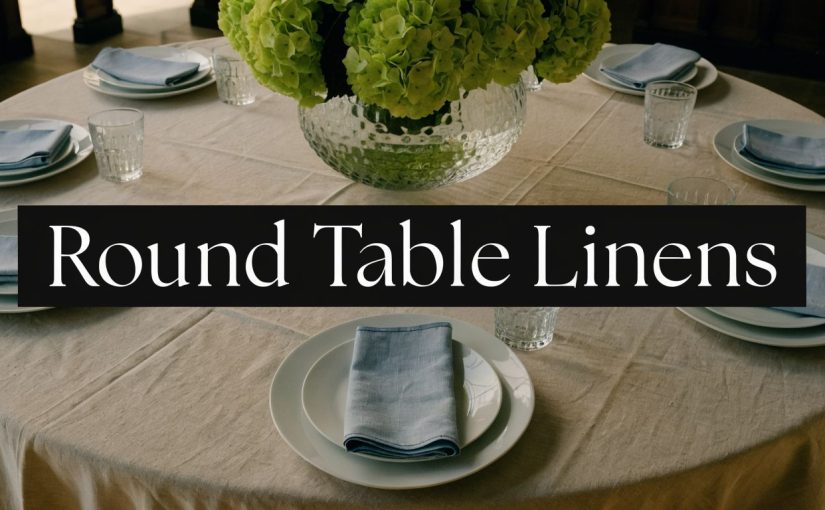
You're often standing in an empty venue when the hardest styling decisions happen. The tables are in place, the light is doing something beautiful through the windows, and yet the room still feels unfinished. At that point, many people focus on flowers first, or candles, or charger plates. In practice, the round table linens usually decide whether the room reads polished, relaxed, formal, modern, or slightly off.
That matters more in Cape Town than people expect. A vineyard venue in Stellenbosch, a glass-fronted hotel ballroom in the city, and a lawn reception in Franschhoek all ask different things of the same table. Generic linen advice doesn't help much when the wind picks up, when suppliers use mixed table sizes, or when your event needs to look premium in photographs from every angle.
The Foundation of Your Event's Style
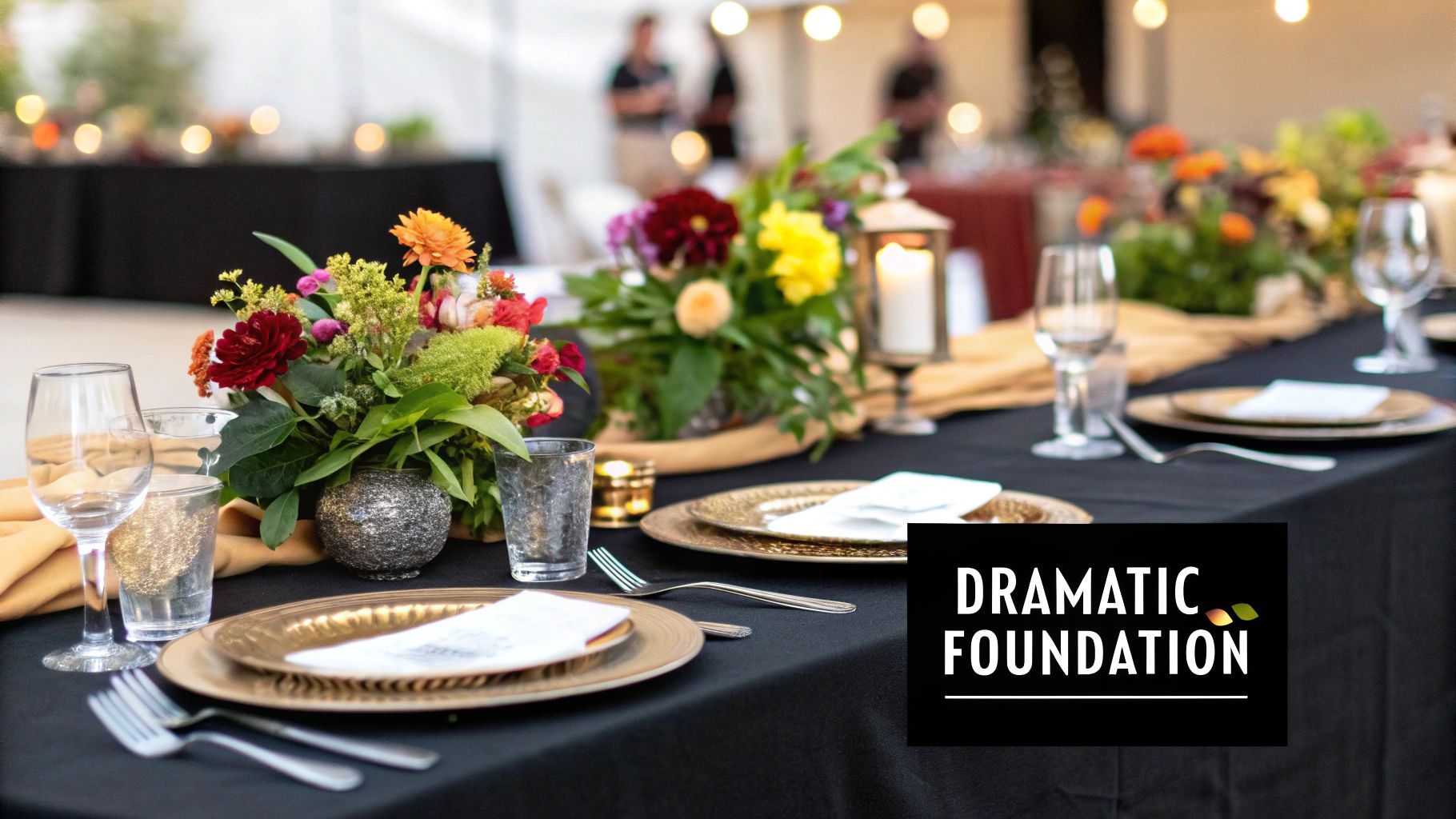
A round table without linen looks like furniture. A round table with the right linen looks like part of the event design.
That's the difference couples and planners notice during a site visit, even if they don't say it in those exact words. In a Cape Town hotel, a smooth full cloth can make the room feel clean and architectural. In a Winelands venue, a softer drape can make timber, stone and glass feel warmer. The linen becomes the base layer that everything else sits on, from candles to cutlery to florals.
Why linen still signals quality
There's a reason table linen still carries such visual weight. Historically, tablecloths were tied to status in European dining culture, and in medieval Europe the whitest linen signalled the highest rank because keeping cloth bright white required serious labour before modern washing methods, as noted in this history of the tablecloth. That legacy still shows up in South African event culture. In Cape Town and the Winelands, a properly dressed round table still reads as premium service.
That doesn't mean every event needs white. It means linen still communicates standard, intention and finish before a guest sits down.
Practical rule: If you want guests to feel that an event is elevated, don't treat the linen as a background item. Treat it as the visual floor of the room.
The tablecloth is the canvas
In real event work, the cloth usually decides how all the smaller details behave. Metallic cutlery feels sharper on matte neutrals. Glassware pops more on darker tones. Florals either float or fight, depending on the base colour under them.
If you're refining your place setting as well, ideas around incorporating gold charger plates in your wedding can help you think through how metallic accents sit against linen colour and texture. That combination often makes the difference between a table that looks assembled and one that looks designed.
What works in Cape Town venues
A few patterns show up again and again:
- Classic estates: Crisp neutrals and controlled drape usually work better than overly shiny finishes.
- Urban launches: Stronger contrast, darker cloths, or textured fabrics can hold their own against modern interiors.
- Private celebrations: Softer tones often make a room feel less hired-in and more considered.
The key isn't choosing the most dramatic cloth. It's choosing the one that gives the rest of your styling somewhere solid to land.
Perfecting the Fit How to Measure for Round Tables
The fastest way to make an expensive setup look wrong is poor fit. Too short, and the table feels underdressed. Too long, and guests catch it with chairs, heels or bags.
The sizing method itself is simple. Use this formula:
Table diameter + (desired drop x 2)
That gives you the required linen size.
Start with the drop, not the cloth size
Many hosts ask, “Do I need a 90-inch or 108-inch round?” The better question is, “How far do I want the cloth to fall?”
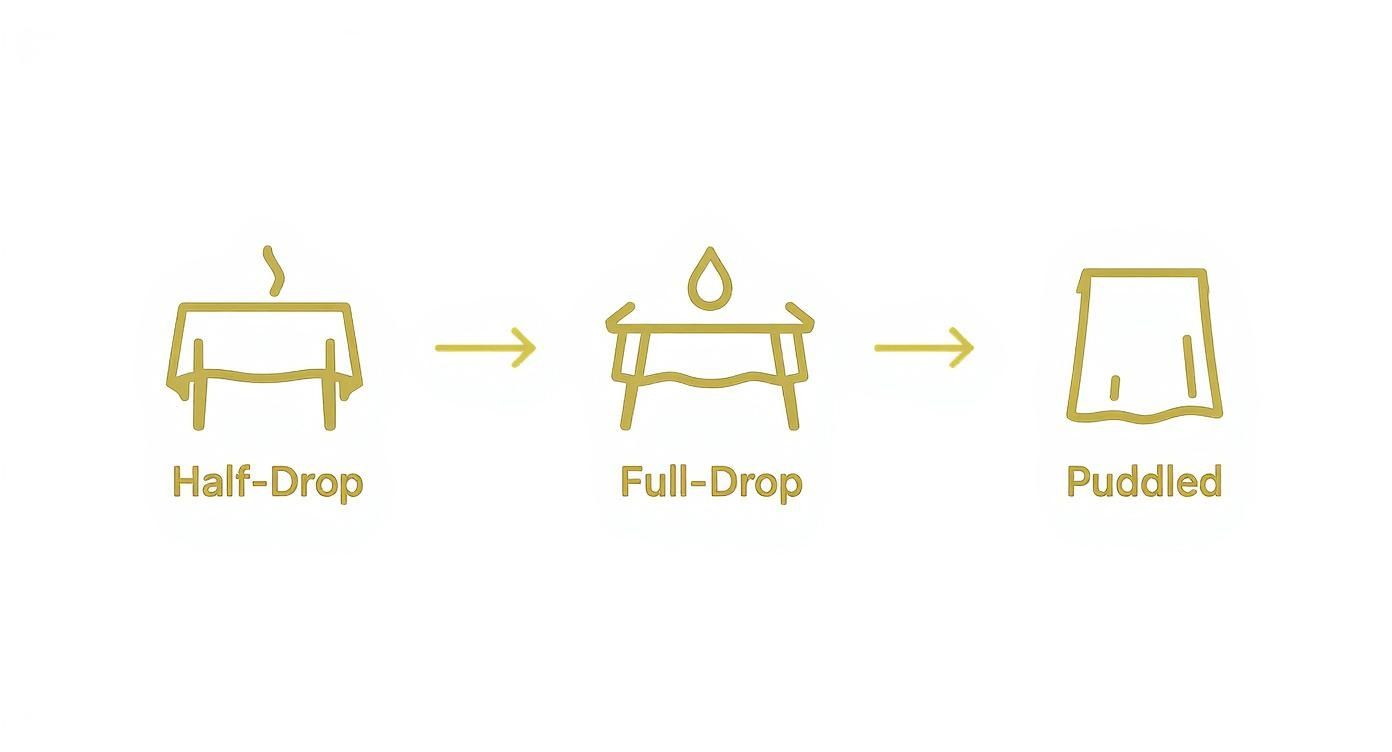
The drop is the amount of fabric hanging from the table edge. That one choice affects the look, guest comfort, setup speed and safety.
For a typical 60-inch round table that's roughly 30 inches high, a 90-inch cloth gives a formal 15-inch drop, and 90-inch to 102-inch round cloths are used on about 78% of premium wedding bookings in the region, according to this linen sizing guide. The same source notes that a 120-inch cloth on a 30-inch table can pool heavily on the floor, which is especially problematic at outdoor Winelands venues.
A quick guide you can actually use
Here's a practical reference for 76 cm/30-inch high tables.
| Round Table Linen Sizing Guide (for 76cm/30" High Tables) | Lap Drop (30cm) | Full Drop (76cm) |
|---|---|---|
| 76cm table / small round | 136cm cloth | 228cm cloth |
| 90cm table / small round | 150cm cloth | 242cm cloth |
| 120cm table / 4 to 6 guests | 180cm cloth | 272cm cloth |
| 152cm table / 8 to 10 guests | 212cm cloth | 304cm cloth |
| 183cm table / larger round | 243cm cloth | 335cm cloth |
For smaller dining setups, this guide to a small round table is useful when you're matching linen proportions to compact floorplans and tighter guest counts.
Which drop suits which event
A lap-length or half-drop often makes more sense than people think.
Outdoor receptions
Shorter drops are easier to manage in wind and high foot-traffic areas. They also reduce the chance of guests stepping on the cloth when tables are tightly spaced.Formal seated dinners
A longer, cleaner drop gives a more finished look, especially in venues with polished flooring, chandeliers or strong symmetry.Brand activations and networking events
Movement matters more than drape. If people will be circulating constantly, a practical drop usually wins.
If guests will move chairs in and out repeatedly, test the linen with a real chair before sign-off. The chair tells you more than the measuring tape does.
The mistake to avoid
The common error isn't measuring badly. It's choosing by appearance in isolation. A cloth can look luxurious in a sample room and become a nuisance the moment service starts.
What works is simple. Measure the actual table. Decide the drop based on venue conditions. Then check the result with chairs, foot traffic and weather in mind. That's how round table linens look intentional instead of improvised.
Choosing Your Fabric and Colour Palette
Fabric choice changes how a table behaves, not just how it looks. In Cape Town, that matters because the same event can begin in still air and end with a breeze pushing through an open venue.
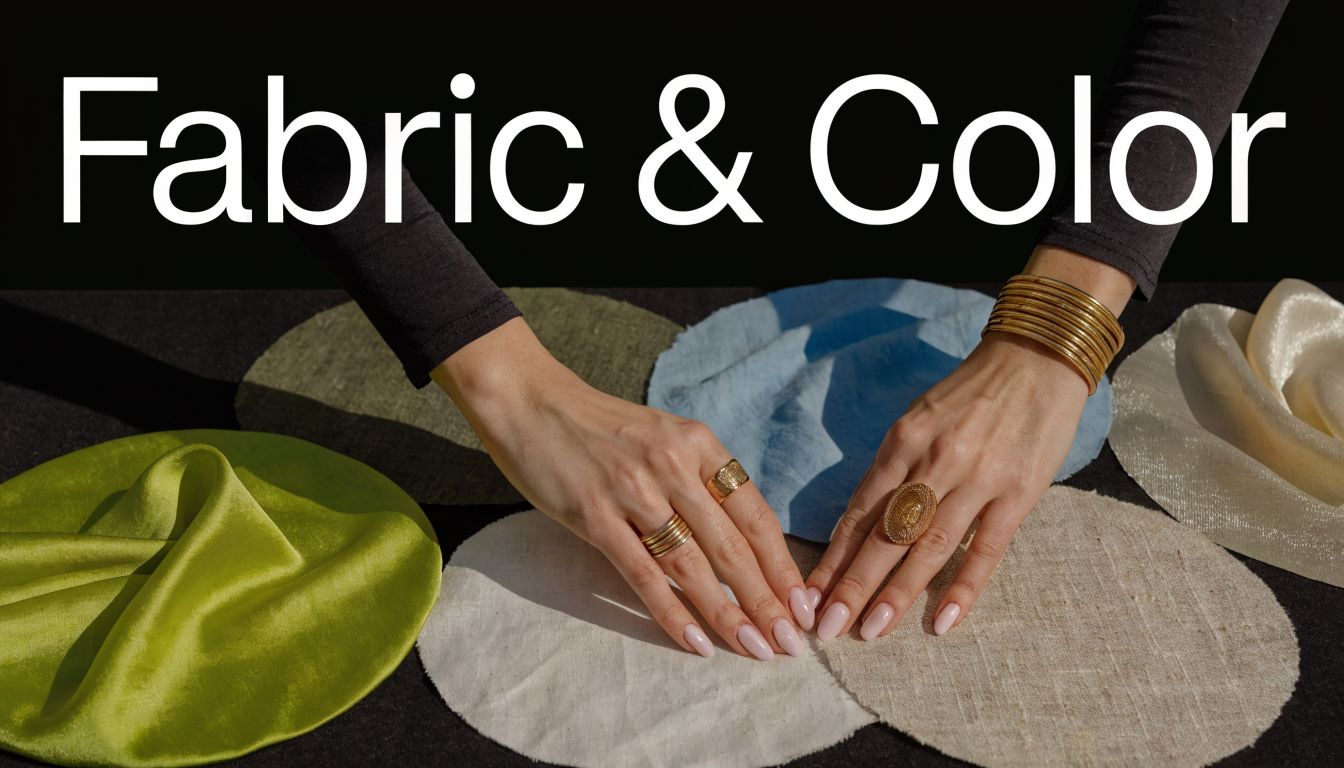
Most generic guides stop at colour and drop. That misses the practical side. For South African events, linen choice needs to balance elegance with local conditions, especially the Western Cape's weather volatility and growing sustainability awareness, as discussed in this piece on weather-resistant and sustainable event planning angles.
What different fabrics do in the real world
Not every fabric earns its place at every event.
- Polyester blends work hard. They're generally easier to manage, hold colour well, and suit events where setup speed and repeated handling matter.
- Cotton-rich options can feel softer and more natural, but they usually ask for more care to keep them looking crisp.
- Satin and high-sheen finishes catch light dramatically. In evening venues, that can look glamorous. In harsh daylight, it can sometimes feel too reflective.
- Velvet or crushed textures add depth fast, especially in winter functions or moody indoor rooms, but they can feel heavy if the rest of the table styling is already visually busy.
Matching fabric to venue conditions
The easiest way to choose is to think about pressure points.
Outdoor settings
A heavier cloth is often more stable on exposed terraces, lawns and wine farm courtyards. Lightweight fabric may move too much, especially when guests stand, sit or brush past.
Fast-turnaround events
Corporate functions, school formals and multi-phase celebrations usually benefit from fabrics that recover well after transport and handling. A material that looks good only when perfectly steamed can create unnecessary stress.
Sustainability-minded planning
Reusable linen has clear practical value when the same event infrastructure moves through multiple hires. The trade-off is maintenance. Some fabrics wash and press more easily than others, so durability and laundering demand should be part of the decision, not an afterthought.
The smartest fabric is the one that still looks right after delivery, setup, guest use and pack-down.
Building a colour palette for Cape Town venues
Colour isn't only about trend. It's about what the venue already gives you.
A few dependable pairings:
- Wine estates and farm venues: warm neutrals, soft stone, muted green, dusty tones
- City hotels and modern venues: black, charcoal, crisp white, deep navy, metallic accents
- Coastal or summer events: sand, pale blue, sage, off-white, restrained texture
- Matric dances and formal evenings: richer jewel tones or contrast combinations with stronger lighting response
If you're exploring layered colour combinations and pattern relationships, these artisan blanket design ideas are surprisingly useful for thinking through balance, contrast and warmth in event styling too.
The best palette usually has one quiet base, one supporting tone and one accent. If every element tries to lead, the table gets noisy. If the base cloth does its job well, the rest of the styling can breathe.
Advanced Styling with Linens
Once the base cloth is right, styling gets interesting. At this point, round table linens stop being a practical item and start doing design work.
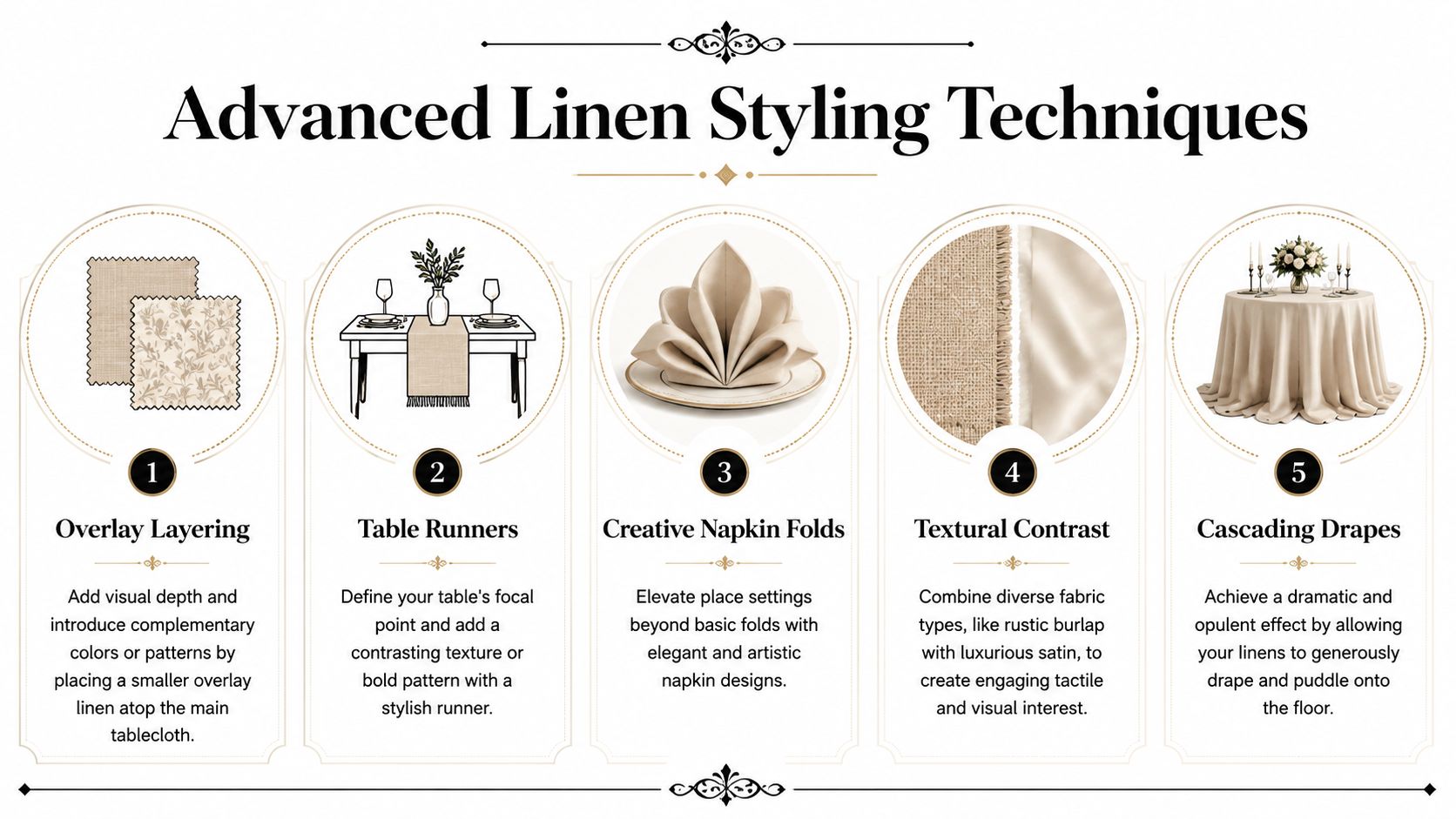
The trick is restraint. A layered table should look considered, not crowded. In mixed-format Cape Town events, that becomes even more important because many layouts include different table sizes, tighter footprints, or unusual room shapes. Most guides assume standard rounds, but planners often need more operational guidance for irregular setups, as highlighted in this discussion of linen decisions for mixed inventories and venue constraints.
Five styling moves that hold up on event day
Overlay layering
An overlay can add depth without changing the whole cloth inventory. This works well when the base linen is neutral and you want a secondary tone on selected tables such as a cake table, registration point or VIP area.
Runners with purpose
Runners are most effective when they create direction. On a round table, they can frame a low centrepiece, separate candle groupings, or introduce texture where the main cloth is plain.
Napkins as the accent
If the room already has strong architecture, use the cloth as the anchor and let napkins carry the colour accent. That often feels cleaner than adding another full textile layer.
Texture contrast
Pairing a matte base with a more tactile element usually works better than combining several glossy surfaces. For example, a soft woven runner over a smooth cloth can add detail without glare.
Controlled drape
A dramatic drop can be beautiful, but only where circulation allows it. On sweetheart tables or display tables, extra drape can look generous. In compact guest seating, it quickly becomes impractical.
Good styling solves a room. It doesn't just decorate a table.
Handling mixed table sizes without visual chaos
Experienced planners save an event in this scenario. If one supplier sends smaller rounds and another sends larger ones, using identical linen sizes can make the room look inconsistent very quickly.
A better approach is to build consistency through these elements:
- Keep the base colour constant across all guest tables.
- Vary only the drop intentionally where layout demands it.
- Repeat one texture or accent tone so the eye reads the room as connected.
- Use feature tables strategically so visual emphasis goes where you want it.
For additional tabletop styling ideas that pair well with linen decisions, these woven table mats are useful when you want to define place settings without overloading the table.
Styling examples that work
A black base cloth with a metallic or sequin runner can suit a matric dance or evening gala. White or soft ivory with a natural-texture runner can suit a farm wedding. A muted neutral cloth with precise napkin colour can sharpen a corporate dinner without making it feel wedding-like.
The room doesn't need more elements. It needs the right relationship between the elements already there.
Renting vs Buying Your Linens
Buying sounds sensible until you deal with volume, storage, stain management and colour consistency. For most once-off or occasional events, renting is the more practical route.
That isn't just a modern convenience. The broader history of table linen points in the same direction. Textile production became more accessible during the 18th and 19th centuries, and modern rental continues that shift by giving planners access to coordinated linen packages without needing to own everything, as noted in this brief history of table linens.

When buying makes sense
Buying can work if you host the same style of event repeatedly and control your venue conditions closely. A restaurant group, venue operator or event business with stable inventory needs may prefer ownership for standard white or neutral basics.
Even then, ownership only pays off if you can manage:
- Storage conditions that keep cloth clean and dry
- Laundry and pressing
- Replacement planning for stains, tears and fading
- Accurate quantity control across event dates
Why renting is usually easier
For weddings, milestone functions, school events and most corporate bookings, renting removes the least glamorous parts of linen management.
You gain flexibility on colour, quantity and size without carrying long-term responsibility for the stock. That matters when guest numbers change, layouts shift, or a planner wants to refine the look closer to the date.
A few practical advantages stand out:
Variety without commitment
You can match linen to the venue and mood instead of forcing one owned stock range onto every event.No post-event laundry problem
After a full event, the last thing most hosts need is fabric recovery logistics.Better fit for mixed requirements
One event may need guest table cloths, cake table linen, buffet draping and cocktail table covers in different proportions.Cleaner coordination
A rental partner can often align tables, seating and linen choices more efficiently than separate suppliers working in isolation.
If you're comparing options, this guide to table cloth hire gives a useful overview of what to ask before confirming quantities and styles. For Cape Town event setups, ABC Hire is one local option for coordinating furniture and related event equipment alongside linen planning.
The real trade-off
Buying gives control. Renting gives adaptability.
For most clients, adaptability wins. Events change. Venues differ. Weather interferes. Guest counts move. Linen is one of those categories where flexibility often saves more stress than ownership ever removes.
Event Day Logistics and Final Checks
Even the right round table linens can fall flat if the final checks are rushed. Event day is where styling decisions meet real conditions.
Use a simple sequence and the room will settle faster.
The checks that matter
- Confirm delivery timing early so the setup team isn't dressing tables around other suppliers.
- Open and inspect a few cloths first before the full room is laid. Look for obvious creasing, colour mismatch or incorrect sizing.
- Dress one sample table completely with chairs pushed in and then pulled out. Problems show up quickly at that stage.
- Keep a handheld steamer available for minor travel wrinkles, but don't rely on last-minute steaming to fix a poor fabric choice or wrong fold method.
- Walk the room from guest height rather than only from standing height. Seated sightlines reveal bunching, uneven drops and cluttered layering.
What planners often miss
The final visual check should happen after place settings and centrepieces are in. A cloth can look perfect on its own and then feel too dark, too shiny or too busy once the table is fully built.
If one table looks wrong, stop and correct it before the whole room is finished. Small linen issues multiply fast.
For broader run-sheet planning, transport timing and supplier coordination, a comprehensive event planning checklist can help you keep the day organised around more than just styling.
Returns are usually straightforward when linen is rented. The important part is knowing what the supplier expects after service, especially if the event runs late or includes outdoor use. Clarify collection timing, packing instructions and any separation needed for heavily soiled items before the event starts, not after it ends.
Round table linens do a lot of quiet work. They shape the mood, support the styling, influence guest comfort and help the room feel finished. Get the size right, choose fabric for the venue you have, and style with discipline. That's usually what separates a good-looking table from one people remember.
If you're planning an event in Cape Town or the Winelands and want help matching tables, linen sizing and venue conditions, ABC Hire can help you build a practical setup that looks polished on the day.