LED Furniture Hire Cape Town: A Complete Planning Guide

Six days before a marquee wedding reception, the planner discovers that the venue's practical lighting is fine for catering, but hopeless for the dance floor and lounge areas. She needs furniture that looks deliberate after sunset, won't create a maze of extension leads, and can reach a Winelands estate without turning setup into a second production. That's where LED furniture hire in Cape Town earns its place.

Illuminated cubes, bars, cocktail tables, benches and ottomans can define a dark venue without hiring a separate lighting crew. But the hire only works when the pieces match the event schedule, venue rules, weather exposure and delivery route. Cape Town's city bowl, Atlantic Seaboard, Stellenbosch estates and Helderberg venues don't present the same operating conditions.

What LED Furniture Hire Actually Means in Cape Town

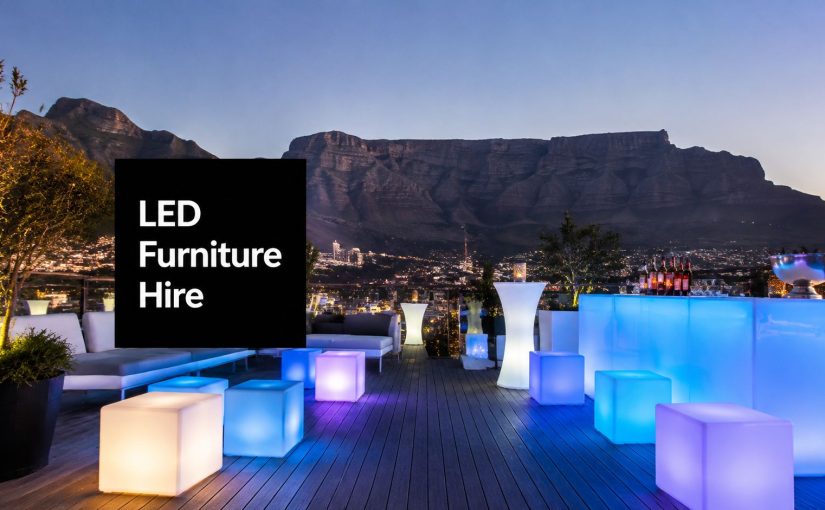
LED furniture hire is a short-term rental service for illuminated seating, tables, bars and decorative pieces. A rental house supplies the furniture, arranges delivery or collection, and may handle placement, setup and removal. The units are usually rechargeable and battery-powered, although some ranges use low-voltage cabling connected to a central transformer.

That changes the floor plan in a useful way. Standard linen-and-Chiavari hire gives guests somewhere to sit and creates a formal dining structure. LED furniture adds light, zoning and visual direction. A glowing bar can anchor the drinks area, cubes can create informal seating around a dance floor, and illuminated cocktail tables can keep guests circulating instead of clustering beside the main dining tables.

Planner's rule: Use LED furniture to define guest behaviour, not just to add colour.

Cape Town has the demand to support this kind of specialist hire. The City of Cape Town reported that its Events Permit Office processed 1,540 event permit applications in the 2025/26 financial year and approved 983 events, attracting about 4.1 million spectators and participants. The city also reported that its top 30 events generated more than R5 billion in local economic activity, with six flagship events contributing roughly R4.5 billion. Those figures include major public events, but they also illustrate the depth of the city's wider event ecosystem, which supports weddings, corporate activations and formal celebrations. The City of Cape Town event-economy assessment provides the local context.

The brief looks different by location. A city-bowl rooftop may need compact pieces that can move through a lift and avoid visible cabling. A wine-estate reception may need weather-rated furniture that arrives over gravel roads before a strict gate closes. A Helderberg matric dance may prioritise saturated colour, photo-friendly seating and fast collection after the last guest leaves.

LED furniture also belongs in the same supplier conversation as exhibition and activation infrastructure. If a brand team is coordinating a broader visual installation, guidance on an exhibition stand can help align furniture, branding and guest-flow decisions. For weddings, planners can also compare illuminated pieces with the wider range of furniture for hire in Cape Town before finalising the layout.

How LED Furniture Works and What the Specs Really Deliver

Start by identifying the power family. Battery-powered pieces contain rechargeable packs inside each unit, while wired or transformer pieces receive low-voltage power from a central source. Battery units are easier to position and safer for layouts that change during the evening. Wired systems can suit fixed installations, but they require cable planning, protected routes and a venue willing to accommodate the load.

Local commercial LED furniture is commonly specified with six to eight hours of recharge time, approximately eight to ten hours of working time, IP64 to IP68 protection, and 16 colour modes, including fading, strobing and flashing. These specifications come from a South African supplier listing summarised in the available local reference material, ABC Hire's LED furniture range. Treat those figures as a planning benchmark, not a promise that every model performs identically.

Battery runtime is a scheduling question

A supplier may quote a working time of eight to ten hours, but the actual result depends on brightness, colour mode and control behaviour. A static single colour is generally less demanding than full-saturation colour changes, rapid flashing or continuous fading. If the reception begins before sunset and ends late, charge every unit fully and ask whether the stated runtime applies to the mode you've selected.

Charging time matters during a busy event week. If pieces are returned from one function and immediately needed for another, the supplier's charging capacity becomes part of your risk assessment. Ask how many units can charge simultaneously and whether backup pieces are already charged.

IP ratings need a real venue scenario

The IP rating indicates resistance to solids and water, but it doesn't make furniture invincible. A weather-rated unit may be suitable for a covered terrace or lawn lounge, yet still need protection from standing water, direct rain and careless placement.

A practical comparison looks like this:

Spec Battery-Powered Pieces Wired or Transformer Pieces
Placement Flexible, with no cable run to each unit Best for planned, fixed layouts
Venue power Minimal reliance on mains during the event Requires transformer access and cable management
Setup Faster repositioning More time needed for routing and protection
Runtime risk Depends on charge, brightness and colour mode Depends on stable supply and protected connections
Best use Weddings, lounges, rooftop events and mobile activations Structured installations with controlled access

Control systems deserve equal attention. An IR remote is simple, but it needs a clear line of sight and a charged battery. DMX can give venue technicians coordinated control across furniture and lighting, while a Bluetooth app offers flexibility but depends on a phone, pairing and someone willing to operate it. If you're leaving before the first dance, choose a mode that can be set once and left alone. For party lighting that needs to work with the overall atmosphere, compare furniture with LED lights for parties before selecting the control method.

Power, Venues and the Cape Town Night-Event Reality

Battery-powered furniture is usually the sensible choice when a venue has strict power-loading rules. Cape Town venues commonly operate on reticulated mains of 240 V and 380 V, and the Cape Town International Convention Centre requires advance notice when demand exceeds 60 Amps on a three-phase supply. Its safety guidance also favours low-wattage or LED displays and discourages halogen because of fire risk. The CTICC safety and security manual sets out those venue considerations.

The important distinction is between furniture power and venue power. A battery cube can be charged before delivery and then operate without adding a new load to the venue during the reception. That reduces the need for extension leads across walkways and lowers the chance that decorative lighting competes with catering equipment, sound, refrigeration or stage systems.

Don't use an unsupported runtime promise in your event plan. The verified local benchmark is about eight to ten hours of working time, with six to eight hours for recharging, so match the unit specification to the schedule and chosen brightness rather than assuming every piece will last indefinitely. If your furniture will be operating throughout the ceremony, cocktail hour and reception, ask the supplier to confirm the expected runtime for that exact programme.

City-bowl rooftops bring access and noise issues. Generators may be restricted, lifts may limit the size of each delivery batch, and cables can create trip hazards in compact spaces. Stellenbosch and Franschhoek farms often present a different problem, limited backup power and longer distances between the loading area and reception site. Battery pieces won't solve every production requirement, but they remove one avoidable dependency.

Load-shedding still needs a proper contingency plan. Charged furniture can remain illuminated if the venue's mains supply fails, but the DJ, caterer, sound system, bar refrigeration and general safety lighting may not. Treat LED furniture as one resilient layer, not as an emergency-lighting system. For smaller guest areas, rechargeable table lights can complement the plan, as outlined in this guide to rechargeable table lamps.

Booking Logistics Across Cape Town and the Winelands

The city and the Winelands should not be booked as if they're one delivery zone. Cape Town's event infrastructure is unusually dense. A 2026 industry inventory report listed 476 conference venues in the Western Cape, representing 26% of South Africa's listed conference inventory, while Cape Town ranked first among cities with 101 venues, or 5.5% of the national listing. The broader Cape Metro, including Stellenbosch, Paarl, Franschhoek and Somerset West, contained 183 venues. The regional venue inventory report explains that spread.

That density creates choice, but it also creates a dispersed logistics problem. City-bowl and Atlantic Seaboard deliveries may be straightforward, while wine-estate jobs can involve gravel roads, narrow gates, loading restrictions and long walks from the truck to the marquee.

Put the brief in writing

Send the supplier a single written schedule covering:

  • Quantity and product mix: List cubes, benches, bars, tables and ottomans separately.
  • Colour and control: Specify static warm white, colour-changing, a branded palette or a preset sequence.
  • Delivery window: Include the venue's approved arrival slot, not merely the guest arrival time.
  • Access information: Share gate instructions, road conditions, loading areas, stairs, lifts and distance to the setup point.
  • Setup responsibility: Confirm whether the team places and tests the furniture or only drops it at the venue.
  • Collection: Ask whether collection is scheduled after the event, the next morning or at another agreed time.

For Stellenbosch, Franschhoek, Paarl and Helderberg estates, book earlier than you would for a city venue. The exact lead time depends on the date, inventory and route, but rural access makes late changes harder to absorb. After-midnight collection can also carry an extra charge, so confirm it before approving the quote.

Check the small contractual details

Ask who supplies the controller, charging equipment, spare batteries and any protective materials. Clarify the damage waiver, especially where wind, uneven lawns, gravel and outdoor bar areas could increase scuffing. A signed delivery note should record the number and condition of the pieces on arrival, with the on-site contact named clearly.

Operational rule: A verbal promise about delivery timing is not a schedule. Put every access and collection detail in the quote or contract.

The local market still has a practical information gap. Product pages often state working times, but planners need answers about charging logistics, venue power limits, load-shedding, delivery windows and outdoor setup. A supplier that answers those questions directly is more useful than one that only sends attractive catalogue images.

Styling Ideas for Weddings, Matric Dances and Brand Activations

LED furniture works when it supports the room's social rhythm. It fails when every item flashes in a different colour and the venue starts looking like a showroom. Choose one dominant mood, then use furniture to create zones that guests understand instinctively.

For a wedding reception, warm white usually gives the most controlled result. Place illuminated cubes around the dance floor as informal perches, add curved benches near the DJ area, and use glowing cocktail tables to define a separate lounge or cigar area. Keep the dining tables calmer. The dance floor and bar should carry the visual energy.
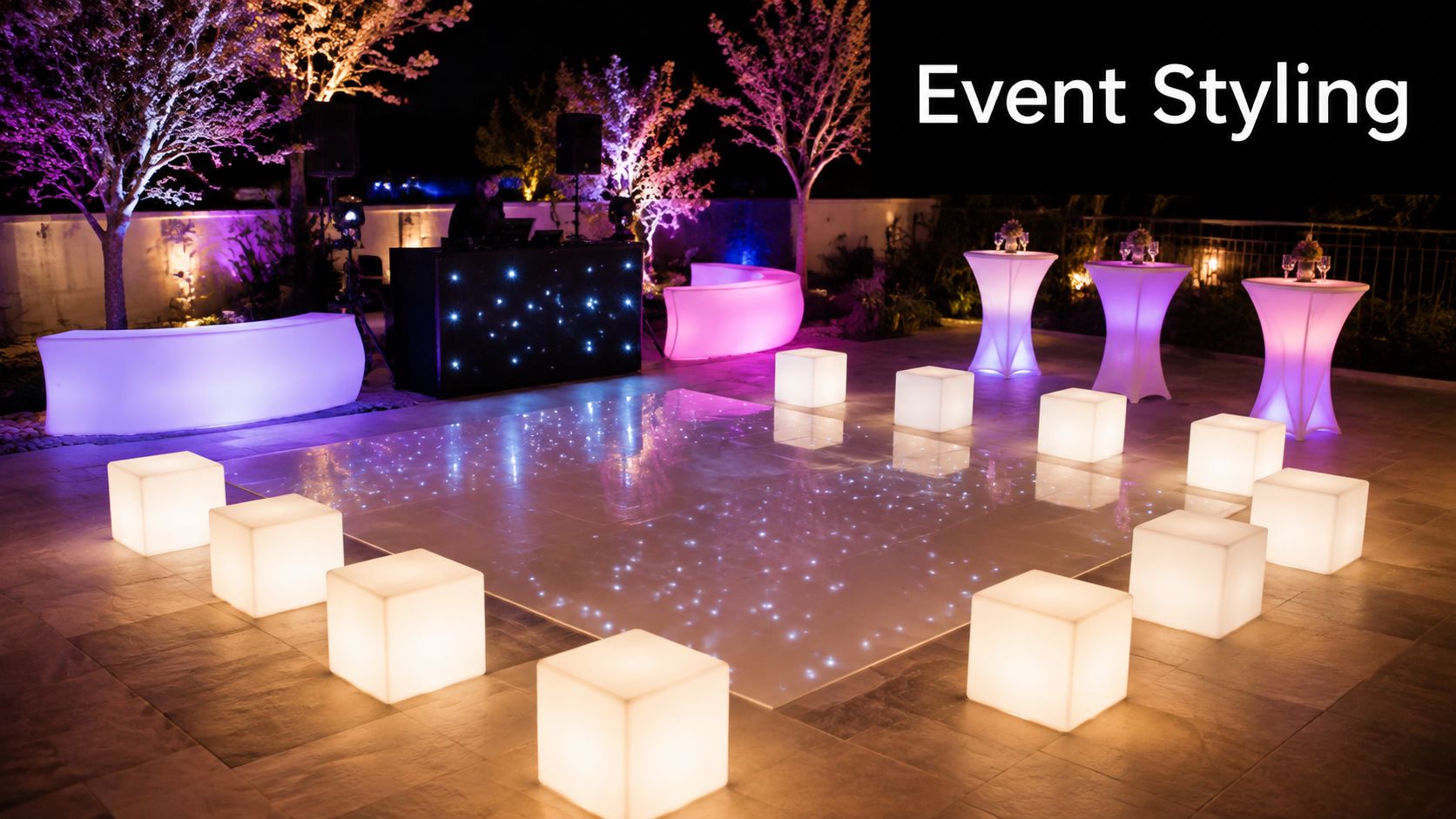
An outdoor evening event setup featuring a glowing white LED dance floor with surrounding cube stools.

Match the furniture to the event

Matric dances can take stronger colour. Magenta, cyan or a programmed colour sequence works well with LED cubes, posing benches and one statement chair that gives students a clear photo anchor. Don't scatter pieces randomly. Create one deliberate photography zone and one separate seating area so the furniture doesn't block the entrance or buffet.

Brand activations need consistency more than spectacle. Ask whether the units accept DMX, IR control or a Bluetooth app, then confirm who will change the colour during the evening. A campaign palette should appear across the bar, cocktail tables and seating rather than shifting unpredictably between unrelated hues.

Winelands ceremonies need restraint. Low-glow rectangular tables under oak trees can create intimacy without flooding the area with light. Use the venue's architecture and planting as part of the design, and avoid bright furniture near the ceremony sightline.

Test colour against the actual venue

Soft pastel modes can disappear in daylight, while saturated colours can dominate a compact rooftop. Request a sample image or colour render that reflects the venue's walls, flooring and nearby lighting. Choose with sunset in mind. A colour that looks refined at the start of the invitation time may look flat once the sky darkens, so plan the transition from natural light to artificial light as part of the styling brief.

Why a Single Cape Town Hire Partner Beats Mixing Suppliers

Splitting the order across several companies sounds flexible, but it creates separate delivery fees, setup windows, contracts and collection arrangements. At a wine estate, each additional vehicle can complicate gate access and unloading. One consolidated delivery is easier for the venue, the planner and the supplier team.

A single partner also creates one chain of responsibility. If a cube arrives scratched, a remote fails or a piece stops responding, you're not left deciding which company owns the problem. One contract can define quantities, condition, damage terms, replacement procedures and collection.
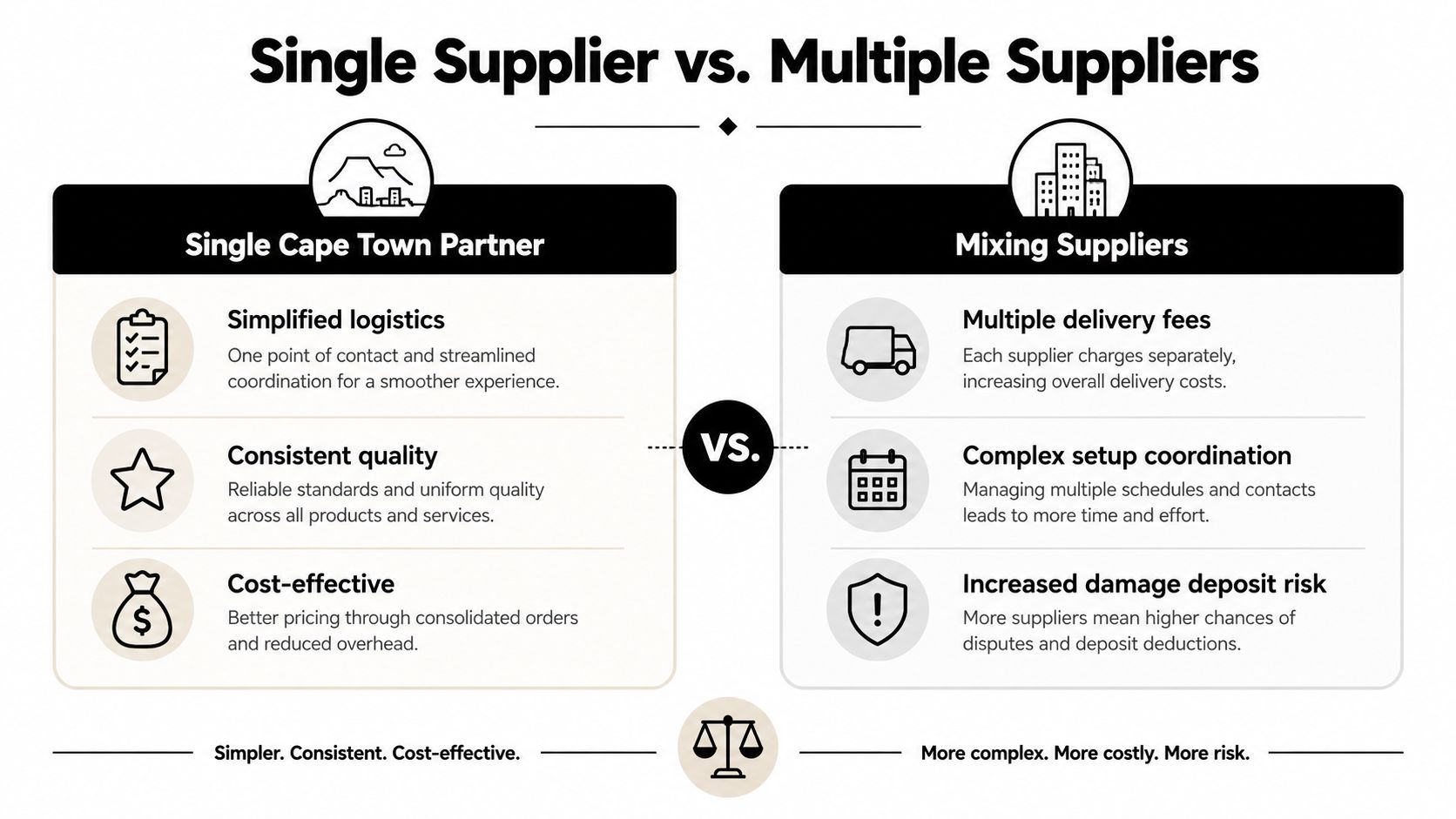
A comparison chart showing the benefits of using a single Cape Town supplier versus multiple suppliers.

What to inspect before signing

Look for a hire partner with a physical warehouse, organised charging bays and a documented backup-unit policy. You want evidence that the furniture is tested before dispatch, not merely loaded from a storage area.

Ask these questions directly:

  • Do you carry charged replacement units: Find out what happens if a piece fails during the reception.
  • Who controls the furniture: Confirm whether the planner, venue technician or supplier operates the remote or DMX controller.
  • How do you handle a late collection: Get the after-hours process and any additional charge in writing.
  • Can you consolidate the delivery: Confirm whether furniture, bars and related event items arrive in one planned vehicle or separate loads.
  • What happens outdoors: Ask how the team protects charging ports, manages uneven ground and responds to weather changes.

ABC Hire is one Cape Town option offering LED tables, bars, ottomans, cubes, balls and swing chairs, with collection or delivery to the event venue. The important point isn't the size of the catalogue. It's whether the supplier can match the furniture, route, control system and backup plan to your venue.

A single partner won't eliminate every event risk, but it gives the planner one person to call and one team accountable for the result. That matters most when the venue sits outside the city and the reception continues after the warehouse has closed.

Your Pre-Event Checklist Before the Furniture Leaves the Warehouse

Run the verification routine before collection or delivery. Don't wait until the furniture is on the lawn, guests are arriving and the planner is answering calls from the photographer.

Battery verification comes first

Every unit should be fully charged and switched on before it leaves the warehouse. Test the selected colour mode, pair the remotes and check that the controls operate the intended pieces. If the supplier uses an app or DMX, confirm the device, account access and controller are available on site.

Tape a spare battery to each remote or keep clearly labelled spares with the event kit. A flat remote on the dance floor late in the evening is a small failure with an outsized effect because the furniture may still be powered but impossible to control.

Inspect the furniture, then inspect the route

Use a simple condition check:

  • Furniture condition: Look for cracks, deep scratches, damaged diffusers and loose fittings.
  • Charging ports: Confirm that rubber bungs and protective covers are present.
  • Order accuracy: Match every piece against the signed quote and delivery note.
  • Outdoor protection: Reconfirm the IP rating for each outdoor zone and keep units away from standing water.
  • Wind exposure: Use weighted bases or move lightweight pieces into sheltered courtyards when conditions change.
  • Weather plan: Know whether the furniture moves under cover, returns to the truck or stays in place during light coastal mist.

Venue paperwork can prevent a failed delivery. Confirm access for the delivery vehicle, loading-bay time slots, lift dimensions for upper-floor city venues, estate gate codes after dark and the route from parking to the reception area. Tell the supplier about gravel, stairs, narrow paths and any security check that could delay unloading.

Build a power contingency

Charge the furniture before the event and confirm the supplier's emergency contact in writing. Keep a torch plan for walkways and service areas, because decorative LED furniture isn't a replacement for venue safety lighting. If load-shedding threatens the event, make sure the sound, catering, refrigeration and general illumination plans are handled separately.
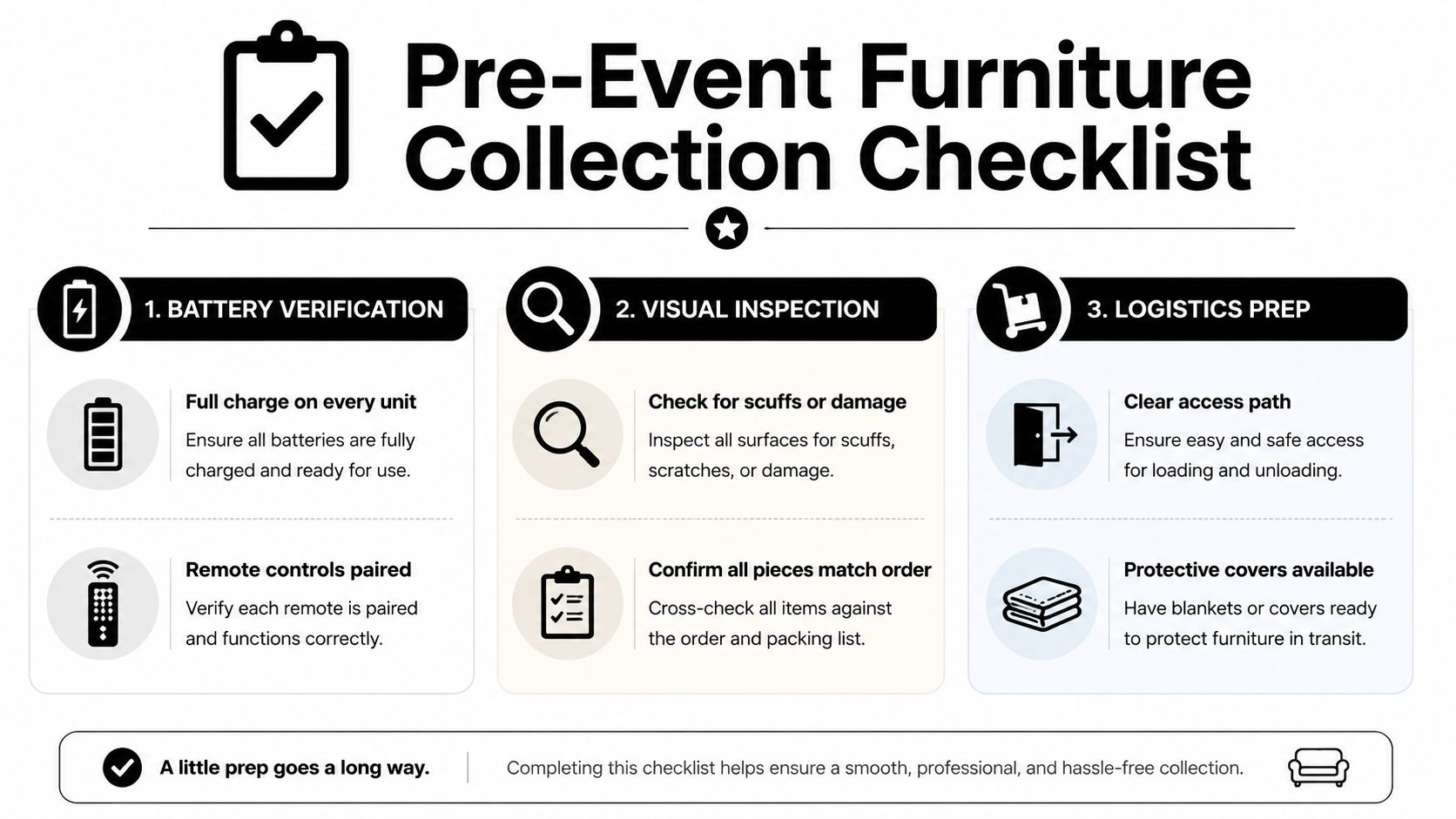
A checklist graphic for pre-event furniture collection, detailing battery verification, visual inspection, and logistics preparation steps.

On arrival, photograph visible condition and count the pieces before the supplier leaves. Get the venue contact to sign the delivery note, store the remote controls somewhere dry and keep the supplier's number both online and offline.


ABC Hire supplies LED furniture for Cape Town events, including illuminated tables, bars, ottomans, cubes, balls and swing chairs, with collection or delivery to the venue. If you're planning a wedding, matric dance or activation in the city or Winelands, visit ABC Hire to discuss the furniture mix, access route, battery plan and setup requirements before you confirm the booking.
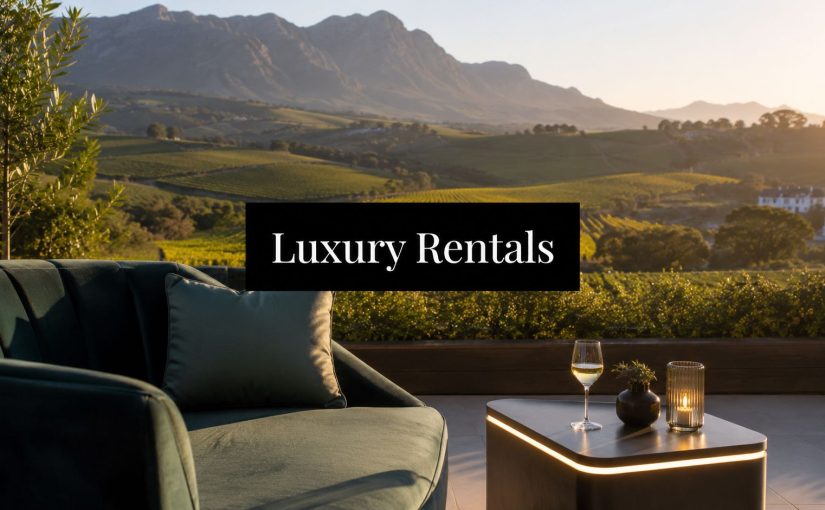
Luxury Furniture Rental: Cape Town & Winelands 2026

You're probably making decisions in the least forgiving phase of event planning. The venue is booked. The brief is approved. The guest experience needs to feel luxurious, not rented. And suddenly the furniture matters far more than many expect.

That's because guests don't remember a floor plan. They remember how the room felt. They remember whether the lounge area invited people to stay, whether the cocktail setup encouraged movement, and whether the furniture matched the standard promised by the invitation, the venue, and the brand.

In Cape Town and the Winelands, that standard is high. A vineyard reception, a Clifton celebration, a Woodstock launch, and a matric dance in the southern suburbs all ask for different visual language. Luxury furniture rental works when it shapes that language with intent, and when the practical side, delivery, setup, weather-readiness, and collection, runs quietly in the background.

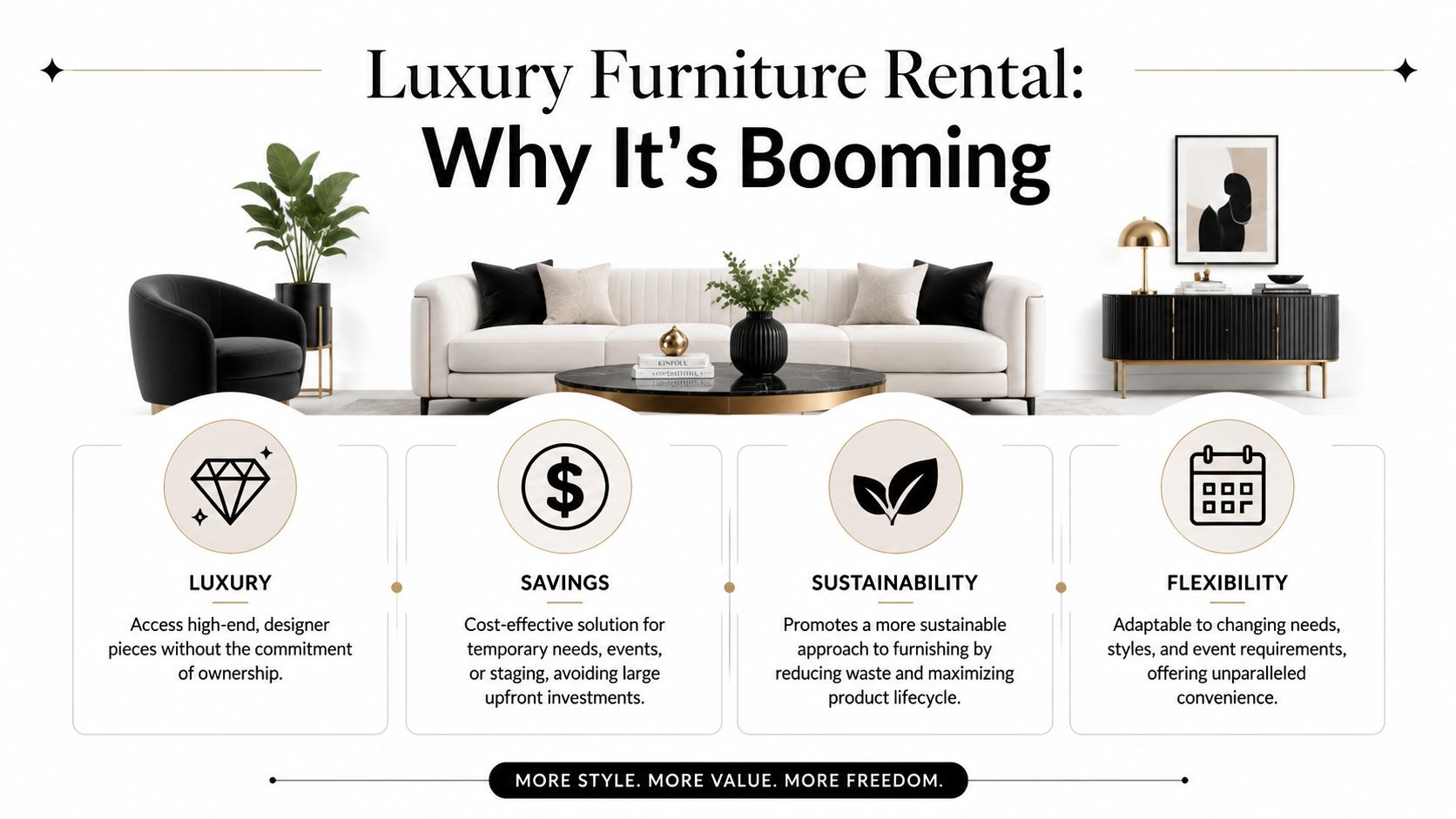
What Is Luxury Furniture Rental and Why It's Booming

Luxury furniture rental isn't just hiring expensive chairs. It's the short-term use of design-led event furniture that changes the tone of a space. That can mean sculptural lounge seating for a wedding, illuminated counters for a late-night activation, bar furniture that sharpens a rooftop cocktail event, or refined dining chairs that lift a formal dinner from serviceable to memorable.

The difference sits in three things. First, finish. Premium upholstery, clean lines, consistent condition, and pieces that photograph well under daylight and event lighting. Second, cohesion. Good rental ranges are built as collections, not random stock. Third, function. The right piece doesn't only look good. It helps guests settle, circulate, gather, or celebrate the way the event needs them to.

An infographic highlighting the benefits of luxury furniture rental, including cost savings, sustainability, and design flexibility.

It's about experience, not stock

A high-end event almost always asks for furniture with a job to do.

  • Lounge pieces: These soften formal venues and create places where guests spend time.
  • Statement bars and counters: These often become visual anchors, especially at receptions and brand events.
  • Designer seating: This shapes the level of formality immediately.
  • LED furniture: This works best when the event needs atmosphere after dark, especially for matric dances, launches, and private parties.

A host buying these pieces outright would take on sourcing, transport, storage, cleaning, maintenance, and style risk. Rental removes that burden. It also keeps your options open when the brief changes, the venue surprises you, or you realise the original layout won't work on site.

Practical rule: If furniture has to be stored, repaired, transported, and styled for only one occasion, rental is usually the cleaner decision.

That flexibility is one reason the category is accelerating. South Africa's furniture rental market is projected to reach USD 1,754.41 million by 2033, growing at a CAGR of 11.38% from 2025 to 2033 according to industry projections for the furniture rental market. For event planners, that matters because it signals a broader shift toward temporary-use, high-impact solutions rather than ownership.

Why hosts choose rental for premium events

Cape Town clients usually arrive at the same conclusion from different directions. Couples want a reception that feels layered and polished. Corporate teams want brand alignment and a smooth install. Schools need something modern enough for photos but durable enough for a busy evening. Private hosts want a celebration that looks considered without turning their home or venue into a logistics exercise.

Luxury furniture rental solves several trade-offs at once:

Priority What rental helps you avoid What it helps you achieve
Visual standard Mismatched bought items A coherent event look
Budget control Paying for long-term ownership Paying for short-term use
Logistics Storage and transport headaches Managed delivery and collection
Creative freedom Being locked into one style Adapting to theme and venue

For planners working through layout options, renting furniture for events becomes less of a convenience and more of a design tool. It lets you build around the guest journey rather than around what's already in storage.

Curating Your Event with Signature Luxury Pieces

The fastest way to lose the luxury feel is to choose furniture item by item without considering the room as a whole. Good event styling starts with atmosphere. The pieces follow from that.

A Winelands wedding might need softness and warmth. A product launch in the city usually needs line, edge, and visual confidence. A matric dance often needs energy after sunset, which is where illuminated furniture can shift a hall from ordinary to memorable.

Wedding lounges that feel relaxed but refined

For wedding receptions, the best luxury furniture rental choices usually create contrast with the formal dining area. Long banquet tables and ceremony seating handle structure. The lounge zone handles mood.

Think velvet couches, occasional chairs, ottomans, and coffee tables arranged in small conversational islands. This works especially well on lawns, under tensile cover, or in transitional spaces between the bar and dining room. Guests who don't want to stay seated at their table all evening need somewhere equally polished to move to.

The most common mistake is under-furnishing the lounge. One couch and two chairs in a large venue doesn't read as curated. It reads as an afterthought.

The lounge should feel intentional from every angle, not like leftover furniture placed near a dance floor.

Corporate events need shape and clarity

Corporate launches, networking evenings, and media functions usually reward cleaner silhouettes. Low-profile couches, cube seating, bar tables, and minimalist stools give the room structure without cluttering sightlines. If the event includes speakers or branded content, furniture should support the room's rhythm rather than compete with it.

This is where zoning matters. Keep registration, cocktail, activation, and lounge moments visually distinct. Use furniture styles to mark those shifts.

A practical layout often includes:

  • Reception furniture: A clean welcome counter or registration point.
  • Networking furniture: Tall cocktail setups that keep guests mobile.
  • VIP or speaker lounges: Softer seating with more breathing room.
  • After-dark transition pieces: LED bars or glowing cubes if the event moves into an evening social phase.

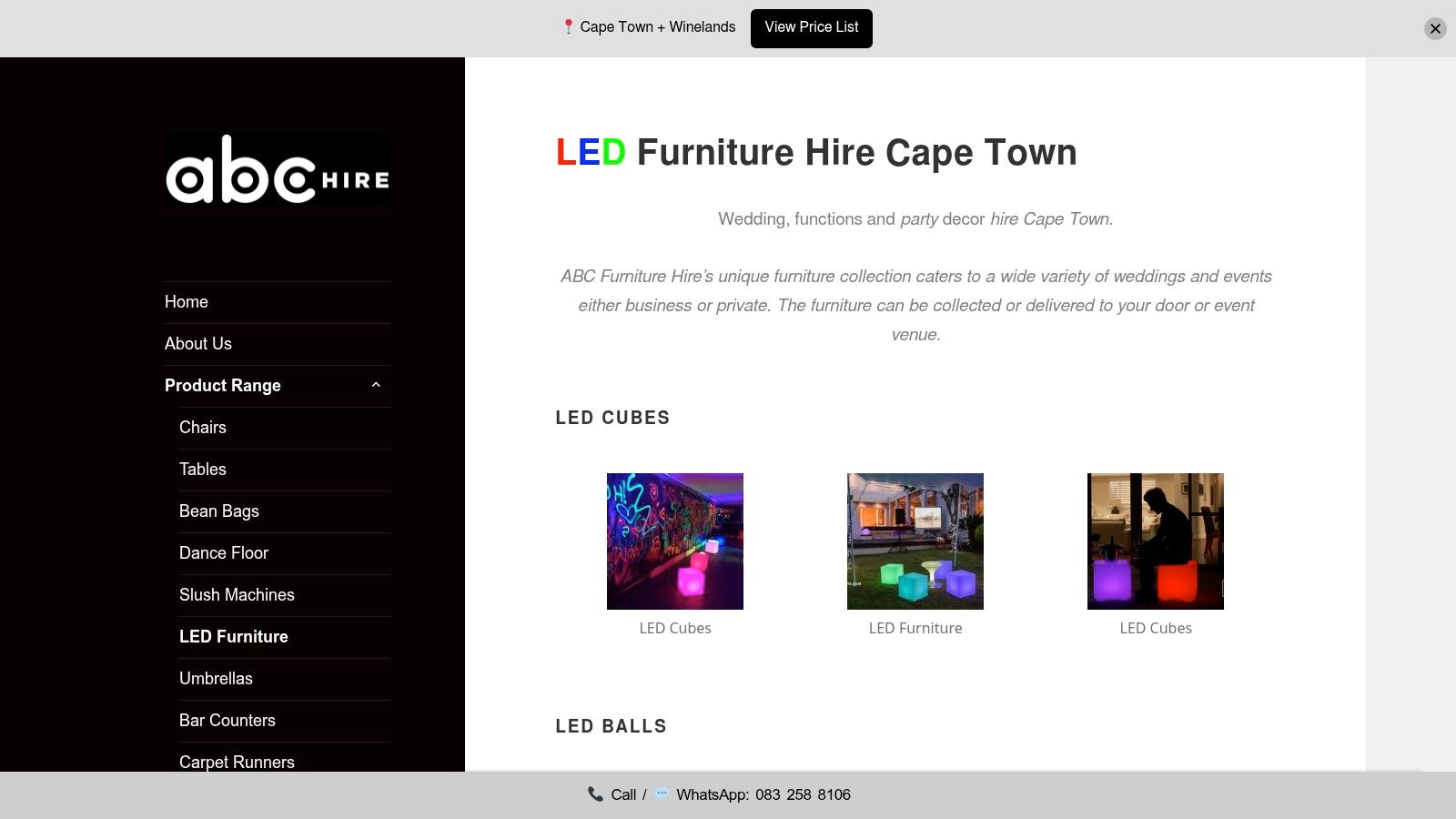
The following style reference shows the kind of illuminated inventory that often works well for launches and formal dances.

Screenshot from https://abchire.co.za/led-furniture/

LED furniture works when the event earns it

LED furniture is often handled badly. Too much of it and the room feels like a novelty setup. Used selectively, it creates a clean, contemporary edge.

For matric dances, birthday celebrations, and branded parties, LED bars, cubes, curved benches, and illuminated poseur tables can add movement and colour after dark. They work best in three situations:

  1. As a focal point near the bar or entrance.
  2. As a transition tool when the event starts formal and becomes more festive later.
  3. As a lighting solution in venues where ambience needs help.

If the venue already has heavy chandeliers, strong uplighting, and a very classic interior, LED furniture can clash. In that setting, it's better to use one illuminated feature than an entire glowing lounge.

Matching pieces to the event type

Some combinations consistently work well.

Event type Furniture direction Effect
Vineyard wedding Velvet seating, ottomans, elegant coffee tables Romantic and layered
Rooftop cocktail event Bar stools, poseur tables, modular lounges Sleek and social
Matric dance LED bars, illuminated cubes, curved benches Energetic and photo-friendly
Brand launch Minimalist seating, branded counters, clean-lined lounges Controlled and modern

The best rooms don't feel furnished. They feel composed. That usually comes from choosing fewer categories well, then repeating materials, colours, and forms with discipline.

Decoding the Costs of Luxury Furniture Rental

The wrong first question is often posed: “What does a couch cost?” The better question is, “What will this event setup require from quote to collection?”

Luxury furniture rental pricing is shaped by more than the item list. The furniture itself matters, of course, but so do access, timing, labour, travel distance, floor surfaces, installation complexity, and whether the team needs to return late at night or the next day. A quote that looks cheap at first glance can become expensive once the practical work is added.

South Africa's luxury furniture market was valued at USD 178.22 million in 2024 and is projected to reach USD 306.45 million by 2033, at a CAGR of 5.57%, driven largely by hospitality and high-end event demand, according to South Africa luxury furniture market projections. In practical terms, that means more supply, more styling ambition, and a wider spread in pricing depending on quality and service level.

What usually appears on the quote

A serious quote tends to include several layers.

  • Furniture hire charge: The base rental for each item or collection.
  • Delivery and collection: This is influenced by where the venue is and how easy it is to access.
  • Setup and breakdown labour: Necessary when items must be placed to plan, assembled, or restyled.
  • Timing variables: Early-morning access, after-hours collections, or tight turnaround windows can affect cost.
  • Risk cover: Some suppliers use a deposit, a damage clause, or a waiver structure.

The easiest way to protect your budget is to ask for a fully itemised quote from the start. That makes it easier to compare like for like.

What changes the final number

The same furniture list can price differently depending on the venue.

A CBD venue with goods-lift access is simpler than a wine estate with gravel paths and a remote loading zone. A private home in Camps Bay may look easy on paper but become labour-heavy if access involves stairs, narrow passages, or careful manoeuvring around finishes. Outdoor installs also tend to need more planning because furniture has to be protected during setup and strike.

Ask one question early: “What assumptions have you made about access, setup time, and collection time?” That's where quote gaps often hide.

A good comparison point is the rent-versus-own decision itself. If you're weighing one event against a purchase, rent or own furniture is the right lens. Ownership only wins when repeated use, storage capacity, and maintenance discipline are already in place.

Sample budget for a 100-Guest Winelands Wedding

The table below gives a qualitative planning framework, not a universal rate card. Final pricing varies by inventory choice, delivery location, event timing, and service scope.

Item Category Description Estimated Cost Range (ZAR)
Lounge seating Sofas, armchairs, ottomans for guest chill areas On request
Coffee and side tables Accent tables for lounge styling On request
Ceremony or reception chairs Premium seating selected to suit the wedding style On request
Cocktail furniture Bar stools, poseur tables, bar units for pre-drinks On request
Climate support Heaters or cooling equipment if required by the venue and season On request
Delivery and collection Transport to and from a Winelands venue On request
Setup and breakdown Placement, styling support, post-event strike On request

That “on request” language isn't evasive. It's realistic. In high-end rentals, service conditions can matter as much as the inventory itself. The smartest planners budget for the room, not just for the pieces.

Styling Memorable Events in Cape Town and the Winelands

Cape Town gives you beautiful venues. It also gives you strong light, coastal wind, quick temperature shifts, and spaces that can overpower generic furniture. Styling well here means working with the venue's character instead of fighting it.

The most successful rooms usually begin with one decision. Do you want the furniture to blend with the architecture and the overall setting, or do you want it to create contrast? Both can work. Problems start when the look sits uncertainly in the middle.

Wine farms need softness and weather sense

In Franschhoek, Stellenbosch, and Paarl, many venues already carry texture through stone, timber, lawns, vines, and mountain views. The furniture doesn't need to compete. It needs to frame the setting.

That usually means lower lounge profiles, warm neutrals, textured upholstery, and groupings that encourage guests to pause. A lounge on a terrace or lawn should feel anchored. Use rugs if the event format allows it, and cluster pieces tightly enough that the arrangement holds its shape in a large open area.

The practical issue is the weather. Even in beautiful conditions, evening temperatures can dip quickly. Wind can also change how an outdoor area functions. The demand for modular, multi-functional furniture is rising at a 5.17% CAGR from 2025 to 2032, and in the Winelands that trend is paired with a technical need for climate control to protect premium materials and keep guests comfortable, according to South Africa furniture market analysis.

That affects styling choices directly.

  • Use modular seating when guest numbers or layout flow may shift.
  • Pair luxury pieces with discreet heating or cooling rather than treating climate equipment as an afterthought.
  • Choose materials carefully for dew, sun exposure, and long outdoor setup windows.

Beachfront and coastal venues need restraint

At Clifton, Camps Bay, or any sea-facing private venue, the backdrop is already doing heavy lifting. Furniture should sharpen the space, not clutter it.

Keep silhouettes cleaner. Avoid overstuffed arrangements unless the brief is very lounge-led and sheltered. Pale neutrals, white, charcoal, and soft natural textures tend to sit well against ocean light. Glass, mirror, or highly reflective surfaces can be striking, but they need careful placement because glare and salt air can work against them.

A good coastal setup usually includes:

  1. A defined lounge area with enough weight to hold its own visually.
  2. A bar zone that feels crisp and serviceable.
  3. Enough spacing between pieces that guests can move easily in windier conditions.

City venues reward bolder contrast

Woodstock warehouses, rooftop venues, and contemporary city spaces often benefit from more assertive furniture choices. Industrial interiors can take black-framed pieces, sharper lines, and stronger accent colours without losing balance. Illuminated furniture, sculptural counters, and minimal seating profiles often perform well in such environments.

If the venue has hard edges, break them with one softer layer. That could be upholstered lounges, rounded ottomans, or warmer textiles. If the venue is architecturally clean already, don't overcrowd it. Leave negative space.

Local insight: In Cape Town, luxury often comes from editing. One strong lounge composition usually lands better than five small, disconnected ones.

Styling choices that hold up on site

A useful way to test your scheme is to ask whether each zone has a clear purpose.

Zone What it needs to do Furniture approach
Arrival Signal tone immediately Statement welcome or bar element
Social Keep guests circulating comfortably Modular lounge clusters and cocktail furniture
Dining Support the event's formality Consistent premium seating
Late-night Shift energy without redoing the room LED accents, bar focus, flexible seating

That's what separates decorative planning from event-ready styling. The room must still function once the wind picks up, the sun drops, and guests start moving the way real guests always do.

Navigating the Logistics of Your Furniture Rental

Beautiful furniture won't rescue a poor install. Logistics decides whether the event feels smooth or stressful.

In a market that's becoming more professional, that operational side matters more than ever. The South African luxury furniture market is projected to reach USD 309.4 million by 2034, according to South Africa luxury furniture growth projections. As standards rise, hosts and planners need partners who can execute with precision, not only supply attractive stock.

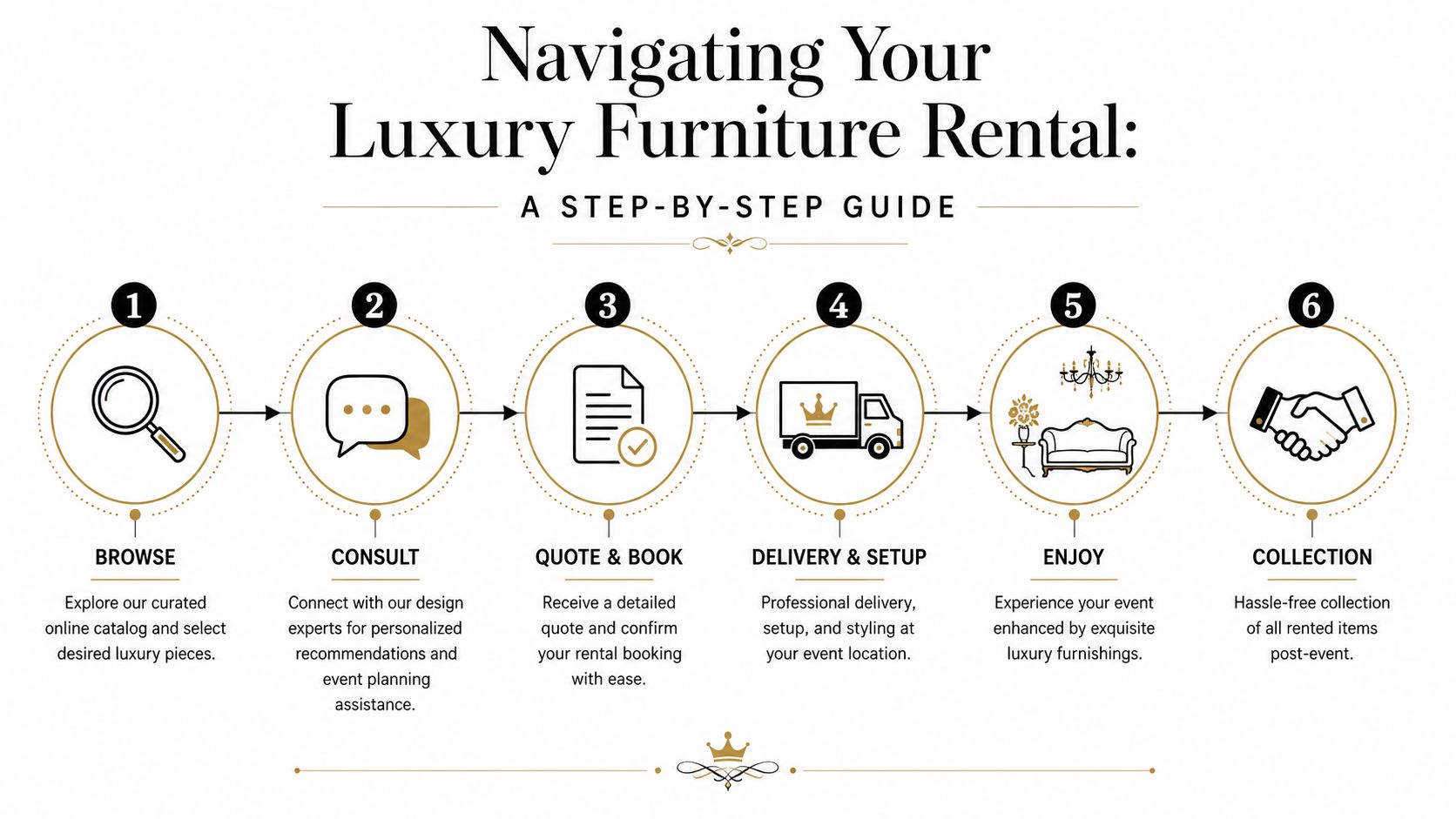
A six-step guide infographic for navigating the luxury furniture rental process from browsing to collection.

The rental timeline that keeps things calm

Most smooth projects follow the same rhythm.

  1. Initial enquiry
    Send the event date, venue, guest count, event type, and mood reference. If you already have a floor plan, include it.

  2. Selection and quote
    The inventory list and service assumptions should be checked carefully. Clarify what's included.

  3. Site and access review
    Some venues are straightforward. Others look simple online but become difficult on delivery day.

  4. Booking confirmation
    Lock the stock once the layout is approved. Premium inventory can't be assumed available until it's reserved.

  5. Delivery and setup
    A good crew places to plan, protects surfaces, and resolves small issues before they reach the client.

  6. Strike and collection
    Collection timing should be coordinated with the venue's access rules and the event finish.

Questions that prevent expensive confusion

Good planners ask operational questions early, not the day before install.

  • What are the access requirements for loading, stairs, lifts, or long carries?
  • Who signs off placement on site if the planner is busy elsewhere?
  • What happens if weather changes and part of the setup must move?
  • How are damages handled if guests spill, sit on wet lawns, or move furniture themselves?
  • What counts as late collection and who approves overtime?

If your timeline is tight, same-day furniture delivery can be useful context for understanding where speed helps and where it introduces risk. Urgent delivery can solve a problem, but it doesn't remove the need for clear access and placement instructions.

Read the agreement like an operator

The rental agreement deserves more attention than most clients give it. Focus on liability, care obligations, collection windows, and what the supplier expects from the venue or host. If the event is outdoors, confirm responsibility for protecting furniture from rain, damp ground, and overnight exposure.

Don't leave logistics to “the team on the day”. The team can only execute the information they receive.

A well-run event often looks effortless because someone dealt with the boring details early. That's the standard luxury events rely on.

Finding the Right Luxury Rental Partner in Cape Town

The furniture might be beautiful, but the supplier still decides the outcome. In Cape Town, where venues range from polished hotels to remote wine estates and private residences, the right rental partner needs more than nice stock photos.

They need judgement. They need operational discipline. They need to know when a requested setup won't survive the site conditions, and they need to tell you before trucks are loaded.

What separates a serious partner from a catalogue

Start with inventory quality, but don't stop there. A polished website can hide tired upholstery, inconsistent finishes, or pieces that only work in a studio photo. Ask how the furniture is maintained, how often ranges are refreshed, and whether matching quantities are genuinely available.

Then look at service depth. The best partners can discuss layout, venue access, sequencing with florists and catering teams, and practical site constraints without hand-holding. They understand that an event install isn't a simple drop-off.

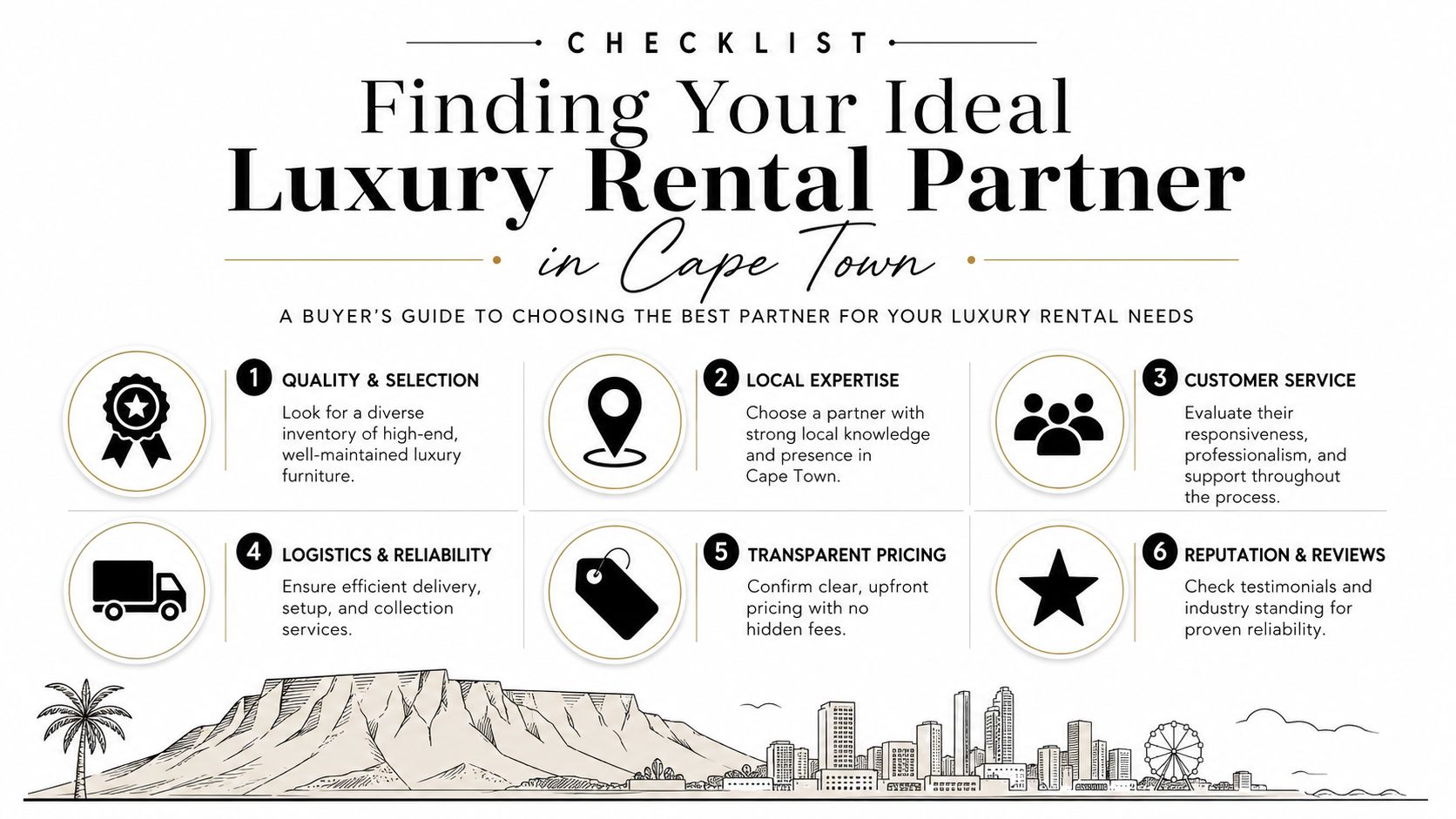
An infographic checklist for selecting an ideal luxury furniture rental partner in Cape Town, South Africa.

A useful buyer's checklist

Use this when comparing providers.

  • Inventory condition matters more than variety: Ten excellent ranges are more useful than a huge list of worn, mismatched pieces.
  • Local venue knowledge saves time: A partner who knows Cape Town routes, Winelands access realities, and common venue restrictions will spot problems sooner.
  • Communication style is a signal: Slow replies, vague answers, and changing assumptions usually get worse under pressure.
  • Operational ownership is essential: Delivery windows, setup responsibility, and collection planning should be clear in writing.
  • Pricing should be transparent: You want itemised costs, service terms, and obvious treatment of deposits or damage liability.
  • Reputation should match the brief: Look for evidence they've handled weddings, corporate events, formal dances, or private luxury functions similar to yours.

Ask better questions before you commit

Some questions reveal competence very quickly.

Ask what they'd change about your draft layout. Ask what usually goes wrong at your type of venue. Ask how they handle a weather shift after delivery has begun. Ask which inventory holds up best at a lawn event, under marquee conditions, or in a hard-edged industrial space.

If you're running a broader creative or venue operation and need to streamline the business side as well, it can help to compare studio management solutions. That's especially useful for teams coordinating bookings, client communication, and production workflows across multiple event suppliers.

A rental partner should reduce uncertainty. If every answer creates a new ambiguity, keep looking.

The best supplier relationships feel collaborative, not transactional. They protect the look of the event, but they also protect the process behind it.


For planners, couples, venues, and hosts who want furniture that looks sharp and arrives with the right operational support, ABC Hire is worth speaking to. Their Cape Town-based range covers luxury event furniture, LED furniture, climate control equipment, and the practical pieces that help weddings, corporate functions, matric dances, and private celebrations come together cleanly across Cape Town, Stellenbosch, Franschhoek, Paarl, and surrounding areas.