
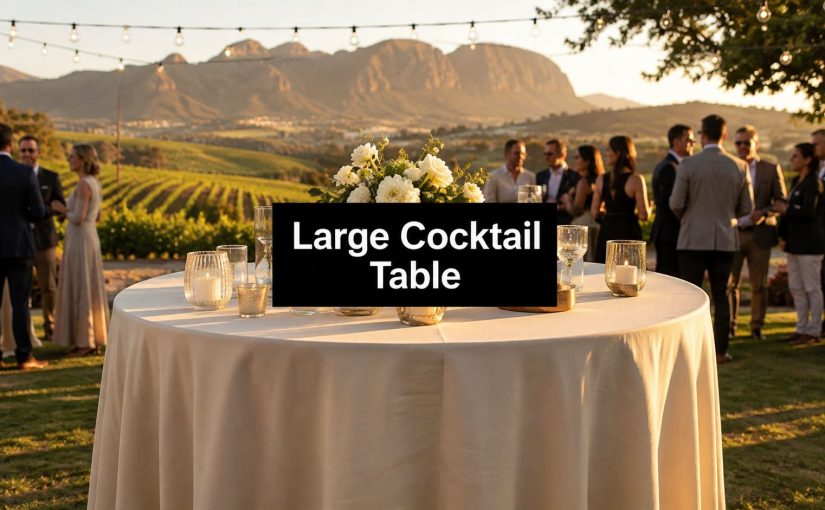
You're standing on a wine estate lawn in Stellenbosch, the ceremony chairs have just been cleared, and guests are drifting in with flutes in hand because nobody wants to sit down yet. A large cocktail table earns its keep here, not as décor, but as a landing point for glasses, canapés, handbags, and the little pauses that keep a reception moving. Get the size wrong and people bunch at the bar, block the waiters, or hover awkwardly with nowhere to put anything.
What a Large Cocktail Table Does at an Event
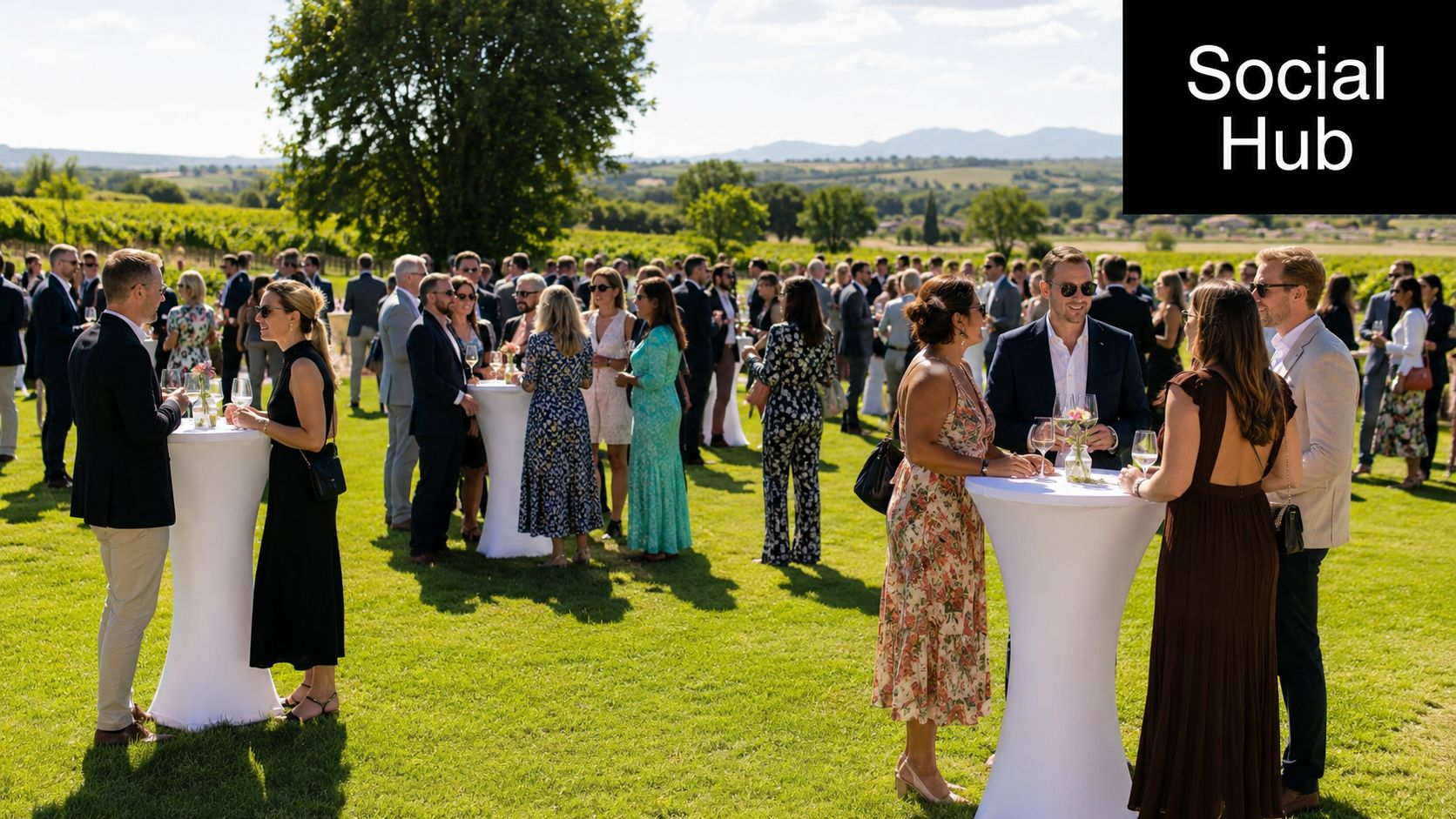
At a Constantia or Stellenbosch reception, guests rarely spread out evenly. They form small groups, carry drinks from the bar, and pause wherever a surface is available while waiters pass through. A large cocktail table gives those pauses a defined place, helping the reception feel planned rather than improvised. Its first job is spatial: support standing conversation without turning a mingling area into a seated dining zone.
Standing, not sitting
A cocktail table belongs to the standing-height part of the floor plan. Guests can rest a glass or plate, face one another, and move on without pulling out a chair. A low coffee table encourages reaching and half-sitting, while a dining table changes the event's posture and service pattern altogether.
South African event planning commonly uses a 1.5 m banquet round as a seated reference, with room for 8–10 guests. A cocktail-height table serves a different purpose. It belongs to the circulation layer, where guests gather briefly and keep moving, rather than the dining layer (Corporate Event Planning seating calculator).
That distinction affects the whole setup. Canapés may rest on the surface between passes, drinks can be collected without blocking a server, and guests can rotate through the group instead of holding one position. On a Winelands lawn, that turnover also helps prevent a few tables from becoming fixed camps beside the bar or dance floor.
Practical rule: if guests are expected to stand, mingle, and move, choose a table that supports that pattern instead of copying the proportions of dining furniture.
Why the surface matters
The top needs to hold a glass and a small plate, with enough spare room for a brief pause. Make it too small and guests crowd the edge or balance items in their hands. Make it too generous and one group may settle there for the evening, reducing circulation around it. In a marquee, courtyard, or lawn reception after sunset, that balance influences whether service paths remain open.
Finish still matters, but it follows the flow decision. Timber, metal, glass, and upholstered treatments change the look and handling requirements, while the table's footprint determines how easily people gather and pass.
Standard Sizes and the Standing-Height Baseline
A quote can list a “large cocktail table” and still leave the most important details unclear. For Cape Town hire stock, the practical baseline is a top of about 600 mm in diameter or square, with the surface roughly 1,090–1,110 mm above the floor. That standing-height category suits receptions and mingling areas, and local rental catalogues commonly use it as a reference point (Top Table South Africa).
What the measurements mean on site
A 600 mm top gives two adults room for drinks and a small plate without constant elbow contact. Increase the top to 700 mm or 800 mm, and the table supports a broader conversation group. It also takes more floor space, so the larger option only works when the layout can absorb its footprint and the surrounding traffic.
The height needs the same scrutiny. A table may appear in a supplier's cocktail category online but arrive too low for guests who are meant to stand. Local hospitality specifications distinguish 750 mm dining-height tables from the 1050–1100 mm range used for high tables. Treat a surface near the lower measurement as seated furniture, not a standing table.
Read the quote precisely
A usable quote states the tabletop size and the full height, rather than saying “round cocktail table”. If one dimension is missing, ask for the actual diameter or square size and the base spread. Those details affect circulation once guest bags, floral arrangements, and waiter movement share the same area.
| Top Size (mm) | Total Height (mm) | Guests Around Table | Best Use |
|---|---|---|---|
| 600 | 1,090–1,110 | 2 | Welcome drinks, canapés, smaller conversation clusters |
| 700 | 1,090–1,110 | 3 | Wedding mingling, lounge edges, relaxed networking |
| 800 | 1,090–1,110 | 4 | Corporate activations, larger standing groups, more service surface |
The table size should follow the expected movement pattern. A smaller top suits a reception where guests keep circulating between the bar, food stations, and lawn. A wider top gives a group more room to pause, but several wider tables can turn a clear route into a series of bottlenecks.
For terminology and examples of the category, the metal cocktail tables guide is a useful local reference. Confirm the height, top size, and base dimensions in the hire quote before approving the layout.
Styles, Materials and Finishes Used in Cape Town
The material choice matters because Cape Town events are not all the same environment. A polished indoor launch at a hotel in the city has very different demands from a windy lawn reception in Franschhoek. The table has to survive both the look and the logistics.
What works on the ground
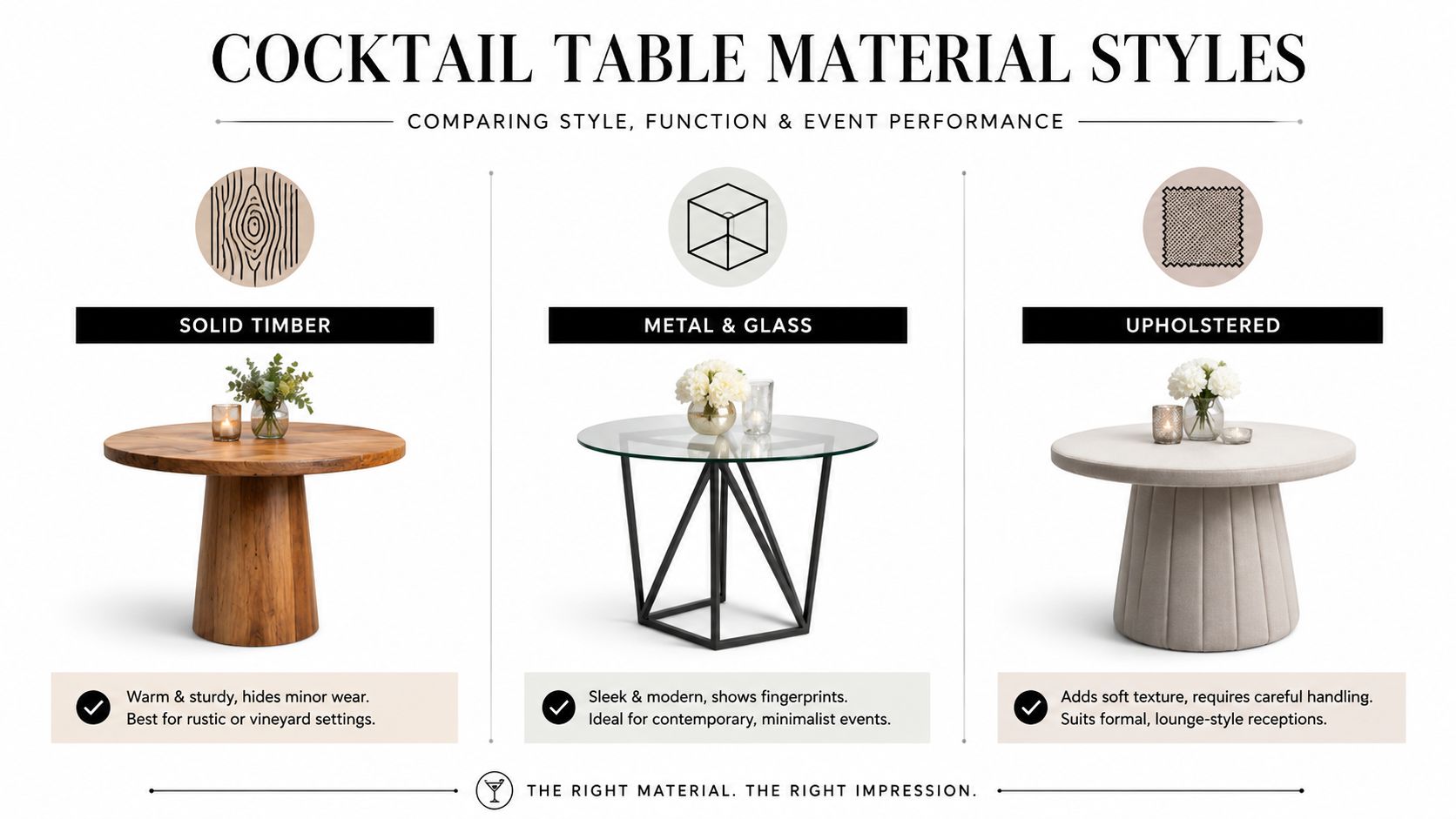
Solid timber tops bring warmth and feel right on vineyard verandas, especially when the rest of the room already has organic textures. They're also heavy, which helps with stability, but that same weight makes them a logistics headache. Uncovered timber shows wine marks quickly, so if the event is relaxed and red wine is flowing, you either protect the surface properly or accept that the finish will look tired by dessert.
Painted MDF or laminate tops with chrome or black steel bases are the workhorse. They're lighter to carry, easier to wipe, and easier to turn around between events. For corporate functions, school formals, and most weddings, this is usually the most practical hire choice because the finish can take normal service without asking for special handling.
Premium finishes such as brass or copper bases, mirrored tops, or ghost acrylic have a narrower job. They're strong visual choices for launches and high-end receptions, but they need more care from setup teams and more caution from guests who lean on them with rings, bags, or heels. In other words, they're beautiful when handled properly, and unforgiving when the floor plan is rushed.
A lightweight base on uneven grass looks fine in the depot and wobbly on the night. That's usually where the trouble starts.
Transport and durability
Transport is where the romantic idea meets the van. Timber tables take more load space and more muscle, while lighter laminate or steel-framed tables stack and move more efficiently. If the site has gravel, lawn, or a soft marquee floor, stability matters more than the finish in the catalogue. High-gloss tops also mark faster under heavy use, especially when the room is busy and nobody is thinking about coasters.
For planners comparing styles, ABC Hire lists cocktail table hire as part of its event furniture range in Cape Town and nearby Winelands areas, which makes it a straightforward option when the job is to match the table to the room rather than buy a one-off piece for storage later. A useful external product reference for table style comparison is cocktail table for your party, especially if you're checking how different suppliers describe top shapes and finishes.
Choosing the Right Size for Weddings, Corporate Events and Private Parties
The right size changes with the event format. A table that feels generous at a networking night can feel oversized in a crowded marquee, and a compact top that works for a ceremony drink station can collapse under brochures, folders, or a canapé spread.
Weddings need small conversation pockets
At a wine estate wedding, the table usually has one job during canapés, which is to keep guests moving without making them feel herded. A 600 mm round suits two standing guests comfortably, while 700 mm gives room for three when the group wants to chat a little longer. If the event needs a larger shared surface, that usually belongs elsewhere in the layout, not at every cocktail cluster.
Corporate events need more usable surface
Corporate launches and product activations often do better with 800 mm rounds or rectangular tops around 1200 × 600 mm because guests carry more stuff. Brochures, small demo items, and laptops change the equation fast. The table has to support a working conversation, not just a drink stop.
Private parties need spillover control
For dinner parties with a bigger guest list, the trick is often to give standing guests enough room to spread out without making the dining area feel disconnected. A 700 mm round can work well near walls or along the edges of the room, while longer buffet-adjacent tables handle the traffic. If the event has a late-night shift, a few high surfaces can keep guests from clustering around seated tables once the music starts.
| Event Format | Recommended Top Size | Standing Guests | Notes |
|---|---|---|---|
| Wedding canapés | 600 mm round | 2 | Keeps conversation groups small and mobile |
| Wedding lounge pockets | 700 mm round | 3 | Better for guests who linger between course changes |
| Corporate launch | 800 mm round | 4 | Good for brochures, samples, and longer conversations |
| Private party | 700 mm round | 3 | Works well near walls and bar-adjacent areas |
If you're comparing round formats specifically, the round cocktail tables guide is a sensible local reference point for how suppliers tend to separate standard sizes from event use.
Sizing shortcut: match the table to the longest likely pause, not the first drink. If people are only setting down a glass for 30 seconds, keep it compact. If they'll be talking for 10 minutes, give them more surface.
Placement, Layout and Flow Around High Tables
Placement comes before décor. A beautiful table in the wrong spot creates friction, and friction shows up fast when waiters are passing, guests are circling, and someone's trying to squeeze through with a plate.
Keep the circulation lanes open
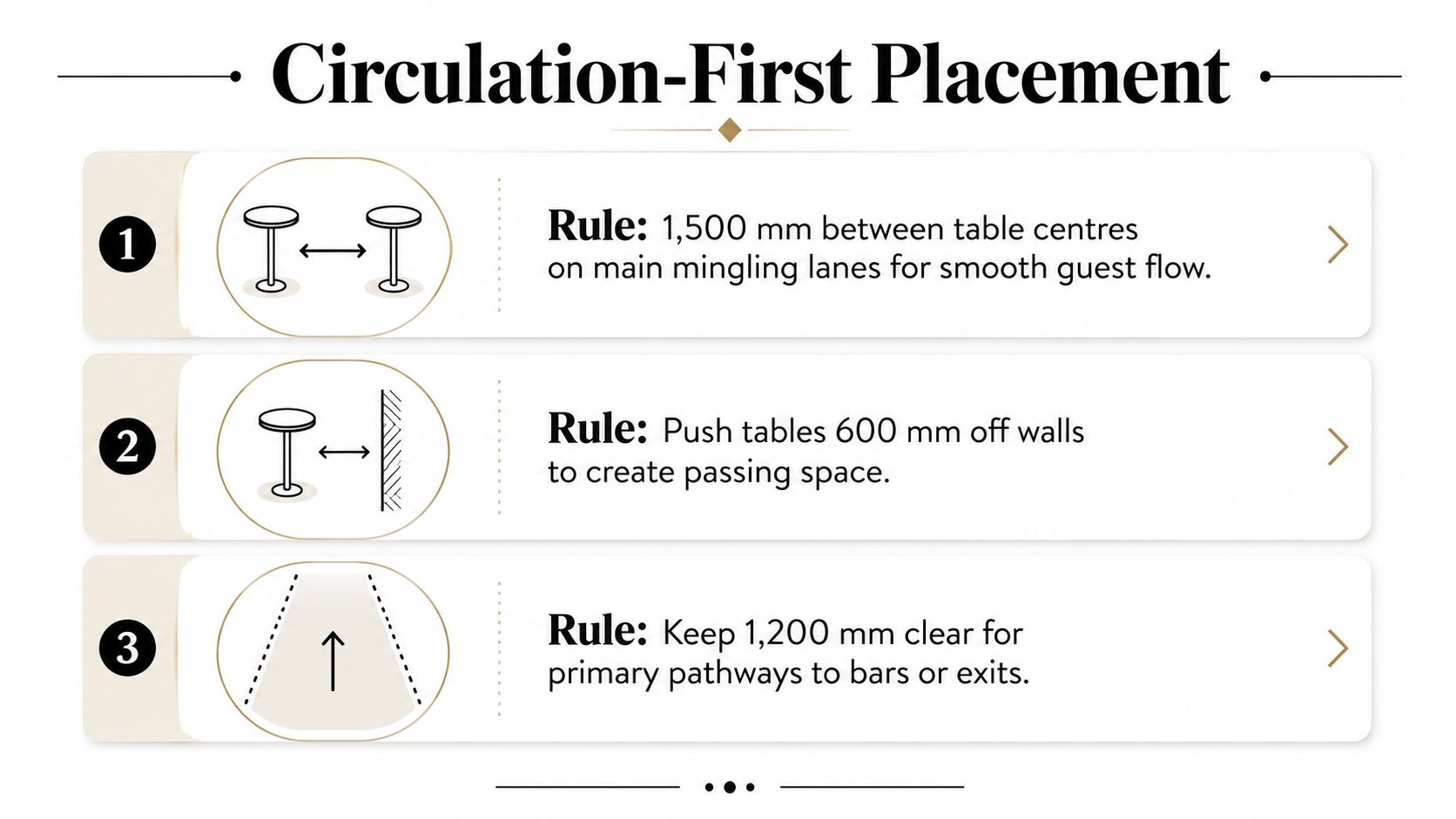
On the main mingling routes, leave 1,500 mm between table centres so groups can form without blocking movement. Push tables 600 mm off any bar queue so guests can pass behind people who are already sipping. And keep a clear 1,200 mm path to bars, exits, or service points so staff aren't forced to thread trays through a tight pocket.
Those rules matter even more on estate lawns where the ground feels spacious until the first cluster of guests settles in. A Babylonstoren or Lourensford reception often works best when the long functional pieces run parallel to the cellar or marquee edge, while cocktail rounds sit in loose pods closer to the lawn boundary. That way, the dance floor stays open, photos look natural, and guests don't get trapped between furniture and foot traffic.
Place tables where guests naturally pause
A single high table against a marquee pole can do useful work as a bag-drop or resting point, especially when the room needs one more surface but not another full conversation cluster. Outdoor layouts need extra thought. Wind weighting helps umbrella tables stay put, and a gravel-free strip of about 300 mm gives high heels something safer to land on near the edge of the seating zone.
For a practical floor-plan reference that treats furniture as part of guest movement rather than decoration, the indoor wedding ceremony floor plans resource is useful for seeing how circulation lines get protected in compact event spaces, even if the venue style is different.
Renting Versus Buying for One-Off and Repeat Events
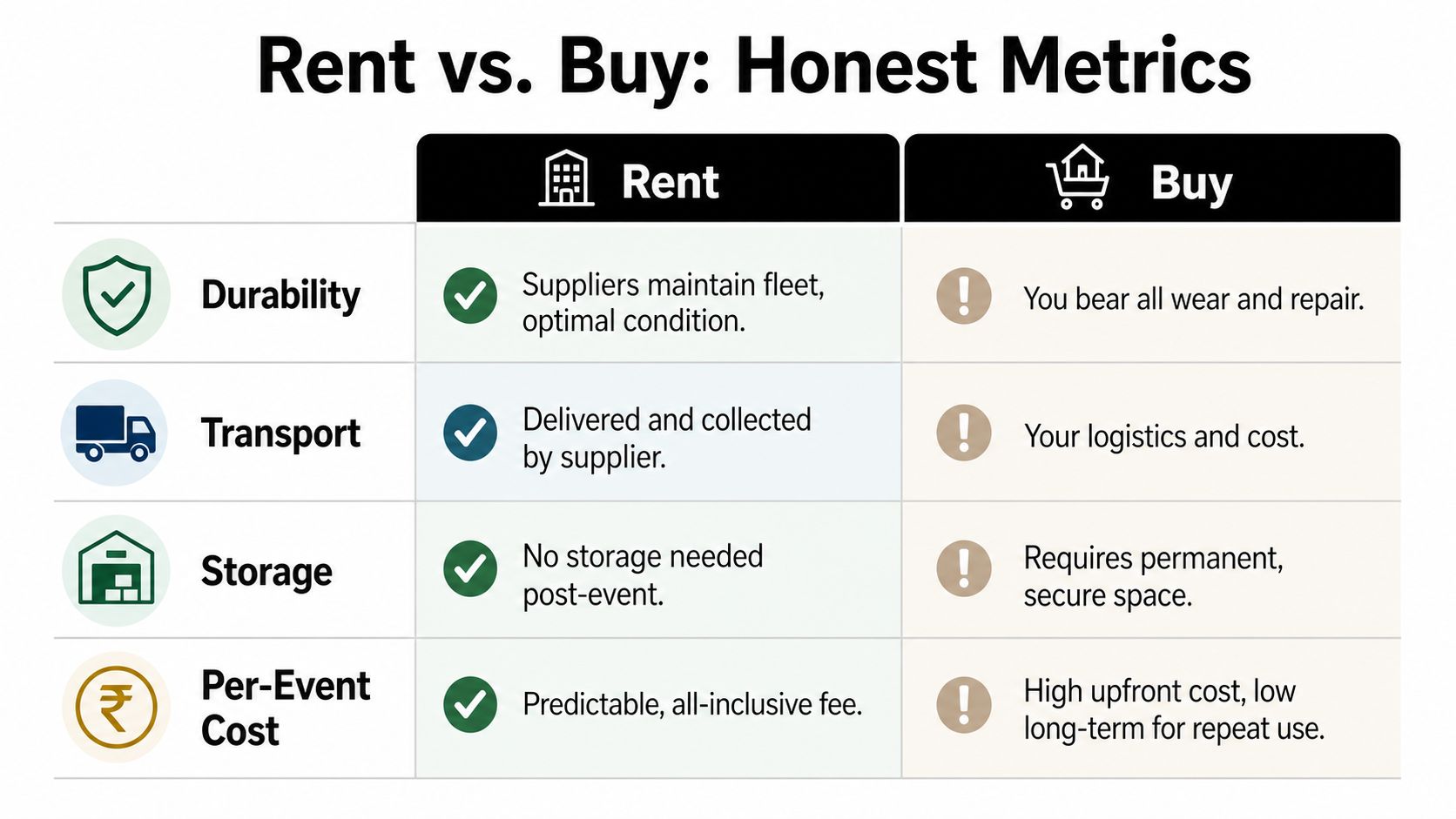
Hire makes sense for most one-off events because the supplier absorbs the boring parts, delivery, collection, replacement stock, and cleaning. Buying only starts to make sense when the table will be used often enough to justify storage and maintenance.
The real trade-offs
A 600 mm pine cocktail table in Cape Town can retail around R1,800 to R2,500, so buying 30 of them reaches R60,000 before you deal with scuffs, bakkie trips, or storage space. The same 30 tables hired at R180 to R280 each per event means the spend stays tied to the actual booking rather than sitting idle between functions. At that point, the break-even only makes sense after roughly five uses.
Those numbers matter because residential tables don't behave like rental stock. Commercial hire tables are built for repeated handling, while bought domestic tables often chip after a couple of weddings if they're moved, stacked, or wiped down roughly. Transport also changes the equation. A hire company sends the stock, sets it up, and clears it away, while a buyer owns every lift, load, and return trip.
If the tables will live in a garage for most of the year, hire is usually the cleaner answer.
Who should buy
Venues, restaurants, and planners who run events weekly can justify ownership if they have storage, transport, and a cleaning routine that protects the finish. Everyone else tends to spend more time managing the inventory than using it. The wrong buy looks cheap on day one and expensive every time it's scratched, missing, or sitting in the wrong storeroom.
Booking, Delivery and Local Hire in Cape Town and the Winelands
The booking process is straightforward when the site is straightforward. It gets complicated when the venue has load-in restrictions, weather risk, or a tight turnaround between ceremony and dinner service.
What to confirm before you book
Start with guest count and venue access. Then ask whether the site needs a meeting before delivery, especially at wine estates where access roads, floor protection, and setup windows can change the job completely. Lock the delivery window around the ceremony and kitchen turnaround so the tables are in place before the service team starts moving.
For a broader local hire checklist, the event furniture hire Cape Town guide is a useful companion when you're comparing table hire with chairs, lounges, and other support pieces.
Questions worth asking the supplier
- Replacement policy: Ask what happens if a top is damaged on site, and whether the stock is commercial grade.
- Weather cover: Outdoor setups need a plan for wind, drizzle, or a last-minute indoor flip.
- Accessories: Check whether linen clips, centrepieces, or weighted bases are included or charged separately.
- Collection timing: Morning collection usually avoids overtime and keeps the venue happier.
Cape Town and the Winelands all have their own delivery patterns. Stellenbosch, Franschhoek, Paarl, and Durbanville are common hire corridors, but distance and access can affect minimum orders and fuel charges. Lead times also matter. If the event is in peak season, confirm availability early and don't assume the exact table style will still be open later in the week.
Short FAQ
How early should I book? As early as the venue and guest count are fixed, especially for estate weddings and launch events.
Do hire companies require minimum quantities? Often yes, particularly on outlying deliveries or smaller orders.
Can I return after hours? Some companies allow it, but collection timing should be agreed in advance.
Will my venue need insurance wording? Many venues ask for it, so check the contract before the final deposit.
ABC Hire supplies cocktail tables as part of its Cape Town event furniture range, and it's a practical fit when you need standing-height tables for receptions, launches, or informal networking layouts. If you're planning a wedding, brand activation, or private event and want tables that suit the room instead of fighting it, visit ABC Hire and get the hire conversation moving early.