
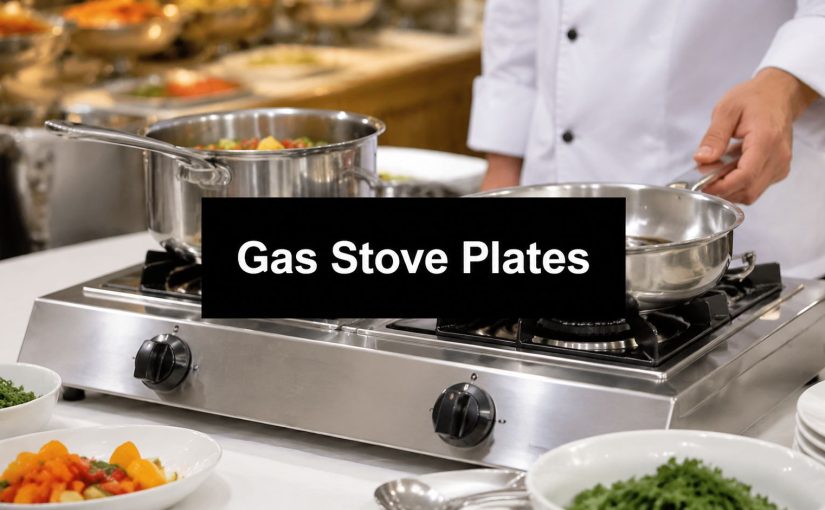
Two hours before service, the room usually looks calm to guests and frantic to everyone working behind it. In Cape Town that pressure often lands hardest at venues with a beautiful view and limited back-of-house infrastructure. The marquee is up, the bar is stocked, the florist has finished, and the caterer is still trying to get stock to a proper boil on a weak cooktop.
That's where gas stove plates stop being a line item and become operational equipment.
For temporary events, they carry more responsibility than many planners realise. They need to light consistently, hold heat under pressure, survive transport, suit the available fuel, and fit a service plan that won't unravel once guests are seated. A stove plate that works perfectly in a permanent kitchen can become awkward, unstable, or slow in a field kitchen, a wine estate prep area, or a loading-bay service zone.
In the Cape Town and Winelands event circuit, that matters. Mobile setups are common. LPG is often the practical choice away from fixed services. Weather changes quickly. Access windows are tight. If the cooking line loses rhythm, the whole event feels it.
Your Guide to Flawless Event Catering
A common event-day problem isn't dramatic. It's gradual. The canapés start a few minutes late because pans are taking too long to recover heat. Sauces aren't holding properly because one burner runs softer than the others. The chef shifts pots around, staff begin queueing for the usable burner, and the service team starts making quiet adjustments in the background.
Guests rarely know the source. They only notice that food arrives unevenly.
For wedding planners in the Winelands, brand teams running outdoor activations, and coordinators managing campus or corporate events around Cape Town, gas stove plates often sit at the centre of that pressure. They're the bridge between menu ambition and what the site can support. A polished service plan on paper means very little if the catering team can't sear, boil, reduce, and hold with confidence on site.
Practical rule: If the menu depends on timing, the cooking equipment must be chosen around service pace, not just headcount.
Temporary kitchens punish weak equipment. Domestic units often struggle with repeated heavy pots, quick turnarounds, and long holding periods. Event kitchens also deal with uneven ground, rushed installs, transport handling, and teams who may not know the quirks of a specific unit until they're already under pressure.
The reliable approach is simple. Choose for output, fuel suitability, stability, and easy recovery after transport. Then test the setup exactly as it will run on the day. That means actual pans, actual gas supply, actual wind exposure if any part of the line is semi-open, and actual staffing.
When planners get this right, the improvement shows up everywhere. Service steadies. Caterers work faster. Safety checks are easier. Cleanup is less chaotic. Above all, the kitchen stops improvising and starts producing.
Understanding Professional Gas Stove Plates
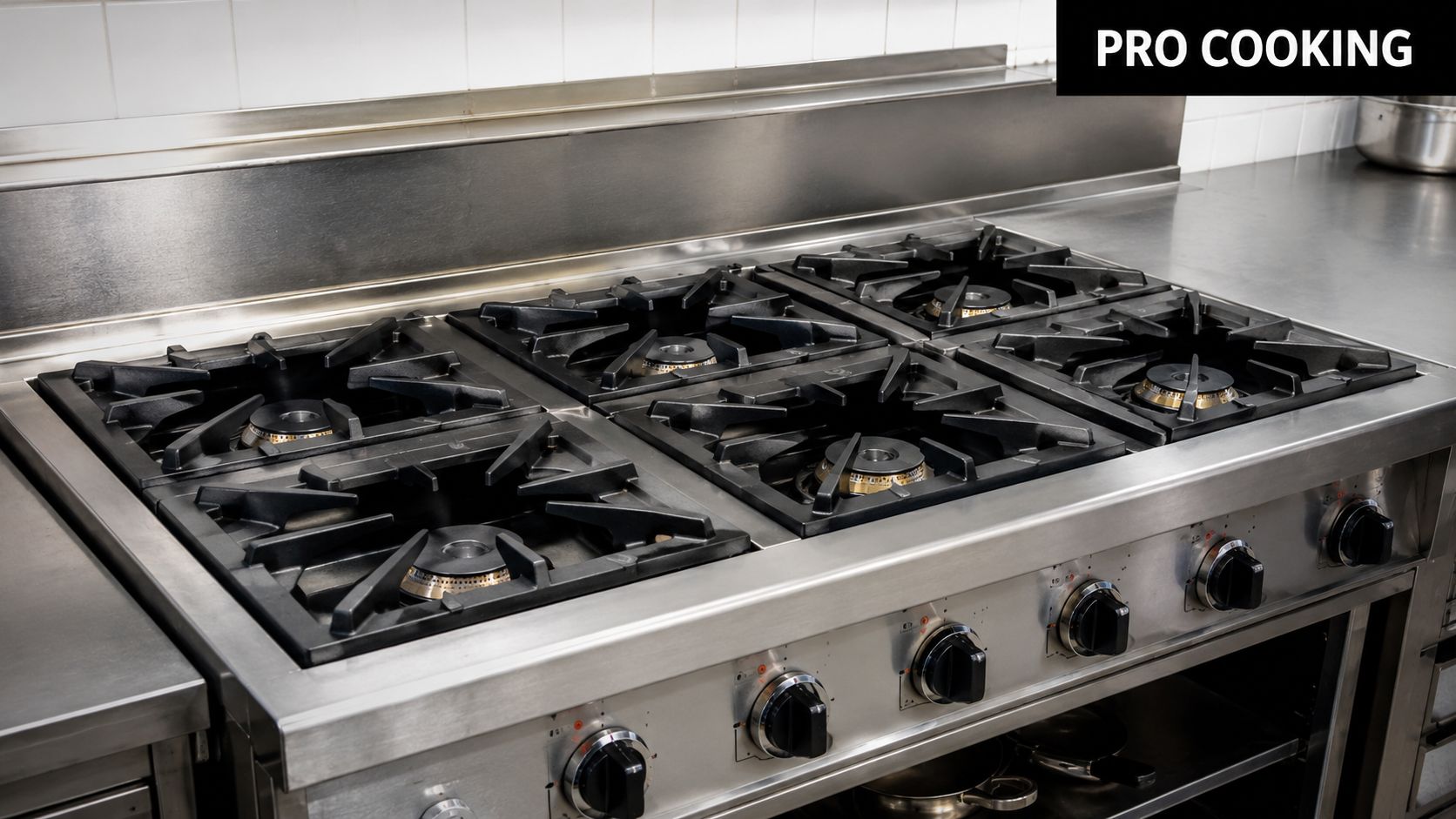
Professional gas stove plates are built for volume, repetition, and hard use. They aren't just domestic stoves in a tougher frame. The difference is visible in the burner design, the support structure, the materials, and the way they cope with sustained service.
What separates commercial from domestic
The easiest way to think about heat output is horsepower. A unit might light and cook in both settings, but one is designed for family dinner and the other is designed for repeated event service with stockpots, sauté pans, and rapid refires.
Commercial gas stove plates can be specified at 25,000 BTU per burner in four-burner configurations, while typical residential cooktop burners often range from 500 to 20,000 BTU according to the Star-Max four-burner hot plate specification. That extra output is what supports fast heat-up, stronger searing, quicker boil recovery, and better throughput when the kitchen is turning out plates without pause.
Higher output isn't automatically better in every situation, though. More burner power also means more thermal load on the top surface and more demand on ventilation. If the pan is too small for the burner, or the extractor plan is poor, you lose efficiency and control.
The questions planners should ask
Before approving a unit for an event, ask practical questions that non-specialists often skip:
- Burner purpose: Is the caterer using it for stockpots, finishing pans, or both?
- Pan match: Do the pan bases suit the burner size, or will heat spill around the edges?
- Surface stability: Will it sit level on the event flooring or temporary prep table?
- Flame behaviour: Does it hold a steady flame once the kitchen is fully running?
The right stove plate is the one that keeps performing after the third pan change, not the one that looks impressive at load-in.
Open burner or sealed style
In event use, operators often prefer configurations that are easy to wipe down and easy to inspect after transport. Open styles can make access and cleaning simpler. More enclosed designs can help contain mess around the top. Neither is universally better. What matters is whether the team can clean, relight, and monitor the unit fast during service.
For planners, the practical lesson is straightforward. Don't hire or approve a gas stove plate based only on burner count. Ask how it behaves under pressure, what fuel it's configured for, and whether the caterer has used that exact type before.
Choosing the Right Stove Plate Material
The material on and around the cooking surface affects more than appearance. In event work, it changes how the unit travels, how quickly it cleans up, how forgiving it is during heavy service, and how much abuse it can take over a season of weddings, launches, and off-site catering jobs.
Cast iron for hard kitchen use
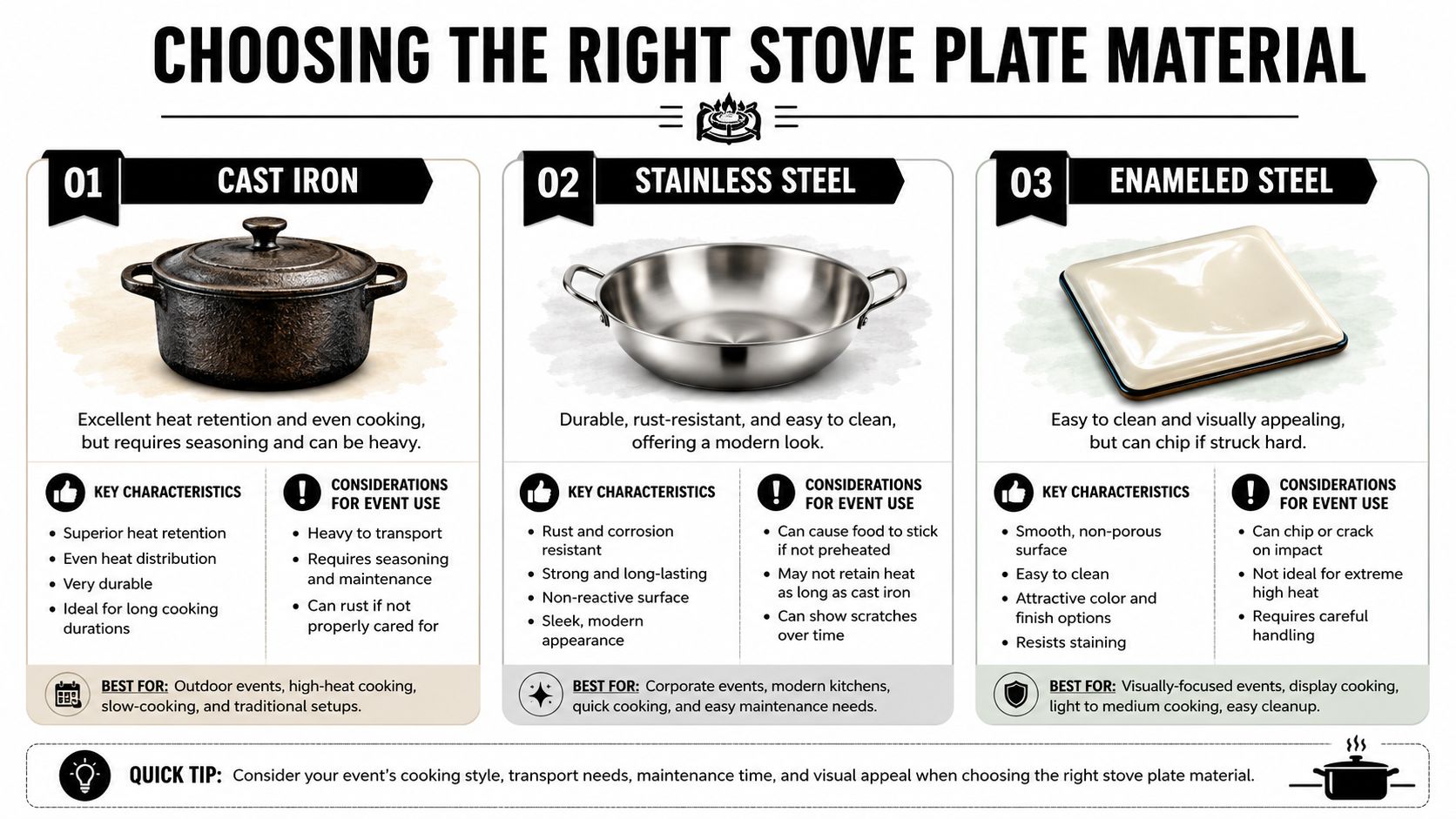
Cast iron makes sense when stability and heat retention matter most. Once hot, it tends to hold temperature well, which helps when a busy kitchen is moving heavy pots on and off the flame. That can be useful for menus with repeated pan work, reductions, or high-heat finishing.
The trade-off is obvious to anyone who's loaded a truck at midnight. It's heavy. It also needs more deliberate cleaning and drying if you want it to stay in good condition. If staff rush post-event breakdown and leave moisture sitting on it, the surface won't thank you.
Cast iron suits teams that already run disciplined kitchen pack-downs. It's less forgiving if the unit will pass through many hands.
Stainless steel for quick reset and easy presentation
Stainless steel is often the most practical choice for event operations where turnaround speed matters. It's straightforward to wipe down, it looks clean in open prep areas, and it handles repeated transport well when packed properly.
For temporary kitchens, that matters more than many buyers expect. A unit that can be cleaned quickly between hire periods or event days reduces friction for everyone. It also helps front-of-house adjacent cooking stations maintain a more polished look.
This is usually the easiest material to live with if the setup changes every week.
Site insight: If a unit will be loaded, unloaded, cleaned fast, and sent back out regularly, stainless steel usually creates the fewest headaches.
Enamelled steel for lighter-duty use
Enamelled steel often appeals to teams that want a tidy, smart appearance without the weight of cast iron. It's generally easier to wipe than rougher surfaces and can look good in visible service areas.
Its weakness is impact. In event environments, equipment gets nudged by crates, stacked too tightly, or knocked during strike. If the enamel chips, the finish starts losing its advantage quickly. That doesn't make it a bad option. It means it needs gentler handling and a more controlled transport routine.
A quick comparison
| Material | Best fit for events | Main strength | Main drawback |
|---|---|---|---|
| Cast iron | Heavy-duty catering lines | Strong heat retention | Heavier and slower to maintain |
| Stainless steel | Frequent rentals and mobile events | Easy cleaning and professional appearance | Shows marks quickly if cleaned poorly |
| Enamelled steel | Lower-impact or presentation-led setups | Clean visual finish | Can chip if struck hard |
How to choose for the menu
Don't choose material in isolation. Match it to how the event will run.
- For production-heavy catering: Cast iron earns its place when the stove plate will run hard for long periods.
- For frequent transport and fast turnaround: Stainless steel is often the safest operational bet.
- For lighter service with careful handling: Enamelled steel can work well where appearance matters and movement is limited.
A lot of planners focus on style first because the event itself is style-led. The kitchen doesn't work that way. The right material is the one that survives the truck, the install, the service window, and the clean-down without creating extra problems for the team.
Sourcing and Setup for Your Cape Town Event
In Cape Town, the first sourcing question isn't usually how many burners you want. It's whether the stove plate matches the site's actual fuel reality. Estate venues, school grounds, beaches, farms, warehouses, and private homes all create different constraints, and temporary catering setups don't get the luxury of assuming a fixed kitchen connection is available.
Start with fuel, not hardware
For South African event use, fuel compatibility often decides whether a setup is practical. A commercial hotplate sold for this market can be specified with natural gas consumption of 1.999 m³/h and LPG consumption of 0.567 m³/h for a single-burner unit, as shown in the South Africa market gas burner listing. That difference matters because it affects running cost, cylinder planning, and how long the kitchen can operate without interruption.
For mobile catering in Cape Town and the Winelands, LPG is often the realistic answer when the event is off-grid or semi-remote. Natural gas can suit sites with established infrastructure, but it's not something you want to assume at the last minute. Different gas types also mean the appliance may need the right jets or regulator settings to perform properly.
Choosing the wrong setup usually shows up fast. Flames become unstable. Heat transfer suffers. Service slows.
The rent versus buy decision
Buying makes sense when the same team runs repeated events, has proper storage, and can manage routine checks, cleaning, and transport protection. Hiring makes more sense when demand changes by season, event scale varies, or the caterer needs different configurations for different sites.
Here's a useful consideration:
- Buy if your operation is standardised and the unit will stay in regular use.
- Hire if your venues change often, your menus vary, or you don't want idle equipment taking up storage space.
- Mix both if you keep core equipment in-house and bring in specialist pieces for larger jobs.
For planners building an equipment list from scratch, a broader guide to catering equipment for hire can help map the stove plate into the rest of the temporary kitchen.
Don't leave gas supply to the final week
The most common setup mistake is treating gas as an accessory instead of infrastructure. It should be confirmed as early as power, water, refrigeration, and prep space.
If your event may need a quick utility solution, it's worth reviewing options for securing temporary gas supply quickly so the catering plan isn't forced into a rushed workaround. Even when LPG is the likely route, that planning mindset is useful. The earlier fuel is locked in, the fewer unpleasant surprises appear at load-in.
Temporary kitchens fail in the gaps between suppliers. The stove plate, the regulator, the hose, the gas type, and the site conditions all have to agree with each other.
Maintenance for Quick Event Turnaround
A stove plate that cooks well but cleans badly creates trouble on the back end. In event work, that trouble usually lands when the team is tired, transport is waiting, and everyone wants to leave. Good maintenance isn't about perfection. It's about getting the equipment safely clean, ready for return or storage, and fit for the next booking without creating damage in the process.
The fast post-service routine
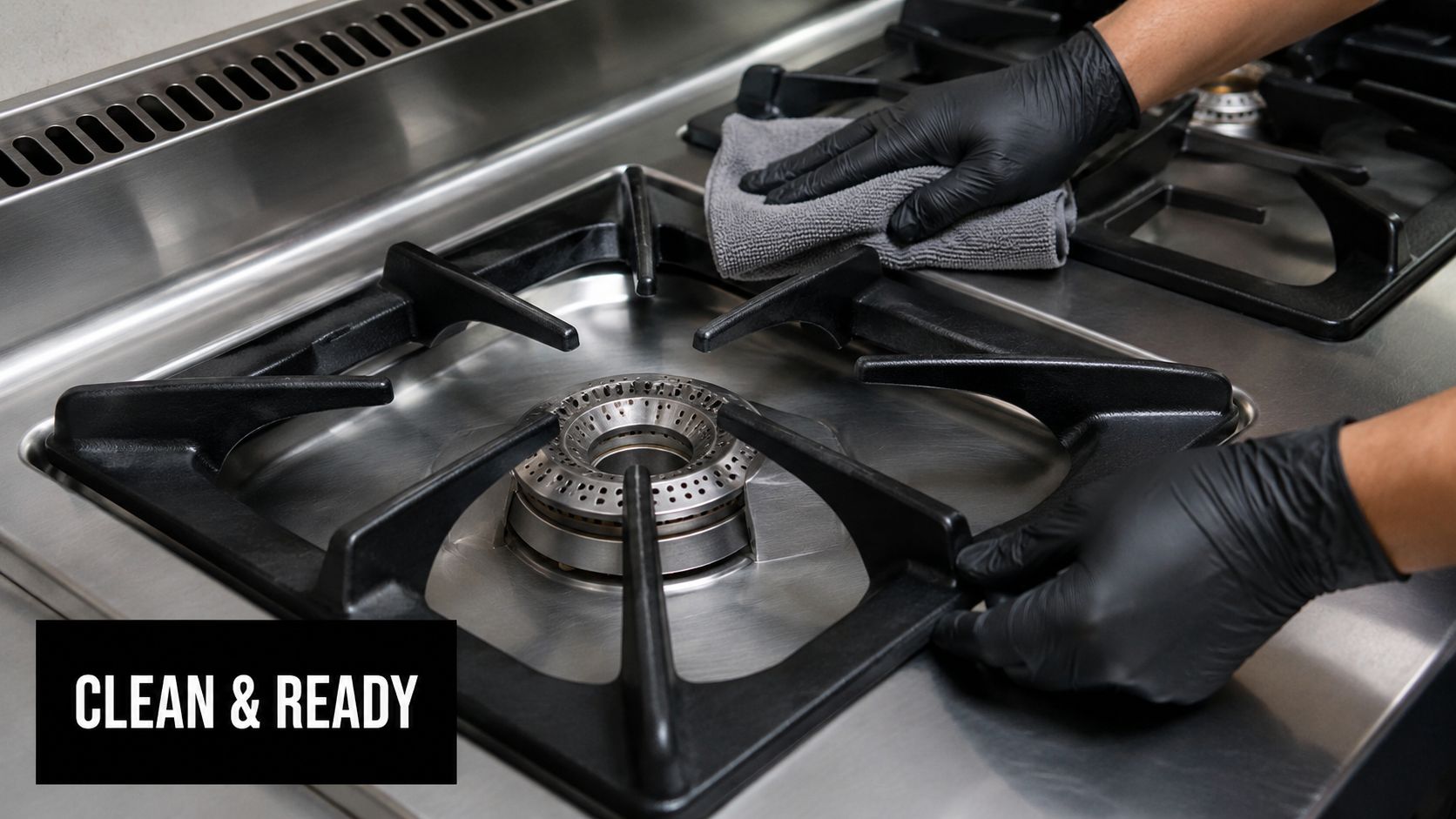
The safest routine is simple and repeatable:
- Shut down fully: Turn off burners, isolate the gas supply, and let the unit cool enough to clean safely.
- Remove loose debris: Lift off grates or removable top parts and clear food debris before it hardens further.
- Separate grease from carbon: Wipe grease first with a cloth or paper towel. Then deal with stuck residue.
- Dry everything properly: Moisture left on metal parts causes avoidable wear and messy storage.
The mistake teams make is jumping straight to aggressive scrubbing. That often wastes time and can damage finishes.
Cleaning by surface type
Different surfaces want different treatment.
- Stainless steel: Use a soft cloth with mild cleaner, then dry it well so the surface doesn't streak or spot.
- Cast iron components: Brush off residue, wipe carefully, and make sure parts are thoroughly dry before packing.
- Enamelled areas: Avoid harsh impact and overly aggressive abrasives that can damage the finish.
If your team manages larger catering operations, broader advice on commercial kitchen maintenance and smooth operations is useful reading because it frames cleaning as part of reliability, not just hygiene.
What helps service on the next job
A well-maintained stove plate does more than look presentable. It relights more predictably, keeps burner areas clearer, and makes fault-checking easier when something goes wrong on site.
For events that also rely on holding equipment, it helps to think about the whole hot line together. Practical planning around catering food warmers often improves turnaround because the cooking and holding equipment are cleaned, packed, and redeployed as one system.
Clean enough to inspect. That's the standard that matters most after an event.
If staff can clearly see the burner parts, supports, and connection points, they're much more likely to spot a problem before the next load-out.
Troubleshooting Common On-Site Issues
When a burner starts misbehaving during service, teams often lose time by guessing. The better approach is to check the obvious mechanical issues first. In event environments, the cause is often simple: transport shifted a burner cap, debris is blocking a port, or a connection wasn't set up cleanly during a rushed install.
A recurring gap in public guidance is uneven flame troubleshooting. Problems such as clogged gas ports, misaligned burner caps, and corrosion affect flame quality and cooking performance, as highlighted in this burner troubleshooting reference video.
If the flame is weak or uneven
Start with the burner assembly itself. Don't assume the gas supply is the problem straight away.
- Check cap alignment: If the cap isn't seated properly after transport or cleaning, the flame can burn unevenly.
- Inspect the ports: Grease, carbon, or food debris can block sections of the burner and distort the flame.
- Look for visible corrosion: Older or hard-used parts can degrade and stop burning cleanly.
If one burner is behaving differently from the others on the same unit, the issue is often local to that burner.
If the burner won't light cleanly
A no-light situation needs a calm sequence, not repeated clicking and frustration.
First confirm the gas is on and the unit is isolated correctly for safe inspection. Then check whether the burner parts were reassembled properly after cleaning. If the igniter clicks but the burner doesn't catch, look for blockage or poor cap seating before assuming a larger fault.
If there's no reliable ignition and staff start reaching for improvised lighting methods without a proper safety process, stop and escalate to a qualified technician or the equipment provider.
A quick field checklist
| Symptom | First check | Likely practical cause |
|---|---|---|
| Yellow or patchy flame | Burner cap position | Misalignment after transport |
| Flame missing on one side | Burner ports | Blockage from debris or grease |
| Repeated lighting failure | Assembly and ignition point | Dirty parts or poor reassembly |
The key is restraint. Minor burner issues can often be diagnosed quickly, but event staff shouldn't dismantle beyond routine user-level parts or attempt repairs that belong to a gas professional. On a live event, the smart move is to solve what's simple and stop where safety starts becoming uncertain.
Essential Gas Safety for Temporary Events
Temporary gas setups need stricter habits than permanent kitchens because the environment changes every time. Different flooring, different airflow, different staff, different access, different pressure. If the team treats each setup as routine, that's when small oversights slip through.
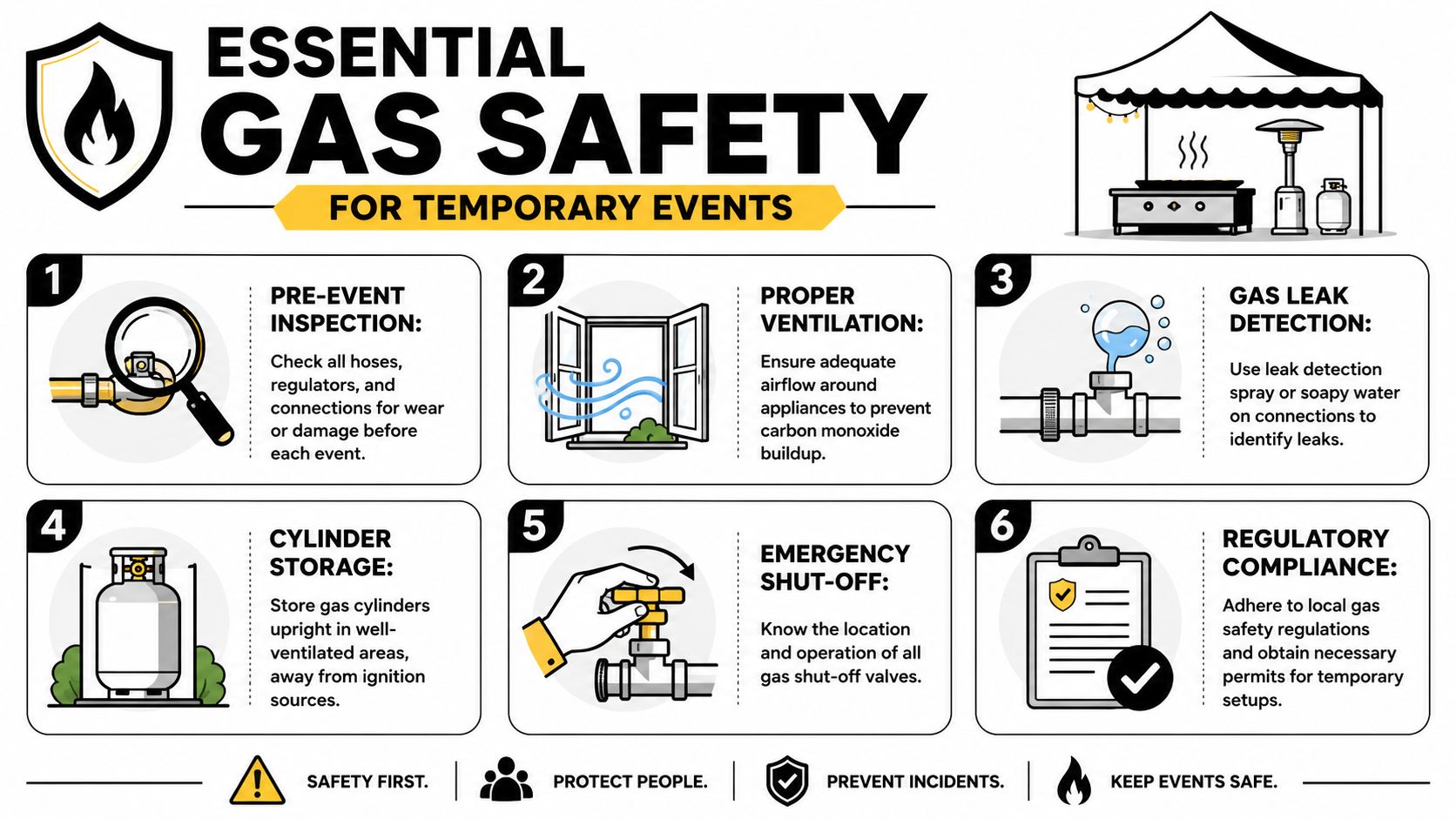
A frequently asked but poorly answered issue for South African users is the safe operation and shut-off of gas appliances, especially in temporary setups, as discussed in this South African gas safety conversation. Event teams need a clear checklist, not informal guesswork.
The non-negotiables on site
- Inspect before every event: Check hoses, regulators, and visible connection points before the kitchen goes live.
- Ventilate properly: Never treat a tent or marquee like a normal indoor kitchen unless airflow has been considered properly.
- Store cylinders upright: Keep them in a suitable ventilated area away from obvious ignition risks and unnecessary traffic.
- Know the shut-off point: Every supervisor on site should know where the supply is isolated and how to stop it quickly.
- Check for leaks safely: Use an appropriate leak-check method before service starts.
- Respect local requirements: Temporary event setups still need to align with local safety expectations and venue rules.
Why planners should care personally
If you're managing the event, this isn't something to leave vaguely with “the kitchen team”. Safety responsibility in live environments overlaps. The venue, planner, caterer, rental provider, and on-site manager all influence whether the setup is sensible.
For a wider operational view, this resource on comprehensive event safety guidance is useful because it places gas risk inside the bigger event safety picture. If your event also includes guest comfort equipment, planning around items like a gas outdoor heater should follow the same disciplined approach.
The safest temporary kitchen is rarely the fanciest. It's the one with clear access, stable equipment, competent setup, visible shut-off control, and no guesswork.
If you're planning an event in Cape Town, Stellenbosch, Franschhoek, Paarl, or the surrounding areas, ABC Hire can help you pull together the practical event equipment that makes service run smoothly. From core event infrastructure to reliable hire solutions for demanding setups, they're a strong local partner when you need equipment that arrives ready, looks professional, and works under pressure.