How to Host a Corporate Event: A 2026 Cape Town Guide

That email usually arrives with very little ceremony. “We need to host a corporate event.” No brief. No real timeline. Sometimes no budget either.

In Cape Town, that request can mean anything from a leadership off-site in the Winelands to a client showcase in the CBD, a product launch in Woodstock, or an end-of-year function that still needs to feel commercially sharp. The mistake is treating all of them as room-booking exercises. They're not. A corporate event is a business tool, and if you plan it like a casual gathering, the gaps show immediately.

The local context raises the stakes. You're not only managing guests, speakers, suppliers, and brand expectations. You're also dealing with venue access, traffic patterns, possible permits, summer heat, hybrid expectations, and the one operational issue that can wreck a polished programme in minutes: power disruption. Good planning in South Africa is practical planning.

Beyond the Boardroom A New Era for Corporate Events

Corporate events used to get framed as “nice to have” moments. That's no longer how serious businesses treat them. They sit much closer to sales, client retention, team alignment, and brand positioning than many companies realise.

If you've just been handed the job of organising one, the pressure probably feels familiar. You need the event to look polished, run on time, and reflect the company well. But you also need it to do something specific. Win trust. Launch something. Bring a remote team together. Start conversations that continue after the room empties.

That shift matters because the category itself is substantial. The global corporate-event market was valued at $330.9 billion in 2023 and is forecast to reach $730.7 billion by 2035 at a 7% CAGR, according to Allied Market Research's corporate event market analysis. In practice, that tells Cape Town hosts something simple. Corporate events aren't a side activity. They're part of a large, expanding business function that rewards professional execution.

What that means in Cape Town

Cape Town and the Winelands give planners a genuine advantage. You can host in a city hotel, a design-forward industrial space, a wine estate, a private venue with mountain views, or a conference setting built for all-day business sessions. Few regions offer that range within such a manageable radius.

But beautiful venues don't rescue weak planning. A stunning Stellenbosch backdrop won't fix poor registration flow. A premium room won't make up for bad acoustics. A wine estate won't help if guests are too hot, can't hear the keynote, or lose Wi-Fi during a hybrid segment.

Practical rule: If the event goal isn't clear, every later decision becomes more expensive and less effective.

The standard has changed

Attendees now expect a smoother experience than they did a few years ago. They notice bottlenecks. They compare your event to others they've attended. They expect comfort, functioning tech, purposeful networking, and a reason for being there.

That's why learning how to host a corporate event starts with business intent, not décor. The best events feel easy on the day because someone did the hard thinking early. That means defining outcomes, building a realistic budget, selecting suppliers who can deliver, and treating operational details as part of the attendee experience, not back-office admin.

Build Your Blueprint Objectives Budget and Timeline

A rushed event usually looks rushed long before guests arrive. It starts with vague objectives, a thin budget, and a timeline built on hope.

The strongest plans I've seen all start the same way. Someone decides what the event is for, what success will look like, and what the business is willing to invest to get there. Only then do venue style, furniture selection, programme design, and catering choices make sense.
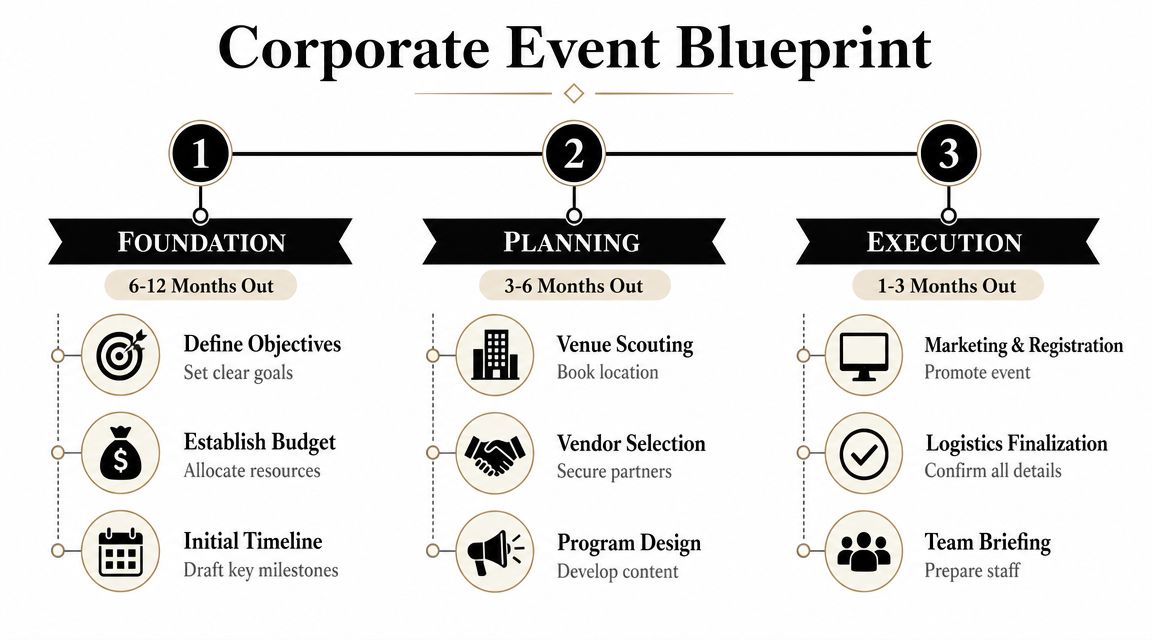
A corporate event blueprint infographic outlining three phases: foundation, planning, and execution for business event management.

Start with the outcome

A product launch needs a different room layout from an executive strategy day. A staff celebration doesn't need the same pacing as a client-facing breakfast. If you don't pin this down first, you'll end up spending money on things that look good but don't help the event work.

Use a simple planning frame:

  • Primary objective: Is this about client engagement, internal collaboration, lead generation, training, or a launch?
  • Audience mix: Are you hosting staff, clients, prospects, media, partners, or a combination?
  • Desired action: What should attendees think, feel, or do after the event?
  • Non-negotiables: Which elements must be excellent for the event to succeed? This often includes AV, comfort, signage, access, and catering timing.

If you want another perspective on building that early strategy, this guide to learn event planning from Silicon Valley Speakers is useful because it keeps the focus on format and purpose before tactics.

Build a budget that expects reality

Many event budgets fail because they only count visible line items. Venue hire gets included. So does catering. Then the hidden practical costs start showing up. Crew time. Delivery windows. Extra microphones. Backup equipment. Branded check-in points. Cooling or heating. Overtime. Contingencies.

A practical benchmark from Whova's event strategy guide is to work backward from the event date with a 6 to 12 month timeline for larger corporate events and leave a 10 to 15% contingency budget. That contingency isn't padding. It protects the event when approvals slip, supplier scope changes, or technical requirements grow.

A useful way to structure your spreadsheet is by grouping costs into workstreams.

Workstream Typical inclusions
Venue and site Hire fee, cleaning, security requirements, access hours
Guest experience Registration, signage, furniture, décor, amenities
Technical AV, lighting, screens, power, internet support
Food and beverage Catering, service staff, dietary planning, bar setup
Content and programme Speakers, moderators, printing, staging needs
Operations Transport, crew, permits, contingency

If you need a practical starting point, use an event planning checklist template from ABC Hire and adapt it to your own approval process.

Work backwards from the date

The biggest timing mistake isn't booking late. It's confirming late. You can have a venue on hold and still lose weeks because nobody signed off floorplans, final headcount, or the AV scope.

Here's the rhythm that tends to work:

  1. Foundation phase
    Lock objectives, budget range, format, and ideal date window.

  2. Planning phase
    Shortlist venues and vendors, shape the programme, and settle the guest journey.

  3. Execution phase
    Finalise numbers, test systems, brief staff, and tighten every operational handoff.

If approvals are slow, treat them as part of the production schedule, not an administrative afterthought.

For larger events, that longer lead time matters because resource strain and late confirmations are where avoidable mistakes begin. The paperwork may feel unglamorous, but it's what prevents chaos later.

Secure Your Dream Team Venues and Vendors
Screenshot from https://abchire.co.za

A Winelands venue can look perfect at 10am on a site visit and become hard work by 2pm on event day. The buses arrive late from Cape Town traffic. Mobile signal drops in one corner. The generator covers the kitchen but not the registration desk. The room heats up once 180 people walk in. That is why venue and vendor selection has to start with operations.

Cape Town gives planners real range. You can book a polished city hotel with stronger weekday access, easier airport transfers, and built-in conference infrastructure. You can also book a Stellenbosch or Franschhoek estate with better views, better pause areas, and a setting that clients actually remember. The trade-off is usually complexity. The further you move from the city core, the more closely you need to check transport timing, supplier access, permit requirements, power cover, and weather exposure.

Choose a venue for function first

Good venue selection starts on the ground, not in the brochure. Walk the guest route from parking to registration. Stand where the catering staff will work. Check where your stage, screens, and power runs need to go. If a venue only works once you ignore its weak points, it does not work.

When I assess venues for corporate events, five checks come first:

  • Arrival and access: Can guests find the site, park without a fight, and enter without bottlenecks?
  • Room logic: Does the layout support plenary sessions, breakaways, catering service, and networking without constant furniture resets?
  • Technical baseline: What is already installed, and what must be hired in?
  • Venue team capability: Can the staff manage supplier arrivals, room turns, timing changes, and escalation when something slips?
  • Power resilience: In South Africa, this sits near the top of the list every time.

If you are comparing local suppliers as well as venues, this guide to events companies in Cape Town is a useful starting point for mapping who handles which part of the production load.

Ask harder questions about load shedding

“We have backup power” is too vague to sign off.

Ask what the backup system carries, how long it runs, how fast it switches over, and which circuits are excluded. A venue may keep lights on but lose air-conditioning, kitchen equipment, registration printers, or breakout room AV. In summer, climate control failure changes the whole tone of the day within minutes. In winter, poor heating in the Winelands can empty a networking area faster than a bad programme.

Put these questions in writing:

  • Backup runtime: How long can the venue hold the event at expected load?
  • Priority circuits: Are AV, Wi-Fi, registration, lighting, and climate control included?
  • Switch-over process: Is the transfer automatic, and who monitors it?
  • Generator impact: Will noise, fumes, or cable routes affect the guest experience?
  • Failure plan: If the backup system trips or underperforms, what gets cut first?

Internet deserves the same level of scrutiny. A room full of executives can forgive simple décor. They will not forgive dead payment terminals, broken check-in systems, or speakers who cannot connect to cloud-based presentations. For a practical benchmark, review this ultimate guide for event connectivity.

Build a vendor mix that solves real problems

Strong vendors do more than deliver stock. They help close operational gaps before guests ever see them.

Your AV partner should flag sightline issues, cable safety, and power draw. Your caterer should understand service speed, reset times, and dietary handling under pressure. Your furniture and equipment supplier should shape the way people move and gather in the room.

Small hire decisions prove valuable. Lounge seating can turn an underused foyer into a proper conversation area between sessions. Ottoman cubes help create flexible breakout clusters in venues that do not have enough built-in meeting furniture. LED bars and illuminated cocktail tables can give an evening function definition and energy without spending heavily on floral or set build. Climate-control units can stabilise a glass-heavy venue in February or make a drafty hall in the Winelands usable after sunset.

ABC Hire is one local supplier in this category, with event furniture, LED pieces, seating, and climate-control equipment available for Cape Town and the Winelands. The useful lesson is broader than one supplier. Furniture and equipment choices affect flow, comfort, service speed, and contingency planning just as much as they affect appearance.

Vendor agreements also need practical detail. Confirm access times, setup windows, strike deadlines, standby support, overtime rates, and who carries responsibility for damage or delays. In Cape Town, where many venues have tight residential noise rules or limited loading access, those details save far more stress than a glossy proposal ever will.

Design an Unforgettable Attendee Experience

Most guests don't judge your event by the spreadsheet behind it. They judge it by what the day feels like.

They arrive. They try to park. They look for the entrance. They scan for registration. They wonder where to put a coffee, whether there's enough space to talk, whether the room is too hot, whether the chairs are comfortable, whether the programme is dragging, and whether the event feels worth their time. That entire chain is the attendee experience.

A 2026 industry survey found that 58% of South African event professionals manage more than 20 events annually, according to Swoogo's event industry statistics roundup. In a market with that kind of event frequency, standard execution fades into the background. Distinct, comfortable, well-paced experiences stand out.
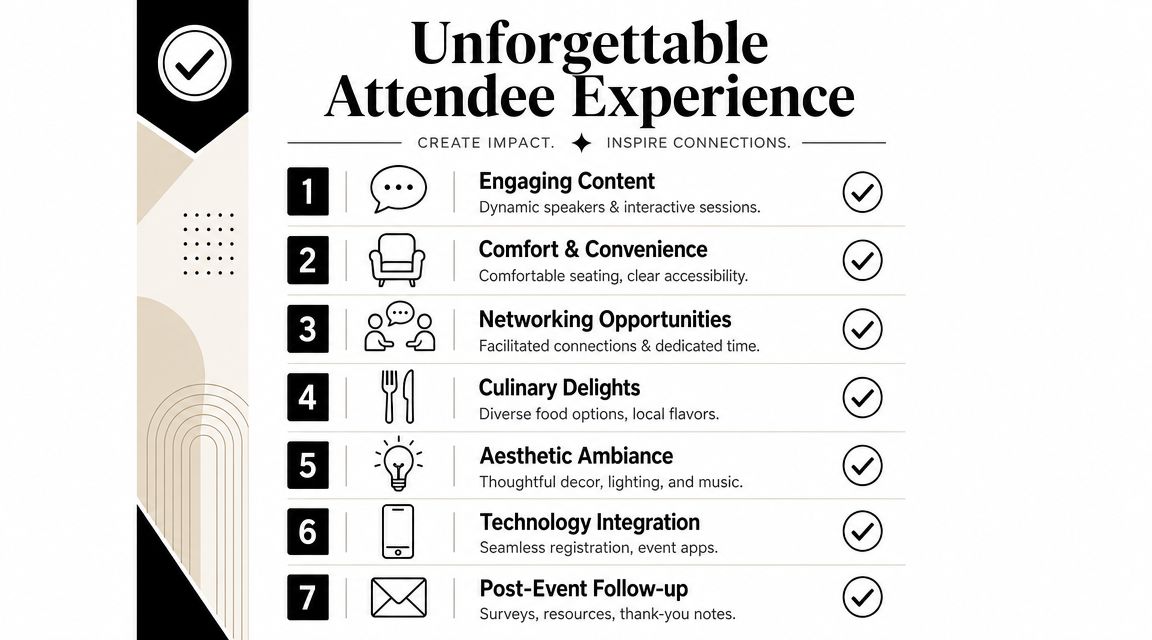
A list of seven essential elements for creating an unforgettable attendee experience at corporate events.

Plan the room from the guest's point of view

A common mistake is designing from the stage outward. Start from the door instead.

When guests enter, the first ten minutes should feel obvious. Registration must be visible. Name badge collection must move quickly. Bags, coffee stations, and ushering should not compete for the same patch of floor. If people have to stop and ask where to go, the layout is already working too hard.

Then look at the event in phases:

  • Arrival phase: Clear wayfinding, uncluttered check-in, immediate welcome.
  • Content phase: Good sightlines, enough personal space, reliable sound.
  • Networking phase: Spaces that invite small-group conversation without blocking circulation.
  • Transition moments: Easy movement between plenary, refreshment, and breakout areas.

Use furniture to shape behaviour

Furniture is one of the most underused tools in corporate event planning. People often treat it as a checklist item. Tables, chairs, done. But the furniture mix tells guests how to use a room.

Theatre seating says “listen”. Banquet seating says “stay put”. Lounge furniture says “talk”. High cocktail tables create movement and faster interaction. LED bars and illuminated cubes signal energy and work particularly well for evening networking, awards after-parties, and brand activations where you want a more contemporary look.

A few practical examples:

Event moment Smarter setup Why it works
Networking arrival Cocktail tables plus soft seating pockets Guests can circulate or settle into conversation
Leadership off-site Mixed boardroom and lounge zones Supports both formal discussion and informal breakout chats
Product launch Clean presentation seating plus branded LED features Keeps focus on the reveal while lifting visual identity
Summer Winelands event Shaded seating and active climate control Protects comfort before guests become distracted

Comfort is part of the brand

If a guest is too warm, can't hear, or has nowhere to place a drink, they remember the discomfort more than the keynote. That's why practical touches often carry more weight than decorative ones.

Reliable connectivity matters too, especially for hybrid components, guest check-in, and event apps. If you're reviewing your network setup, this ultimate guide for event connectivity is a useful operational reference because it focuses on planning Wi-Fi as part of the event experience rather than as an afterthought.

The attendee doesn't separate logistics from atmosphere. They experience one event, not two departments.

The best answer to how to host a corporate event isn't “make it impressive”. It's “make it easy, comfortable, and purposeful”. That's what guests feel.

Manage Risk in the Final Countdown

The last stretch before an event is where disciplined planners separate themselves from hopeful ones. If you're still making major decisions in the final week, you're not in execution mode. You're still planning, and that's a dangerous place to be.

This stage should be about verification. Every supplier should know their call times, access instructions, technical scope, and escalation path. Every internal stakeholder should know who owns what. Every document should answer questions before they're asked on site.
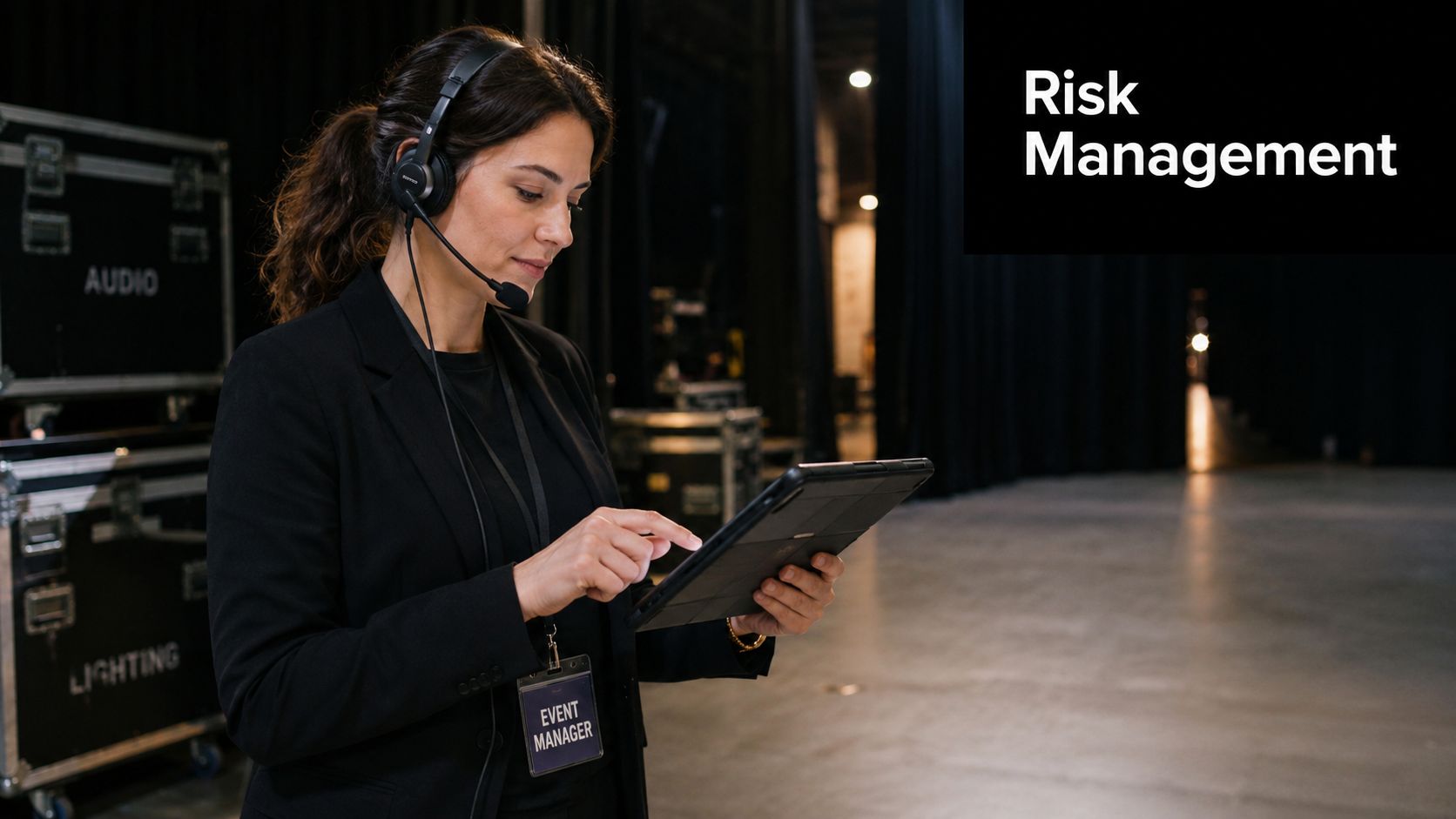
A professional female event manager wearing a headset works on a tablet in a large dark event hall.

Treat the run sheet as your control document

A good run sheet is not a rough schedule. It is a minute-by-minute operating document with names, numbers, handoffs, cues, and contingency notes. It should sit with the event lead, AV lead, venue contact, registration lead, and any producer or floor manager on the day.

Include:

  • Timing detail: Supplier load-in, rehearsal, doors open, service windows, speaker cues, reset periods.
  • Named owners: One person per task. No shared assumptions.
  • Escalation contacts: Venue, AV, power, catering, transport, security.
  • Contingency notes: What happens if a speaker is late, a mic fails, or the weather turns.

If your event includes outdoor hospitality, evening networking, or winter operations, comfort planning matters as much as safety planning. Setups such as a boma fire pit for South African events can work well when they're planned properly within venue rules, guest flow, and fire-safety controls.

Risk is operational and reputational

Planners often think about risk in narrow terms. Security. Insurance. Medical support. Those matter. But brand risk now includes guest comfort, supplier behaviour, sustainability choices, and whether the event feels responsibly organised.

Modern corporate event planning in South Africa must include reputational risk management, including lower-carbon procurement, local sourcing where practical, and event waste decisions, as discussed in this venue-focused guide to hosting successful corporate events. That doesn't mean performative green messaging. It means making procurement and format choices you can stand behind if a client, executive, or procurement team asks how the event was delivered.

A simple final-week check works well:

  1. Operational readiness
    Confirm staffing, deliveries, permits, technical tests, and backup plans.

  2. Guest-facing readiness
    Recheck signage, registration communications, dietary notes, accessibility, and weather comfort.

  3. Brand readiness
    Review sustainability choices, local supplier mix, and anything that could create avoidable reputational friction.

For the people side of risk, external perspectives can help. Overton Security's event guidance is US-based, but its practical framing around crowd management, access points, and role clarity is still useful when stress-testing your own event operations.

Measure Success After the Last Guest Leaves

If you only count attendance, you won't know whether the event worked. You'll only know that people showed up.

That's why post-event measurement needs to be built before the first invitation goes out. The event team should know what success looks like before the room is set. Otherwise, you end up with a stack of photos, a few compliments, and no credible case for future budget.

Use a staged measurement workflow

The most practical approach is staged. Define a small set of business-relevant KPIs before the event, monitor engagement during delivery, gather feedback immediately afterwards, and then track business impact over time. That workflow is the recommended method in Crea Group's guide to measuring event success.

Here's the version that works well in practice:

Stage What to measure Why it matters
Before the event KPIs tied to event purpose Gives the team a shared definition of success
During the event Attendance patterns, session engagement, live issues Shows whether the audience experience matched the plan
Immediately after Survey feedback, content relevance, operational satisfaction Captures reactions while the event is still fresh
Long after Pipeline, retention, internal adoption, relationship outcomes Connects the event to actual business value

Ask better post-event questions

Generic survey forms produce generic answers. “Did you enjoy the event?” won't tell you much. Ask questions that relate directly to the purpose you set at the beginning.

For example:

  • For a client event: Did the event improve your understanding of our offering?
  • For an internal event: Did the sessions help you act more confidently in your role?
  • For a leadership gathering: Were the discussions productive and well facilitated?
  • For a launch event: Was the product or message clear and memorable?

The point of measurement isn't to prove that everyone had a nice time. It's to learn whether the event changed anything that matters.

Track outcomes beyond the survey

The survey is only one layer. Sales teams may need to track follow-up conversations and movement in the pipeline. HR or internal comms teams may need to assess retention, morale, or training uptake. Marketing may need to look at content downloads, meeting requests, or post-event engagement.

The exact indicators differ by event type, but the principle stays the same. A corporate event should leave evidence. If it strengthened relationships, moved conversations forward, improved alignment, or opened commercial opportunities, document that properly. That's how event planning shifts from cost centre thinking to strategic contribution.

Conclusion From Planner to Strategic Partner

Hosting a corporate event well means thinking like an operator, a host, and a business partner at the same time. You're not only filling a venue. You're building an environment where a company can communicate clearly, host people well, and achieve a specific outcome.

The strongest events in Cape Town and the Winelands rarely succeed because of one dramatic idea. They succeed because dozens of practical decisions were made properly. The objective was clear. The budget had room for reality. The venue matched the format. The suppliers understood the brief. The power plan was tested. The furniture supported flow. The room was comfortable. The run sheet was tight. The follow-up happened quickly.

That's the answer to how to host a corporate event. It's structured work, done early, with local context in mind.

If you approach it that way, your role changes. You stop being the person who “organises the event” and become the person who helps the business use events well. That's a more valuable role, and frankly, it produces better events.

When the details are handled properly, guests notice the brand, the message, and the experience. They don't notice the firefighting behind the scenes, because there isn't any.


If you're planning a corporate event in Cape Town, Stellenbosch, Franschhoek, Paarl, or the surrounding Winelands, ABC Hire can support the practical setup side with event furniture, LED pieces, seating, and climate-control equipment that help improve guest flow, comfort, and on-site atmosphere.

Event Management Cape Town: Your Ultimate Guide

When you think about event management in Cape Town, you’re talking about more than just logistics. You’re blending world-class infrastructure with some of the most breathtaking natural beauty on the planet to create experiences that people simply don’t forget. The city has a unique magic—a mix of stunning venues, a deep pool of professional talent, and a vibrant cultural energy that just lifts any gathering, from a huge international conference to an intimate corporate get-together.

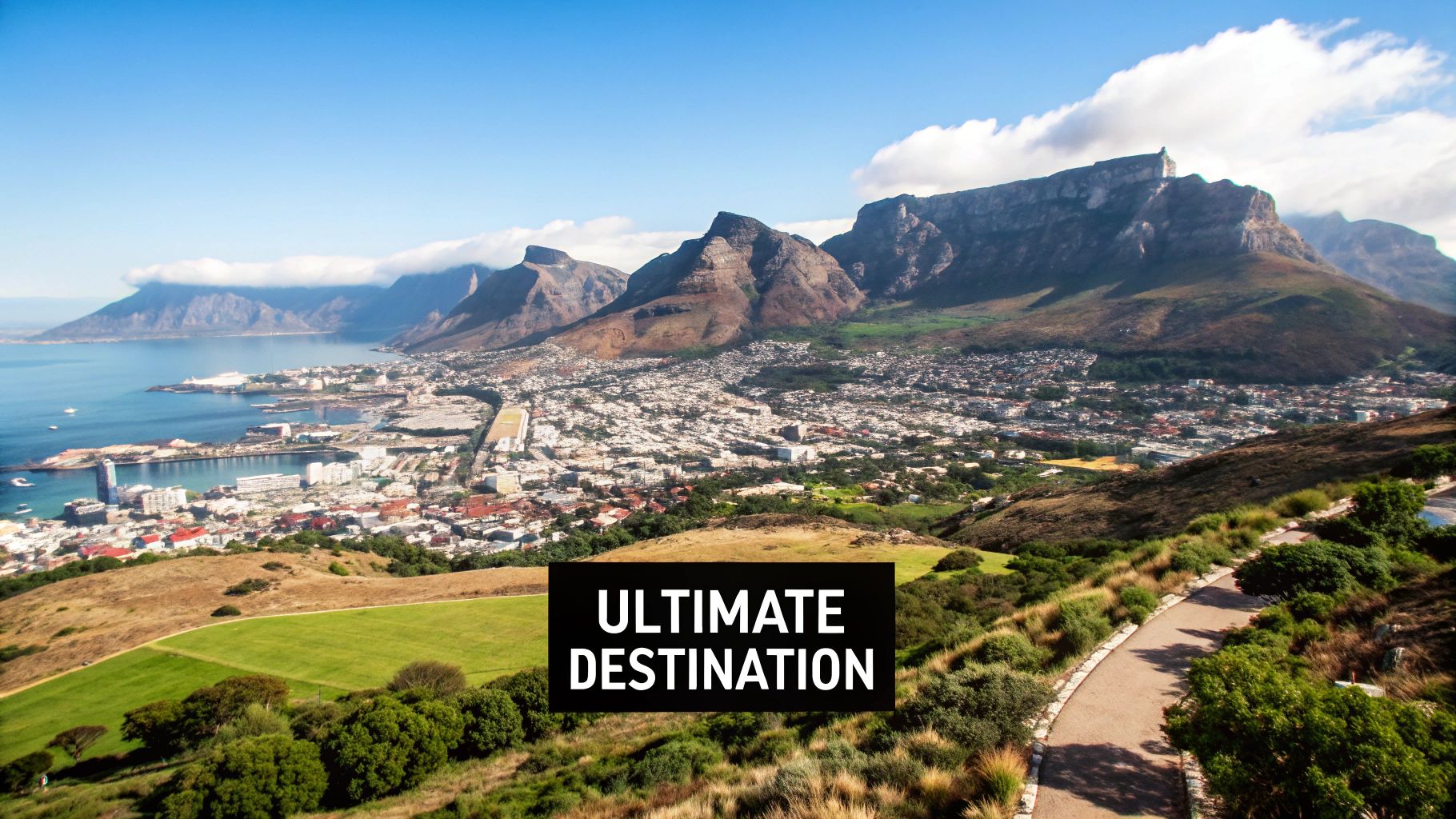
Why Cape Town Is the Ultimate Event Destination

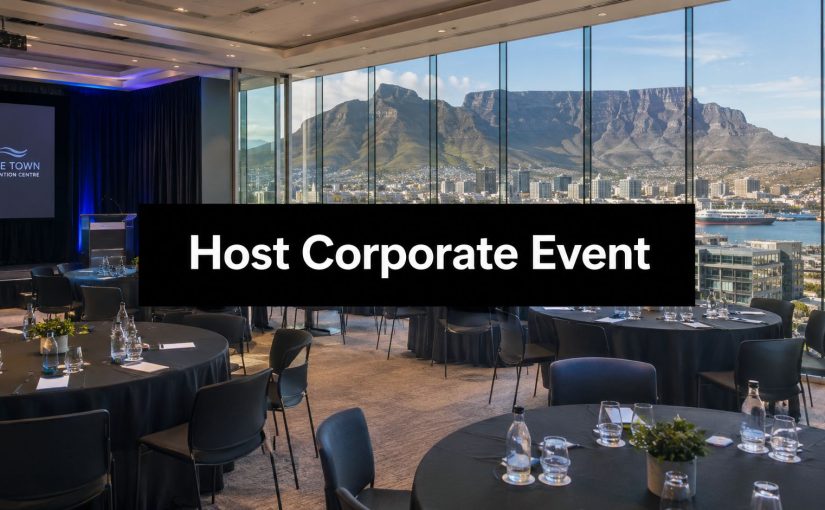
A view of Cape Town with Table Mountain in the background

Planning an event here isn’t just about booking a space. It’s about choosing a destination that becomes an active part of your event’s success. The city’s appeal goes far beyond its good looks. Behind that iconic silhouette of Table Mountain is a seriously sophisticated events ecosystem, ready to handle just about anything you can throw at it.

This powerful mix of scenery and substance is exactly why global organisers keep coming back to the Mother City. It gives you an edge that a pretty backdrop alone never could. Imagine hosting a gala dinner at a historic Constantia wine estate or launching a new product in a trendy, repurposed warehouse in Woodstock. The setting itself becomes part of the story you’re telling.

A Hub of Professional Excellence

Cape Town’s reputation as a top-tier event destination is well-earned. It’s been officially recognised as the number one convention city in Africa and the Middle East, cementing its place as a go-to hub for professional gatherings. This status is massively boosted by world-class facilities like the Cape Town International Convention Centre (CTICC). In the last two decades, the CTICC has successfully hosted nearly 9,500 events, including over 700 international conferences. You can explore more about Cape Town’s standing as a leading event hub to see for yourself.

All that experience has built up an incredible local industry. As a planner, you get access to:

  • World-Class Infrastructure: We’re talking about an award-winning international airport, reliable public transport, and a huge range of quality accommodation.
  • A Deep Talent Pool: From seasoned event managers and creative caterers to expert AV technicians and logistics wizards, the local talent is second to none.
  • Diverse Venue Portfolio: The city offers an unbelievable variety of venues, from state-of-the-art conference centres and exclusive beachfront properties to rustic wineland estates.

More Than Just a Pretty Place

Look, the natural beauty is undeniable. But the city’s real value for event management comes from its energetic, creative atmosphere. It’s a place buzzing with innovation, and that creates a dynamic environment that inspires everyone involved, from the attendees to the organisers themselves. This creative pulse is something you can actually feel, and it adds an extra layer of engagement to any function.

Choosing Cape Town isn’t just about finding a location; it’s about leveraging an environment. The city’s unique blend of natural wonder, established infrastructure, and creative spirit provides a powerful platform for crafting truly impactful and successful events.

Ultimately, this is why an event in Cape Town is never just another date on the calendar. It becomes a standout experience, leaving a lasting impression on every guest long after they’ve headed home.

Finding the Perfect Cape Town Venue

A sophisticated event setup in a Cape Town venue with stunning views

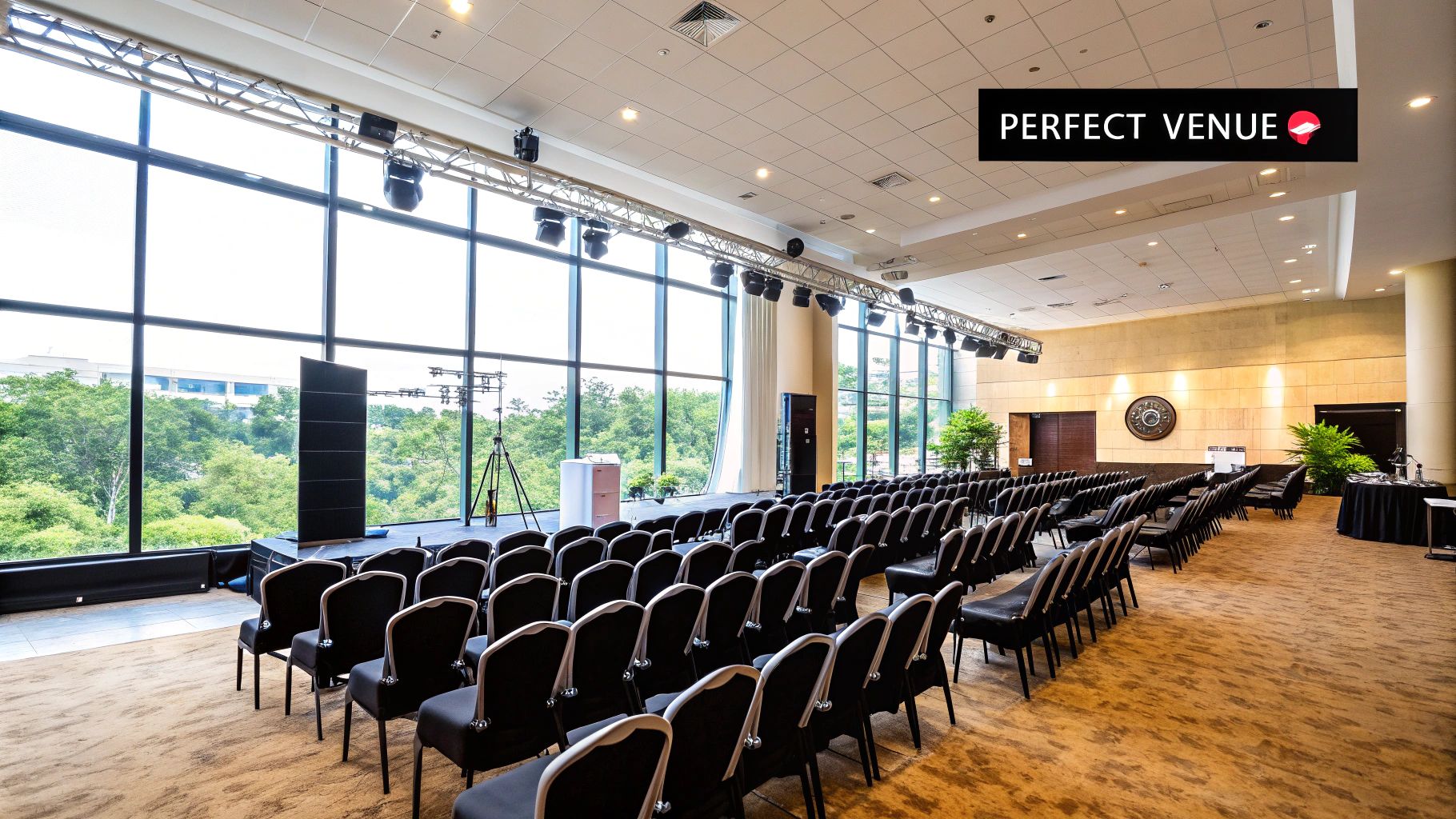
Choosing a venue in Cape Town isn’t just about ticking a box for capacity and location. Think of it like casting the main character in your event’s story. The right space doesn’t just hold your guests; it sets the tone, shapes the experience, and becomes an unforgettable part of the day.

The city’s portfolio of venues is as diverse as its landscapes. From sleek, modern conference centres in the CBD to historic wine estates nestled in the valleys and edgy industrial hubs, your options are almost endless. The real secret to successful event management in Cape Town is to look past a simple list of locations and instead match the venue’s personality to your event’s soul.

Matching Venue to Vision

The first step is always to get crystal clear on the experience you want to create. A massive international conference has completely different needs than an exclusive product launch or a dream wedding. Each type of event simply thrives in a specific environment that amplifies its core purpose.

A corporate gala aimed at impressing stakeholders might find its perfect home in the sophisticated elegance of a Constantia wine farm. On the other hand, a forward-thinking tech summit would feel much more authentic in a repurposed warehouse in the creative heart of Woodstock or Salt River.

Your venue choice is a direct reflection of your event’s brand and message. It’s the physical manifestation of your vision, and getting it right is the foundation for creating an immersive and impactful experience for every attendee.

Understanding this connection between purpose and place is what separates a good event from a truly great one. It ensures the environment is actively working for you, not just acting as a passive backdrop.

Key Venue Categories in Cape Town

To make your search a bit easier, it helps to think about Cape Town’s venues in terms of the unique experiences they offer. This approach helps you focus on what actually matters for your specific gathering.

  • Corporate and Conference Hubs: For the big stuff, the Cape Town International Convention Centre (CTICC) is a world-class choice, offering huge flexibility and all the tech you could need. Major hotel conference facilities are also great options, providing that seamless blend of accommodation and event space.
  • Wineland Estates: The nearby regions of Constantia, Stellenbosch, and Franschhoek offer breathtaking scenery and a touch of historic charm. These spots are perfect for elegant corporate functions, incentive trips, and luxury weddings, combining gourmet food and wine with stunning vineyard views.
  • Creative and Industrial Spaces: Neighbourhoods like Woodstock and the CBD are filled with incredible converted warehouses, art galleries, and rooftop bars. These venues are brilliant for product launches, brand activations, and networking events that need a modern, edgy, and memorable atmosphere.
  • Coastal and Scenic Retreats: From private beachfront properties in Camps Bay to venues overlooking the ocean in Llandudno, these locations are all about Cape Town’s natural beauty. They are unparalleled for high-end weddings, exclusive celebrations, and corporate retreats designed to inspire. Of course, venues like these often come with specific price tags; to get a better feel for budgeting, you can explore our guide on the cost of venues for weddings which has some valuable insights.

Beyond Aesthetics: What to Look For

Once you’ve narrowed down the style of venue you’re after, it’s time to get practical. A beautiful space is useless if it can’t handle the logistical demands of your event. A thorough site visit and a good chat with the venue manager are non-negotiable.

This simple checklist is a great tool to guide your site visits and make sure you’re asking the right questions. It helps you compare apples with apples and avoid any nasty surprises down the line.

Cape Town Venue Selection Checklist

Consideration Key Questions to Ask Ideal for (Event Type)
Capacity & Layout What are the maximum capacities for seated, standing, and theatre-style setups? Is the layout flexible? All Events
Technical Capabilities Is there in-house AV equipment? What is the Wi-Fi strength? Are there enough power outlets? Conferences, Launches
Accessibility Is there ample parking? Is the venue accessible for guests with mobility challenges? How is public transport? Large Gatherings, Corporate
Logistics & Policies What are the rules for external vendors? Are there noise restrictions or curfew times? Weddings, Parties

By systematically walking through these points, you can feel confident that your chosen venue isn’t just inspiring, but also perfectly equipped to bring your event to life without any last-minute drama. It’s this detailed approach that really is a cornerstone of professional event management.

Building Your A-Team of Local Vendors

A team of event vendors collaborating at an event in Cape Town

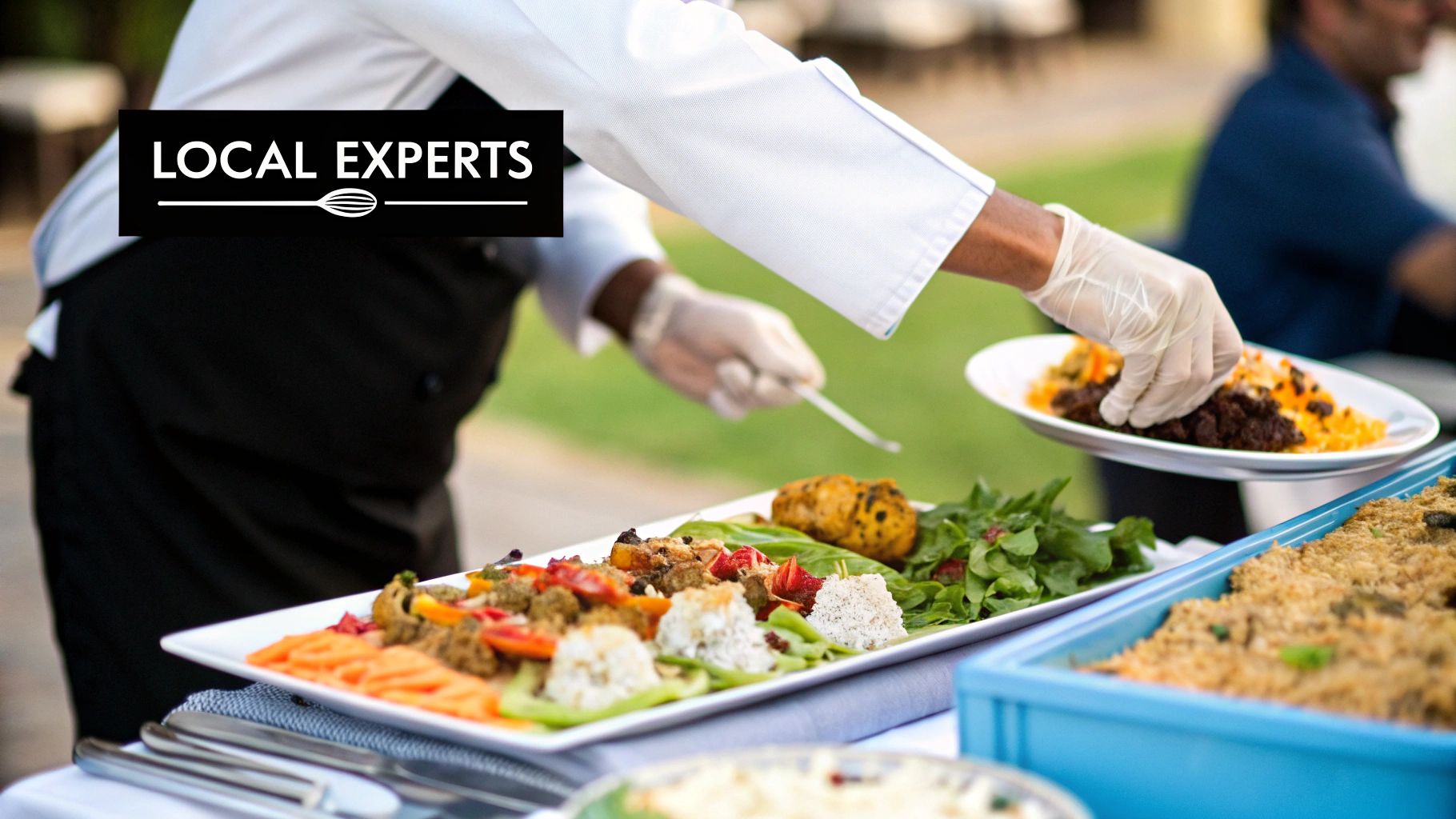
Here’s the truth: an event is only as good as the people running it. Think of yourself as the director of a film. You have the vision, but it’s your crew—the caterers, the sound techs, the stylists—who bring it to life on screen. Without a stellar team, even the best idea will fall flat.

Putting together a top-tier crew of local Cape Town vendors is easily one of the most important parts of pulling off a professional event. These are the partners who will turn your vision into a reality, from the taste of the canapés to the vibe on the dance floor. They’re masters of their craft, and finding the right ones is non-negotiable.

This is where local knowledge becomes your secret weapon. Working with professionals who know Cape Town inside and out is invaluable. They understand the city’s rhythm, its unique challenges, and its hidden gems, ensuring every detail is handled with an expert touch.

Sourcing Your Core Event Partners

First things first, you need to figure out who you actually need on your team. Every event is different, of course, but there’s a core group of specialists that most functions rely on. Don’t just turn to a quick Google search; the absolute best vendors are often found through word-of-mouth and industry connections.

A seasoned local event planner will already have a little black book filled with the city’s best suppliers, built over years of working together. They know who stays calm under pressure and who really understands the ins and outs of Cape Town’s premier venues.

Your essential vendor checklist will probably look something like this:

  • Caterers: Find a team that can create a menu with local flair (hello, Cape Malay flavours!) while also handling any dietary requirements with ease.
  • AV Technicians: You need experts who know your venue’s tech setup to avoid any last-minute sound or visual nightmares.
  • Décor and Floral Stylists: Partner with creatives who get your theme and can transform a space into something truly special.
  • Furniture and Equipment Hire: From chairs and tables to stretch tents and climate control, these companies are crucial for guest comfort.
  • Transportation Providers: Getting guests to and from your event smoothly is key, so reliable transport is a must.

Vetting Vendors for Reliability and Skill

Once you’ve got a shortlist, it’s time to dig a little deeper. This isn’t just about comparing prices. You’re looking for reliability, professionalism, and a team that you’ll actually enjoy working with. A vendor’s portfolio shows you what they can do, but their references tell you what they actually do.

Start by looking at their portfolio for events that are similar to yours in size and style. That’ll give you a good sense of their capabilities. But the real game-changer? Speaking directly with their recent clients.

“Planning an event in a new city is like trying to assemble furniture without the instructions. Your local vendors are your instruction manual, providing the essential guidance and expertise needed for a seamless build.”

Don’t be shy when checking references. Get into the details. Ask about their communication, how they handle unexpected problems, and whether they stuck to the budget. This is how you find out what it’s really like to work with them.

Asking the Right Questions Before Signing

Before you sign any contracts, you need to have a proper chat to make sure everyone is on the same page. This is your chance to align expectations and get total clarity on deliverables, timelines, and backup plans. A small misunderstanding now can turn into a massive headache on event day.

Come prepared with a list of questions tailored to your event’s specific needs.

Here are a few key questions you should always ask potential vendors:

  1. Experience: Have you worked at our venue before? Are there any quirks or challenges we should know about?
  2. Contingency Plans: What’s your plan B if equipment fails, staff call in sick, or the weather turns?
  3. Team Structure: Who will be my main point of contact leading up to and during the event?
  4. Pricing Transparency: Is your quote all-inclusive, or could there be extra charges later on?
  5. Insurance: Can you show me proof of your public liability insurance?

By taking the time to carefully choose and vet your A-team, you’re setting your event up for success. These local experts aren’t just suppliers; they’re your partners in creating an unforgettable Cape Town experience.

Getting to Grips with Cape Town’s Unique Logistics

Pulling off a brilliant event in Cape Town isn’t just about finding a jaw-dropping venue and hiring a great team. It’s about mastering the city’s on-the-ground realities—its unique logistical rhythm. Think of it like learning the local lingo; once you understand it, you can navigate things smoothly and avoid the kind of slip-ups that can throw your whole event off course.

This is the kind of practical, boots-on-the-ground knowledge that really separates the pros from the rookies. It’s having the foresight to see a problem coming before it hits—from the city’s wild weather to its layers of red tape—so you can guarantee a seamless event without any nasty surprises.

Mastering Local Permits and Regulations

First things first: you have to get your head around the city’s administrative side. It might not be the most exciting part of the job, but getting the right permits is completely non-negotiable. If you try to cut corners here, you could be looking at hefty fines or, even worse, having your event shut down at the last minute.

Every event is different, but a few permits pop up time and time again:

  • Liquor Licences: Planning on selling booze? You’ll need a temporary or special event liquor licence. The application process can be a real mission, so you absolutely have to start this well in advance.
  • Public Event Authorisations: If you’re using a public space—anything from a park to a city square—you’ll need the green light from the City of Cape Town. This usually involves safety and compliance checks.
  • Noise Exemption Permits: If your event is going to have loud music or entertainment running late, you’ll have to apply for a noise exemption to keep the peace with the neighbours.

Planning for Cape Town’s Unpredictable Elements

Beyond the paperwork, real logistical mastery in Cape Town means being ready for its one-of-a-kind environmental quirks. These are the details that local experts know to plan for, and they can make or break your event on the day.

One of the city’s most famous characters is the “Cape Doctor,” the howling south-easterly wind that can whip up out of nowhere. For any outdoor event, this isn’t a small detail; it’s a massive planning point. You have to secure everything—from marquees to floral arrangements—and have a rock-solid Plan B. For some practical tips on this, have a look at our insights on Cape Town umbrella hire to make sure your setup can handle a proper gusty day.

Another big one is load shedding. Scheduled power cuts are just a part of life in South Africa, and they can bring an event to a dead stop if you’re not prepared. Always, always check if your venue has backup power. If they don’t have a generator, it’s up to you to hire one.

Think of your logistics plan as your event’s insurance policy. By getting ahead of challenges like the Cape Doctor or load shedding, you stop being a reactive problem-solver and become a strategic planner who’s in total control.

Taming Traffic and Transport

Finally, do not underestimate Cape Town’s traffic, especially during the peak summer season (November to February). The main routes into the city, out to the Atlantic Seaboard, and around the Winelands can get completely choked up.

Here’s how to manage it:

  1. Stagger Arrival Times: If you can, design your schedule to help guests avoid the worst of the commuter rush hour.
  2. Provide Chartered Transport: For bigger groups, organising shuttles is often the easiest and most stress-free way to get everyone there.
  3. Communicate Clearly: Give your guests detailed directions, let them know how long the drive might take, and suggest they use ride-sharing services to cut down on parking headaches.

Designing Modern and Sustainable Events

Putting together an event in Cape Town these days is about so much more than just making things look good. It’s really about creating experiences that feel up-to-the-minute and are kind to the environment, which is exactly what people expect now. This means weaving in technology to make things smoother for your guests and putting sustainability right at the heart of your planning.

When you manage to get both of these right, that’s when you know you’ve created something special. An event that runs like a dream and leaves a positive impact is the kind of event people remember.

Integrating Technology for a Seamless Experience

Think of technology not as a fancy extra, but as the behind-the-scenes magic that turns a good event into a great one. It’s the stuff that simplifies how you talk to people, gets them more involved, and lets your event live on long after everyone has gone home. The real trick is to use tech to solve problems, not just for the sake of it.

For instance, a simple event app can take the place of bulky paper schedules, send out live updates, and even help guests connect with each other. Or, you could use tools like live polls and Q&A platforms to get your audience involved instead of just passively listening.

The best technology at an event is the kind you don’t even notice. It’s there to make human connections easier, not get in the way. It works by smoothing out the little logistical bumps and creating more space for people to actually interact.

The event scene in South Africa is really embracing hybrid models that mix in-person and online attendance, powered by things like live streaming and interactive digital platforms. At the same time, going green has become a massive priority. You can dig into more about current event trends in South Africa to see what’s happening.

Embracing Sustainability in an Eco-Conscious City

Cape Town and its incredible natural beauty go hand-in-hand, making it the perfect backdrop for a sustainable event. Planning a green event here isn’t just following a trend; it’s about showing respect for this beautiful place and tapping into what a global audience cares about. And no, it’s not just about popping a recycling bin in the corner.

A truly sustainable event thinks about its impact from the moment you start planning right through to the final pack-down. It’s about making smart choices to cut down on waste, save resources, and give back to the local community. Not only is this great for the planet, but it also makes your brand look good.

Here are a few practical ways to make your Cape Town event a bit greener:

  • Partner with Sustainable Caterers: Look for caterers who are all about using local, seasonal ingredients. This shrinks your event’s carbon footprint and helps out local farmers. Don’t forget to ask what they do with leftovers—donating surplus food to local charities is a great option.
  • Implement a Zero-Waste Strategy: Chat with your venue and suppliers about cutting down on packaging. Go for digital tickets and info packs, use real cutlery and plates instead of disposables, and set up clearly marked stations for recycling and composting.
  • Choose Eco-Friendly Venues: Plenty of venues in Cape Town are already on board with green practices. Find spots that use renewable energy, are smart about saving water, and have official green certifications to their name.

By making sustainability a core part of your plan, you’re not just creating a memorable, modern event—you’re leaving a positive legacy that lasts.

Your Cape Town Event Planning Timeline

Pulling off a great event is a lot like conducting an orchestra. Every single piece—from the venue and vendors to the tiniest logistical detail—needs to come in at just the right moment to create something truly special. A solid, detailed timeline is your conductor’s score, turning what feels like a massive, complex project into a series of calm, manageable steps.

Think of this plan as your roadmap for professional event management in Cape Town. It’s what keeps you in control, helps you see what’s coming next, and makes sure you never miss a crucial deadline. From hashing out the big-picture vision a year in advance to doing the final on-site checks, this is how you bring it all to life.

The Long-Range View: 12 to 9 Months Out

This is where you lay the groundwork. With plenty of time up your sleeve, you can make clear-headed, strategic decisions without feeling the pressure. This is your chance to define your “why”—the core goals, who you’re trying to reach, and the exact feeling you want to create for your guests.

Once that vision is locked in, it’s time to talk money. A realistic, line-by-line budget is non-negotiable. It will shape every single decision you make from here on out, from the venue you choose to the menu you serve.

Here’s what you should be tackling in this phase:

  • Defining Event Goals: What does a “win” look like for this event? Is it ticket sales, brand awareness, or something else?
  • Setting the Budget: Map out a comprehensive budget that accounts for all possible costs, big and small.
  • Selecting a Date: Do your homework. Check for local holidays, school breaks, and other major city events to avoid any clashes.
  • Venue Scouting: Start your search. Shortlist potential Cape Town venues and, most importantly, go see them in person.
  • Key Vendor Booking: Lock in your must-have suppliers now. The best photographers, caterers, or headline entertainers get booked up a year or more in advance.

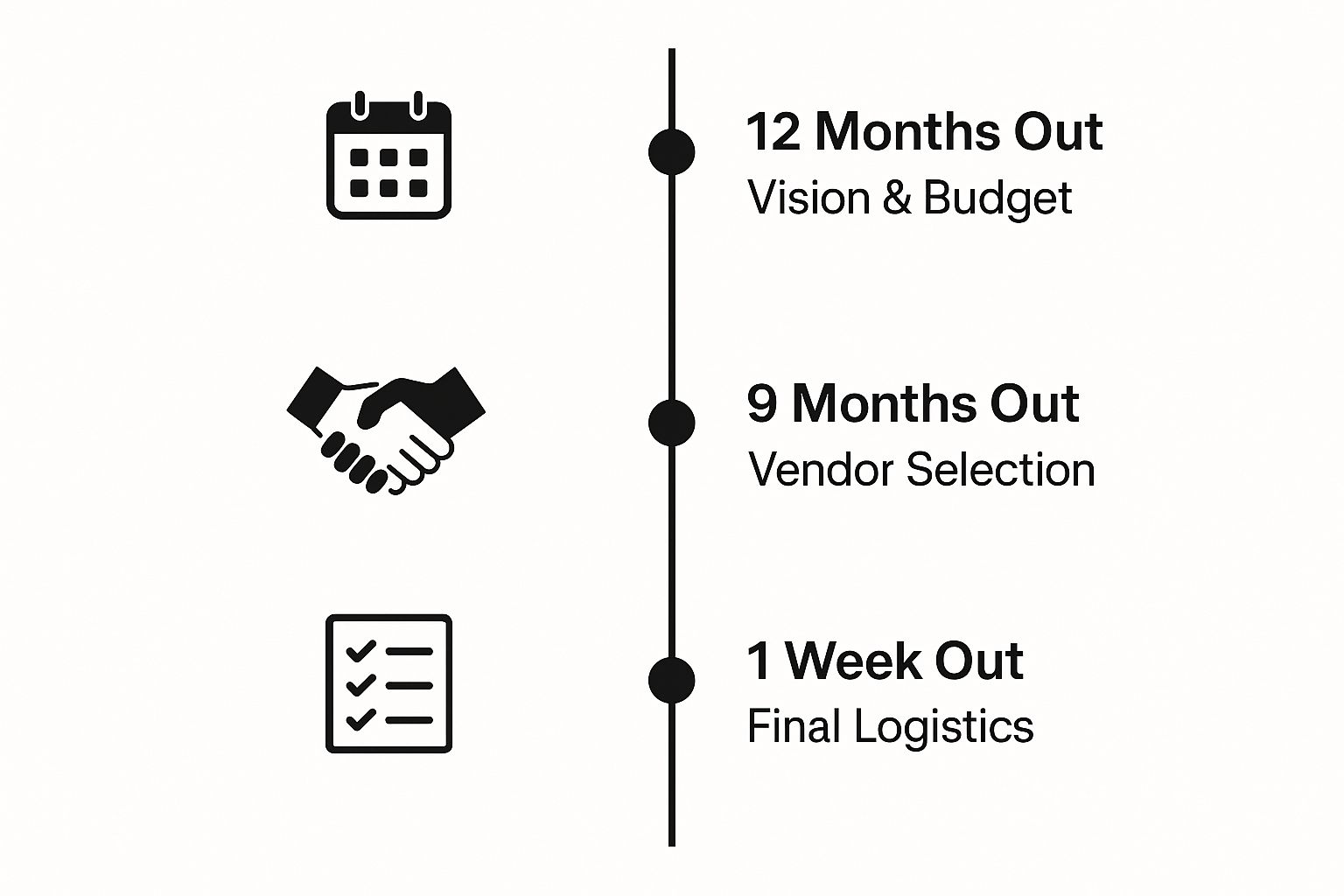
This timeline visualises the critical phases of event planning, from initial strategy to final execution.

Infographic about event management cape town

As the infographic shows, getting those big-ticket items like your budget and key vendors sorted early gives you the breathing room you need to handle all the smaller details closer to the time.

To give you a clearer picture, here’s a sample timeline for a medium-sized corporate event.

Sample Event Planning Timeline

Timeframe Key Tasks and Milestones Pro Tip
12-9 Months Out Define event goals, set a preliminary budget, pick a date, and start scouting venues. Book your venue and any high-demand suppliers (like a well-known photographer) as soon as possible. Prime Cape Town spots go fast!
8-6 Months Out Finalise the venue, start vendor negotiations (catering, AV, furniture hire), and launch a “save the date” campaign. Get multiple quotes for everything. This is your best chance to find great value and partners you genuinely click with.
5-3 Months Out Finalise all vendor contracts, develop a detailed marketing plan, open registration/ticket sales, and plan the event programme. Create a master contact sheet for all vendors, staff, and speakers. It will be a lifesaver on the day.
2-1 Month Out Send out formal invitations, confirm speaker details, finalise the menu with your caterer, and arrange transportation logistics. Walk through the venue with your key vendors to spot any potential issues with layout, power, or access.
The Final Week Confirm final guest numbers with the venue/caterer, create the on-site run sheet, and prepare welcome packs or registration materials. Pack an “event emergency kit” with everything from gaffer tape and zip ties to safety pins and a first-aid kit.
Event Day Arrive early, do a final walkthrough, brief your team, and manage the event flow from start to finish. Stay calm and be prepared to troubleshoot. No event ever goes 100% to plan, but with good prep, you can handle anything.

This table is just a guide, of course. The key is to adapt it to the unique needs and scale of your own event.

The Final Stretch: The Last Three Months

With your main building blocks in place, the focus now shifts to the finer points and creating an amazing guest experience. Communication is absolutely key during this phase. You’ll be coordinating with all your suppliers while also ramping up the marketing to your attendees.

This period is all about confirming arrangements, finalising guest lists, and getting everything ready for the day itself. The final week is when your attention will turn completely to on-site prep. This means doing final walkthroughs with the venue manager, triple-checking delivery times with all your vendors, and getting registration desks and welcome packs ready to go.

It’s about making sure every single detail is buttoned up for a smooth, successful, and stress-free event day. For a much more detailed breakdown, our comprehensive event planning checklist template is an incredible step-by-step resource.

Got Questions About Your Cape Town Event? We’ve Got Answers

Even the most meticulous planner runs into questions when organising an event in a city they don’t know inside and out. Getting straight answers to those practical, on-the-ground queries is what turns a good plan into a great one. Let’s tackle some of the most common questions we hear from people planning events in Cape Town.

Think of this as the inside scoop—the final details that make all the difference to your event’s success and, most importantly, your guests’ experience.

When Is the Best Time of Year to Host an Event?

This is a big one. Picking the right season in Cape Town is a strategic move, and the best choice really comes down to what kind of event you’re hosting.

Cape Town’s summer, from November to February, is absolutely glorious. The weather is perfect for outdoor weddings, rooftop parties, and sun-drenched functions. But, it’s also peak tourist season. That means you’ll be competing for venues and accommodation, and prices will be at their highest.

If you’re planning an indoor conference or corporate meeting, the shoulder seasons are your best bet. Autumn (March to April) and Spring (September to October) offer beautiful, mild weather without the massive crowds. You’ll find better availability and more competitive rates, hitting a strategic sweet spot for many event planners.

By syncing your event date with the city’s natural rhythm, you can get more out of your budget and give your guests a more relaxed experience, steering clear of the summer rush.

How Should I Handle Transport for My Guests?

Getting around a new city can be intimidating for visitors, so having a solid transport plan is non-negotiable. For larger groups moving between set locations, like a hotel and a conference centre, chartered shuttles are easily the most efficient way to go. It takes all the stress of traffic and parking off your guests’ plates.

For smaller events or for guests who prefer a bit of independence, ride-sharing services like Uber are everywhere and very reliable. Just be sure to factor in Cape Town’s traffic, especially during the morning and evening rush hours. Whatever you decide, communicate all the options clearly to your guests well before they arrive.

Are There Any Unique Cultural Details I Should Consider?

Absolutely, and this is where you can make your event truly special. Weaving in a bit of local culture is what elevates a standard function into a memorable Cape Town experience. While English is the main language for business, a simple welcome in isiXhosa (“Molo”) or Afrikaans (“Goeie dag”) is a small gesture that goes a long way.

When planning your menu, remember the city’s diverse heritage. Including halal, kosher, and vegetarian options is a must. You can also bring in authentic local flavour with delicious Cape Malay canapés or by hiring a marimba band for entertainment. It’s these little touches that give guests a genuine taste of Cape Town they won’t forget.


Ready to create an unforgettable atmosphere for your Cape Town event? ABC Hire offers a premier selection of event furniture and accessories, from stylish LED furniture to practical climate control solutions, ensuring your gathering is both beautiful and comfortable.

Explore our full range of event hire options and get a quote today!