
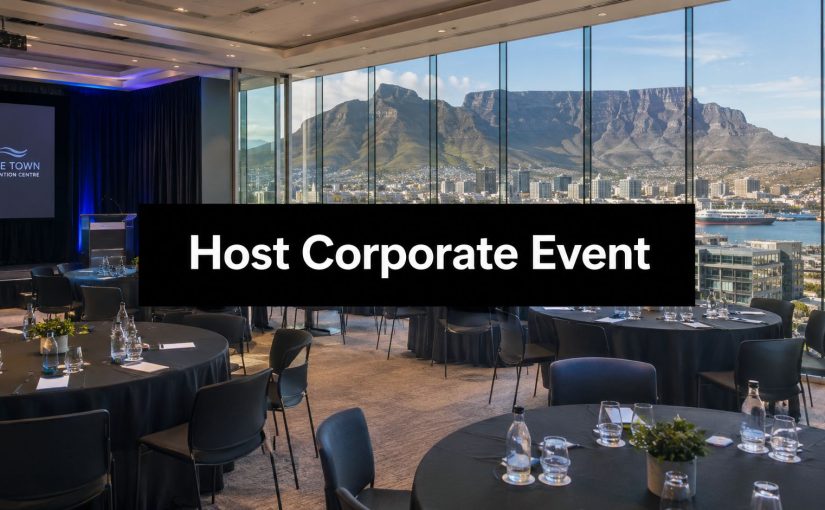
That email usually arrives with very little ceremony. “We need to host a corporate event.” No brief. No real timeline. Sometimes no budget either.
In Cape Town, that request can mean anything from a leadership off-site in the Winelands to a client showcase in the CBD, a product launch in Woodstock, or an end-of-year function that still needs to feel commercially sharp. The mistake is treating all of them as room-booking exercises. They're not. A corporate event is a business tool, and if you plan it like a casual gathering, the gaps show immediately.
The local context raises the stakes. You're not only managing guests, speakers, suppliers, and brand expectations. You're also dealing with venue access, traffic patterns, possible permits, summer heat, hybrid expectations, and the one operational issue that can wreck a polished programme in minutes: power disruption. Good planning in South Africa is practical planning.
Beyond the Boardroom A New Era for Corporate Events
Corporate events used to get framed as “nice to have” moments. That's no longer how serious businesses treat them. They sit much closer to sales, client retention, team alignment, and brand positioning than many companies realise.
If you've just been handed the job of organising one, the pressure probably feels familiar. You need the event to look polished, run on time, and reflect the company well. But you also need it to do something specific. Win trust. Launch something. Bring a remote team together. Start conversations that continue after the room empties.
That shift matters because the category itself is substantial. The global corporate-event market was valued at $330.9 billion in 2023 and is forecast to reach $730.7 billion by 2035 at a 7% CAGR, according to Allied Market Research's corporate event market analysis. In practice, that tells Cape Town hosts something simple. Corporate events aren't a side activity. They're part of a large, expanding business function that rewards professional execution.
What that means in Cape Town
Cape Town and the Winelands give planners a genuine advantage. You can host in a city hotel, a design-forward industrial space, a wine estate, a private venue with mountain views, or a conference setting built for all-day business sessions. Few regions offer that range within such a manageable radius.
But beautiful venues don't rescue weak planning. A stunning Stellenbosch backdrop won't fix poor registration flow. A premium room won't make up for bad acoustics. A wine estate won't help if guests are too hot, can't hear the keynote, or lose Wi-Fi during a hybrid segment.
Practical rule: If the event goal isn't clear, every later decision becomes more expensive and less effective.
The standard has changed
Attendees now expect a smoother experience than they did a few years ago. They notice bottlenecks. They compare your event to others they've attended. They expect comfort, functioning tech, purposeful networking, and a reason for being there.
That's why learning how to host a corporate event starts with business intent, not décor. The best events feel easy on the day because someone did the hard thinking early. That means defining outcomes, building a realistic budget, selecting suppliers who can deliver, and treating operational details as part of the attendee experience, not back-office admin.
Build Your Blueprint Objectives Budget and Timeline
A rushed event usually looks rushed long before guests arrive. It starts with vague objectives, a thin budget, and a timeline built on hope.
The strongest plans I've seen all start the same way. Someone decides what the event is for, what success will look like, and what the business is willing to invest to get there. Only then do venue style, furniture selection, programme design, and catering choices make sense.
Start with the outcome
A product launch needs a different room layout from an executive strategy day. A staff celebration doesn't need the same pacing as a client-facing breakfast. If you don't pin this down first, you'll end up spending money on things that look good but don't help the event work.
Use a simple planning frame:
- Primary objective: Is this about client engagement, internal collaboration, lead generation, training, or a launch?
- Audience mix: Are you hosting staff, clients, prospects, media, partners, or a combination?
- Desired action: What should attendees think, feel, or do after the event?
- Non-negotiables: Which elements must be excellent for the event to succeed? This often includes AV, comfort, signage, access, and catering timing.
If you want another perspective on building that early strategy, this guide to learn event planning from Silicon Valley Speakers is useful because it keeps the focus on format and purpose before tactics.
Build a budget that expects reality
Many event budgets fail because they only count visible line items. Venue hire gets included. So does catering. Then the hidden practical costs start showing up. Crew time. Delivery windows. Extra microphones. Backup equipment. Branded check-in points. Cooling or heating. Overtime. Contingencies.
A practical benchmark from Whova's event strategy guide is to work backward from the event date with a 6 to 12 month timeline for larger corporate events and leave a 10 to 15% contingency budget. That contingency isn't padding. It protects the event when approvals slip, supplier scope changes, or technical requirements grow.
A useful way to structure your spreadsheet is by grouping costs into workstreams.
| Workstream | Typical inclusions |
|---|---|
| Venue and site | Hire fee, cleaning, security requirements, access hours |
| Guest experience | Registration, signage, furniture, décor, amenities |
| Technical | AV, lighting, screens, power, internet support |
| Food and beverage | Catering, service staff, dietary planning, bar setup |
| Content and programme | Speakers, moderators, printing, staging needs |
| Operations | Transport, crew, permits, contingency |
If you need a practical starting point, use an event planning checklist template from ABC Hire and adapt it to your own approval process.
Work backwards from the date
The biggest timing mistake isn't booking late. It's confirming late. You can have a venue on hold and still lose weeks because nobody signed off floorplans, final headcount, or the AV scope.
Here's the rhythm that tends to work:
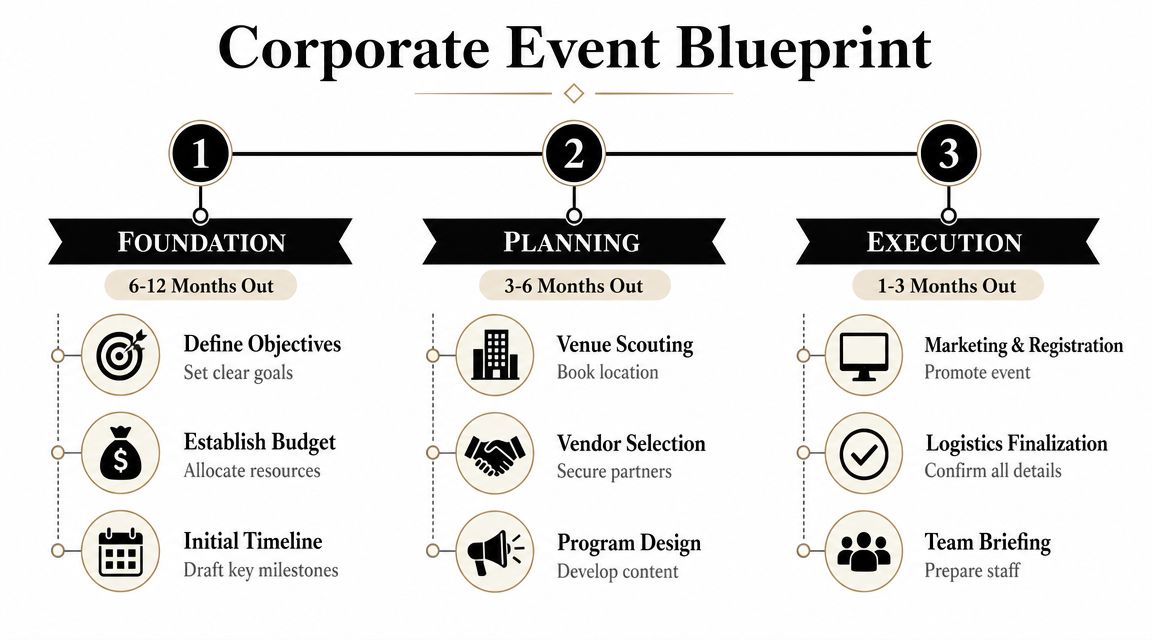
Foundation phase
Lock objectives, budget range, format, and ideal date window.Planning phase
Shortlist venues and vendors, shape the programme, and settle the guest journey.Execution phase
Finalise numbers, test systems, brief staff, and tighten every operational handoff.
If approvals are slow, treat them as part of the production schedule, not an administrative afterthought.
For larger events, that longer lead time matters because resource strain and late confirmations are where avoidable mistakes begin. The paperwork may feel unglamorous, but it's what prevents chaos later.
Secure Your Dream Team Venues and Vendors
A Winelands venue can look perfect at 10am on a site visit and become hard work by 2pm on event day. The buses arrive late from Cape Town traffic. Mobile signal drops in one corner. The generator covers the kitchen but not the registration desk. The room heats up once 180 people walk in. That is why venue and vendor selection has to start with operations.
Cape Town gives planners real range. You can book a polished city hotel with stronger weekday access, easier airport transfers, and built-in conference infrastructure. You can also book a Stellenbosch or Franschhoek estate with better views, better pause areas, and a setting that clients actually remember. The trade-off is usually complexity. The further you move from the city core, the more closely you need to check transport timing, supplier access, permit requirements, power cover, and weather exposure.
Choose a venue for function first
Good venue selection starts on the ground, not in the brochure. Walk the guest route from parking to registration. Stand where the catering staff will work. Check where your stage, screens, and power runs need to go. If a venue only works once you ignore its weak points, it does not work.
When I assess venues for corporate events, five checks come first:
- Arrival and access: Can guests find the site, park without a fight, and enter without bottlenecks?
- Room logic: Does the layout support plenary sessions, breakaways, catering service, and networking without constant furniture resets?
- Technical baseline: What is already installed, and what must be hired in?
- Venue team capability: Can the staff manage supplier arrivals, room turns, timing changes, and escalation when something slips?
- Power resilience: In South Africa, this sits near the top of the list every time.
If you are comparing local suppliers as well as venues, this guide to events companies in Cape Town is a useful starting point for mapping who handles which part of the production load.
Ask harder questions about load shedding
“We have backup power” is too vague to sign off.
Ask what the backup system carries, how long it runs, how fast it switches over, and which circuits are excluded. A venue may keep lights on but lose air-conditioning, kitchen equipment, registration printers, or breakout room AV. In summer, climate control failure changes the whole tone of the day within minutes. In winter, poor heating in the Winelands can empty a networking area faster than a bad programme.
Put these questions in writing:
- Backup runtime: How long can the venue hold the event at expected load?
- Priority circuits: Are AV, Wi-Fi, registration, lighting, and climate control included?
- Switch-over process: Is the transfer automatic, and who monitors it?
- Generator impact: Will noise, fumes, or cable routes affect the guest experience?
- Failure plan: If the backup system trips or underperforms, what gets cut first?
Internet deserves the same level of scrutiny. A room full of executives can forgive simple décor. They will not forgive dead payment terminals, broken check-in systems, or speakers who cannot connect to cloud-based presentations. For a practical benchmark, review this ultimate guide for event connectivity.
Build a vendor mix that solves real problems
Strong vendors do more than deliver stock. They help close operational gaps before guests ever see them.
Your AV partner should flag sightline issues, cable safety, and power draw. Your caterer should understand service speed, reset times, and dietary handling under pressure. Your furniture and equipment supplier should shape the way people move and gather in the room.
Small hire decisions prove valuable. Lounge seating can turn an underused foyer into a proper conversation area between sessions. Ottoman cubes help create flexible breakout clusters in venues that do not have enough built-in meeting furniture. LED bars and illuminated cocktail tables can give an evening function definition and energy without spending heavily on floral or set build. Climate-control units can stabilise a glass-heavy venue in February or make a drafty hall in the Winelands usable after sunset.
ABC Hire is one local supplier in this category, with event furniture, LED pieces, seating, and climate-control equipment available for Cape Town and the Winelands. The useful lesson is broader than one supplier. Furniture and equipment choices affect flow, comfort, service speed, and contingency planning just as much as they affect appearance.
Vendor agreements also need practical detail. Confirm access times, setup windows, strike deadlines, standby support, overtime rates, and who carries responsibility for damage or delays. In Cape Town, where many venues have tight residential noise rules or limited loading access, those details save far more stress than a glossy proposal ever will.
Design an Unforgettable Attendee Experience
Most guests don't judge your event by the spreadsheet behind it. They judge it by what the day feels like.
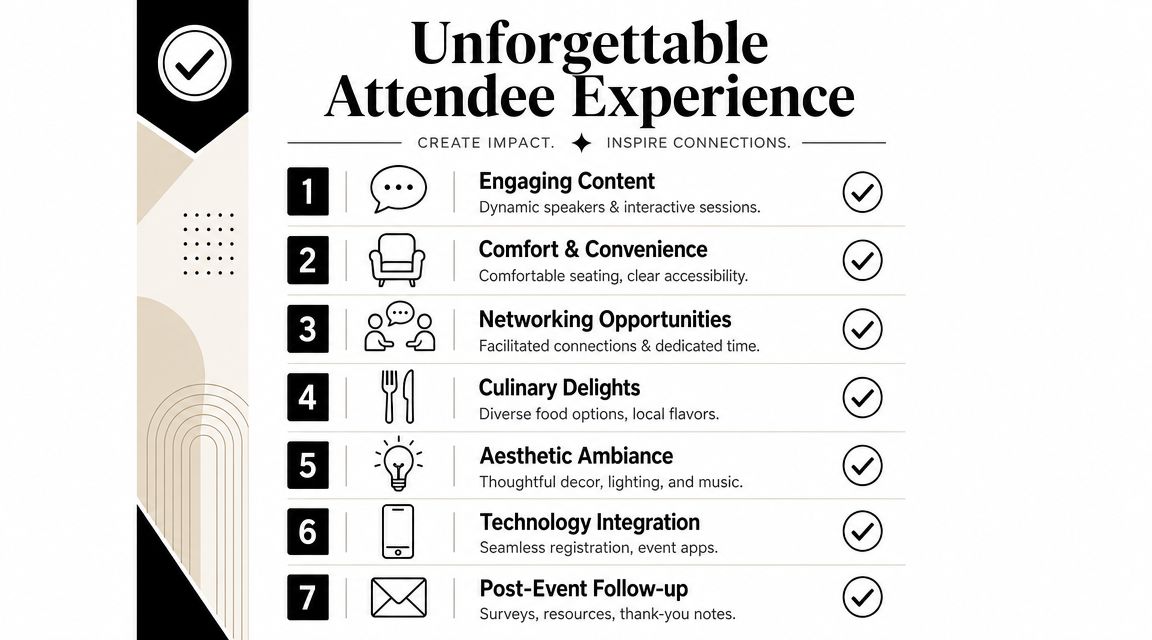
They arrive. They try to park. They look for the entrance. They scan for registration. They wonder where to put a coffee, whether there's enough space to talk, whether the room is too hot, whether the chairs are comfortable, whether the programme is dragging, and whether the event feels worth their time. That entire chain is the attendee experience.
A 2026 industry survey found that 58% of South African event professionals manage more than 20 events annually, according to Swoogo's event industry statistics roundup. In a market with that kind of event frequency, standard execution fades into the background. Distinct, comfortable, well-paced experiences stand out.
Plan the room from the guest's point of view
A common mistake is designing from the stage outward. Start from the door instead.
When guests enter, the first ten minutes should feel obvious. Registration must be visible. Name badge collection must move quickly. Bags, coffee stations, and ushering should not compete for the same patch of floor. If people have to stop and ask where to go, the layout is already working too hard.
Then look at the event in phases:
- Arrival phase: Clear wayfinding, uncluttered check-in, immediate welcome.
- Content phase: Good sightlines, enough personal space, reliable sound.
- Networking phase: Spaces that invite small-group conversation without blocking circulation.
- Transition moments: Easy movement between plenary, refreshment, and breakout areas.
Use furniture to shape behaviour
Furniture is one of the most underused tools in corporate event planning. People often treat it as a checklist item. Tables, chairs, done. But the furniture mix tells guests how to use a room.
Theatre seating says “listen”. Banquet seating says “stay put”. Lounge furniture says “talk”. High cocktail tables create movement and faster interaction. LED bars and illuminated cubes signal energy and work particularly well for evening networking, awards after-parties, and brand activations where you want a more contemporary look.
A few practical examples:
| Event moment | Smarter setup | Why it works |
|---|---|---|
| Networking arrival | Cocktail tables plus soft seating pockets | Guests can circulate or settle into conversation |
| Leadership off-site | Mixed boardroom and lounge zones | Supports both formal discussion and informal breakout chats |
| Product launch | Clean presentation seating plus branded LED features | Keeps focus on the reveal while lifting visual identity |
| Summer Winelands event | Shaded seating and active climate control | Protects comfort before guests become distracted |
Comfort is part of the brand
If a guest is too warm, can't hear, or has nowhere to place a drink, they remember the discomfort more than the keynote. That's why practical touches often carry more weight than decorative ones.
Reliable connectivity matters too, especially for hybrid components, guest check-in, and event apps. If you're reviewing your network setup, this ultimate guide for event connectivity is a useful operational reference because it focuses on planning Wi-Fi as part of the event experience rather than as an afterthought.
The attendee doesn't separate logistics from atmosphere. They experience one event, not two departments.
The best answer to how to host a corporate event isn't “make it impressive”. It's “make it easy, comfortable, and purposeful”. That's what guests feel.
Manage Risk in the Final Countdown
The last stretch before an event is where disciplined planners separate themselves from hopeful ones. If you're still making major decisions in the final week, you're not in execution mode. You're still planning, and that's a dangerous place to be.
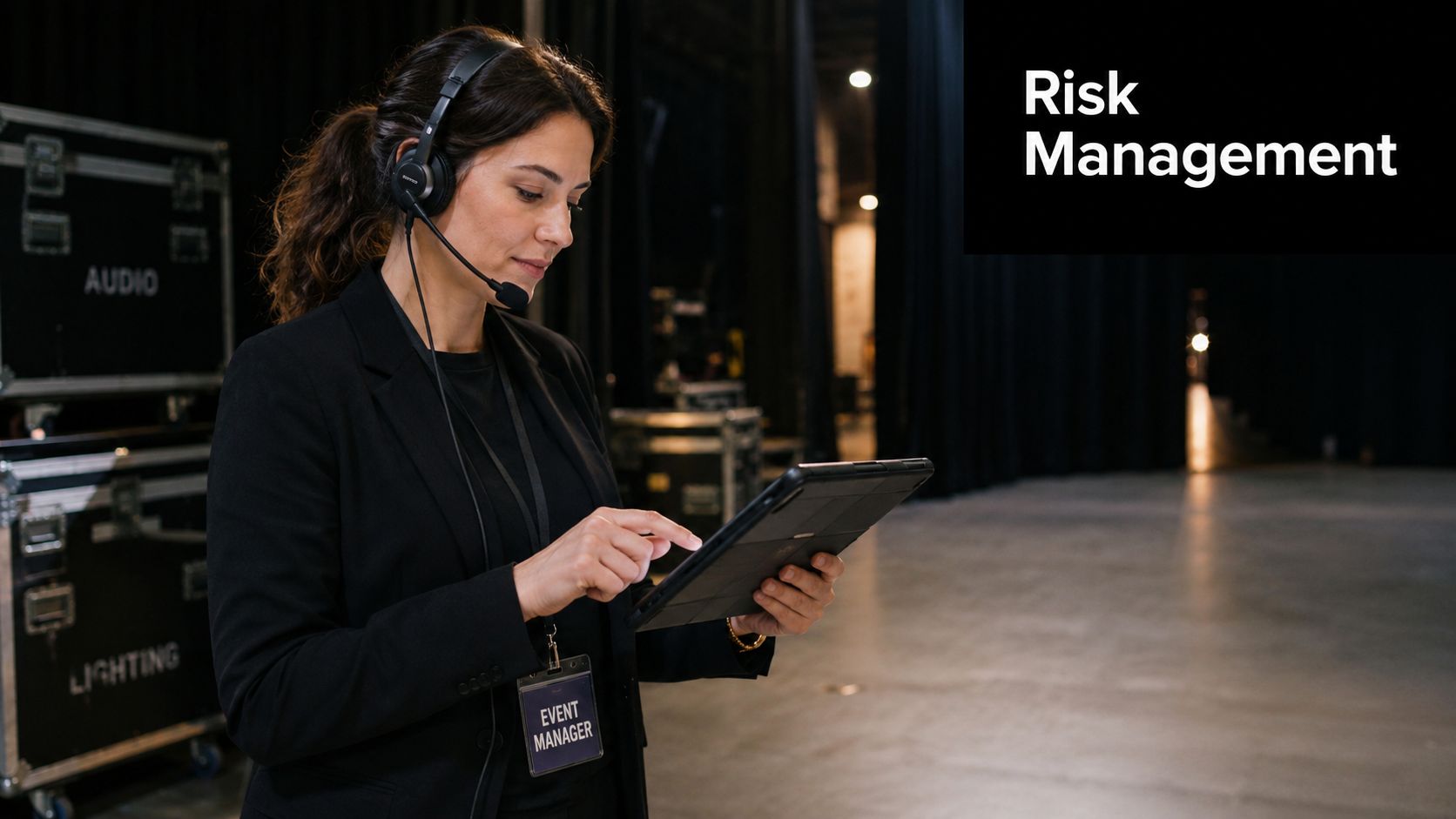
This stage should be about verification. Every supplier should know their call times, access instructions, technical scope, and escalation path. Every internal stakeholder should know who owns what. Every document should answer questions before they're asked on site.
Treat the run sheet as your control document
A good run sheet is not a rough schedule. It is a minute-by-minute operating document with names, numbers, handoffs, cues, and contingency notes. It should sit with the event lead, AV lead, venue contact, registration lead, and any producer or floor manager on the day.
Include:
- Timing detail: Supplier load-in, rehearsal, doors open, service windows, speaker cues, reset periods.
- Named owners: One person per task. No shared assumptions.
- Escalation contacts: Venue, AV, power, catering, transport, security.
- Contingency notes: What happens if a speaker is late, a mic fails, or the weather turns.
If your event includes outdoor hospitality, evening networking, or winter operations, comfort planning matters as much as safety planning. Setups such as a boma fire pit for South African events can work well when they're planned properly within venue rules, guest flow, and fire-safety controls.
Risk is operational and reputational
Planners often think about risk in narrow terms. Security. Insurance. Medical support. Those matter. But brand risk now includes guest comfort, supplier behaviour, sustainability choices, and whether the event feels responsibly organised.
Modern corporate event planning in South Africa must include reputational risk management, including lower-carbon procurement, local sourcing where practical, and event waste decisions, as discussed in this venue-focused guide to hosting successful corporate events. That doesn't mean performative green messaging. It means making procurement and format choices you can stand behind if a client, executive, or procurement team asks how the event was delivered.
A simple final-week check works well:
Operational readiness
Confirm staffing, deliveries, permits, technical tests, and backup plans.Guest-facing readiness
Recheck signage, registration communications, dietary notes, accessibility, and weather comfort.Brand readiness
Review sustainability choices, local supplier mix, and anything that could create avoidable reputational friction.
For the people side of risk, external perspectives can help. Overton Security's event guidance is US-based, but its practical framing around crowd management, access points, and role clarity is still useful when stress-testing your own event operations.
Measure Success After the Last Guest Leaves
If you only count attendance, you won't know whether the event worked. You'll only know that people showed up.
That's why post-event measurement needs to be built before the first invitation goes out. The event team should know what success looks like before the room is set. Otherwise, you end up with a stack of photos, a few compliments, and no credible case for future budget.
Use a staged measurement workflow
The most practical approach is staged. Define a small set of business-relevant KPIs before the event, monitor engagement during delivery, gather feedback immediately afterwards, and then track business impact over time. That workflow is the recommended method in Crea Group's guide to measuring event success.
Here's the version that works well in practice:
| Stage | What to measure | Why it matters |
|---|---|---|
| Before the event | KPIs tied to event purpose | Gives the team a shared definition of success |
| During the event | Attendance patterns, session engagement, live issues | Shows whether the audience experience matched the plan |
| Immediately after | Survey feedback, content relevance, operational satisfaction | Captures reactions while the event is still fresh |
| Long after | Pipeline, retention, internal adoption, relationship outcomes | Connects the event to actual business value |
Ask better post-event questions
Generic survey forms produce generic answers. “Did you enjoy the event?” won't tell you much. Ask questions that relate directly to the purpose you set at the beginning.
For example:
- For a client event: Did the event improve your understanding of our offering?
- For an internal event: Did the sessions help you act more confidently in your role?
- For a leadership gathering: Were the discussions productive and well facilitated?
- For a launch event: Was the product or message clear and memorable?
The point of measurement isn't to prove that everyone had a nice time. It's to learn whether the event changed anything that matters.
Track outcomes beyond the survey
The survey is only one layer. Sales teams may need to track follow-up conversations and movement in the pipeline. HR or internal comms teams may need to assess retention, morale, or training uptake. Marketing may need to look at content downloads, meeting requests, or post-event engagement.
The exact indicators differ by event type, but the principle stays the same. A corporate event should leave evidence. If it strengthened relationships, moved conversations forward, improved alignment, or opened commercial opportunities, document that properly. That's how event planning shifts from cost centre thinking to strategic contribution.
Conclusion From Planner to Strategic Partner
Hosting a corporate event well means thinking like an operator, a host, and a business partner at the same time. You're not only filling a venue. You're building an environment where a company can communicate clearly, host people well, and achieve a specific outcome.
The strongest events in Cape Town and the Winelands rarely succeed because of one dramatic idea. They succeed because dozens of practical decisions were made properly. The objective was clear. The budget had room for reality. The venue matched the format. The suppliers understood the brief. The power plan was tested. The furniture supported flow. The room was comfortable. The run sheet was tight. The follow-up happened quickly.
That's the answer to how to host a corporate event. It's structured work, done early, with local context in mind.
If you approach it that way, your role changes. You stop being the person who “organises the event” and become the person who helps the business use events well. That's a more valuable role, and frankly, it produces better events.
When the details are handled properly, guests notice the brand, the message, and the experience. They don't notice the firefighting behind the scenes, because there isn't any.
If you're planning a corporate event in Cape Town, Stellenbosch, Franschhoek, Paarl, or the surrounding Winelands, ABC Hire can support the practical setup side with event furniture, LED pieces, seating, and climate-control equipment that help improve guest flow, comfort, and on-site atmosphere.