

Room screen dividers are basically clever, temporary walls you can use to slice and dice a large room into smaller, more intimate zones. For any event, they’re more than just functional; they’re like functional art. They let you sculpt the space, direct the flow of your guests, and create a specific vibe without needing to call in the builders. Think of them as your secret weapon for flexible event design.
How Room Screen Dividers Can Completely Change an Event Space
Picture this: you’ve booked a venue, and it’s a huge, open, cavernous hall. It’s a blank canvas, which is great, but also a bit daunting. This is a situation many event planners in Cape Town face, whether it’s a sprawling wine estate in Stellenbosch or a sleek corporate venue in the CBD. The real challenge is turning that big, empty area into a series of cosy, practical, and inviting spaces. This is exactly where room screen dividers come in to save the day.
They’re so much more than just simple partitions. They’re genuinely transformative pieces that solve common event headaches with a bit of style and a lot of practicality. At their core, their job is to bring structure and purpose to an otherwise wide-open floor plan.
Creating Function and Flow
First and foremost, room screen dividers are all about managing your space. They give you the power to build an event experience from scratch, mapping out dedicated zones for different activities. Getting this strategic separation right is a huge part of a successful event.
- Defining an Entrance: You can easily create a welcoming entryway or a corridor that guides guests from the front door into the main event, setting the mood right from the get-go.
- Separating Activities: Got a big ballroom? No problem. Section it off into a cocktail reception area, a formal dining space, and a dance floor. Each part of the evening gets its own special, contained feel.
- Concealing Operations: Let’s be honest, nobody wants to see the catering prep stations or stacks of extra chairs. You can cleverly use dividers to hide all the back-of-house action, keeping everything looking polished and professional.
Enhancing Aesthetics and Privacy
Beyond just being practical, these dividers play a massive role in the overall look and feel of your event. The idea of using screens to create privacy and control an environment isn’t new; it’s a concept that’s been around for ages. In fact, archival research on South African interior artefacts shows that local communities were using traditional dividers made from woven grasses and reeds as far back as the mid-19th century. You can discover more insights about the historical use of room dividers from this research.
We’ve just refined that classic idea for modern events, where dividers now add layers of visual interest and create exclusive little pockets within a larger space.
Once you add a physical boundary, you instantly change the feel of a space. A simple screen can turn an open corner into a private VIP lounge or a quiet nook for conversation, making guests feel far more comfortable and looked after.
Ultimately, room screen dividers give you total control over the story your event space tells, turning it from something ordinary into something truly extraordinary.
Choosing the Right Divider for Your Event Theme
Picking the perfect room screen divider is a bit like choosing a statement piece of furniture for a room. It has to work, of course, but it also has to reflect the event’s personality. Get it right, and it elevates your theme. Get it wrong, and it just feels… off. It’s not simply about putting up a barrier; it’s about weaving in another layer of texture, colour, and style that ties into your whole vision.
Let’s put it this way: you wouldn’t use a sleek, minimalist metal divider for a rustic farm-style wedding in the Cape Winelands. It would clash horribly with the natural, earthy vibe. A warm wooden or woven screen, on the other hand, would feel like it belongs there. The goal is to make your dividers feel like a seamless part of the story you’re telling.
This diagram nails the core idea—room dividers are all about transforming a space. They create privacy, guide the flow of people, and hide things you don’t want guests to see.
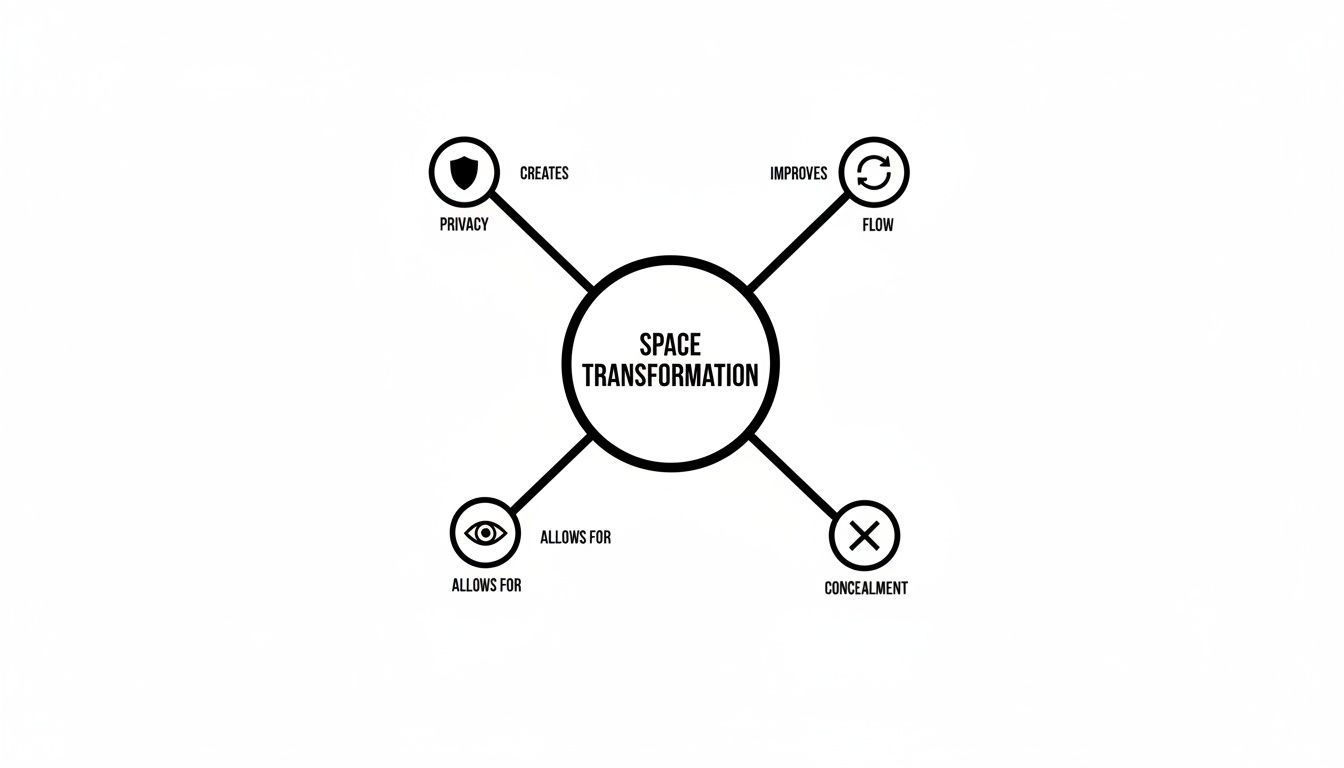
The real takeaway here is that dividers do more than just divide. They actively shape how your guests experience the event by controlling what they see and where they go.
Matching Divider Types to Event Styles
The world of room dividers isn’t one-size-fits-all. There are a few key types, and knowing the difference is the first step to making a smart choice for your event.
- Folding Screens: These are the classic, go-to option for a reason. Usually made of three or more hinged panels, they are incredibly easy to set up, shift around, and pack away. Their flexibility makes them perfect for creating a quick photo backdrop, sectioning off a cosy lounge area, or hiding the DJ booth from view.
- Hanging Dividers: If you’re after a modern, airy feel, hanging dividers are a brilliant choice. They suspend from the ceiling, creating a sense of separation without completely boxing a space in. These are great for contemporary corporate events or chic private parties where you want to keep that open-plan atmosphere.
- Modular Systems: For big events where you need proper, configurable walls, modular systems are your answer. These are interlocking panels that can be built into all sorts of shapes and sizes. They offer a much more solid, permanent-feeling division, which is ideal for trade show booths or breaking up a large conference hall.
Your choice of divider type directly shapes the flow and feel of your venue. Folding screens give you adaptability for dynamic events, while modular systems bring solid structure to more formal, large-scale functions.
Selecting Materials to Create Atmosphere
Once you’ve settled on a type, the material is what really brings your theme to life. It dictates the look, the texture, and the overall vibe the divider adds to the room.
Comparing Divider Materials for Event Planners
To make things easier, here’s a quick breakdown of the most common materials. Think of this as your cheat sheet for matching the material to the mood you’re trying to create.
| Material | Primary Aesthetic | Best For | Considerations |
|---|---|---|---|
| Wood | Warm, classic, sophisticated | Weddings, upscale corporate retreats, intimate dinners | Can be heavy. Style ranges from rustic to modern carved. |
| Wicker/Rattan | Natural, rustic, bohemian | Garden parties, beach weddings, relaxed brand activations | Lightweight and allows light through, but less private. |
| Metal | Sleek, industrial, modern | Art gallery openings, minimalist events, product launches | Durable and strong but can feel cold without soft styling. |
| Fabric | Soft, versatile, elegant | Galas (velvet), conferences (sound absorption), brand events (colour matching) | Huge variety of colours/textures. Can help dampen sound. |
| Acrylic/Polycarbonate | Contemporary, clean, open | Trade shows, modern parties, high-traffic areas | Allows light through, maintaining an open feel. Lightweight. |
Ultimately, the material you choose should be a natural extension of your event’s decor, not an afterthought.
A Closer Look at the Materials
Natural and Rustic Vibes
For events that need a warm, organic, or bohemian feel, you really can’t beat natural materials.
- Wood: Wooden dividers just have a timeless warmth and elegance. Whether it’s solid, slatted, or intricately carved, wood provides a sturdy and sophisticated barrier that’s perfect for weddings, intimate dinners, and high-end corporate retreats.
- Wicker or Rattan: These lightweight, woven materials add a wonderfully relaxed and rustic texture. They’re ideal for creating a laid-back atmosphere at garden parties, beach weddings, or boho-themed celebrations, as they let a bit of light filter through.
Sleek and Modern Aesthetics
If your event is all about a clean, sharp, and contemporary look, these materials will deliver that polished finish.
- Metal: For a sleek, industrial edge, metal dividers are strong and durable. They fit right in with minimalist themes, art gallery openings, and modern corporate functions where clean lines are a must.
- Fabric: Soft, versatile, and available in endless colours and patterns, fabric dividers are amazing for adding a pop of colour or a touch of elegance. They are also great for absorbing sound, which helps in creating quieter zones at a bustling reception. Think luxurious velvet for a gala or simple linen for a daytime event—the creative options are limitless.
- Acrylic or Polycarbonate: These are a fantastic lightweight and shatter-resistant alternative to glass. They create separation while still letting light pass through, which is perfect for maintaining a sense of openness. They’re also easy to clean, making them a practical choice for high-traffic areas at trade shows or product launches.
Strategic Placement to Create Flow and Function
Great event design is about more than just what things look like; it’s about psychology. It’s about guiding your guests through an experience you’ve carefully planned out. When you place room screen dividers, you’re not just breaking up a space—you’re sculpting it to create natural pathways, distinct zones, and even a bit of discovery. The right placement turns a simple screen into a powerful tool for directing foot traffic and shaping the entire mood of the event.
Think of a big, open venue like an open field. Without any paths, people just wander. Room dividers are those gentle, guiding pathways. They create “soft boundaries” that subtly suggest where to go next, preventing that lost feeling and making the journey through your event seamless. It feels intuitive and welcoming, not restrictive.
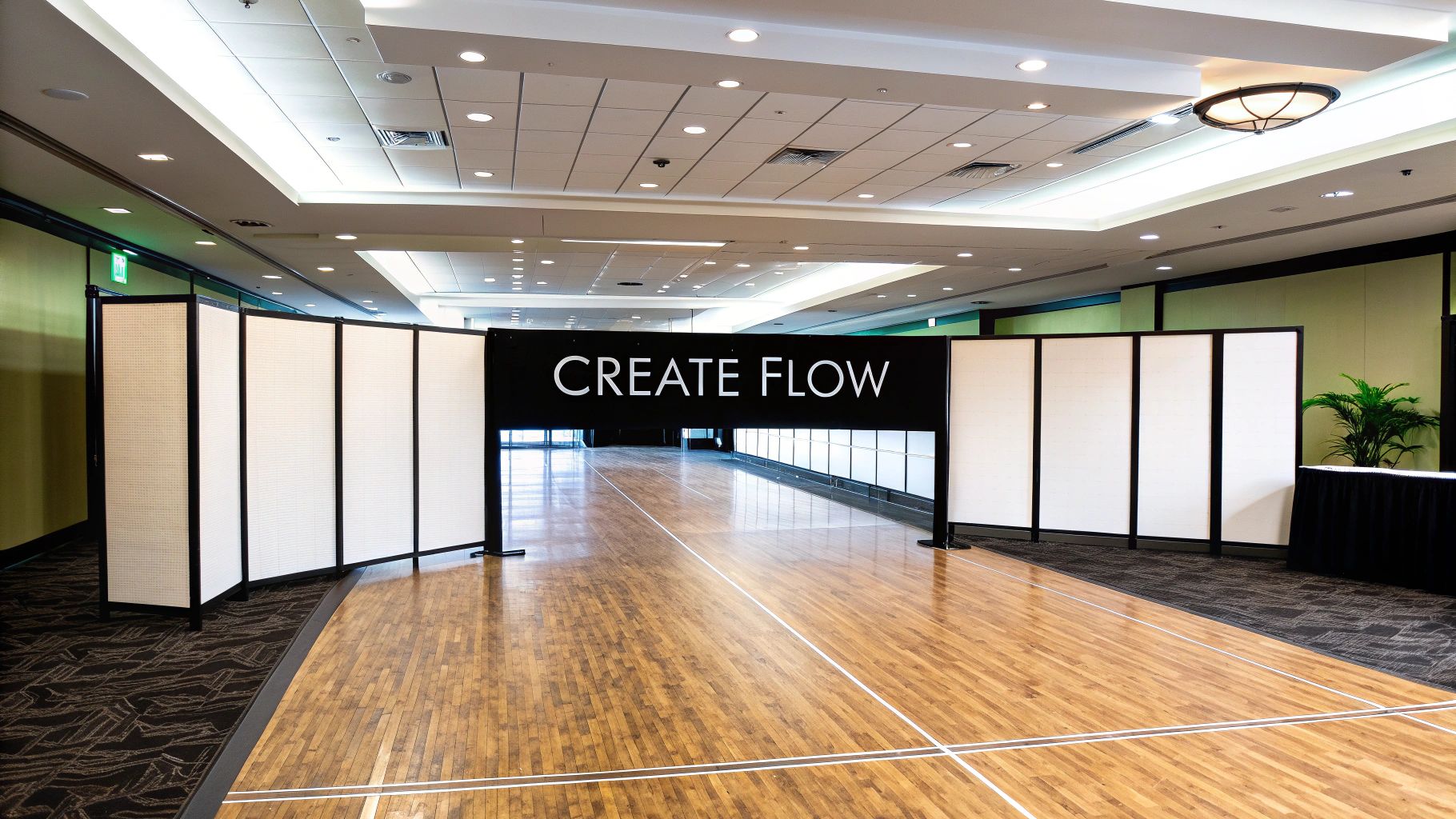
This is the secret that separates a good layout from a great one. It’s the subtle art of making a large, potentially intimidating space feel manageable, intimate, and a breeze to navigate.
Creating Zones for a Seamless Event Journey
One of the best ways to use room screen dividers is for zoning—carving a large venue into smaller, purpose-driven areas. When you do this, you can guide guests through the different parts of your event without any confusion.
Let’s take a typical wedding reception in a big ballroom. You could use some elegant fabric screens to:
- Form an Entry Corridor: Create a grand entrance that leads guests away from the main door and steers them towards the welcome drinks. This simple funnel builds anticipation right from the start.
- Define a Cocktail Zone: Section off a dedicated space just for pre-dinner drinks and canapés. This contains the initial buzz and stops guests from wandering into the dining area before it’s time.
- Reveal the Dining Area: Arrange dividers to hide the main dining setup at first. Then, they can be moved aside for a dramatic reveal when dinner is announced.
The same idea works perfectly for corporate events. You can easily create separate zones for registration, networking, a keynote presentation, and breakout sessions, all within the same hall.
Guiding Movement with Strategic Angles
How you angle your dividers makes a huge difference to how people move. Straight, rigid lines can feel like hard walls, but angled screens can subtly nudge people in a specific direction.
Imagine creating a gentle, curved path with several folding screens. This naturally encourages guests to meander along it, slowing their pace and giving them a chance to take in the decor or chat with others along the way.
On the other hand, a sharp 45-degree angle can effectively steer traffic away from a service entrance or a back-of-house area you’d rather keep private. It’s all about using visual cues to guide behaviour without a single “No Entry” sign in sight. Of course, for any of this to work, pairing your dividers with the right furniture is key. Our guide to choosing the perfect tables and chair rentals can help you finish off the look and function of each zone you create.
Practical Placement Scenarios
Okay, let’s get practical. Here are a couple of common event challenges and how to solve them with smart divider placement:
Scenario 1: The Overlooked Catering Station
- The Problem: The catering prep area or buffet station is right in the line of sight, creating visual clutter and noise that distracts from the main event.
- The Solution: Use a series of tall, solid room screen dividers to create a complete visual barrier. Place them a few metres in front of the station—this also gives staff plenty of room to work comfortably behind the scenes. Instantly, the whole room looks cleaner and more professional.
Scenario 2: The Empty Corner
- The Problem: A large venue has an awkward, empty corner that feels forgotten and just sucks the energy out of the room.
- The Solution: Use some decorative wooden or rattan screens to section off that corner and turn it into a feature. Add a couple of comfy chairs, a small table, and some soft lighting, and you’ve created an inviting photo booth backdrop or a quiet lounge nook for conversation.
By taking a moment to really look at your venue’s layout, you can spot these opportunities to make big improvements. Running through a mental checklist—identifying high-traffic routes, unsightly spots, and underused spaces—will help you place every single screen with purpose, ensuring it adds both beauty and logic to your event design.
Of course. Here is the rewritten section, crafted to sound completely human-written and natural, following the style and tone of the provided examples.
Essential Technical and Safety Considerations
Getting the look right is one thing, but making sure your event design is practical and safe is a whole different ball game. The last thing you want is a wobbly screen or a speaker that no one can hear. Overlooking these technical details can turn a great-looking divider into a genuine liability.
Think of it as the backstage work that lets the main event shine. Getting the acoustics, privacy, and stability right protects your clients, your guests, and ultimately, your reputation. These are the non-negotiables every planner in Cape Town needs to get right.
Managing Acoustics and Ensuring Privacy
One of the most underrated perks of using room screen dividers is how well they can control sound. Picture a big reception hall with high ceilings and tiled floors – sound just bounces everywhere, making it impossible to hold a conversation. This is where upholstered or fabric-covered dividers become your best friend, acting like sponges that soak up echoes and dial down the background noise.
It just makes the whole space feel more comfortable. In fact, this is a huge trend in office design right now. A 2023 report on the South African market found that 35% of new commercial office fit-outs used modular dividers with sound-insulation to create quieter, more private work areas. The same logic applies perfectly to events. You can read more about these commercial room divider market findings to see how the pros are using them.
For creating genuine visual privacy, keep these points in mind:
- Height: You’ll want a divider that’s at least 1.8 metres (around 6 feet) tall. Anything shorter, and standing guests will be able to see right over the top.
- Opacity: Go for solid materials. Wood, thick fabric, or opaque acrylic will get the job done. Things like rattan or slatted screens look great, but they only create a sense of separation, not total privacy.
- Placement: Make sure you close any gaps. A small opening between panels or against a wall can completely ruin that feeling of a private, secluded space.
A great room screen divider doesn’t just block sight—it manages sound. Using acoustically absorbent panels is the key to creating quiet VIP lounges or ensuring a keynote speaker can be heard clearly over the clinking of glasses.
Prioritising Stability and Safety Protocols
This is the big one: safety. A divider tipping over is a serious hazard, so stability has to be your number one priority, especially when you’ve got guests walking around or kids at the event.
For indoor venues with smooth floors like polished concrete or wood, look for dividers with wide, heavy bases or T-shaped legs. If you’re setting up on thick carpet, check that the feet can sit flat without wobbling. For any outdoor event on grass, don’t even think about skipping the weighted sandbags at the base of each panel. A sudden gust of wind from the Cape Doctor could easily send them flying.
Finally, you have to play by the rules of the venue and public safety. Always remember to:
- Never Obstruct Exits: Your layout must keep all fire exits, extinguishers, and emergency routes completely clear. No exceptions.
- Check Fire Retardancy: Many venues require all decorative elements to be made from flame-retardant materials. Double-check this with your rental supplier to avoid any last-minute drama with the venue manager on the day.
- Secure Tall Dividers: If you’re using a divider taller than 2 metres, it’s always a good idea to secure it to a wall or pillar if you can. It adds that extra layer of stability and peace of mind.
Styling Dividers to Elevate Your Event Decor
Once you’ve figured out the practical side of things, it’s time for the fun part: making these functional items look absolutely stunning. Styling your room screen dividers is how you turn a simple partition into a feature piece, weaving it into your event’s creative vision. This is where a divider stops being just a divider and becomes a memorable part of the décor that guests will be snapping photos of all night.
Think of a plain wooden screen as a blank canvas. For a romantic wedding, you could weave delicate floral arrangements and cascading ivy through its panels to create a lush, organic photo backdrop. At a corporate launch, that same screen can be completely transformed with a custom-branded vinyl wrap, giving it a polished, professional look that reinforces the company’s identity.
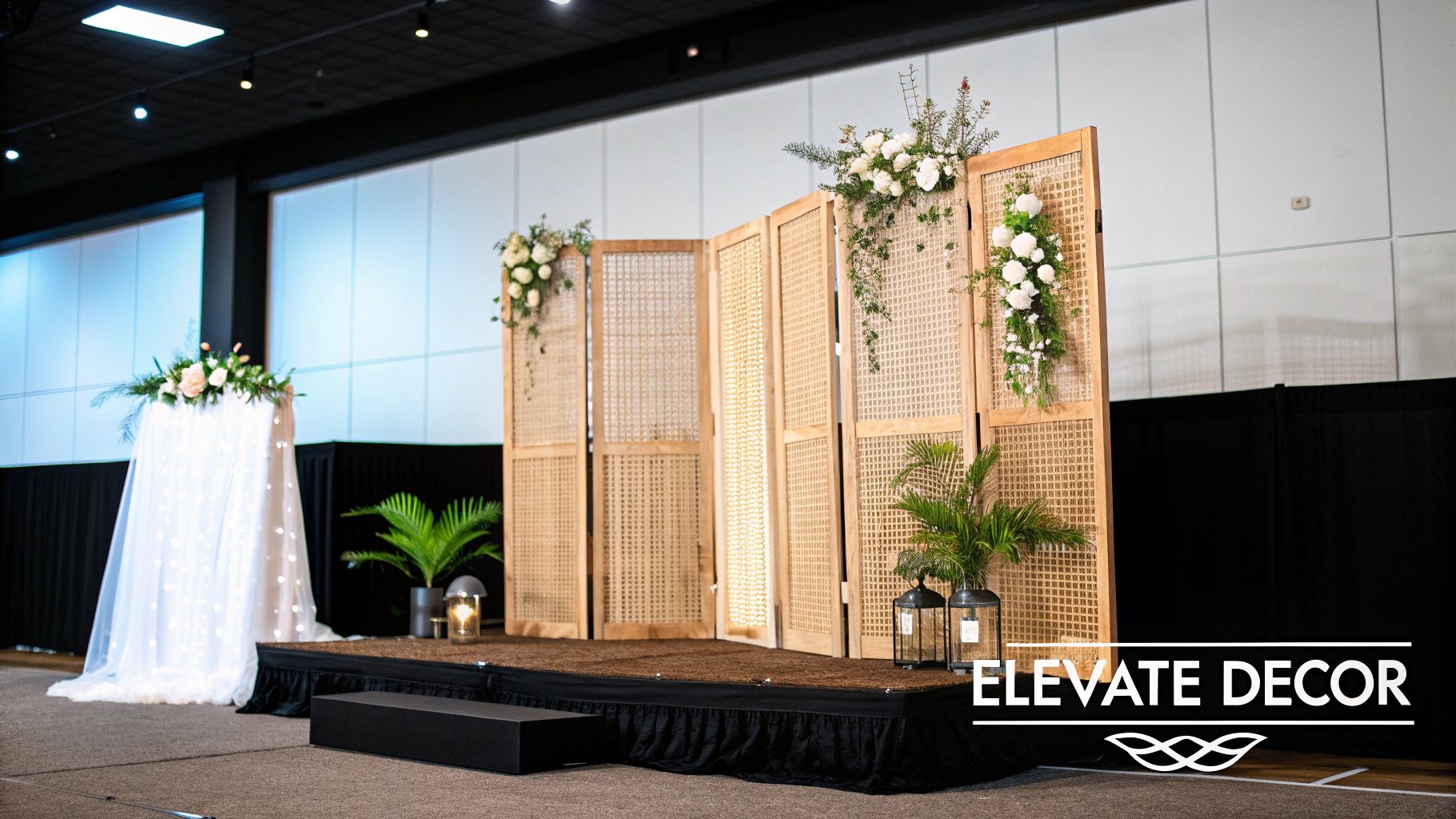
The possibilities are endless. The trick is to see the divider not as a wall, but as an active, exciting part of your overall design.
The Transformative Power of Lighting
Lighting is your secret weapon when it comes to styling room dividers. Honestly, it’s probably the most powerful tool you have. The right lighting can completely change the mood and appearance of a simple screen, turning it from a background piece into a dynamic art installation. It’s a surprisingly cost-effective way to get a high-impact look.
Here are a few techniques we love to use:
- Uplighting: This is a classic for a reason. Placing lights on the floor and aiming them up along the divider creates dramatic shadows and highlights its texture. It works beautifully with carved wooden screens or textured fabric, adding a real sense of depth and drama to the room.
- Backlighting: This one is all about elegance. By placing a light source behind a semi-translucent screen (like one made of shoji paper or thin fabric), you create a sophisticated silhouette effect. The soft, diffused glow is perfect for a chic lounge area or an ethereal wedding backdrop.
- Gobo Projections: A gobo is just a fancy name for a stencil you put over a light to project a pattern or image. You can project anything onto a plain divider—from abstract textures and company logos to delicate floral motifs. It instantly turns a boring screen into a captivating visual display.
By strategically lighting your dividers, you can paint with light and shadow to craft an atmosphere. A simple backlight can make a screen glow with ambient warmth, while a sharp uplight can turn it into a bold architectural feature.
Creative Styling Ideas for Every Event
Beyond lighting, there are countless ways to physically dress up your dividers to match your theme. The aim is to make them feel like a custom, intentional part of the event design. Whatever you choose, it should enhance the divider, not overwhelm it.
For Weddings and Romantic Occasions
For that soft, romantic feel, you can’t go wrong with natural and delicate touches.
- Floral and Greenery: Weave garlands of eucalyptus, roses, or even some local fynbos through the panels of a wooden or rattan screen.
- Draping Fabric: Cascade soft fabrics like chiffon or organza over the top and sides to soften the lines and add a touch of elegance.
- Hanging Elements: Suspend delicate glass baubles with tea lights, strings of fairy lights, or even macrame hangings from the top for a whimsical, bohemian vibe.
For Corporate and Branded Events
Corporate events demand a look that’s polished, professional, and on-brand.
- Custom Vinyl Decals: Apply non-damaging, removable vinyl logos, taglines, or event graphics directly onto any smooth-surfaced dividers.
- Integrated Shelving: Some of the more modern, modular dividers have options for shelving. These are perfect for displaying products, awards, or branded materials.
- Colour Coordination: Use fabric dividers in your company’s brand colours. It’s a simple way to create a cohesive and immersive brand experience for your guests.
No matter how you style it, the goal is always to enhance the overall theme. Even a simple, well-placed divider can serve as a powerful visual anchor for your space. For more inspiration on creating stunning focal points, check out our guide on finding the perfect backdrop to hire for your event. Many of these same techniques can be used on backdrops to create a truly unforgettable design.
Renting vs Buying Dividers in Cape Town
As any event planner in Cape Town knows, every decision is a balancing act between your budget, the logistics, and the final impact. When it comes to room screen dividers, you’ll face the classic question: is it better to rent or buy?
While owning a set of dividers might seem like a good investment at first, the practical side of things—storage, transport, and maintenance—can quickly become a headache for most event professionals.
Imagine you’ve just wrapped up a gorgeous wedding at a Stellenbosch wine farm. The last thing on your mind should be figuring out how to haul ten bulky wooden screens back to a storage unit. This is exactly why for the vast majority of events, renting is the clear winner. It takes all those logistical nightmares off your plate and gives you far more flexibility.
Why Renting Is the Smarter Choice
Renting gives you access to a massive variety of styles without the long-term commitment or cost. One month you might need sleek, modern acrylic panels for a corporate launch in the CBD. The next, you might want rustic rattan screens for a bohemian beach wedding in Llandudno. A good rental company can provide all of this on demand.
Beyond the sheer variety, the practical benefits are huge:
- No Storage Costs: You use the dividers for your event, and then they’re gone. No need to sacrifice precious office or warehouse space to store them.
- Effortless Transportation: Reputable rental companies handle all the delivery and collection. This saves you from the stress of organising a big enough vehicle and the staff to move heavy, awkward items.
- Zero Maintenance: Scratches, scuffs, and general wear-and-tear? That’s the rental company’s problem, not yours. The dividers simply arrive looking great every single time.
In a city like Cape Town, where making the most of your space is key, these benefits really add up. In fact, reports on the South African market show that demand for space-saving solutions like these has grown a lot. Roughly 23% of urban households now use some form of room divider, which just goes to show how practical they are. You can read more about how room dividers are used in the South African market.
Vetting Cape Town Rental Companies
Once you’ve decided renting is the way to go, the next step is finding the right local partner. And trust us, not all rental companies are created equal. To make sure everything goes off without a hitch, you need to ask the right questions before you sign anything.
Think of it as a job interview. You’re trusting a key part of your event’s design and logistics to this company, so it pays to be thorough.
Make sure you cover these essential points:
- Inventory and Condition: Ask to see their catalogue or, even better, visit their showroom. Do they have a good selection of room screen dividers? Are the items well-looked-after, clean, and free from obvious damage?
- Delivery and Setup Services: Get clear on whether their service includes delivery, setup, and breakdown. A full-service option can be a massive time and stress saver on event day.
- Insurance and Damage Policy: What happens if a divider gets accidentally damaged by a guest? You need to understand their insurance coverage and what you might be liable for. A transparent, clear policy is the sign of a professional company.
The right rental partner is more than just a supplier; they are an extension of your event team. Their reliability, professionalism, and quality of inventory directly reflect on your final product.
Ultimately, choosing to rent frees you up to focus on what you do best: designing incredible experiences. By partnering with a reliable supplier, you get access to a world of decorative possibilities without the burden of ownership. For more ideas on sourcing the best items, our guide on finding top-quality decor hire in Cape Town offers some great additional tips.
Of course. Here is the rewritten section, crafted to sound completely human-written and match the requested style.
Common Questions About Using Room Screen Dividers
Even the most organised event can throw up a few surprises on the day. When you’re on-site and juggling a dozen things at once, you need quick, no-nonsense answers. We’ve put together a few of the most common questions we get from planners about using our room screen dividers, along with practical solutions to help you handle any challenge that comes your way.
Think of this as your back-pocket guide for those last-minute hiccups.
How Do I Make Sure the Dividers Are Stable on Uneven Ground?
This is a big one, and rightly so. We see it all the time with marquee weddings on beautiful lawns or events in older venues with charming, but not-so-level, floors. Safety comes first, so stability is key.
If you’re setting up outdoors on grass or an uneven surface, you’ll want dividers with a nice, wide base. To keep them securely in place, weighted sandbags are the go-to solution. Tucked neatly at the bottom of each panel, they’re fantastic for standing up to a sudden gust of the Cape Doctor. If the ground permits, stakes are another option, but always get the green light from your venue first.
For indoor events on old wooden floors or tiles, dividers with adjustable feet are a game-changer. You can level out each panel individually, so there’s absolutely no wobble.
Pro Tip: When you book your dividers, let your rental company know what kind of surface you’re working with. A good supplier can point you to the right type of room screen divider and provide all the necessary gear to keep it secure, taking one more thing off your plate.
Can I Brand or Customise Rented Room Screen Dividers?
Yes, you absolutely can! It’s a great way to make a rented piece feel like it was made just for your event and tie it into your corporate branding. Most rental companies in Cape Town are more than happy to help with this.
The easiest and most popular option is to use temporary vinyl decals. They can be applied to any smooth-surfaced divider to show off company logos, event hashtags, or branded messages. The best part? They peel off without leaving any sticky residue or damaging the panel.
Some suppliers, like us, also offer custom-printed fabric panels that fit onto the screen frames for a really polished, professional look. Just be sure to always check with your rental company about their approved customisation methods before you start, so you can avoid any unexpected damage fees.
How Far Ahead Should I Book Divider Rentals?
A little bit of planning goes a long way, especially during Cape Town’s peak event season from November to March. For a standard order, booking 4-6 weeks in advance is usually a safe bet. That gives you plenty of time to get what you need without any stress.
But, if you have more specific needs, you’ll want to book a bit earlier:
- Large Orders: If you’re partitioning a huge space, it’s best to book at least 2-3 months ahead of time.
- Speciality Styles: Our more unique or popular designs get snapped up fast, so reserve those as early as you can.
- Custom Jobs: For custom-printed panels, we recommend getting in touch at least 3 months in advance. This gives us enough time for the design, printing, and production process.
Ready to find the perfect room screen dividers for your next event? ABC Hire offers a wide range of high-quality, stylish options to suit any theme or function. Explore our collection and let us handle the logistics, so you can focus on creating an unforgettable experience. Visit us online at abchire.co.za to get a quote today.