
The florist has signed off. The menu is locked. Your seating chart has changed for the third time, but it's finally workable. Then you look at the table setting and realise something important. Everything is correct, but it still doesn't feel complete.
That final lift usually doesn't come from adding more. It comes from choosing one detail that changes how the whole table reads. In Cape Town and across the Winelands, I've seen that happen with lighting, with linen, with chargers, and very often with gold cutlery sets.
Gold flatware does something silver rarely does. It warms the table immediately. In a vineyard setting, it catches late-afternoon light and softens the whole look. In a city venue with glass and concrete, it stops the table from feeling cold. At weddings, it makes white crockery feel more considered. At brand events, it gives a standard plated dinner a sharper, more editorial finish.
The mistake is treating it like a novelty add-on. Used well, gold cutlery is part of the design language. It can make a simple place setting look layered, expensive, and camera-ready without pushing the décor into excess. That's why it works for black-tie receptions, long-table harvest lunches, matric dances, milestone birthdays, and polished corporate dinners alike.
The Midas Touch for Modern Events
A couple will often spend weeks choosing napkin folds, candle heights, and menu cards, then leave the cutlery decision until the end. That's usually where the table either settles into “nice” or moves into “memorable”.
At a Winelands wedding, for example, you might have oat-coloured linen, soft ivory flowers, clear stemware, and stoneware plates that feel beautifully restrained. Add standard stainless steel cutlery and the table stays safe. Swap in gold, and the whole setting picks up warmth. Suddenly the candles make more sense, the florals feel richer, and the photographs gain contrast where they need it.
Corporate clients run into the same problem in a different form. The brief is often modern, clean, and premium, but the venue's house setup can look generic once the room fills. Gold cutlery gives the place setting a point of view. It tells guests that someone paid attention to the guest experience rather than making a basic meal service order.
Why it changes the table so quickly
Gold works because it behaves like décor while still doing the job of a practical item. Chargers and centrepieces sit in the background. Guests notice them, but they don't touch them as often. Cutlery is handled constantly, so it becomes part of the sensory experience of the event.
A few styling effects show up again and again:
- Warmth against neutrals. White, cream, taupe, sand and greige all look more intentional when paired with gold.
- A stronger photographic finish. Gold creates definition around the plate, which helps tables read better in close-up images.
- A premium feel without visual clutter. You can keep the rest of the table relatively quiet and still get impact.
Gold cutlery works best when it doesn't have to fight for attention. If every element is shouting, the finish gets lost.
That's why the smartest tables aren't always the most decorated ones. Often, they're the most edited.
Decoding the Glow of Gold Cutlery
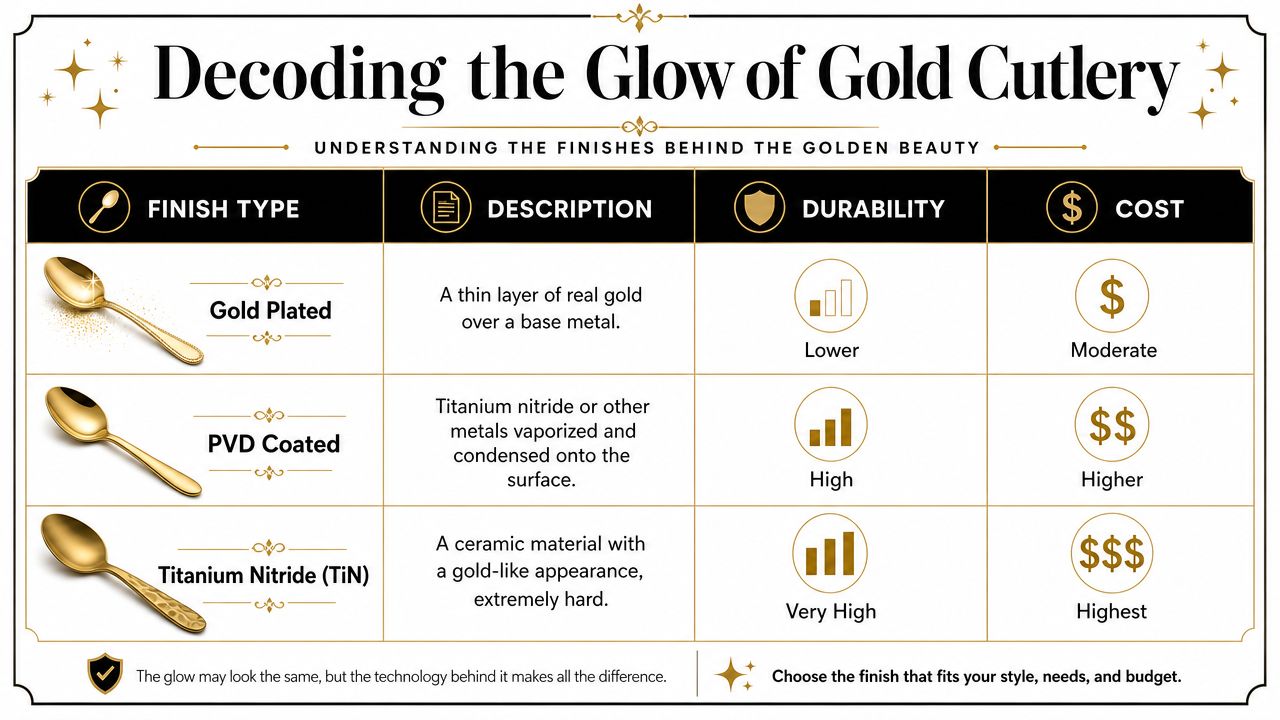
Before choosing a style, it helps to know what “gold” means in practical terms. In this category, gold cutlery sets typically refer to stainless steel tableware with a gold-plated or gold-coloured finish rather than solid gold, and South Africa doesn't have official trade data for this niche item category, with availability shaped mainly by retailers and rental companies, as noted on this South African gold stainless steel tableware product listing.
That distinction matters because it sets the right expectations. You're choosing a finish and a style, not investing in precious metal tableware. For events, that's exactly what you want. The base needs to be practical. The finish needs to look elegant under venue lighting and hold up through service.
The finishes you'll come across
Not all gold reads the same on a table. The finish changes the mood more than is often realized.
| Finish | Best for | What it looks like | Watch-out |
|---|---|---|---|
| Polished gold | Formal weddings, gala dinners, classic hotels | Reflective, bright, dressy | Shows fingerprints more easily |
| Matte gold | Contemporary receptions, minimalist styling | Soft, muted, understated | Can disappear if the table lacks contrast |
| Brushed gold | Textured, layered tablescapes | Slight texture, relaxed luxury | Needs the right crockery to avoid looking too casual |
| Champagne or rose-toned gold | Romantic dinners, feminine florals, modern celebrations | Warmer and gentler than bright gold | Can clash with very yellow gold décor |
What usually works best in real venues
In Cape Town light, polished gold looks strongest at evening events. Candles, glassware, and low ambient lighting give it enough sparkle to feel celebratory rather than flashy. It pairs beautifully with crisp white porcelain and clear wine glasses.
Matte and brushed finishes are often better for daytime weddings and Winelands venues. They sit more comfortably with timber tables, raw linen, and natural florals. If the setting already has mountain views, vines, and soft earth tones, a quieter gold usually looks more expensive than a high-shine finish.
Practical rule: Match the cutlery finish to the room before you match it to the Pinterest board.
A useful way to choose
If you're still torn, make the decision using three questions:
- What time is the event? Evening can carry more shine. Daytime usually prefers restraint.
- What is the plate finish? Glossy crockery can handle polished gold. Handmade or matte plates usually suit satin or brushed tones.
- How formal is the service? The more structured the meal, the more refined the cutlery should look.
When those three line up, the table almost always feels resolved.
Composing the Perfect Cutlery Set
Once the finish is sorted, the next question is simple. What do you need on the table?
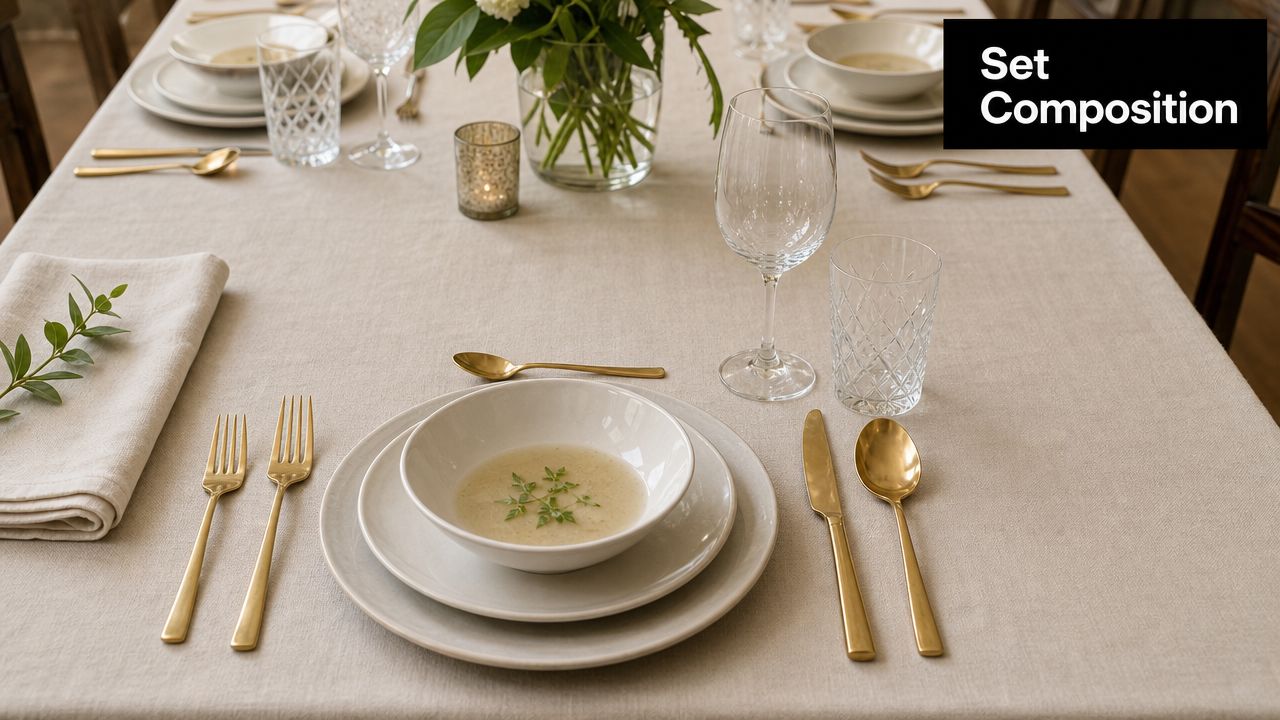
A common challenge for hosts involves either over-ordering or missing key pieces. A place setting should follow the menu, not the mood board. If guests are having a plated starter, mains, and dessert, the set needs to support that sequence cleanly. If it's a canapé evening with grazing stations, a full formal setting can feel unnecessary and even awkward.
Match the cutlery to the menu
A well-composed setting usually falls into one of these event types:
Formal seated dinner
Use a dinner knife and fork as the foundation. Add a starter fork or spoon if the first course needs it, and include dessert cutlery if dessert is served at the table.Shared feast or family-style meal
Keep the personal setting clean. A dinner knife and fork often do the heavy lifting, while serving pieces on the table handle the rest.Cocktail-style event
Small forks, tasting spoons, or dessert forks may be all you need. Full place settings can look decorative but won't always be used.Cake-and-coffee celebration
Cake forks and teaspoons matter more than dinner pieces, resulting in many birthday and kitchen tea setups becoming over-styled and under-practical.
A simple planning checklist
Use this before confirming quantities and piece types:
- Read the final menu, not the draft menu. Caterers often change plating style close to the event.
- Check whether dessert is plated, passed, or stationed. That decides whether dessert cutlery belongs at the setting.
- Ask if soup, pasta, or seafood needs specialist pieces. Don't assume standard cutlery will cover every course.
- Review children's tables separately. Smaller guests often need a simpler, less crowded setup.
A strong table setting also depends on the glasses alongside it. If you're planning wine service, this guide to choosing crystal wine glasses for events helps you keep the whole place setting balanced rather than focusing on cutlery in isolation.
What often goes wrong
The most common mistake is laying every possible piece from the start, even when the meal doesn't justify it. That can make the table feel busy and old-fashioned. The opposite mistake is trying to keep things “minimal” and then discovering guests have no proper dessert spoon or no knife for the main course.
If a guest has to ask the waiter for basic cutlery during service, the table wasn't finished properly.
Good styling never gets in the way of service. It should make service feel smoother.
The Art of Styling Your Tablescape
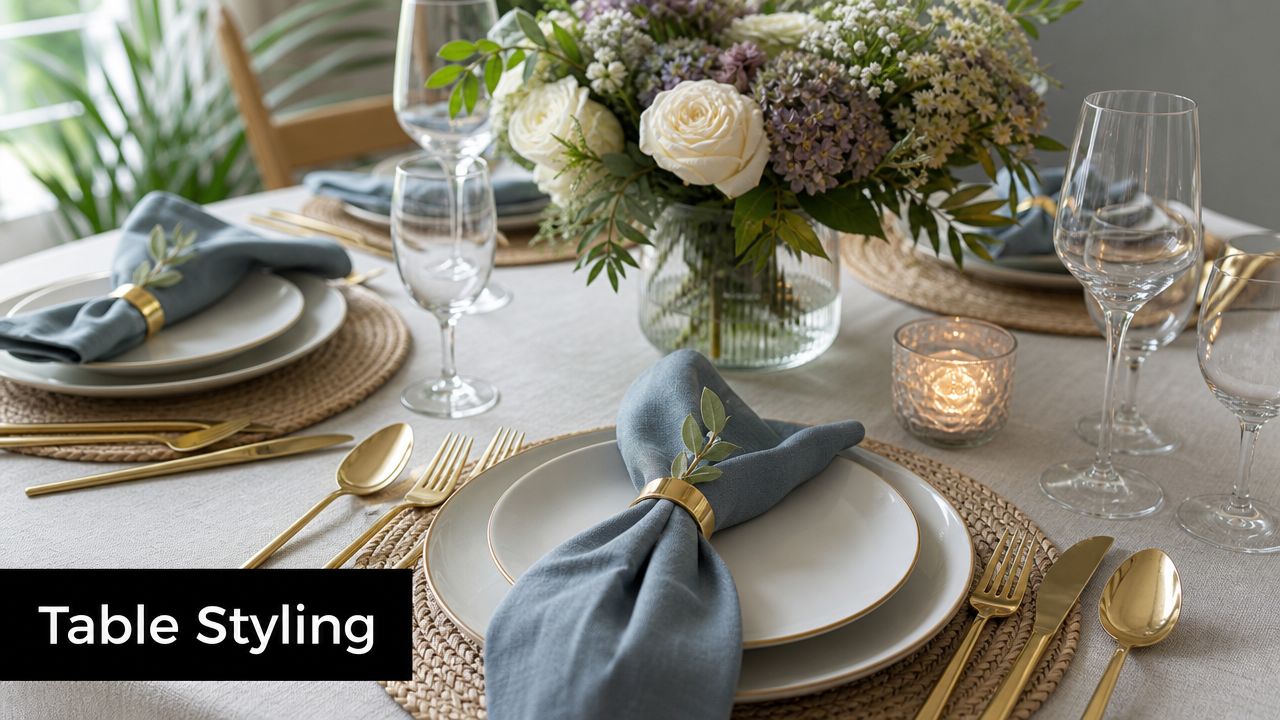
Gold cutlery earns its place when the rest of the table supports it. That doesn't mean everything has to be gold. In fact, the best tables usually use gold as the punctuation mark, not the whole sentence.
The modern minimalist table
This look suits city venues, rooftop dinners, gallery launches, and contemporary weddings. Start with white or bone-coloured crockery, then add slim gold cutlery with a cleaner silhouette. Keep the linen plain. Stone, chalk, ivory, or soft mushroom all work.
The trick here is restraint. Don't pair bright gold with too many competing reflective surfaces. Clear stemware, low florals, and neat folded napkins keep the setting sharp.
For extra depth, use black menu cards or dark taper candles sparingly. The contrast gives the gold definition without tipping the table into something harsh.
The rustic Winelands table
In Stellenbosch, Franschhoek, and Paarl, the most convincing gold tables rarely feel glossy. They feel grounded. Think textured runners, natural linen, ceramic plates with a handmade edge, and floral work that looks gathered rather than tightly formal.
Brushed or matte gold cutlery sits naturally in that environment. It echoes candlelight and sunset tones without looking too urban. Pair it with warm neutrals, muted greens, dusty blush, or soft terracotta. Timber tables can be left partially visible so the metallic finish has something earthy to play against.
A useful outside reference for mood-building is 1021 Events' event decoration guide, especially if you're trying to turn a broad theme into practical table decisions.
The classic glam table
Polished gold excels in formal environments. A ballroom wedding, black-tie fundraiser, or luxury awards dinner can carry more formality and more shine. Use white porcelain, full stemware, pressed napkins, and symmetrical place settings.
Then layer in depth with glass chargers, mirrored details, or candle holders that repeat the metallic tone. If you're exploring that direction, these ideas for gold candle holders in event styling are useful because they show how to repeat the finish without making the table look overly themed.
Pairings that usually land well
A few combinations are reliable because they balance warmth, texture, and contrast:
- Gold with white and clear glass creates a timeless formal table.
- Gold with navy or deep green napkins feels rich without becoming heavy.
- Gold with sand, oat, and stone tones suits vineyard and garden venues beautifully.
- Gold with blush or toffee florals softens the setting for romantic events.
Don't chase matching. Chase harmony. Gold cutlery doesn't need every surrounding item to be gold-toned.
Florals matter here too. Bright tropical arrangements can compete with gold unless the rest of the table is simplified. Loose whites, creams, soft apricots, olive foliage, and seasonal textures usually allow the cutlery to shine without turning the whole setup into a metallic statement.
Essential Care and Handling for Gold Cutlery
Gold finishes look refined because the surface is more visually sensitive than ordinary stainless steel. That means handling matters, especially once service starts and the table is no longer under the stylist's control.
The first rule is simple. Treat the finish like part of the décor, not like back-of-house utility stock. Staff should avoid tossing pieces into tubs, scraping them roughly against plates, or stacking them in ways that create avoidable friction.
During the event
A few habits make a noticeable difference:
- Clear thoughtfully. Servers should lift cutlery with plates rather than sweeping pieces together in a pile.
- Keep acidic residue moving. If pieces have been used with lemon, vinegar-heavy dressings, or tomato-based sauces, don't leave them sitting dirty for hours.
- Separate from harsh metal contact. Mixed heaps of service tools and cutlery can create scratches fast.
If there's a prep area on site, assign one person to oversee collection. That single point of responsibility usually prevents the rough handling that happens when everyone assumes someone else is managing the returns.
Cleaning and packing
For hired pieces, always follow the supplier's return instructions first. If light rinsing is requested, use mild soap, warm water, and a soft cloth or sponge. Avoid abrasive scourers, harsh powders, and aggressive dishwasher cycles unless the rental company has specifically approved them.
A practical return routine looks like this:
- Remove food residue early so it doesn't dry onto the finish.
- Rinse gently if required rather than scrubbing.
- Dry before packing if instructed to avoid water spotting or trapped moisture.
- Repack neatly in the containers or wraps provided.
The finish usually suffers more during pack-down than during dinner service.
What doesn't work
A few shortcuts create problems quickly:
| Avoid this | Why it causes trouble |
|---|---|
| Abrasive sponges | They can mark the coloured finish |
| Long soaking | It makes residue easier to forget and can dull the look |
| Harsh dishwasher detergents | They're often too aggressive for specialty finishes |
| Wet repacking | It encourages spotting and messy returns |
Good care isn't fussy. It's disciplined. If the team treats gold cutlery as a styling item right until the final crate is sealed, it usually comes back looking as elegant as it did on the table.
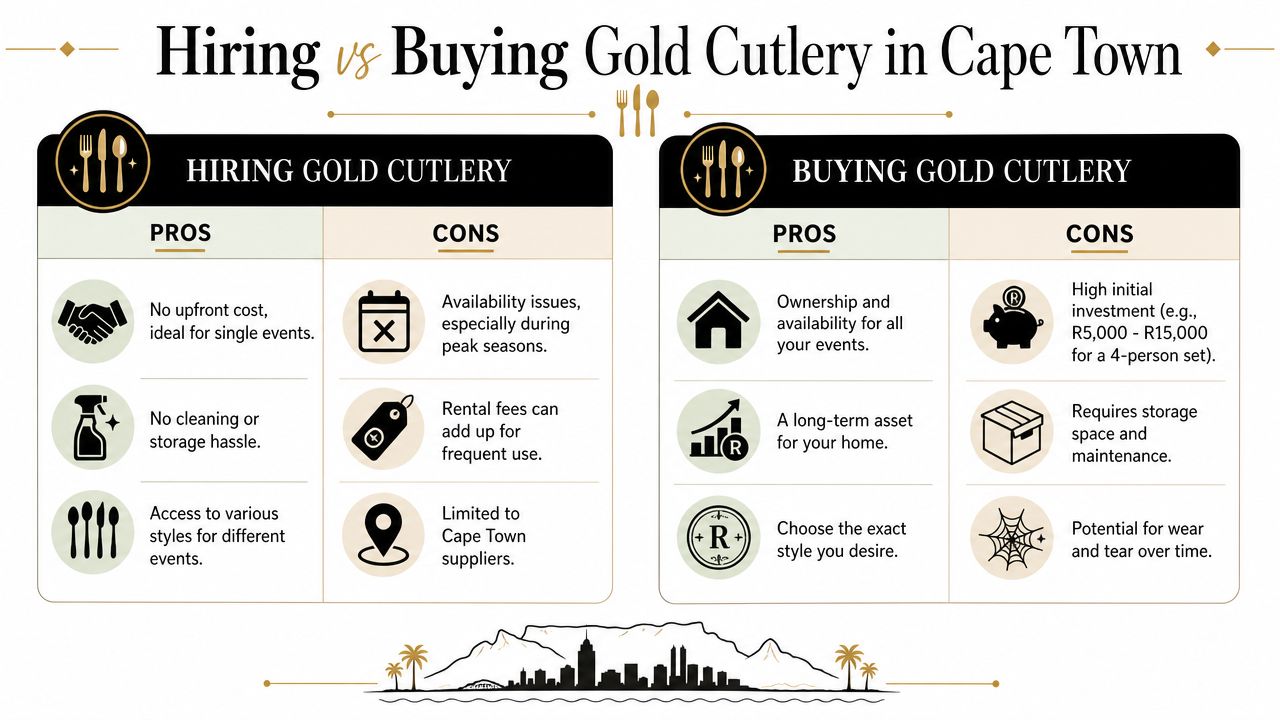
Hiring vs Buying Gold Cutlery in Cape Town
For most events, hiring makes more sense than buying. That isn't because buying is always wrong. It's because ownership brings jobs that most hosts don't want.
When people buy gold cutlery sets for a large event, they're often buying into a chain of extra decisions. Where will it be stored? Who will wash and dry it properly? Does the style still suit the next event? What happens when a few pieces go missing and the set no longer matches perfectly?
When buying makes sense
Buying can work well if you host often, have secure storage, and know exactly which finish suits your long-term style. It can also make sense for private dining, boutique guesthouses, or venues creating a permanent in-house look.
But even then, consistency becomes the challenge. Replacement pieces may not match older stock perfectly. Colour tone, handle shape, and surface finish can vary from batch to batch. That's frustrating if your brand depends on a polished table presentation.
Why hiring is usually the smarter event choice
For weddings, matric dances, product launches, milestone birthdays, and one-off corporate dinners, hiring is often the cleaner decision.
- You choose for the event, not forever. A Franschhoek harvest table and a CBD gala dinner don't need the same finish.
- You avoid storage and maintenance. No boxes in the garage. No post-event washing marathon.
- You keep flexibility. If the theme changes late, you're not stuck with inventory that no longer fits.
There's also the local convenience factor. In Cape Town and the Winelands, event timelines are often tight. Delivery and collection to venues in Stellenbosch, Franschhoek, and Paarl can remove a major layer of logistical pressure for planners and couples already juggling florists, coordinators, and catering teams.
If you're weighing décor spend across the full event, this roundup of affordable wedding planning advice is useful because it helps separate “worth it” splurges from details that are better handled through smart hiring choices.
A practical comparison
Here's the decision in plain terms:
| Consideration | Hiring | Buying |
|---|---|---|
| Best for | Once-off events, changing themes, larger guest counts | Frequent use, permanent collection |
| Aftercare | Usually simpler for the host | Fully your responsibility |
| Storage | No long-term storage burden | Needs protected storage space |
| Flexibility | Easy to match to each event style | Limited by what you already own |
If you're planning a fuller tabletop package, this guide to cutlery and crockery hire for events is a helpful next step because it frames cutlery as part of the entire dining setup rather than a stand-alone item.
Hire when the event has a clear visual brief and a clear end date. Buy when you're prepared to maintain a collection properly.
That's the line one should use.
Create Your Unforgettable Golden Moment
Gold cutlery has a rare advantage in event styling. It feels luxurious, but it doesn't have to be complicated. Choose the right finish for the venue, match the pieces to the actual menu, and style the table with enough contrast for the metallic tone to read cleanly.
That's where the best tables succeed. They don't overload the guest with decoration. They use a few disciplined choices that make the whole setting feel resolved. Gold cutlery can do that on a long vineyard table, a polished ballroom setup, or a contemporary corporate dinner just as effectively.
The practical side matters just as much as the visual side. A well-chosen set should support service, survive pack-down gracefully, and fit the event without creating unnecessary buying, cleaning, or storage headaches. For most Cape Town and Winelands occasions, hiring keeps the process simpler while still delivering that high-end look people remember.
If you're planning an event and want the table to feel finished rather than merely furnished, gold cutlery is one of the smartest details you can choose.
If you're ready to style your event with confidence, ABC Hire can help you pull the whole table together. From Cape Town to Stellenbosch, Franschhoek, and Paarl, their team offers event rental options that make it easier to achieve a refined look without the hassle of buying, storing, and maintaining specialty pieces yourself.