
You make the same decision under pressure. The florist is asking for final vessel sizes, the venue has sent table plans late, and the client wants something that looks polished without tipping into overdone. In Cape Town and the Winelands, that decision gets harder because the setting does half the work for you. A vineyard, a mountain backdrop, or a stripped-back industrial venue can either make your décor sing or expose every weak choice.
That’s why cylinder glass vases stay in rotation. They’re clean, adaptable, and far more useful than trend-led containers that only suit one look. They work at weddings in Stellenbosch, brand dinners in the city, and matric dances where the room needs height and glow but not visual clutter.
Used properly, they solve real event problems. They hold florals without fighting the room. They take candles well. They can be dressed up, stripped back, clustered, or left almost bare. Used badly, though, they create other problems. Wrong proportions block guest sightlines. Lightweight pieces wobble outdoors. Poor glass quality shows every flaw once the afternoon light hits it.
Elevating Your Event with Cylinder Glass Vases
By late afternoon in Stellenbosch, the light shifts, the wind usually picks up, and every glass surface on the table starts showing its true quality. That is often the moment a cylinder vase proves its value. Good ones catch candlelight cleanly, hold their line in a refined setup, and add polish without pulling attention away from the venue.
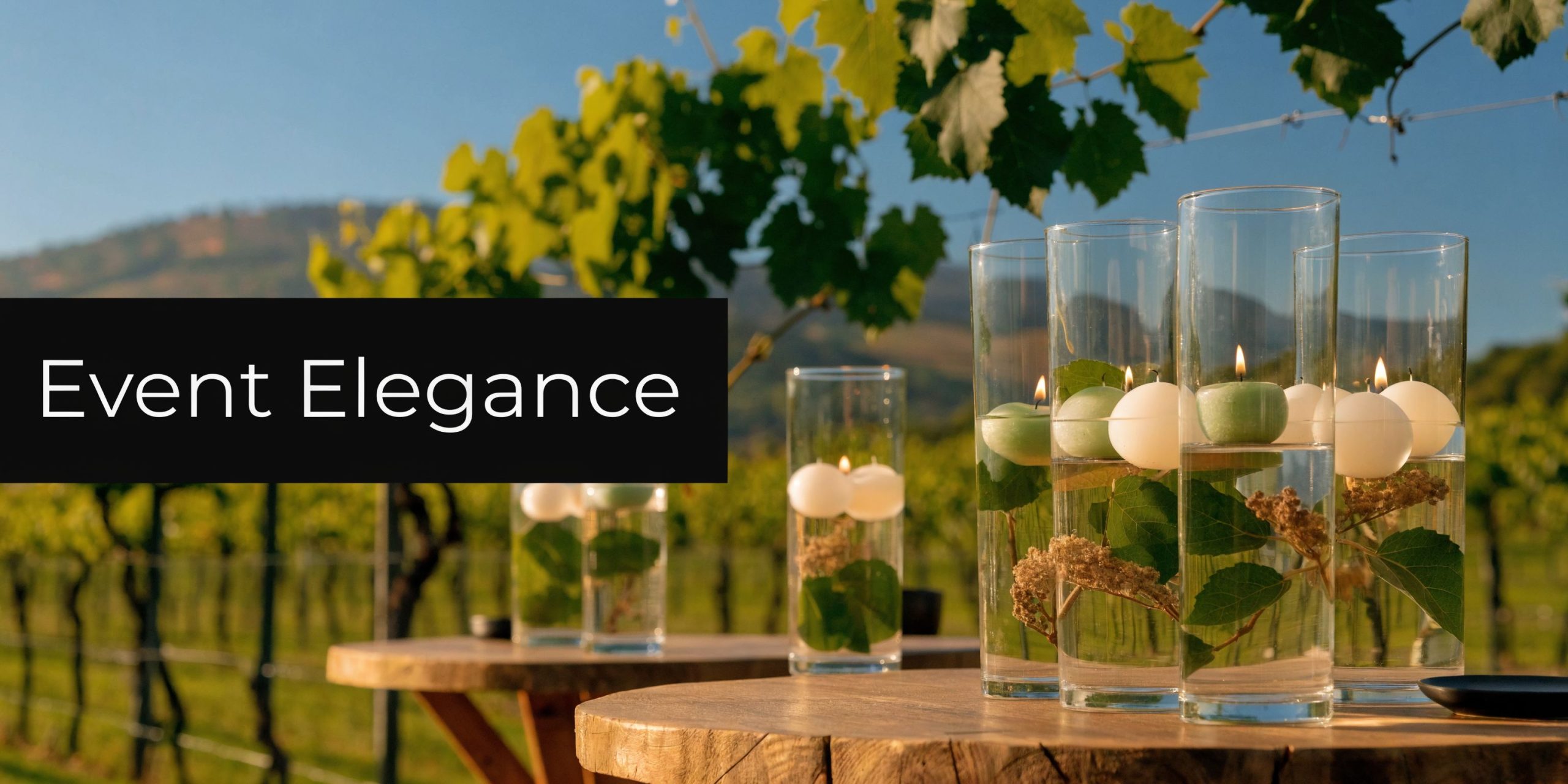
That matters in Cape Town and the Winelands because the room is often already doing a lot of visual work. A Franschhoek estate has stone, vines, and long views. A city venue near the Waterfront has glass, steel, and sharper lines. Cylinder vases fit both because they bring structure without adding visual noise.
Why the shape keeps working
The shape has lasted for a reason. It is simple, readable, and easy to style well. Guests understand it immediately, which helps a table feel settled and intentional even when the rest of the décor is restrained.
It also gives suppliers room to work. Florists can keep stems upright without fighting an awkward opening. Stylists can use candles, water, branches, fruit, stones, or nothing more than clear glass in repetition. On event day, that flexibility saves time.
Where it earns its place in Cape Town
Cylinder glass vases do their best work at venues where you want to support the setting, not compete with it. That is a common brief here. At a Winelands wedding, the backdrop usually carries enough romance on its own. At a corporate dinner in town, the table often needs discipline more than decoration.
They are especially useful for:
- Adding height cleanly without the width of heavier urns or compotes
- Keeping a consistent look across mixed table sizes and changing guest counts
- Switching easily between candles and florals if the brief changes late
- Photographing well in natural light, candlelight, and indoor evening service
A simple rule works at most Western Cape venues. If the view, ceiling, or architecture is already strong, clear glass usually performs better than an ornate vessel.
From my side, the best table designs I see in the Cape use cylinder vases as structure. Not as the star of the show. Repetition, scale, and spacing do more for a room than a table full of unrelated containers. That approach also makes life easier during setup, especially when stock is being split between Cape Town, Paarl, and Stellenbosch on the same day.
Choosing the Right Cylinder Vase for Your Theme and Venue
Most problems with centrepieces start before styling. They start with proportion. A vase can be beautiful on a shelf and still be wrong for the room, the table shape, or the drive out to the venue.
In Cape Town, selection has to do three jobs at once. It must suit the look, survive transport, and behave on site. If one of those fails, the whole centrepiece plan becomes labour-heavy very quickly.
Start with venue reality
Tall cylinders look elegant, but they aren't the right call. On a round banquet table in a ballroom, height can create presence without taking over. On a narrow harvest table under low festoon lighting, the same vase can feel awkward and top-heavy.
Use this as a practical guide.
Cylinder Vase Size Guide for Cape Town Events
| Vase Dimensions (Height x Diameter) | Best For (Table Type) | Typical Use | Pro Tip for Winelands Venues |
|---|---|---|---|
| 20cm x 10cm | Small round tables, café-style setups | Low floral clusters, pebbles, tea lights, compact greenery | Good where wind is a concern because the lower profile stays settled |
| 30cm x 10cm | Long rectangular tables | Floating candles, single-stem styling, layered fillers | Use in groups rather than as stand-alone pieces for a fuller table line |
| 40cm x 12cm | Standard guest tables | Submerged florals, fuller candle styling, mixed natural fillers | Check table width before committing, especially at narrower estate tables |
| 50cm x 15cm | Large round tables, statement entrance styling | Tall branches, dramatic candle designs, sculptural arrangements | Better indoors or in sheltered courtyards where gusts won’t catch the height |
| 75cm or taller, slender profile | High-ceiling venues and formal gala tables | Vertical impact without wide arrangements | Only use if the base feels stable enough for transport and setup conditions |
What to prioritise when inspecting quality
For premium event rentals, quality isn’t guesswork. Local production checks can include ultrasonic thickness gauging for 3 to 5mm walls with a tolerance of ±0.2mm, plus thermal shock testing where vases survive a 200°C temperature change more than 95% of the time, which matters when cold water meets a hot Cape afternoon, according to this overview of glass manufacturing and quality control.
That’s the technical side. On the ground, you’ll notice quality faster by eye and by hand.
Look for these signs:
- Clean rims: Chips show immediately under candlelight and look careless in close-up photos.
- Useful weight: A vase shouldn’t feel flimsy, especially if it’s going outdoors.
- Clear glass: Distortion can ruin the look of submerged stems or floating candles.
- Even walls: Uneven thickness often shows up once water is added.
Don’t choose height first. Choose stability first, then choose the height that still fits the brief.
Matching vase choice to event style
Different Cape venues pull styling in different directions.
For wine estates and garden venues, shorter or medium cylinders often work better because they feel anchored against stone, timber, and open natural settings. For city venues with clean architecture, taller cylinders can reinforce a modern line without adding clutter.
A quick decision framework helps:
- Check sightlines. Seated guests should still be able to talk across the table.
- Check wind exposure. Outdoor lawns and terraces need broader, steadier forms.
- Check the road to venue. The further and bumpier the route, the less forgiving delicate pieces become.
- Check labour time. More intricate shapes slow packing, washing, and on-site assembly.
The best choice is rarely the most dramatic vase in the storeroom. It’s the one that still looks composed after the van trip, setup rush, and first breeze.
Styling Cylinder Vases Beyond Basic Florals
A cylinder vase is best treated as a framework. Once you stop thinking of it as a flower holder, more options open up. That matters in Cape Town because venue styles change fast from one job to the next. One week it’s a vineyard lunch. Next it’s a black-tie dinner in town.
Floating candles done properly
Floating candles are the first thing many planners reach for, and for good reason. They create height, reflection, and movement without needing a dense floral budget. But they only look expensive when the water is clean and the proportions are right.
Use distilled or very clear water if you want the vase to stay crisp-looking through service. Keep the waterline intentional. Half-filled often looks accidental. Very full usually reads cleaner.
A few practical rules make the difference:
- Keep wick height controlled: If the candle sits too close to the rim, breezes catch it faster.
- Clean fingerprints after filling: Water magnifies marks on the outside.
- Avoid overcrowding: One floating candle in one vase often looks better than trying to force more in.
Outdoor candle styling works best in sheltered spots. If the venue catches late afternoon wind, shift to enclosed lighting or LEDs before setup becomes a firefight.
Submerged stems and restrained botanical looks
Submerged florals suit modern Cape venues well. Single orchid stems, calla lilies, or foliage with a strong line can look refined because the glass does part of the visual work. You’re not relying on mass. You’re relying on clarity and silhouette.
To keep stems in place, use clear glass beads or another unobtrusive anchor at the base. Cut stems with enough length to hold shape once submerged. Short cuts tend to float up and ruin the line.
This style works especially well when you want:
- A cooler, cleaner look for corporate dinners
- Minimal colour noise against branded table settings
- High impact with fewer stems, which helps when the budget needs discipline
If you’re using orchids, maintenance matters. A solid reference for handling them without bruising the look is this glass vase care guide, especially for planners who need arrangements to hold through setup and service.
For broader centrepiece planning, this roundup on a centrepiece for table is also useful when you’re pairing vase styling with the rest of the tabletop.
Lights, layers, and non-floral fillers
Evening events often need something florists alone won’t solve. That’s where lights and structured fillers come in. Cylinder glass vases take LED fairy lights well because the glass amplifies the glow without adding heat risk.
Other fillers can work too, if they match the event language:
- Pebbles or sand: Good for earthy, coastal, or neutral schemes
- Coffee beans: Strong for winter events, food-led functions, or rich brown palettes
- Citrus slices in water: Fresh and sharp-looking for daytime lunches
- Layered natural textures: Useful where the vase itself needs to carry the design
What tends not to work
Some ideas look better on Pinterest than in Paarl after a warm setup window.
Avoid these common mistakes:
- Too many filler types in one vase. It starts to look busy, not curated.
- Murky water with floral debris. Clear glass is unforgiving.
- Oversized inserts in narrow cylinders. They press against the glass and look cramped.
- Unstable top-heavy designs outdoors. If wind is part of the brief, design for it from the start.
Plain cylinders reward discipline. If the contents are clean, scaled well, and repeated consistently, they read as premium. If every table is doing something different, the room loses cohesion fast.
Transport Setup and Breakdown Logistics
Most vase failures don’t happen on the table. They happen in transit, during unpacking, or at strike when everyone’s tired and rushing. That’s why logistics deserve as much attention as styling.
A vase can leave the depot looking perfect and arrive at a Franschhoek venue with a hairline crack you only notice once water goes in. By then, your setup clock is already running.

Why handling matters more than people think
High-quality vases are built to handle repeated use, but only when the production is sound. A key part of that is annealing, which relieves internal stress and reaches 92 to 95% success rates in controlled facilities. Poor annealing is a major reason glass cracks during transport or when filled with water at a different temperature, as explained in this glassblowing process video.
That doesn’t mean the vase is indestructible. It means your packing and handling still matter.
A setup system that saves time
The fastest teams don’t improvise on site. They build a simple workflow and keep handling to a minimum.
A practical event setup line looks like this:
- Unpack and inspect: Open crates first, then check rims and bases before any styling starts.
- Polish dry: Remove transit dust and marks before water or fillers go in.
- Fill in batches: Keep water, candles, beads, or stems standardised table by table.
- Place last: Move finished vases onto tables only once the tablecloth, cutlery, and other décor are locked in.
The more often a glass vase changes hands, the higher the chance of chips, fingerprints, and avoidable breakage.
Foam-divided crates are worth insisting on. Brown paper wrapping alone won’t stop glass from knocking together on uneven roads. Cape routes out to wine farms aren’t always forgiving, especially when vehicles are loaded with mixed rental stock.
If you’re managing broader event logistics at the same time, this guide to renting furniture for events is useful because vase transport usually has to fit into a much larger loading plan.
Breakdown is where costs creep in
Post-event handling catches teams out because the job feels finished. It isn’t. Breakdown is where replacement fees and stock losses often start.
Use a proper strike routine:
- Extinguish or remove candles first.
- Empty water on site where permitted.
- Separate debris from reusable fillers.
- Wrap and crate immediately, not later in a pile.
What doesn’t work is stacking loose glass at the end of the night and assuming someone will sort it back at the warehouse. That’s how chips spread through a set.
For Cape Town planners, the hidden win in good logistics is consistency. When every vase arrives intact, sets up cleanly, and returns safely, the final room looks deliberate instead of assembled under pressure.
The Smart Financial Choice Renting vs Buying Vases
Buying feels sensible at first. A vase is a physical object, so it seems like something you’ll own and reuse. In practice, most single-event clients underestimate what comes with ownership.
Storage is the first problem. Glass doesn’t store like linen or signage. It needs protection, space, and careful stacking. Then there’s washing, polishing, transport, replacement, and the inevitable issue of mismatched stock after a few breakages.
What the local market tells you
For the Western Cape, the rental question isn’t abstract. A source discussing the local market states that the event industry saw a 28% surge in 2025, that searches for glass vase rental Stellenbosch often go unanswered, and that renting through an established supplier is typically around R50 to R150 per day, compared with a purchase price of R200+ per vase in the same market context, according to this overview of glass cylinders and local rental demand.
That gap matters because many planners only compare hire price with shelf price. They don’t compare the full event cost.
Comparing Rental and Purchase
Renting usually makes more sense when:
- You need event-ready stock: Clean, matching vases save prep time.
- You don’t want post-event storage: Glass takes up more room than many expect.
- You want lower risk: Breakage during delivery and return is easier to manage within a rental system.
- You need flexibility: Different events need different sizes and looks.
Buying can make sense for venues or stylists who use the same format constantly and already have protected storage and trained handling staff. For most private hosts, one-off weddings, matric committees, and corporate teams, that’s not the setup.
A useful broader reference point is how the Events Rentals industry frames rental operations around repeat use, asset handling, and service coordination. Those operational realities explain why renting often wins financially even before you factor in labour.
If you’re comparing décor options across a whole event, this guide to decor hire in Cape Town helps put vases into the wider budget picture.
Where buying usually goes wrong
The common trap is overbuying a style that only suits one event. Then half the stock sits boxed up, a few pieces chip, and replacements don’t match perfectly. Glass is only an asset when you can keep it in circulation without creating admin and storage headaches.
For most Cape Town event clients, renting cylinder glass vases is the cleaner financial decision because it shifts the burden of maintenance, stock consistency, and transport off your plate.
Common Questions About Using Cylinder Vases
A planner signs off a beautiful layout for a Franschhoek wedding, then the forecast shifts and the dinner moves onto an exposed terrace. Suddenly the questions get practical. Will the candles stay lit, will the glass travel safely from Cape Town, and will the tables still look polished once guests sit down? That is usually the point where cylinder vases either prove their value or create extra work.
FAQ
| Question | Answer |
|---|---|
| Are cylinder glass vases still in style for weddings and formal events? | Yes. Their appeal is timeless because the shape is simple, clean, and easy to adapt across different décor styles. A clear cylinder can read formal in a ballroom, relaxed at a wine farm, or modern at a corporate dinner without looking dated. |
| What works best in windy outdoor venues? | Lower, broader cylinders are usually the safer choice at exposed Cape Town and Winelands venues. On lawns in Stellenbosch or terraces in Constantia, I would rather use a stable vase with a compact arrangement than a tall narrow piece that catches wind and shifts once service starts. |
| Should every table use the same height? | No. The table shape should decide that. Long harvest tables usually look better with a controlled mix of heights, while round guest tables tend to feel cleaner with one repeated height or two carefully matched sizes. |
| Are floating candles better than florals? | They solve different problems. Floating candles build atmosphere fast and work well for evening receptions, especially where the venue already has strong architecture. Florals add softness and colour, but they need tighter execution in heat and wind. |
| How do you stop clear glass from looking messy? | Use clean water, wipe each vase after filling, and keep stems, sand, stones, or candles consistent from table to table. The simplicity of the vase means small mistakes show up clearly. |
| Do cylinder vases suit corporate events as well as weddings? | Yes. They are one of the easiest vessels to restyle. Change the fill, spacing, and scale, and the same vase can suit a product launch in the city, a year-end function in Paarl, or a formal awards dinner. |
| Is it worth using them for matric dances and school formals? | Yes, especially when the brief calls for impact without complicated installation. Repetition works well here. A row of matching cylinders with candles or simple florals can make a hall feel finished quickly, provided the setup team keeps everything uniform. |
Final practical checks before event day
Keep this list close during final sign-off, especially if the event is outside Cape Town and the stock is travelling in:
- Confirm the actual table dimensions: A vase that works on a supplier mock-up can look oversized once linen, cutlery, and platters are on the table.
- Ask where the wind hits hardest: Courtyards, cellar doors, lawns, and decks all behave differently, even at the same venue.
- Decide who fills the vases on site: Transporting glass pre-filled with water adds weight, increases breakage risk, and slows setup.
- Plan the strike before the event starts: Late-night breakdown on a farm venue is harder when staff are packing wet glass into crates in poor light.
Cylinder vases reward tidy work.
Get the basics right and they give you a polished result without fighting the venue. In Cape Town and the Winelands, where the setting often does half the visual work for you, that restraint is usually an advantage.
If you need reliable, event-ready options for weddings, corporate functions, matric dances, and private celebrations, ABC Hire can help with practical rental support across Cape Town, Stellenbosch, Franschhoek, Paarl, and surrounding areas. Their range of event furniture and accessories makes it easier to build a cohesive setup without juggling multiple suppliers.