
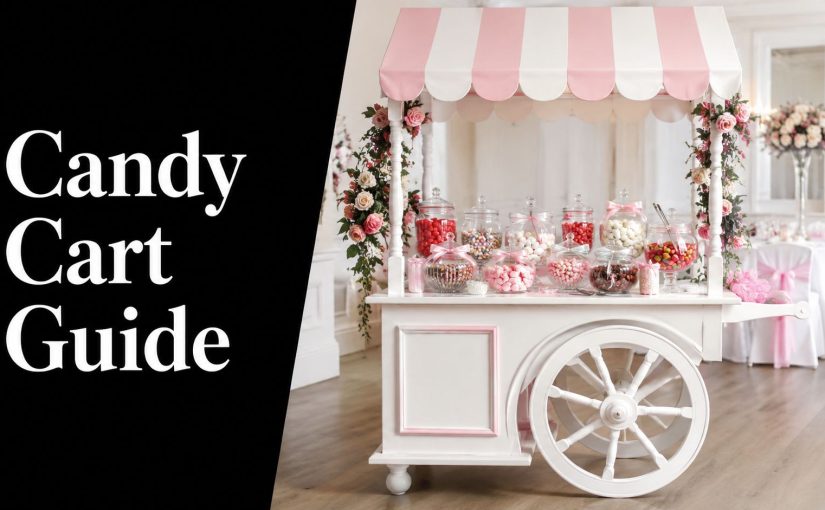
You're probably here because the Pinterest board looks great, the event mood board is almost done, and now someone wants a candy cart for sale quote before the whole plan gets out of hand. That's the usual Cape Town story, a wedding in the Winelands, a matric dance in the suburbs, or a brand activation in town, and suddenly the question isn't “which cart looks cutest”, it's whether buying one is smarter than hiring it for the day.
That decision matters more than most listings admit. A cart can be a smart little asset, or it can become a bulky prop you store in a garage and drag out twice a year. If you want a practical framework for thinking about equipment spend in your business, your shop's profitable growth plan is worth a look before you commit.
The Real Decision Behind a Candy Cart for Sale
A lot of buyers start with fantasy, not function. They see a styled cart full of sweets at a wedding in Stellenbosch, then they search for a candy cart for sale and assume ownership is the next step. In practice, the first decision is simpler, and harsher, do you need a cart once, a few times a year, or often enough that it starts to earn its keep?
What Cape Town buyers are actually comparing
For a one-off celebration, ownership usually loses on convenience alone. You need a place to store the cart, a way to move it, and time to clean it after the event. If you're hosting in Cape Town, the Winelands, or surrounding areas like Franschhoek and Paarl, that storage and transport piece matters more than the online photo.
For repeat use, ownership can make sense. School fairs, seasonal markets, and brand activations create a different math because the cart isn't a decor expense anymore, it becomes an operating asset. That is the key filter, not whether the cart has pretty paint or a rustic signboard.
Practical rule: if the cart won't be used often enough to justify storage, transport and upkeep, hire it.
The best buyers I work with don't start by browsing the prettiest cart. They start by answering four blunt questions, how often will it be used, where will it live, how will it get to the venue, and who's cleaning it afterwards. Once those are clear, style becomes the final choice, not the first one.
If the answer is still fuzzy, don't force the purchase. A hire option protects the budget and keeps the event planning simple, which is usually what the client wants anyway.
Cart Types and Features Worth Knowing
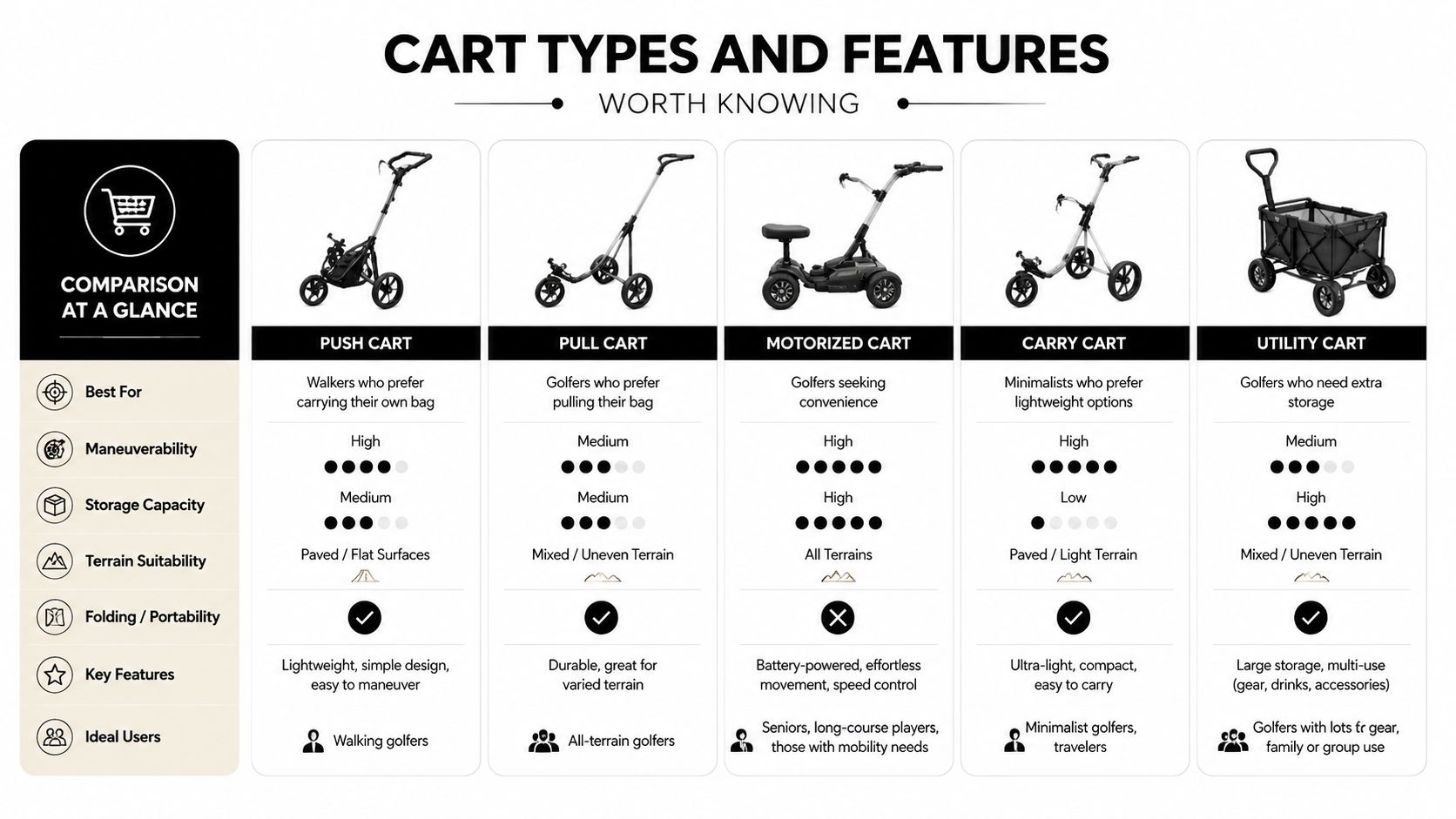
A cart that looks perfect in a product photo can be a pain on event day. Cape Town buyers should judge the frame, the weight, the storage footprint and how fast the cart can be loaded, not just whether it looks cute beside a dessert table. That is where the money is lost or saved.
The main cart styles
A classic decorative cart suits weddings and styled events where appearance matters more than movement. It gives you a polished finish, but fixed shapes and heavier builds become a headache if you need to shift stock between venues or move the cart through tight loading bays.
A flat-pack folding cart is the one I rate for mobile work. It stores better, loads faster and is far easier to keep in rotation when you are doing events across Cape Town and the Winelands. For anyone pricing out a candy cart for sale, that convenience often matters more than a fancy silhouette.
A full vending cart is a different purchase altogether. Once the cart has to carry a machine, you need to think about frame strength, power access and cleaning, not just display value. A cart that works for pre-packed sweets can be the wrong fit for live service.
A rustic wooden cart works best for farm weddings and relaxed outdoor venues. It photographs well, but wood needs care, dries out badly in the wrong conditions and is a poor choice if you expect to move the cart often.
Features that earn their place
- Wheels over fixed legs: useful if you move the cart yourself and want to avoid lifting it with two people.
- Lockable storage: worth paying for if the cart holds stock, jars or serving tools.
- Removable canopy: practical for outdoor activations and harsh sun.
- Adjustable shelves: useful if you change layouts often.
- Decor-only trim: pleasant to have, not worth a premium unless the event depends on styling.
If you are comparing carts with other dessert stations, the chocolate fountain machine hire guide is a useful benchmark because it makes the same point clearly. Spend on function first, then decide how much visual polish the event really needs.
Materials, Sizes and Custom Branding
A candy cart is event furniture first, branding surface second. Buyers often obsess over colour and forget that the cart has to survive load-ins, heat, cleaning and occasional rough handling. In Cape Town, where one weekend can mean sun, wind and a damp warehouse on Monday morning, material choice matters.
What each material is really good for
| Cart material comparison | Typical look | Durability | Best for |
|---|---|---|---|
| Powder-coated steel | Clean, commercial, modern | Strong for repeated use | Mobile suppliers and frequent event use |
| Pine or reclaimed wood | Rustic, warm, handmade | Good if cared for properly | Weddings, farm venues, styled shoots |
| MDF with laminate | Flat, neat, budget-friendly | Fine for light use, less forgiving with transport | Low-budget decor carts and occasional use |
| Stainless steel components | Functional, hygienic, professional | Best for cleaning and food-service contact | Carts that double as service stations |
The point isn't that one material is always better. It's that the wrong material pushes costs up later. MDF looks affordable upfront, but it's not the choice I'd make for a cart that gets moved every few weeks. Powder-coated steel is harder to ruin, and stainless steel is the safest bet where food contact and cleaning are part of the job.
Branding that works in real life
Vinyl wraps are the quickest way to get a cart branded cleanly. Acrylic signage looks sharper, but only if the design is simple and the cart is used in controlled conditions. Chalkboard panels suit casual, changeable messaging, though they can look messy if the handwriting is weak.
Custom colour matching sounds attractive, but it only pays off when the cart is part of a larger branded setup. If the cart is for a wedding or a single activation, keep the finish simple and spend the budget on consistency, not overengineering.
For buyers comparing build quality against equipment spend, the embroidery machine price guide is a good reminder that accessories and setup costs can outrun the base item if you chase too many extras.
Typical Price Ranges for New and Used Carts
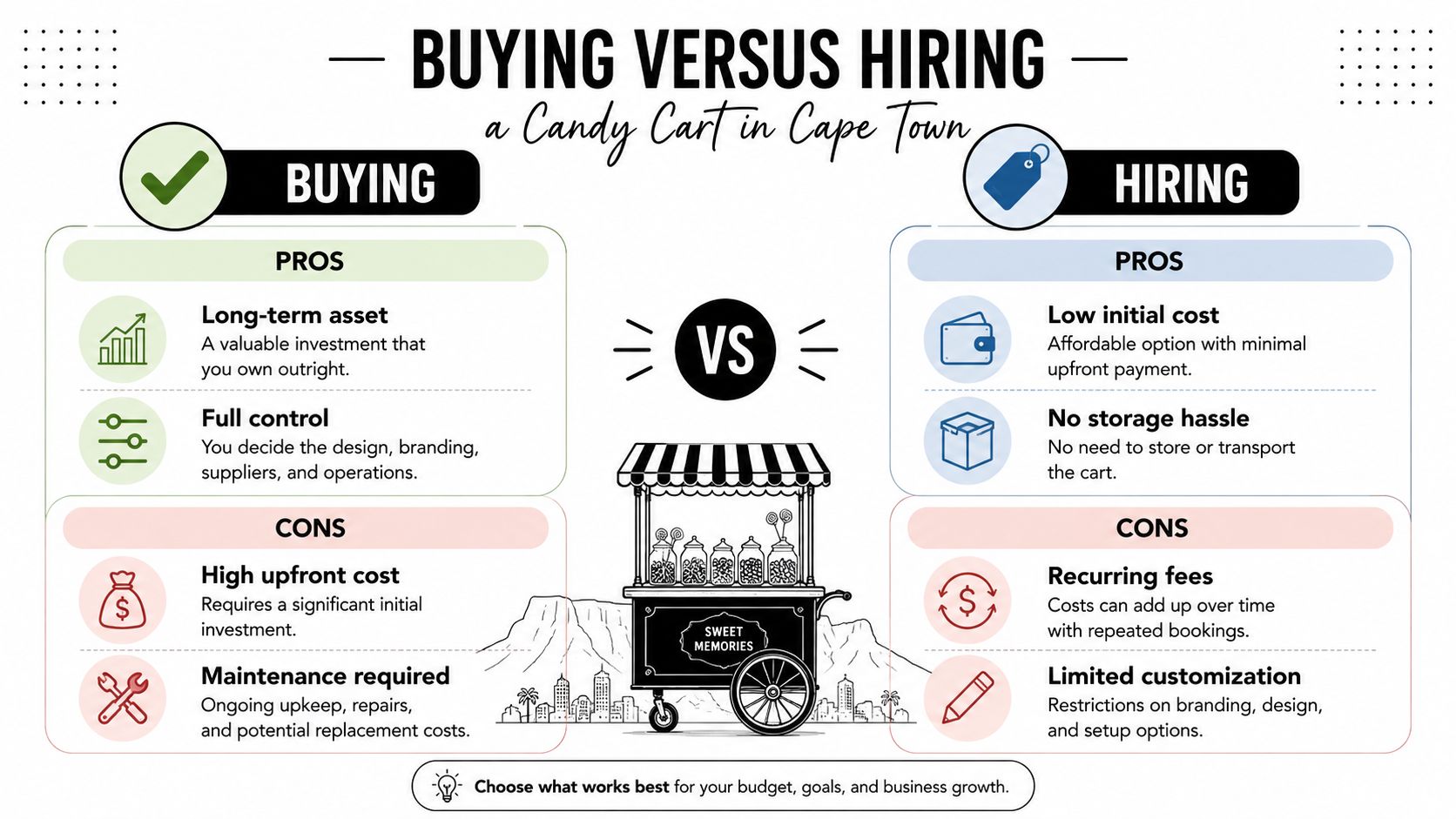
Pricing on a candy cart for sale listing is messy because buyers aren't comparing like with like. One cart includes signage, jars and a finished paint job. Another is just a frame with a plank and a promise. That's why the finish, accessories and support matter as much as the frame itself.
Where the real savings usually are
Used carts can be worth it when the frame is solid and the seller has kept the cart dry and clean. The genuine savings come from avoiding cosmetic extras you don't need. The risk is buying a cart that looks fine in photos but needs repairs, replacement wheels or a full refinish before it's venue-ready.
New carts cost more because you're paying for consistency, finish and fewer surprises. That's especially true with custom wooden builds from local Cape Town makers, where the craft and fit-out take time. Imported decorative carts can seem cheaper, but the final bill often rises once you add delivery, replacement jars, signs and textiles.
What to budget for beyond the cart itself
The cart is only the starting point. You still need to think about jars, scoops, labels, linen, sweets, packaging and transport. If the cart is branded, add the sign treatment. If it's hired out or used at a venue with strict standards, add cleaning and sanitising supplies.
Before paying a deposit, ask for current photos, exact dimensions, what's included, and whether the cart has already been used at events. If the seller can't answer clearly, walk away. A cheap listing is only cheap if you never have to fix it.
Buying Versus Hiring a Candy Cart in Cape Town
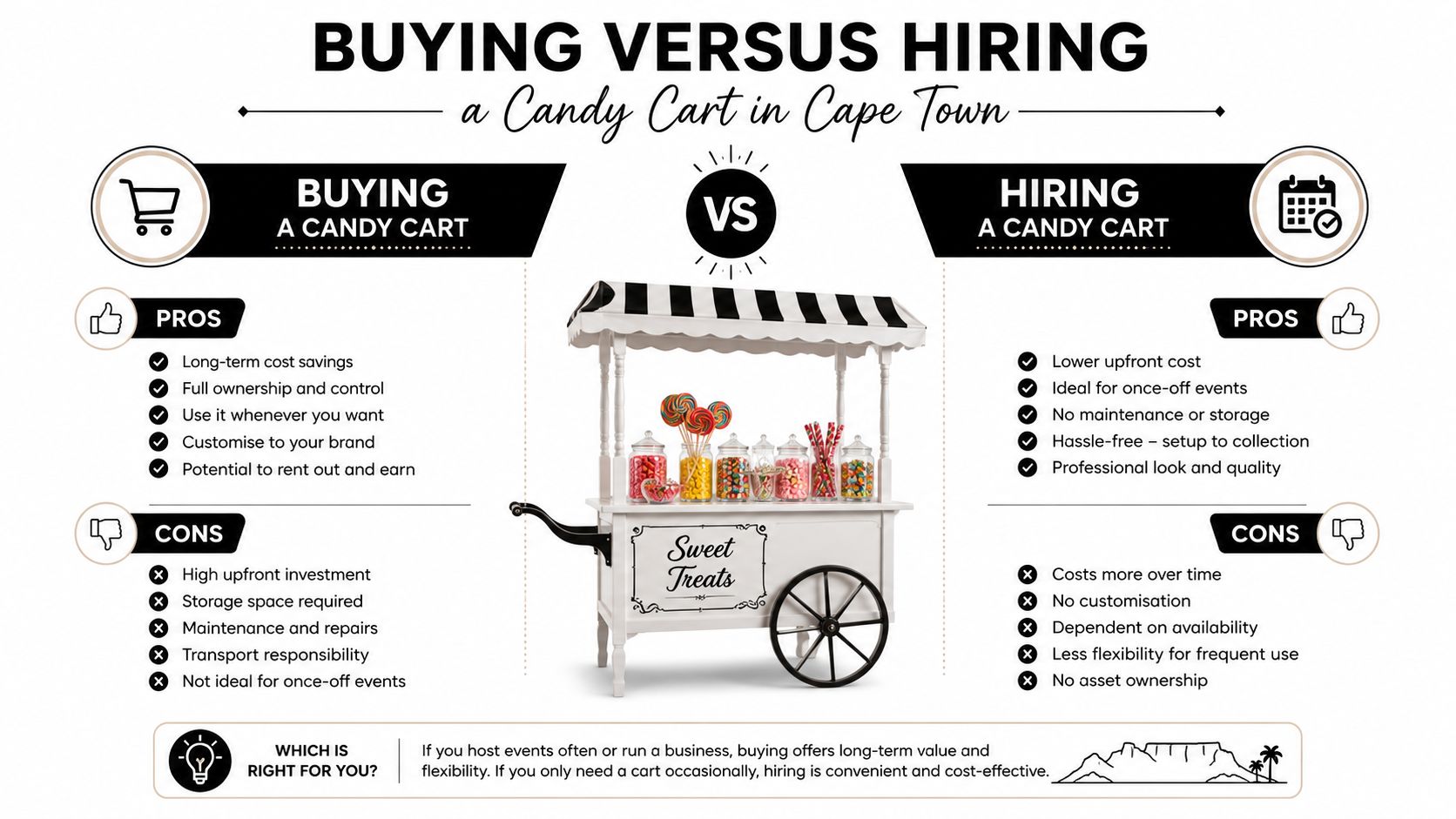
A lot of Cape Town buyers fixate on the sticker price and miss the harder question. If the cart is for a single wedding or a once-off function, hiring usually makes more sense because you avoid storage, cleaning, transport and the problem of where the cart sits after the event. If you'll use it often, ownership starts to justify itself.
When buying is the better move
Buying makes sense when the cart has regular work ahead of it. School fairs, recurring corporate activations, market stalls and event businesses all benefit from having a cart ready to go without arranging stock and styling from scratch each time. A lightweight flat-pack cart helps here because it is easier to load into a family vehicle and easier to move without dragging in extra hands.
Buying also gives you control over branding and presentation. If your events need the same look every time, that control is worth paying for. You can keep jars, labels and styling packed and ready instead of rebuilding the setup for every booking.
When hiring is the smarter call
Hiring wins for occasional, specific events. A matric dance, a once-off birthday, or a single wedding does not justify tying up money in equipment that will sit unused. It also removes the storage headache, which is often the deal-breaker for Cape Town homes and small event stores.
Hiring also works well when you are still testing demand. Some clients like the look of a candy cart on a mood board, then decide the guest list would get better value from another dessert feature once they start looking at the full event spend.
Buying gives control. Hiring gives flexibility. For one-off events, flexibility is usually the better bargain.
If you want a rental model instead of carrying the ownership burden yourself, the cotton candy machine hire guide shows why hiring specialised equipment often suits occasional events better than buying it outright.
Hygiene, Safety and Venue Compliance
Venues notice cleanliness immediately. Schools notice it even faster. If a candy cart looks pretty but can't be wiped down properly, it creates friction before service even starts. That's why stainless steel components matter on food-service units, because they're easier to clean thoroughly than painted or composite surfaces.
What matters on the day
A true food-service cart is different from a decorative display. A cotton-candy machine, for example, can pair a 950 W heating system with a 30 W motor and operate in a 338–482°F range, which means the heater is the main power draw and venue planning has to account for mains supply and surge capacity (commercial cotton-candy machine specs). That matters if you're running the unit in a school hall, tented venue or corporate space with limited sockets.
Even where only pre-packaged sweets are served, the setup still has to look controlled. Staff should have a clean work surface, covered stock, and a serving method that doesn't invite sticky hands all over the display. If the venue is strict, a cart that doubles as a tidy service point will save you more hassle than a purely decorative piece.
Compliance touchpoints buyers shouldn't ignore
- Municipal trading rules: relevant if the cart is used repeatedly or for public vending.
- Food-handling expectations: schools and family venues often want basic proof that service will be hygienic.
- Public liability: corporate activations can ask who carries the risk if something goes wrong.
- Venue approval: some sites want the supplier's equipment list and confirmation that the cart suits the space.
For a broader look at event equipment documentation and what venues usually expect, the catering equipment for hire guide is a useful reference point. The main lesson is simple, if the cart is going to touch food, the venue will care about how you clean it and who is responsible for it.
Upkeep, Storage and a Sample Budget
A candy cart is easy to buy and easy to neglect. The buyers who get value from it are the ones who treat upkeep as part of the purchase, not an afterthought. After every event, wipe the shelves, clean the jars and lids, check the wheels, and look over the branding panels for scratches or peeling edges. If the cart sits in a damp garage through a wet Cape Town winter, the finish will suffer fast.
A simple ownership budget
Build the budget around five items, the cart itself, branding, jars and consumables, transport, and a contingency line for repairs or replacement pieces. Skip the contingency and you will pay for it later, usually at the worst possible moment.
The bigger mistake is buying a cart that looks good in photos but falls apart under real use. A cart with a glossy finish and weak hardware becomes a maintenance bill. A simpler build that can handle repeated loading, unloading and cleaning is the smarter spend for Cape Town buyers who plan to use it more than once.
A hire quote tells a different story. You pay for the cart, setup, collection, and the convenience of handing the problem back at the end of the event. For occasional events, that usually makes more sense than ownership. Buying only starts to win when the cart is going to work across several events and you already have storage and transport under control.
Budget rule: if storage and transport feel improvised, you are not ready to buy yet.
Spending too much on style and too little on durability is where buyers get burned. A cart that looks polished on day one but needs constant touch-ups is poor value. Spend on solid construction first, then on the finish and branding details that matter for the event.
Decision Checklist and Frequently Asked Questions
Use this before you pay a deposit.
If the cart will only appear at one event, hire it. If you expect several events this year, compare ownership against hire properly, because that is where the cost decision sits. A cart without storage space or dry transport still points to hire. A cart that already has a place to live, a vehicle to move it, and a plan for repeat use starts to justify buying. If branding must stay consistent across weddings, school formals or activations, ownership can make sense. If you want no maintenance at all, hire every time.
Should I buy local or import? Buy local if you want easier communication, easier support and fewer surprises on size, finish or build quality. Importing can look cheaper on paper, but buyers in Cape Town often pay for the gap later when the cart does not match what they expected.
What proof of compliance should I ask for? Ask for cleaning details, food-contact material information if the cart serves food, and any venue-facing paperwork the supplier normally provides. If the cart will sit at a school, hotel or wedding venue, you want those documents ready before the event starts.
How early should I book hire? Book well ahead for peak wedding and matric dance periods, because the better stock goes first. Leave it too late and you end up choosing from whatever is left, not what suits the event.
Is a very cheap listing risky? Usually, yes. If the price looks too good, assume the finish, strength or accessories are missing something. Cheap carts often need repairs, extra fittings or a second round of branding before they are usable.
For most Cape Town buyers, the maths still points to hiring unless the cart will work repeatedly across the year. If that's your situation, look at ABC Hire for a straightforward rental option that keeps the event polished without turning a one-day idea into a long-term storage problem.
If you're weighing up a candy cart for a wedding, school event or brand activation in Cape Town, ABC Hire can help you keep it simple and professional. Visit ABC Hire to check event hire options that suit one-off celebrations, and skip the cost, storage and upkeep of ownership when hiring makes more sense.