

You're four weeks out, the guest count is fixed, and the table plan still isn't settled. That's exactly when table linen for sale stops being a décor decision and becomes a logistics decision. If the cloth misses the drop, fights the venue's table shape, or looks wrong under Winelands light, the whole room feels off.
Cape Town planners get caught here all the time. A linen swatch looks elegant in a showroom, then lands on a trestle at a Stellenbosch estate and suddenly it's too short, too shiny, or too stiff against the room's oak, stone, and glass. The fix is simple, but it has to be practical. Measure the tables properly, choose fabric for the venue, and stop treating sizing as an afterthought.
For context, South Africa's demand for home and event textiles rests on a large, urban consumer base, with a population estimated at about 63.2 million in 2024 and 68.7% of people living in urban areas in 2023, according to World Bank data cited in the market brief on table linen. That matters in Cape Town because urban buying is easier, event turnover is faster, and linen moves through retail and rental channels more often than in low-density markets. Add the country's GDP per capita of about US$6,100 in 2024, also cited in the same brief, and you're not just dressing a basic table. You're specifying presentation, repeat use, and guest-facing polish. For a planner, that's the essential work. World Bank-based South Africa market context
Why Linen Choice Matters More Than You Think
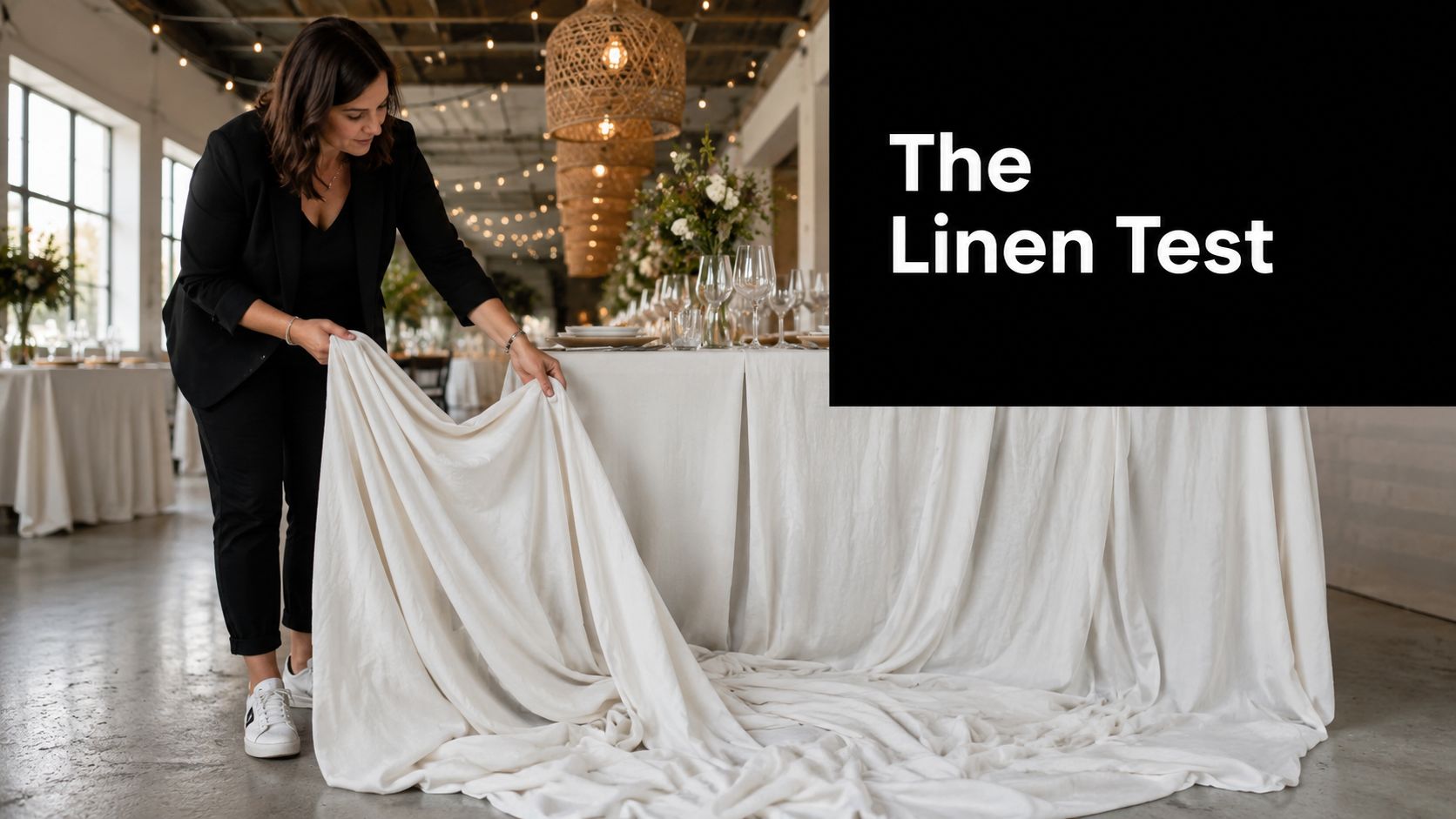
The mistake usually happens at the sample stage. The cloth looks perfect folded over a chair, the colour seems calm, and everyone nods. Then the tables arrive, the venue team starts laying them out, and the linen either stops short of the floor, puddles where guests will kick it, or clashes hard with the estate's timber and stone palette.
The fit problem comes first
A linen can look expensive and still be wrong. Cape Town and Winelands venues are full of table types that don't forgive lazy ordering, round banquets, long trestles, cocktail poseurs, and mixed-size setups all demand different drop lengths. If you only think in terms of “white cloth” or “nice fabric”, you end up solving the wrong problem.
Practical rule: if you don't know the table's exact dimensions, you don't know the linen size. Guessing is how you end up steaming cloths at midnight or borrowing from another supplier.
The other issue is visual weight. A crisp white cloth can read as formal in one room and clinical in another. On a rooftop in the city, that same cloth might feel too bright under hard light, while at a wine estate it can look smart if it's balanced with warmer natural textures.
Style only works after fit
That's why I treat linen as a fit-first purchase. Once the drop is right, the colour and fabric can do their job. Before that, design is just a distraction.
If you need a quick visual reference on dressing the table after the size is locked, use the styling examples in ABC Hire's table décor guide, but don't let styling advice override measurement. The cloth has to behave on the table before it can look good in the room.
Fabric Types That Actually Work for Events
Most planners hear “polyester, cotton, linen” and think they're just different looks. They're not. They behave differently once the cloth meets venue heat, wind, photographers, and guests leaning across the table. The best choice is the one that survives the room you've booked, not the one that sounds nicest in a supplier catalogue.
What each fabric does in practice
Polyester is the safe event workhorse. It tends to crease less, which is useful when a rental team is turning tables quickly, and it usually stays visually calm under pressure. The trade-off is that it can photograph a bit warm and feel less natural in a close-up setting.
Cotton feels familiar and premium, but it shows wrinkles quickly. On a formal dinner where guests are close to the table, that can be fine if the linen is pressed properly and handled well. On a rushed setup, it becomes a maintenance problem.
Pure linen is the one I'd choose when the brief says elegant, natural, and slightly relaxed, but only if the team is prepared for care and pressing. A local product listed at 190 g/m² is described as a medium-weight cloth with better drape stability than lighter decorative linens, and that matters in rental use because heavier cloth sits more cleanly and masks table structure better. 190 g/m² pure linen reference
Satin or taffeta has its place for corporate branding, stage-adjacent tables, and more polished formal setups. Use it sparingly. It can look sharp, but it also makes mistakes obvious, especially if the tables underneath aren't perfectly square.
Pick by event, not by habit
If the event is outdoors in a windy Winelands setting, choose a heavier cloth that doesn't skate across the table. If the event is formal but not fussy, cotton blends are the middle ground that keeps most planners sane. If the brief is premium dining with close guest interaction, pure linen wins on texture, but only if you can handle the maintenance.
For a straightforward breakdown of tactile table layering, the woven mat examples in ABC Hire's table mats guide are useful, but keep the main decision focused on how the fabric behaves, not just how it looks.
Sizing and Drop Length for Cape Town Tables
Most linen orders go wrong here. The method is not complicated, but it has to be followed properly. Measure the tabletop, then add the desired drop twice. That means one allowance for each side of the table, not just one. For a 30-inch-high banquet table, a full-drop linen usually needs 60 inches added in length and width, and for a 36-inch-high table, it needs 72 inches added, because the cloth has to cover both sides evenly. Table sizing method and drop allowance
Use the table shape, not the table vibe
Round tables, rectangular trestles, and cocktail poseurs all need different thinking. A “one-size” cloth is how people end up with knees showing or fabric dragging where glasses and feet catch it. For Cape Town and Winelands venues, I'd rather see a planner overspecify the drop than hope a too-short cloth will pass as intentional.
Here's the simplest way to think about it.
| Table format | Tabletop size | Seats | Full drop, floor-length | Knee-length drop |
|---|---|---|---|---|
| Round banquet | 60 inch round | 8 | Add 60 inches to the diameter | Mid-length, no floor touch |
| Round banquet | 72 inch round | 10 | Add 60 inches to the diameter | Mid-length, no floor touch |
| Rectangular trestle | 6 ft x 2.5 ft | 6 to 8 | Add 60 inches to both length and width | Drop to below the knee line |
| Rectangular trestle | 8 ft x 2.5 ft | 8 to 10 | Add 60 inches to both length and width | Drop to below the knee line |
| Cocktail poseur | small round top | 2 to 4 standing | Add 72 inches for the 36-inch height | Usually not recommended |
Know what each drop says
A full drop gives the room the cleanest formal line, especially for weddings and black-tie dinners. A knee-length drop is safer for mixed-use spaces, buffet edges, and more casual corporate functions. Floor-pooling works only when the venue team wants a dramatic look and the floor is clean, level, and not crowded.
Rule I stick to: if guests are seated close enough to touch the cloth with their knees or shoes, the linen is too short for a formal event.
The biggest practical advantage of exact sizing is that it helps you brief a supplier in one sentence instead of three vague ones. Don't ask for “big rectangles” or “something elegant for trestles”. Give the table format, the tabletop size, and the drop you want.
Colour and Styling for Winelands Venues
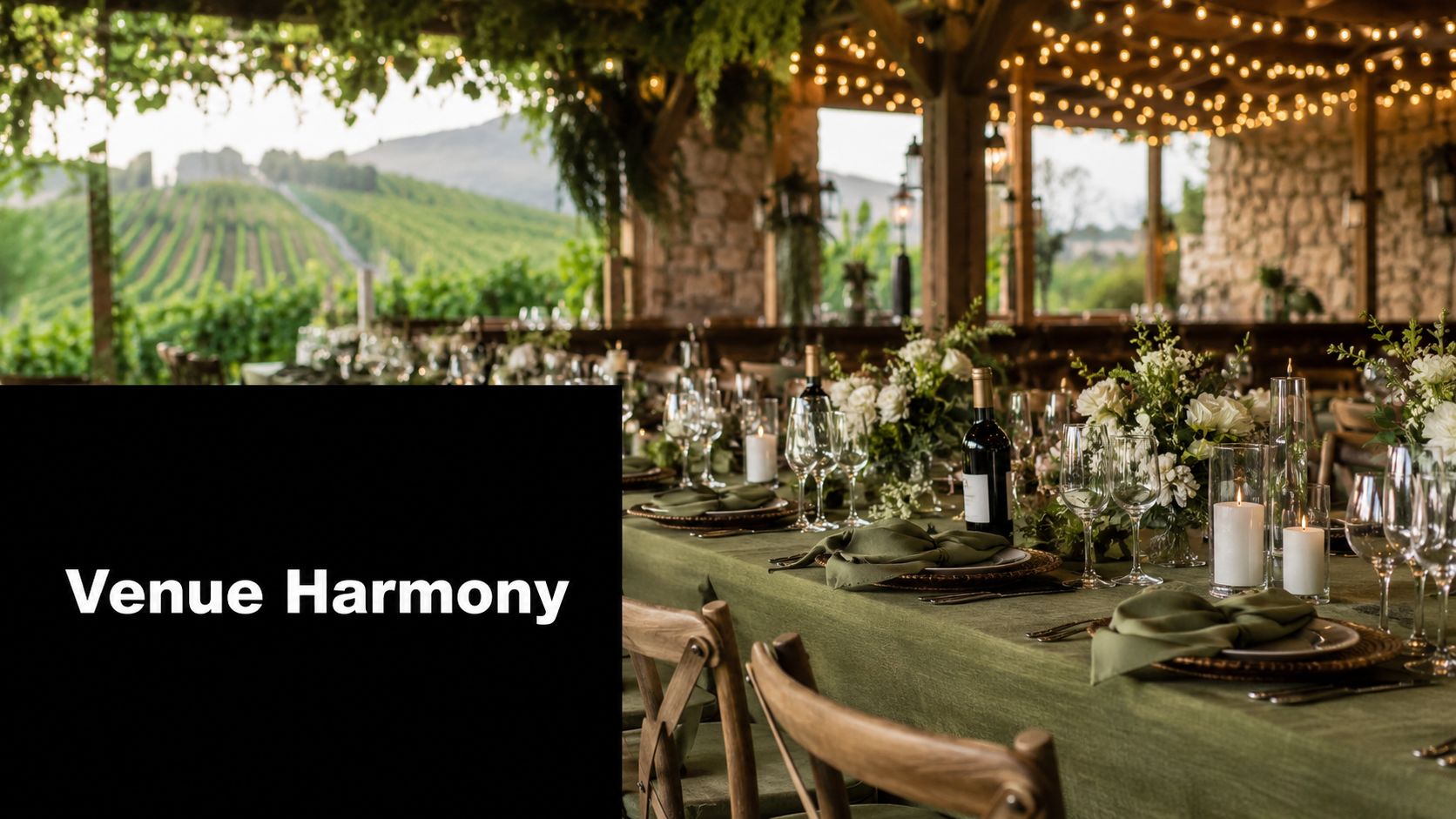
Cape Town and the Winelands don't reward random colour choices. A linen that looks soft in daylight can go flat under warm vineyard lighting, while a sharp white can feel cold in a city venue with glass walls and polished floors. The right answer depends on the venue's material palette, the time of day, and whether you want the linen to disappear or carry the styling.
Match the room, not just the mood board
At historic wine estates in Stellenbosch and Franschhoek, I'd lean towards warm neutrals, soft ivory, sand, or stone, because they sit better beside terracotta, timber, and vineyard greenery. At contemporary city venues, a cleaner white or charcoal-toned linen works better because the architecture usually carries the visual weight already.
For coastal or garden settings, keep the base calm and let texture do the work. A runner or napkin band in olive, dusty green, or muted clay is usually enough. You don't need to force a full-colour tablecloth onto a room that already has enough visual movement.
Keep bold colour in the accents
Most planners overdo colour at table level. If the florals are strong, keep the linen quiet. If the floral budget is restrained, the runner can take more of the visual load. That's how you avoid the room feeling overworked.
A simple rule helps:
- Warm venue materials: choose ivory, oat, or soft beige.
- Cool modern interiors: use crisp white, slate, or deep neutral tones.
- Garden or vineyard settings: pair natural linen shades with a coloured napkin, not a loud base cloth.
- Black tie or formal dinners: keep the cloth neutral and add contrast through glassware, chairs, or menu cards.
The mistake is trying to make the linen be the centrepiece when the venue already has its own personality. Let the fabric support the space. Don't fight it.
Buying Versus Renting for the Cape Town Market
If you're planning one milestone event, rent. If you're running regular corporate functions, buying can start to make sense. If you're a full-time planner or venue with constant turnover, owning usually wins on long-term convenience. That's the clean answer, and I'd stick to it.
Match the purchase model to the event volume
For a single milestone celebration, buying is the wrong move unless you already have a storage system and you know you'll reuse the cloth. One-off events rarely justify the upkeep, and rental houses in Cape Town already stock the standard sizes and colours most planners need.
For seasonal or recurring functions, buying makes sense if the same look gets reused across multiple dates and storage isn't a problem. Pure linen can be a great choice, but only if someone is willing to press it and keep it in good condition.
For a full-time planner or venue, buy. The convenience of having the right sizes on hand matters more than the initial outlay, and you stop relying on whatever a rental house has left after peak weekends.
A linen cupboard is only useful if someone has time to manage it. If nobody is pressing, sorting, and checking the stock, owning cloth becomes a chore, not an asset.
Keep the cost logic simple
I'm not going to pretend there's a universal breakeven number, because supplier pricing moves and the cloth type changes the maths. What matters is the pattern of use. If a cloth gets used repeatedly and stored properly, ownership can pay off. If it sits in a cupboard between one big event and the next, you're paying for fabric and forgetting about the labour that comes with it.
If you want a local sourcing reference that speaks directly to hiring cloth rather than owning it, ABC Hire's table cloth hire guide is the relevant place to start. Use that route when you need standard sizes fast and don't want laundry sitting on your own team.
Event-Specific Recommendations
For a wedding, I'd keep the base linen quiet and let the florals do the storytelling. At venues like Babylonstoren or MolenVliet, pair an ivory or soft stone cloth with a textured runner and napkins that echo the bouquet rather than compete with it. If the tables are long trestles, layer a runner down the middle and keep the side drop clean, because clutter around the edges kills the look in photographs.
Weddings
Use linen napkins in a shade close to the base cloth, or one step darker if you want contrast without chaos. On round guest tables, a full-drop cloth with a restrained runner often looks more polished than a busy printed option. If the ceremony and dinner are in the same space, keep the linen neutral enough to survive both daylight and evening light.
Corporate functions and brand activations
Corporate work needs cloth that reads calm on stage and still looks clean after repeated handling. Go with a durable base in white, charcoal, or deep neutral tones, then use a branded runner rather than printing the whole table if the budget is tight. That keeps the brand visible without making the whole room feel like a sales floor.
If you need event furniture and accessory support alongside the linen, ABC Hire stocks rental items for Cape Town and surrounding Winelands venues, which helps when the table setup is only one part of the brief. Keep the linen simple and let signage, menus, or a centrepiece carry the identity.
Matric dances and formal school events
Matric dances need cloth that can handle accidents, movement, and a lot of hands. Choose a practical fabric in a colour that works under camera flash, then keep the napkins coordinated rather than dramatic. A school event doesn't need a complicated table language. It needs clean, reliable presentation and easy cleanup.
For these events, I'd avoid fragile-looking finishes that demand constant correction. If the tables are long and the budget is tight, a consistent runner-and-napkin pairing is smarter than trying to make every table a design statement.
Care, Maintenance, and Price Ranges in Rands
If the cloth arrives wrinkled, don't panic. Steam it properly, hang it with space to breathe, and don't cram it into a cupboard the night before the event. For coastal Western Cape storage, dryness matters more than people admit. Damp linen picks up problems fast, and event linen that smells musty is a fail before it reaches the room.
What to do before and after the event
Before setup, inspect every cloth for seam issues, marking, or previous damage. On the day, treat spills immediately with a clean cloth, not panic and rubbing. After the event, separate stained linen from clean linen straight away, because mixing them makes sorting harder and often spreads the problem.
For storage, fold only when the fabric is fully dry. Keep it off the floor, out of direct sun, and away from anything that can trap moisture. That matters even more in the Western Cape than people expect, because humidity and storage shortcuts are a bad combination for formal linen.
What prices should look like
I'm not giving fantasy overseas pricing here. In South African rand, economy options are usually the entry point for basic tablecloths and napkins, mid-range covers the more common event cloths and better finishes, and premium sits where pure linen and heavier decorative cloths usually live. Rental per event usually makes sense for one-off functions, while buying becomes more practical when the cloth gets repeated use and can be maintained properly.
A supplier quote should tell you:
- Fabric weight, so you know if the cloth will drape properly.
- Exact dimensions, not a vague size label.
- Drop length, so you can compare against the table format.
- Stain and tear policy, because damage happens.
- Whether laundering is included, because hidden cleaning costs change the total price.
If a quote leaves those details out, push back. That's not being difficult, that's basic procurement.
A CTA for ABC Hire. If you're planning a Cape Town or Winelands event and need table linen that fits the tables on site, send ABC Hire your table sizes, event date, and preferred look now. Ask for cloth that matches the table format first, then the colour, and you'll save yourself the last-minute scramble that ruins so many good events.