
You're probably weighing this decision with an actual event on the calendar. A Winelands wedding needs cross-back chairs and a long harvest table look. A CBD product launch needs clean cocktail seating that won't look tired under branded lighting. A matric dance needs impact without blowing the décor budget in one night. In all three cases, the same question lands on the desk first. Do you buy the furniture, or do you use a rent own furniture approach that keeps cash free and logistics lighter?
In Cape Town, that decision is rarely just about price tags. It affects how much stock you must hold, how quickly you can pivot when a client changes theme, and whether your team spends event week styling a venue or chasing transport, cleaning, and storage problems. The planners who get this right usually don't chase the cheapest line item. They choose the model that matches how often they run events, how specialised their inventory needs are, and how much operational pressure they can absorb.
The Event Planner's Dilemma Renting vs Buying Furniture
A common Western Cape scenario goes like this. A couple wants an elegant Stellenbosch wedding with soft neutral tones, banquet seating, and a statement lounge corner for sunset drinks. The planner prices the look and realises the furniture list isn't made up of generic items. It includes pieces that need to look polished in photographs, survive transport over wine farm roads, and arrive on time with no fixing on site.
That's where the dilemma starts. Buying seems sensible if you expect repeat use. Renting seems sensible if you want variety and less admin. Rent-to-own sits in the middle and can work when you need access to quality pieces now but don't want the full cash hit upfront.
Why this choice matters more in Cape Town
Cape Town events aren't uniform. A wedding in Franschhoek, a conference in the CBD, and a matric dance in the northern suburbs all demand different furniture, loading schedules, and presentation standards. If you buy for one format, you can get trapped with stock that doesn't suit the next brief.
That flexibility is part of why furniture rental keeps gaining ground. South Africa's furniture rental market is projected to reach USD 1,754.41 million by 2033, growing at a CAGR of 11.38% from 2025, driven by urbanisation and demand for more flexible living arrangements, according to Industry Research on South Africa's furniture rental market.
For event planners, that projection lines up with what's happening on the ground. Clients expect unique styles, shorter lead times, and cleaner execution. Permanent ownership helps when your event profile is repetitive. It hurts when your style brief changes every weekend.
Practical rule: Buy only what you'll use often, transport easily, and store properly. Rent everything that is trend-led, bulky, fragile, or difficult to clean between events.
The strategic lens
The rent own furniture decision works best when you stop treating it as a yes or no question. Most experienced planners use a mixed inventory model.
A practical split usually looks like this:
- Own the basics: Plain folding tables, standard linen-friendly chairs, or back-of-house utility items can make sense if your team uses them constantly.
- Rent the visual heroes: Lounge sets, LED furniture, feature chairs, bars, and themed pieces are usually better hired when needed.
- Use rent-to-own selectively: If a certain furniture category appears in booking after booking, a staged ownership model can reduce strain on working capital.
If you want a broader events-focused view, this guide to renting furniture for events is useful for understanding where rental simplifies planning.
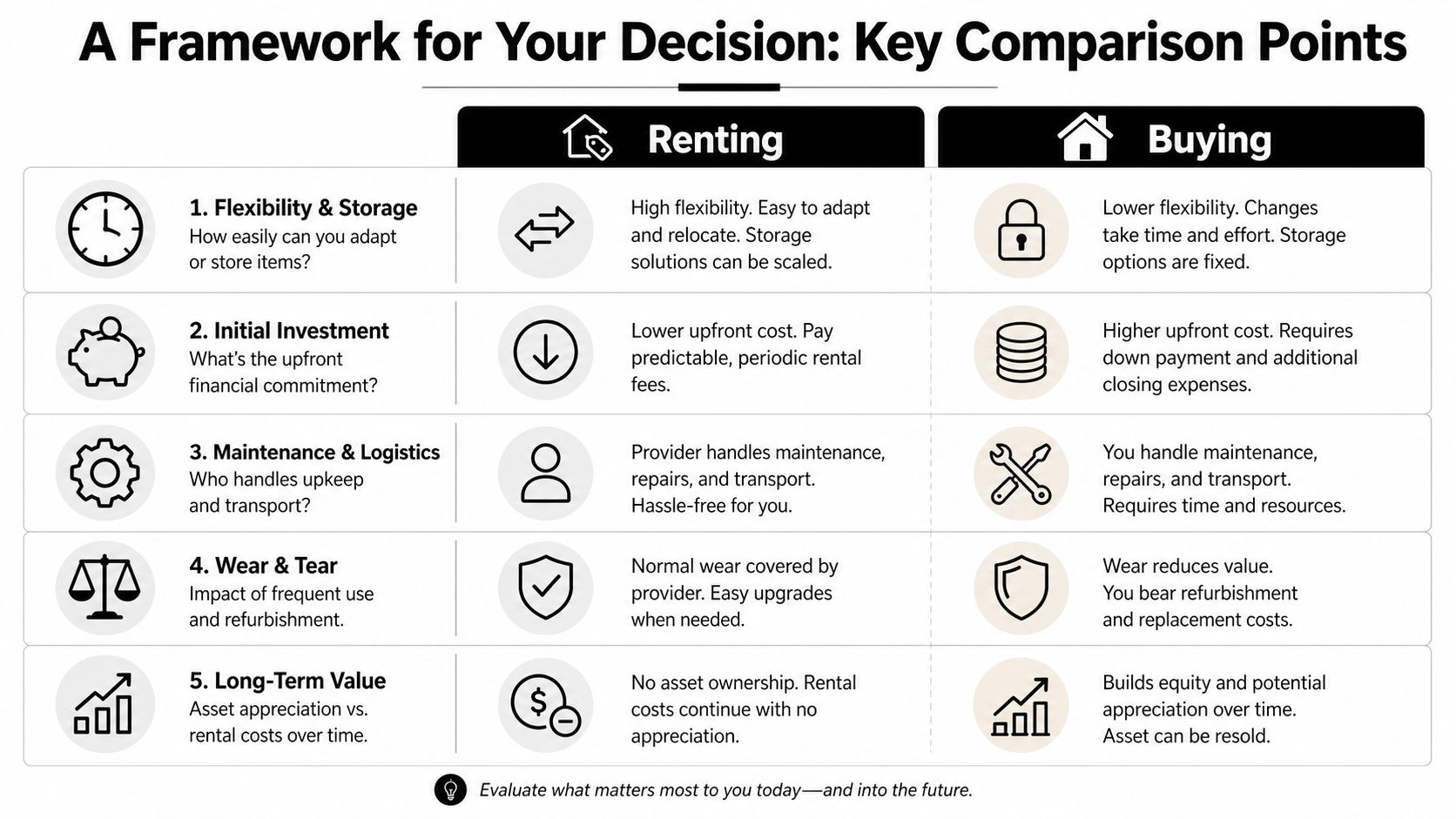
A Framework for Your Decision Key Comparison Points
Before you calculate any break-even point, compare the two options on the issues that shape event delivery. A planner can survive a higher line item more easily than a bad logistics week.
| Decision point | Renting | Buying |
|---|---|---|
| Upfront capital outlay | Lower immediate cash pressure | Higher immediate cash commitment |
| Long-term return | Better for irregular or varied event schedules | Better if the same items are used repeatedly |
| Style flexibility | Easy to switch looks for different clients | Best if your design style stays consistent |
| Maintenance and storage | Usually handled externally or reduced | Fully your responsibility |
| Logistics and transport | Often simpler to coordinate | Requires systems, staff, and space |
Upfront capital outlay
Renting protects cash. That matters when you're paying deposits to venues, florists, staffing teams, and transport suppliers at the same time. If you buy furniture outright, you lock money into stock before the event has even happened.
Buying has one real advantage here. Once the item is yours, future use doesn't trigger another hire fee. That's attractive for venues or planners with highly predictable event formats.
Long-term return
Ownership only wins when your event pattern is stable enough. If you run similar conferences every month with nearly identical layouts, bought stock can work hard. If your work swings between formal dining, cocktail networking, and themed school events, ownership often creates mismatched inventory.
This is similar to how property buyers think about use horizon, flexibility, and total carrying cost. If you want a simple non-event example of that mindset, Wispra's guide pour acheter un appartement is helpful because it shows how the wrong purchase can look good upfront and feel heavy later.
Style flexibility
Cape Town clients don't all want the same room. One week it's oak and rattan in Paarl. The next it's acrylic, chrome, and LED for a night launch near the Waterfront. Renting lets you respond to the brief instead of forcing the brief to fit your warehouse.
A stock room full of yesterday's fashion is not an asset. It's a reminder that event trends move faster than furniture depreciation.
Buying works when your visual language is consistent. A venue with a fixed house style can make ownership work beautifully. A freelance planner serving mixed clients usually needs more freedom.
Maintenance and storage
This category gets underestimated. Furniture has to be cleaned, checked, wrapped, loaded, unloaded, repaired, and stored in dry, secure space. Even sturdy pieces degrade if they're stacked badly or moved carelessly.
Renting shifts much of that burden away from the planner. Buying gives you control, but it also hands you every small problem that comes with wear, scratches, loose joints, and fabric marks.
Logistics and transport
A planner's week is already crowded. Add inventory management and things get messy quickly.
- With renting: Delivery windows, returns, and replacements are usually easier to coordinate.
- With buying: You need vehicle capacity, labour, loading plans, and contingency if something breaks in transit.
- With rent-to-own: You still need to evaluate who carries servicing and condition control through the term.
The Financial Deep Dive Calculating Your Break-Even Point
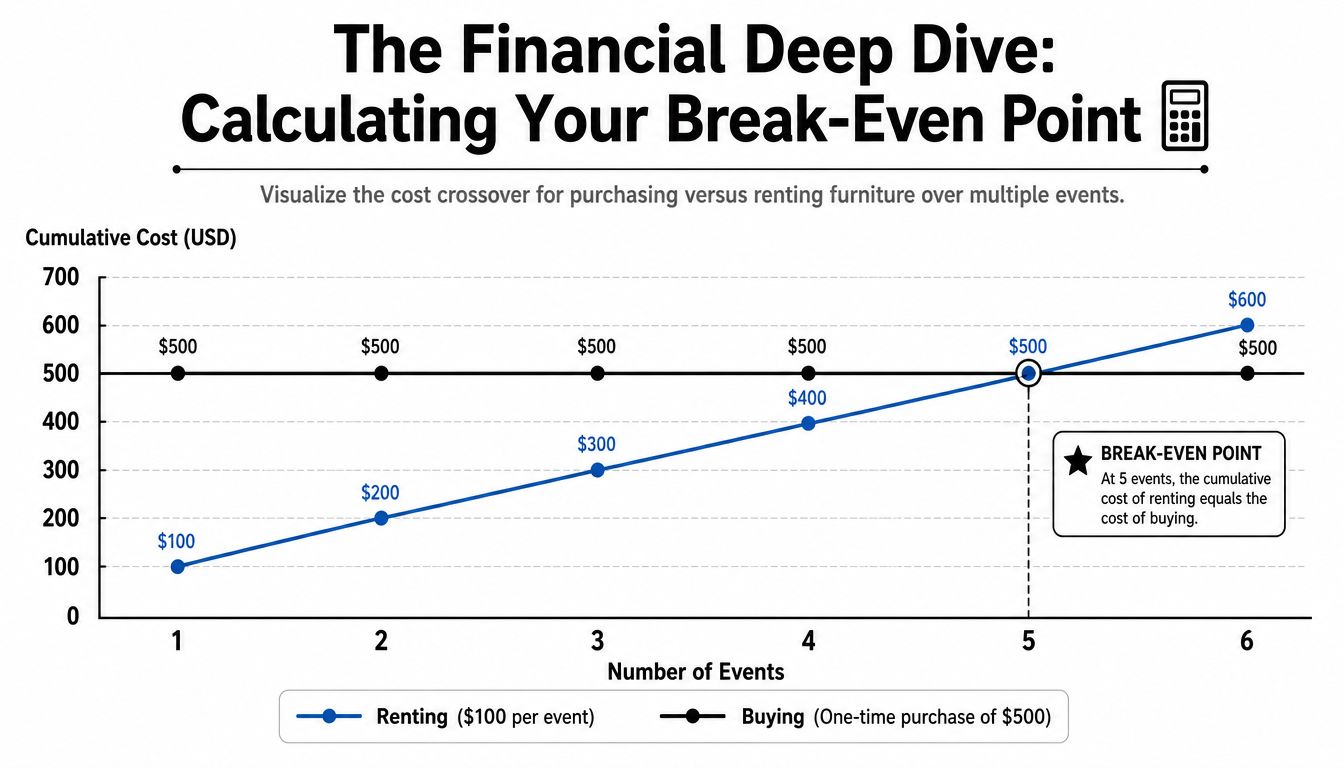
The break-even point is simple in theory. It's the moment when buying becomes cheaper than repeated renting. In practice, event planners miss it because they compare only the visible hire fee against the purchase price and ignore the rest.
Start with the basic formula:
Break-even event count = total ownership cost ÷ rental cost per event
That ownership cost isn't just what you paid to acquire the furniture. It also includes cleaning, minor repairs, transport handling, storage, admin time, and the realistic value left in the item after heavy event use.
A practical way to run the numbers
Let's say you're considering lounge furniture for recurring corporate networking events. You don't need perfect precision to make a smart call. You need a framework.
Use this sequence:
- List the item category clearly: Don't lump cocktail tables, couches, and ottomans together.
- Set the acquisition cost: Use your actual buy price or rent-to-own commitment.
- Estimate event frequency: Monthly, seasonal, or occasional.
- Add ownership overhead: Cleaning, handling, wrapping, storage, and likely refurbishment.
- Compare against rental usage: Multiply your likely number of uses by the hire cost.
A useful benchmark from the wider market shows the basic shape of the decision. Renting a living room set costs approximately USD 80 to 120 monthly versus USD 2,000 to 3,500 for outright purchase, with the cost advantage projected to reach 35 to 40% savings by 2033 as supply chains optimise, according to Fortune Business Insights on the furniture rental service market.
That doesn't map perfectly to every event item in Cape Town, but it captures the financial logic. If your use period is short or uncertain, renting often protects margin. If your use is frequent and consistent, ownership starts to look better.
Where planners usually miscalculate
The most common mistake is assuming every use after purchase is “free”. It isn't. Every event adds wear, coordination time, and risk. White couches need more attention than black cocktail stools. Ghost chairs show scratches. Timber tops chip. LED units need careful handling.
Field note: If you can't describe how an item will be cleaned, stored, and moved after each event, you're not ready to count it as a good ownership candidate.
Another useful comparison comes from adjacent short-stay operations. Operators in furnished accommodation often evaluate every item by turnover rate, replacement cycle, and handling pressure rather than headline purchase cost alone. That's why these short-term rental arbitrage insights are surprisingly relevant to event planning. The same discipline applies. Furniture only “earns” well when usage, care, and downtime are managed tightly.
When rent-to-own makes sense
Rent own furniture can be the right middle ground in three cases:
- You've identified repeat demand: The same inventory appears on bookings again and again.
- You want to preserve cash: Buying outright would strain event operations.
- You need quality immediately: Waiting to build inventory gradually would cost you bookings.
It works less well when your design requirements shift constantly. In that case, staged ownership still ties you to stock that may not fit next season's briefs.
Beyond the Price Tag Logistics Storage and Maintenance
Owning furniture changes your business model. You stop being only a planner and start becoming an inventory operator. Some teams are built for that. Many aren't.
Cape Town makes this sharper because storage isn't just a background issue. If your stock sits too far from your regular venues, turnaround gets harder. If it sits in the wrong space, condition slips. If it sits in a premium area, your overhead climbs before a single guest arrives.
The hidden work of ownership
A bought chair doesn't move itself to Constantia, Stellenbosch, or the CBD. Someone has to count it out, protect it in transit, unload it, place it, collect it, inspect it, and return it to storage. That's manageable with a few standard pieces. It becomes a burden when the inventory includes mixed materials, glass tops, upholstered seating, and statement items.
These are the costs planners often forget to price into ownership:
- Storage discipline: Furniture needs dry, organised space with stacking systems that won't damage finishes.
- Cleaning standards: Weddings and matric dances leave marks. Drinks spill. makeup transfers. Dust shows under venue lighting.
- Repair cycles: Loose screws, chipped paint, torn fabric, and scuffed edges all need attention before the next booking.
- Insurance and accountability: Once the item is yours, every scratch and loss is your problem to track.
Why renting often buys peace of mind
Rental isn't only about avoiding purchase cost. It buys operational relief. That matters most in peak season, when event teams are stretched and turnarounds are tight.
A practical example is same-day problem solving. If rain shifts a wine farm wedding indoors, or a corporate booking increases guest count late, rental support is often far easier to work with than trying to pull extra stock from your own scattered inventory. A service model, such as same-day furniture delivery for events, offers a solution to problems ownership can't fix quickly.
The hidden cost of buying is distraction. Your team spends time managing objects instead of managing the guest experience.
What works and what doesn't
Owning works when your stock list is narrow and your operations are disciplined. A venue with recurring layouts can justify that effort because the same items move in predictable patterns.
Owning struggles when:
- Your event types vary widely
- Your team is small
- Storage is limited
- Set-up crews change often
- Clients expect fresh styling each season
In those cases, the rental premium is often cheaper than the operational drag of carrying stock yourself.
Curating the Perfect Event Inventory for Cape Town Occasions
Not all event furniture deserves the same decision. Some items are practical workhorses. Others are visual tools that should stay flexible. If you treat them all the same, you either overspend on hiring basics or overbuy pieces that age badly.
A useful local signal is that event furniture such as LED tables and bean bags is growing at a 15.8% CAGR in South Africa's rent-to-own market, linked to urban mobility and co-living trends in Cape Town, according to Dataintelo's benchmark analysis of event furniture growth. That matters because these are exactly the categories planners tend to regret buying too early.
Winelands weddings
Weddings in Stellenbosch, Franschhoek, and Paarl are detail-heavy. Clients notice chair style, timber tone, lounge texture, and how everything photographs against the venue.
Best rented items usually include:
- Feature chairs: Cross-back, Tiffany, or any style chosen for a specific look rather than utility.
- Lounge settings: Couches, ottomans, and coffee tables for pre-drinks or chill-out zones.
- Statement bars and décor furniture: Pieces that carry the aesthetic but won't suit every future wedding.
Possible ownership candidates are plain service tables or versatile support pieces hidden under linen. Those don't date as quickly and don't need to impress in photographs.
Corporate events in the CBD
Corporate functions reward consistency, speed, and branding compatibility. Here, repetitive event formats can make ownership tempting. Sometimes that's sensible.
Consider buying only if you repeatedly use:
- Neutral cocktail tables
- Standard conference chairs
- Back-of-house utility pieces
Rent the client-facing style layer. That includes lounge furniture for networking areas, illuminated furniture for evening activations, and anything that must align with a campaign look. If your team needs inspiration on what's commonly available locally, this overview of furniture for hire in Cape Town is a practical starting point.
Matric dances and school formals
These events are high impact and often theme-led. One year's trend can look stale very quickly. That makes renting the safer call for most of the visible inventory.
Schools usually get better value by renting the wow factor and keeping their own spend focused on décor, lighting, and event management.
Good rental choices here include LED cubes, glow tables, bean bags, and themed seating. Buying them only makes sense for schools or organisers running multiple formal events with the same look and enough secure storage to keep everything in good condition.
Private parties and milestone celebrations
Birthdays, anniversaries, engagement parties, and home events usually have the shortest useful life for purchased furniture because the brief changes every time. One client wants sleek white bar stools. Another wants rustic benches. Another wants a children's chill zone.
For these events, a rent own furniture strategy only makes sense if you host often and favour the same core stock. Otherwise, renting keeps the brief open and the home garage clear.
Your Final Decision Checklist and When to Partner with ABC Hire
By the time you reach the final quote stage, the right answer is usually visible. The trick is asking operational questions before emotion gets involved. A beautiful furniture set can still be the wrong business decision.
Use this checklist before you commit.
Ask these questions honestly
- How often will this exact item be used? Not “something similar”. The exact chair, couch, bar, or table.
- Do you have proper storage? Not spare space for now. Proper space that protects condition between events.
- Can your team transport it safely? Delicate or bulky items create cost the minute they leave storage.
- Will the style still work next season? Trend-led inventory dates faster than planners expect.
- Do you want to manage maintenance? Someone must inspect, clean, repair, and track every piece.
- Would that capital work harder elsewhere? Deposits, staff, lighting, and décor often generate more event value than stock ownership.
A simple verdict guide
Renting is usually the stronger choice if most of these statements sound true:
- Your events vary in style
- You need flexibility across weddings, corporate functions, and formals
- You don't want storage and maintenance overhead
- You need specialist pieces for one-off briefs
- You'd rather protect cash flow than lock money into stock
Buying or rent-to-own deserves a closer look if these statements fit better:
- You use the same furniture repeatedly
- Your storage and transport systems are already organised
- Your event format is predictable
- You're building a standardised venue or recurring event operation
There's also a broader financing clue in the local market. In South Africa, rent-to-own furniture plans typically require monthly payments that are 25 to 30% lower than traditional financing, with quality furniture sets available for approximately R1,500 to R2,200 monthly versus R40,000 to R65,000 for outright purchase, according to Astra Furnishers' overview of rent-to-own furniture in South Africa. For event operators, that reinforces the value of staged access when outright buying would squeeze cash too hard.
When a rental partner is the better move
If your answers lean toward flexibility, specialist inventory, and lower operational burden, a dedicated event rental partner usually beats trying to build everything in-house. That's especially true in Cape Town and the Winelands, where venue access, delivery timing, and style expectations can shift fast.
A strong rental partner helps when you need:
- A broad range of chairs, tables, and lounge items
- LED furniture for night events
- Inventory that suits weddings, corporate functions, and private parties
- Reliable support across Cape Town, Stellenbosch, Franschhoek, and Paarl
The best rent own furniture decision isn't the one that looks bold on paper. It's the one that leaves your event better organised, your margins protected, and your team free to focus on guests rather than stock.
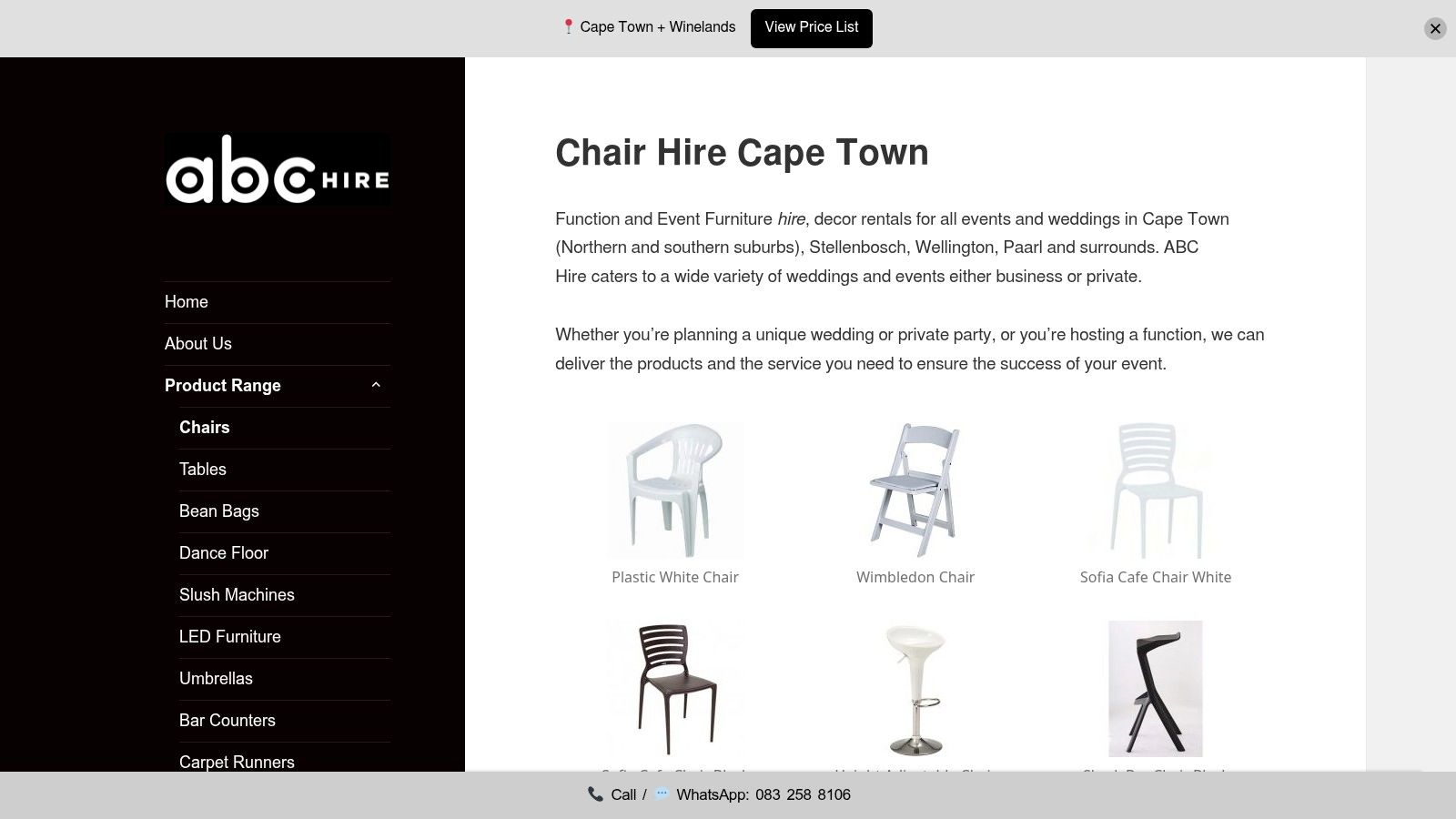
If renting looks like the smarter route for your next event, ABC Hire is a practical place to start. They offer event furniture and accessories across Cape Town and the Winelands, including chairs, tables, LED furniture, bean bags, climate control equipment, and more for weddings, corporate functions, matric dances, and private celebrations.