
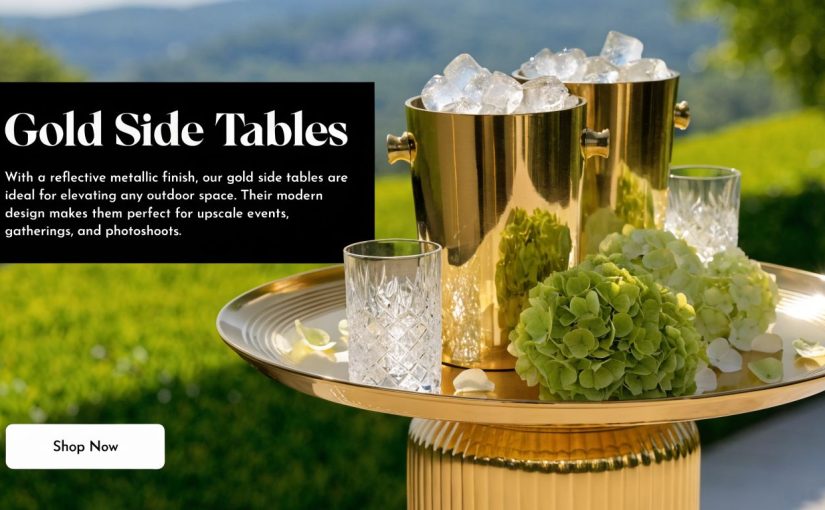
You’ve finalised the florals, the candles are on brief, the linen works, and the room still feels a little unfinished. That usually happens in the last layer of styling. The large items are doing their job, but the guest experience between those hero elements still needs shape, shine, and somewhere practical to rest a drink, a clutch, or a small arrangement.
That’s where gold side tables earn their place. In a Cape Town wedding lounge, they can lift a soft neutral palette without making it feel heavy. In a Stellenbosch corporate launch, they give a seating cluster a polished edge and make the room feel considered rather than merely furnished. They’re small pieces, but they read like jewellery in a venue.
The Midas Touch That Elevates Every Event
A planner will often walk into a venue and know immediately that the layout is correct but the mood isn’t landing yet. The sofas are in place. The bar is built. The lighting is working. What’s missing is a reflective accent that catches candlelight, LED glow, or late afternoon sun and ties the styling together without adding clutter.
Gold side tables offer unobtrusive support. They don’t fight with a statement floral install or a dramatic dancefloor. They support it. Place one beside a velvet occasional chair, or between two lounge seats with a low arrangement and glassware, and the whole area feels more intentional. That’s why they work so well as event pieces rather than just furniture.
South Africa’s connection to gold gives that finish extra resonance. The Witwatersrand Gold Rush of 1886 helped shape a long cultural familiarity with gold as a marker of celebration, craft, and status, and the country historically produced over 50% of the world’s gold supply according to this background on gold history. In the Western Cape event world, that affinity still shows up in how clients respond to gold-accented décor.
Gold works best when it’s used as punctuation, not as noise.
For planners building out a coordinated look, it helps to think of these tables as companions to other warm metallic seating details. If your event already includes gold Tiffany chairs, a side table in a matching or complementary finish can stop the room from feeling visually disconnected.
The effect is strongest when the table is doing two jobs at once. It needs to look elegant from across the room and still be useful at arm’s reach.
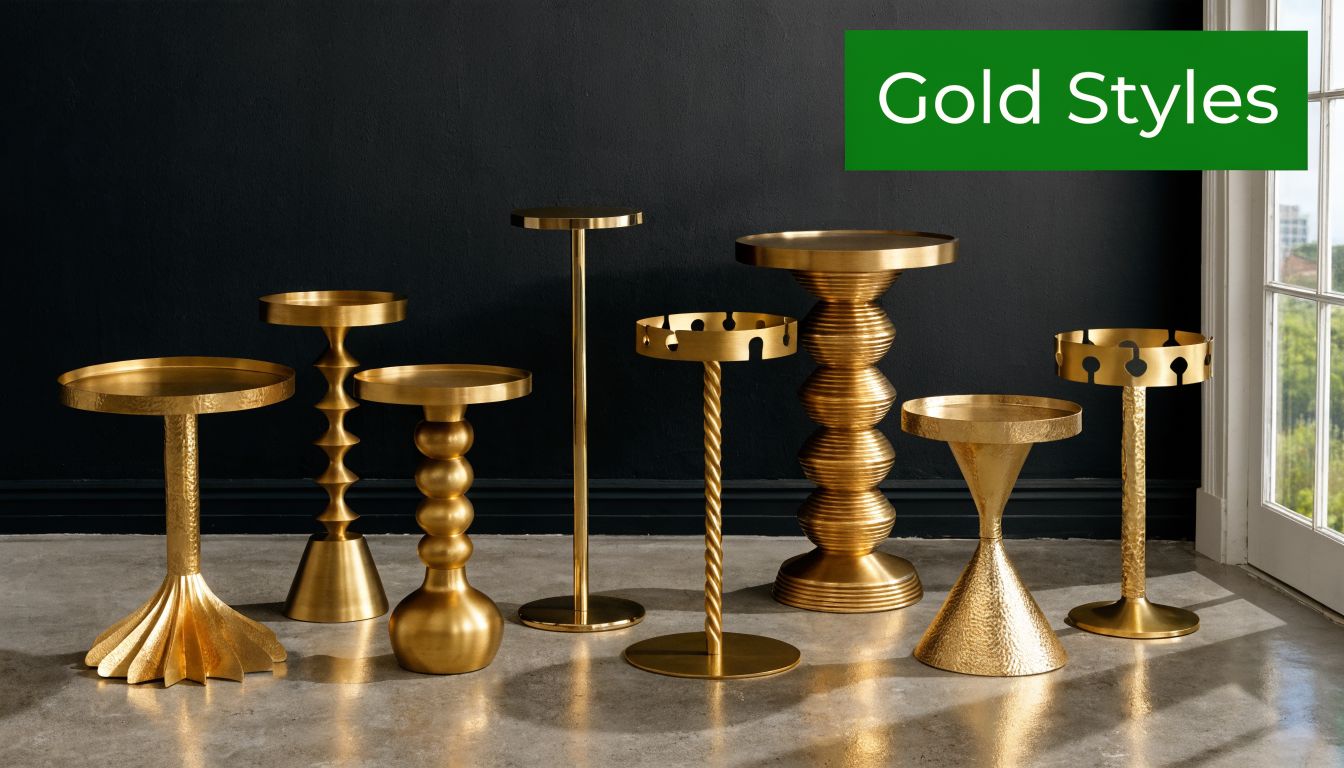
A Spectrum of Gold Exploring Styles and Finishes
Not every gold side table says the same thing. Some read clean and architectural. Others feel romantic, decorative, or overtly glamorous. Choosing well starts with understanding both style and finish, because clients often ask for “gold” when what they really mean is a specific mood.
Modern gold side tables
Modern gold side tables suit venues where the architecture is already doing some of the work. Think clean-lined wine estate interiors, glass-heavy reception spaces, or corporate lounges where branding needs to remain the focal point. These tables usually rely on slim frames, geometric bases, and restrained tops.
They’re useful when you want metal detail without visual heaviness. A round top with a simple gold frame can sit next to a boucle chair, hold a drink and a candle, and still leave the setup feeling airy.
A modern shape also plays well with black, stone, white, taupe, and smoked glass. If the event palette includes contemporary materials, browsing pieces similar in spirit to marble top end tables can help clarify whether you want the gold to feel warm and decorative or structured and architectural.
Vintage and decorative styles
Vintage-inspired gold side tables bring more personality. You’ll see curved legs, patterned metalwork, Art Deco references, mirrored shelves, or detailing that feels softer and more ornamental. These are often the right choice for weddings, milestone birthdays, or any event where romance matters more than restraint.
They work especially well with:
- Textured seating: Velvet, tufted ottomans, and upholstered benches.
- Layered tabletops: Bud vases, votives, champagne coupes, and folded napkins.
- Warm lighting: Candles, festoon lighting, and amber-toned LEDs.
Use them carefully, though. If the venue already has highly decorative chandeliers, patterned carpeting, and ornate tableware, an overworked side table can push the room into visual clutter.
Practical rule: The more detailed the venue and floral styling are, the simpler the side table should be.
Mirrored and high-glam options
Mirrored gold side tables are the statement-makers. They bounce light, photograph beautifully, and can make a smaller lounge area feel brighter at night. They’re ideal near dancefloors, champagne stations, or entrance moments where reflection adds energy.
The trade-off is maintenance during service. Fingerprints, condensation rings, and cake crumbs show quickly on mirrored surfaces. For formal events with attentive staff, that’s manageable. For high-traffic parties, a less fussy surface is usually easier.
Understanding finishes properly
Clients often use “gold”, “brass”, and “metallic” interchangeably, but the finish changes the feel of the room. The easiest way to think about it is to compare tables to jewellery.
| Finish | How it reads in a venue | Where it works best |
|---|---|---|
| Brushed brass | Softer, muted, less reflective | Romantic weddings, earthy palettes, textured lounges |
| Polished brass | High-shine, formal, more noticeable | Black-tie events, glamorous receptions, evening bars |
| Gold lacquer | Smooth and even in colour | Modern styling where consistency matters |
| Gold-plated metal look | Richer and more jewellery-like | Feature pieces, premium lounge moments |
A matte gold finish behaves like brushed jewellery. It adds warmth without shouting. A polished finish behaves like a dress piece. It catches every light source in the room.
That matters when pairing side tables with larger rentals. If your lounge also includes metallic statement surfaces, it’s worth reviewing related styling examples such as gold coffee tables so the metallic elements feel related rather than mismatched.
What usually works and what doesn’t
A few patterns come up repeatedly on real event floors:
- Works well: One clear metal story across the lounge cluster. Warm gold with warm glassware and cream florals feels coherent.
- Often fails: Mixing yellow gold, rose gold, chrome, and copper in the same small area without a deliberate reason.
- Works well: Letting one finish dominate and using other materials to soften it.
- Often fails: Choosing the table from a product photo without considering what the venue lighting will do to the finish.
The best choice isn’t the most ornate table. It’s the one that keeps the room balanced.
Function Meets Form Selecting the Right Table for Your Occasion
A beautiful table that’s too low, too narrow, or too unstable becomes a nuisance within the first hour of service. Selection should start with use, not with colour. Ask what guests will place on the table, how long they’ll occupy the area, and whether staff need to move around it carrying trays, coffee service, or branded materials.
In Cape Town’s event market, gold-finished side tables account for 12% of premium furniture rentals for night-time events, and a 2024 industry report noted more than 2,500 units rented annually across over 1,200 weddings, which tells you two things at once: they’re popular, and planners need to choose them deliberately rather than treat them as filler pieces. That market context was noted in the earlier gold heritage discussion and is part of the same source base already referenced there.
Start with height and reach
A side table should be easy to use without guests leaning awkwardly forward or twisting in their seat. In lounge clusters, the top should sit comfortably near the arm height of the seating around it. If it’s noticeably lower, glasses end up on chair arms. If it’s too tall, the setup feels stiff and slightly commercial.
For practical selection, use this decision lens:
- Beside a single chair: Choose a compact top for one drink, one phone, and one small accent item.
- Between two seats: Allow enough surface area for shared use. Two glasses and a candle arrangement fill space faster than people expect.
- At a welcome drink point: Prioritise top stability and easy access over decorative base detail.
Event type changes the brief
The right table for a wedding is not always the right table for a product launch or matric dance. The styling may overlap, but the pressure on the furniture doesn’t.
Weddings
Wedding lounges usually ask the table to do three jobs at once. It has to photograph well, support drinks, and leave room for a small floral or candle element. Round tops often work best because guests move around them easily and they soften the look of a seating cluster.
Corporate events
Corporate events need cleaner functionality. If attendees are networking with a drink in one hand and a phone or notebook in the other, the table needs a clear usable surface. Intricate decorative edges can look good in photos but reduce practical space.
Parties and formal dances
High-energy events are where stability matters most. If the floor is busy and guests are circulating constantly, a delicate-looking table with a narrow base can become a headache. In these settings, a sturdier build and simpler top are usually the smarter call.
If guests have to think about using the table, the table is wrong for the event.
Don’t ignore traffic and flooring
Venue flooring changes how a table performs. A polished indoor floor is forgiving. Lawn, gravel, paving joints, and slightly uneven heritage venue surfaces are not. For Winelands events, this becomes a genuine styling decision because the prettiest placement spot isn’t always the most stable one.
Check these before confirming your quantity:
- Surface condition: Flat indoor floor, decking, lawn, gravel, or mixed terrain.
- Guest density: Quiet lounge corner or high-traffic circulation zone.
- Service style: Passed canapés, plated dining, self-pour stations, or coffee service.
A side table succeeds when nobody comments on it. Guests use it, and the room feels finished.
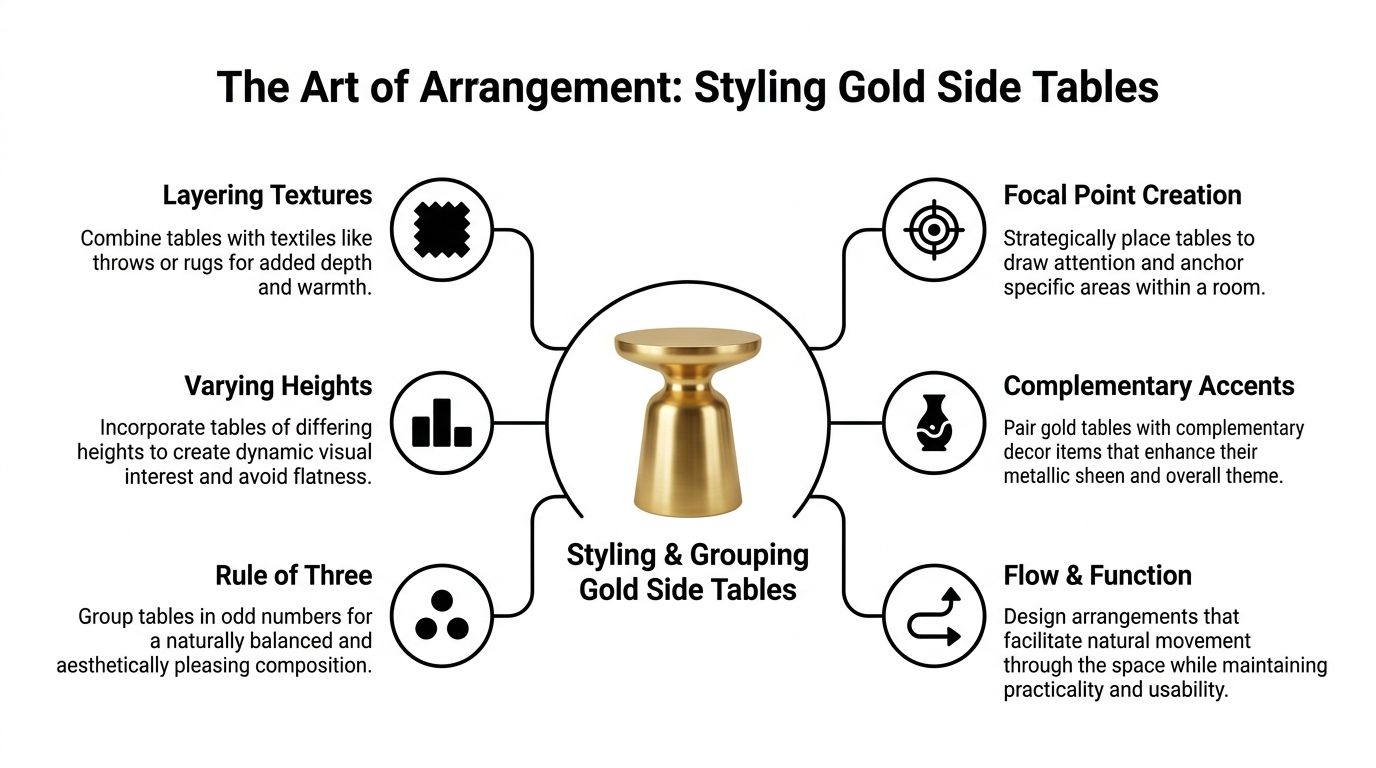
The Art of Arrangement Styling and Grouping Gold Side Tables
One gold side table can be elegant. A well-grouped set can define a whole area of the event. Placement is what turns these tables from isolated accents into layout tools that shape movement, conversation, and photo opportunities.
When planning visual zones, product stylists often talk about background control, reflection, and visual hierarchy. Those same principles apply to events, and the thinking behind crafting the right background for your product is surprisingly useful when deciding how metallic furniture will sit against draping, walls, branding panels, or floral installs.
The Conversation Pod
This is the most reliable arrangement for lounge areas. Use three small tables with slight variation in height or visual weight around a sofa-and-chair grouping. The cluster shouldn’t feel perfectly symmetrical. A little irregularity makes the setup feel lived-in and softer.
Use this when the seating area is meant to keep guests there for a while. One table can take florals, another drinks, and the third can remain open for practical use.
- Best for: Cocktail lounges, bridal lounges, VIP seating.
- Avoid if: The footprint is tight and service staff need a direct through-route.
- Styling note: Keep at least one tabletop mostly clear.
The Elegant Welcome
A single gold side table near an entry point can do far more than fill space. It gives arriving guests a visual cue that they’ve entered a curated event environment. Add a candle, a welcome sign detail, a single arrangement, or pre-poured drinks if staffing and timing allow.
This setup works because it’s restrained. Don’t overcrowd the tabletop. A side table at an entrance should read instantly.
A good arrival moment tells guests what kind of evening they’re walking into.
The Cake Annex
Cake displays often look beautiful in isolation but become awkward in use. Guests need somewhere for flutes, forks, napkins, or small dessert accompaniments, and those practical items can ruin the central display if they’re placed on the main cake table itself.
Two flanking gold side tables solve that neatly. They frame the hero piece and absorb the useful items without diluting the photograph.
The Lounge Bridge
This arrangement is useful in larger venues where separate seating pockets can start to feel disconnected. Place gold side tables between adjacent lounge zones to visually “stitch” them together. The tables don’t need heavy styling. Their repeated finish creates continuity.
This approach works particularly well when the room has multiple conversational clusters and you want a coherent metallic thread running through the floor.
The Photographic Corner
Create a small feature area with one statement chair, one gold side table, and a controlled décor item such as a vase, lamp, or champagne bucket. This gives guests a natural spot for portraits and candids without needing a full photo booth structure.
A few simple rules make these arrangements stronger:
- Vary heights: Flat lines look static in photos.
- Use odd numbers: Groupings of three usually feel easier on the eye than pairs.
- Mind clearance: Guests still need to move naturally around the space.
- Edit accessories: If the table itself is striking, reduce tabletop clutter.
The strongest styling plans don’t use more pieces. They place the right pieces with intent.
The Smart Choice Renting vs Buying for Cape Town Events
For one-off events, buying gold side tables is usually the expensive answer to a short-term problem. Purchase can make sense for a permanent venue with consistent styling needs and available storage. For planners, private hosts, schools, and most corporate teams, it usually creates extra cost and extra admin.
The local market gap makes that even clearer. For one-off events, renting gold side tables can deliver over 40% cost savings compared with buying, and the same source context notes that no major ZA rental platforms list these items for local hire, while 62% of Cape Town schools report challenges with furniture reuse after events like matric dances according to the source set tied to gold side table purchase listings. That combination matters. If reuse is difficult and storage is inconsistent, ownership becomes wasteful very quickly.
What buying really adds to the job
Buying sounds simple when you’re looking at a product page. The hidden work starts afterwards. Someone has to receive the tables, inspect them, store them, transport them, protect them during loading, wipe them down, and deal with wear across multiple events.
That’s manageable if furniture management is part of your operation. It isn’t manageable if your team is already occupied with guest lists, technical suppliers, catering deadlines, and venue access windows.
Where renting makes more sense
Renting is usually the better route when the event brief changes from one job to the next. A romantic Winelands wedding might need brushed gold with soft edges. A city launch might need something cleaner and more structured. Hiring lets the furniture follow the brief instead of forcing the brief to fit what you already own.
For planners who need broader event inventory as well, a local option such as furniture for hire in Cape Town is one way to keep lounge pieces, seating, and support items aligned within the same logistics plan.
Rental vs purchase comparison for gold side tables
| Consideration | Renting (with ABC Hire) | Buying |
|---|---|---|
| Upfront spend | Lower commitment for the event period | Higher initial outlay |
| Storage after the event | Not your problem once collected | You need secure, clean storage |
| Style flexibility | Choose a look that suits each brief | You’re tied to what you own |
| Transport | Usually coordinated as part of rental logistics | You arrange vehicles, loading, and returns |
| Maintenance | Event-level care during use | Ongoing cleaning, repairs, and wear management |
| Quantity changes | Easier to scale up or down per event | Difficult if demand changes suddenly |
| Use case | Best for weddings, launches, formal dances, private functions | Better suited to permanent venues with repeated use |
Buying works for stock rooms. Renting works for events.
The less obvious trade-off
Ownership can also narrow your creative options. Once a venue or planner has spent money on one style, there’s pressure to use it repeatedly whether or not it’s the best fit. That’s how rooms start to look recycled instead of perfectly suited.
With rented gold side tables, the decision can stay where it belongs. On the event concept, the venue conditions, and what guests will do in the space.
Logistics and Care for Hired Tables in the Cape
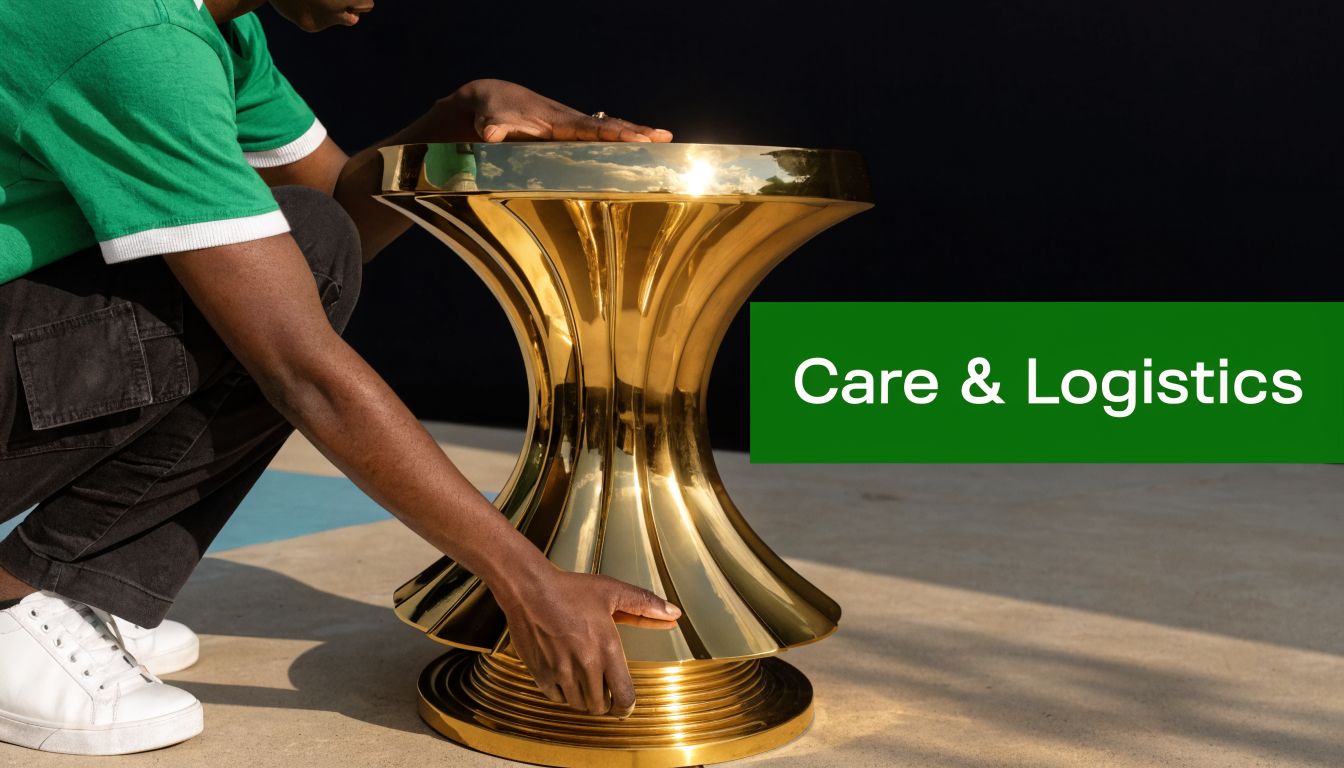
A gold side table can leave the warehouse spotless and still arrive at a venue facing three local realities: narrow access times, mixed terrain, and weather that changes faster than the running order. Good logistics matter as much as good styling, especially across Cape Town, Stellenbosch, Franschhoek, and Paarl.
The outdoor side of the market has become harder to ignore. Source data notes a 22% increase in outdoor corporate events in the Winelands and an 18% rise in rainfall, with 35% of event cancellations avoided by using appropriate rental furniture over owned pieces that are more vulnerable to coastal humidity or UV exposure, as summarised in the source context linked to gold side table category listings. That tells planners something practical. Outdoor furniture selection isn’t decorative fussiness. It’s risk control.
Getting placement right on site
The first step is always surface assessment. A polished table on a flat indoor floor behaves very differently from the same table on paving joints, timber decking, or compacted lawn. Before styling starts, test each placement point for wobble and adjust the plan if the ground isn’t fully true.
A few habits prevent most problems:
- Check before dressing: Confirm stability before adding glassware, candles, or florals.
- Keep weight centred: Don’t place heavy objects on one edge of a narrow top.
- Allow breathing room: Avoid squeezing tables into pathways where guests or staff will clip them.
Caring for the finish during service
Gold finishes look refined when they stay clean and dry. During the event, the biggest threats are condensation, abrasive cloths, sticky spills, and improvised cleaning. If a table gets marked, gentle handling matters more than aggressive wiping.
Use soft cloths only. Avoid harsh cleaners, rough scrubbers, or anything that can dull the finish. If drinks service is heavy, ask staff to keep an eye on condensation rings and wipe them promptly with appropriate materials.
Outdoor use in Cape weather
Outdoor setups need a stricter eye. Even when a table is suitable for event use outside, that doesn’t mean it should sit fully exposed for hours if rain threatens or sea air is particularly sharp. Positioning under a stretch tent, marquee edge, verandah, or covered lounge zone is usually the safer call.
For Winelands events, keep these in mind:
- Morning setup is not the whole forecast: Conditions can shift by late afternoon.
- Metal reflects heat and light differently outdoors: What looked subtle in a showroom may read brighter in direct sun.
- Collection condition matters: Clearing standing water and obvious residue before pickup helps avoid unnecessary issues.
The planners who have the smoothest event days usually treat hired furniture as part of operations, not just décor. That’s what keeps the room looking sharp from guest arrival to final pack-down.
Your Questions Answered
Do gold side tables only suit formal events?
No. They suit styled events. That includes formal weddings and black-tie dinners, but it also includes contemporary brand launches, birthdays, engagement parties, and polished matric farewells. The key is choosing the right shape and finish. A sleek, restrained gold table can feel modern rather than traditional.
How many gold side tables do I need?
Start with function, not symmetry. A lounge area usually needs enough tables so guests don’t have to balance drinks on chair arms or window ledges. If there’s a cake zone, welcome point, or portrait corner, count those separately. It’s better to place fewer tables well than scatter too many without purpose.
Can gold side tables work with silver cutlery or black décor?
Yes, if one finish clearly leads and the others support it. Gold side tables pair well with black, white, stone, glass, and many neutral linen colours. Mixed metals can work too, but only when the contrast feels intentional. If every metallic tone is competing for attention, the room starts to look unresolved.
The safest way to mix finishes is to choose one hero metal and let the rest stay quieter.
Are they practical for drinks and canapés?
They are, provided the top size suits the setting. In cocktail lounges, guests need enough room for glassware and a small styling element. For packed standing events, they should be placed where people can approach them comfortably rather than in circulation bottlenecks.
What if my event is outdoors?
Outdoor use is possible, but placement matters. Covered positions are usually preferable, especially in the Cape where weather can shift during the course of an event. Stability, moisture exposure, and guest traffic all need to be considered before final placement.
Do I need matching gold pieces everywhere?
Not at all. Matching everything can flatten the room. A better result usually comes from repeating gold with restraint. You might use gold side tables in the lounge, a separate metallic detail at the bar, and keep dining tables more neutral.
What causes the most styling mistakes with gold side tables?
Usually one of three things:
- Choosing by photo alone: The venue lighting changes how the gold reads.
- Over-accessorising: Too many candles, flowers, menus, and props can hide the table itself.
- Ignoring scale: A tiny table beside a large sofa looks decorative but not useful.
When the finish suits the room and the proportions suit the guest experience, gold side tables rarely feel like a risky choice.
Add a Touch of Gold to Your Next Event
Gold side tables do more than fill corners. They sharpen lounge layouts, support service, catch light beautifully, and help an event feel finished. In Cape Town and the Winelands, they’re especially effective because the venues often ask furniture to do double duty. It must look refined in photographs and still perform well through setup, guest flow, and pack-down.
The strongest results come from making a few grounded decisions. Choose the right finish for the room. Match the size to how guests will use it. Place each table with purpose. And for one-off events, avoid turning a styling need into a storage problem.
If you’re planning a wedding, activation, formal dance, or private function, hiring is usually the cleaner route. It gives you flexibility, removes the burden of long-term ownership, and lets the furniture fit the event rather than the other way around.
If you’re planning an event and want to use ABC Hire for gold side tables and related event furniture, the simplest next step is to review the available style direction, request a quote, and confirm delivery details for your venue in Cape Town or the Winelands. That gives you clarity on quantities, finishes, and logistics before the styling plan is locked.