
A guest count just changed, the venue has a tighter floor than expected, and the couple still wants that warm timber look in a Stellenbosch setting. That's usually where pine dining table and chairs come onto the shortlist fast, not because they're the flashy option, but because they're the set that can be moved, dressed, and fitted into real event space without turning setup into a wrestle.
Why Pine Works So Well for Cape Town Events
A Paarl farm wedding and a corporate lunch in the CBD ask very different things from furniture, but pine handles both surprisingly well. The reason is simple. Pine is lighter and easier to work than hardwoods, and modern wood-density references put it at about 450 to 500 kg/m³, while oak sits around 700 to 800 kg/m³, so oak can weigh about 1.5 times more for the same volume, which matters every time a team carries tables across gravel, lifts them into a marquee, or resets them between room changes. That lower weight helps rental crews move faster and with less strain, while still giving clients the solid timber look they want for weddings, corporate functions, and private events, as described in the historical overview of pine furniture use in accessible, functional settings source.
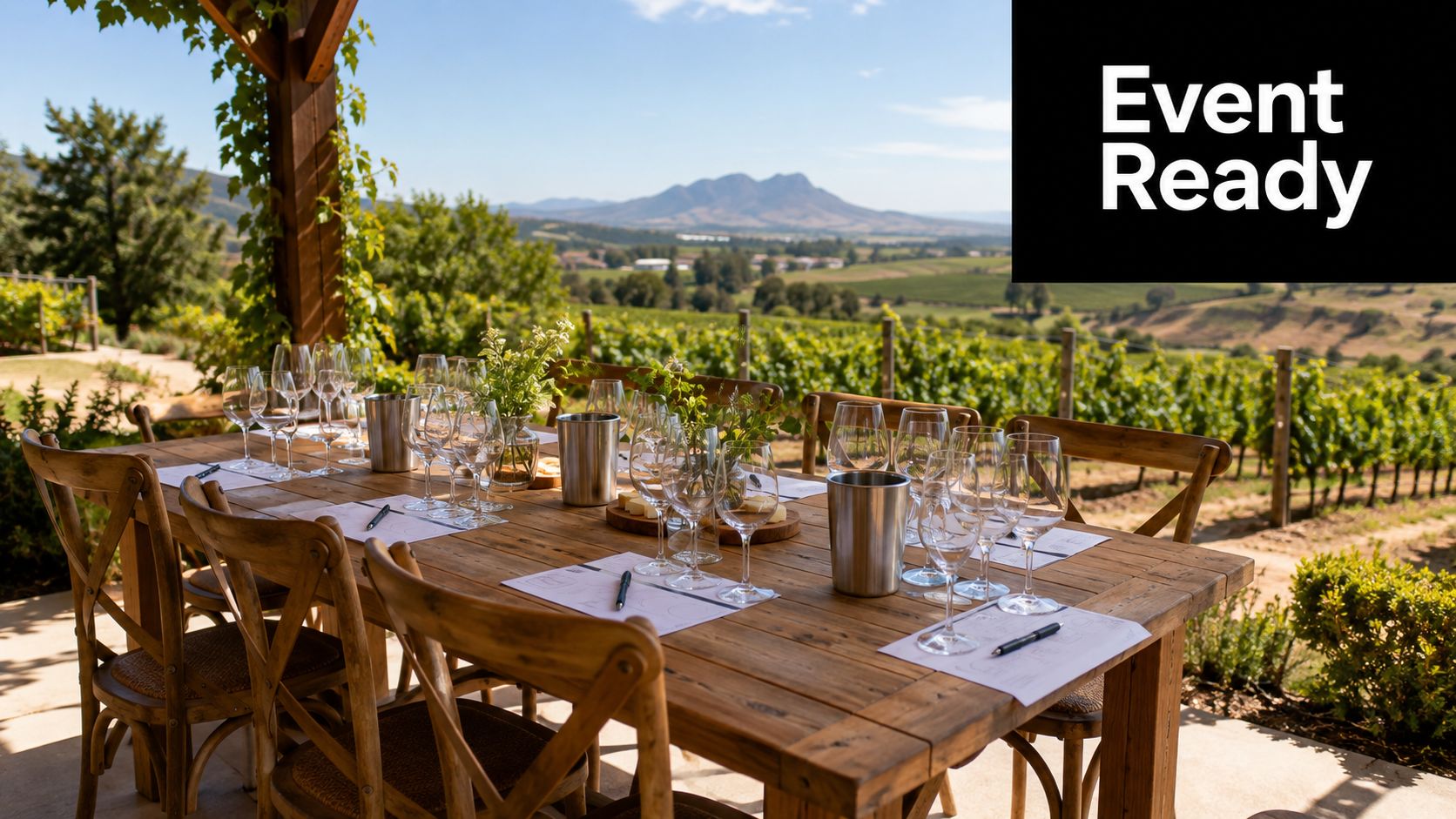
The practical reason planners keep returning to pine
Pine also fits the look most clients are asking for when they say “simple but polished”. It reads as warm and familiar, which works in a farm venue in the Winelands, a tasting room, or a formal dining tent where the rest of the styling is doing the heavy lifting. The historical furniture record notes that dining furniture became a distinct household fixture later than many assume, and that early sets were often straightforward combinations of table and chairs in woods such as oak, pine, and cherry source.
That matters in Cape Town event hire because pine doesn't fight the room. It supports the room.
Practical rule: if the room changes often, the venue is spread across multiple surfaces, or the same stock needs to be reconfigured between ceremony and reception, pine usually makes the operation easier than a heavier hardwood set.
There's a trade-off, though. Pine is softer, so it shows wear faster than harder woods under repeated commercial use. For a one-night event or a seasonal venue refresh, that's often acceptable. For a busy hire cycle with lots of turnover, you need to plan for surface care and refinishing between jobs, not pretend the material is indestructible.
Sizing a Pine Dining Table and Chairs Set to Your Guest Count
On site, the first wrong turn is usually the same. Someone picks the table style before checking the footprint, then tries to make the guest count fit around it. Start with the size of the set, then check whether it can seat people without pushing knees, elbows, or serving paths into the same narrow space. South African furniture specifications commonly separate 4-seater, 6-seater, and 10-seater formats, and that helps planners stop treating one shape as a universal answer source.
For Cape Town and Winelands setups, that distinction is practical, not theoretical. A pine set that works in a small tasting room can feel crowded once you add charger plates, glassware, flowers, and a service route. Pine also shifts easier than many hardwood pieces, which helps with load-in and layout changes, but the material's softness means the finish needs a little more care if the set is going to move between ceremony, dinner, and late-night resets.
Use the table height and seat height together
For a standard 4-seater, a common footprint is 900 x 900 x 450 mm source. Everyday dining-table heights usually sit around 750 to 760 mm, and chair seat heights cluster around 420 to 450 mm, which is the range that usually gives workable thigh clearance and a comfortable dining posture source. The order matters. Measure the table height first, then confirm the chair seat height matches it.
A low lounge chair under a dining-height table is the quickest way to ruin a tidy layout. It looks fine on a product page and feels wrong the minute guests sit down.
For guest-count planning, work in layouts, not loose numbers. A 50-guest wedding may sit neatly across smaller tables, while a 60-guest dinner can be easier to service with longer runs if the room shape allows it. The room decides a lot here. A narrow farm venue, a marquee with a central aisle, and a corporate dinner in a hotel function space all ask for different spacing, even if the guest count is similar. If you are still weighing whether the event should feel more intimate or more compact, practical tools like wedding size decision exercises help couples settle the scale before décor gets booked.
| Set size | Table footprint (mm) | Seats | Best venue use |
|---|---|---|---|
| 4-seater | 900 x 900 x 450 | 4 | Small dining rooms, tasting areas, breakout meals |
| 6-seater | Use supplier format | 6 | Family-style dinners, mid-size receptions |
| 10-seater | Use supplier format | 10 | Long-table banquets, corporate dining, larger wedding meals |
The practical test is simple. Put the chosen table in the room, place the chairs, then walk the route a waiter would take with plates in hand. If the chair backs, table ends, or décor start narrowing the path, the set is too big for the floor plan, even if the guest count looks correct on paper. Pine makes this easier to adjust than heavier furniture, but only if the table size matches the way the room will be used.
Choosing the Right Pine Finish for the Event Style
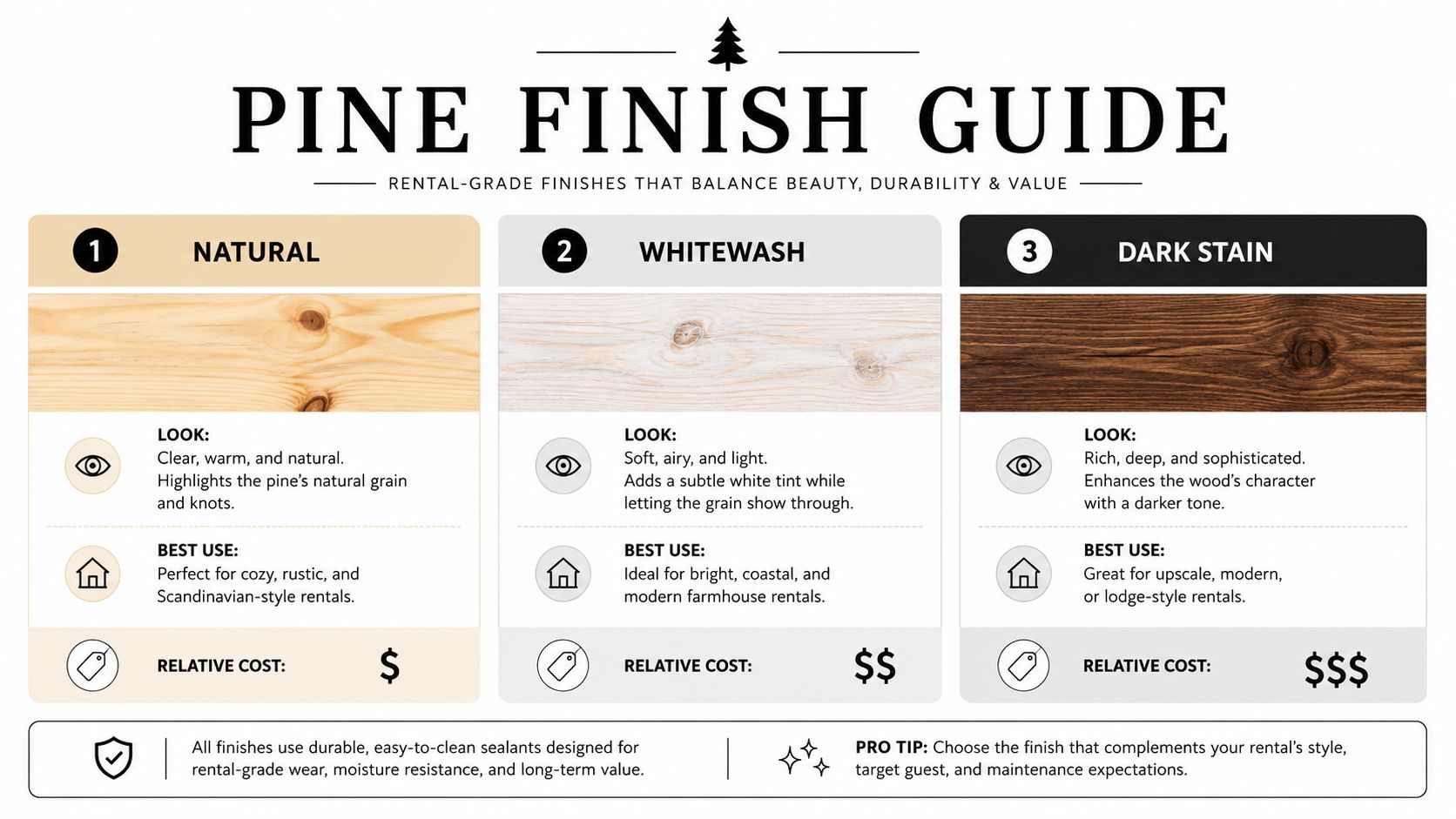
Finish changes how pine reads in the room. A natural pine set feels relaxed and honest, a whitewashed set looks lighter and softer, and a dark stain pushes the furniture toward a more dramatic, formal feel. The wood itself stays the same basic material, but the visual effect changes enough that a Strand beach wedding and a Century City gala won't want the same treatment.
Match the finish to light, not just theme
Natural pine works best when the venue already has warmth in it. It suits farm lunches, informal receptions, and spaces with sandstone, linen, and ambient evening light. Whitewash pine is the cleaner choice for bright interiors and contemporary rooms, because it keeps the furniture from reading too heavy in daylight. Dark stain is the most controlled-looking option, but it also makes the grain feel more deliberate and can absorb light in a way that suits evening functions more than airy daytime spaces.
Pine's softer grain matters here. It can take stain unevenly compared with harder woods, so if a client wants a perfectly uniform, premium sheen, that expectation needs to be managed before hire confirmation. The finish can still look good, but it shouldn't be sold as if it behaves like a dense hardwood.
Care changes with the finish
The wrong cleaner can do more damage than a long event. Harsh products strip sealants, dull the surface, and leave patched-looking areas that show up under venue lighting. Coasters are worth using even at events, because condensation rings and hot cups punish pine finishes faster than most clients expect.
The market still shows steady interest in unfinished and natural pine dining pieces, including farmhouse-style options, which tells you the look remains useful for buyers who want flexibility rather than a locked-in formal style source. That same versatility is why finish choice should be made by venue, not by habit.
Layout Planning That Actually Works On Site
A room plan fails when it looks tidy on paper but leaves no room for people to move. Start with clearance, then build the tables around the circulation route, not the other way around. Independent design guidance recommends allowing about 24 inches per person and at least 36 inches between the table edge and walls or other furniture, with 48 inches preferred in larger rooms source. That spacing matters in Cape Town and the Winelands because venues often mix dining, dancing, service access, and décor storage in one continuous area.
Build the floor plan from the service path inward
For a marquee on a wine farm, the route from kitchen to tables is usually the pressure point, so the aisle needs to stay clean from start to finish. In a Cape Town CBD banquet, the issue is often side access and how the tables relate to the room perimeter. For a corporate board dinner, the challenge is less about headcount and more about how the layout supports conversation without blocking visibility or staff movement.
The fastest way to avoid a bad plan is to work in this order:
- Measure the usable room, not the whole venue.
- Mark the service aisle before placing any tables.
- Place the chosen set sizes with guest movement in mind.
- Check access points for doors, DJ kits, bars, and staff routes.
That same logic applies whether you're booking a set of dining tables or coordinating with a hire house that also stocks chairs and other room basics, like the layout guidance discussed in ABC Hire's tables and chairs rental overview.
A dining layout is only successful when service can move without asking guests to stand up.
Common site mistakes to avoid
Don't force a head table into a depth that only works on a brochure. Don't forget the footprint of the DJ, band, or gift table. Don't leave breakout bar space as an afterthought if the room is meant to carry a reception and a meal in one flow. If the layout starts to feel tight before décor is even added, it's already too tight.

Load Ratings and Durability Without the Guesswork
A pine dining table can look ready for anything on a wedding or corporate floor, until someone starts using it like a buffet station, a display stand, or a place to park heavy décor. That is where problems begin. In practice, the safe habit is simple, check the chair rating first, then the table's allowable load, then leave margin for guests leaning in, staff setting down service items, and people shifting in their seats.
Read the rating as a hard ceiling
Manufacturer ratings are not decorative copy. They are the limit you work to, and on site I treat them that way every time. IKEA notes that one pine chair model in its table-and-4-chairs set was tested for domestic use and meets EN 12520 and EN 1022 for safety, durability, and stability source. A solid-pine dining set from a major retailer lists a 265 lb table capacity and 220 lb per chair, while a comparable pine set lists a 110 lb table limit and 220 lb per chair. The point is not to memorise those figures. It is to follow the order of checks. Start with the chair load, confirm the table rating, and keep headroom for real event movement.
Pine also benefits from a quick reality check against how other furniture systems are handled. The Safety Space pallet rack guide makes the same basic point in a different setting, weight limits only work when the people using the equipment respect them. That mindset matters on a floor where tables are moved, reset, and dressed under time pressure.
Where pine is fine, and where it isn't
Pine handles normal dining use well, and it does a good job in many rental layouts across Cape Town and the Winelands when the load is spread evenly across the top. What it does not like is repeated overloading, rough transport, or being asked to do the work of a production table for a full buffet line. Soft timber marks more easily than harder species, so a heavy vase, stacked décor, or a bad drag across the floor can leave a visible trace.
That trade-off is part of the rental decision. A pine table is usually a good fit for seated meals, welcome drinks, and lighter decorative setups. If the job involves heavy service gear, constant repositioning, or a table that will carry more than dining, a metal-framed rental option is often the safer call. The right choice is the one that matches the load, the handling, and the amount of wear the piece will take before it gets back into the truck.
For mixed orders, it helps to compare pine tables with a more workmanlike format such as the one discussed in ABC Hire's wooden trestle table guide. The frame matters as much as the finish. If a table has to hold more than place settings and a centrepiece, choose the build that is meant to carry that job.
Styling Linen, Centrepieces and Lighting for Pine Tables
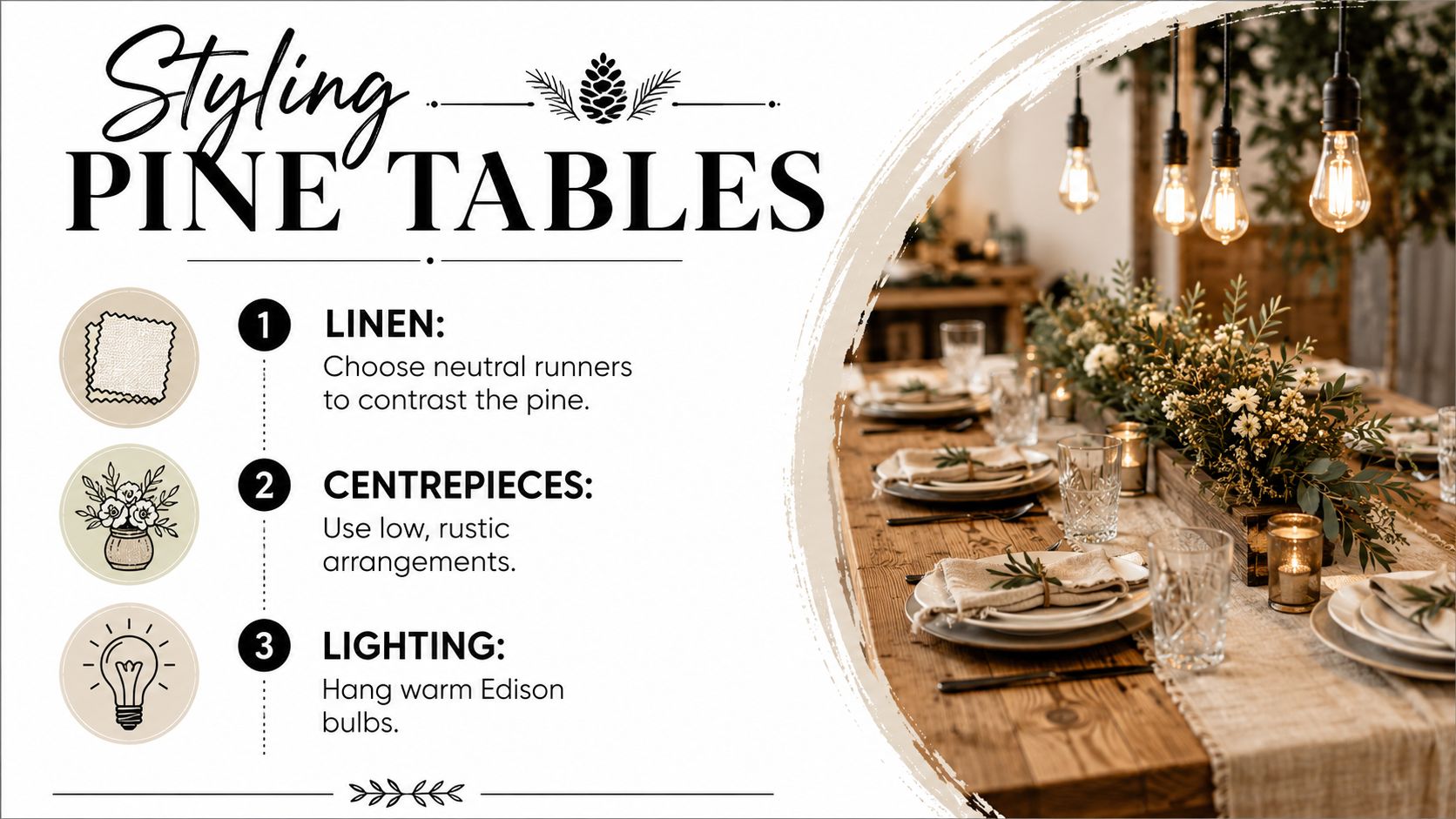
Pine looks best when the styling respects its warmth instead of trying to cover it up. The furniture should still read as timber, so the décor needs to frame the finish rather than fight it. Natural pine takes warm linen and amber light well, whitewash pine works neatly with cool greys and cleaner candlelight, and dark-stained pine can take more dramatic uplighting without losing its shape in the room.
Keep the table surface open
Low-profile centrepieces are the safest option for most events. Tall arrangements can look impressive in isolation, but they block sightlines and make the table feel crowded once chargers, glasses, menus, and service pieces are added. A linen runner usually does more for the table than a full cover, because it lets the wood remain visible while still adding softness.
A simple styling approach often works better than a heavily layered one:
- Natural pine: Use neutral runners, soft beige napkins, and warm, textured florals.
- Whitewash pine: Pair with pale linen, cool-toned accents, and restrained décor.
- Dark stain: Use contrast. Think lighter textiles, candle clusters, and fewer pieces on the tabletop.
Let lighting do part of the work
Warm bulb tones flatter pine grain and keep the timber from going orange under venue lights. That matters in the evening, especially in larger rooms where the furniture needs to hold its own visually without becoming heavy. Edison-style bulbs suit the look if the venue allows them, but the bigger principle is consistency. Don't mix too many light temperatures over the same table.
The design instinct here is similar to the broader advice in ABC Hire's decor on table guide. The best tables don't look crowded. They look finished.
If the décor steals the space from the furniture, the setup stops feeling coordinated and starts feeling squeezed.
Rental Logistics and On-Site Setup That Save the Day
The last hour before delivery is where good planning shows up. Confirm the stock count, recheck the table and chair measurements, and make sure the venue knows where the furniture is going before the truck arrives. If the event is outside in the Winelands, ask about humidity, uneven ground, and flooring protection before anyone starts unloading.
Use a setup sequence, not a scramble
The simplest delivery check is still the most useful one. Count chairs on arrival. Verify seat height against the table. Run a quick wobble test. Then brief the venue on floor protection so nobody drags timber across stone, tile, or polished concrete.
A few things save time every single time:
- Check the handoff early: confirm delivery windows, access points, and contact names before the truck leaves.
- Inspect damage immediately: note chips, cracks, loose legs, or finish wear before setup starts.
- Keep replacements realistic: if stock is missing, swap with a compatible size and finish, not a visually clashing alternative.
- Plan for outdoor movement: have a wet-weather or wind backup if the furniture is going onto grass, decks, or gravel.
If you're organising a mixed storage-and-delivery workflow, especially across multiple venues or off-site holds, furniture storage delivery options are worth understanding because the handoff between transport and setup is where a lot of avoidable damage happens.
What to ask before the truck arrives
Ask whether the tables were already sealed and whether the chairs were checked for loose joints. Ask who covers late-return issues if the schedule shifts. Ask what happens if the guest count changes at the last minute, because it often does. And if load shedding is part of the event environment, make sure the room plan doesn't depend on perfect lighting just to make the timber work.
ABC Hire supplies event furniture, including tables and chairs, for weddings, corporate functions, and private events across Cape Town and the surrounding Winelands. If you need pine dining table and chairs for a reception, tasting, or formal dinner layout, visit ABC Hire and plan the hire around the room, the guest count, and the setup you need.