
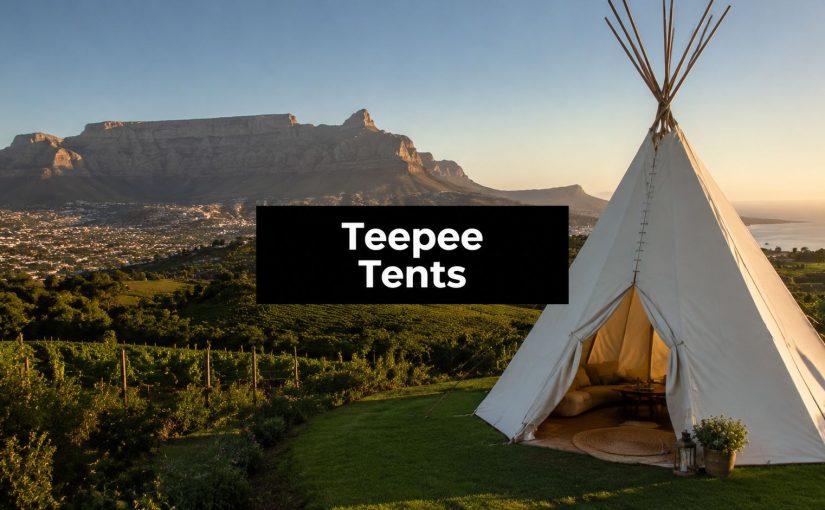
You're probably balancing two competing pictures right now. One is the event you want your guests to remember: mountain views, warm lighting, open air, a structure that feels more special than a standard marquee. The other is the practical reality of Cape Town and the Winelands: wind that can arrive without warning, farm roads that don't suit large delivery vehicles, venue rules, and the need to keep everyone comfortable from midday heat into a chilly evening.
That's exactly where T pee tents work well, provided they're planned properly. They're striking, flexible and well suited to outdoor functions, but they are not a drop-and-go product. In the Western Cape, the success of a teepee event depends on sizing, site choice, access, anchoring, layout and weather management.
Used well, a teepee becomes both your shelter and your centrepiece. Used badly, it becomes a beautiful idea fighting the site all day. The difference is in the planning.
Why Teepee Tents Are Perfect for Cape Town Events
Cape Town events ask more from a structure than many other destinations do. It needs to look exceptional against vineyards, mountains, lawns and courtyards. It also needs to adapt to changing light, moving wind, uneven terrain and a guest experience that often shifts from ceremony to drinks to dinner to dancing in one setting.
That's why T pee tents have become such a strong fit locally. They don't read like temporary infrastructure in the way some conventional tents do. They feel architectural. The cone shape, high headroom and open-plan interior create a room with presence, which matters when the venue backdrop is already doing a lot of visual work.
They suit the way Cape events are styled
A Winelands wedding often wants softness, warmth and texture rather than a rigid corporate shell. A brand activation in Cape Town often needs a structure that photographs well from every angle and can be configured around product displays, lounges or service zones. A private celebration may need to feel relaxed but still polished.
Teepees handle that mix well because the interior doesn't force one layout style. You can keep it formal with banquet tables, loosen it up with long harvest tables, or build in lounge pockets and a dance floor without the space feeling chopped up.
Practical rule: If the brief calls for “outdoor, but elevated”, a teepee usually makes more visual sense than a standard white tent.
There's also a wider shift behind this. The global camping tent market was valued at about USD 5.7 billion in 2023 and is projected to reach USD 10.9 billion by 2033, with 6.7% CAGR, according to camping tent market research published by Market.us. For Cape Town planners, the useful takeaway isn't retail camping. It's that guests and clients increasingly respond to outdoor-living formats that feel spacious, distinctive and quick to install.
They do more than look good
The appeal isn't just aesthetic. The tipi format has been used for centuries, and modern versions still rely on the same core ideas: a central pole system, a shape that sheds weather well, and a roomy interior. For events, that translates into usable vertical space, cleaner sightlines and more freedom with décor.
A few local event types where they work particularly well:
- Vineyard weddings because the silhouette complements the natural setting rather than competing with it.
- Corporate launches where branding, bars and lounge zones need to sit in one coherent environment.
- Matric dances and private functions where guests want something more memorable than a standard hall setup.
- Garden celebrations where the structure needs to feel soft and premium, not bulky.
Where they outperform standard options
Traditional marquees still have their place. If your site is tight, fully paved, or heavily constrained by neighbouring structures, another format may be easier. But for many outdoor venues around Stellenbosch, Franschhoek, Paarl and the southern suburbs, a teepee offers something marquees often don't: atmosphere built into the structure itself.
That matters because when the tent already creates mood, the rest of the budget works harder. Lighting looks better. Furniture feels more intentional. The event starts with character before the first floral installation is even hung.
Selecting the Right Teepee Size and Capacity
A planner calls a week before a Stellenbosch wedding and says, “We have 80 guests, so one big teepee should do it.” Sometimes it will. Often it will not, especially once you account for a bar, a DJ, a gift table, catering access, and enough circulation for guests in heels carrying wine glasses on an uneven farm site.
That is the primary sizing question in Cape Town and the Winelands. Capacity is never only about guest count. It is about how the event needs to work on the ground, and how much margin you want once weather, service, and site constraints start putting pressure on the layout.
Plan for usable space, not brochure capacity
The quickest way to undersize a teepee is to buy according to the maximum number and ignore the event format. A seated dinner, a cocktail launch, and a tasting event can all use the same structure very differently.
Ask these questions first:
- Will guests be seated for a full meal or mostly standing?
- Do catering staff need to serve inside the tent?
- Will the bar sit under cover or outside?
- Is there a dance floor, stage area, DJ booth, or lounge grouping?
- Does the venue need clear access routes for staff, suppliers, or emergency exit points?
- Can any support functions sit outside without exposing guests or equipment to wind?
Those answers usually change the size decision more than the guest list does.
Match the teepee to the event format
Use this table as a practical starting point, then adjust for layout and site conditions.
| Teepee Diameter | Seated Guests (Banquet Tables) | Standing Guests (Cocktail Event) | Best For |
|---|---|---|---|
| Small | Intimate seating with room to spare for styling | Compact standing gatherings | Proposals, small birthdays, lounge areas, children's sleepover styling |
| Medium | Mid-sized seated events with careful table planning | Comfortable cocktail flow | Private celebrations, small brand events, ceremony cover |
| 9 m | Around 40 seated | Higher standing capacity with simpler furniture layouts | Weddings, dinners, tasting events, activation hubs |
| Large multi-teepee setup | Depends on how units connect and where support areas sit | Strong for high-volume guest movement | Larger weddings, launches, festival-style events |
As a working benchmark, suppliers such as Native Teepees list a 9m giant hat teepee at around 40 seated guests. That figure is useful, but only as a starting point. Round tables, a central feature, or a dance floor will reduce practical capacity fast.
In the Winelands, I would rather see a tent feel generous than watch staff and guests fight for space all evening.
Three decisions that usually change the size
Dining style
Round banquet tables take more room once chairs are pulled back and service starts. Long harvest tables can use space more efficiently and suit vineyard settings well, but only if spacing is disciplined and there is still room along the edges. If guests have to squeeze past seated diners, the layout is too tight.
Event rhythm
Some events need one static layout. Others shift through welcome drinks, dinner, speeches, and dancing. That changeover needs open floor area and clean circulation. If the room has to transform during the event, size up early instead of trying to force too many functions into one footprint.
Site logistics
Cape Town tent planning is rarely just about what fits on paper. Access roads at farms can be narrow. Certain lawns are softer than they look. Some venues want structures positioned away from irrigation lines, vines, or heritage features. A permit or venue sign-off may also dictate where the tent can sit, which can limit usable diameter or require linked units rather than one larger structure.
One teepee or multiple connected units?
A single teepee often works well for intimate events where everyone shares one central room. Connected teepees are usually the better answer for larger guest numbers or more layered briefs.
They let you separate functions clearly. Dining in one section, lounge and bar in another, service tucked to one side. They also help on awkward sites where trees, slopes, farm tracks, or existing buildings interrupt the ideal footprint.
For planners still comparing structures, it helps to review different types of tents for events before committing to a teepee layout. Some sites in the Western Cape suit a peg-and-pole structure beautifully. Others are better served by a different system.
A practical rule for Cape Town events
If the event includes seated dining, styling, and any dancing under cover, choose the next size up from your first estimate.
That extra room pays for itself. Service runs better, the tent photographs better, and guests feel relaxed instead of compressed. In a region where wind can force more activity under cover than planned, that margin is not indulgence. It is good event planning.
Designing Your Floor Plan and Interior
Once the structure is chosen, the tent stops being a product and starts becoming a room. That shift matters. People don't experience diameter measurements. They experience arrival, movement, comfort, temperature, acoustics and whether the space feels easy to use.
The strongest teepee interiors aren't overdesigned. They're organised.
Start with zones, not furniture
Before placing a single table, define what the room needs to do. Most Cape Town and Winelands events need some combination of these zones:
- Arrival zone where guests first step in and get the visual impact
- Main social zone for dining, speeches or central activity
- Service edge for staff movement, bar access or catering support
- Atmosphere pockets such as lounges, cake display, gifts or photo moments
That approach prevents the common mistake of pushing everything to the perimeter and leaving a dead centre. In a teepee, the centre often wants intention. Sometimes that means a statement floral installation. Sometimes it means a dramatic dance floor. Sometimes it means preserving openness so the roofline can do the work.
A luxury-style interior often leans into warm materials and soft textures:
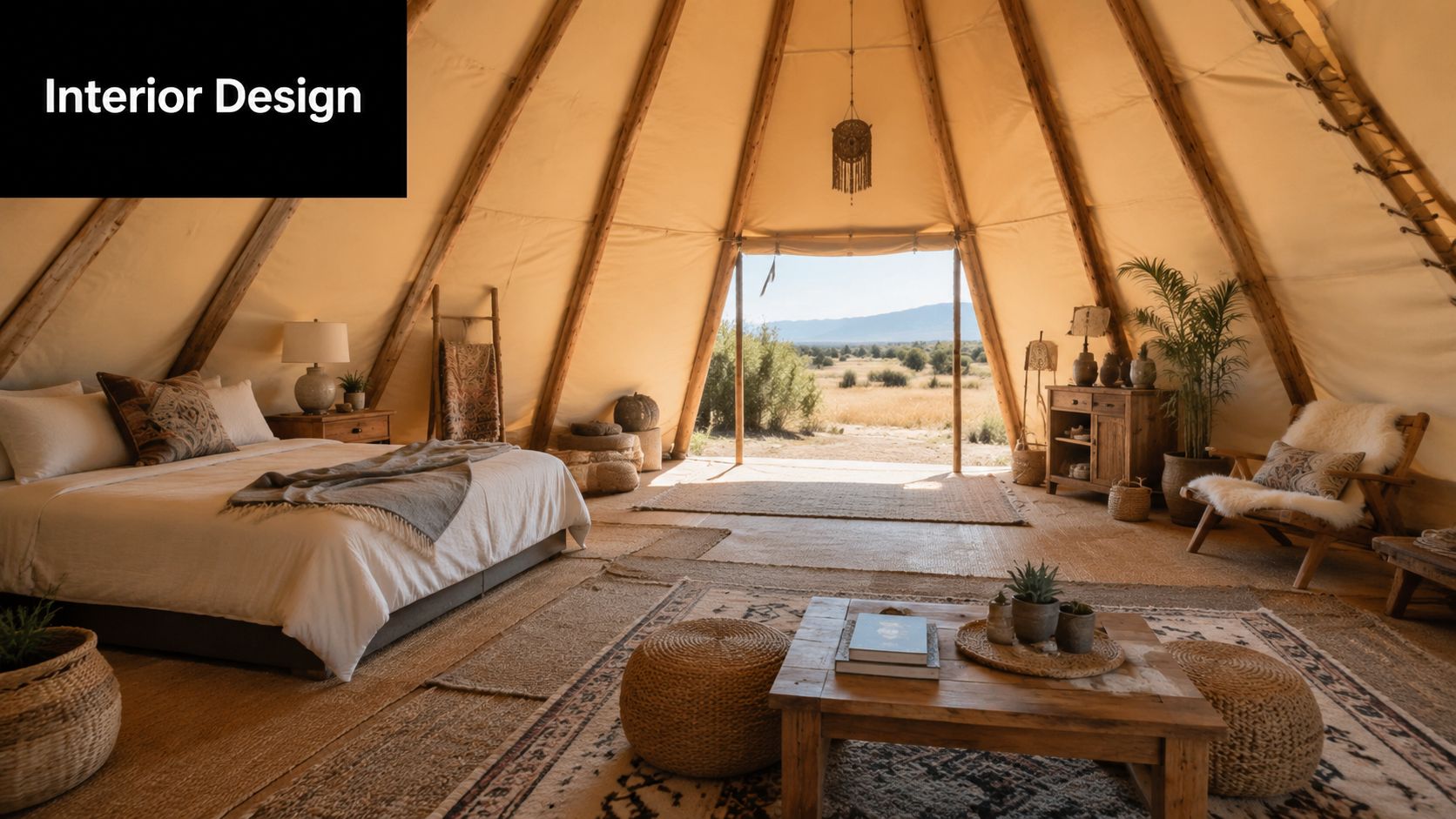
Three floor-plan approaches that work
Formal wedding layout
Place dining as the dominant function, with a clear focal point for speeches and the couple. Keep the central area open enough that guests can still read the shape of the tent. If there's dancing later, allow furniture that can be removed without rebuilding the room.
Corporate presentation layout
Keep sightlines disciplined. A teepee can look relaxed, but for launches or internal functions the audience still needs to see and hear clearly. Put presentation infrastructure on a strong axis and avoid cluttering side zones with furniture that interrupts flow.
Relaxed celebration layout
This works well for birthdays, engagement parties and brand socials. Use scattered cocktail tables, mixed seating heights and lounge clusters. The trick is to make it feel effortless while still protecting circulation between bar, loos, entry and service points.
Flooring and comfort choices matter more than people think
A teepee over grass can look beautiful and still be uncomfortable if the floor is uneven, damp or dusty by mid-event. Flooring isn't just aesthetic. It changes the way heels, catering equipment and dance traffic behave.
Consider these decisions early:
- Matting or natural-look flooring if you want a softer, rustic finish
- A firm dance floor insert if dancing is part of the programme
- Defined thresholds at the entrance so guests don't drag mud or dust into the main area
- Cable planning before floor finishes go down
The interior should feel intentional from the first step inside. Guests notice underfoot comfort immediately, even if they never mention it aloud.
Plan for temperature, not just style
Cape events often begin in sunshine and end in cool air. In summer, heat buildup can become a problem during setup and early guest arrival. In the Winelands, evenings can turn cold quickly once the sun drops behind the mountains.
That means climate control should be built into the design, not added as an apology later. Practical options include discreet heaters for evening functions, fans for warmer daytime events, and vent management that supports airflow without disrupting the room visually.
A polished teepee interior usually gets four things right at once:
- Clear movement paths so guests and staff never fight the layout.
- Balanced furniture density so the room feels full but not packed.
- A central visual idea that gives the tent identity.
- Comfort infrastructure such as flooring, heating or airflow planning.
When those are resolved early, décor becomes easier. You're styling a functional room, not trying to hide a bad layout with pretty objects.
Mastering Setup and Wind Safety in the Western Cape
The wind picks up at 2 pm, right as the florist starts dressing the entrance and guests are due in three hours. That is a normal Cape Town event scenario, not bad luck. On coastal venues, exposed farms, and many Winelands properties, wind planning needs to be built into the teepee install from the start.
A teepee handles wind better than many flat-sided structures because of its shape, but shape alone does not make a site safe. Good results come from the basics being done properly: suitable ground, correct anchoring, even cover tension, and enough working space around the tent for adjustments during setup and service.
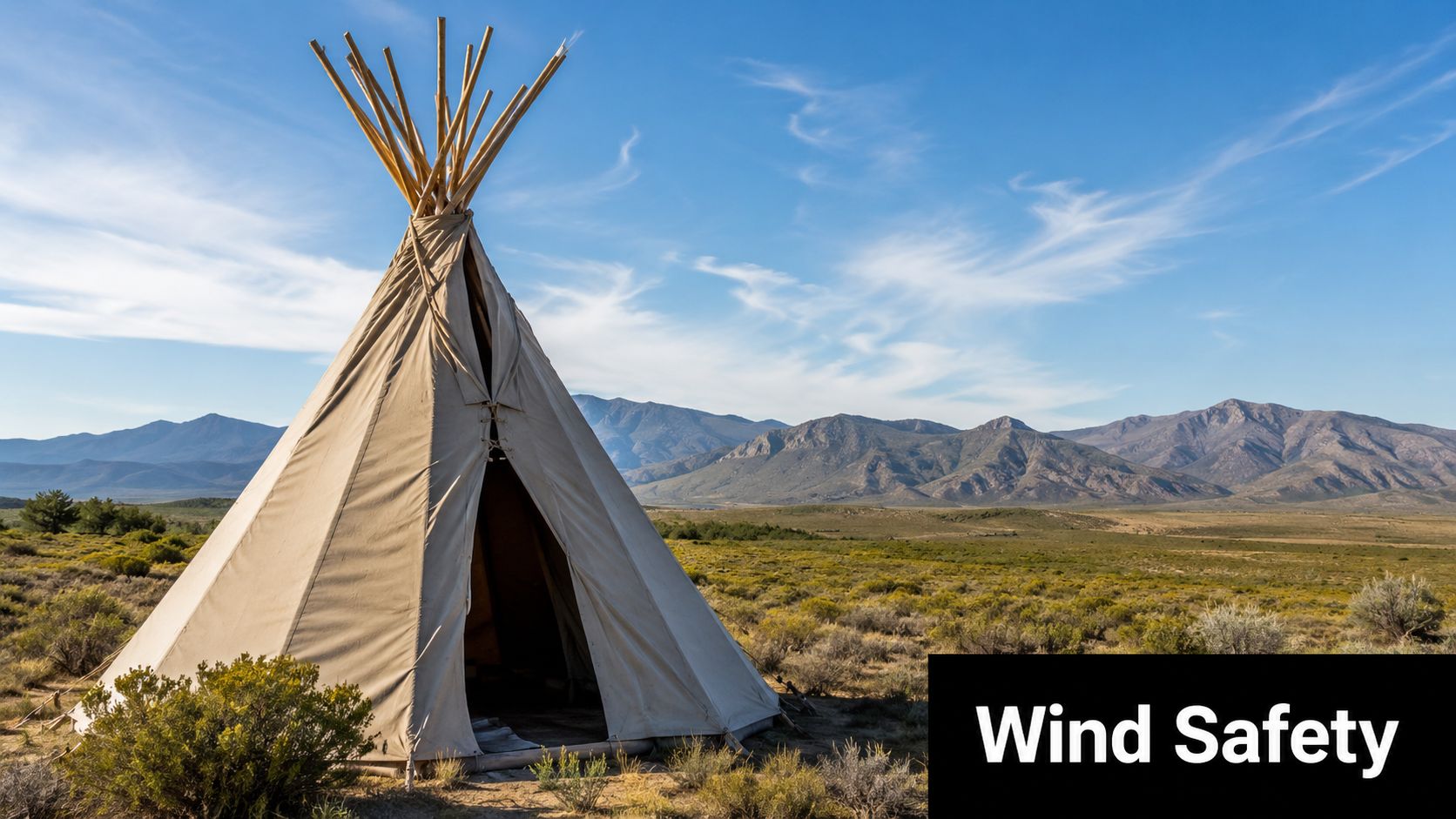
The site determines the install
In the Western Cape, I would rather have a good site with an average view than a dramatic site that fights the structure all day. Teepees need clear perimeter space beyond the visible footprint so crews can tension the cover properly, manage flap rods safely, and return to access points if conditions change. If the tent is squeezed between hedges, walls, planters, or parked vehicles, the install becomes harder and the margin for error gets smaller.
That point gets missed often at vineyards and private homes. A planner measures the internal floor area and assumes the tent will fit. The working footprint is larger, and that extra room matters once the weather changes.
What causes trouble on Cape Town and Winelands sites
Vineyard access affects setup quality
Some of the best-looking Winelands venues are the hardest to build on. Narrow farm roads, soft lawn edges, hidden irrigation, low tree branches, and long hand-carry distances all slow the crew down. If installation equipment cannot get close enough to the final position, the job takes longer and setup options become more limited.
Wind exposure changes from one corner of a property to another
A lawn can look perfect at a site visit and still behave badly in wind. I see this often on estates where buildings create wind tunnels or where an otherwise level area sits on an exposed edge. Sandy ground and soft soils also reduce anchoring confidence, especially after irrigation or recent rain.
Uneven tension shows up later
Many teepee problems are not frame failures. They start with tension that is slightly off during installation, then worsen once gusts build through the afternoon. A cover that is carrying load unevenly will move differently across the structure, and that is when flapping, stress points, and water ingress become more likely.
On a windy Western Cape site, the real question is whether the teepee has been installed for that specific ground, exposure, and access constraint.
Required checks for Western Cape setups
Ask your supplier these questions before you confirm the booking:
- Has the team inspected the actual setup area? Venue photos are useful, but they do not show soil condition, slope, hidden services, or wind exposure properly.
- What anchoring method suits this surface? Pegging, weighting, and backup restraint planning depend on the ground.
- How much perimeter must stay clear? Operational space should stay free of furniture, florals, bars, and signage.
- What is the weather plan if strong wind is forecast? The answer should cover timing, site changes, and what adjustments can be made safely.
- How is an exposed site handled differently? Coastal lawns, ridgelines, and open vineyard positions often need more conservative planning.
For planners weighing alternatives on difficult sites, this guide to heavy-duty gazebos for outdoor events is useful. Some locations are better served by a different structure.
Permits, venue rules, and access timing matter too
Cape Town and Winelands events often run into practical limits that have nothing to do with aesthetics. A venue may restrict vehicle movement across lawns, require protection over irrigation routes, or limit installation windows around guest check-ins, tasting-room trade, or neighbouring functions. On municipal or public-facing sites, permit requirements can also affect where and when a structure can be erected.
These details change the installation plan. They also affect safety, because rushed crews and compressed build windows leave less room to correct avoidable site issues.
Wind planning also protects the guest experience
A well-installed teepee feels calmer. You get less movement in the cover, fewer draughts through the wrong openings, and better protection for lighting, tables, and service areas. That matters at weddings and private events, where guests may never notice the engineering, but they notice discomfort immediately.
Keep these habits in place on the day:
- Keep the perimeter clear. The crew may need access points during final adjustments.
- Check anything attached to the structure. Signage, draping, floral work, and lightweight décor all add wind behaviour.
- Report changing conditions early. The venue coordinator, planner, and tent team should stay in contact if the wind strengthens.
The best Cape teepee events look effortless because the hard decisions were made early, with the site, the weather, and the logistics treated seriously from the start.
Lighting and Décor Ideas to Style Your Teepee
A teepee doesn't need excessive decoration. It already brings shape, height and texture into the event. The best styling uses that structure rather than hiding it.
I've seen the strongest results come from a simple principle: let the canopy stay visible, then add layers that warm it up. When decorators try to fill every line of sight, the room loses the calm, dramatic quality that makes teepees special in the first place.
Use light to define mood and architecture
Lighting should do two jobs at once. It must make people look good, and it must reveal the shape of the tent after sunset. Warm overhead glow, focused accents and low-level ambient light usually work better than one harsh wash.
This visual guide captures the kind of details that soften and enhance a teepee interior:
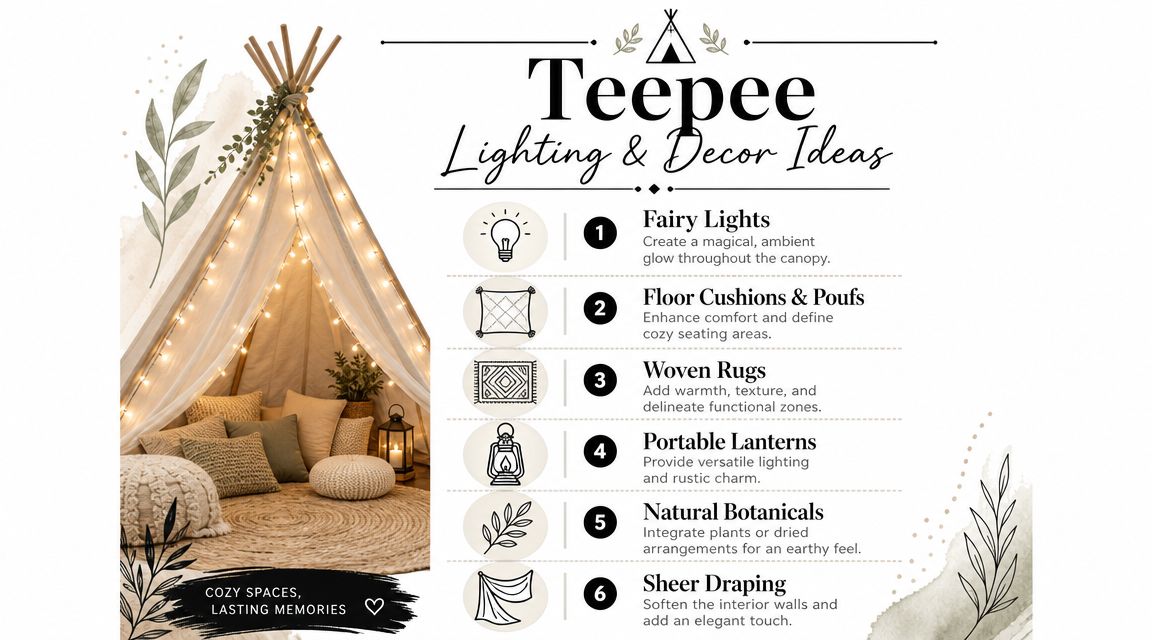
A few combinations work especially well:
- Pole lighting with warm fairy lights to draw the eye upward and create softness overhead
- Lanterns and table lighting to make dining areas feel intimate rather than cavernous
- Uplighting at key points if you want to highlight the teepee geometry without flattening it
- Lounge-area accent lighting so quieter corners feel intentional at night
If you want a softer, romantic treatment for weddings and evening functions, fairy light curtain ideas for events are useful inspiration for layering glow without overpowering the space.
Soft light at multiple heights almost always beats one bright source in the middle of the room.
Styling examples that suit local event briefs
Winelands wedding
Keep the palette grounded. Timber tones, woven textures, layered rugs, candles or lantern-style lighting, and restrained florals tend to suit the setting. The tent should feel connected to the setting, not imported into it.
Modern brand activation
Contrast works well. Pair the natural canvas and rope textures with clean furniture, tighter colour control and a stronger lighting scheme. A contemporary lounge inside a rustic shell can look sharp when the branding is disciplined.
Private party or milestone celebration
Use the teepee to create atmosphere pockets. A bar at one edge, low seating in one corner, a dance area in the centre and warm decorative lighting overhead can make the event feel full of discovery without becoming cluttered.
Decor that works and decor that doesn't
What works:
- Natural botanicals that echo the outdoor setting
- Sheer draping in small doses to soften edges
- Rugs and layered textures to define zones
- Furniture with presence rather than lots of small filler items
What usually doesn't:
- Too many hanging elements that fight for the same visual space
- Heavy décor at the perimeter where operational access may still be needed
- Cold white lighting that makes the canvas look flat
- Overfilling the floor so the structure disappears behind furniture
A teepee is at its best when guests can still register the volume of the space. Leave some air in the design. The room should glow, not groan under styling.
Your Cape Town Teepee Rental and Logistics Checklist
Most teepee problems don't start with the tent. They start with assumptions. Someone assumes the access road is fine. Someone assumes the venue allows stakes. Someone assumes the supplier's cleaning standards are obvious. Someone assumes power can be pulled from the nearest building. Event day is the wrong time to test any of that.
A good rental process is a checklist process.
Questions to settle before you book
Start with the venue and the site itself. Then move to the structure.
- Access: Can delivery vehicles reach the setup area easily, or is there a long manual carry from the parking zone?
- Ground permission: Does the venue allow pegging and anchoring in that specific area?
- Power: Where will lighting, catering support, sound and climate-control equipment run from?
- Timing: How early can setup begin, and how late can breakdown happen?
- Weather plan: What happens if conditions change close to the event date?
For public spaces or highly controlled venues, also check permit requirements early. On farms and estates, ask one extra question: who gives final approval on exact placement? It's not always the same person who signs the booking.
Hygiene, fabric care and repeat-use rentals
This matters more than many clients realise, especially for children's parties, school functions and public-facing events. Fabric structures are reused, transported, packed and reopened across different environments. You should ask directly about cleaning and sanitation between hires.
That's not fussy. It's responsible. Guidance around repeat-use fabric structures highlights the importance of asking about cleaning and sanitation protocols between hires to support hygiene and indoor air quality, especially for children's parties and public gatherings, as discussed in teepee care guidance from Colorado Yurt Company.
Ask what gets cleaned, how it's dried, how it's stored and what happens if the canvas comes back damp from a previous event.
A practical event-week checklist
Venue confirmation
Reconfirm the exact setup area, access route and contact person on site. Don't rely on an old pin drop or a verbal description from weeks ago.
Supplier coordination
Make sure all vendors are working from the same floor plan. The florist, furniture team, lighting crew and caterer should not discover the layout for the first time on arrival.
Weather review
Check conditions and revisit the site plan if the forecast changes. Exposed lawns, open vineyards and coastal locations often need a sharper eye in the final days.
Service logistics
Confirm toilets, waste handling, staff movement and pack-down timing. A refined event still depends on basic operational discipline.
What a smooth booking usually includes
A strong teepee booking process should cover these practical items clearly:
- Site suitability
- Tent size and intended layout
- Installation timing
- Anchoring method
- Furniture and flooring coordination
- Weather response
- Cleaning expectations
- Breakdown access and timing
When those are settled early, the tent becomes easy to work with. When they're left vague, even a stunning setup can become stressful behind the scenes.
If you're planning a wedding, launch, matric dance or private celebration in Cape Town or the Winelands, ABC Hire can help you build the full event environment around the right structure. From furniture and LED pieces to climate-control equipment and practical event essentials, the team supports polished outdoor setups that look exceptional and run smoothly.