
A Winelands wedding can look effortless from the guest's side. The flowers are placed, the wine is poured, and the granite top table sits solidly beneath the evening lights. Behind that polished finish, someone has had to confirm the base rating, plan the loading route, protect the edges, and make sure the surface won't be damaged during a rushed venue changeover.
That's the part that matters when you're hiring furniture in Cape Town. A granite top table offers a premium finish and strong day-to-day resilience, but it also brings substantial handling, support and maintenance requirements. The right choice depends on more than colour. You'll need to check the top's dimensions, thickness, base compatibility, access route, storage arrangement and care expectations before signing off the hire.
Why Granite Top Tables Are Dominating Cape Town Events
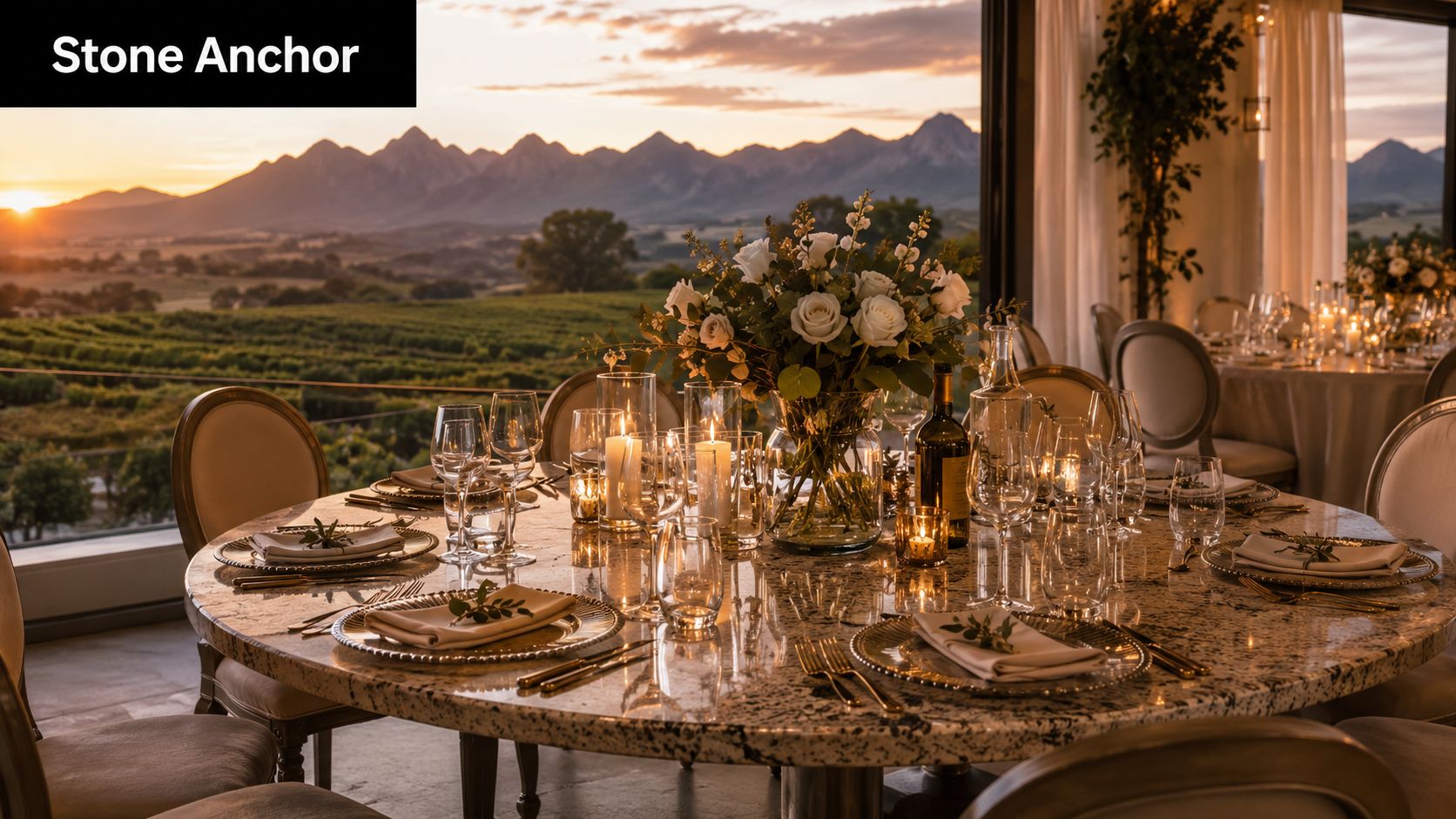
At a vineyard reception outside Stellenbosch, a round granite top table can anchor the room without competing with the surrounding view. Under warm festoon lighting, the polished surface reflects glassware and candlelight cleanly, while the stone gives the setting a more permanent, architectural feel than a temporary laminate table. At a Cape Town brand activation, the same material can support a product display, registration point or hospitality station where guests will repeatedly place drinks, bags and promotional items.
South Africa has a long commercial granite history. Production became established around Rustenburg, exports began in the 1950s, and the country's dimension stone sector was historically dominated by granite. The South African dimension stone sector overview records 36 operational quarries in 2004, including 29 granite quarries, with dimension stone production estimated at 527kt valued at R490 million. More recently, South Africa exported US$66.3 million of granite in 2023, making it the world's eighth-largest exporter, while imports were US$4.45 million. That trade depth helps explain why granite remains a familiar and available material for local furniture and event applications.
The questions to ask before booking
The premium appearance is only useful if the table works in the venue. Ask the hire company:
- What is the actual top thickness and weight? A visual 40 mm edge may be a laminated profile over a thinner slab.
- What base is supplied? The base must support the stone without allowing excessive overhang or wobble.
- Who handles the table on site? Confirm whether delivery staff will position the top or whether venue staff are expected to assist.
- Can the table pass through the venue route? Check doors, lifts, stairs, paving and narrow service corridors.
- What happens if the layout changes? Granite shouldn't be dragged across floors or lifted casually during last-minute styling.
- How is the surface maintained? Ask when it was last sealed and what cleaning products the supplier uses.
Why granite suits local event conditions
Wine, sauces and citrus are common around Western Cape functions. Granite's low water absorption and high compressive strength make it a practical surface for repeated wiping and outdoor exposure. South African material guidance reports water absorption under 0.5% and compressive strength above 200 MPa in the cited granite data, although the exact performance still depends on the stone, finish, fabrication and care regime. See the South African granite specification guide when a fabricator or venue needs a more technical material discussion.
The strongest reason to choose granite isn't that it looks expensive. It's that the surface can keep its visual authority through demanding events, provided the team respects the stone's mass and brittle edges.
Honest Pros and Cons of Granite Top Tables for Events
Granite is a strong event surface, but it isn't an effortless one. The material performs well once installed, yet most operational problems occur before guests arrive, during loading, positioning or teardown. Comparing it with alternatives makes the decision clearer.
Where granite performs well
- Premium appearance: Natural variation gives each table more depth than a printed laminate, while polished or honed finishes suit formal dinners, launches and cocktail settings.
- Resistance to routine wear: Granite tolerates repeated wiping, glassware and normal service activity better than many softer or lighter surfaces.
- Outdoor suitability: Properly selected granite can handle exposure and frequent cleaning, which is useful for courtyards, terraces and vineyard venues.
- Long service potential: A well-supported top can remain visually useful across many hires instead of looking tired after a short programme.
- Styling flexibility: It works with linen, timber, metal, florals, candles and contemporary display pieces without dictating one décor theme.
Where the material creates work
- Weight changes the labour plan: The top may need a team lift, protective blankets, edge guards and a trolley suitable for stone. A supplier who treats it like a folding trestle is creating risk.
- Edges remain vulnerable: Granite resists surface wear, but a corner can chip if it strikes a door frame, vehicle floor or metal base.
- The base must be engineered for the load: A decorative pedestal that looks stable may still flex under the stone or concentrate force at the wrong points.
- Maintenance isn't zero: Water and a microfiber cloth may be enough for routine cleaning, but acidic liquids can dull polished granite over time. The granite care guidance from ANG recommends resealing every 1–3 years or when water starts spotting the surface.
- Replacement is less convenient: A damaged laminate top can be replaced quickly and consistently. A granite replacement may involve matching colour, sourcing stone, fabrication and new transport planning.
How alternatives compare on the day
Solid wood is often easier to handle and can absorb a more relaxed, rustic design brief, but it may show moisture marks, scratches or dents differently from stone. Tempered glass provides visual lightness and a modern finish, although fingerprints, chips and breakage risk deserve close attention during a busy load-in. High-pressure laminate is generally easier to replace and transport, but it won't provide the same natural variation or visual weight.
Practical rule: Choose granite when the event benefits from permanence and the supplier can demonstrate a safe handling system. Choose a lighter surface when access, turnaround speed or frequent layout changes matter more than the stone finish.
How to Size and Specify a Granite Top Table for Your Event
A reliable specification starts with use, not appearance. A dining table, cocktail station and product display place different demands on the top, base and surrounding floor area. Write the intended use into the hire request so the supplier can recommend a suitable configuration rather than quoting a shape in isolation.
South African retail listings describe locally sourced Kalahari granite cut into a 20 mm top, as shown in this Kalahari granite outdoor dining table listing. For a heavier visual profile, fabricators may laminate the edge so a 20 mm slab appears like a 40 mm edge. That detail affects styling, clearance and handling, even though it doesn't mean the entire slab is 40 mm thick.
A practical specification sequence
- Define the function. State whether the table is for seated dining, standing drinks, registration, a cake, floral display or brand merchandise.
- Choose the shape around circulation. Round tops help soften formal layouts and remove sharp corners. Square tops suit compact lounge or display arrangements. Rectangular tops work when the table must sit against a wall or align with a long dining plan.
- Confirm the slab and edge. Request the actual thickness, edge treatment, finish and approximate weight from the supplier.
- Specify the support method. A central pedestal can provide useful legroom, while a broad steel frame may distribute weight more effectively on larger tops.
- Check the overhang. Excessive unsupported stone at the edge increases the risk of flexural failure and corner damage.
- Plan the surrounding space. Leave enough room for guests, service staff, chairs, linen and safe movement during setup.
South African technical guidance lists standard slab sizes of about 2800 mm x 1800 mm, with polished or honed finishes commonly used for horizontal surfaces. The same guidance gives a thermal expansion coefficient of around 7–8 × 10^-6/°C, so larger tops shouldn't be trapped rigidly around their perimeter when indoor and outdoor temperatures change.
Granite top table sizing guide for common event layouts
| Event Use | Typical Shape | Approximate Top Size | Recommended Base Type |
|---|---|---|---|
| Seated wedding dining | Round | Confirm guest plan and chair spacing with the supplier | Central pedestal or engineered dining base |
| Corporate registration | Rectangular | Sized for branding, paperwork and queue flow | Wide steel frame with distributed support |
| Cocktail service | Round or square | Compact footprint that preserves circulation | Stable pedestal with a broad footprint |
| Matric dance display | Square or rectangular | Matched to display items and venue sightlines | Heavy-duty frame with protected corners |
For a larger seated plan, compare the layout against this guide to 10-seater table planning, then ask the hire company to confirm the actual top and base combination. Never approve a granite top solely because the diameter fits. The frame rating, contact points and safe overhang are equally important.
Transport, Handling and On-Site Setup Without Damage
Transport is where a granite top table becomes an operations issue. South African references place granite at roughly 6–7 on the Mohs hardness scale and around 2.6–2.75 g/cm³ density, while installed granite is cited at approximately 150–180 kg per square metre in one local reference. A 1.0 m-diameter top can therefore add well over 70 kg before the base is included, depending on thickness and stone type. The local granite performance and pricing reference also highlights the importance of support, handling and lower-porosity stone selection for demanding events.
Before the vehicle leaves
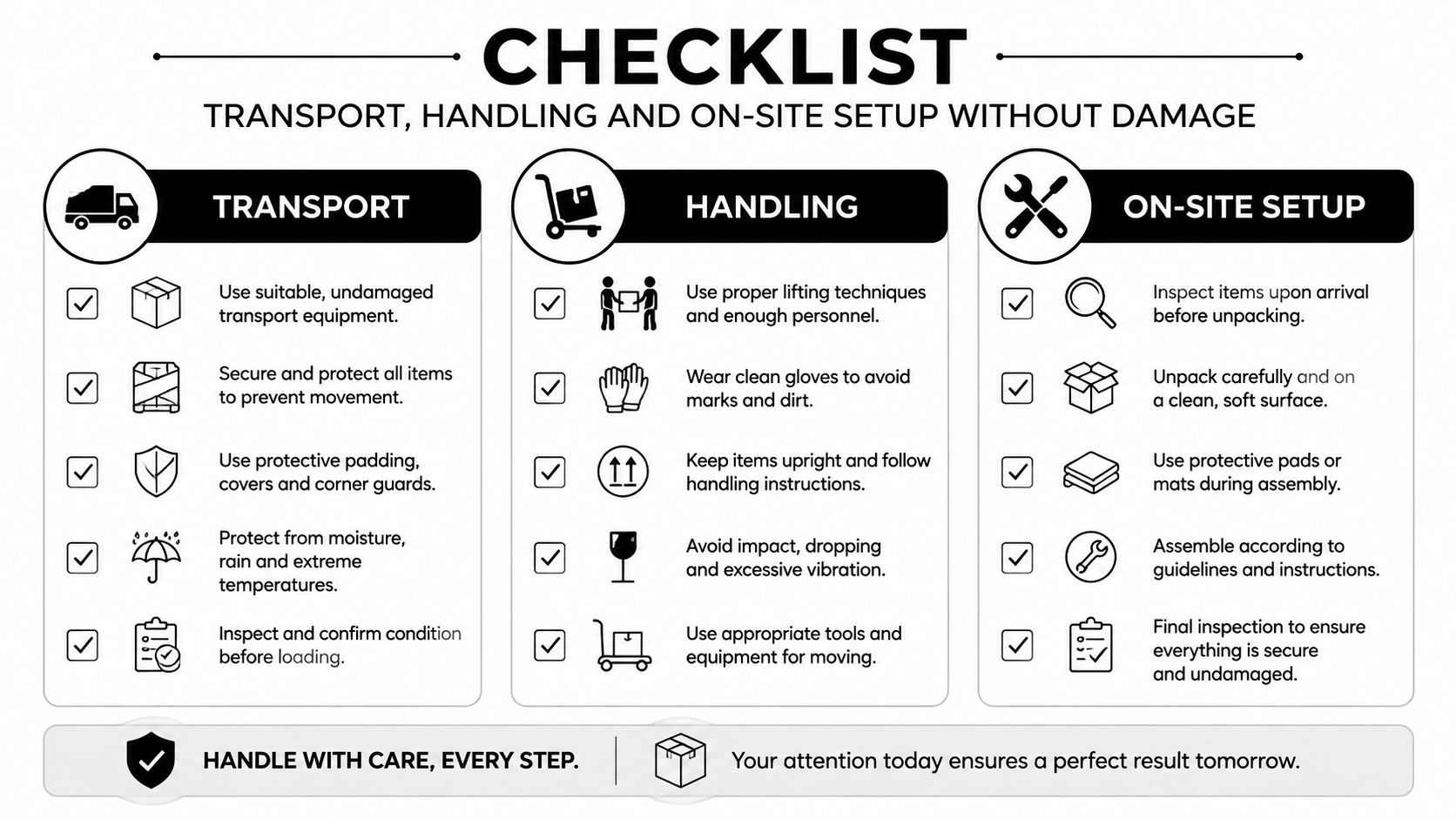
Inspect the top under good light. Look for existing cracks, corner chips, hairline fractures and movement in any laminated edge. Photograph the condition, clean and dry the surface, then wrap the top in a heavy moving blanket with separate protection around the perimeter.
A flat, padded transport position is safer than allowing the slab to lean against unsecured equipment. Keep straps firm but not crushing, and don't place décor boxes or cases on top of the stone. If the supplier uses custom timber protection or padded cases, the same principles used for fragile display materials apply. This resource on best crates for artwork transport is useful background for understanding why rigid protection, padding and controlled loading matter for valuable surfaces.
The load-in route
Walk the route before delivery day. Measure the narrowest door, identify steps and lifts, check whether paving is smooth enough for a loaded trolley, and agree who will control access. A beautiful table can become unusable if the top can't clear a service entrance without being tilted into a frame or wall.
Use two people for a 20 mm slab and more assistance when the diameter, edge profile or route demands it. Carry the top vertically when appropriate for the handling system, keep hands away from unsupported corners, and use edge protection wherever the stone might contact a trolley, vehicle or doorway.
Positioning and final setup
Place the base first, confirm that it stands level, then lift the top squarely into position. Don't slide the granite across the frame. Use suitable rubber shims to correct minor unevenness, especially on outdoor paving, but ask the supplier to resolve any substantial instability rather than compensating with improvised packing.
Granite expands and contracts slightly as conditions change. Installers should allow movement gaps on larger tops and avoid rigid perimeter constraints, particularly where a table moves from a cool storeroom into warm afternoon sun. Keep the top covered until the caterer and decorator have finished the heavy work. For tightly timed deliveries, same-day furniture delivery planning can help teams coordinate access, but it doesn't remove the need for a safe route and a designated setup lead.
On-site standard: The base should be ready, the route should be clear and the final position should be agreed before anyone lifts the stone.
Renting Versus Buying Granite Top Tables in South Africa
For a one-off wedding, hiring usually avoids the most awkward ownership costs. You don't need to find long-term storage, maintain a suitable delivery vehicle, train staff to handle heavy slabs or carry the replacement risk after the event. The supplier manages the table as part of an existing furniture fleet, while you budget for the hire and delivery arrangement agreed for that date.
Buying can make sense for a venue, décor company or corporate team with recurring demand. A venue hosting regular functions may value consistent stock, a familiar base system and control over styling. The trade-off is that ownership turns every future move into your responsibility. Storage needs to keep the tops dry, protected and accessible, and the transport process needs to work even when a table isn't booked for a formal event.
The lifecycle questions that matter
Storage is part of the purchase price. Granite tops take up protected floor space and shouldn't be treated as spare boards in a crowded storeroom. A careless stack can create edge pressure, while unprotected movement can cause chips that only become visible under event lighting.
Transport affects recurring cost. A buyer needs a vehicle, protective materials, handling equipment and people who understand how to move stone. A Cape Town or Winelands venue may also face narrow access, stairs, gravel paths and frequent last-minute changes.
Replacement is more complicated than repair. A damaged top may not match the remaining set in colour, veining or finish. South Africa's trade position shows strong export depth, but it also has imports and regional supply links. The granite trade profile for South Africa reports November 2024 exports of ZAR50.1M versus imports of ZAR5.53M, with imports concentrated in part among regional suppliers such as Zimbabwe. That means stock may be available, but sourcing, fabrication and delivery still require planning.
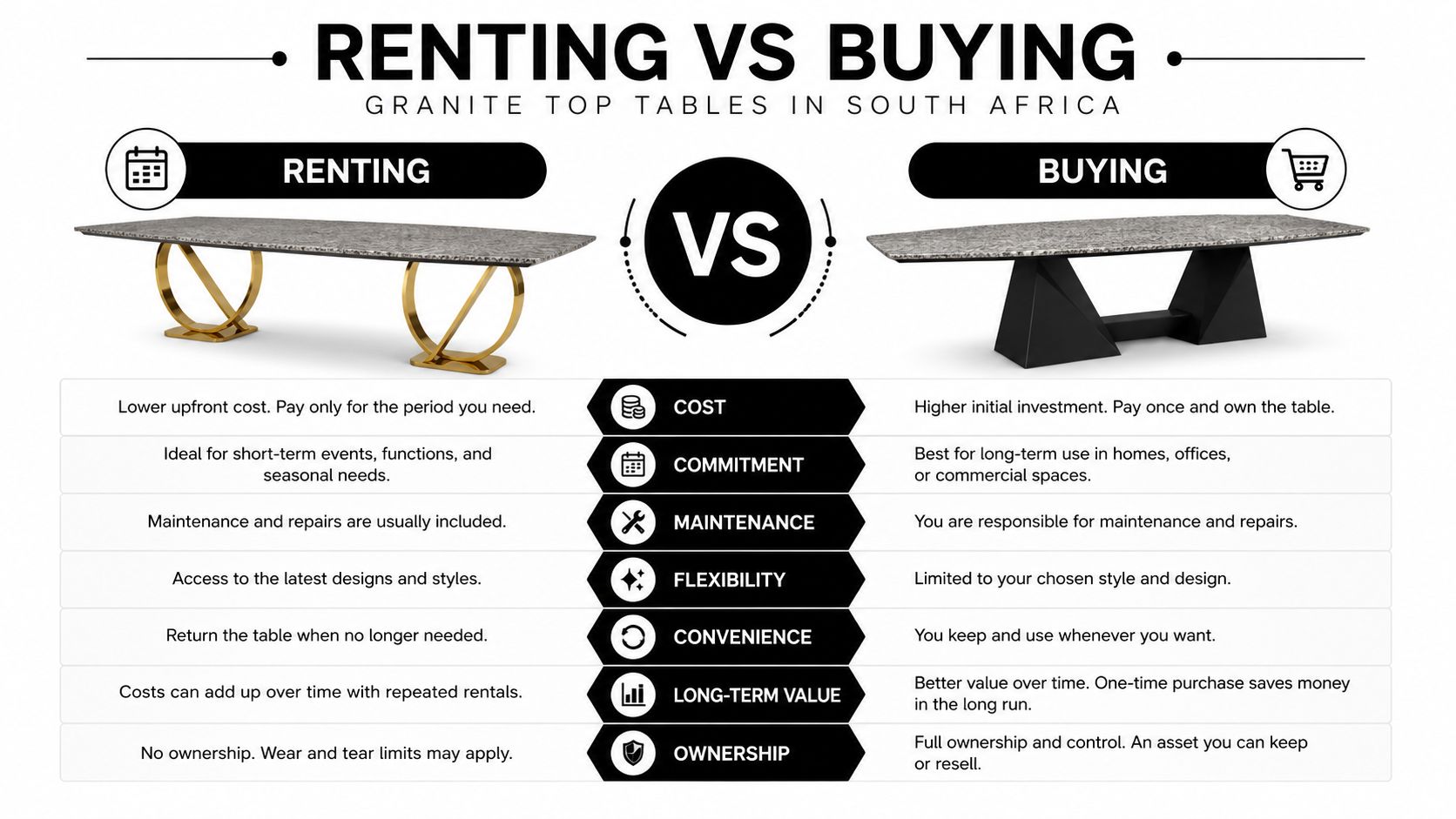
A decision framework for event teams
| Situation | More practical route | Main reason |
|---|---|---|
| One-off wedding | Hire | Avoids storage, fleet and replacement responsibility |
| Recurring corporate activation | Compare both | Repeated use may justify controlled ownership |
| Venue with frequent functions | Ownership or standing supplier arrangement | Consistency and availability can outweigh flexibility |
| Brand campaign with changing layouts | Hire | Different formats can be sourced without holding fixed stock |
For most planners, the strongest argument for hiring is operational flexibility. You're paying for access to a finished asset and the supplier's handling process, rather than building a stone furniture operation around a single event requirement.
Styling, Décor Pairing and Everyday Care for Granite Surfaces
A granite surface can suit a Winelands wedding or a corporate launch, but the styling needs to respect its finish and the work required to protect it. Pair warmer stone with linen, timber, dried grasses and seasonal florals. For a product launch, use a restrained runner, clear acrylic signage, controlled uplighting and fewer objects, so the table supports the brand environment without becoming cluttered.
The finish should determine the décor choices. Polished granite reflects light and glassware, while honed stone gives the setting a softer, quieter feel. For colour, pattern and finish references, Browse our granite tiles, while remembering that hired tabletops have their own handling and sealing requirements.
Keep repeated movement under control. Place a runner or placemat beneath serving pieces, metal stands and ceramic bases, and lift items rather than sliding them across the stone. The guidance on décor on tables can help styling teams maintain visual impact while leaving clear space for service.
Care checklist for venue and hire teams
- Clear spills quickly: Blot wine, sauces and citrus instead of allowing them to dry.
- Use gentle materials: Use water and a microfiber cloth for routine marks.
- Avoid acidic cleaners: Vinegar and lemon-based products may dull polished granite over time.
- Check the seal: Follow the supplier's resealing schedule, commonly every 1–3 years, or arrange resealing when water begins spotting the surface. The schedule and signs of wear are covered in ANG's granite cleaning and sealing guidance.
- Protect during teardown: Lift décor away, keep cases clear of exposed edges and avoid dragging equipment over the tabletop.
- Record damage immediately: Photograph chips, stains or marks before the table leaves the venue.
For event hire, “low maintenance” means a clear process, not a maintenance-free surface. Good handling, sensible styling and prompt cleaning preserve the finish and reduce avoidable repair costs.
ABC Hire supplies event furniture for weddings, corporate functions, private celebrations and venue programmes across Cape Town, Stellenbosch, Franschhoek and Paarl. Share the required dimensions, access route and setup conditions with the team, then visit ABC Hire to arrange granite tables with the rest of your event furniture.