
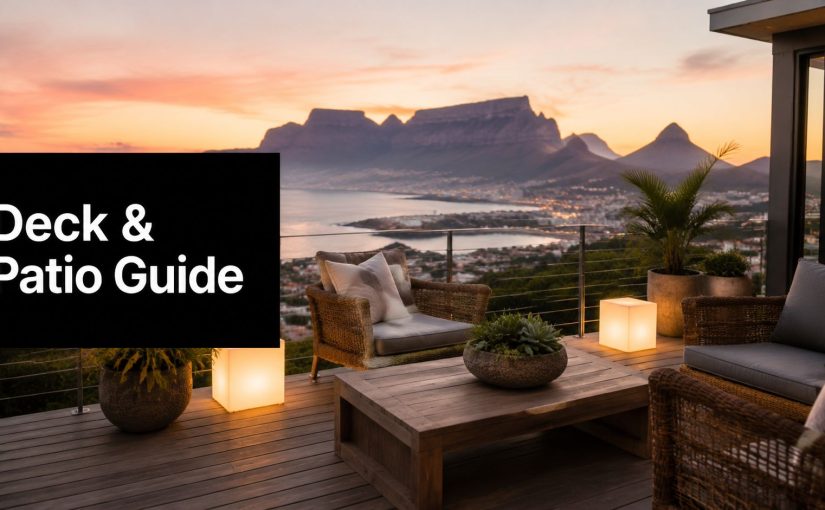
The venue looks perfect at first glance. A timber terrace on a wine farm. A sea-facing deck in Camps Bay. A lawn in Franschhoek with mountain light dropping softly behind the vines. Then the practical questions arrive. What will still look polished after a full afternoon of sun? Which lounge chairs won't shuffle across the paving when the wind picks up? What survives salt in the air without looking tired by the second event?
That's where deck and patio furniture stops being décor and starts becoming event infrastructure.
Planners are under pressure to deliver outdoor spaces that feel as comfortable as an interior lounge. That expectation isn't anecdotal. The global outdoor furniture market was valued at USD 52.96 billion in 2025, driven by growing interest in stylish outdoor living spaces, according to The Business Research Company's outdoor furniture market report. Guests want softness, layout, lighting, and detail. They don't want an outdoor setup that feels improvised.
Cape Town and the Winelands reward good choices and punish lazy ones. The right rental mix gives you flexibility without forcing you to own, store, maintain, and replace furniture that only suits some venues and some seasons. That's usually the smarter route if you want a high-end result without tying up budget in stock that may be wrong for the next site.
Crafting Unforgettable Outdoor Events in Cape Town
A new planner often starts with the mood board. That's normal. You see pale timber, woven textures, low lounges, scattered side tables, candles, maybe a long outdoor dining run under festoon lights. Then the site visit changes the brief.
On a Clifton deck, the breeze isn't a detail. It changes what you can safely place near the edge and what needs more weight. In Stellenbosch, hard afternoon sun affects fabric choice, guest comfort, and where lounge clusters should sit once speeches begin. On a Winelands terrace, the furniture has to look refined from the first guest arrival to the final collection, even after service staff, photographers, and guests have moved through it all evening.
That pressure is why deck and patio furniture needs to be selected as a system, not as isolated pieces.
The look has to work with the site
A beautiful outdoor event usually has three things in balance:
- Comfort: Guests need somewhere to settle, not just perch.
- Visual order: The space has to feel designed from every approach angle.
- Practical resilience: Furniture must still perform when wind, moisture, or heat start interfering.
If you're still shaping the broader surface and design direction, these insights for your patio decking project are useful because they help you think about how the deck itself influences furniture style, flow, and atmosphere.
Outdoor furniture at an event doesn't succeed because it photographs well. It succeeds because guests use it easily and the setup still looks intentional under real weather conditions.
Why rental usually makes more sense
Owning stock sounds efficient until the venue changes. One weekend needs clean-lined aluminium lounges for a rooftop launch. The next needs warmer timber tones for a wedding on a farm. Then a private party wants LED cubes and soft seating that can move from sunset drinks to late-night dancing.
Rental keeps your options open. It also removes the hidden burden that planners underestimate. Storage, cleaning, transport, repairs, fading cushions, chipped finishes, and missing components all eat time. Hiring the right pieces for the venue, season, and guest profile is usually a better decision than trying to make one permanent stock list solve every brief.
Choosing the Right Furniture Material for the Cape Climate
Material choice is where many outdoor events are won or lost. In Cape Town, furniture isn't just dealing with occasional weather. It's dealing with high UV, wind-driven moisture, and saline air at coastal venues. For timber-based products, proper treatment matters, and corrosion-resistant fasteners such as stainless steel matter too, as noted in this guidance on outdoor material durability in South African conditions.
A planner who chooses only by colour or shape usually pays for it later. The finish degrades, the hardware stains, the cushions age unevenly, or the setup starts looking worn long before guests arrive.
What each material does well
Below is the working comparison I'd use for Cape Town events.
| Material | Pros for Cape Town | Cons for Cape Town | Best For |
|---|---|---|---|
| Powder-coated aluminium | Handles coastal air well when properly finished. Lightweight for transport and fast setup. Clean, modern look. | Can be too light for exposed windy sites unless the design has enough footprint or weight. Lower-end coatings show wear quickly. | Rooftops, terraces, corporate events, modern lounges |
| Hardwood such as teak | Strong visual warmth. Good choice where a natural look matters. Better suited to outdoor exposure than decorative indoor timber. | Heavier and usually more expensive. Needs consistent care if you want it to keep a polished look. Poor hardware choices create problems. | Weddings, wine farms, premium dining and lounge areas |
| All-weather wicker or synthetic rattan | Softer resort-style feel. Works well for relaxed lounges. Better than natural wicker outdoors if the weave and frame are good quality. | Cheap versions fade, sag, or crack. Can collect dust and grime in the weave. Wind can move lighter pieces. | Poolside events, garden parties, casual luxury setups |
| High-grade plastic or resin | Easy to clean. Useful for back-of-house or flexible seating plans. Can be practical for wet conditions. | Lower-end pieces can look temporary, become brittle, or cheapen a premium event. | Large functions, support zones, practical overflow seating |
The Cape Town trade-offs that matter
Aluminium is often the safest broad-choice material for event hire because it travels well, looks neat, and resists many of the issues that attack ordinary metal near the coast. But planners make a mistake when they assume all aluminium furniture suits all outdoor sites. On a calm courtyard, that's fine. On an exposed Atlantic-facing venue, it may need heavier table bases, denser grouping, or sheltered placement.
Teak and other outdoor hardwoods work beautifully in the Winelands because they sit naturally against stone, vineyard views, and timber decks. They tend to look more expensive, too. If you want a good primer on what makes teak attractive outdoors, Urban Man Caves on teak furniture gives a useful overview. The catch is maintenance. Timber that's neglected doesn't age romantically at events. It just looks tired.
Don't confuse outdoor-looking with outdoor-grade
Many planners hire from photos. That's risky. A woven armchair may look coastal and premium online, but if the weave is low-grade or the frame fixings aren't suited to marine air, the piece won't hold up. The same goes for timber items with decorative steel hardware that starts staining in damp conditions.
A simple filter helps:
- For coastal venues: Prioritise aluminium, marine-sensible hardware, and timber only if it's properly suited to outdoor exposure.
- For inland Winelands venues: Use timber more confidently, but still watch UV, dust, and cushion fade.
- For highly exposed lawns and terraces: Avoid anything too light unless it's part of a controlled, sheltered arrangement.
- For fast turnaround events: Choose materials that wipe clean quickly and still look sharp under bright daylight.
For a broader practical view on pieces built to handle the elements, this guide to weather-resistant outdoor furniture is worth keeping in your planning file.
Practical rule: If a piece needs perfect weather and careful handling to look good, it's not the right hero item for an outdoor event.
Furniture Sizing and Layout for Flawless Event Flow
The most expensive lounge setup can still fail if guests don't know how to move through it. Outdoor events need breathing room, sightlines, and enough flexibility that the space still works once catering, bars, photographers, and speeches start sharing the same footprint.
In the Western Cape, wind also affects layout. Stability matters. Furniture with a low centre of gravity, wide bases, or sufficient mass is the safer choice for exposed venues, following the same practical wind logic discussed in this note on outdoor furniture stability and SANS 10160 context.
Build in zones, not rows
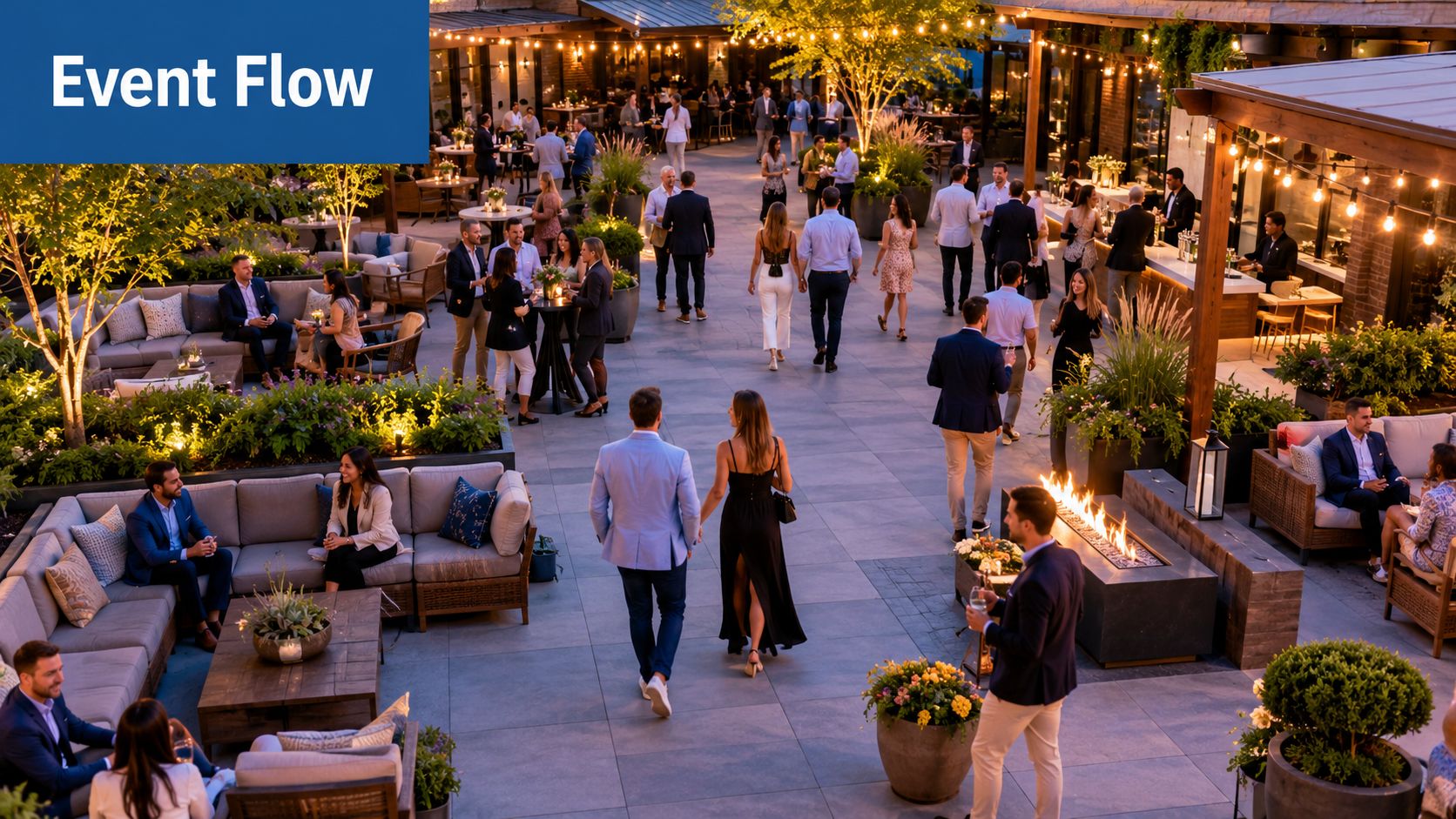
A strong outdoor layout usually has clear use areas rather than one continuous spread of furniture. Guests read zones instinctively when the furniture is organised properly.
For most events, I'd separate the space into:
- Arrival or welcome zone: A clean first impression with standing tables or a small seating pocket.
- Main social zone: The largest lounge or dining area where guests naturally gather.
- Transition zone: Space between bar, food, and seating that keeps traffic moving.
- View or premium zone: The best-positioned seating cluster, reserved for the strongest visual payoff.
If every piece is pushed to the perimeter, the centre often dies. If everything is clustered too tightly, service becomes awkward and guests hesitate to sit.
Different events need different flow
Weddings
Wedding guests need softness and intimacy. Use smaller seating groups rather than one oversized lounge block. That creates conversation pockets and keeps the event from feeling like a waiting area.
Keep ceremony, drinks, and reception transitions obvious. Guests shouldn't have to guess where to move next.
Corporate functions
Corporate events need cleaner circulation and stronger visual discipline. Leave obvious paths for networking, branded moments, and staff movement. Cocktail tables can help bridge between standing conversation and seated lounge use.
Avoid over-furnishing. If the setup is too dense, people stop moving and the event loses momentum.
Private parties
Private celebrations can be looser, but they still need structure. Create one energetic zone near music or the bar, then soften the perimeter with lower lounge pieces. People want options. Some guests dance, some talk, some sit and stay.
Low seating works best outdoors when it's anchored by tables, rugs, planters, or lighting. Otherwise it can look like furniture was simply dropped into the venue.
Use furniture to shelter people from wind
You can't eliminate the south-easter, but you can reduce how it affects the guest experience.
Try these placement decisions:
- Turn lounge backs toward prevailing wind where possible.
- Use lower profiles on exposed edges of decks and terraces.
- Choose wider-based tables so they feel planted.
- Place the most comfortable soft seating in naturally protected corners, behind screens, walls, or planting.
- Avoid tall, top-heavy combinations in open positions.
A good outdoor layout feels relaxed because somebody has already solved the practical problems before guests notice them.
Styling Your Space With LED Accents and Lounge Pieces
The quickest way to make an outdoor event feel expensive is to layer comfort with controlled lighting. The quickest way to make it feel messy is to throw in glowing furniture without a visual plan.
LED pieces work best when they support the layout rather than dominate it. They should define edges, draw attention to key zones, and help the event transition from daylight to evening. They shouldn't turn a vineyard dinner into a nightclub unless that's exactly what the brief calls for.
Keep one element calm
If the LED furniture is the statement, the lounge pieces should do the grounding. Neutral sofas, clean-lined ottomans, and simple coffee tables let the lighting feature read as deliberate. If the upholstery is already bold, scale the lighting back.
A simple styling balance works well:
- Soft seating sets the tone
- LED pieces create punctuation
- Textiles bring warmth
- Small tables make the lounge usable
That last point gets ignored constantly. Guests need somewhere to place a drink, clutch, phone, or canapé plate. A beautiful lounge without enough surface area always underperforms.
Use light for shape, not novelty
LED cubes, benches, and bar elements can divide space very effectively after dark. They help signal where the party continues once natural light fades. But the light colour matters. Cool, harsh tones can flatten the atmosphere. Warmer or controlled tones usually sit better with timber decks, natural stone, and vineyard or coastal settings.
If the venue design already includes railing or deck-edge lighting, this guide to Ultra Modern Rails cable railing systems is a useful reference for thinking about how line lighting can support the broader look of the outdoor environment.
For lounge-focused styling ideas that feel polished rather than overdone, this article on modern lounge furniture for events is a practical place to start.
Fabrics and colour need to work in daylight first
Cape Town light is unforgiving. Cushions that look rich indoors can look flat outside. White and oatmeal tones are elegant, but they show marks quickly. Charcoal and taupe hide wear better, but can feel heavy in full sun if the rest of the palette is dark.
I'd usually steer planners toward:
- Stone, sand, olive, charcoal, or muted navy for broad versatility
- Quick-drying outdoor fabrics when pieces may sit out through dew or coastal moisture
- Accent cushions used sparingly, not everywhere
- Texture over pattern when the setting already provides the drama
Evening styling works best when guests notice the mood before they notice the furniture.
Mastering Rental Logistics and Budgeting
Furniture rental goes wrong long before delivery day. It goes wrong when planners don't define the venue properly, don't allocate budget by priority, or don't confirm access and timing early enough.
The strongest rental process is boring in the best way. The right items arrive on time, fit the venue, suit the weather risk, and leave without creating a post-event mess for the planner to absorb.
Budget by function, not by category alone
If you only budget by item type, you can end up with plenty of seating and no coherence. Start by assigning budget according to what the event must do.
A practical breakdown looks like this:
- Guest comfort: Main seating, dining, or lounge requirements
- Visual impact: Hero pieces, statement bar elements, lighting accents
- Operational necessity: Registration tables, service support, bar backs, waiting areas
- Contingency: Last-minute weather shifts, add-ons, replacements, access complications
This approach protects the essentials first. It also stops decorative pieces from consuming budget that should have gone to guest flow or comfort.
Site details matter more than planners think
Before confirming deck and patio furniture, check the things that cause real problems on setup day:
- Access route. Can large lounge pieces get from truck to site without stairs, narrow gates, or gravel slowing everything down?
- Surface type. Timber deck, grass, cobble, and stone all change what sits level and what needs protective feet.
- Exposure. Is the site shielded, partially exposed, or fully open to coastal wind?
- Venue timing. What are the delivery and collection windows, and who is opening the site?
- Power points. If you're using LED pieces, bars, or other powered items, the power plan can't be an afterthought.
What a planner should confirm with a rental partner
Good rental management reduces risk. Great rental management also saves time because the planner doesn't have to keep solving predictable issues.
Ask for clarity on:
- Condition expectations: What level of wear is normal for event hire stock?
- Placement support: Who is positioning furniture on site?
- Weather contingency: What happens if the layout has to change?
- Damage responsibility: Is there a waiver, and what does it precisely cover?
- Collection timing: Can the venue accommodate next-day collection if the event ends late?
If you want a practical overview of why hiring often beats buying for events, this guide to renting furniture for events covers the operational side well.
A planner's best move is to treat rental as part of event design and risk management, not as an isolated supplier line item. That's when the process becomes easier and the result looks more professional.
Actionable Checklists for Your Next Outdoor Event
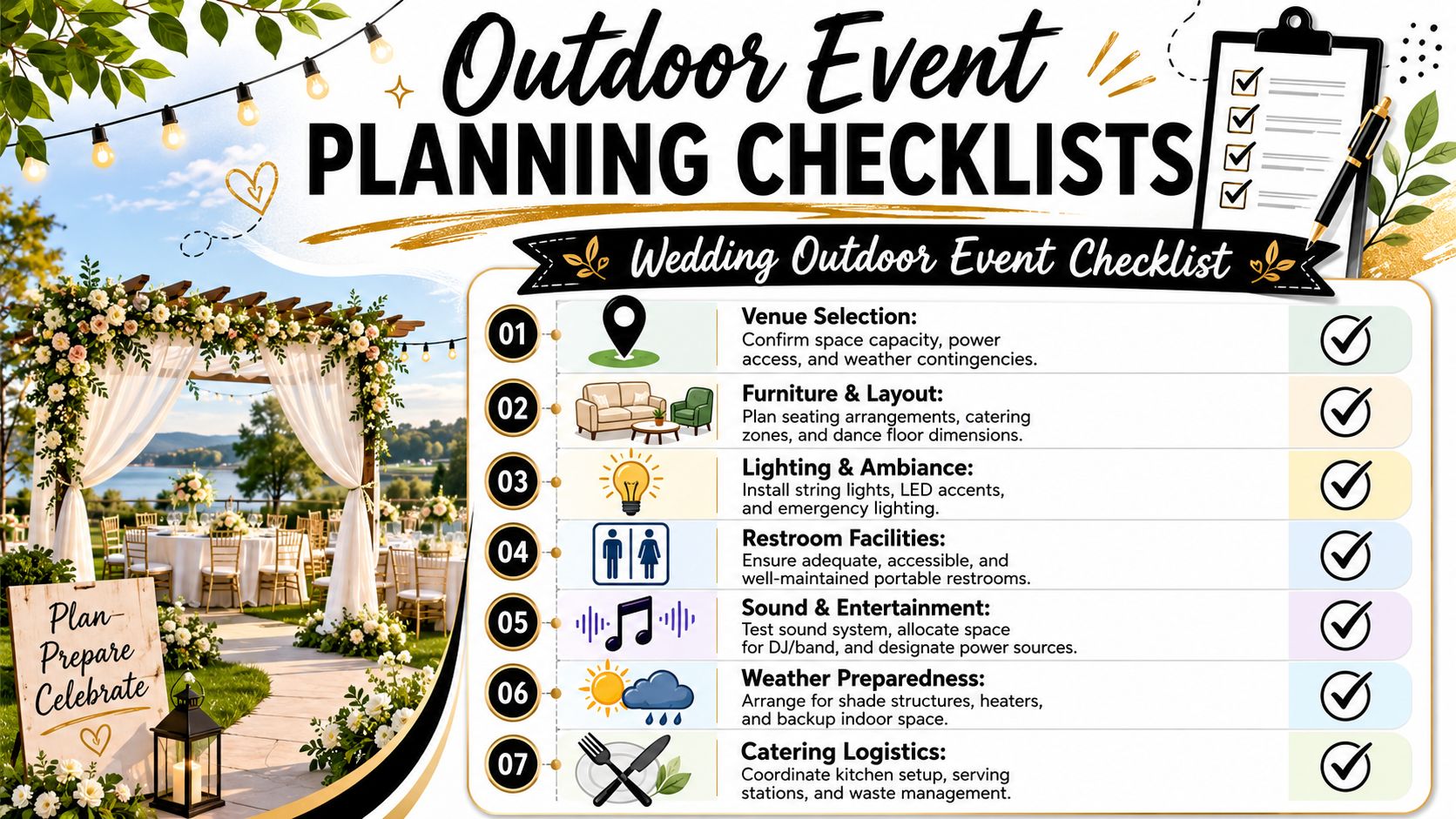
A solid outdoor event usually comes down to a few disciplined checks done early. The furniture should support the event type, venue conditions, and guest behaviour. If any one of those is ignored, the setup starts fighting the function.
Keep these checklists close when you're briefing suppliers or reviewing a site.
Wedding checklist
- Define the emotional zones: Ceremony, drinks, dinner, lounge, and dancing should each feel intentional.
- Match furniture to the setting: Timber and softer textures usually sit well on wine farms and garden venues.
- Check shade and sunset direction: Guest comfort changes fast during the late afternoon.
- Keep lounge groupings intimate: Smaller clusters encourage conversation and look better in photographs.
- Confirm backup for cushions and soft goods: If dew or wind arrives, staff should know what gets moved first.
- Reserve premium seating positions: Parents, older guests, and key family members shouldn't be left with awkward overflow options.
Corporate event checklist
Start with brand behaviour, not furniture style. A product launch, networking evening, and staff celebration all need different movement patterns.
Make sure you've covered these points:
- Arrival sequence and registration flow
- Branded focal moments near bars, stages, or media walls
- A mix of standing and seated interaction zones
- Furniture finishes that fit the brand image
- Service routes that don't cut through guest conversations
- Practical surfaces for drinks, laptops, samples, or brochures
The best corporate layouts don't force people to choose between comfort and networking. They support both.
Private party checklist
Private hosts often want the biggest visual payoff with the least stress. That's achievable if the setup stays flexible.
Check the following:
- Guest mix: Older family, teenagers, and party-focused adults won't all use the space the same way.
- Day-to-night transition: The event should still feel warm once natural light disappears.
- Furniture mobility: Some pieces may need repositioning after food service or speeches.
- Entertainment footprint: Leave room for music, a dance zone, or activity area.
- Breakage risk: Avoid fragile styling pieces if the event will get lively.
- Comfort at the edges: Quiet seating away from the main sound zone keeps people at the event longer.
Final pre-event review
Do one last run-through before sign-off:
- Venue conditions confirmed
- Material choice checked against exposure
- Layout tested against guest movement
- Lighting and power accounted for
- Delivery and collection times signed off
- Contingency plan in place for wind, moisture, or temperature shifts
That final review catches most expensive mistakes before they leave the warehouse.
Your Partner in Creating Exceptional Outdoor Experiences
A polished outdoor event in Cape Town doesn't happen by accident. It comes from choosing deck and patio furniture that suits the venue, the weather pattern, and the way guests will use the space. Material matters. Layout matters. Styling matters. Logistics matter just as much.
The planners who get the best results usually make fewer assumptions. They don't choose lightweight pieces for exposed terraces just because they look elegant in a catalogue. They don't overfill a lawn with seating that blocks movement. They don't leave lighting and collection logistics to the final week. They make deliberate decisions early, and the event feels calm because of it.
If you're planning a wedding, corporate function, matric dance, or private celebration in Cape Town or the Winelands, the smartest move is to work with a rental specialist who understands local venues, outdoor conditions, and what holds up under real event pressure.
ABC Hire helps planners create polished outdoor setups with event furniture that suits Cape Town venues, changing weather, and high guest expectations. If you need practical advice on lounge layouts, LED features, seating mixes, or the right deck and patio furniture for your next event, explore ABC Hire and start the conversation early.