Tents For Hire Near Me A Cape Town Event Planner’s Guide

So, you’ve started searching for "tents for hire near me," and you're seeing a few common options pop up. In Cape Town, you're generally looking at three main players: the ever-popular stretch tents, the timeless classic marquees, and the highly practical frame tents. The right choice really comes down to the vibe you're going for, how many people you're inviting, and where you're setting up.

Choosing The Right Tent For Your Cape Town Event

Planning an event in the Cape means you're already spoilt for choice with stunning backdrops, from rolling Winelands estates to dramatic coastal settings. But that beautiful scenery comes with its own set of rules, and the right shelter is non-negotiable if you want your guests to be comfortable—come wind, rain, or blazing sun.

The real trick is to move beyond just finding a tent and instead find the tent that feels like a natural extension of your event.

Are you picturing a rustic, laid-back wedding in Stellenbosch? A slick corporate launch on the Foreshore with a modern edge? Or maybe a big 21st birthday bash in a lush Constantia garden? Each of these scenarios points to a different style of tent. Nailing this choice is your first big step towards a knockout event.

Understanding Your Tent Options

Let's break down the big three. Each one brings its own personality to the party.

A classic marquee, with its distinctive high peaks and traditional shape, just screams elegance. It's the go-to for formal weddings and upscale functions, giving you a beautiful blank canvas for draping, lighting, and sophisticated decor.

Frame tents are the workhorses of the event world. Their biggest advantage? No internal poles. This gives you a completely open, unobstructed space inside, which is perfect for exhibitions, trade shows, or any event with a stage or a specific floor plan. They’re also brilliant for tricky surfaces like paving or tar where you can't just stake into the ground.

Then you have stretch tents. It’s no secret why they’ve taken Cape Town by storm. Their fluid, organic shapes can be rigged in countless ways, letting them hug the landscape and blend right in. This makes them a favourite for stylish, relaxed gatherings where you want the structure to feel part of the environment. If you want to get into the nitty-gritty of this style, have a look at our guide on why stretch tents are a great choice for Cape Town events.

Vetting Local Suppliers And Service Areas

Once you’ve got a style in mind, it's time to find a supplier you can trust. As you filter through your search results, look for companies that are upfront about where they operate. A good supplier like ABC Hire will have a clear service area, covering not just Cape Town but also extending into the Winelands hotspots like Paarl, Franschhoek, and Stellenbosch. That kind of local knowledge is gold.

A supplier’s experience in a specific region is about more than just delivery. It’s about knowing the ground conditions at popular venues, understanding how the 'Cape Doctor' behaves in certain valleys, and having solid relationships with other local event pros.

The Western Cape's events scene is buzzing. We've seen tent rentals jump by 29% in recent years, mostly because everyone wants an outdoor wedding or corporate day in our scenic Winelands. With exhibitions and outdoor events making up 17% of the national party rental market, it's clear that hiring a tent is the smart way to embrace the region's love for al fresco celebrations.

Quick Guide To Tent Types For Cape Town Events

To make things even clearer, here’s a quick comparison of the main tent styles you'll find for hire. Think of it as a cheat sheet to match your event's vision with the right practical choice.

Tent Type Best For Typical Capacity (Seated) Key Feature
Stretch Tent Stylish, relaxed events; weddings; parties; uneven ground 20 – 200+ Highly versatile, organic and modern aesthetic
Marquee Tent Formal weddings, traditional corporate events, large gatherings 50 – 500+ Elegant high peaks and classic, formal appearance
Frame Tent Corporate events, exhibitions, functions on hard surfaces 30 – 300+ Unobstructed interior space with no centre poles

Hopefully, that gives you a solid starting point. By understanding the core strengths of each tent, you’re already well on your way to making a decision that will perfectly complement your Cape Town event.

How To Calculate Your Tent Size And Layout

Trying to figure out the right tent size can feel a bit like solving a puzzle, but it’s honestly simpler than you’d think. There’s no need for guesswork. We use practical, reliable formulas to make sure your search for "tents for hire near me" lands you the perfect fit for your event, whether it's in the heart of Cape Town or out in the beautiful Winelands.

A great layout is about so much more than just fitting in chairs. It’s about creating flow, making guests feel comfortable, and carving out different zones for all the activities you have planned. The trick is to think in square metres per guest first, and then add space for all the extras that make an event truly special.

Before you even start looking at suppliers, you need to get a handle on your event's vibe and guest count. This is always the starting point.
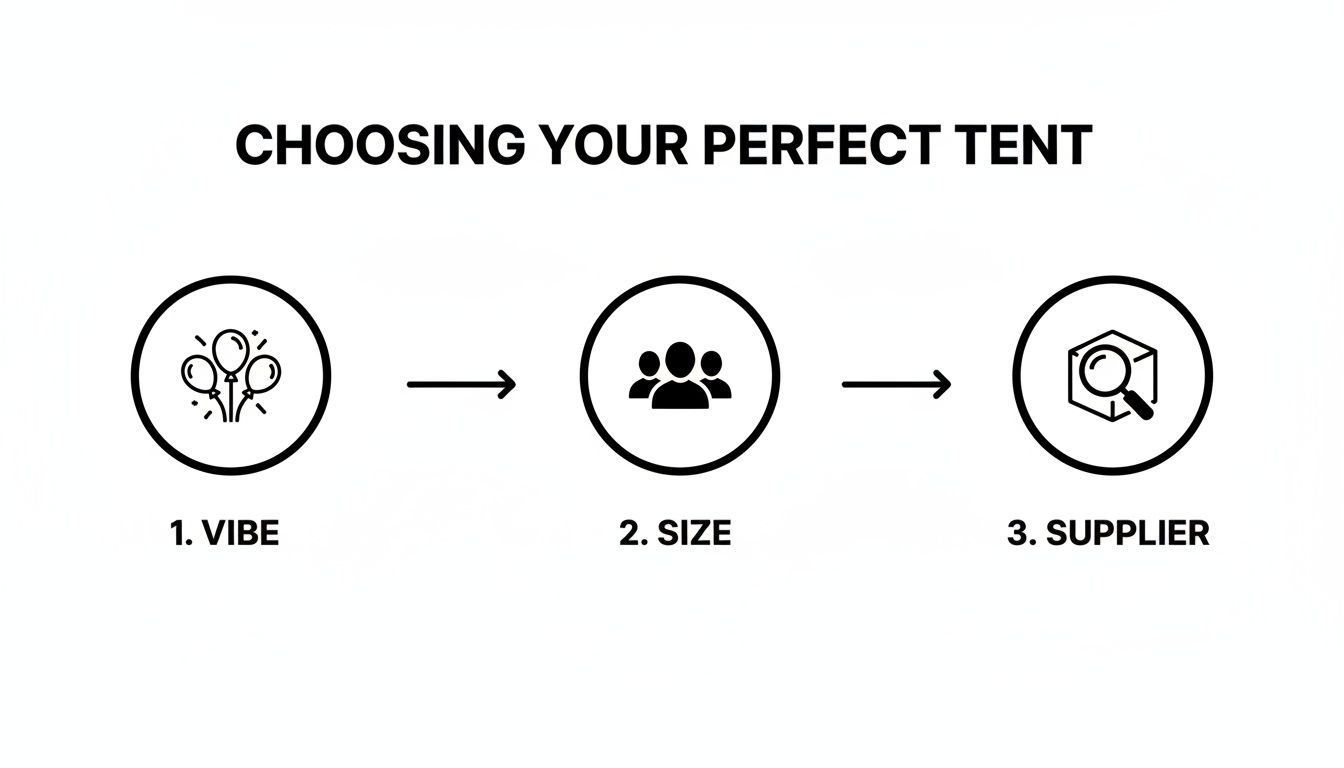
A diagram titled 'Choosing Your Perfect Tent' with three steps: Vibe, Size, and Supplier.

The style of your event really dictates the space you'll need, just as much as your guest list does. Once you know that, you can find a supplier who has exactly what you need.

Calculating Your Base Space

Right, let's get the foundation sorted. Before you even think about a dance floor or a buffet station, you need to work out the basic space your guests will take up. How much room each person needs comes down to your seating arrangement.

  • Standing Cocktail Party: For a casual, mingling-style event, you only need about 0.5 square metres per person. This gives everyone enough room to move around without feeling squashed.
  • Seated Ceremony (Theatre-Style): If your guests are sitting in rows watching a ceremony, plan for roughly 0.7 square metres per person.
  • Seated Dining (Long Tables): This is a popular, family-style setup. You'll need about 1.1 square metres per guest to allow for chairs and for staff to serve easily.
  • Seated Dining (Round Tables): Round tables take up a bit more floor space. You'll need to allocate a more generous 1.4 square metres per person to accommodate the tables and clear walkways.

So, for a wedding with 150 guests seated at round tables, your base calculation is 150 guests x 1.4 sq metres = 210 square metres. That’s your starting point—just for the seating.

Planning For Functional Zones

Now for the fun stuff. That base calculation is only part of the picture. You have to add space for every other functional area inside the tent to avoid things feeling cramped and chaotic.

Imagine you're planning a corporate year-end bash in Paarl for 200 people. You won't just have tables; you'll likely need a stage for announcements, a bar, and maybe even a chilled lounge area. Each of these zones has its own footprint that needs to be added to your total.

A common mistake we see is people underestimating the space needed for these "non-guest" areas. A cramped bar means long queues, a tiny dance floor kills the party vibe, and a tight buffet line is just frustrating for everyone. Always be generous with the space for these crucial zones.

Here are a few standard space guidelines for popular add-ons:

  • Dance Floor: Plan for about 0.3 square metres per guest you expect to be dancing at any one time. For a 150-guest wedding where half the crowd will be on their feet, you’d need a dance floor of around 23 square metres (think 5m x 4.6m).
  • DJ Booth or Small Stage: A typical DJ setup needs at least 10 square metres. A small band might need a bit more, say 15-20 square metres.
  • Bar Area: Set aside at least 15-20 square metres for a standard bar, which includes back tables and enough room for bartenders to work efficiently.
  • Buffet Station: For two long buffet tables, you'll want 25-30 square metres. This gives people room to queue up on both sides without bumping into each other.

We’re seeing this need for larger, more dynamic spaces across the board. Tent rentals here in Cape Town have jumped by 32% recently, and weddings make up 45% of all our bookings. It’s part of a global market now valued at USD 2.3 billion! Corporate managers and schools planning big matric dances are all looking for spacious tents that can comfortably hold over 300 guests plus all the extras, from slush machines to lounge furniture. You can read more about these market trends and why the industry keeps growing.

By carefully calculating each zone and adding it to your base seating area, you move from a rough guess to a precise, functional layout. This is the kind of detailed planning that ensures your event space feels generous, runs smoothly, and looks absolutely spectacular.

Getting Your Venue Ready For The Tent
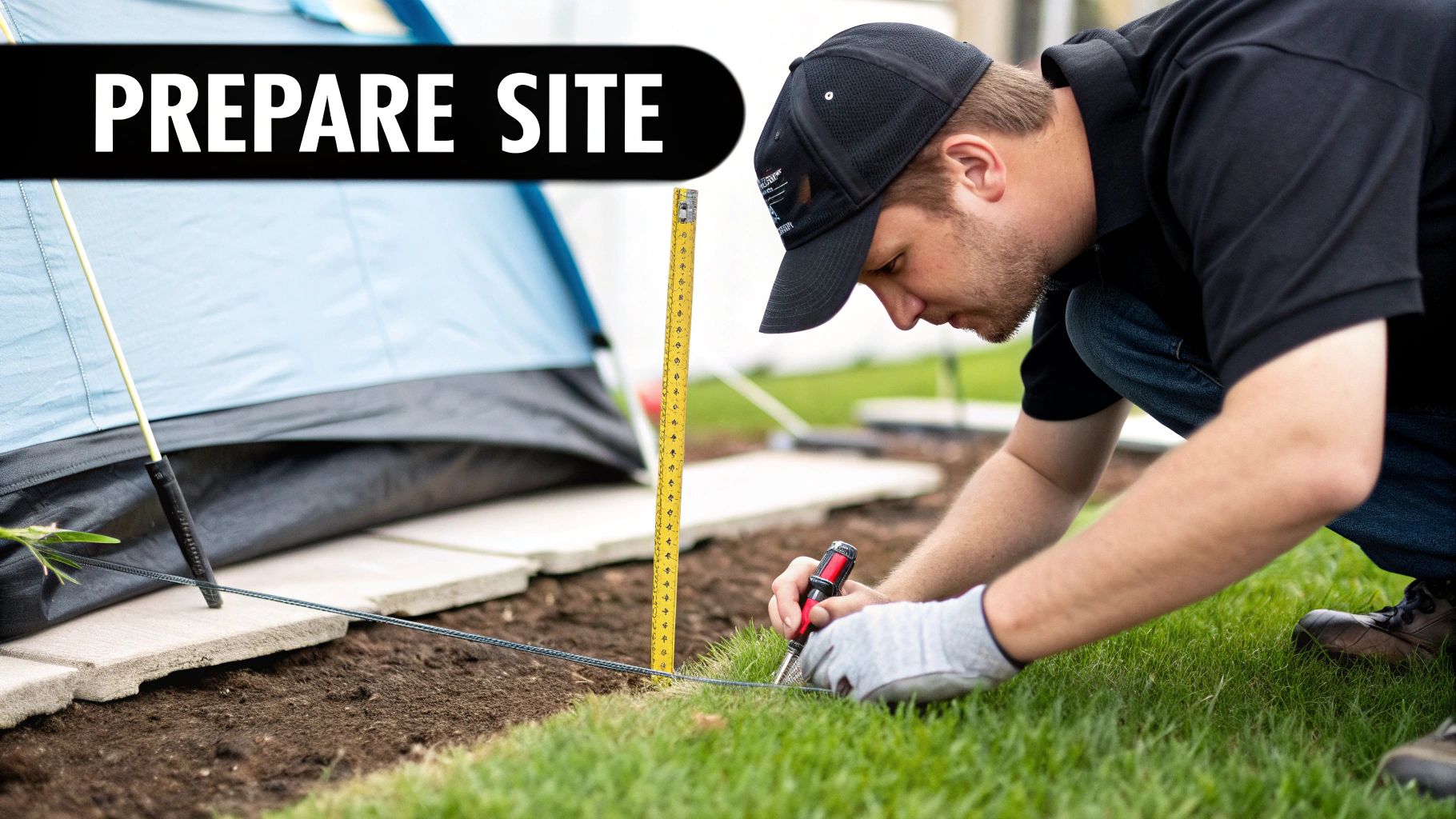
A man kneels on grass, using a tool to prepare the ground near a tent and a measuring tape.

A successful event is built on a solid foundation—quite literally. Once you’ve moved past searching for “tents for hire near me” and picked out the perfect one, your focus needs to shift to the venue itself.

Site preparation is one of those steps that’s easy to overlook but is absolutely crucial for a safe and stress-free setup. Getting the ground ready is about more than just mowing the lawn; it’s about understanding the terrain, checking for hazards, and making sure the installation crew can get the job done right. A little prep work now prevents last-minute panic and ensures your tent stands strong, no matter what the Cape weather throws at you.

What’s The Ground Like?

First thing’s first: your tent supplier needs to know what kind of surface they’re working with. The ground determines how the tent gets anchored, which is everything when it comes to stability. Different surfaces mean different gear and sometimes, different costs.

  • Grass and Lawns: This is the best-case scenario. It’s perfect for traditional staking, where long metal stakes are driven deep into the ground. For big marquees, this is the most secure method by far.
  • Paving, Concrete, or Tar: If your event is on a patio or in a parking area, staking is obviously out. Instead, the tent needs to be secured with heavy weights, usually massive concrete blocks or water barrels at each anchor point.
  • Sand or Beach Setups: A beach wedding sounds amazing, but sand requires special attention. You need extra-long stakes or specific sand anchoring systems to get a proper grip. Make sure your supplier has done beach setups before.

Be upfront and honest with your rental company about the surface. Sending a few quick photos of the site can save everyone a massive headache on installation day. It means the team shows up with the right equipment, whether that's a stake driver or a pallet jack for shifting concrete weights.

Check For Hidden Dangers

This next step is non-negotiable. Before a single stake goes into the ground, you have to know what’s underneath. Hitting a water pipe or electrical cable isn’t just expensive to fix—it’s incredibly dangerous.

You need to check for things like irrigation pipes, electrical wiring, or septic systems. If it’s a private home, the owner should know where their sprinkler lines run. For commercial venues, the facilities manager is your best friend; they’ll have the site plans.

Never, ever assume a clear patch of grass is safe for staking. A quick chat with the venue owner can prevent a disaster. A professional crew will always ask, but it's your job as the event planner to have this information ready.

Preparing For That Cape Town Weather

Anyone who’s planned an event in Cape Town knows you have to respect the weather—especially that famous southeasterly wind, the 'Cape Doctor'. A well-installed tent can handle a lot, but a solid backup plan is still key.

If your venue is a bit exposed, talk to your tent provider about wind-loading. Adding a full set of sidewalls can make a huge difference in protecting the structure and keeping guests comfortable if a gale picks up. And for those cool evenings, especially out in the Winelands, heaters aren't a luxury; they're a must-have for your guests.

A final thought is to check local regulations. Most private parties are fine, but massive public events might need a temporary structure permit from the City of Cape Town. A seasoned local company like us at ABC Hire knows the ins and outs of these rules and can guide you. This foresight ensures your setup is not only beautiful but also 100% compliant and safe.

Before our crew arrives, running through a quick site check can make the entire installation process smoother for everyone involved. Here's a simple checklist to guide you.

Site Preparation Checklist

Checklist Item Why It's Important Pro Tip From ABC Hire
Clear Access Route The delivery truck and crew need a clear path to the setup area. Trim back any low-hanging branches or overgrown bushes that could block a large vehicle.
Level Ground Confirmed A level surface ensures the tent is stable and flooring sits correctly. Minor slopes are usually fine, but significant inclines may require a sub-floor, which adds cost.
Underground Utilities Mapped Prevents dangerous and costly damage to pipes, cables, or septic tanks. Have the venue owner physically mark out sprinkler heads or known utility lines with small flags.
Site Clean and Clear Remove rocks, branches, pet waste, and any other debris from the tent area. A quick mow a day or two before is great, but don't water the lawn right before we arrive!
Overhead Clearance Checked Look for power lines, tree branches, or building overhangs. Remember, our tents have high peaks! A standard 6m x 12m marquee needs about 4.5m of vertical clearance.
Weather Contingency Plan Know where you'll add sidewalls or heaters if the weather turns. It’s easier to book heaters and have them on standby than to find them on a cold, rainy day.

Taking a few moments to tick off these items ensures that when our team arrives, they can get straight to work building your perfect event space without any hitches.

Essential Add-Ons That Elevate Your Event
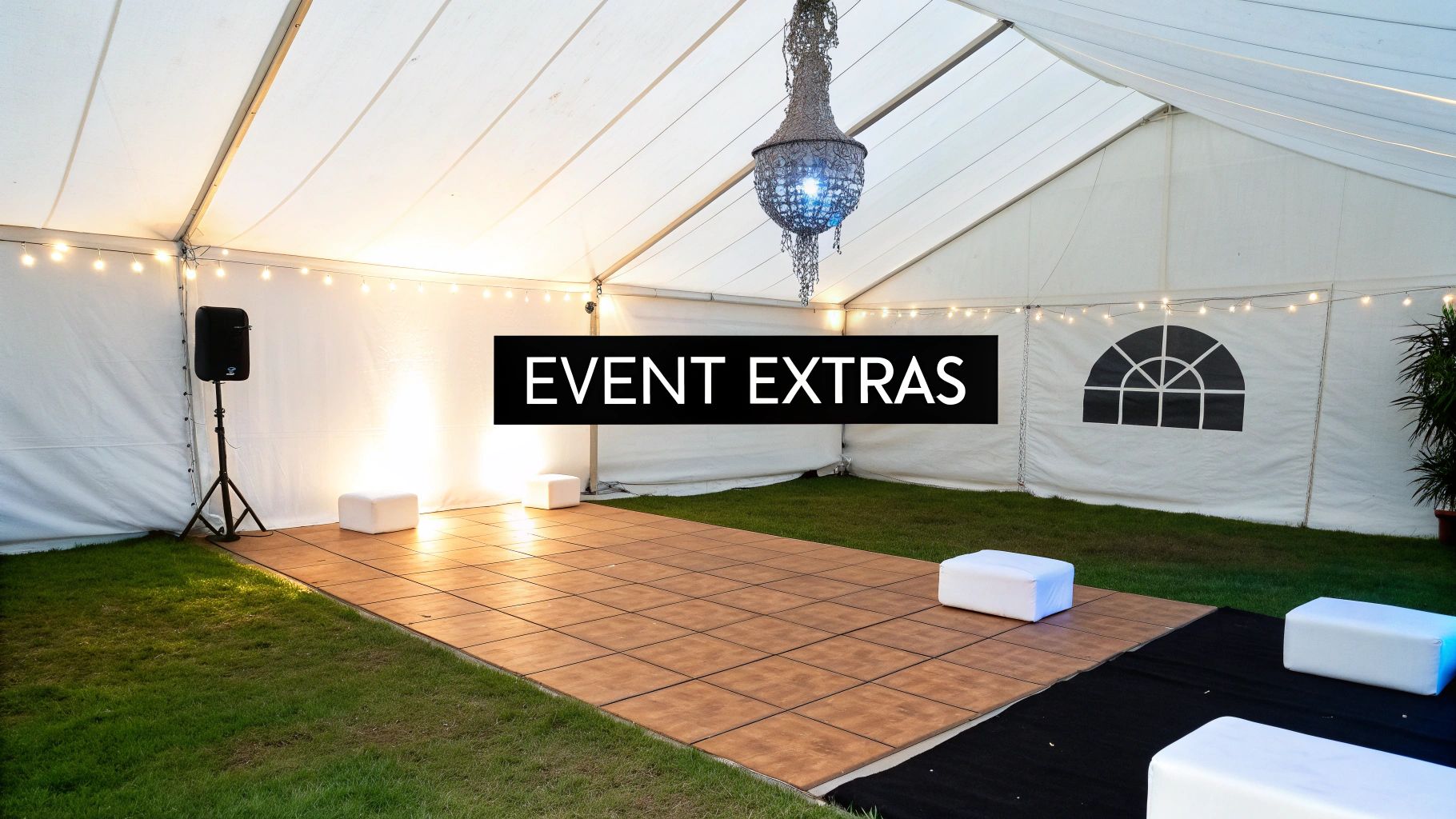
An event tent interior with a wooden dance floor, lighting, speaker, and white modular seating.

So, you've chosen the perfect tent. That's your structure sorted. But the real magic—the atmosphere your guests will remember long after they've gone home—comes from the details you put inside. Moving beyond the canvas and poles is where you really start to craft an experience.

These essential add-ons are what transform a simple shelter into a breathtaking venue. Think of the tent as your blank canvas; things like lighting, flooring, and climate control are the paints you'll use to bring your vision to life. Getting these elements right is absolutely key to creating comfort, setting the mood, and making sure your event is a seamless success.

Crafting The Perfect Atmosphere With Lighting

Lighting is, without a doubt, the most powerful tool you have for setting the tone. The right illumination can make a space feel grand and formal or, conversely, intimate and relaxed. It guides your guests' attention and creates a distinct mood that lasts all evening.

For a classic, elegant wedding out in the Winelands, you can't beat the timeless romance of chandeliers hanging from the tent’s peaks. They add a real touch of grandeur and provide beautiful, soft ambient light that’s perfect for dinner and conversation.

On the other hand, a modern 21st birthday party or a corporate brand launch might call for something with a bit more punch. Colour-changing LED furniture and uplighting can inject a ton of energy and a contemporary feel into the space, matching your event’s theme and creating a vibrant party atmosphere.

Pro Tip: Don't just focus on the big statement pieces. Never underestimate the impact of subtle, functional lighting for pathways, bars, and catering stations. It’s a safety essential and keeps the event running smoothly long after the sun goes down.

For a truly enchanting effect, we've found that layering different types of light is the way to go. To see one of our favourite techniques in action, find out how curtain fairy lights can transform your venue and create a seriously magical backdrop.

Defining Your Space With Smart Flooring Choices

Flooring might seem like a purely practical choice, but it plays a massive role in both comfort and aesthetics. A good floor pulls the entire look together, defines different zones within the tent, and ensures your guests are comfortable on their feet.

If your event is on uneven or soft ground, a solid, level floor is non-negotiable. It gives you a stable base for tables and chairs and, crucially, stops high heels from sinking into the grass!

Beyond the basics, you can get creative and use flooring to carve out distinct areas in your layout:

  • A Dedicated Dance Floor: This is a must for most weddings and parties. A classic wooden or sleek white dance floor creates an irresistible focal point, practically begging guests to get up and celebrate.
  • Full Carpeting: For a more luxurious and cohesive feel, carpeting the entire tent interior adds warmth and sophistication. It also helps dampen sound, making conversations much easier to hear.
  • Artificial Turf: Want to bring the outdoors in? Artificial grass is a fun, practical option that works really well for themed events or for creating a relaxed, garden-party vibe inside the tent.

Ensuring Guest Comfort With Climate Control

Here in the Cape, the weather can turn on a dime. A beautiful sunny day can quickly become a chilly evening, especially in the Winelands. Making sure your guests are comfortable, no matter what the temperature is doing outside, is the hallmark of a really well-planned event.

Heaters are an absolute must for any evening function between April and October. Strategically placed gas patio heaters can keep the entire tent cosy and allow the party to continue long into the night. For those scorching summer days, particularly in areas like Paarl or Stellenbosch, powerful fans or portable air conditioning units are a lifesaver. They keep the air circulating and stop the tent from getting stuffy, ensuring your guests stay cool and refreshed.

Thinking beyond the tent itself can really set your event apart. It’s worth looking into innovations that can improve the guest experience, and you can learn more about the top technology for hospitality to discover new ways to enhance both satisfaction and efficiency. At the end of the day, it's these thoughtful details that truly complete your setup.

Nailing the Booking Process

Right, you’ve got your layout sorted and you know exactly which add-ons will bring your event to life. The final piece of the puzzle is locking in that booking. This is where the planning turns into reality, and a little bit of know-how can make the whole process feel less like a chore and more like the exciting final step it is.

Let’s get this done without any last-minute surprises.

What to Look For in Your Rental Quote

A proper quote from a professional hire company should be crystal clear. It’s not just one big number; it should break down every single thing you’re paying for. Getting into the nitty-gritty of these line items is the only way to genuinely compare different suppliers and keep your budget on track.

When that quote lands in your inbox, you’ll likely see a few standard charges. Don’t just skim to the bottom line—understand what each part covers.

Here’s what you should expect to see:

  • The Tent Rental Fee: This is the basic cost for hiring the tent structure for your event period.
  • Labour and Installation: This covers the crew who will be putting up and taking down the tent. The cost can shift depending on how tricky the site is or how massive the tent is.
  • Delivery and Collection: A straightforward fee calculated on the distance to your venue, whether it's deep in the Winelands or right here in Cape Town.
  • Damage Waiver: Think of this as event insurance. It’s a small, optional fee (usually around 10-15% of the rental cost) that covers you for any accidental scuffs or minor damage. Honestly, it’s worth it for the peace of mind.

A quick tip from my years in the business: always insist on an itemised quote. If a company just throws a single figure at you with no breakdown, treat it as a red flag. Transparency is a non-negotiable for a trustworthy partner like us at ABC Hire.

The Must-Ask Questions Before You Sign Anything

You’ve got the quote, and you’re ready to commit. Hold on for just a second. Before you put pen to paper, there are a few final details you need to iron out. Getting these things clarified in writing is your best defence against any future misunderstandings.

Here's my personal checklist of questions I always tell clients to ask:

  1. What’s your cancellation policy? Things can change. You need to know the deadlines for getting a partial or full refund if your plans go sideways.
  2. How does the payment schedule work? Most companies require a deposit (typically 50%) to secure your date, with the rest due closer to the event.
  3. Do you do a site inspection? For anything complex, a pre-event visit from the team is essential to spot any potential access or ground issues before they become real problems.
  4. Who is my go-to person on the day? You need a name and a number for someone you can call with questions or if an issue pops up during setup.
  5. Can you confirm the setup and takedown times? Nail down exactly when the crew will arrive and how long they anticipate the job will take.

Getting clear answers to these questions ensures everyone is on the same page. If you're curious about what makes a good rental company tick, looking into different profitable rental business ideas can give you great insight into the operational standards of the best in the business. It helps you spot a well-run company that really values clear communication. And for a bit of inspiration on how all the elements can come together, checking out guides on event decor hire near me can show you what’s possible.

Your Top Tent Hire Questions Answered

When you start searching for "tents for hire near me," it's easy to feel a bit overwhelmed. A whole host of questions probably spring to mind, and that's perfectly normal. You’re not just hiring a tent; you're building a venue from the ground up, so it pays to get into the details before you book.

To help you out, we’ve put together the most common questions we get from clients planning events all over Cape Town and the Winelands. Getting these sorted will give you the confidence to move forward and finalise your plans.

How Far In Advance Should I Book My Tent?

This is easily the question we hear the most, and for good reason. For events during Cape Town’s peak season—that’s roughly September to April—my best advice is to lock in your tent 6 to 12 months ahead. This is especially true if you’re planning a wedding or a big corporate function on a popular date.

The most in-demand styles, like our elegant stretch tents and classic large marquees, get booked up for weekends incredibly fast. If you leave it too late, you might end up having to compromise on the look or size you really wanted.

For smaller private parties or events in the quieter off-season, you can usually get away with booking 3 to 4 months in advance. Remember, booking early doesn’t just secure your tent. It also gives you breathing room for proper planning, like site visits with our team to map out the perfect layout and get the logistics spot-on.

What Does The Hire Price Actually Include?

Knowing exactly what’s in your quote is crucial for keeping your budget on track. The base price you see will almost always cover the core components: the tent canvas, all the necessary poles, and the standard pegs for a straightforward grass installation.

But there are a few other essential services that are typically itemised separately. This isn't to catch you out; it's because these costs can change a lot depending on your specific event.

  • Delivery and Collection: The fee here is based on how far your venue is from our warehouse. A trip out to Stellenbosch will naturally cost more than a delivery just down the road in Cape Town.
  • Labour for Setup and Takedown: This covers the skilled crew needed to put up and dismantle the tent safely and correctly. A tricky setup on uneven ground will require more hands and time than a simple job on a flat lawn.
  • Add-Ons: All the extras that make your event special—things like flooring, lighting, sidewalls, heaters, and furniture—are always priced individually so you only pay for what you need.

I always tell clients to ask for a fully itemised quote. It gives you complete transparency over the cost breakdown and ensures there are no nasty surprises down the line.

What Happens If The Weather Turns Bad?

Planning an outdoor event in the Cape means you have to be ready for anything, from a sudden downpour to the infamous 'Cape Doctor' wind. The good news is that professional event tents are built tough and designed to handle some pretty serious weather. A reputable company like ABC Hire always uses heavy-duty, weather-resistant materials and robust anchoring systems. Safety is our absolute priority.

It's really important to have a chat with your supplier about your venue and how exposed it is. For that extra peace of mind, think about adding a full set of sidewalls to your booking. Some even have clear window panels, which are fantastic for keeping the wind and rain out without sacrificing that stunning view.

For any event in the cooler months, or for evening functions where the temperature is likely to drop, heaters are a must. They keep your guests comfortable and ensure the party atmosphere stays warm, no matter what the weather is doing outside.

Can A Tent Be Set Up On Any Surface?

While modern tents are incredibly versatile, how we install them depends entirely on the ground. It's one of the first things we'll ask you about.

Grass is the easiest and most common surface. It allows us to use traditional steel pegs, which are driven deep into the ground to create a super-secure anchor.

But what about hard surfaces like paving, tennis courts, or concrete patios where pegging is out of the question? In these cases, we have to secure the tent with heavy weights, which usually means positioning large concrete blocks or water barrels at each anchor point. This method often has an extra cost for the specialised equipment and labour, so it's vital to tell your hire company about the surface right from the start. That way, they can show up with all the right gear for a safe and secure setup.


Ready to create an unforgettable atmosphere for your next event? The team at ABC Hire is here to help with everything from stylish stretch tents and LED furniture to essential climate control. Explore our extensive range of event rentals and get a quote today
Tent Hire Cape Town: Your Guide to Tent Hire Cape Town Marquees

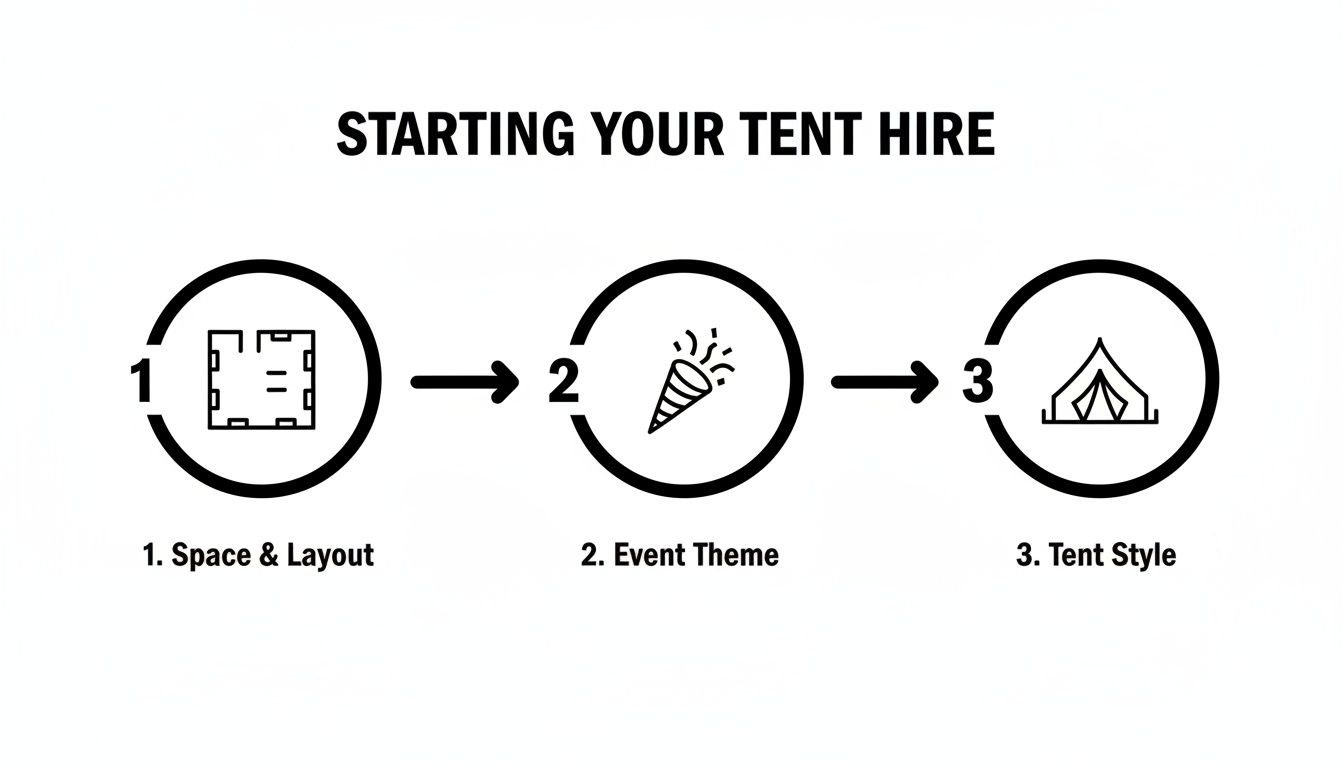
Hiring a tent can take any spot in Cape Town and turn it into the perfect venue, but figuring out where to start can feel like a mission. It really just comes down to three things: working out your space, nailing down your event's theme, and picking a tent style that brings it all together.

Get these fundamentals right, and your tent hire in Cape Town will be a breeze.

Starting Your Tent Hire Journey in Cape Town

Choosing a tent is your first real step toward creating a truly unique event, whether it's a dream wedding on a wine farm or a slick corporate function with views of Table Mountain. Unlike a brick-and-mortar venue, a tent is a completely blank canvas. But with that freedom comes the need for a bit of smart planning upfront to dodge any potential hiccups.

The journey doesn't actually start with the tent. It starts with your guests and the kind of experience you want to give them. Before you even think about different tent styles, you need to get a solid handle on your numbers and what will be happening inside.

Calculate Your Space and Capacity

First things first: you need to figure out exactly how much room you'll need. This is about more than just getting enough chairs in; you have to think about every single part of your event. A good rule of thumb is to work out the space per guest, but this can change quite a bit depending on your setup.

Think about these key points:

  • Seating Arrangement: Are you picturing long, banquet-style tables or intimate round ones? Round tables almost always take up more floor space per person.
  • Functional Areas: Have you made room for a dance floor, a bar, a catering station, a DJ booth, or maybe even a stage? Each one of these needs its own dedicated patch of real estate.
  • Guest Comfort: You've got to leave enough space for people to move around easily, pull out their chairs, and mingle without feeling like they're in a sardine can.

This initial planning part is so important. As you get started, it helps to see the bigger picture. For a great rundown on the whole process, check out this guide on how to plan a successful event.

Define Your Theme and Select a Style

Once you know how much space you're working with, you can get to the fun part—the look and feel. The style of the tent you choose sets the entire mood for the event.

A beautiful, flowing stretch tent, for example, gives off a modern and relaxed vibe—perfect for a sunset cocktail party in Camps Bay. A classic, structured frame marquee, on the other hand, brings a more formal elegance that's just right for a sophisticated wedding in the Winelands. Let your theme be your guide.

This simple infographic breaks down how your space, theme, and style choices should line up.

Infographic outlining three key steps for successful tent hire planning: space, theme, and style.

As you can see, the practical stuff (space) and your creative vision (theme) have to come together before you settle on the perfect tent. If you need some expert advice on pulling all these elements together, have a look at our insights on event management in Cape Town.

Choosing the Right Tent for Your Cape Town Venue

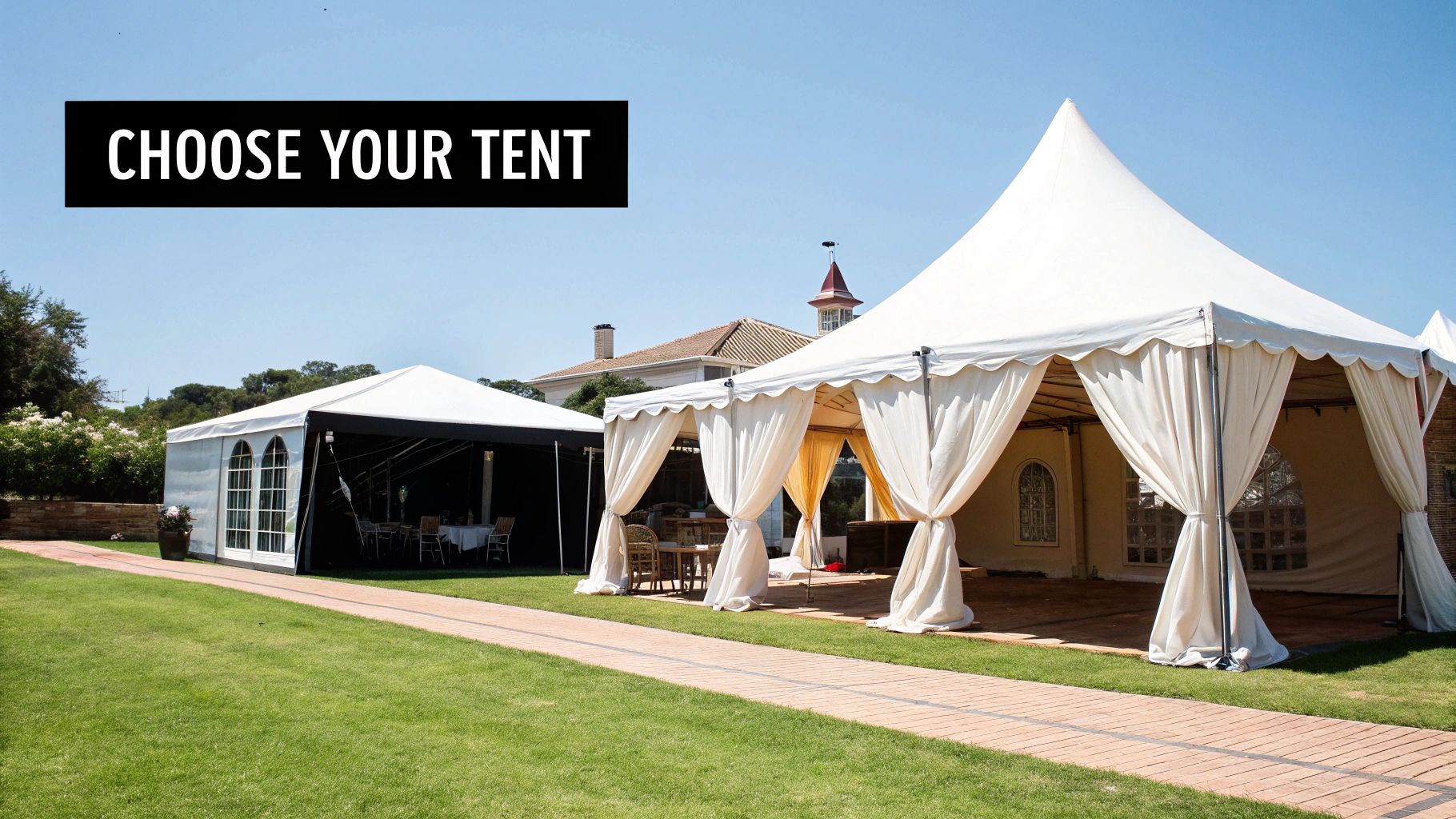
Two different white event tents are set up on a green lawn with a brick pathway.

The tent you pick does more than just keep your guests dry; it’s the heart and soul of your event, setting the whole mood. It dictates the flow, the style, and the experience. For any successful tent hire in Cape Town, getting to know the main options is the first step to making your vision a reality.

In Cape Town, you’ll mostly come across two popular styles. You’ve got the modern, flowing lines of stretch (or Bedouin) tents, and then there’s the classic, structured elegance of frame marquees for a more traditional feel.

Stretch Tents Modern and Versatile

Stretch tents, often called Bedouin tents, are a massive hit across the Western Cape. You can see why. Their organic, flowing shapes can adapt to just about any landscape, creating stunning, sculptural silhouettes. The flexible fabric is stretched and anchored to poles, which can be set at different heights.

This makes them a fantastic choice for tricky venues with uneven ground or things you can’t move, like trees or flowerbeds. The setup can be customised to work around them. They give off a contemporary, relaxed vibe that’s perfect for cocktail parties, beach weddings, and festivals.

One of the biggest wins for a stretch tent is how it handles the wind. That aerodynamic shape holds up against the infamous Cape Southeaster way better than a boxy, traditional tent.

The only real catch is the internal poles needed to create those beautiful shapes. They can get in the way of sightlines and floor plans. You can get creative and use them to mark out different zones, but it’s something to keep in mind if you need a completely open, clear space inside.

Frame Marquees Classic Elegance and Open Space

For more formal events like gala dinners or big weddings, the aluminium frame marquee is usually the go-to. These are solid, self-supporting structures without any pesky internal poles. This gives you a completely clear-span interior and total freedom with your layout.

Having that unobstructed space is a game-changer when you’re planning for big stages, a proper dance floor, or complicated seating charts. They have a clean, polished look with high ceilings, basically giving you a blank canvas to go wild with lighting and décor.

Frame marquees can be set up on almost any surface, from grass to paving, using heavy weights instead of stakes. For smaller get-togethers, you might not need something so grand; our guide on heavy duty gazebos can point you towards more compact alternatives like a 10×10 screened canopy.

While they are incredibly sturdy, their high, straight sides can act like a sail in a serious gust, so expert installation is non-negotiable. They also have a more traditional look, which might not click with a more modern party theme.

Tent Type Comparison for Cape Town Events

Choosing between these styles often comes down to your event's specific needs, your venue's quirks, and the famous Cape Town weather. Here’s a quick breakdown to help you compare the most common options at a glance.

Tent Type Best For Space Profile Wind Resistance Estimated Cost Guide (per sqm)
Stretch (Bedouin) Tent Weddings, festivals, cocktail events, venues with uneven ground. Flexible layout with some internal poles interrupting the space. Excellent – aerodynamic shape handles wind well. R55 – R90
Frame Marquee Corporate events, large formal weddings, exhibitions, long-term hires. 100% open clear-span interior with no obstructions. Good to Very Good – needs professional securing in high winds. R70 – R120
Peg & Pole Marquee Classic garden parties, country-style weddings on soft ground. Traditional look with centre poles and guy ropes. Moderate – not ideal for extremely windy coastal sites. R50 – R85

This table should give you a solid starting point. Remember to chat with your potential supplier about your venue—their hands-on experience is invaluable for making the final call.

Getting to Grips with Site Logistics and City Permits

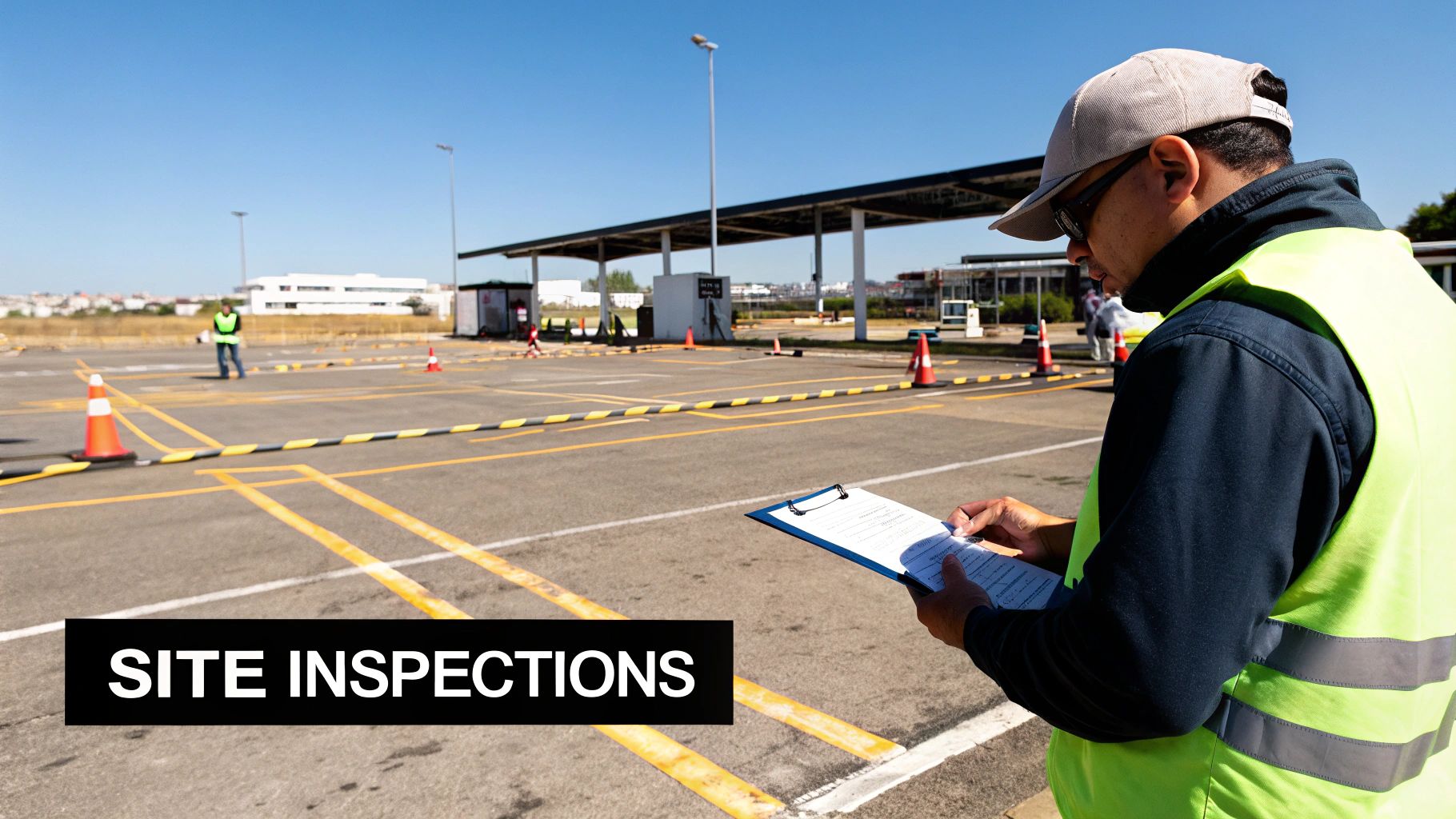
A person in a high-visibility vest and cap inspecting an outdoor site, writing on a clipboard.

You’ve found the perfect tent—great! But the real work starts now: making sure you can actually put it up safely and legally at your venue. This is where so many event plans hit a snag. Getting the logistics and permits sorted is one of those unglamorous but absolutely critical steps for any successful tent hire in Cape Town.

Before you even think about paying a deposit, a proper site inspection is a must. This isn’t a quick glance; it's a deep dive to spot any issues that could derail your setup. Your tent company should handle this, but you need to know what they're looking for so you can ask the right questions.

The All-Important Site Inspection

In a perfect world, every venue would be a flat, wide-open field with easy access. But let’s be honest, that’s rarely the case here in Cape Town, where our most stunning venues often come with their own unique challenges. A professional site check is crucial to avoid expensive, last-minute surprises.

Here’s what a proper inspection should cover:

  • Ground Surface and Slope: Is the area actually level? A minor slope can sometimes be managed, but anything more significant will likely require proper sub-flooring to create a safe, stable base. That’s an extra cost you need to know about upfront.
  • What Lies Beneath: You can’t see what’s underground. Are there irrigation pipes for the beautiful gardens? Hidden electrical cables? Septic tanks? The last thing you want is a tent stake going through a water main. It happens.
  • Overhead Clearance: Look up! Low-hanging branches, power lines, or building overhangs can make it impossible to raise the tent to its full height safely.
  • Getting In and Out: How will the delivery truck access the site? If it can't get close, the crew will have to carry everything by hand. That means more time and higher labour costs, which will definitely find their way onto your final bill.

Don't fall in love with a beautiful spot and just assume it'll work. A thorough site visit is your best protection against unexpected problems and ensures the quote you get is the price you'll actually pay.

Untangling City of Cape Town Permits

Okay, the site is physically perfect. Now for the red tape. Putting up a temporary structure, especially for a larger or public event, almost always requires a nod from the City of Cape Town.

You'll probably need a permit if your tent:

  • Is bigger than a certain size (the magic number is often around 100 square metres).
  • Will be standing for more than a few days.
  • Is going up in a public area like a beach, park, or municipal field.

The application usually requires site plans, safety certificates from your tent supplier, and sometimes even an engineer's report to sign off on the structure. Any reputable company offering tent hire in Cape Town will know this process inside-out and should be able to guide you, or even handle the entire application for you.

Ask them about their experience with city permits—it’s a great way to gauge their professionalism and local knowledge. And whatever you do, start this early. Approvals can take weeks, and it’s not something you want to be chasing the week before your event.

Decoding Quotes and Rental Contracts

Getting that first quote for your tent hire is always an exciting moment, but it's vital to look past the big number at the bottom. A good quote is more than just the price of the tent; it's a full breakdown of every single service and item that makes up your final cost. Knowing how to read it properly is the secret to keeping your budget on track and avoiding any nasty surprises down the line.

The best suppliers in Cape Town will give you a fully itemised list, making it dead simple to see exactly what you're paying for. This also lets you compare quotes from different companies fairly—like for like. If a quote looks a bit vague or lumps everything into one fee, don't be shy about asking for more detail.

What to Look For in Your Quote

A professional quote will always separate the core tent rental from all the other services and potential add-ons. Remember, you’re not just hiring a piece of canvas; you're hiring a complete service that covers logistics, labour, and all the necessary equipment.

Make sure you can spot these specific line items:

  • Tent Rental Fee: This is the base cost for the tent structure itself.
  • Labour Costs: This should cover both the setup (installation) and the takedown (strike) of the tent.
  • Delivery and Collection: A fee that’s usually calculated based on how far your venue is from their warehouse.
  • Damage Waiver: Think of this as insurance. It’s a small, non-refundable fee that covers minor, accidental bumps and scrapes.
  • Value Added Tax (VAT): Always check if the price is inclusive or exclusive of VAT. In South Africa, it’s currently 15%, and that can make a big difference to your final bill.

A transparent quote is the hallmark of a professional company. Hidden fees often sneak in when things like labour or transport are bundled into a vague "service charge," so if anything isn't crystal clear, ask for clarification.

Reading the Fine Print in Contracts

Once you’ve settled on a quote you're happy with, the rental contract is the next step. This is a legal document designed to protect both you and the supplier. It’s so tempting to just skim and sign, but taking the time to read it carefully is non-negotiable.

Pay special attention to clauses about cancellation policies, what happens if there’s significant damage, and any terms related to extreme weather conditions. For example, the big industry players like GL Events handle everything from intimate weddings to massive corporate events, and they operate under incredibly strict safety protocols. This level of professionalism, which has become standard since updated regulations came in back in 2015, has massively improved safety across the board. You can get a feel for their standards by reading about their approach to hiring top-quality marquee tents in Cape Town.

Understanding these terms from the get-go means you know exactly where you stand, which gives you complete peace of mind.

Essential Add-Ons to Complete Your Venue

A tent gives you the structure, but it's the right accessories that truly transform that space into a breathtaking and functional venue. These are the details that create atmosphere, guarantee comfort, and make your event run like a dream. For any top-tier tent hire in Cape Town, thinking beyond the canvas is what sets a good event apart from a great one.

Let’s start from the ground up. The surface your tent sits on can make or break the guest experience, especially if the ground is uneven, a bit muddy, or damp. Flooring isn't just about practicality; it sets the entire tone for your event.

A simple yet brilliant option is coir matting. This natural, coconut-fibre carpeting is perfect for nailing that rustic, relaxed vibe. It's fantastic for a country-style wedding or a casual garden party, giving you a firm and clean surface over grass.

Creating the Perfect Foundation and Atmosphere

For a more polished and formal affair, a solid wood floor is the ultimate choice. It creates a completely level, stable surface—which is essential if you're planning a proper dance floor or setting up elegant dining furniture. A solid floor instantly elevates the whole event, turning your marquee into a genuine pop-up ballroom.

With your foundation sorted, you need to think about Cape Town's famously unpredictable weather. A beautiful summer day can easily turn into a cool, windy evening, especially if you're out in the Winelands or near the coast.

Don't let your guests get cold. Planning for a drop in temperature is one of the smartest moves you can make. A comfortable guest is a happy guest who will stay and enjoy the party for longer.

This is where climate control becomes an absolute must-have. For those chilly evenings, a few well-placed outdoor heaters can make all the difference. To figure out what you'll need, you can learn more about choosing the right gas outdoor heater for your event. On the flip side, for a scorching summer afternoon, strategically placed air-coolers will keep the air moving and ensure everyone stays comfortable.

Lighting and Powering Your Event

Lighting is where your creative vision really comes to life. It’s about so much more than just being able to see; it’s about crafting an unforgettable mood. Your lighting plan should be layered to create depth and warmth.

Here are a few key elements to consider:

  • Ambient Lighting: This is your general, overall illumination. Think simple string lights or elegant chandeliers to cast a warm, inviting glow.
  • Task Lighting: This is focused light for specific zones, like the bar, catering stations, or the entrance, making sure these functional areas are well-lit.
  • Decorative Lighting: This is where the magic happens! Uplighters can throw dramatic colours up the tent walls, while fairy lights woven through the ceiling can create a stunning starry-night effect.

Of course, all these amazing add-ons need power. Unless your venue has plenty of dedicated outdoor power points, you will almost certainly need to hire a generator. Chat with your supplier about your total power needs—covering everything from lighting and sound systems to catering equipment—to make sure you have a reliable source that won’t quit on you.

Finally, don't forget the other crucial rentals. High-quality furniture sets the stage for comfort and style, while luxury portable restrooms offer a level of convenience your guests will definitely appreciate. It's the thoughtful combination of all these elements that turns a simple tent hire into a complete, memorable venue experience.

Got Questions About Hiring a Tent in Cape Town?

Once you start digging into the details of your event, a few questions always pop up. To help you plan with total confidence, we’ve put together answers to the most common queries we get about hiring a tent in and around Cape Town. This should clear up any last-minute worries.

One of the biggest concerns for event planners is timing. You don't want to book too late and find everything is taken, but booking too early can feel like a shot in the dark.

How Far in Advance Should I Book My Tent?

For any event planned during Cape Town's peak season (that’s roughly October to April), you’ll want to lock in your tent six to nine months in advance. Weekend dates during this period are gold dust, especially for sought-after wedding spots in the Winelands.

If you’re planning something in the quieter off-season, three to four months is usually plenty of time. But, a word of advice: if you have your heart set on a very specific style, like a unique colour of stretch tent, book it as soon as you can. It’s the only way to guarantee you get the exact look you're going for.

What Happens if the Weather Turns on My Event Day?

Ah, the infamous Cape Town weather—four seasons in one day is a real thing here! Not to worry. Professional tent suppliers use structures engineered to handle pretty much anything the Cape Doctor can throw at them. A correctly installed stretch tent is surprisingly aerodynamic, and a solid frame marquee is built for serious stability.

Always ask your potential supplier about their bad-weather plan. They should be able to show you that their tents are fully waterproof and explain how they secure them with extra weights or specialised pegs if the wind starts pumping.

Here's a pro tip that's easy to miss: flooring. Investing in a solid floor or quality matting is your absolute best defence against a muddy mess if the heavens decide to open.

Can a Tent Be Set Up on Any Surface?

Almost any surface, but there are a few things to keep in mind. Grass is the easiest and most ideal, as it allows for traditional staking—the most secure anchoring method. For hard surfaces like paving, concrete, or even a tennis court, a frame marquee is your best bet. It can be safely anchored with heavy water barrels or concrete blocks instead of pegs.

It's absolutely critical to tell your supplier about the setup surface when you first ask for a quote. This directly impacts the equipment they'll need and, naturally, the final cost. The biggest challenge is very uneven or steeply sloped ground, which might require a custom-built sub-floor to create a level and safe foundation.

Will I Need to Hire a Generator?

It’s very likely, yes. If your event involves professional lighting, a sound system for a DJ or band, catering gear like food warmers, or any kind of heating or cooling, you will almost certainly need more power than a standard wall socket can provide.

The best way to figure it out is to add up the power needs from all your suppliers—tent, catering, and entertainment. Hiring a dedicated, silenced generator is the most reliable way to make sure everything runs smoothly, preventing any awkward power trips from killing the vibe.


Ready to create an unforgettable atmosphere for your next event? ABC Hire offers a premier selection of tents, LED furniture, and all the essential add-ons to bring your vision to life.

Explore our full range of event rentals and get a quote today at https://abchire.co.za.
A Guide to Gazebo Hire Cape Town for Any Event

So, you're planning an event and need some reliable cover? When it comes to gazebo hire in Cape Town, the process is pretty straightforward. You'll pick a style that matches your event (think a wedding versus a market day), figure out the size you need for your guests, and book it with a local supplier. Just remember that prices and availability can vary a lot, so it's always a good idea to get a head start on your planning.

Choosing the Right Gazebo for Your Cape Town Event

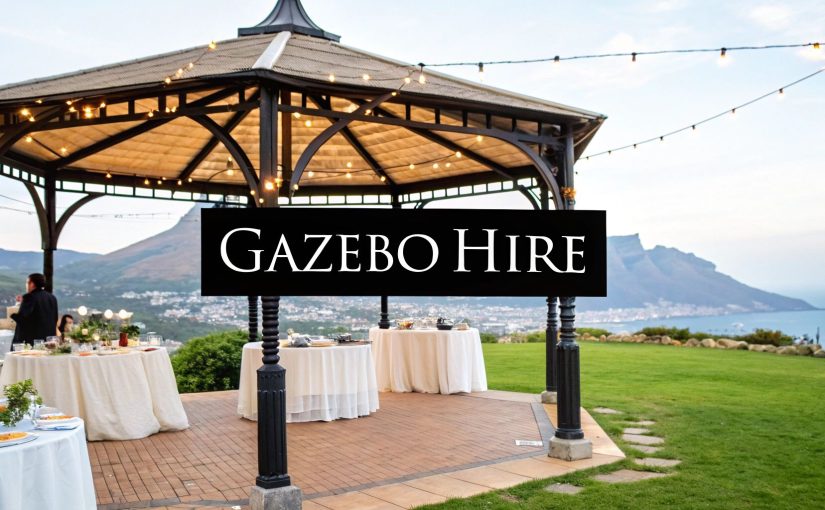
Nailing the choice of gazebo is one of the first and most important steps for any successful outdoor event in Cape Town. This isn't just about getting some shelter from the sun or rain; it's about creating an atmosphere. Whether you’re planning a dreamy wedding out in the Winelands, a corporate function with coastal views, or a lively birthday bash, the right structure really sets the tone.

Your decision has a direct impact on your guests' comfort, the flow of your event, and the overall look and feel. That's why it pays to understand what's out there. You need a gazebo that not only fits your theme but can also stand up to Cape Town's famously fickle weather—from glorious sunshine one minute to the notorious "Cape Doctor" wind the next.

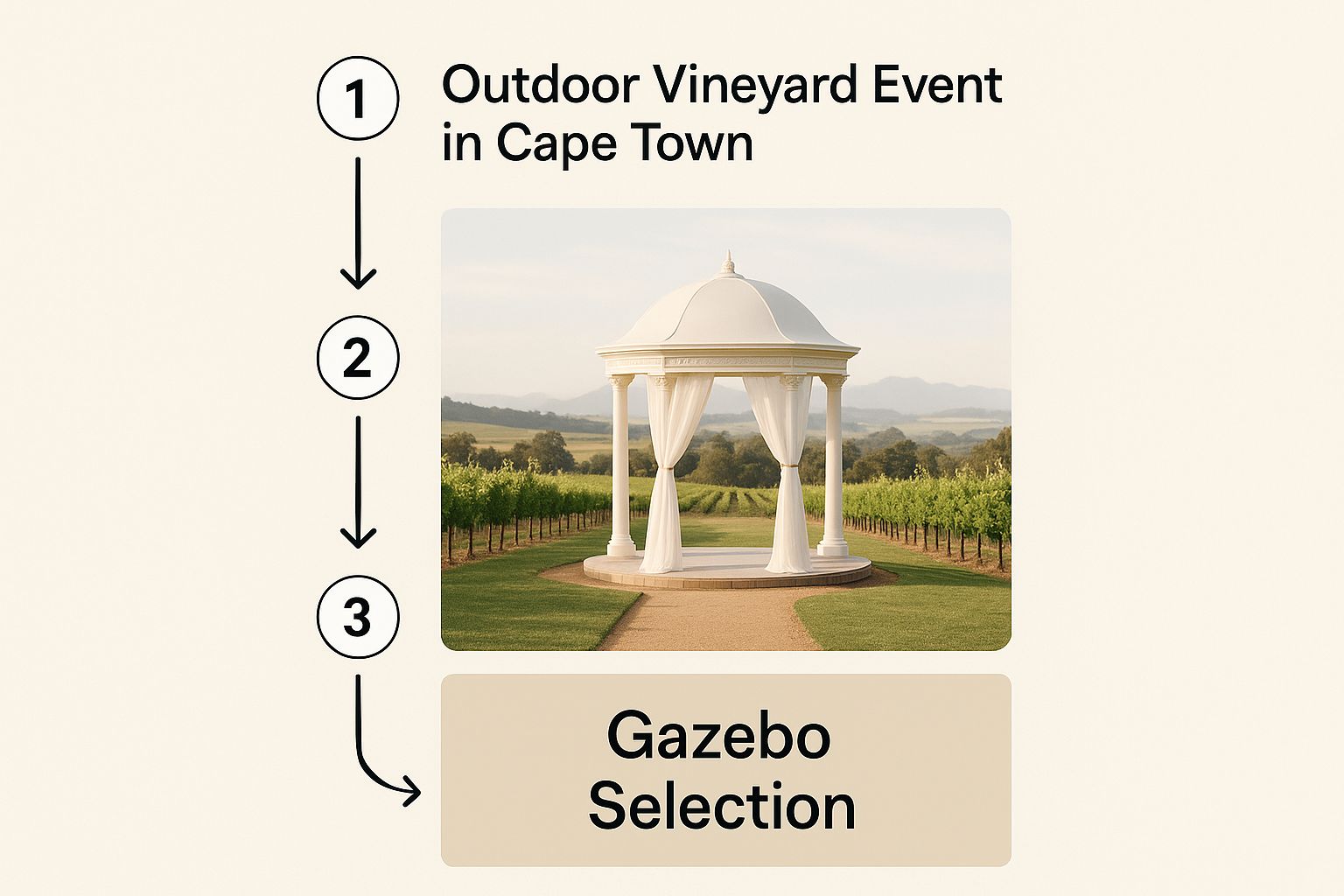
This visual guide breaks down the typical selection process, from the initial idea to the final choice for a stunning outdoor event.

Infographic about gazebo hire cape town

As the infographic shows, matching the gazebo style to your event's purpose and location is the decision that guides everything else.

Key Factors to Consider First

Before you get lost in different styles and sizes, let's lock down a few basics that will help steer you in the right direction.

  • Event Type and Theme: Is this a formal wedding that calls for an elegant white gazebo, or a casual festival that needs something more rugged and functional? The purpose of your event is your style guide.
  • Guest Count: Even a rough headcount is crucial. This is the main thing that will determine the size you need, which we'll get into more detail about soon.
  • Venue Layout and Surface: Take a good look at the ground. Is it grass, paving, or sand? This detail affects how the gazebo is installed and whether you might need to hire extra flooring.
  • Weather Contingency: Think about whether you'll need sidewalls for wind and rain protection. Even on a perfect day, sidewalls can provide welcome shade. For smaller, more intimate spots, you might also want to check out our guide to Cape Town umbrella hire for some extra coverage.

The event infrastructure scene in the Western Cape is a huge part of the region's bustling tourism economy. In fact, industry reports show that 60-75% of outdoor events using hired gazebos are linked to tourism and hospitality, covering everything from weddings and festivals to corporate functions. As Cape Town continues to cement its reputation as a premier event destination, the local gazebo hire market has grown into a competitive and highly professional industry.

How to Calculate Your Gazebo Size and Space Needs

A well-proportioned gazebo set up for a dining event at a scenic Cape Town venue.

Choosing the wrong size gazebo is one of the most common pitfalls we see. It can instantly throw off the entire vibe of your event. Too small, and your guests will feel like they’re in a sardine can. Go too big, and the atmosphere feels cold and impersonal.

So, let's get it right. Forget just counting heads for your gazebo hire in Cape Town. We need to think a bit smarter.

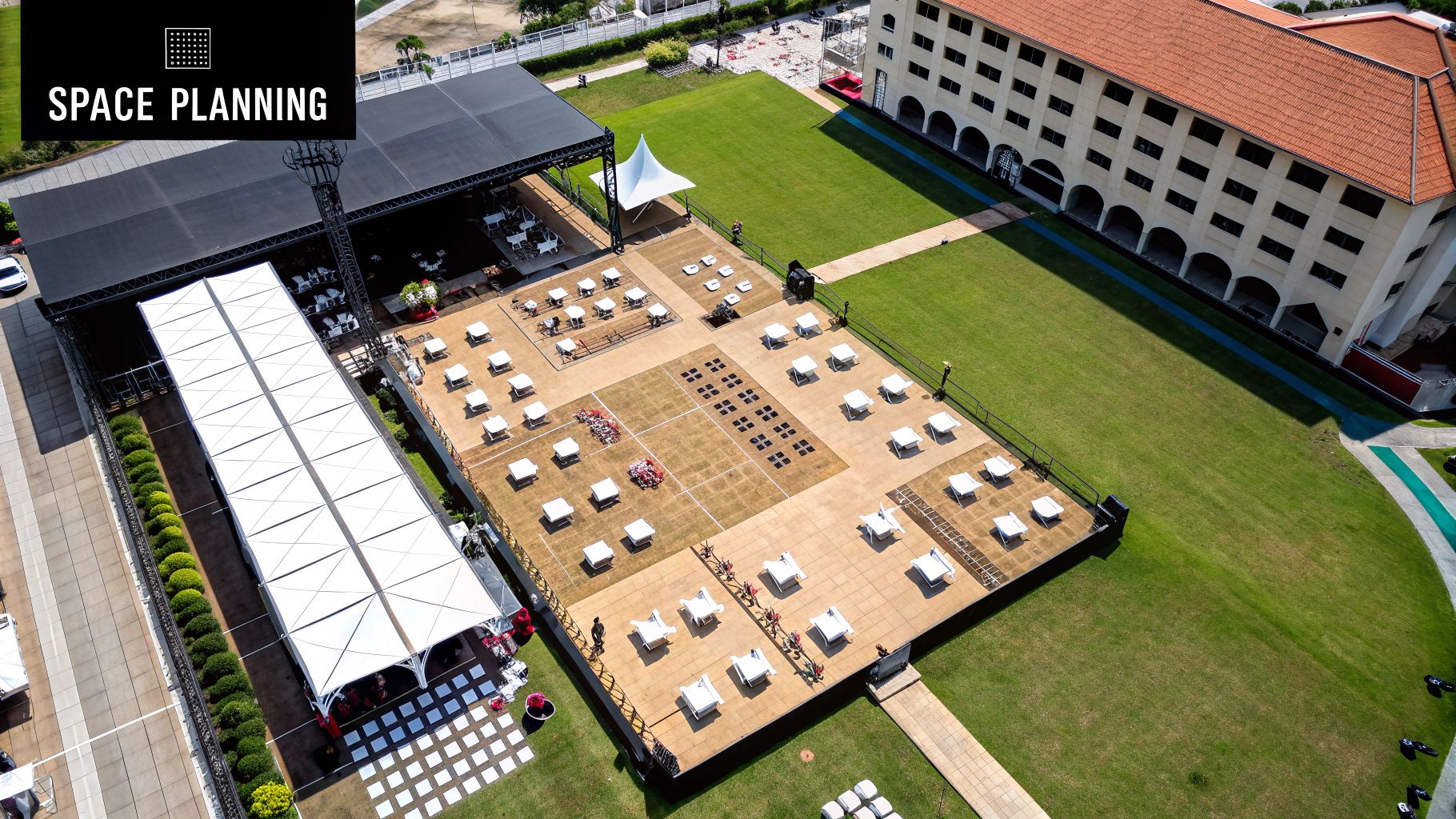
Your gazebo isn’t just a roof; it's the blueprint for your event's entire layout. The real question isn't just "how many people?" but "what will everyone be doing?". A standing cocktail party needs a completely different footprint than a sit-down wedding reception that also needs space for a dance floor. Once you make that mental switch, you're on the right track to creating a space that feels just right.

Moving Beyond the Headcount

A simple guest count is a decent starting point, but it barely scratches the surface. To really nail down the right dimensions, you have to picture the layout and the flow of your event.

Over the years, we've found these industry rules of thumb work wonders for figuring out the square metres you'll need per person:

  • Standing Reception (Cocktail Style): Plan for roughly 0.5 to 0.7 square metres per person. This gives everyone enough elbow room to mingle and move around comfortably without feeling crowded.
  • Seated Dining (Long Tables): You’ll want to budget around 1.1 to 1.3 square metres per guest. This covers the table, chairs, and crucial space for guests to get in and out, plus room for servers to navigate.
  • Seated Dining (Round Tables): Round tables take up a little more floor space, so aim for 1.3 to 1.5 square metres per person to keep things feeling spacious and accessible.

A classic mistake is forgetting to account for the "extras." That DJ booth, buffet line, gift table, or small stage for the band all eat up valuable floor space. You have to factor these into your total calculation from the very beginning.

Assessing Your Venue Space

Once you’ve got a handle on the internal size you need, it's time to look at the actual venue. Your chosen spot in Cape Town is the ultimate decider of what’s possible. A perfect plan on paper is useless if the gazebo physically can't fit on site.

Before you lock in that booking, do a proper site inspection. Seriously, don't skip this. Here’s what to look for:

  • Ground Conditions: Is it level grass, paving, or sand? Uneven or soft ground might mean you need to hire extra flooring or use specialised anchors. It's something your hire company absolutely needs to know beforehand.
  • Overhead Obstacles: Look up! Low-hanging tree branches, power lines, or bits of a building can get in the way of the gazebo’s roof. Always measure the vertical clearance.
  • Access Points: How is the delivery team going to get the equipment in? Make sure there’s a clear path for their vehicle and that any gates or walkways are wide enough.

By thinking about both your event's internal flow and the physical limits of your venue, you can confidently pick a gazebo that isn't just big enough, but is perfectly suited to your location. That’s the key to a smooth, successful event.

Let's talk numbers. Budgeting for your event is always a balancing act, and knowing what to expect for gazebo hire in Cape Town will save you from any nasty surprises down the line. It's rarely just one flat fee; the final invoice usually includes the base hire cost plus any extras you've chosen to make your space perfect.

A standard hire package from most suppliers will get you the gazebo structure itself, along with delivery, professional setup, and the teardown afterwards. This is a big deal. Having their team handle the installation is crucial, especially with Cape Town's famously unpredictable wind. But what one company calls "standard" another might not, so always double-check what's in the box.

What Goes Into the Final Price?

So, what actually shapes the quote you'll receive? The biggest factor, without a doubt, is the size of the gazebo. A little 3×3 metre pop-up for a weekend market stall is going to be leagues cheaper than a sprawling 6×12 metre structure needed for a wedding reception. Style plays a part, too—those elegant, high-peaked gazebos often have a higher price tag than their more functional, straightforward counterparts.

Then you have the add-ons. These are the bits and pieces that turn a simple shelter into a truly comfortable and functional event space.

Here’s what you’ll often see as extra charges:

  • Sidewalls: A must-have for wind and rain protection. You can usually choose between solid panels or ones with clear "windows."
  • Flooring: Absolutely necessary if you're setting up on uneven ground or just want a more polished, comfortable surface for your guests.
  • Lighting: From simple, charming string lights to fancy chandeliers, lighting is key if your event runs into the evening.
  • Weighting and Anchoring: If you're on a hard surface like paving or a patio where pegs are a no-go, you'll need specialised weights. This is a non-negotiable for safety.

Don't forget about the location itself. A tricky-to-access backyard or a venue that requires a long haul from the delivery truck might mean extra labour charges.

My best advice? Always, always ask for an itemised quote. It gives you total transparency, showing you exactly what you’re paying for. This makes it so much easier to compare quotes from different suppliers and ensure you’re getting the best possible value.

What to Expect Price-Wise and When to Book

To give you a ballpark idea, let's break down what you might expect to pay.

Estimated Gazebo Hire Price Ranges in Cape Town

Planning your budget is a whole lot easier when you have a rough idea of the costs involved. This table outlines the typical price ranges for gazebo hire in Cape Town, based on size and what you might need to add on.

Gazebo Size (Capacity) Typical Price Range (Per Day) Common Add-on Costs
3m x 3m (Small stall / ~10 people) R500 – R1,200 Sidewalls, basic weights
3m x 6m (Small gathering / ~20 people) R1,000 – R2,500 Sidewalls, basic lighting
6m x 6m (Medium event / ~40 people) R2,500 – R5,000 Flooring, sidewalls with windows
6m x 12m (Large event / ~80-100 people) R5,000 – R9,000+ Full flooring, fairy lights, delivery fees

Keep in mind these are just estimates! The final cost will always depend on your specific needs, the supplier you choose, and the complexity of your setup.

Now for a crucial tip: book well in advance. I can't stress this enough, especially if your event falls during Cape Town’s peak season, which runs roughly from September to March. The best suppliers and the most popular gazebo sizes get snapped up months ahead for summer weddings and year-end functions. Booking early doesn't just guarantee you get what you want—it also locks in your price and gives you one less thing to worry about.

Planning for Cape Town Weather and Seasons

A gazebo set up on a beautiful Cape Town day, with Table Mountain in the background.

Anyone who has lived in Cape Town knows you can experience all four seasons in a single afternoon. That beautiful sunny morning can quickly turn into a gusty, windy day without much warning. This is exactly why thinking about the time of year is non-negotiable when planning your event.

The season will dictate everything from the type of gazebo you need to the accessories that will keep your guests comfortable. It’s all about understanding the city’s rhythm to make sure your event goes off without a hitch, no matter what the weather decides to do.

Peak Season Versus Off-Season Hire

Cape Town's event calendar really comes alive during the glorious spring and summer months, which typically run from September to March. This is prime time for weddings, festivals, and year-end functions, making it the peak season for gazebo hire. The obvious plus is a much better chance of sunshine for your big day.

But that popularity comes with a couple of things to keep in mind:

  • Higher Costs: With everyone wanting a gazebo, prices naturally go up.
  • Limited Availability: The best suppliers and most popular sizes get booked out months—sometimes even a year—in advance.

On the other hand, the cooler, wetter months from April to August are considered the off-season. This can be a smart move. You'll often find more competitive pricing and far more availability, which is a huge advantage for anyone working with a tighter budget or planning something at the last minute.

The numbers back this up. The peak season accounts for roughly 65-70% of all annual gazebo rentals in the city. This rush often pushes hire costs up by an estimated 10-20%, a figure you’ll definitely want to factor into your budget.

Weather-Proofing for Cape Town Conditions

No matter the season, you have to be ready for the infamous "Cape Doctor." This strong south-easterly wind can make short work of a flimsy gazebo. Prioritising a sturdy, properly anchored structure isn't just a good idea; it's essential for safety.

When you chat with your supplier, tell them exactly where your event is and how exposed to the wind it might be. They’ll be able to recommend the right anchoring solution, whether that’s heavy-duty pegs for a lawn or solid weights for a paved area. When it’s windy, a robust frame is a must. For a deeper dive, our guide on heavy-duty gazebos explains what makes a structure truly wind-resistant.

Don't underestimate the need for sidewalls. Even on a beautiful day, they offer excellent protection from wind and sun. For winter events, they are essential for keeping out rain and trapping warmth, especially if you plan on adding heaters.

Here’s a quick checklist of weather-proofing essentials to consider:

  • Solid Sidewalls: Your first line of defence against wind and rain.
  • Clear Window Sidewalls: A great option to keep the weather out without losing that gorgeous Cape Town view.
  • Secure Anchoring: Insist on heavy-duty pegs or weights specifically suited to your venue's surface.
  • Guttering Systems: If you're using multiple gazebos, these stop rain from dripping through the gaps.
  • Heating Options: A few portable gas heaters can make a world of difference on a chilly evening.

Managing Logistics for a Smooth Setup Day

You’ve booked the gazebo. Great! But the real work starts now. Honestly, a successful hire isn't just about making the booking; it's all about how flawlessly things run on the day. A common mistake I see is people overlooking the practical side of things, which almost always leads to last-minute stress.

The secret? Proactive communication with your gazebo hire company. It’s about getting everyone on the same page so their team can work efficiently and safely, letting your event setup kick off without a hitch.

Think of it as setting the stage before the main act. A little prep work makes sure everything from the delivery truck's arrival to the final peg going in happens smoothly. That way, you can focus on the bigger picture.

Confirming the Setup and Teardown Plan

Never, ever assume the delivery crew knows your event schedule inside and out. You have to be absolutely clear about the timeline. A couple of weeks before your event, give your supplier a quick call to nail down the specifics for delivery, installation, and collection.

These are the non-negotiable questions you need answers to:

  • What's the delivery window? Don't settle for "in the morning." Get a specific timeframe, like "between 9 AM and 11 AM."
  • How long does setup typically take? Knowing this is crucial for scheduling other vendors. Your caterers or decorators might need to get inside the gazebo, and you need to build that time into your schedule.
  • What do you need on-site? Does their crew need access to power points, water, or a restroom? It's better to know in advance.
  • When is teardown scheduled? Find out if they'll be back the same night or the next day. This is especially important if you have a strict venue handover time.

That one five-minute call lines up everyone's expectations and can save you hours of headaches and scheduling clashes later on.

Preparing Your Venue for Arrival

The biggest hurdle for any setup crew is often an unprepared site. You can make their job—and your day—infinitely easier by doing some basic prep work. A clear, ready space means a faster, safer, and more professional installation.

It's on you, the client, to provide a safe and accessible area. This means flagging any hidden dangers like septic tanks or underground irrigation pipes that could be seriously damaged by pegs.

Before the team is due to arrive, run through this final checklist:

  • Clear Vehicle Access: Make sure the path to the setup spot is completely clear. No parked cars, no half-finished decorations, no obstacles. Remember, they're likely arriving in a large truck.
  • Level and Clear Ground: Mow the lawn a day or two beforehand. Clear away any garden furniture, kids' toys, or general debris from the exact spot the gazebo will stand.
  • Mark Underground Utilities: If you have underground sprinklers, pipes, or cables, do yourself a favour and mark their locations clearly. A few small flags or a bit of spray paint will do the trick.

Feeling a bit overwhelmed with all the details? To make sure nothing slips through the cracks in the lead-up, using a comprehensive guide like this event planning checklist template can be an absolute lifesaver.

A Few Common Gazebo Hire Questions

Hiring a gazebo in Cape Town can bring up a few questions, especially if it's your first time. Getting the right answers upfront is the key to making sure everything, from the initial booking to the day of your event, goes off without a hitch. Let's walk through some of the queries we hear most often.

Think of this as your quick guide to finalising the details with total confidence. We’ll cover everything from tricky council rules to what happens when the weather doesn't play along, ensuring you have all the info you need before you book.

Do I Need a Permit for a Gazebo in Cape Town?

This is a big one, and a really important question to ask. The good news is that for most private events on your own property—like a birthday bash in your garden—you almost never need a permit. The rules change, though, the moment you plan to set up on public land.

If your event is happening in a public park, on a beach, or any other city-owned space, you'll almost certainly need an event permit from the City of Cape Town. This is less about the gazebo itself and more about the event as a whole.

  • Public Parks and Beaches: Permission is pretty much always required.
  • Private Residential Property: You're in the clear. No permit is needed for a temporary structure.
  • Commercial Venues: The venue's management team usually handles any necessary permits.

If you’re unsure, it’s always best to check with the City’s events office well in advance. A good gazebo hire company in Cape Town can often point you in the right direction, but remember, securing the actual permit is the event organiser's responsibility.

What’s Included in a Standard Hire Package?

Knowing exactly what you're paying for is crucial for keeping your budget in check. While the specifics can vary a little between suppliers, a standard hire package should always cover the absolute essentials to get your gazebo up and ready.

A typical hire agreement should always include delivery to your venue, professional installation by an experienced team, the gazebo structure itself, and the subsequent dismantling and collection after your event. Safety is paramount, so proper setup is non-negotiable.

Anything beyond these basics is usually considered an add-on. These optional extras often include:

  • Sidewalls (either solid or with clear windows) to protect against the elements.
  • Flooring options, which can range from basic groundsheets to more elegant interlocking panels.
  • Lighting, like charming fairy lights or practical overhead lighting.
  • Weights or specialised anchoring for setting up on hard surfaces like paving, where pegs can't be used.

What Happens If Bad Weather Is Forecast?

Cape Town's weather is famously unpredictable, so a solid backup plan isn't just nice to have—it's essential. Professional hire companies have plenty of experience preparing for the notorious 'Cape Doctor' wind and those sudden downpours. Your best defence starts with hiring a high-quality, sturdy gazebo built to handle local conditions.

If the forecast looks dodgy, get in touch with your provider right away. They might suggest adding a full set of sidewalls to keep wind and rain out or using extra-heavy weights for more stability. In the rare case of extreme weather warnings where safety could be an issue, most companies will work with you to reschedule or find another solution, though their specific cancellation policies will apply.


For an event that runs seamlessly, you need a team that gets Cape Town's unique demands. At ABC Hire, we provide sturdy, stylish gazebos and all the accessories you need to create a comfortable and memorable occasion, whatever the weather. Explore our full range of event solutions at https://abchire.co.za.

📍 Cape Town + Winelands