
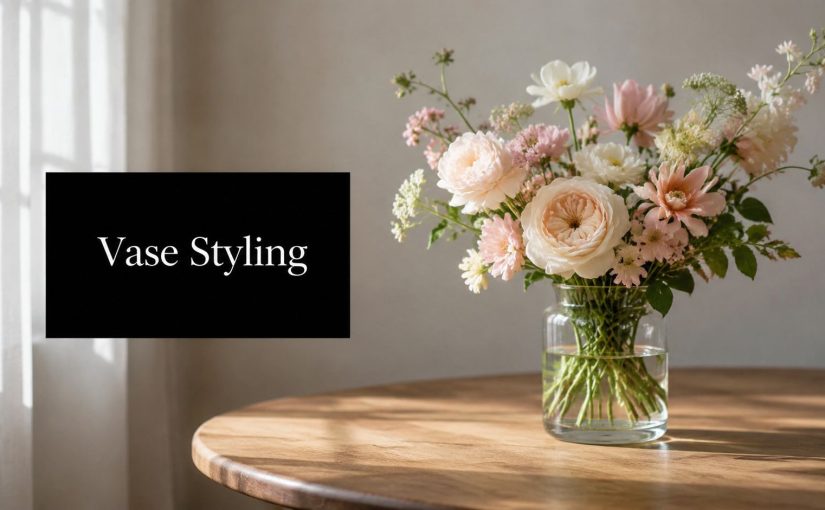
You're likely standing in a venue right now, looking at dressed tables, a flower delivery that's about to be unpacked, and a dozen styling decisions that can still go right or wrong. The vase is one of them. Get it wrong, and the arrangement feels heavy, cramped, or awkward to talk across. Get it right, and the flowers do the work without fighting the room.
A glass vase for flowers stays the default choice for a reason. It keeps attention on the stems and blooms, it suits both stripped-back and formal styling, and it has been central to floral display for a very long time. Floral decoration reaches back to 2,500 BCE in Egypt, while vase-making is documented in Mesopotamia around 3000 to 3250 BCE Britannica. That continuity matters on Cape Town banquet tables and in Winelands venues, because the vase is still doing the same job it always did, holding the flowers where guests can see them.
Why Glass Vases Dominate Event Styling
The table is dressed, the candles are in place, and then the florist arrives with the centrepieces. If the vase is opaque, bulky, or visually noisy, the arrangement starts competing with the room. Clear glass keeps the flowers in charge, and the table feels lighter straight away.
Why clear glass keeps working
Transparent glass has one simple advantage, it gets out of the way. That is why it works so well for weddings, corporate dinners, and matric dances, where the flowers need to support the room instead of fighting it. On a vineyard reception table, clear glass sits beside linen and candlelight. At a black-tie product launch, it looks polished without pulling attention away from branding, glassware, or place settings.
Cape Town and Winelands venues make this even more relevant. Guests sit close to the table edge, servers need clean sightlines, and taller centrepieces can block conversation faster than people expect. A glass vase for flowers lets the stems, water line, and bloom shape stay visible without adding visual clutter. That matters on long banquet tables, especially when you want the room to feel open rather than crowded.
Glass also survives trends better than most styling choices. Vase-making and floral display have a long decorative history, and clear vessels have stayed useful because they suit both formal and simple arrangements Britannica. That consistency is exactly why event teams keep returning to them, they work in almost any setting without forcing the flowers into a specific look.
A glass vase for flowers is also practical for sourcing. Industry reports on the wider glass tableware and decorative glass market point to steady demand, which matches what florists and hire companies already know from event work. Clear glass stays in circulation because it photographs well, suits many flower types, and can be reused across different table plans without clashing with the colour palette.
Hard water is the part people forget. In Cape Town, a cloudy water line or mineral mark on the glass shows up fast under candlelight and camera flash, and it makes even expensive flowers look tired. That is why event teams should rinse vases properly, dry the outside before set-up, and keep a simple cleaning routine between venue load-ins.
Practical rule: if the room already has strong colours, busy décor, or tight guest sightlines, choose clear glass and let the flowers do the work.
Choosing the Right Vase Shape for Your Flowers
The wrong shape is one of the fastest ways to weaken a floral setup. A good florist can make almost anything look acceptable, but the right vase shape makes the stems easier to place, steadies the arrangement, and saves time on the day.
Match the vase to the stem structure
A cylinder vase is the most useful workhorse. It suits roses, hydrangeas, tulips, and grouped stems because the straight sides support a tidy mass and keep the design upright. If you're setting guest tables or buffet accents, cylinder vases give you control without looking fussy. For a structured, polished event look, that's usually the right call. See this practical guide to cylinder glass vases.
A trumpet vase gives you a more elegant silhouette. The narrower top helps guide the stems inward, which works beautifully for formal weddings and banquet centrepieces with a deliberate, tapered look. Use it when the arrangement needs height and shape, but not bulk. It's a strong fit for long-stemmed roses, lilies, and mixed florals with a vertical line.
A cube vase suits compact arrangements and modern tables. It works well for low corporate centrepieces and clustered blooms because the squared footprint feels disciplined. If the venue has tight table spacing, cube forms are easier to place cleanly than wide, rounded vessels.
A bud vase is the simplest option, and it's often the smartest. Use single stems, a few clipped garden flowers, or repeated mini-arrangements down a long table. Bud vases are ideal when you want rhythm across the room rather than one big centrepiece dominating each table.
A compote creates a more open, traditional floral profile. It works for lush arrangements and romantic styling, especially when the florist wants a dome shape that sits low and spreads gracefully.
The fastest way to choose is to look at the flowers first, then the event style, then the table size. Heavy-headed blooms need support. Single stems need restraint. And if the brief is corporate, don't overcomplicate it. Clean lines usually beat decorative excess.
Use this as your buying brief
- Roses and hydrangeas: ask for cylinders or compotes with enough width for grouped stems.
- Single stems or sparse styling: choose bud vases.
- Modern brand tables: cubes keep the look sharp.
- Tall mixed stems: use trumpet shapes when the event can handle height without blocking views.
Sizing Vases for Event Tables and Guest Sightlines
A centrepiece can be beautiful and still be wrong for the table. If guests can't see each other, the room feels awkward. If the vase is too tall for its base, the whole arrangement feels unstable. Both mistakes are common, and both are avoidable.
Keep the height where conversation still works
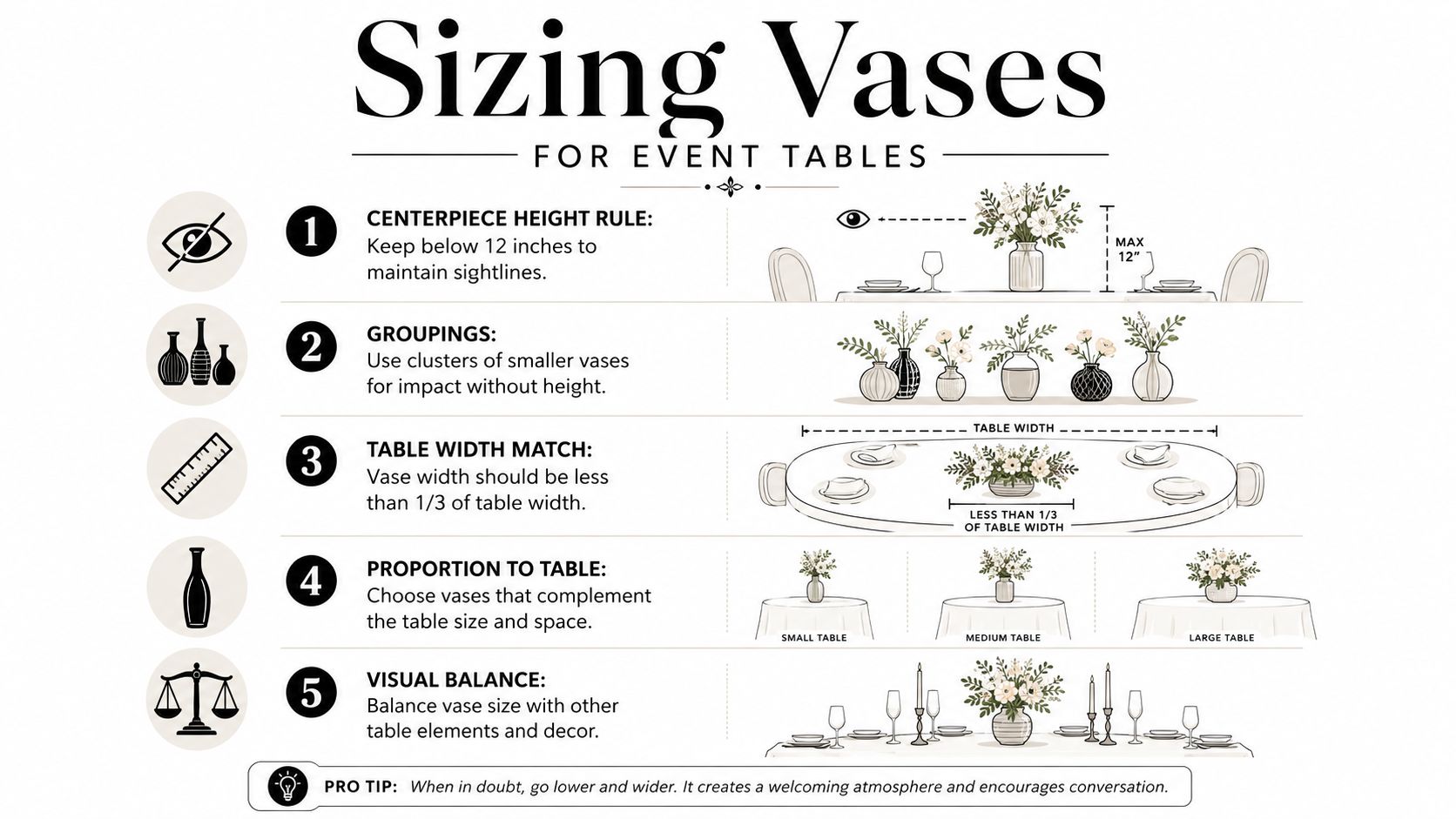
General floral guidance says the vase height should sit at about one-third to one-half of the arrangement height IKEA. For dining tables, the same guidance recommends keeping centrepieces under 12 inches so guests can still see across the table IKEA. That's the baseline I'd use for Cape Town weddings, school formals, and corporate dinners. If people need to lean sideways to speak, the arrangement is too tall.
Stability matters just as much. A sourcing guide recommends that the base diameter be at least one-third of the vase's total height, and it gives a 12-inch vase with a 4-inch base as a practical benchmark to reduce tip-over risk Kingstar Living. That ratio becomes especially important on crowded banquet tables, where glassware, dinner plates, charger plates, and elbows all compete for space. If the vase is narrow and tall, it shifts the centre of gravity upward and becomes easier to knock.
Use the venue, not the catalogue, to decide
A vendor catalogue can't tell you how close the tables are in the room. It can't tell you how much light falls across the centrepieces, or whether the table layout leaves room for service trays. That's why tall glass vases need to be specified against the actual venue layout, not chosen because they looked dramatic on a mood board.
If a florist wants height, give it to them on the ends of a room, on stage tables, or at entrance points. Keep dining surfaces low.
For one useful reference on event table styling, see centerpiece for table. The right mix is often a low base, a compact floral mass, and enough negative space for people to talk without lifting their heads around the flowers.
Renting Versus Buying Glass Vases for Events
The smartest choice depends on how often you host and how much storage you've got. Most one-off events should rent. Venues, schools, and frequent corporate hosts may prefer to buy a core set and reuse it. The trap is pretending those two options cost the same once delivery, breakage, and cleaning are added.
Make the decision on logistics, not wishful thinking
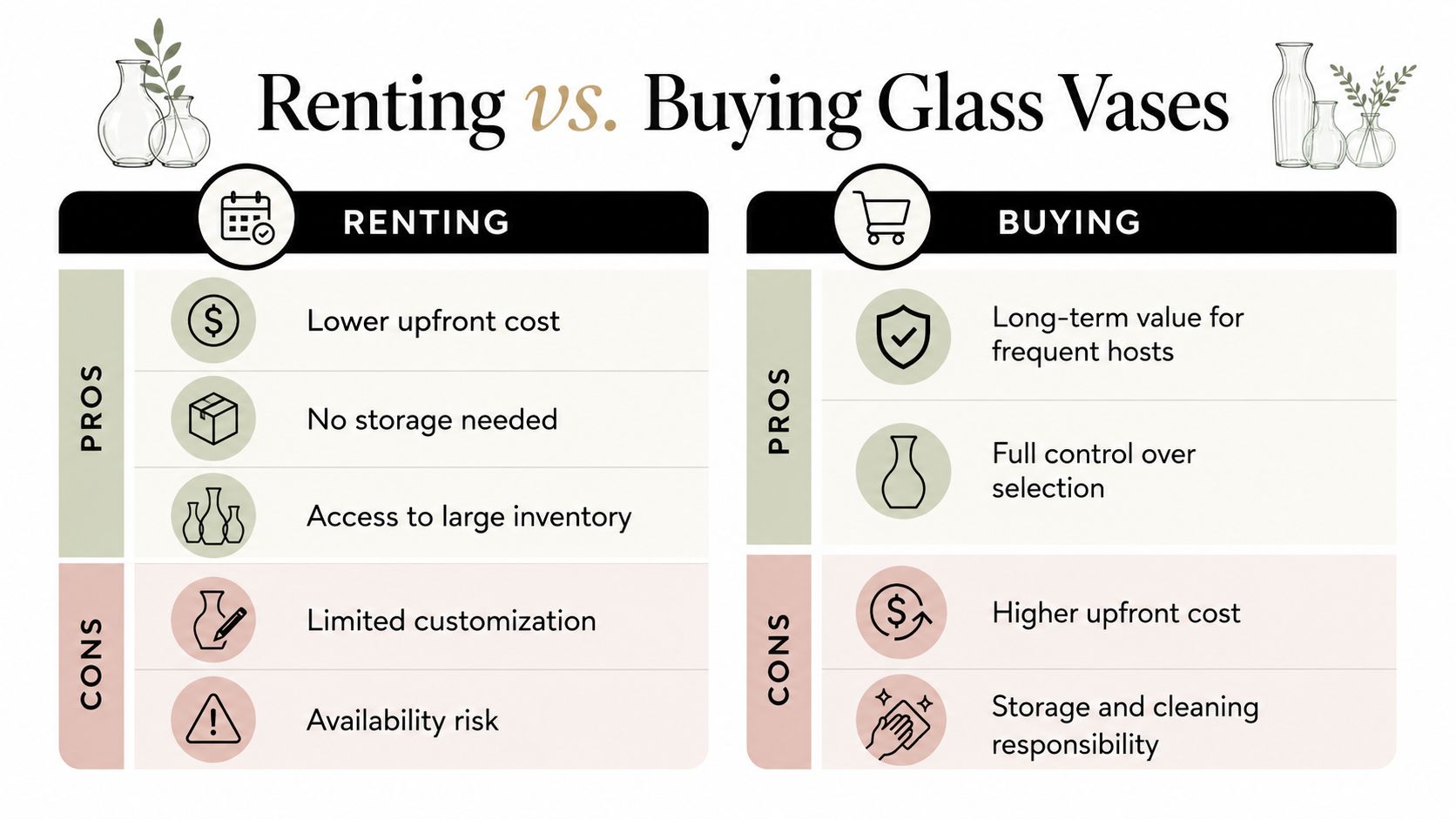
Rental wins for most weddings and single corporate functions because it removes storage and reduces the headache of holding stock between events. It also gives you access to a wider range of shapes without committing to a style that may not suit the next function. That matters if you're moving between a vineyard wedding, a launch event, and a formal dinner across the season.
Buying makes sense when the vase is part of a repeated venue setup. If you use the same centrepieces regularly, ownership gives you control over consistency and lets you keep a familiar look across events. It does, however, place the burden of cleaning, transport, and breakage on you. That's where first-time buyers get caught out.
For hosts comparing broader event rentals, this practical overview of renting furniture for events is a useful companion read. The same logic applies to vases, if the item has to move often, storage and handling matter more than the purchase price alone.
Use your venue type as the filter
- One-off weddings: rent. You'll want flexibility and less post-event admin.
- Recurring corporate tables: buy a small, consistent set if the style stays the same.
- Venues with limited storage: rent unless you've already got a dry, secure cupboard system.
- Schools and formal events: decide based on how often the same décor is reused.
If you're planning a full technical setup for a brand activation or conference dinner, a specialist supplier such as event tech hire London 2026 shows how event teams often separate décor hire from AV and staging hire. That separation is useful, because vases solve a different problem from screens, lighting, or sound.
ABC Hire also fits into that same rental logic, since it supplies event furniture and glassware hire for Cape Town functions. If you want one supplier that can handle table-related pieces alongside the rest of the event furniture, that's the kind of inventory to ask about.
Caring for Glass Vases in Hard-Water Regions
Cape Town and the surrounding areas often expose clear glass to hard water residue, and you can see the problem fast under event lighting. Clouding makes a vase look old before its time, and it shows up in photos even when the flowers are fresh. If you're using transparent vessels, maintenance isn't optional.
Clean the glass before the event, not after the panic starts
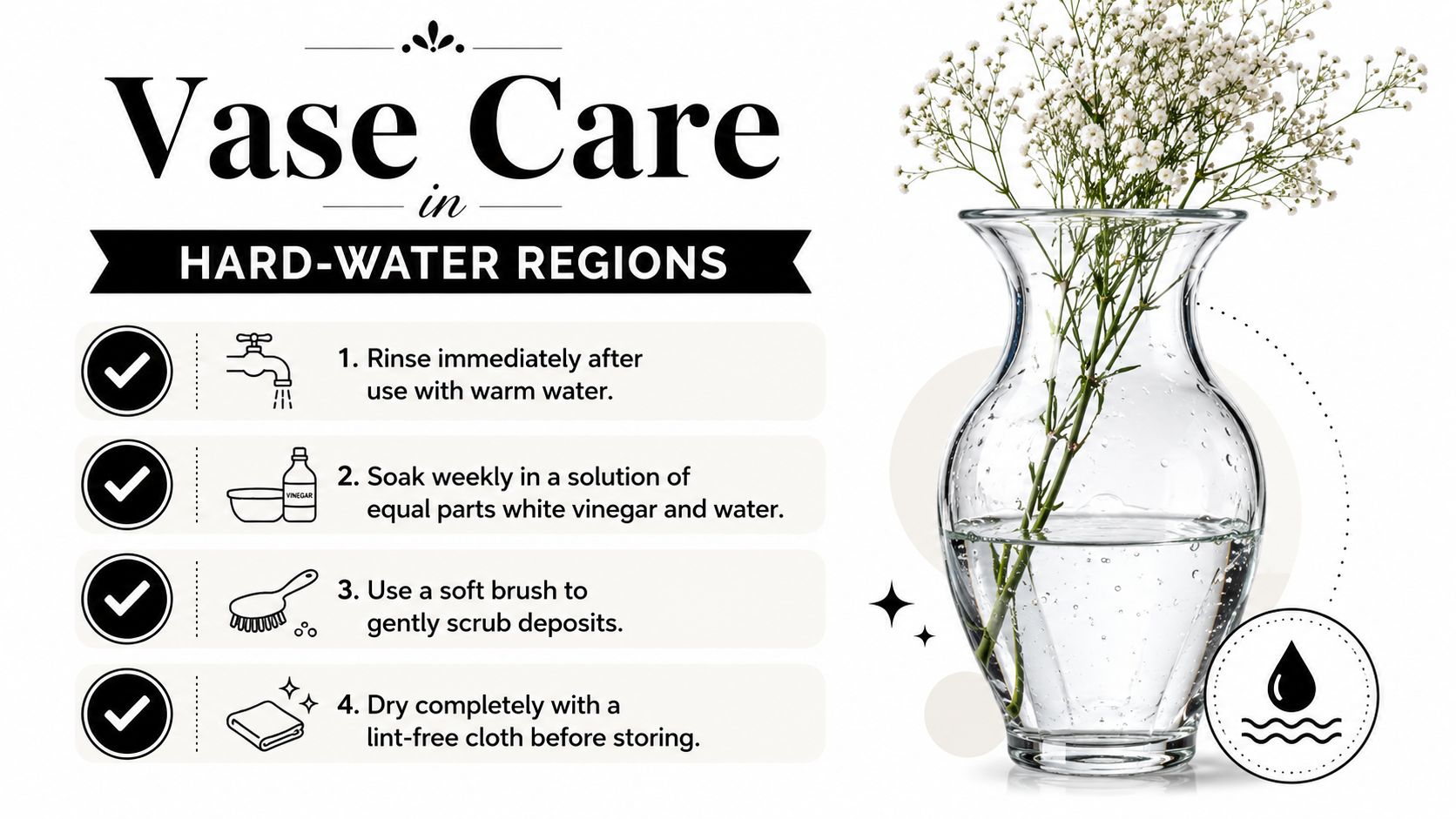
A vinegar-based descaling routine is the simplest way to deal with mineral residue, especially if a vase has already been used before. The aim is to remove clouding before it reaches the venue table. Generic vase styling content often skips this part, but in hard-water areas it's one of the most important details because glass only looks elegant when it stays clear. South African home-care guidance commonly uses vinegar for mineral build-up, which is why that method is so practical for vase maintenance Jingyi Glass.
Fill the vase carefully on the day of the event. Don't over-handle it once it's been polished. Move it straight from cleaning to placement, then to the final fill point. That reduces fingerprints, splash marks, and last-minute wiping on site.
Protect the finish between venue and storage
- Rinse promptly: get the water out soon after the event so deposits don't set.
- Dry fully: moisture left in the base leads to streaking and smell.
- Use soft handling: wrap each vase individually when you transport them.
- Check the rims and bases: chips happen most often at contact points.
If you're reusing the same vessels, keep them boxed in a way that stops glass from rubbing against glass. A small chip on a base can turn into a crack during the next transport cycle, and that's the kind of problem that shows up only when you're already short on time. For serious hosts, the maintenance routine is part of the hire or purchase decision, not an afterthought.
Styling Glass Vases for Different Event Themes
A single clear vase can read as rustic, modern, or formal depending on how you finish it. That flexibility is why event teams keep them in rotation. Change the contents, wrap, and lighting, and the same vessel tells a different story.
Make the styling details do the heavy lifting
For vineyard weddings, I'd keep the glass simple and let the texture come from the flowers themselves. Sand, pebbles, and low waterline stems work well when the table already has linen, candles, and a warm natural palette. For corporate brand activations, keep the vessel clean and controlled, then echo the brand colours through ribbon, fabric ties, or compact floral inserts.
Matric dances can handle a bit more drama. Clear glass with floating candles or reflective fillers picks up light well, which helps in evening venues. Milestone birthdays sit in the middle, where you can lean either sleek or playful depending on the room and the guest list. The point is to change the styling layer before you buy a different vase.
Use light and colour with restraint
LED uplighting changes how glass reads after dark, which is why clear vessels stay useful in evening events. The glass picks up colour from the room, so a neutral vase can suddenly feel tinted without needing extra décor. That's an efficient way to work when you want impact without adding more items to the load-in.
A few practical choices do the job better than clutter:
- Ribbon wraps: useful when you want the vase to match a palette without hiding the glass.
- Filler materials: pebbles and sand create weight and texture, while floating candles suit low, atmospheric settings.
- Repeated clusters: several small glass vases usually look more intentional than one oversized piece if the table is long.
The best glass vase for flowers is the one that supports the room, doesn't block conversation, and stays clear enough to photograph properly. Choose the shape for the stems, size it for the table, and maintain it for the water in your area. That's the formula that holds up in Cape Town, Stellenbosch, Franschhoek, and Paarl.
If you're planning a wedding, corporate dinner, or formal function in Cape Town or the Winelands, ask ABC Hire about glassware and event furniture that suits your table plan and your sightlines. Visit ABC Hire to check the range and line up the pieces before your event day gets too close.