
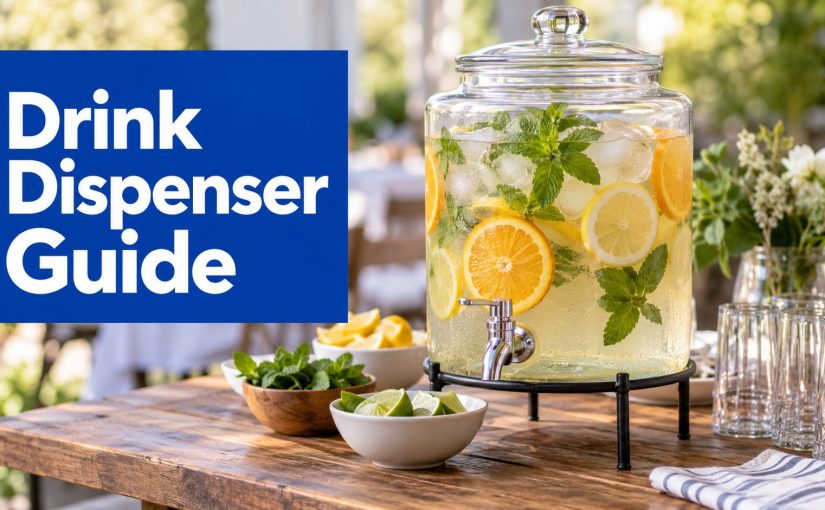
The welcome drinks are due to go out, the venue's counter space is tight, and someone has just asked whether the glass dispensers can stand beside the entrance without becoming a hazard. At that point, a drink dispenser glass stops being a decorative detail. It becomes part of the service operation, affecting guest movement, beverage quality, hygiene, refill timing and breakage risk.
In South Africa, glass remains a high-volume beverage material. Packaging data place annual glass-bottle use at roughly 1.4 to 1.7 billion containers, equivalent to about 389,000 to 457,000 tonnes, while beverages represented 63.12% of South Africa's container-glass demand in 2025, according to the South African packaging recyclability guideline. That scale makes careful handling and recovery especially relevant for event hire.
Planning a Glass Dispenser Station
A venue coordinator preparing welcome drinks for a corporate function with 120 guests usually starts with the visual brief. The practical questions arrive shortly afterwards. Can guests reach the station without blocking the registration desk? Does the table leave enough room for cups, napkins and a drip tray? Will people carrying full glasses need to cross a busy walkway?
Those questions point to three decisions that determine whether the station works.
Start with guest flow
A dispenser should be visible from the main seating or arrival area, but it shouldn't sit in the centre of a queue. Guests need a clear approach, enough space to place a cup under the tap, and a route away from the station that doesn't force them through staff traffic.
A narrow counter may favour two smaller vessels rather than one large jar. One can hold still water and the other infused water, with cups on one side and garnishes on the other. At a larger buffet, three smaller dispensers can separate water, lemonade and iced tea while reducing the number of guests gathered around one tap.
Match volume to service intervals
The beverage choice matters as much as the guest count. Water may be replenished during the event, while punch or a branded welcome drink may need to be ready before guests arrive and topped up during a transition. A vessel that looks generous can still run short if ice, fruit and a no-fill space beneath the neck reduce usable volume.
The placement also affects service intervals. A dispenser near the catering access point is easier for staff to refill, but it may be less convenient for guests. A station at the far end of a room may improve circulation, yet make discreet monitoring more difficult.
Treat glass as a public-contact risk
Glass used by the public needs more consideration than an attractive shape and a matching stand. South Africa's compulsory safety-glazing requirements under SANS 1263-1 address glass in applications where human contact could cause injury, with the purpose of reducing cutting or piercing injuries if breakage occurs, as described in the government safety-glazing regulation.
Practical rule: Choose the station as a complete service point, not as a jar placed on a table.
Capacity selection, stable placement and cleaning control all follow from the initial layout. A narrow entrance station may need compact vessels and short refill routes. A self-service drinks bar may need stronger bases, protected edges and a named staff member watching the taps. The right drink dispenser glass is the one that fits the room, the beverage and the way guests will use it.
Choosing the Right Dispenser and Capacity
The familiar round jar with a front spigot suits water, lemonade and simple fruit infusions. Its broad opening makes filling and cleaning straightforward, although the wide body takes up more counter space and can become awkward when guests crowd around it.
A footed apothecary style raises the vessel and often gives a more formal look for weddings or styled tables. The raised base can improve cup clearance, but it also increases the importance of checking that the stand is stable and that the tap doesn't sit so high that children or shorter guests struggle to use it.
Stackable beverage cylinders work well where a caterer wants a modular station. They create a taller visual line and can separate beverages by flavour. Mini tabletop dispensers are better suited to syrups, garnish accompaniments or smaller children's stations than to serving a full event alone.
For water and flavoured water, a useful planning rule is one litre per three to four guests. Iced tea, lemonade and punch generally need more generous provision because guests often take larger servings, return for refills or use ice that displaces liquid. Keep the estimate practical by accounting for service duration, refill access, ice and fruit before selecting the vessel.
| Format | Capacity Range | Best Beverage Match | Fragility Rating |
|---|---|---|---|
| Round jar with spigot | Small to large event vessels | Water, infused water, lemonade | Moderate |
| Footed apothecary style | Small to medium | Welcome drinks, iced tea, styled service | Moderate to high |
| Stackable beverage cylinder | Modular multiple-vessel setup | Separate juices, teas and branded drinks | Moderate |
| Mini tabletop dispenser | Compact service point | Syrups, garnish drinks and children's portions | Moderate |
Inspect the hardware, not only the shape
Look for a substantial wall, a broad base diameter and enough clearance below the jar for the cup you intend to use. The tap should have a food-grade silicone gasket that seats evenly, and the handle should close fully without requiring force. Edge protection and controlled transport matter in busy venues, particularly where guests may brush against the table.
A purpose-built chilled water system may be more appropriate for a high-throughput conference than a self-service glass jar. For a different equipment category, this overview of an instant chilled bubbler for Melbourne helps illustrate how plumbed or powered dispensing differs from a temporary event vessel.
Rental and purchase decisions also depend on repetition. Rental makes sense for a one-off wedding, activation or school function where transport, cleaning and breakage exposure are part of the service. Ownership becomes more defensible when a venue or caterer runs several comparable events and has proper storage, inspection and cleaning capacity. Local SA listings show retail prices from about R179.99 for a 5L dispenser to R599.99 for multi-dispense glass sets, while rental-oriented services advertise short-term rates from R6.30/day to R8.81/day excluding VAT, according to South African juice-dispenser rental listings. Compare the full operating burden, not only the purchase price.
For further reference on vessel selection and handling, see this practical guide to a glass water dispenser.
Setting Up the Dispenser Safely
Set the table before assembling the vessel. It should be solid, level and larger than the dispenser's base, with no overhanging edge beneath the jar. Place a non-slip mat or a clean damp towel under the base to reduce movement, then check that the table won't rock when someone leans lightly against it.
Fit the spigot before filling. The gasket must sit flat against the glass, the washer should be correctly positioned and the handle should close without sticking. Set the lid in place without forcing it. If the lid needs pressure to sit correctly, stop and inspect the fit rather than transferring strain to the glass.
Fill only after the station is fixed
A partially filled vessel is easier and safer to move than a full one. Keep the dispenser no more than two-thirds full during transport, then complete the top-up once it has reached its final position. This reduces sloshing and limits the load placed on the base and tap while staff carry it.
Test the spigot with a measured cup before adding the beverage. Open the handle, confirm a steady flow and close it fully. Wait briefly to check for a slow drip around the seal. Testing with water is faster, cleaner and less wasteful than discovering a faulty gasket after filling the jar with punch.
Leave at least 60 centimetres of clearance in front of the tap, so a guest can stand squarely at the station and place a filled glass on the landing area. Put cups and garnish to the side, not directly behind the tap, where guests would need to reach across the stream or knock the vessel while serving.
A drinks fridge can support the station by keeping refill batches cold and reducing the need to move a heavy filled vessel. Plan the refill route with the same care as the station itself, using equipment such as a fridge for drinks where the venue layout requires staged replenishment.
Cleaning and Maintaining the Glass Vessel
A reusable drink dispenser glass needs a closed hygiene routine. South African packaged-water controls emphasise that safety depends on processing and handling, not only on the original water source. The guidance associated with SANS 1657:2025 describes reusable 18.9-litre dispenser bottles as requiring thorough cleaning before refilling, supported by good manufacturing practices and laboratory checks, as outlined in this South African dispenser-water standards summary.
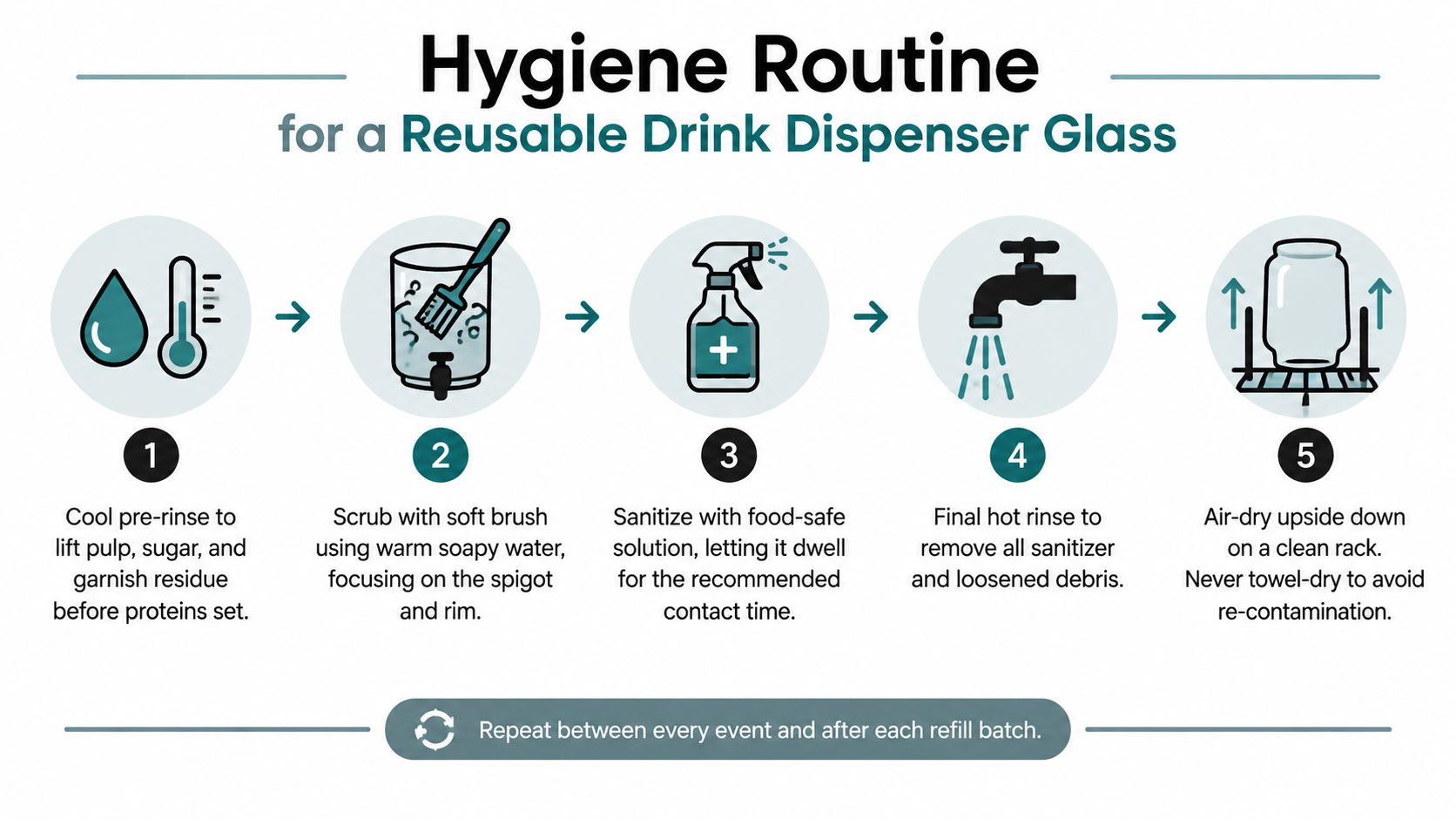
Start with a cool pre-rinse. It lifts pulp, sugar and garnish fragments before proteins dry onto the surface. Follow with a food-safe detergent wash using a long-handled, soft brush that reaches the shoulder, neck and base. The spigot threads deserve particular attention because residue can remain hidden even when the main body looks clear.
Clean the tap as a separate component
Disassemble the spigot according to its design and keep the small internal washer in a clean container while the parts are washed. Scrub the threads, outlet and contact surfaces, then rinse away detergent completely. If the tap uses a seal that needs lubrication, use a food-grade silicone lubricant rather than a petroleum-based product around beverage contact points.
Apply a food-safe sanitiser at the product's stated dilution and allow the required contact time. Diluted chlorine products and food-grade peracetic acid don't share the same handling instructions, so follow the chemical label and rinse where the product requires it. Never guess the concentration from appearance.
The cleanest-looking vessel isn't automatically the safest vessel. Its tap, seals, handling history and drying conditions all matter.
Invert the washed glass on a clean rack and let it air-dry. Towel polishing can redeposit lint and transfer contamination from a cloth that appears clean. Before approval, inspect the rim, base and spigot opening under raking light, looking for haze, chips and fine cracks.
For exterior marks, keep a separate product from the internal hygiene routine. Guidance on safe ingredients for glass cleaner can help when selecting a suitable surface-cleaning approach, but exterior glass cleaner must never replace internal washing and sanitising.
South Africa's glass recovery infrastructure also shows why responsible handling matters. The share of glass collected rose from 38.9% in 2014 to 45.7% in 2018, while about 82% of glass packaging placed on the market is diverted from landfill each year through recycling and returnable bottles, according to the glass recovery benchmark. Preventing breakage and separating damaged vessels from reusable stock supports that wider recovery system.
Building Beverage and Garnish Stations
The beverage should determine the dispenser shape. A tall, narrow vessel suits infused water and citrus water, where cucumber, lemon or herbs create visible layers without taking over the opening. A wide-shouldered jar is more practical for punch, sangria and ice-heavy drinks because staff can add fruit and reach the interior without forcing ingredients through a narrow neck.
Recipe behaviour matters too. High-acid citrus drinks can affect some fittings over long contact periods, sugary drinks leave sticky residue, and heavily diluted beverages lose flavour as ice melts. Decide whether ice belongs inside the vessel or in an external bucket. External ice slows dilution and makes the beverage level easier to monitor, while internal ice may keep a small station colder but reduces usable liquid and can obstruct the tap.
| Dispenser Style | Suitable Beverages | Garnish Station Components | Service Notes |
|---|---|---|---|
| Tall narrow dispenser | Citrus water, cucumber water, infused water | Sliced citrus, mint, herb tongs | Keep pieces small enough to avoid blocking the tap |
| Wide-shouldered jar | Punch, sangria, fruit lemonade | Fruit bowl, scoop, ice bucket | Use a ladle if pulp or large fruit makes the tap unreliable |
| Footed apothecary vessel | Welcome drinks, iced tea, formal service | Printed menu, measured garnish cups | Check stand stability and cup clearance |
| Mini tabletop dispenser | Syrups, cordials, children's drinks | Small cups, non-alcoholic syrups, labels | Place at a lower, supervised station |
A gin-themed station can pair a clear water dispenser with herbs, cucumber ribbons and citrus wheels, while a sangria station needs fruit portions, a scoop and a spill-resistant landing area. For children, use a lower station with non-alcoholic syrups and clear labelling rather than relying on colour alone.
Labels should identify the drink, flag alcohol and state relevant allergen information where applicable. Match the service tool to the liquid. A tap suits clear drinks, while a ladle works better for punch with pulp or floating fruit. Add a drip tray and stack cups at a height that lets guests collect them without knocking the spigot.
For further inspiration on themed layouts, these drink station ideas for entertainers show how a beverage point can operate as part of a broader entertaining setup. A related guide to glass water jugs can help coordinate the rest of the tableware without treating the dispenser as an isolated prop.
Troubleshooting Common Event Problems
Cloudy glass after washing usually points to a residue problem rather than permanent damage. Hard-water deposits, detergent film and protein residue can look acceptable while the vessel is wet, then become obvious after drying. Separate the corrective wash from the routine clean, using a vinegar or citric-acid treatment suitable for the glass and rinsing thoroughly before the normal detergent and sanitising process.
Printed capacity also creates false confidence. The stated volume may not equal usable service volume once ice, fruit and the space below the neck have been accounted for. A dispenser can therefore appear full during setup and still run short during the busiest part of the event.
Stability deserves an event-specific check
A level kitchen counter isn't the same as a marquee floor, a sloped buffet table or a bar top crossed by cable runs. Place the vessel on a non-slip mat, use suitable levelling shims where needed and avoid balancing one heavy jar on a narrow edge. Two smaller dispensers can distribute weight more safely than one oversized vessel, provided guests can reach both without crossing each other.
Don't leave the station without ownership
An unattended dispenser may drip, run empty or become surrounded by wet cups while staff handle speeches and transitions. Assign someone to check the level, refill timing, ice melt and drip tray during service. Fruit garnish trays need the same attention. Shared tongs left among cut fruit can become a contamination point, particularly when guests use them for multiple ingredients.
If a tap continues to drip after the handle is closed, remove the vessel from service and inspect the gasket rather than tightening the fitting aggressively. If the glass has a chip around the rim, a mark near the spigot base or a crack that appears only under angled light, quarantine it. A decorative vessel isn't worth exposing guests or staff to a breakage hazard.
Final Event Readiness Checklist
Use the final half-hour as a calm operational sweep, not a last-minute styling session. Start with the guest count and the total usable beverage volume, then walk the actual route guests will take from cup collection to the exit side of the station.
Check each vessel on its final table. Confirm that the surface is level, the base is stable, the station is away from foot traffic and the tap has enough clearance for the selected cup. Test the lid and spigot under the cold beverage load, then measure the beverage temperature rather than judging it by touch.
Complete the hygiene check
Confirm that each vessel was sanitised within the past four hours, that the drying racks are clear and that no film, pulp or residue remains on the internal surface. Inspect the rim and spigot under angled light. Exterior marks can be spot-cleaned with a lint-free cloth, but don't use external glass cleaner as a substitute for internal sanitation.
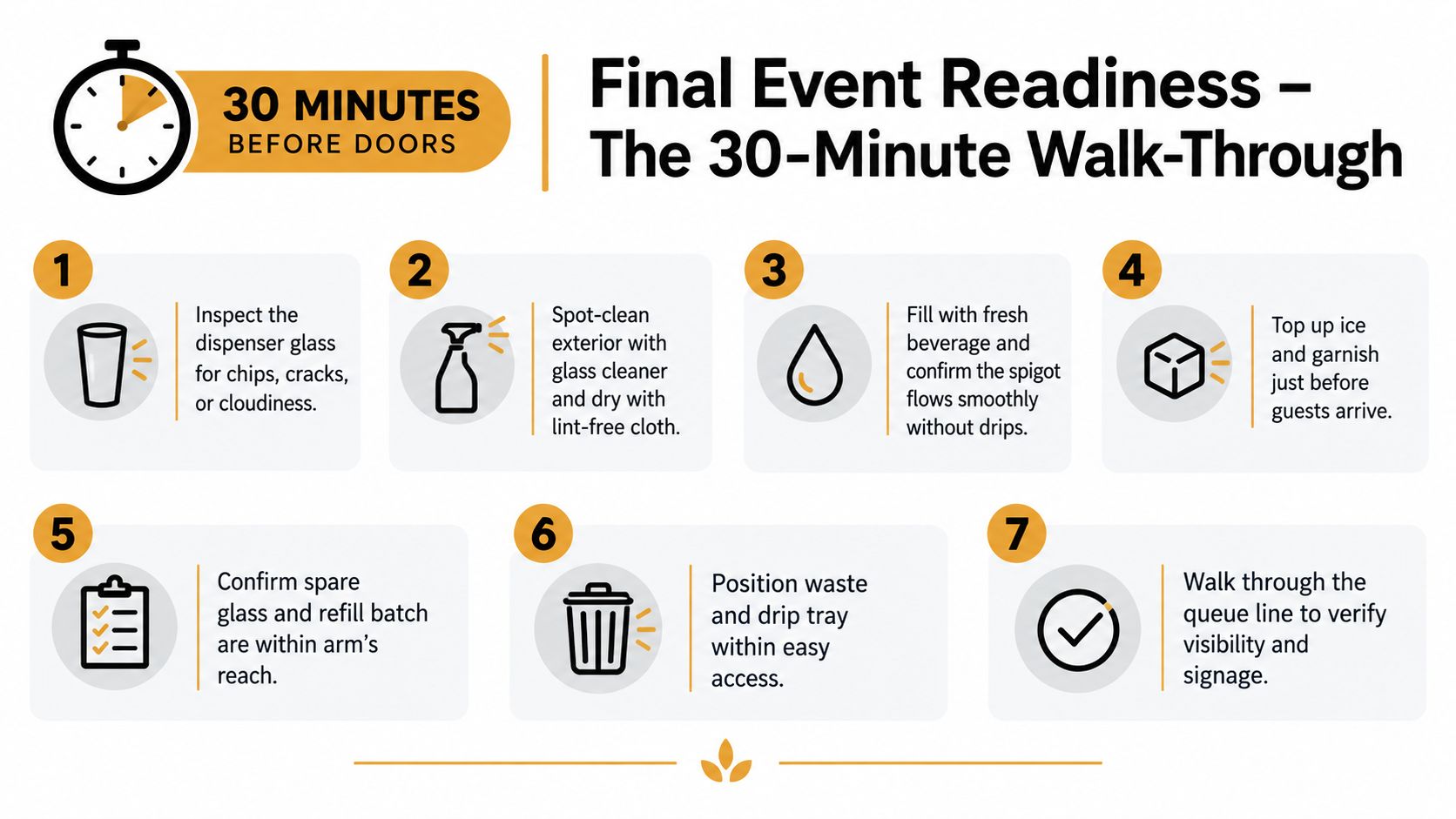
Top up ice and garnish shortly before doors open, then check that fruit isn't blocking the tap. Make the signage legible from the queue, include alcohol and allergen indicators where relevant, and stage the refill batch close enough for staff to reach without carrying full containers through the guest area.
Finally, assign a named person to monitor levels, manage refills and empty drip trays. Keep spare cups, waste bins and the reserve beverage within arm's reach. A station is ready when guests can understand it, use it safely and leave without creating a queue or spill.
ABC Hire can help organise the practical serving equipment around your event, including glassware, crockery, cutlery and related hire items for weddings, corporate functions, school events and private celebrations in Cape Town and the Winelands. Review the available event-hire options and visit ABC Hire to plan a drink dispenser station that is safe, clean and ready for service.