
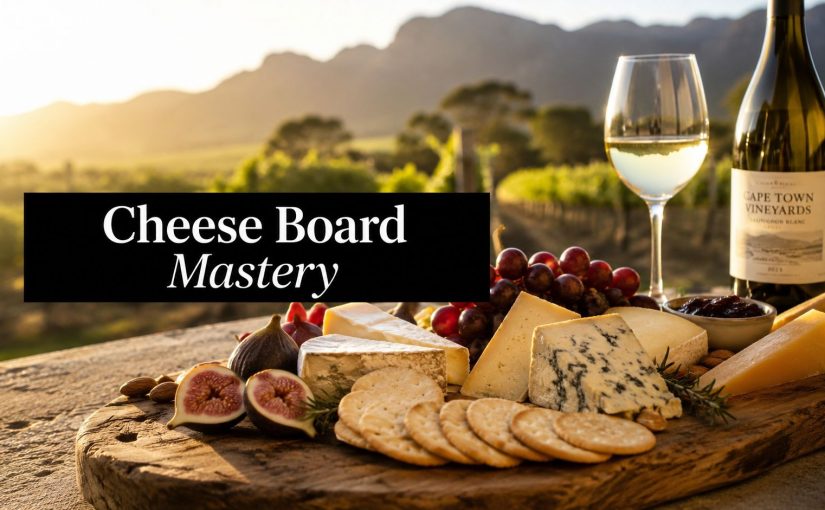
You can have a beautiful board lined up, the vineyard lawn ready, and a guest list that looks manageable on paper, then the afternoon heat starts working against you. Soft cheese loosens, cut fruit dulls, and the platter that looked sharp during load-in can look tired before the first round of speeches. That's the challenge with a cheese platter board in Cape Town, not just making it look generous, but keeping it elegant, safe, and easy to serve through a long event window.
A cheese platter board works because it sits at the point where hospitality, speed, and visual impact meet. Cheese has a long culinary history, with cheesemaking dating back more than 4,000 years in ancient records, and some evidence placing it over 7,000 years ago in early European and Mediterranean finds, while the formal cheese course became established in Europe during the 17th and 18th centuries according to the International Dairy Foods Association's history of cheese. That lineage matters in South African event catering, because this isn't a novelty garnish, it's a proven serving format built for sharing.
Why a Cheese Platter Board Works for Cape Town Events
A planner standing on a Winelands lawn knows the pressure points immediately. The guest list is final, the venue has a narrow load-in window, and the food has to look as good at service time as it did in the proposal deck. A cheese platter board fits that brief better than most centrepiece formats because it doesn't need on-site cooking, it transitions easily from intimate gatherings to larger receptions, and it feels at home beside local wines.
The format also carries visual credibility. Cheese boards grew from a structured course into a shared platter for social entertaining, and that shift from formal dining to easy hospitality is exactly why they work so well at weddings, tastings, matric dances, and corporate functions. The long history behind the format, documented by the International Dairy Foods Association, gives planners a useful answer when clients ask why this style feels polished without being stiff.
The practical reason it wins on event day
The biggest advantage is operational, not decorative. A board can be staged early, replenished cleanly, and photographed from several angles without a chef standing over it. It also pairs naturally with tasting-style service, which is why it suits pre-drinks, cellar-door events, and brand activations where guests circulate rather than sit.
Practical rule: if the food has to look premium, travel well, and require minimal last-minute work, a cheese board is often the safest centrepiece choice.
There's still a decision to make, though. The right guest quantity, cheese mix, board style, and temperature control plan all change how well the final display survives. That's where most catering advice goes thin, and where event planners need a working method instead of pretty inspiration.
Calculating Quantities for Any Guest Count
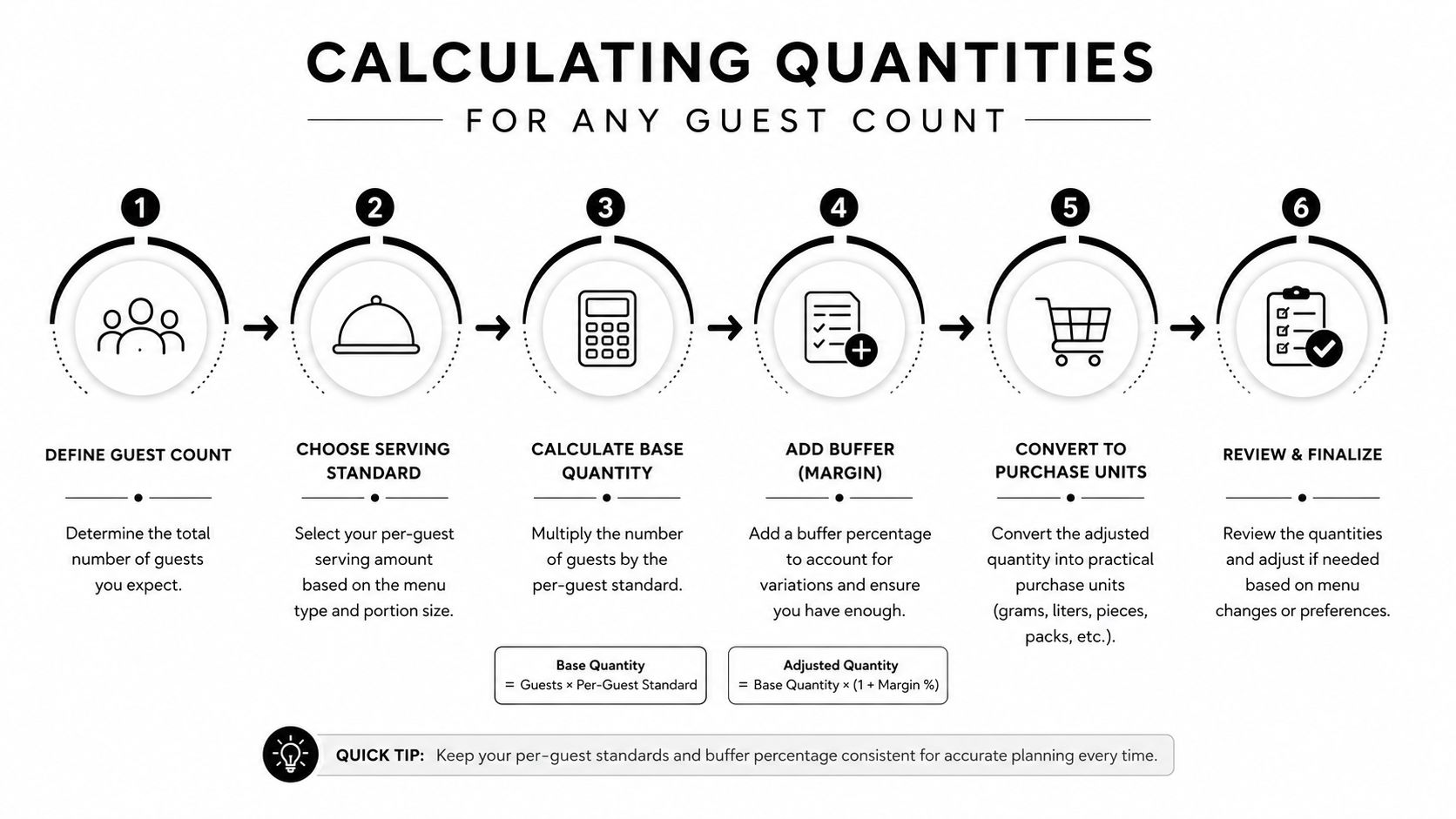
Start with the cheese itself, then build the rest of the board around that number. For a cheese-centric platter, the record-based guidance in the brief points to 1.75 oz (50 g) of each cheese per person, while a board that sits alongside other food can drop to ¾ oz (25 g) per person. Another catering benchmark for an appetizer board is 1 to 1.5 oz of cheese per guest per cheese, with 3 to 4 cheeses usually giving enough flavour contrast without overcrowding the display, as noted in Shelburne Farms' cheese board guidance.
A simple working formula
Use this order of planning:
- Decide the board's role. If it's the main grazing station, lean heavier on cheese. If it shares space with canapés or charcuterie, go lighter.
- Pick 3 to 4 cheeses first. That gives contrast without turning the board into a shop shelf.
- Size cheese before accompaniments. Once the cheese mass is fixed, fill the board with bread, crackers, fruit, nuts, and spreads around it.
- Leave space for topping up. A board that looks too full from the start usually looks messy by the midpoint of service.
- Match quantity to format. A small dinner board needs density. A corporate station needs easier access and a faster refill pattern.
For an 80-guest Winelands wedding where the board is a pre-dinner feature and not the only food on site, the lighter benchmark is usually the smarter one. That means sizing for the lower per-guest range, then using accompaniments to create visual abundance rather than forcing too much cheese onto the board. The Guinness World Records listing for the largest cheese platter, at 2,012.85 kg (4,437 lb 9.92 oz) with around 145 varieties from Wisconsin producers, shows the format can scale dramatically, but event service still works best when the board stays readable and easy to approach, not overstuffed, according to Guinness World Records.
Use the cheese count to set the shape of the board, not the other way around. If the board is too small for the mix, guests end up fighting for space around the same wedges.
That logic holds whether you're feeding 20 people at a private dinner or 300 guests at a corporate launch. The method is the same, only the refill rhythm changes.
Choosing Cheeses That Earn Their Place on the Board
The easiest mistake is shopping by instinct instead of function. A board needs cheese roles, not just cheese names, because guests read the display as a composition, not a list. Hard cheeses anchor, semi-soft cheeses bridge, soft cheeses spread, and blue cheeses give the board a strong finish.
| Category | Role on Board | Texture | Pairing Direction |
|---|---|---|---|
| Hard | Anchor | Firm, sliceable, grating-friendly | Works with crackers, crusty bread, and structured wine |
| Semi-soft | Bridge | Supple, balanced | Fits most guests and softens the jump between stronger styles |
| Soft | Spread | Creamy, yielding | Needs bread, fruit, or plain crackers for easy service |
| Blue | Accent | Bold, pungent | Best used in smaller amounts as the flavour highlight |
A balanced shortlist usually starts with one familiar crowd-pleaser, one local Winelands option, one hard cheese with structure, one creamy cheese, and one blue for contrast. That mix gives you comfort and interest without making the board feel random. It also helps when you brief a supplier, because you're asking for a texture profile and service role, not just a shopping list.
What to avoid when you're selecting
Avoid building the whole board from soft cheeses. They look lovely for a moment, then lose edge and become difficult to slice or spread neatly once service starts. Avoid buying only crowd-pleasers too, because the board becomes flat and forgettable.
The best boards usually have one cheese that most guests already know, one that feels a little local or seasonal, and one that makes people pause. That pause matters in a tasting setting, because it encourages conversation without turning the station into a lecture.
If a cheese doesn't change the board's texture, colour, or flavour range, it probably doesn't deserve space.
Building and Styling the Board Itself
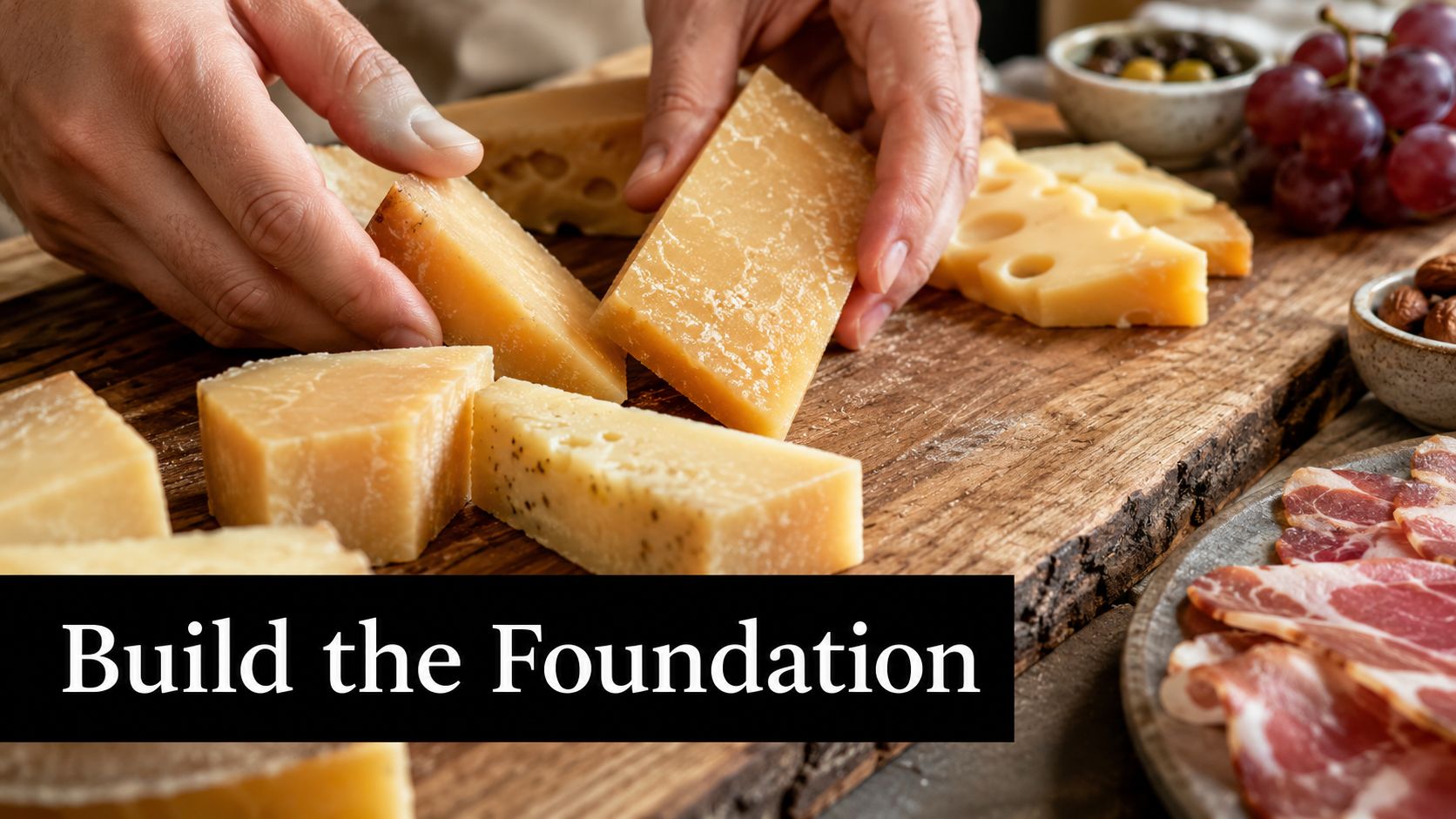
Start with the hardest cheeses, because they do the visual heavy lifting. They act as anchors, they hold clean edges, and they give the board structure before anything softer goes in. Once those are placed, add the creamy cheeses and spreads, then fill the negative space with fruit, nuts, olives, preserves, and bread.
The order that keeps the board tidy
First place the boards or trays, then the main cheeses, then the supporting elements. Use bowls and small ramekins for olives, honey, chutney, or mustard so the liquids don't spread into the cheese area. That keeps the surface clean and lets you add height without clutter.
Colour matters more than people think. Pale cheeses need contrast from dark grapes, figs, berries, or dried fruit, while a few herbs or leafy garnishes can break up the visual weight. Odd numbers usually look more natural than pairs or perfect symmetry, but don't force that rule if the serving flow needs clearer access.
The board should still have breathing space around each cheese. Guests need room to cut, scoop, and move without damaging the arrangement, and the display looks more premium when nothing is jammed edge to edge. The wooden serving board guide from ABC Hire is useful here because the surface itself affects how polished the final layout feels, especially on rustic, vineyard-style tables.
A well-styled board should look abundant, but never crowded. The moment guests can't tell where one item ends and the next begins, the composition has gone too far.
Heat, Timing and Food Safety on Long Event Days
A cheese platter board can look perfect at set-down and still fall apart by mid-service if the temperature is wrong. Cape Town summer heat is hard on soft cheeses, cut fruit, and anything with a glossy finish, and the board starts to look tired long before guests are finished. On long winery lunches and outdoor corporate functions, the display has to survive the afternoon as well as the first reveal.
The fix is to treat timing as part of styling. Put the board out closer to guest arrival, not during early venue setup, and build a plan for refreshes if service will run for hours. Use shade wherever you can, because direct sun on a vineyard lawn or terrace will push the board downhill fast. Chilled staging bowls under selected items can keep the display steady without changing the look, and the Wayfair cheeseboard guide still gives a solid baseline for room-temperature presentation, even if it does not deal with long hot-service days in a practical way.
What holds up best
Hard cheeses handle service better than soft cheeses. They keep their shape, slice cleanly, and stay presentable for longer, which matters when the board is meant to sit in front of guests rather than disappear into the kitchen after five minutes. Soft cheeses need quicker replenishment and tighter checks because once they warm, they lose their edges and the board starts to look messy.
Cold storage behind the scenes matters just as much. The display can be styled perfectly, but if the back-up stock is sitting warm, the next refill only resets the problem for a short while. That is why a mobile fridge for hire guide from ABC Hire fits this part of planning so well, because the board depends on what is stored off-site or off-board as much as what guests can see.
Food safety and presentation rise or fall together on long event days. If the back-up stock is warm, the next refill only repeats the same issue.
Cross-contact control matters too, especially when prep teams are handling dairy, fruit, crackers, and garnish in the same prep flow. The guide on prevent cutting board cross contamination is a useful reminder that clean surfaces, separate tools, and clear prep zones are part of keeping the board safe, not just tidy.
Transport, Setup and Hygiene on Site
The journey from prep kitchen to venue is where many boards lose quality. Pack the cold items last, keep the load order logical, and avoid stacking anything that can crush fruit, crack cheese edges, or smear garnish. A board that arrives intact usually got packed in the reverse order of how it's served, with the most delicate items protected and the board surface kept clean and dry.
On site, the board should go down on a stable base before anything is styled on top. Serving knives, spoons, tongs, and cheese markers need to be placed where staff can reach them without crossing over the food. Allergen labels help guests self-serve confidently, especially at corporate functions and formal weddings where mixed dietary needs are the norm.
The board itself also matters for hygiene. A procurement-grade specification that allows for surface roughness not exceeding 3.2 µm Ra, thickness variation within ±2 mm, and edge radii of 2 to 3 mm, with groove channels about 4 to 5 mm deep and 6 to 7 mm wide, is not just technical jargon, it reduces moisture ingress, warping, and sanitation problems between events, according to the professional cheese board procurement guide. In rental work, those finish tolerances directly affect whether a board cleans properly after repeated wash-and-dry cycles.
Leftovers need a plan before service begins. If the board is meant to be reset later, keep the reserve stock separated, chilled, and clearly marked so staff don't mix fresh product with display items that have already sat in the room. That habit protects both the presentation and the venue's reputation.
Wine Pairings That Work in the Winelands
A good cheese board in the Cape lands best when the wine feels intentional, not improvised. Strong blues usually want contrast, aged hard cheeses need structure, creamy soft cheeses prefer brightness, and semi-soft cheeses sit comfortably in the middle. That gives you a useful pairing logic for weddings, cellar tastings, and corporate launches where guests expect the board to reflect the wine list rather than compete with it.
For a straightforward Winelands pairing map, bold blue cheese works well with a tawny port or sweet dessert-style wine, aged hard cheese suits a structured red such as Cabernet Sauvignon or a Bordeaux-style blend, creamy soft cheeses pair naturally with Sauvignon Blanc or Cap Classique, and semi-soft or washed-rind cheeses can sit comfortably with Pinot Noir or a lighter Chardonnay. For hosts who want a wider flavour reference beyond wine, the whiskey food pairing guide shows the same basic principle at work, pairing intensity with structure instead of throwing random flavours together.
How to label pairings so guests use them
Keep the signage short. Guests don't need a tasting essay, they need confidence. A simple note such as “Best with Cap Classique” or “Try this with the red blend” is enough to guide self-service without slowing the line.
Waiting staff should know which cheese sits where and which pour matches it. That helps at formal receptions where guests ask the same question repeatedly, and it keeps the board from becoming a bottleneck. If the bar team knows the pairing story, they can steer guests naturally instead of improvising answers.
For the physical setup, matching the serving style to the room makes a difference. The wine glasses and crystal guide from ABC Hire is relevant because stemware, board height, and table placement should feel like one design choice, not separate rentals dropped into the room.
How ABC Hire helps the board work on site
The right rental pieces remove friction where it shows up. Cheese boards, crates, and display props help with height and layout. LED cubes and furniture suit evening functions where the board needs to read as a feature station. Tables and climate control equipment solve the service window and heat problem. Slush machines can support the beverage side of a summer activation, which keeps guests moving while the board remains accessible.
For smaller private dinners, a single well-built board with simple props is usually enough. For larger weddings and corporate activations, the board often needs support from tables, chilled staging, and a cleaner traffic flow around the station. That's where good rental choices matter, because they let the food stay elegant without asking the venue team to improvise on the day.
Quick checklist for the quote
- Board size and finish to suit the guest count and service style
- Chilled support for backup stock and long outdoor service
- Display props for height, visibility, and table styling
- Stemware and furniture to match the wine experience
- Climate control if the board has to survive a warm afternoon
If you're planning a wedding, tasting, matric dance, or corporate function in Cape Town, Stellenbosch, Franschhoek, or Paarl, build the rental quote around the board first, then add the pieces that keep it attractive and safe for the full event window. Visit ABC Hire to source the boards, props, furniture, and climate-control support that make a cheese platter board work properly on the day.