
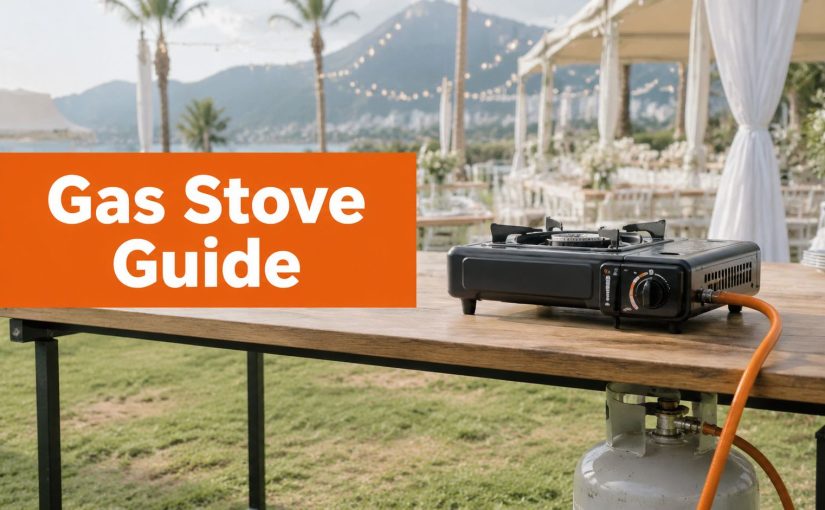
On a wedding morning in Stellenbosch, the electric line can look perfect right up until load-shedding hits mid-plating. The passes go cold, the garnish station stalls, and somebody from the venue starts asking what can still be cooked without power. That is usually the moment a small gas stove with cylinder stops being a backup item and becomes the only reason service stays on time.
A compact LPG setup works because it is self-contained. It runs from a detachable cylinder, not fixed gas infrastructure, so a team can place it where the work needs to happen, whether that's a prep table in a marquee kitchen, a catering nook in the Winelands, or a temporary station on the Cape Town side of a corporate activation. South African energy conditions and the practical need for portable cooking have pushed this format into normal event operations, not niche camping gear, and the Department of Mineral Resources and Energy has long treated LPG as a clean-burning cooking fuel in the country's broader energy transition (Hometech Vista reference).
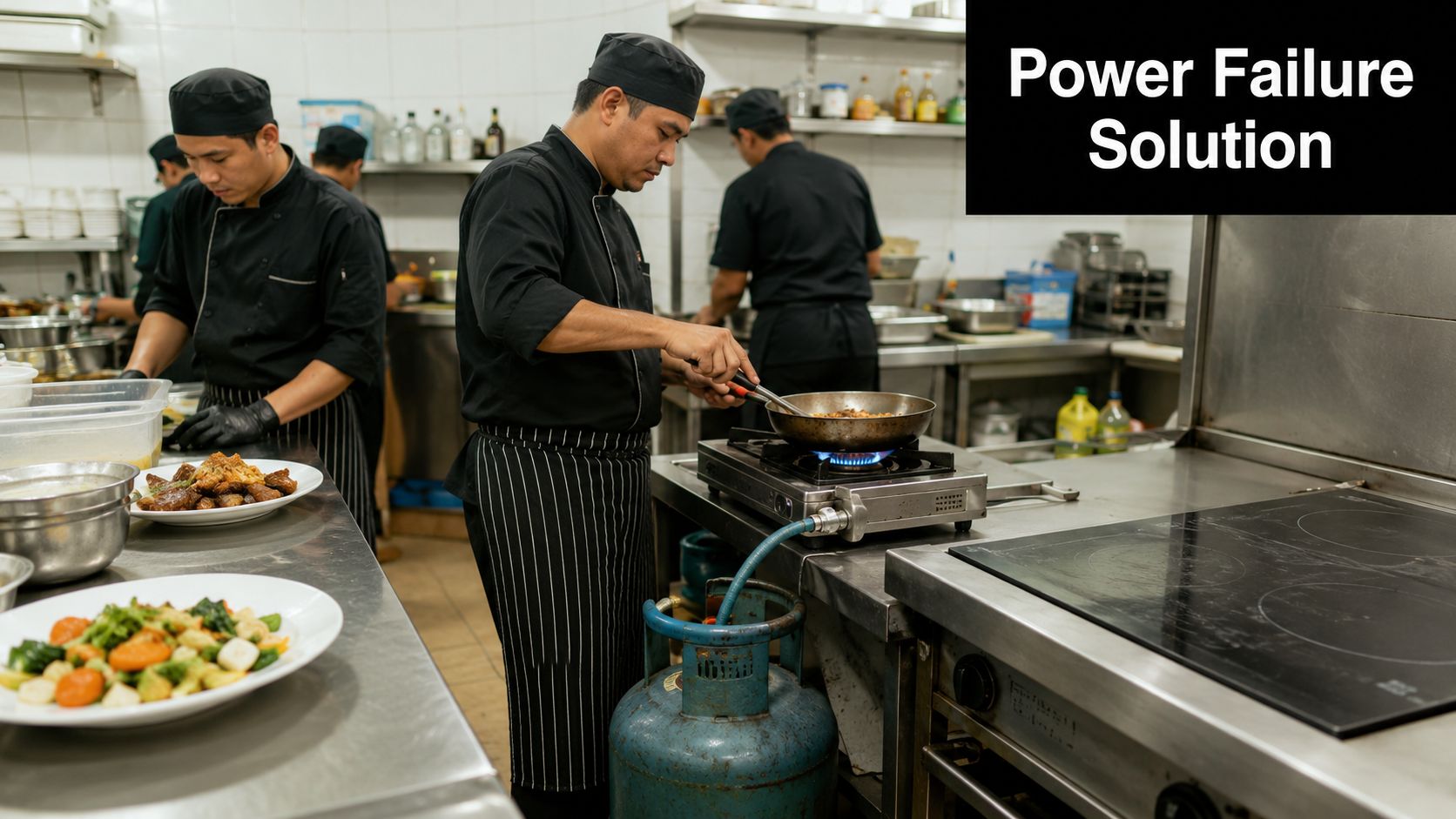
For event work, the appeal is simple. You get rapid deployment, portable heat, and a cooking point that doesn't care whether the venue's electrical circuit is stable. That matters for wedding planners, caterers, and venue coordinators who need to keep food moving even when the grid doesn't cooperate. It also explains why small cylinder-based stoves have become a standard support item for short-duration food service, mobile catering, and backup cooking in the Western Cape.
Why Small Gas Stoves Are Essential for South African Events
A function can be halfway through canapés, the ovens can cut out, and the kitchen team still keeps service moving because the backup line is already lit. That is the practical value of a small gas stove with cylinder, it keeps food service running when electricity fails, without waiting for a fixed installation or a technician to restore the line. In South African event work, that resilience is basic operational planning.
What the setup actually is
The format is straightforward. A small portable stove connects to a detachable LPG cylinder, usually through a regulator and hose assembly, so the appliance can run without fixed gas pipes. That makes it useful in temporary kitchens, catering tents, hotel back-of-house areas, and outdoor service points where a fixed line does not exist or cannot be relied on.
The important detail is that this is more than a burner sitting on a bottle. In South African practice, the cylinder, regulator, hose, and appliance all have to work as one system because that combination governs gas flow and safety compliance. Event teams should treat it as a complete setup, not just a stove. A useful practical reference for coordinating the cooking surface itself is ABC Hire's gas stove plates guide, especially when the worktop needs to match the burner layout.
Why it fits Cape Town and the Winelands
Western Cape events often happen in venues that look beautiful but were never built for heavy kitchen infrastructure. Old farm venues, tasting rooms, temporary marquees, and boutique function spaces can be awkward for fixed kitchens, especially when power dips or when the menu needs a dedicated hot station. A portable LPG stove solves the access problem quickly, which is why it shows up so often in mobile catering, load-shedding backup, and compact prep areas.
Practical rule: If the venue cannot guarantee uninterrupted power for the hot line, treat portable LPG as part of the event plan, not the emergency plan.
The broader South African picture explains the shift. As liquid fuel and electricity costs fluctuate, portable LPG equipment remains a practical fallback, and that matters in a market where households and businesses already rely on bottled gas for flexibility. For event planners, the lesson is clear. If the menu cannot stall, the heat source cannot depend on the grid.
Indoor use needs a second check. In enclosed Winelands venues, the issue extends beyond correct connections to whether the cooking area provides enough ventilation, because a busy catering line in a closed room can create avoidable risk even when the stove itself is operating properly.
Types of Small Gas Stoves and Cylinder Sizes Explained
The wrong stove choice slows service and creates avoidable mess on the line. A tiny single burner can hold a sauce or warm milk, but it will struggle if you expect it to carry a busy two-course service. A larger portable unit gives the chef more room to work, yet it takes more space, needs a steadier setup, and asks for better cookware placement over the flame.
Match the stove to the job
A single-burner compact stove is the easiest unit to move and set up. One cited compact model weighs about 0.75 kg, uses a 3/8" LH gas-cylinder connection, and is rated at 8,000 BTU with 186 g/h gas consumption (Companion single burner stove reference). In event work, that suits a coffee station, a warming point for milk, or light prep where portability matters more than output.
A tabletop connected unit sits on a surface and links to the cylinder through a hose and regulator. That is usually the better fit for mobile catering lines because it gives the chef a steadier working surface and keeps the cylinder off the cooking area. A two-burner portable stove makes sense when a small wedding kitchen needs two tasks running at once, such as heating sauce on one side and finishing a side dish on the other.
Cylinder size matters more than people think
In South Africa, 9 kg and 14 kg cylinders are common domestic refill sizes used in portable stove setups. The smaller bottle suits light-duty or mobile use, while the larger one works better for longer intermittent cooking runs or event prep that stretches through the day.
The choice comes down to how the line will run. If the stove is backup heat or a short service point, the 9 kg option is easier to move and store. If the crew is doing repeated hot holding, sauces, or breakfast service, the 14 kg cylinder gives more breathing room before a refill is needed.
| Small Gas Stove and Cylinder Options for Events | |||
|---|---|---|---|
| Stove Type | Cylinder Size | Estimated Burn Time | Best For |
| Single-burner compact stove | 9 kg | Not fixed, depends on load and flame use | Coffee stations, warming, light mobile prep |
| Tabletop portable stove | 9 kg or 14 kg | Not fixed, depends on load and flame use | Small catering lines, temporary kitchens |
| Two-burner portable stove | 14 kg | Not fixed, depends on load and flame use | Wedding kitchens, multi-item service |
A useful rule from the appliance side is to match burner size and pan size together. A compact burner under an oversized pan wastes flame contact and slows service, which is why cookware selection matters as much as cylinder choice. For planners comparing surface options, a breakdown of gas stove plate types helps with the layout side of the decision, especially when the prep table has to suit the burner pattern.
Indoor venues add another layer. In a closed Winelands room, the same small stove that works well on an open prep table can create heat and fumes if the layout leaves no room for airflow. On a busy event, that trade-off matters as much as burner count, because the stove has to suit the menu, the room, and the crew working around it. For venue compliance on enclosed catering setups, NFPA 96 code compliance is a useful benchmark to keep in view when the kitchen is temporary rather than fixed.
Safety Regulations and Ventilation Requirements
A gas stove that works well on a demo table can still be a poor fit for a closed venue if airflow is ignored. That is the part many planners miss. Correct connections matter, but the cooking area also needs enough ventilation and enough working space for staff to move safely without putting guests at avoidable risk.
Ventilation is not optional
Indoor gas cooking raises the stakes around air quality. Research shows that gas cooking can push indoor nitrogen dioxide above outdoor standards within minutes when ventilation is poor, with greater concern for children, pregnant people, and those with respiratory conditions (PMC article). In a Cape Town function room or a closed Winelands venue, a small stove cannot go wherever there is a gap in the floor plan.
The practical answer is direct. Use the stove only where air can move properly, and do not treat a closed prep nook like a normal kitchen. If the venue layout holds heat or fumes in place, move the station, improve extraction, or choose a different setup.
Practical insight: The prettiest service area is often the worst place for a gas stove if it has no airflow.
Regulators, hoses, and pressure matching
Safety also depends on pressure compatibility. For compact LPG cylinder-stove setups, cylinder design pressure is typically around 3.0 to 3.2 MPa, with working pressure around 2.1 to 2.2 MPa and test pressure around 3.0 to 3.2 MPa, so the regulator and hose assembly must match low-pressure appliance specifications rather than direct high-pressure cylinder output (Daly Cylinder reference). A burner rated around 28 to 30/37 mbar and drawing about 280 g/h at 3.8 kW gives a useful sense of how the appliance and cylinder need to be balanced, but only if the regulator suits the stove itself.
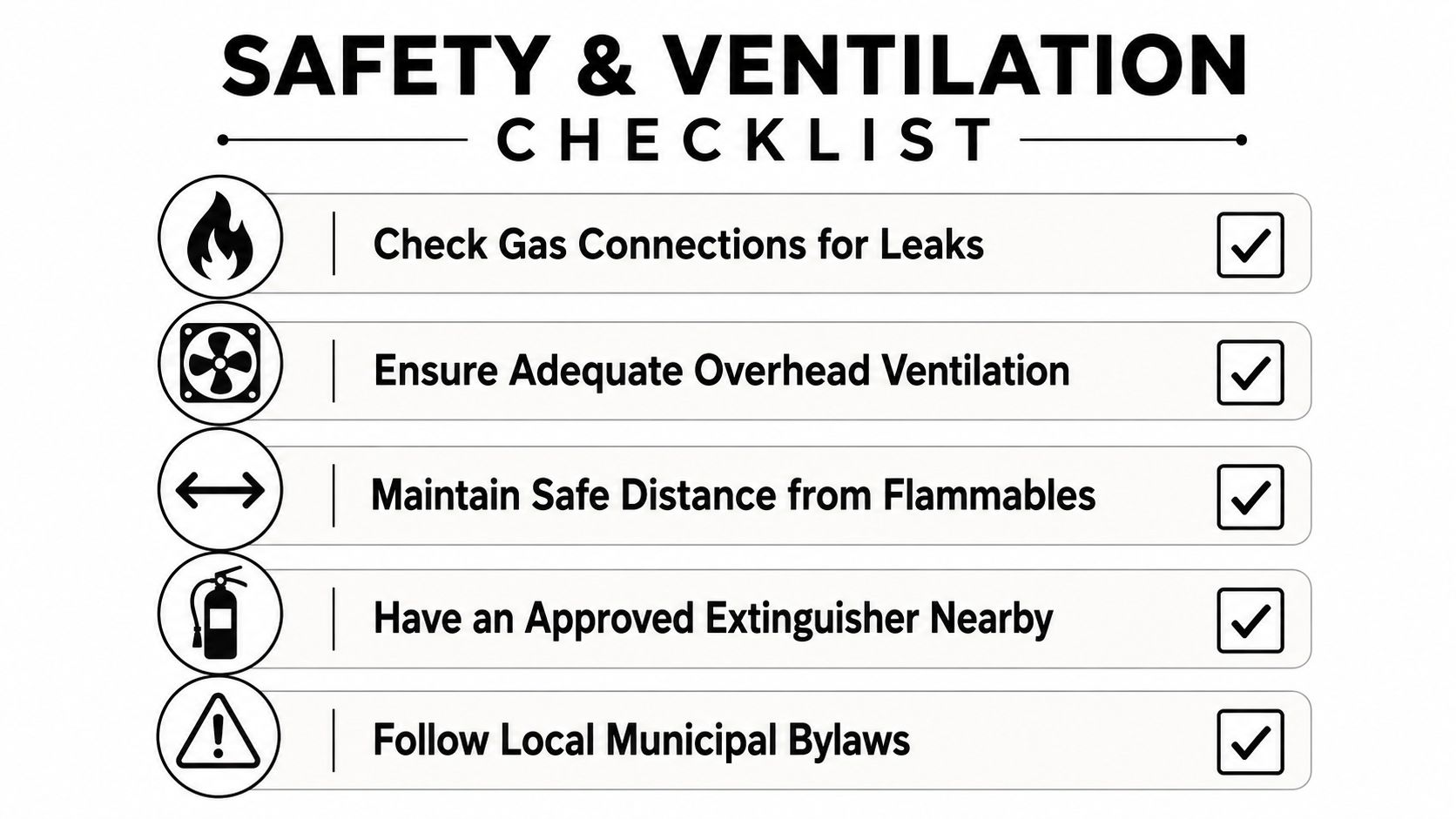
For venue work, the rule stays simple:
- Use approved equipment: Cylinder, regulator, hose, and stove all need to be compliant and undamaged.
- Keep it ventilated: If the air is stale, the setup is wrong.
- Avoid improvised fittings: A poor connection is not a shortcut, it is a failure point.
- Know the venue rules: Municipal bylaws and venue requirements can limit where cylinders are stored or used.
For enclosed catering setups, NFPA 96 code compliance is a useful benchmark for extraction, clearance, and safe airflow around cooking equipment. For planners comparing broader hire options, the ABC Hire catering equipment hire overview is a practical reference point for the rest of the kit around the stove.
Renting Versus Buying for Event Planners
A wedding planner handling one or two functions a month does not need the same gas strategy as a catering company that works every week. The choice is operational, not emotional. The wrong setup ties up cash, storage space, and transport capacity that should be going into plates, staffing, or décor.
When renting makes more sense
Renting works best when the stove only comes out for specific events. If the unit is used a few times a year, ownership costs go beyond the purchase price, because storage, maintenance, regulator checks, hose replacement, and the pressure of finding the unit ready the night before load-shedding all sit on your side of the ledger.
Rental also helps when the job changes from event to event. A compact breakfast station one week and a larger mobile prep line the next week call for different equipment, and a rental supplier can scale the kit without forcing you to own everything. For planners who already rent tables, chairs, or climate control, a stove can fit into the same procurement pattern. A practical reference point for broader catering kit is the ABC Hire catering equipment hire overview.
When buying starts to make sense
Buying starts to make more sense when the stove is part of the working inventory every week. A corporate activations team or a caterer moving across multiple venues may prefer to own the unit so it is always available for a last-minute job. Ownership also helps when a crew has standardised on one regulator type, one hose length, and one burner size.
The hidden costs still matter. A cylinder refill is only part of the running cost. Regulator replacements, hose wear, transport, and storage all sit on the ownership side of the ledger. If the team does not have a dry, secure place to keep gas gear, renting can be the cleaner operational choice, especially when a job needs to move quickly between venues.
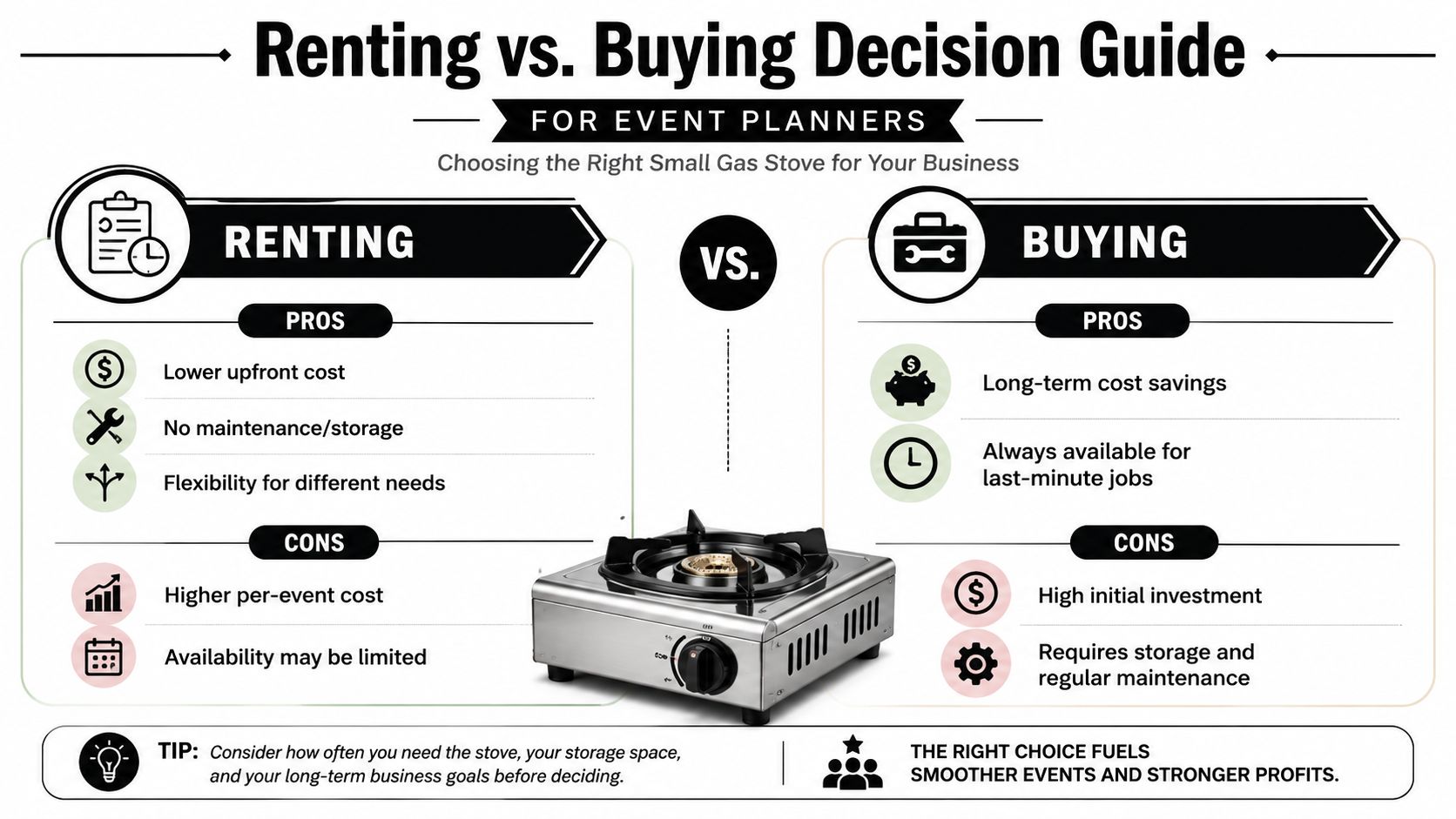
The practical takeaway is blunt. Rent if the stove is occasional and the menu changes. Buy if the stove is part of repeat service and your crew can store and maintain it properly. One point many planners miss is the cylinder supply chain itself. World Bank material on bottled gas makes clear that adoption depends on affordability and logistics, not only on the appliance (World Bank reference).
Setup Checklist and Maintenance Tips for Event Day
A clean setup saves time, cuts risk, and keeps the line moving. On a busy wedding day in Cape Town or the Winelands, the teams that finish service smoothly are the ones that check the kit before the first pan heats up, not the ones that discover a loose hose after guests are already seated.
Use the same sequence every time
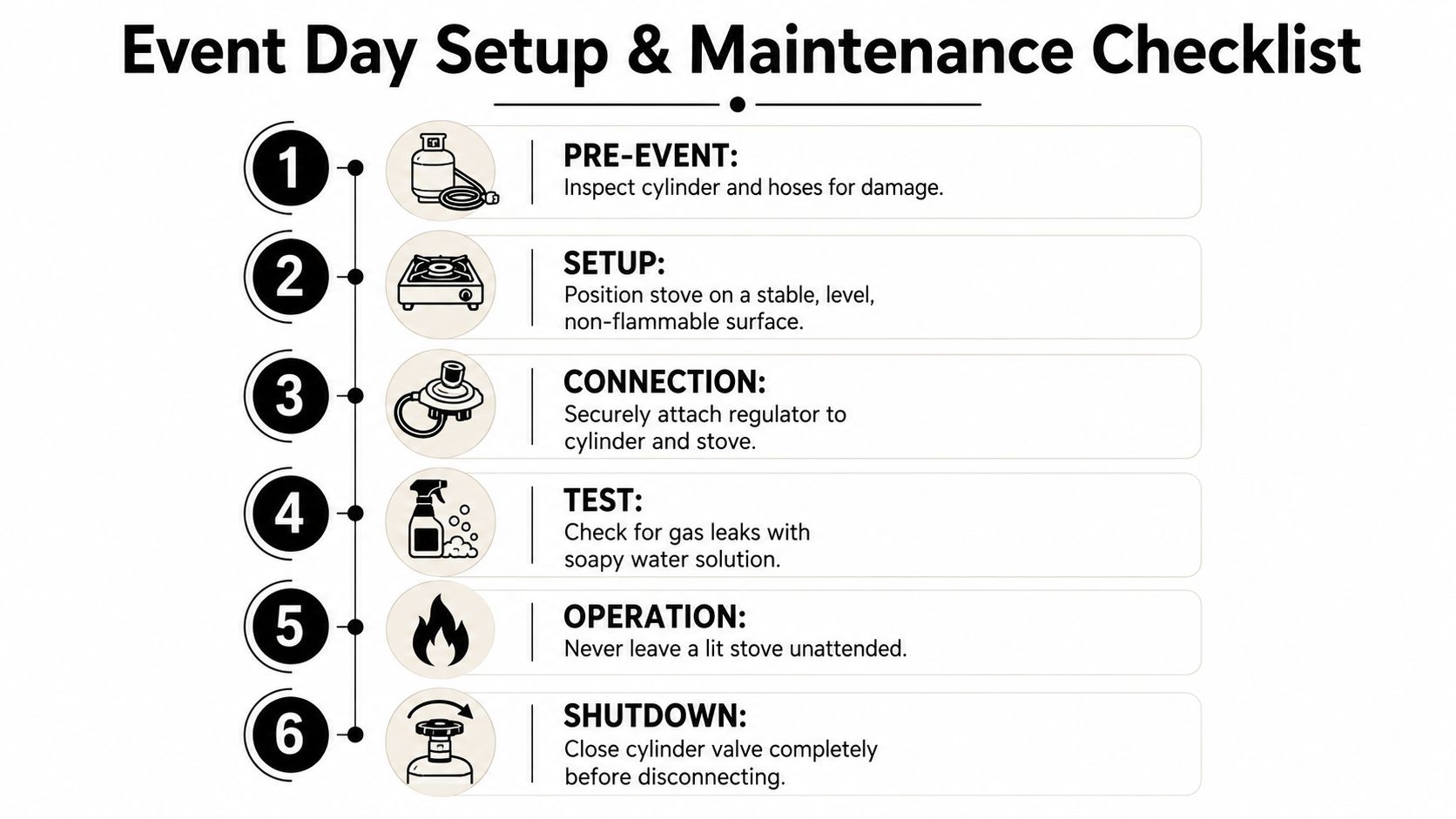
Start with the cylinder. Confirm that it is full enough for the service, standing upright, and placed where servers, cables, or luggage trolleys will not knock it over. Then inspect the regulator and hose for cracks, kinks, wear, or loose fittings. If either part looks tired, replace it before service starts, not while the kitchen is under pressure.
Next, place the stove on a stable, level, non-flammable surface. Secure the regulator to the cylinder and the appliance to the regulator according to the manufacturer's instructions, then test the connections with soapy water. If bubbles appear, shut the unit down and correct the seal before anyone lights it.
After that, check the cooking arrangement itself. A burner that is too small for the pan wastes heat and slows service, while a burner that is too large for delicate warming can scorch food. A busy catering line needs the flame, the pan, and the task to match.
In enclosed venues, especially older Winelands rooms with limited airflow, the setup also needs space around the stove. Keep it out of corners, away from curtains, and clear of stacked trays so heat and fumes do not build up where staff are working.
Keep the unit working properly
Good maintenance comes down to routine. Wipe spills off the body and burner area after use, clean burner heads so ports do not clog, and inspect the hose regularly so cracks do not turn into a service interruption. If a regulator behaves oddly, if the flame looks unstable, or if the stove struggles to hold output, take it out of service.
Keep the stove clean enough that a leak test tells you something useful.
A simple event-day routine keeps the pressure down and makes handovers easier for the crew:
- Pre-event inspection: Check cylinder, regulator, hose, and burner condition before load-in.
- Positioning: Keep the stove away from guest traffic, fabric, paper, and other flammables.
- Connection: Tighten fittings properly and test for leaks with soapy water.
- Operation: Never leave a lit stove unattended during service.
- Shutdown: Close the cylinder valve fully before disconnecting or moving the unit.
For planners who like a structured prep list, the event planning checklist template is a useful companion when the stove has to fit into a wider service plan.
Frequently Asked Questions About Small Gas Stoves for Events
A Cape Town venue can use a small gas stove with cylinder indoors, but only where the room has proper ventilation and the venue allows it. In enclosed prep rooms, especially in Winelands venues with limited airflow, the issue is indoor air quality and how the heat source sits in relation to staff, food, and exits.
A 9 kg cylinder does not give the same runtime in every service. Burner output, cookware size, and how hard the stove is pushed all change the result, so a compact burner rated at 186 g/h only gives you a rough guide to consumption at appliance level, as noted earlier.
Event planners also need to treat temporary catering setups as controlled work, not a casual plug-in and cook arrangement. Approved equipment, proper installation, and clear sign-off on cylinders, hoses, and regulators should all be in place before service starts, because the venue, supplier, and installer each have a role to play.
If a cylinder runs out during service, the response has to be immediate and orderly. Move to a spare cylinder that has already been checked and staged, then relight only after confirming the regulator and hose are still secure. If there is no backup cylinder on site, the menu needs to shift straight to cold service, holding, or another option that does not depend on flame.
ABC Hire serves Cape Town, Stellenbosch, Franschhoek, and Paarl, so planners who need a rental option can keep the logistics local rather than chasing kit from far away. For short-term event use, renting often makes more sense than buying when storage, maintenance, and transport all need to stay simple, especially for busy event teams that do not want extra gear sitting in a storeroom between bookings.