
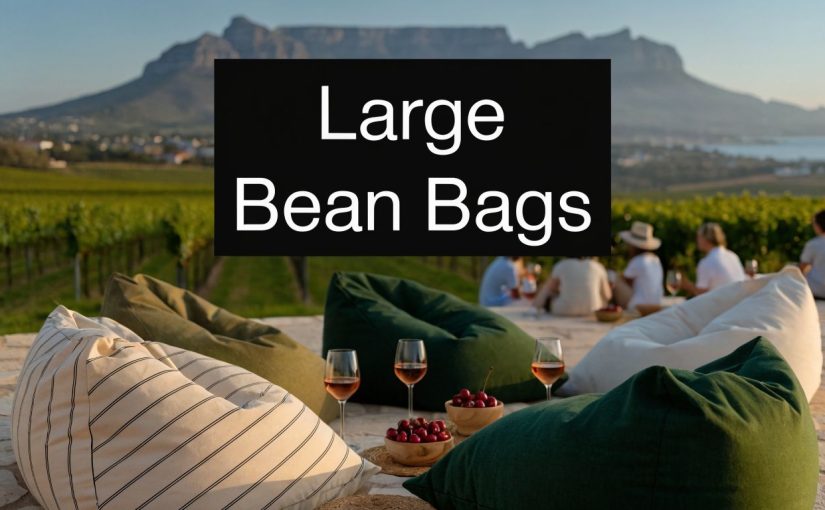
You've booked the venue, sorted the bar, and finalised the guest list. Then you look at the floor plan and realise the room still feels too formal. Standard seating does the job, but it doesn't create the kind of atmosphere people remember.
That's where large bean bags earn their place. In Cape Town and the Winelands, they work best when you use them with purpose. They can soften a corporate networking zone, turn a lawn into a sundowner lounge, or give a matric dance a social area that feels current instead of stiff. The difference is rarely the bean bags alone. It's the sizing, the fabric, the layout, and the hire logistics behind them.
Planners often make the same mistake. They choose oversized soft seating for the look, then only later ask whether it can handle weather, guest traffic, cleaning, and delivery access. Event-grade bean bags need to do all of those things well. If they don't, they stop being a design feature and start becoming a problem.
Creating Memorable Spaces with Large Bean Bags
Large bean bags change how guests use a space. People don't perch on them for two minutes and move on. They settle in, lean toward each other, and stay longer. That's why they work so well for wedding lounges, rooftop functions, brand activations, and private celebrations that need a relaxed but polished feel.
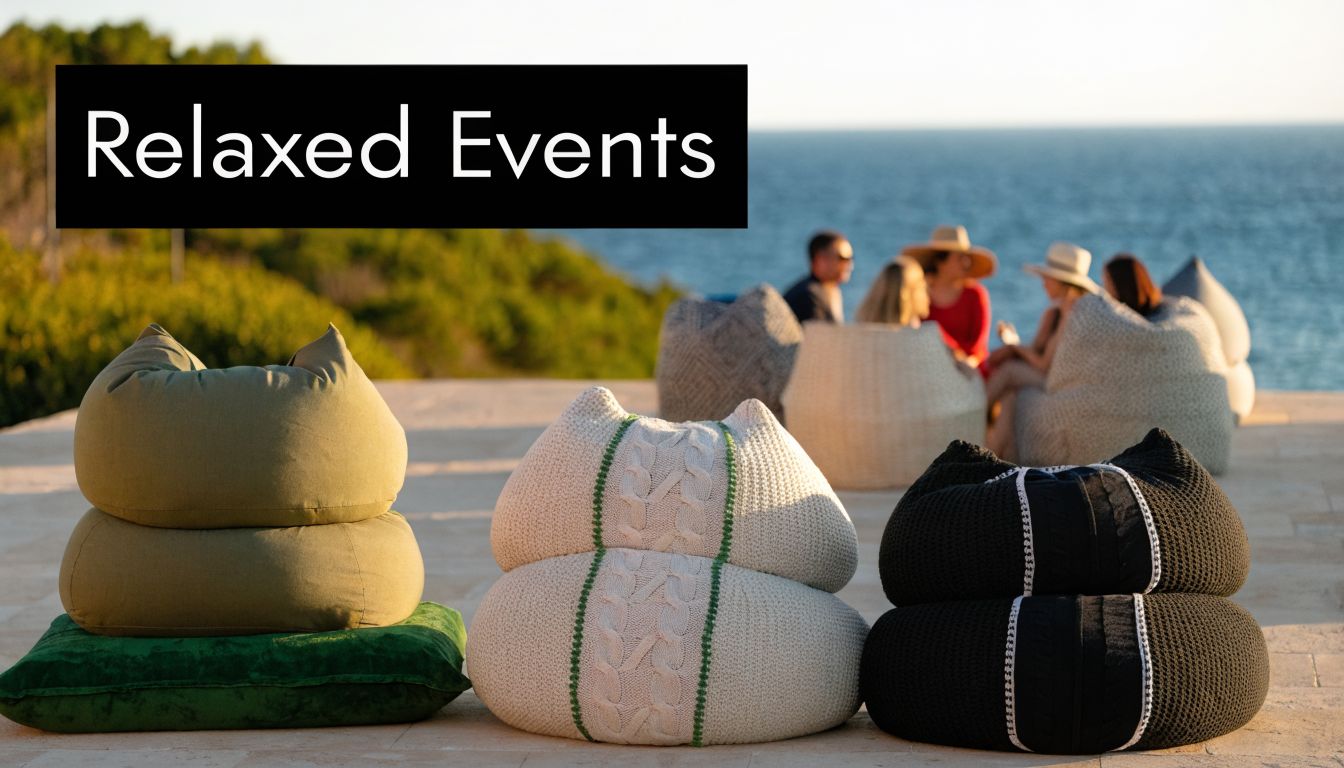
The strongest setups use them to define a zone, not to fill leftover corners. A cluster near a bar creates a social spill-out area. A semi-circle on a lawn gives guests a place to land during cocktail hour. At a conference, a softer seating pocket can break the stiffness of rows of chairs and banquet furniture.
Where they work best
Large bean bags are especially effective when the event needs a mood shift:
- Wedding sundowner areas: Guests can move out of the formal reception flow and relax between key moments.
- Corporate breakout zones: Teams talk more naturally in informal seating than they do around a boardroom-style setup.
- Private parties: A lounge cluster makes the room feel hosted, not just furnished.
- School formals and matric dances: They give students a place to regroup, chat, and take photos without crowding the dance floor edges.
Practical rule: Use large bean bags where you want people to pause, not where you need fast turnover.
Why the atmosphere changes
Traditional event seating tells guests to sit upright and stay put. Large bean bags do the opposite. They signal comfort, flexibility, and a more modern event style. That matters in Cape Town settings where indoor and outdoor areas often blend together, and where the view, sunset, or vineyard setting is part of the experience.
They also photograph well. That sounds secondary, but it isn't. A well-styled bean bag lounge creates a distinct scene within the event, and guests notice those visual moments immediately.
Choosing the Right Large Bean Bag for Hire
The right hire choice starts with how the seating will be used on site. A bean bag for a Constantia wedding lawn, a Stellenbosch wine estate launch, and a city conference breakout zone should not all be the same spec. For rentals, I look at three things first. Fill, fabric, and how quickly the unit can be reset between guests.
Start with the fill
Fill affects posture, turnaround, and the overall look of the lounge once guests have been using it for an hour or two.
High-density EPS bead fill is usually the safer rental option for busy events. It keeps a cleaner shape, is easier for crew to plump back into position, and suits spaces where guests sit down and get up regularly. Size guidance from Big Bertha Original's bean bag size guide is useful here because it shows how larger formats suit adult use better than undersized home models.
Shredded foam gives a softer, deeper sit. That works well for premium lounges, longer dwell times, and events where comfort matters more than quick turnover. The trade-off is practical. Foam-filled units are heavier to move and can look a bit too relaxed if the event calls for a sharper, more structured setup.
Compare the two main fill types
| Fill type | Best use | What works well | Trade-off |
|---|---|---|---|
| High-density EPS beads | High-traffic events, mixed-age gatherings, faster guest rotation | Holds shape better, easier to reset, neater visual line | Firmer feel |
| Shredded foam | Extended lounging, premium chill zones, longer seated conversations | Softer sit, more cushioned feel | Heavier handling and a looser profile |
Fabric is part of the logistics
In Cape Town and the Winelands, outdoor use can mean dry heat in the afternoon, wind at sunset, and damp grass by evening. Fabric has to handle all three.
For event hire, ask about:
- Water-resistant covers: Better for lawns, pool decks, and coastal venues
- Wipe-clean finishes: Better after red wine spills, canapés, dust, and makeup transfer
- Reinforced seams: Better for repeated handling during load-in, setup, and strike
- Removable covers: Better for cleaning between hires and keeping stock presentable
A good-looking cover in a catalogue is not enough. If it marks easily, absorbs moisture, or stretches out after one event, it will look tired long before the evening ends.
What separates rental-grade from decorative stock
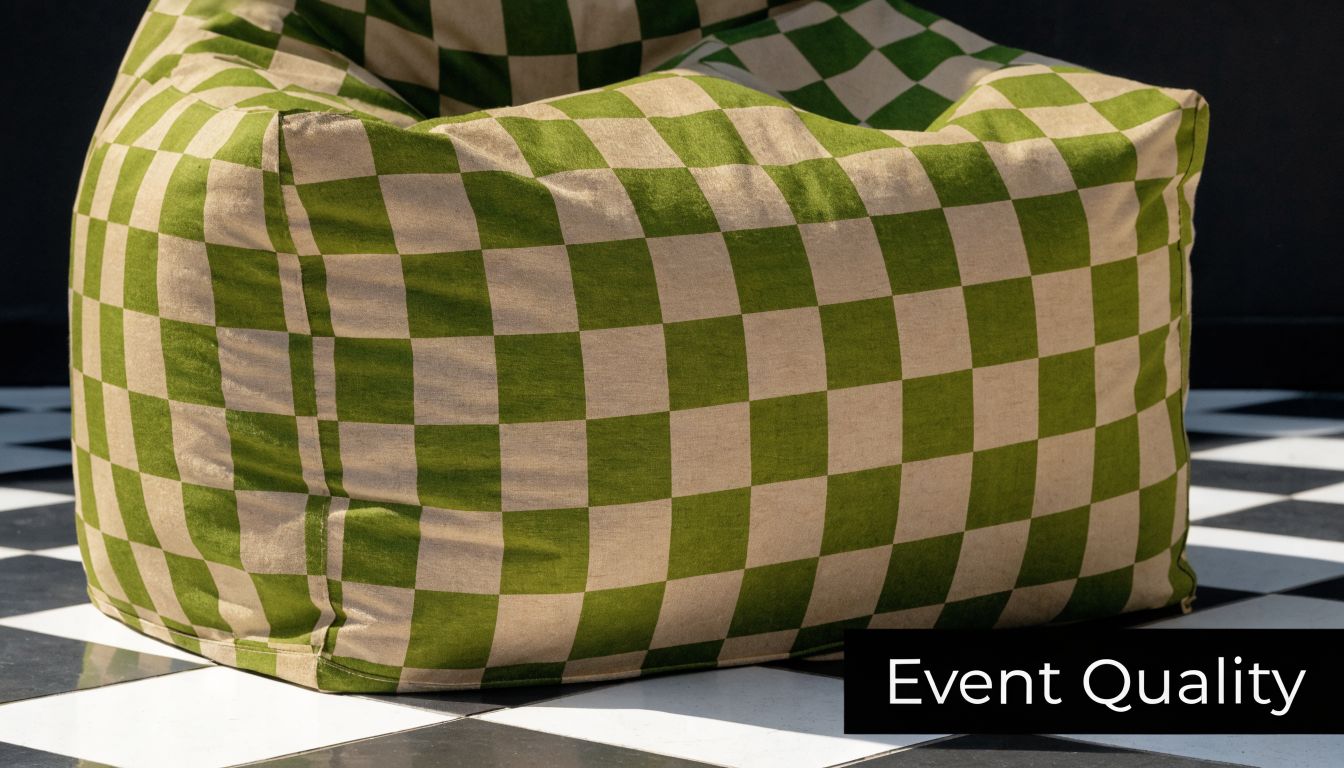
Construction tells you whether the bean bag is built for events or built for a spare room. Strong paneling helps it keep its shape. Decent stitching matters when units are dragged across decking, moved from ceremony lawn to cocktail area, or shared by more than one guest.
This is also where local supplier experience matters. Teams that regularly build exhibition lounges and branded visitor areas already understand guest flow, reset time, and presentation standards. The same thinking used by Exhibition company Australia applies here. Informal seating still needs structure behind it.
Before you confirm a hire, ask direct questions:
- What fill is inside?
- Is the fabric suitable for indoor and outdoor use?
- How many adults can sit comfortably without the unit collapsing flat?
- Will the bag still present well after several hours of use?
- Can the supplier replace covers or swap units quickly if weather or damage becomes an issue?
Those answers usually matter more than colour alone. For planners working with a local team such as ABC Hire, that practical detail is often the difference between a lounge that photographs well at setup and one that still looks good once the event is in full swing.
The Pros and Cons for Your Event
Large bean bags can improve guest experience quickly, but they're not a universal answer. They work best when you understand what they do better than conventional seating, and where they need support from the rest of the layout.
Where they outperform standard seating
Comfort is the obvious advantage, but the type of comfort matters. High-end rentals often use shredded polyurethane foam, which has a 15-20% lower interface pressure than standard beads. That helps prevent hot-spot fatigue during long wedding lounges or extended activations, as described on the Ultimate Sack product page.
That comfort changes behaviour. Guests don't just sit. They gather. They stay in conversation longer. They use the lounge area as a destination instead of a waiting spot.
They're also flexible from a styling point of view. You can build a relaxed cluster, an informal audience area, or a branded chill zone without committing to a rigid furniture plan. Exhibition and event teams often use that same thinking when designing visitor flow, and firms such as Exhibition company Australia show how informal seating can support interaction rather than serving only to fill floor space.
The trade-offs planners need to manage
The biggest drawback is footprint. Large bean bags need room around them. If you cram them into an already tight floor plan, the event feels cluttered. Guests also need enough circulation space to get in and out comfortably, especially when drinks, handbags, or décor are involved.
Their low seating height can also be a limitation. Some guests love it. Others avoid it completely. That doesn't make large bean bags a poor choice. It means they should sit within a mixed seating plan that includes chairs, benches, or stools.
Here's the practical comparison:
- They win on atmosphere: Great for relaxed, current, social spaces.
- They lose on density: You won't seat as many people per square metre as you would with chairs.
- They win on versatility: Easy to style into breakout areas, lounges, and photo moments.
- They lose on universal accessibility: Not every guest will want low, sink-in seating.
Use them as a layer in the room, not as the entire seating strategy.
Best fit events
They tend to shine in events with natural pauses and social drift. Weddings, private milestone parties, after-parties, launches, and student functions all benefit from seating that feels less formal. For seated dinners, conferences with note-taking, or older guest-heavy functions, they work better as an add-on zone than as a main seat.
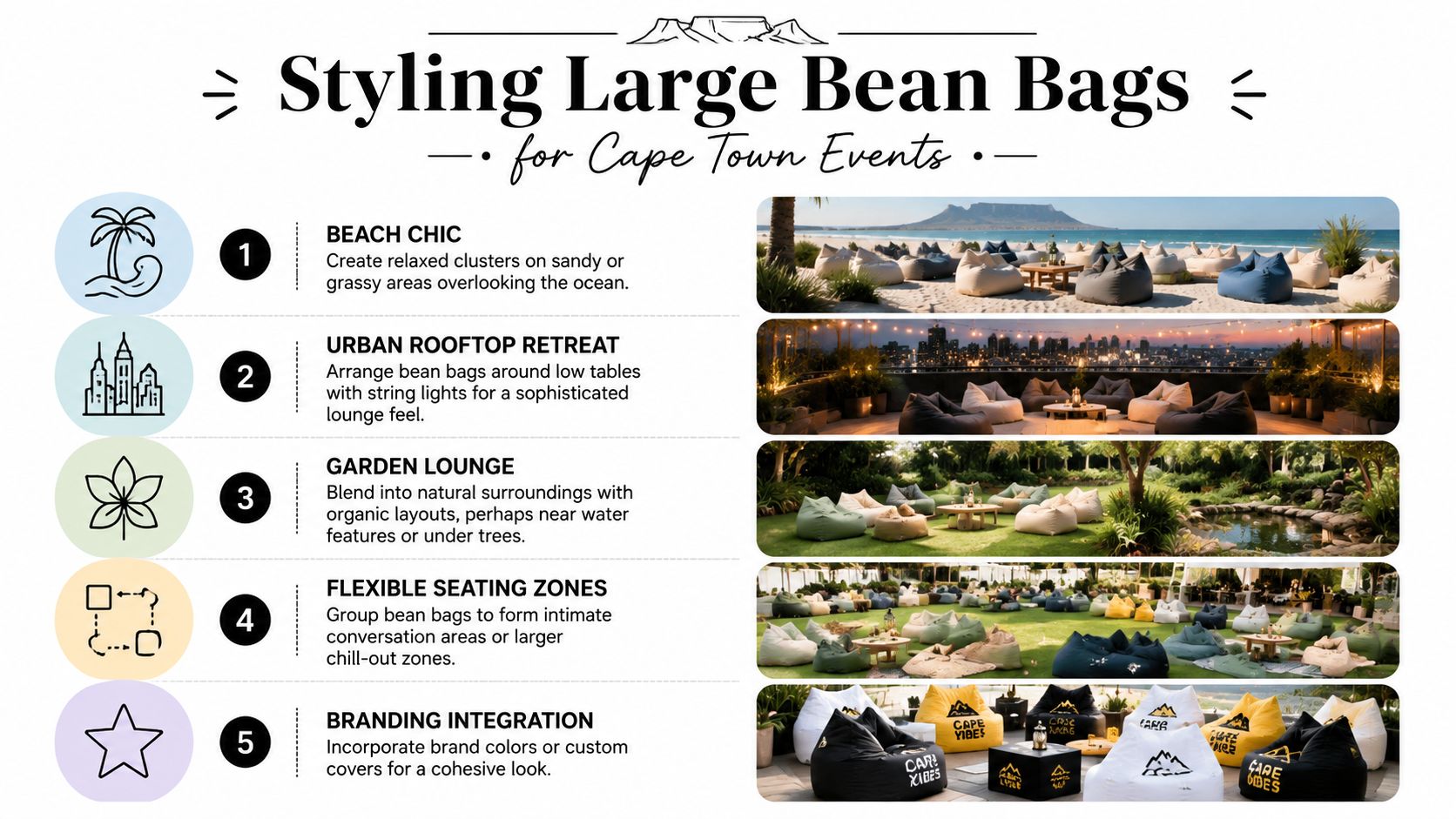
Styling and Layout Ideas for Cape Town Events
The most successful large bean bag setups don't look randomly dropped into a venue. They look anchored. The seating relates to the view, the lighting, the guest journey, and the event tone.
Winelands wedding lounge
On a vineyard lawn, large bean bags work best in a curved or semi-circular arrangement rather than straight rows. The shape feels softer and gives everyone a shared focal point, whether that's the view, a fire feature, or the sunset.
Keep the palette restrained. Neutrals, muted tones, or whites usually sit better against natural scenery than bright colour blocking. Add low side tables so guests have somewhere to place glasses, and leave enough space behind the lounge for service staff and photographers to move cleanly.
A good wedding lounge does three jobs at once:
- It catches guests after the ceremony
- It creates a second social area away from the dance floor
- It gives the event a strong visual layer without overdecorating
Corporate networking and activation zones
In city venues and conference environments, brighter large bean bags can work well if they tie into a brand palette. Instead of one big pile of soft seating, create smaller pods. Groups of three to five units often feel more intentional and make conversation easier.
For activation spaces, use bean bags to lower the formality of the interaction. Guests are more likely to pause, watch a demo, or chat with staff if the seating doesn't feel stiff. If you're designing a broader contemporary lounge concept, this guide to modern lounge furniture ideas is useful for pairing bean bags with complementary pieces rather than treating them as stand-alone décor.
The best event lounges always have a reason to exist. They give guests comfort, but they also shape movement and encourage people to stay in the space longer.
Private parties and home events
At home celebrations, the mistake is usually scale. Hosts order large bean bags, then place them against walls as if they were spare chairs. That wastes their visual impact. Pull them inward. Build a social island around a low table, a drinks station, or a central rug.
A few styling combinations work especially well:
| Event setting | Layout approach | Styling note |
|---|---|---|
| Rooftop party | Loose cluster around low tables | Add warm lighting for a lounge feel |
| Garden birthday | Organic arrangement under trees or near water features | Use tones that blend with greenery |
| Beach-facing terrace | Smaller conversational groups | Leave sightlines open to the view |
If the event runs from afternoon into evening, think about how the bean bags will look after sunset. Soft lighting nearby makes a bigger difference than extra décor.
A Practical Guide to Renting Large Bean Bags
Buying can look tempting when you first compare options online. Then the practical questions start. Where will you store them after the event? Who cleans them? How do you transport bulky soft seating without crushing it into a hatchback? For most one-off functions, hiring makes more sense.
For a typical one-off event in Cape Town, renting a large bean bag offers 85-93% cost savings compared to buying. Rental prices start at around R350 per weekend, while similar quality models can cost R2,500-R5,000 to purchase, according to this reference on bean bag buying costs.
Why renting works better than purchasing
The financial case is clear, but logistics matter just as much.
When you hire, you avoid:
- Storage problems: Large bean bags take up real space between events.
- Cleaning admin: Soft seating always needs attention after guest use.
- Transport headaches: Bulk matters more than weight with these items.
- Maintenance guesswork: Refluffing, cover care, and condition checks are part of professional turnaround.
If you're planning a local function and want a sense of what's available for event use, this overview of Cape Town bean bag hire options gives a useful starting point.
Questions to settle before requesting a quote
Don't ask only for price. Ask for the practical details that affect the day.
How many lounge seats do you need?
Think about how many guests will use the chill area at one time, not total attendance.Where is the setup point?
A city venue with lift access is different from a farm venue with gravel paths or long carrying distances.How long is the hire period?
Weekend weddings, overnight functions, and multi-day activations may need different handling.Who places the furniture on-site?
Placement matters with bean bags because they can make a room feel either curated or chaotic.
Hiring isn't just about receiving the product. It's about reducing the number of moving parts you need to manage on event day.
What good rental logistics look like
Strong hire service should include clean stock, reliable delivery timing, sensible placement, and post-event collection without you having to chase. This matters even more at venues in Stellenbosch, Paarl, or Franschhoek, where timing windows and access can be tighter than expected.
A smooth rental process protects the overall event. You're not left fluffing seating, finding storage corners, or figuring out stain removal while guests are arriving.
Safety and Care for Outdoor Winelands Events
Outdoor soft seating looks effortless when it's done well. It only stays that way if you plan for weather, ground conditions, and guest use from the start.
The Cape Town and Winelands area faces 28% higher UV exposure and 15% more sudden rains than other regions, which can degrade standard bean bags in under six months outdoors. For outdoor events, it's important to hire UV50+-rated, waterproof XL bean bags, which have shown a near-zero failure rate in local field tests, as noted in this article about outdoor bean bag design considerations.
Placement rules that prevent problems
Start with the ground. Large bean bags should sit on level, stable surfaces whenever possible. On lawns, avoid low spots where evening moisture collects. On gravel, use a stable underlayer if the setup needs to look polished and stay comfortable.
Keep them clear of:
- Open flames and fire pits
- Catering spill zones
- Walkways with heavy foot traffic
- Areas exposed to direct wind funnels
If the event runs into the evening, pairing your lounge with suitable heating helps guests keep using the area after sunset. For planners comparing options, this guide to a gas patio heater for events is useful when building an outdoor comfort plan.
Cleanliness during the event
Even water-resistant covers need quick attention when something spills. Blot first, then wipe. Don't rub liquids deeper into the fabric. For wine, sauces, or oily food, event staff should deal with marks immediately instead of leaving them until breakdown.
For broader care principles, the advice in this piece on cleaning delicate home upholstery is a useful reminder that soft surfaces last longer when stains and residue are treated properly rather than aggressively scrubbed.
Outdoor bean bag care is less about deep cleaning on-site and more about fast response, sensible placement, and using the right covers in the first place.
Wind, dew, and late-night reality
Cape Town weather changes quickly. A lounge that looks perfect at 16:00 can be damp, windswept, or half-empty by 20:00 if you haven't planned for comfort. Keep bean bag zones close enough to shelter, heating, or indoor fallback areas that guests can shift naturally if conditions change.
That's the difference between an outdoor lounge that gets admired and one that gets used.
Your Cape Town Event Planner Checklist
A week before an event is usually when bean bag decisions stop being about style and start being about execution. The lounge might look sorted on the mood board, but on site the actual questions are simpler. Will the units fit through the access route, sit properly on the surface, and still make sense if the South Easter picks up or the evening runs colder than expected?
In Cape Town and the Winelands, that final check matters more than planners sometimes expect. A setup that works perfectly at an indoor launch in the CBD may need a different quantity, fabric, and layout for a lawn wedding in Franschhoek or a cellar function in Stellenbosch. Hiring locally helps because the supplier already understands those venue conditions, delivery windows, and setup limitations.
Before you book
Run through these points before you confirm the order:
- Match the bean bags to the event type: A wedding sundowner lounge needs a softer, more polished look than a branded activation or student event.
- Check the venue surface: Grass, decking, paving, gravel, and indoor flooring all affect stability, comfort, and how clean the setup stays.
- Confirm outdoor suitability: Ask what cover fabric is being supplied and whether it is appropriate for sun, dust, and light moisture.
- Plan for mixed seating: Bean bags work best as part of the seating mix, not as the only answer for every guest.
- Review access carefully: Gates, stairs, lifts, loading zones, and carrying distance affect labour time and setup speed.
Before the event day
This is the point where good planning saves time on site.
| Checkpoint | Why it matters |
|---|---|
| Final quantity confirmed | Keeps the lounge full enough to feel intentional without crowding the venue |
| Layout marked on floor plan | Gives the crew a clear install plan and reduces repositioning |
| Colour selection approved | Prevents last-minute styling clashes with linens, branding, or florals |
| Placement away from service routes | Reduces congestion near bars, wait stations, and high-traffic walkways |
| Wet-weather fallback agreed | Gives the team a fast backup plan if conditions shift |
Final quality checks
Before sign-off, ask the hire company direct questions about intended use, cleaning standard, and whether the units are supplied for single-seat lounging or shared casual seating. For event work, clear answers matter. Vague answers usually point to stock that was not selected with commercial use in mind.
I also check how the supplier talks about setup. An experienced Cape Town team will usually ask about the venue, the surface, the guest profile, and the time of day. That tells you they are planning for real use, not just dropping furniture and leaving.
Good bean bag hire feels easy on the day because the practical problems were solved before the truck arrived.
The planner's quick yes or no test
Say yes if the bean bags suit the crowd, the venue has space for a proper lounge zone, access is workable, and the weather plan is clear.
Say no if they are being added as filler, if guests need more formal seating, or if nobody has thought through placement, delivery, and backup options.
For stylish, event-ready seating across Cape Town, Stellenbosch, Franschhoek, and Paarl, ABC Hire can help you create lounge spaces that feel relaxed, polished, and practical on the day. If you're planning a wedding, corporate event, matric dance, or private party, their range of hire furniture makes it easier to build a guest-friendly setup without the hassle of buying, storing, and maintaining bulky pieces yourself.