
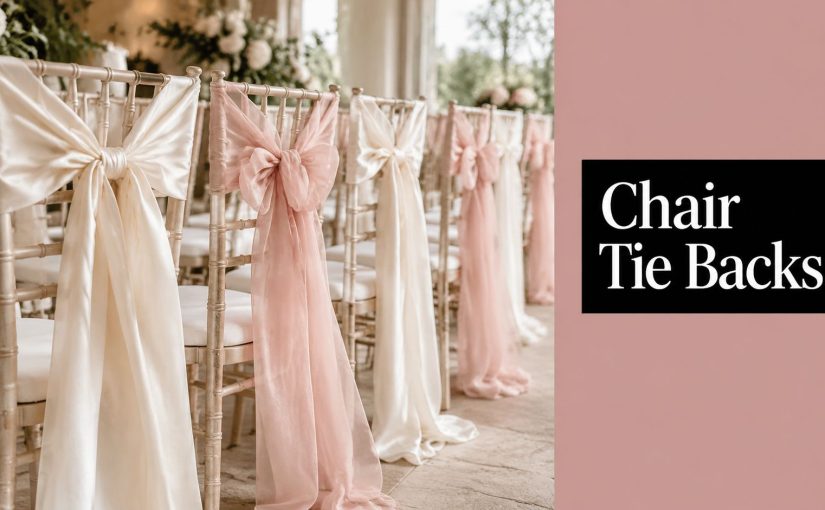
You arrive at a Cape Town venue before the guests, and the room looks almost right. The linen is pressed, the florals are in place, and the lighting is warm. Then you notice the chairs. Some sit at different angles, a few have visible marks, and the room lacks the repeated detail that makes a wedding, matric dance or corporate dinner feel deliberately styled.
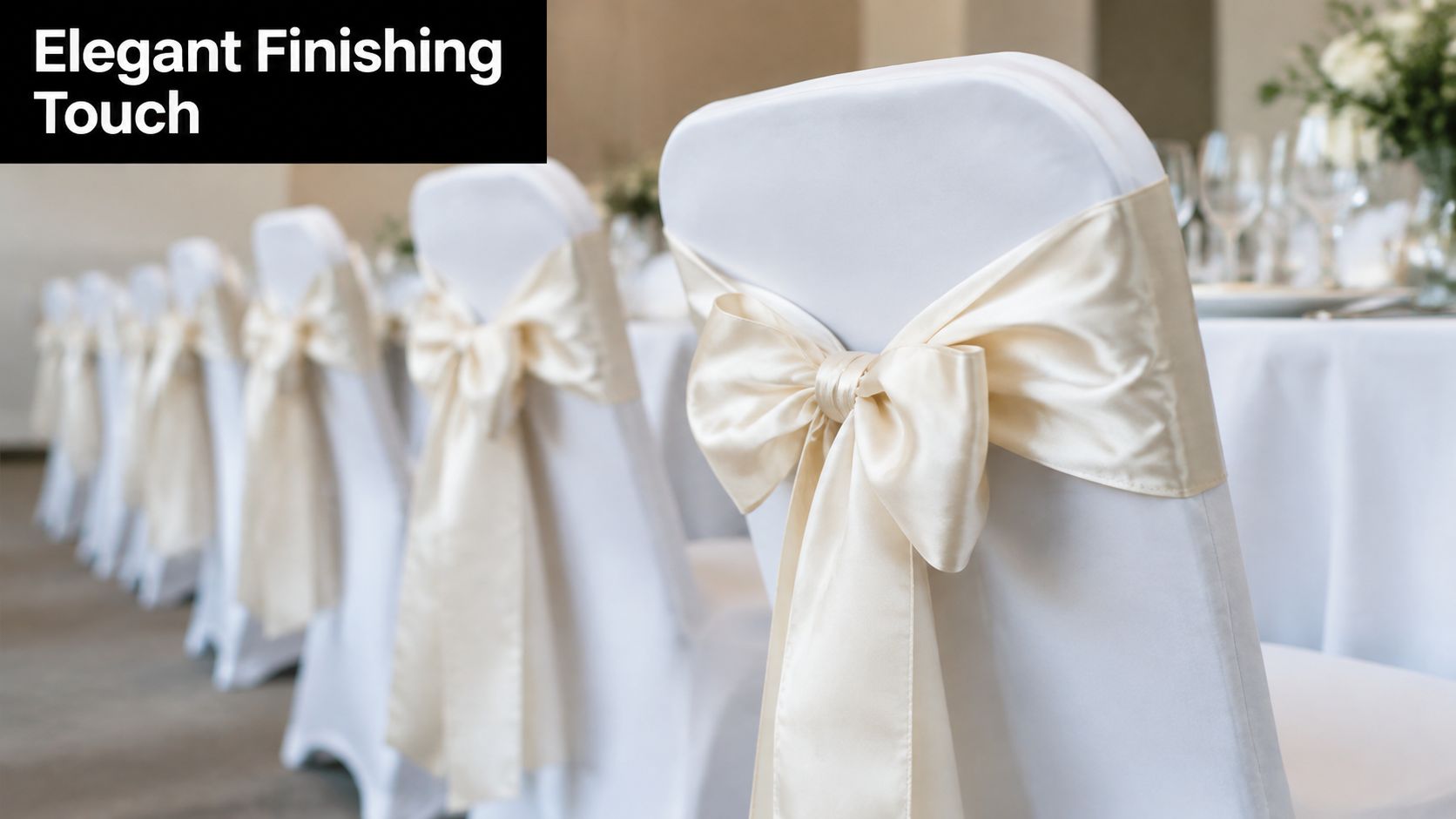
That's where chair tie backs earn their place. A well-chosen sash can turn ordinary venue seating into part of the design without covering every chair from top to bottom. It can echo the table linen, pick up a colour from the flowers, soften a hard chair profile and give photographs a consistent rhythm.
Why Chair Tie Backs Still Matter for Modern Events
A chair tie back works because it repeats a visual decision across the room. One ribbon on one chair may look decorative, but a row of matching backs creates structure around the tables. In photographs, that repeated line helps the seating read as part of the tablescape rather than as borrowed furniture placed around it.
A typical venue walk-in makes the difference obvious. White chairs might be perfectly serviceable, yet they can look disconnected from natural linen, seasonal flowers or a carefully selected lighting scheme. Add a fabric strip in a restrained colour, and the room gains a visual thread that links guest seating to the rest of the styling.
A small detail with a local language
In South Africa, “sash” has a meaning that reaches well beyond furniture decor. Six women founded the Women's Defence of the Constitution League on 19 May 1955, and the movement became known for the black sash worn in protest against constitutional change, as documented by the Black Sash history archive. The organisation's history included silent vigils, symbolic mourning and the visible use of the sash as a public protest marker.
That gives the word a distinctly local resonance. In Cape Town and the Winelands, suppliers may use “sash”, “tie back”, “chair ribbon” or “chair dressing” for related styling pieces, but the terminology carries a traceable public history in the South African context.
Why tie backs can beat full covers
Full chair covers can conceal an unattractive frame, but they also introduce more fabric, more fitting work and a stronger visual statement. Tie backs leave the chair visible, which often suits venues with attractive timber, rattan or upholstered seating. They're especially useful when the furniture is part of a modern mixed-texture layout.
Good chair tie backs help with:
- Room cohesion: They connect seating to linen, florals, stationery and lighting.
- Photographic consistency: Repeated bows, knots or sweeps create a clean background behind guests.
- Furniture flexibility: They can work alongside lounge pieces instead of forcing every seat into one formal treatment.
- Practical styling: A single centred detail may be enough when the venue chairs are already clean and presentable.
For guest-flow planning, pair the styling decision with a reliable seating plan for weddings. The tie back should enhance the seating arrangement, not obstruct access, aisle movement or the way guests pull chairs out from the table.
Choosing the Right Material and Style for Your Chairs
Material choice should begin with the chair, not the colour swatch. A glossy satin strip may look polished on a straight banquet chair but feel too formal on a woven rattan seat. A rough hessian tie can suit a vineyard setting, yet it may fight with plush upholstery or a sleek corporate palette.
Compare the fabric before you order
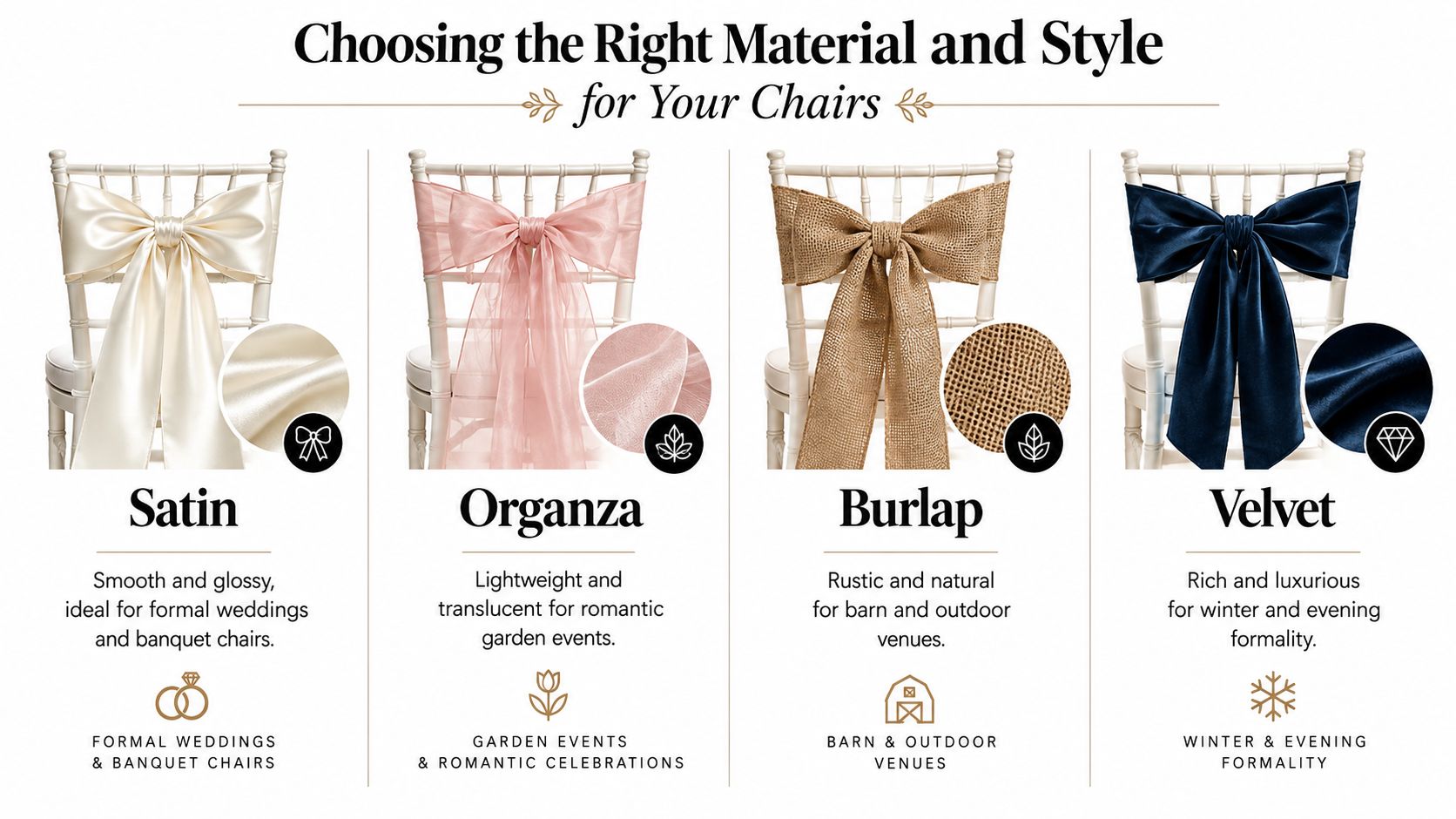
Satin catches light and gives formal chairs a crisp, reflective finish. It's a natural fit for banquet halls, evening receptions and polished corporate dinners, but it can show creases and may slide on very smooth chair backs if the tension isn't even.
Organza is lighter and more translucent. It creates an airy effect for garden weddings and soft romantic palettes, although its sheerness can make a single layer look insubstantial against a dark chair.
Hessian and other textured natural fabrics bring warmth to outdoor celebrations, farm venues and relaxed Winelands styling. Their stiffness can help a knot hold, but the texture should be tested against guests' clothing and the chair's surface.
Velvet gives depth and absorbs light rather than reflecting it. It suits rich evening schemes and cooler-season formality, though its weight can pull a loose tie out of position.
The following guide keeps the decision practical:
| Material | Best For | Look and Handling |
|---|---|---|
| Satin | Formal weddings and banquet chairs | Smooth, glossy and neat, but needs careful pressing and firm positioning |
| Organza | Garden ceremonies and romantic receptions | Sheer and lightweight, with a soft drape that may need layering |
| Hessian | Rustic, vineyard and outdoor events | Textured and natural, with a dependable knot but a more casual finish |
| Velvet | Evening celebrations and formal winter styling | Rich and tactile, with weight that requires a secure tie |
Match the tie to the chair profile
Upholstered or fabric-backed chairs usually give a sash something to grip. A tie can sit flat across the back without needing a full slipcover, which is one reason this treatment is practical on suitable venue chairs, as discussed in this chair sash tying guide.
Tiffany and Wimbledon-style chairs often look better with a restrained strip rather than an oversized bow. Cross-back chairs already have strong geometry, so place the fabric where it supports the cross rather than hiding the structure. On rattan, test the tie against the weave. A narrow ribbon may disappear into the texture, while a broader strip can give the back a clear colour block.
For a more detailed look at trim, proportion and decorative applications, this resource on selecting designer ribbon for interiors is useful beyond event work as well. Before committing, make one complete sample chair and photograph it from the guest's seated height, the table edge and the room entrance.
If the furniture needs broader visual coverage, compare the tie-back idea with white chair covers. A tie back is a styling accent. It won't hide a damaged frame, mismatched chair colour or upholstery that the event design needs to conceal.
How to Tie Chair Tie Backs Neatly and Securely
A neat chair tie back depends less on an elaborate knot than on preparation and repetition. The first chair sets the standard for every chair after it, so take the time to establish the position before the team moves into production mode.
Prepare one reference chair
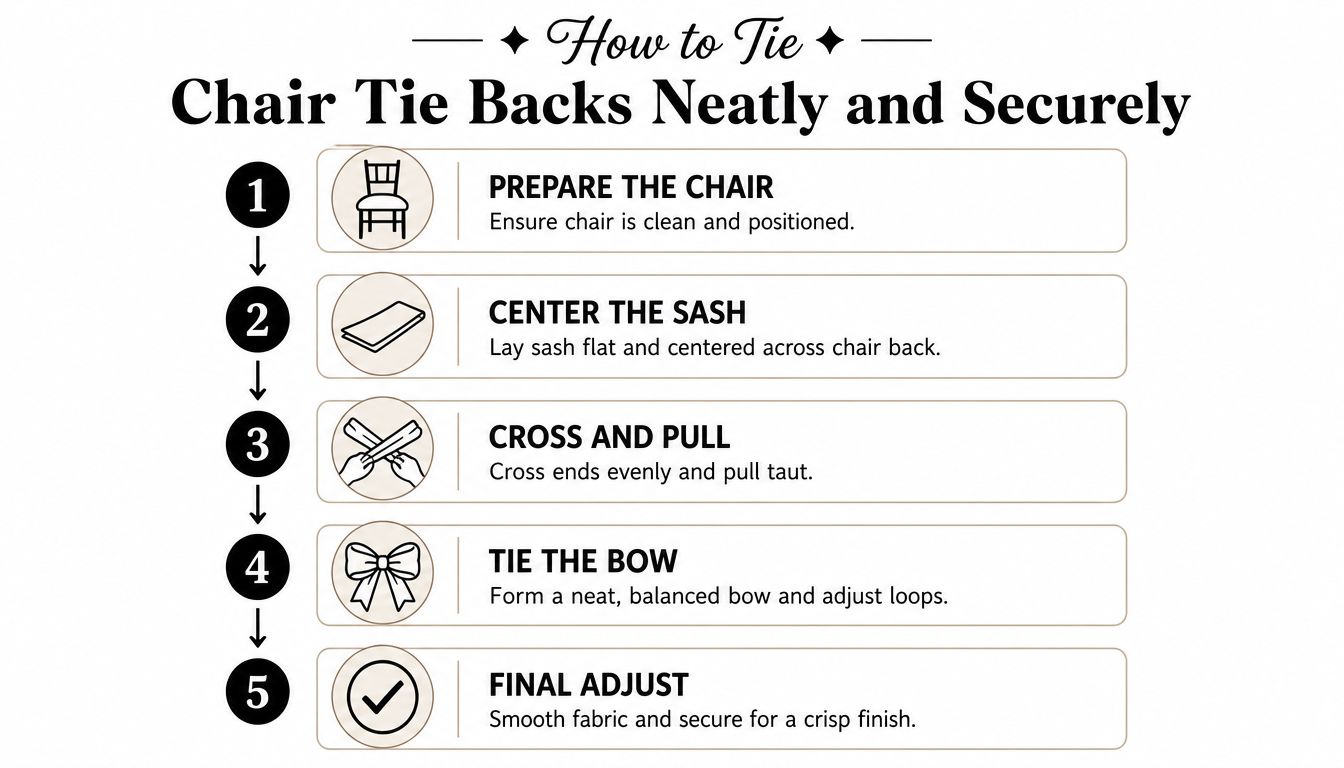
Clear the chair back first. Remove packaging, dust, loose threads and anything that could sit beneath the fabric and distort the line. Position the chair exactly as it will sit during the event, because a sash can look centred when the chair is angled and uneven once the whole row is aligned.
Lay the sash flat across the chosen height. On a straight-backed chair, the centre is usually easy to judge. On a curved or barrel-shaped back, follow the widest stable part of the profile rather than forcing the fabric around a narrowing point.
Cross the ends evenly behind the chair. Pull until the fabric is secure, but don't tighten it so far that it compresses upholstery or creates an uncomfortable edge. Unsecured decorative pins can cause discomfort or safety problems, so use a method appropriate to the chair and venue rules.
Use a repeatable tying method
Classic bow: Cross the ends, form two balanced loops and pull them to the same size. This is the most recognisable formal treatment, but it exposes uneven work quickly, so use the reference chair as a visual target.
Simple knot with tails: Make a clean knot and leave short, even tails. This suits hessian, velvet or textured ribbon where a large bow would look heavy.
Side sweep: Anchor the crossing point slightly off-centre and let one controlled fold or tail sweep to the side. It works best when the room has a relaxed, editorial feel, but keep the direction consistent across the row.
Finish the room, not just the knot
Once the first chair is approved, assign one person to demonstrate the method and have the rest of the team copy the same height, tension and tail length. Marking a simple reference point with removable tape can help staff place each tie back consistently, provided the venue approves the method and no adhesive touches finished furniture.
Keep tails above the floor so they don't catch shoes, collect dirt or interfere with guests moving their chairs. Walk along the completed row from the entrance and check the backs as a group, rather than inspecting only one chair at a time.
Practical rule: Secure the fabric first, then create the shape. A beautiful bow that slips during guest movement is unfinished styling.
For a different perspective on tying and tension, The Fabric Company's guide to tying quilts offers useful handwork principles, although event chair dressing needs a quicker and more uniform finish. The important lesson is control. Smooth the fabric, balance the ends and make the final adjustment from the side guests will see.
Coordinating Tie Backs With Your Theme and Venue
Tie backs look premium when they belong to the room's wider material story. They look added on when the colour is chosen in isolation, the finish ignores the chair, or every available accent gets placed on the same small area.
Echo colour instead of copying it
A vineyard wedding may use soft stone linen, dried grasses and pale florals. The chair tie back doesn't need to match the linen exactly. A muted clay, dusty rose or natural flax tone can echo the flowers or stationery while allowing the tablecloth to remain the dominant surface.
Corporate styling benefits from the same restraint. If the brand colour is strong, use it as a controlled accent on selected seating or pair it with a quieter neutral. A full row of intense colour may overwhelm the room, especially when the venue already has branded signage, lighting or stage elements.
For a matric dance, the styling can be more expressive, but the chair still needs to remain comfortable and safe. Metallic ribbon, velvet or a dramatic colour can work when the room has enough visual space around it. Avoid adding bulky ornaments that knock against guests or catch on clothing.
Adapt the treatment to mixed furniture
Modern Cape Town and Winelands layouts often combine dining chairs with curved lounge seating, rattan pieces and residential-style groupings. Traditional tie backs don't need to disappear, but they do need to become more selective.
Use them on the dining chairs when those seats form the formal perimeter of the room. Leave lounge pieces unadorned if their upholstery or shape already provides the visual interest. On rattan chairs, choose a fabric with enough body to remain visible against the weave. On curved backs, place the tie at a stable point and use a smaller knot or side sweep rather than forcing a symmetrical bow across an uneven profile.
Stylist's judgement: Uniformity should follow the furniture family, not the entire furniture inventory.
A mixed plan can still feel coherent through a shared colour, repeated texture or matching floral detail. Before finalising the chair treatment, review the linen and tablecloth options alongside the chair fabric. The relationship between the two matters more than either item viewed alone.
Keep movement in mind
The best-looking chair detail still has to survive service, dancing, speeches and guests pulling seats away from tables. Keep the back profile visible where it adds character, avoid floor-length tails and don't place a tie where it presses against a curved edge. A venue walk-through with one dressed sample chair will reveal more than a colour board can.
Hiring Chair Tie Backs Versus Buying and Styling Yourself
The cheapest fabric isn't always the cheapest event solution. Buying ribbon may look economical, but the task includes measuring, cutting, pressing, transporting, styling, correcting uneven ties and dealing with leftover material after the event.
A South African wedding decor guide places chair sashes at R20 to R60 each as a seating decor line item, according to local wedding decor cost guidance. At a 100-guest reception, that benchmark works out to roughly R2,000 to R6,000 for chair sashes, before labour, setup and other decor items are added.
Compare the treatment, not just the unit price
Full covers have a different purpose. They hide chair colour and condition, but they require more fabric and a closer fit. The same South African guidance compares full chair-cover styling at about R15 to R35 per chair with a single ribbon, fabric strip or greenery tie-back at about R3 to R8 per chair, a stated 73% to 80% unit-cost reduction for the simpler treatment. For 100 chairs, the cited comparison is roughly R300 to R800 for the minimal tie-back approach versus R1,500 to R3,500 for covers.
Those figures are benchmarks, not a quote for every venue. Fabric quality, pressing, delivery, installation, collection and the complexity of the chosen style can change the final hire price.
Choose based on labour and furniture condition
DIY makes sense when the chair backs are uniform, the event team has time to prepare the fabric and the styling is deliberately simple. It becomes a false economy when the chairs vary, the fabric needs extensive pressing or the venue requires installation and removal within a tight access window.
Hiring through a rental partner such as ABC Hire can combine chair-related furniture hire with event accessories, allowing the organiser to brief one team about the room layout and finish. For a broader comparison of cover logistics, see the guidance on hiring chair covers.
Plan quantities with the room in mind
Confirm the final chair count after the floor plan is approved. Ask whether the venue supplies spare chairs, whether lounge seating is included in the styling count and who will dress any replacements. Prepare a few additional tie backs where the supplier's terms allow it, particularly when last-minute seating changes are possible.
For Stellenbosch, Franschhoek, Paarl and greater Cape Town, confirm delivery access, setup responsibility and collection timing in writing. A clear brief should include the chair photograph, tie height, material, colour, knot style and the person responsible for the final room check.
Final Checks and Pro Tips for a Flawless Finish
A chair tie-back installation succeeds in the final inspection, not when the first bow looks attractive. Give the room a deliberate walk-through from the entrance, the head table, the dance floor and the photographer's likely positions.
Use this pre-event check:
- Count the seating: Match dressed chairs to the approved floor plan, including any changes made by the venue team.
- Test one complete chair: Photograph the sample in the actual room light before dressing the full layout.
- Check the height: Look across the backs in a row. Uneven placement is more visible than a small colour variation.
- Test the fabric: Pull the chair out and sit briefly if permitted. The tie should stay secure without creating a hard or uncomfortable pressure point.
- Lift the tails: Nothing should drag, catch shoes or brush against the floor.
- Inspect the knots: Loose bows need tightening, while over-tightened ties need to be relaxed and repositioned.
- Assign final ownership: One person should make the last alignment pass instead of leaving corrections to whoever notices them.
Curved and rattan chairs deserve extra attention because their profiles can make a centred tie appear crooked. Judge the result from the guest's viewpoint, not only from directly behind the chair. If a chair has a damaged back or an inconsistent colour, don't expect a small sash to solve a problem that calls for a cover or a furniture change.
Keep the reference chair available during setup. It gives the team a fixed standard for loop size, tail length, height and tension, which is far more reliable than verbal instructions passed from one person to another.
Final check: If the detail looks balanced from across the room and remains secure when the chair moves, it's doing its job.
For chair tie backs, chair covers and coordinated event furniture in Cape Town, Stellenbosch, Franschhoek and Paarl, speak with ABC Hire about the pieces that suit your venue and floor plan. Visit ABC Hire to discuss your chair styling requirements and arrange the practical hire details before event day.