

When you’re catering an event, the moment of truth isn’t just when the food is first cooked to perfection. It’s hours later, when the last guest is served. How do you make sure that final plate is just as hot, delicious, and safe as the first? That’s where catering food warmers come in.
These aren’t just hot boxes; they are the unsung heroes of the catering world. They act as the vital bridge between your kitchen and the guest’s plate, preserving the flavour, texture, and overall integrity of your carefully prepared dishes.
Keeping Your Culinary Creations Perfect
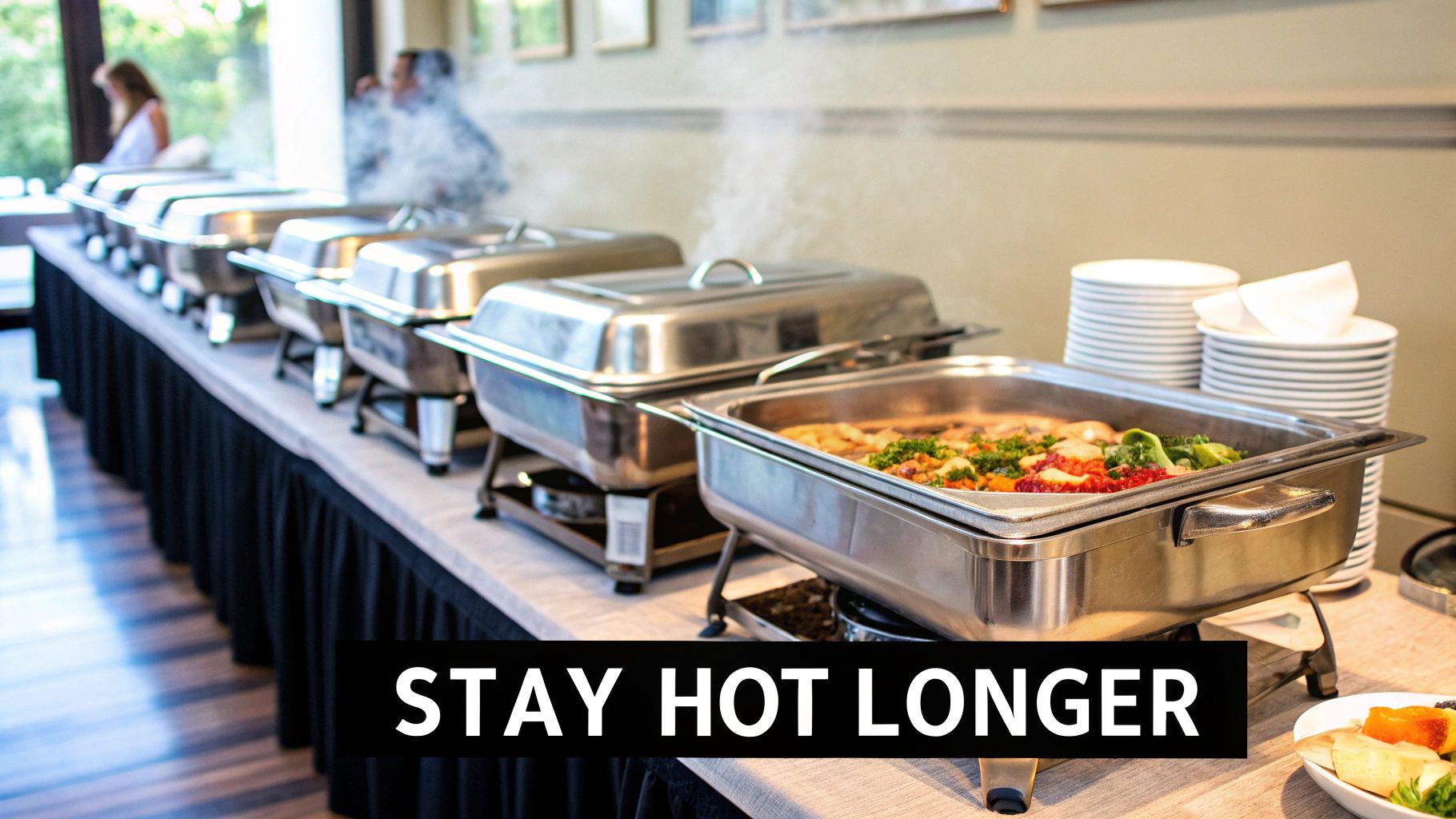
The real challenge for any great caterer is delivering that just-cooked quality, long after the food has left the stove. This is where the right equipment becomes non-negotiable, and today we’re looking at the most critical piece of that puzzle: catering food warmers.
Think of them as the silent guardians of your hard work. They ensure every dish served is a flawless representation of your skill, bridging that crucial gap between preparation and the moment of service.
The Role of Warmers in Modern Catering
Here in South Africa, the events scene is always buzzing. From corporate functions in Johannesburg to beautiful, intimate weddings in the Cape Winelands, the demand for top-tier catering never stops. This has made reliable food holding equipment more important than ever.
In fact, the catering food warmer market in South Africa has grown significantly since 2023, pushed by the expanding hospitality sector. This is especially true with the rise of food delivery and outdoor catering in cities like Johannesburg and Cape Town, where food hygiene regulations are rightly strict.
A food warmer is your guarantee to guests. It promises that the last plate served will be just as delicious, warm, and safe as the first. It’s the silent workhorse that protects your reputation.
More Than Just Heat
At the end of the day, these devices do so much more than just keep food hot. They are fundamental to your success.
- Food Safety: This is the big one. Keeping food above the 60°C danger zone is crucial for preventing the growth of harmful bacteria.
- Quality Preservation: The right warmer helps retain moisture and texture. No more dry chicken or soggy vegetables—just food that tastes the way you intended.
- Operational Efficiency: They give your chefs breathing room. Food can be prepared in advance, which completely streamlines the flow of service during those peak, high-pressure moments of an event.
Of course, for outdoor events, managing the food is only half the battle. You also need to keep your guests comfortable. If you’re planning an event under the open sky, you might find our guide on selecting a gazebo for hire incredibly useful. It’s another key piece of equipment for a successful outdoor gathering.
Choosing the Right Tool for the Job
Stepping into the world of catering food warmers can feel a bit overwhelming at first glance. The easiest way to think about it is like a specialist’s toolkit—you wouldn’t use a hammer to turn a screw. Each warmer has a specific job, and picking the right one is the secret to presenting your food perfectly every single time.
Getting to know the main types is your first step. From the classic look of a chafing dish to the get-up-and-go convenience of an insulated carrier, each one plays a unique role in making an event a roaring success.
The Buffet Workhorse: Chafing Dishes
Chafing dishes are probably what you picture when you think of a buffet line. They’re the cornerstone of any classic setup for a good reason! Their system is simple but incredibly effective: a pan of water is gently heated by a gel fuel source underneath, creating steam that keeps the food warm without drying it out. This method is brilliant for maintaining the perfect texture and moisture in dishes like curries, stews, and pastas.
They are the go-to choice for events where guests will be serving themselves over a few hours, like at a wedding reception or a corporate lunch. Plus, let’s be honest, they just look professional and add a touch of class to any food station.
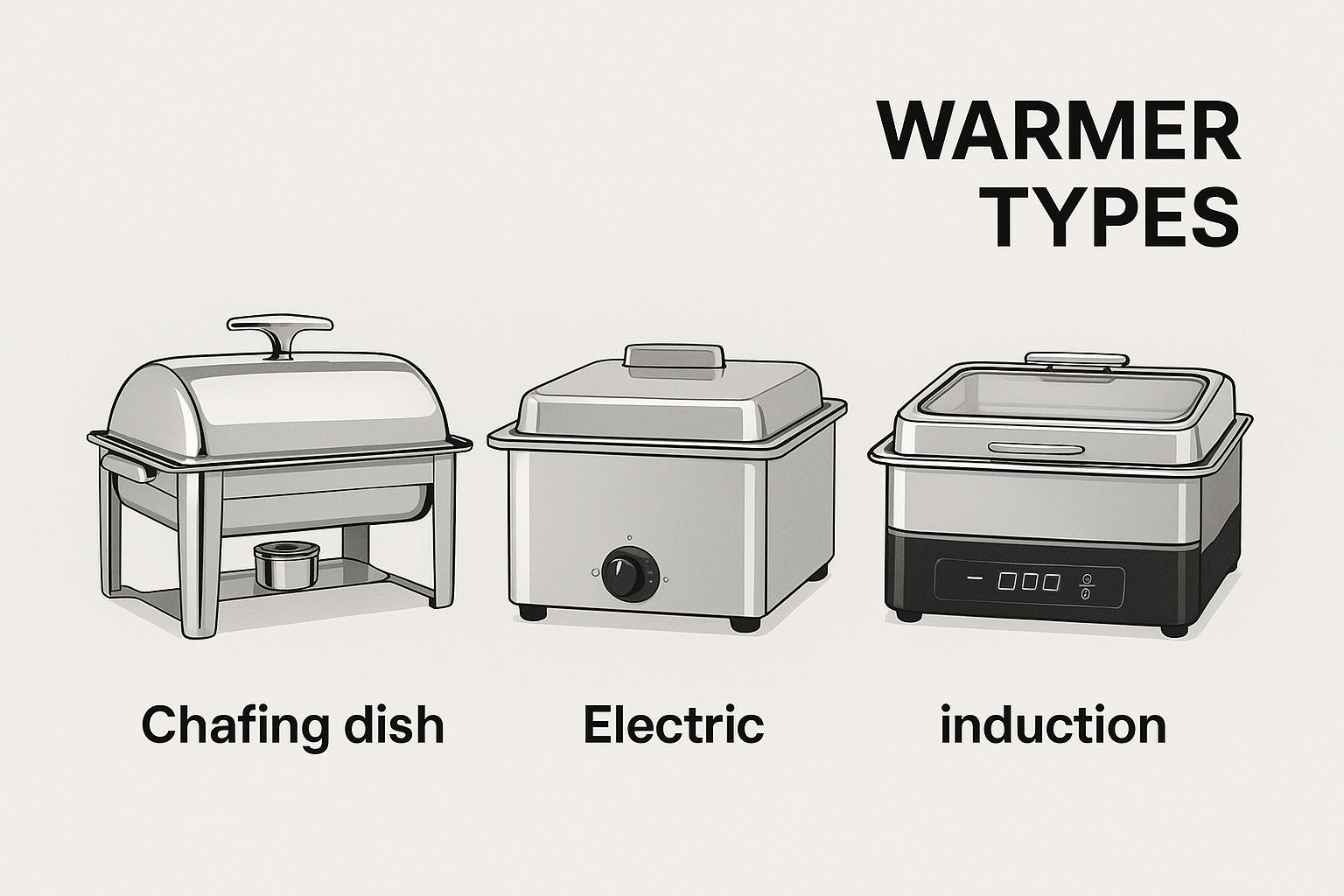
As you can see, different units are built for different jobs, from traditional chafing dishes for a classic buffet to modern electric models for more controlled environments.
When you’re dealing with a variety of warmers, it helps to see how they stack up against each other.
Your Guide to Catering Food Warmer Types
Here’s a quick breakdown to help you match the right warmer to your specific event needs.
| Warmer Type | Primary Use | Power Source | Best For Events Like |
|---|---|---|---|
| Chafing Dish | Keeping food warm on a buffet line | Gel Fuel / Sterno | Weddings, corporate buffets, large parties |
| Electric Warmer | Precise temperature control for various dishes | Electricity | Indoor events, conference centres, hotels |
| Heat Lamp | Keeping carved meats warm without overcooking | Electricity | Carving stations, pass-through kitchen areas |
| Insulated Carrier | Transporting hot food to off-site locations | None (retains heat) | Outdoor events, drop-off catering |
Think of this table as your cheat sheet for flawless food service, no matter the occasion.
Power and Precision: Electric Warmers
When you have access to a plug socket and need to hold a specific temperature, electric food warmers are your best friend. They take away the guesswork of open flames, which makes them a safer bet for indoor venues and much easier to manage over a long event. No more swapping out fuel cans!
These handy units come in a few different styles:
- Drawer Warmers: You’ll find these in any high-volume kitchen, like in a hotel or conference centre. They’re built to hold multiple pans of food, each at its own perfect temperature, making service a breeze during the dinner rush.
- Countertop Warmers: These are basically the electric version of a chafing dish. They give you that consistent, reliable heat without you having to fuss with fuel canisters.
- Heat Lamps: Absolutely perfect for a carving station. A heat lamp focuses warmth directly onto cooked meats like a Sunday roast, keeping it deliciously warm without actually continuing to cook it. This preserves the texture right up until the moment it’s served.
Ready to Go: Insulated Carriers for Off-Site Catering
For any caterer on the move, insulated food carriers are non-negotiable. Picture them as heavy-duty, high-tech cooler boxes, but designed to keep things hot for hours on end. They’re an absolute lifesaver for getting food from your kitchen to an event venue without losing a single degree of heat or a bit of quality.
This ensures that even if you’re serving in a marquee in the middle of a field, every dish arrives as hot and fresh as it was when it left the kitchen. It’s all part of the planning—just like you’d look into a cotton candy machine hire for a fun food station, choosing the right warmer is a fundamental part of your event’s success. Once you understand these core types, you’ll be able to confidently pick the perfect tool for any job, making sure your food always wows your guests.
What to Look for Before You Buy or Hire
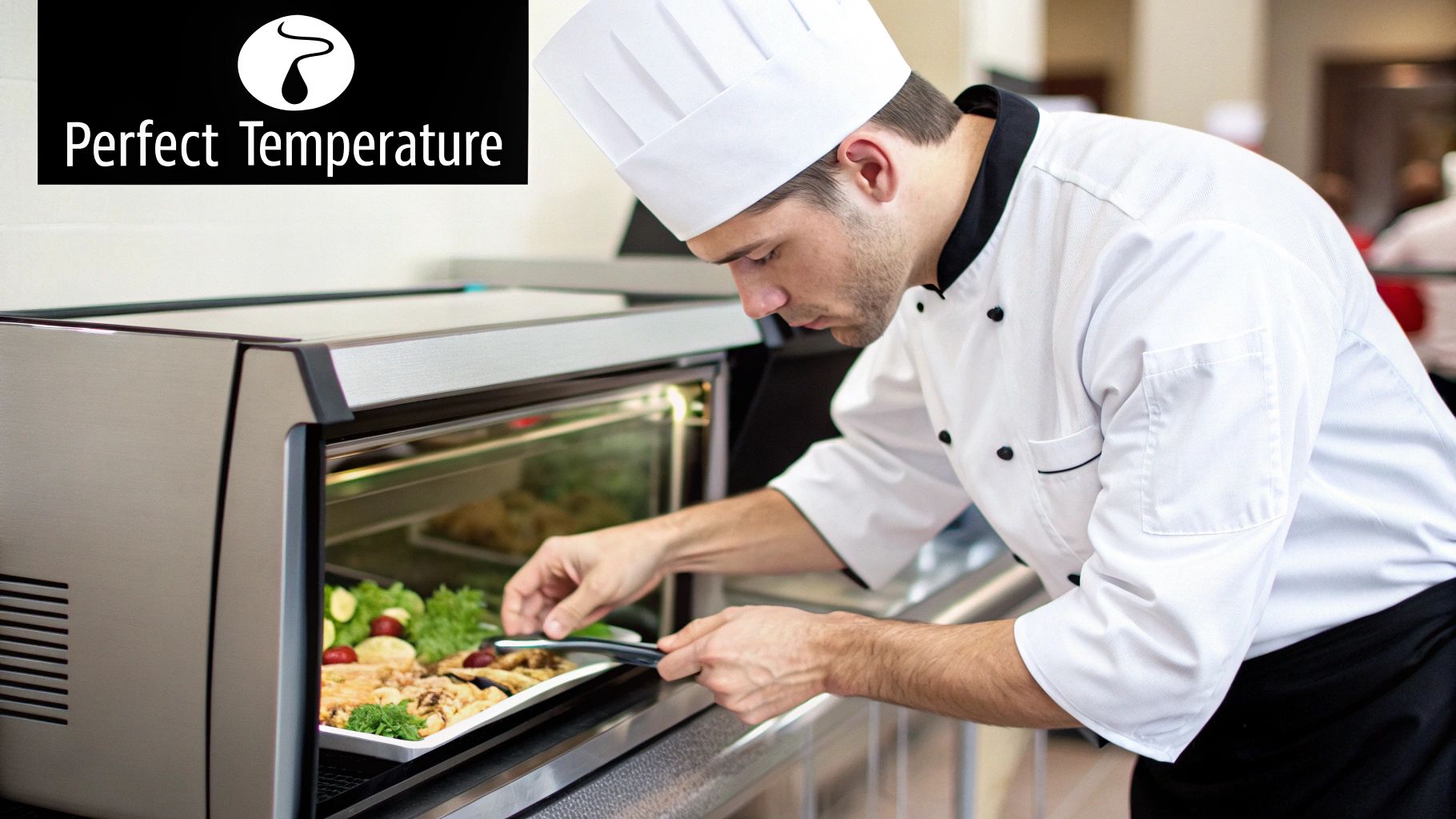
So, you know the different types of food warmers out there. That’s the first step. But choosing the right one for your event or business is about digging a little deeper into the features that make a real difference.
Whether you’re hiring a unit for a once-off wedding or buying one for your catering company, a few key details will separate a decent piece of equipment from a true workhorse. It’s a bit like buying a car—you know you need to get from A to B, but things like boot space, fuel economy, and handling are what really decide if it fits your life. Same story here.
Control and Consistency
Above all else, a food warmer has one critical job: keep food at a consistent, safe temperature. If the heat fluctuates, you risk ruining the texture of your food and, even worse, compromising safety. This is why precise temperature and humidity controls are absolute must-haves.
- Precise Temperature Control: Always look for a warmer with a clear, easy-to-use thermostat. This lets you dial in the perfect holding temperature for everything from delicate sauces to crispy fried chicken, making sure you stay safely above the 60°C danger zone without overcooking a thing.
- Humidity Management: This is the secret weapon against sad, dry food. Models with humidity controls or a simple water pan are brilliant because they add moisture back into the air. This is a game-changer for keeping roasted meats juicy and vegetables looking fresh for hours on end.
A great catering food warmer doesn’t just keep food hot; it creates the perfect environment to preserve the exact flavour and texture you worked so hard to achieve in the kitchen.
Durability and Practical Design
Let’s be honest, the catering world is tough on equipment. Everything gets bumped, moved, and put to the test. The materials and design of your food warmer will have a massive impact on how long it lasts and how easy it is to use, especially when you’re constantly on the move.
Built to Last with Smart Features
You can’t go wrong with high-grade stainless steel. It’s not just for looks; it’s tough, a breeze to clean, and resists rust and corrosion, which is vital for keeping things hygienic.
Think about portability, too. If you’re a mobile caterer, features like strong, lockable wheels and good handles are lifesavers. They make lugging a heavy unit from the van to the venue so much easier and safer for you and your team.
Finally, don’t overlook energy efficiency. It might seem like a small thing, but an efficient model can save you a surprising amount of money over time, particularly if it’s running for hours on end. Look for units with quality insulation and tight seals to stop heat from escaping. It means the warmer doesn’t have to work as hard, saving you on electricity bills and making it a smarter long-term investment.
Let’s be honest, beyond the delicious flavours and beautiful presentation, your number one job as a caterer is keeping the food safe and top-quality. This is where a good catering food warmer becomes your most trusted piece of kit. It’s your main line of defence against all the things that can go wrong when you’re holding food for a few hours.
The biggest threat you’re up against is what we call the temperature danger zone. Food safety laws in South Africa are crystal clear on this: it’s the temperature range between 5°C and 60°C. In this zone, nasty bacteria like Salmonella and E. coli can have a party, doubling their numbers in as little as 20 minutes. Keeping your food consistently above 60°C stops this bacterial growth cold, making sure every single plate you serve is perfectly safe.
Your Game Plan for Safe Food Holding
You can’t just chuck hot food into a cold warmer and hope for the best. To really get it right and guarantee safety, you need a solid, repeatable process. This isn’t optional; it’s the mark of a true professional.
First things first, you have to pre-heat your unit. Always switch your food warmers on at least 20-30 minutes before they’re needed. This gets the inside of the cabinet up to a safe holding temperature, stopping a dangerous temperature drop the moment you load the food in. It’s a small step that makes a world of difference.
Next, you absolutely must check the internal temperature of the food itself—not just the air inside the warmer.
Don’t ever just trust the dial on the machine. A properly calibrated food probe is the only tool that will tell you the truth about your food’s temperature. It’s your proof that you’re doing your due diligence and taking safety seriously.
Using a food probe is simple but so important:
- Get it in the Right Spot: Stick the probe into the thickest part of the food, making sure to avoid hitting any bones or big pockets of fat.
- Check a Few Places: For bigger dishes, like a large tray of lasagne or a whole roast chicken, check the temperature in a couple of different spots. This ensures the heat is getting all the way through evenly.
- Keep a Record: For bigger events, it’s a brilliant idea to log your temperature checks. This gives you a clear record of safety compliance and helps you notice if any of your equipment isn’t performing as it should.
It’s Not Just About Heat, It’s About Quality
While safety is the top priority, quality is what keeps clients coming back. Thankfully, modern food warmers are designed for more than just keeping food hot; they’re built to lock in the texture and moisture that make your food stand out.
Take humidity controls, for example. Many electric models have this feature, and it’s a total game-changer for anything that tends to dry out. By adding a bit of controlled moisture to the air inside, you can keep roasted meats juicy and vegetables looking fresh for hours. If your unit doesn’t have built-in controls, no stress. Just place a shallow pan of hot water on the bottom shelf. It does a great job of creating a similar humid environment, stopping your amazing food from becoming dry and sad. This way, the last guest served gets the exact same quality as the first.
Should You Hire or Buy Your Equipment?
Sooner or later, every caterer—whether you’re just starting out or you’re an established name—hits a fork in the road when it comes to equipment. For catering food warmers, the question seems simple, but the answer is anything but: is it smarter to hire what you need for each event, or is it time to buy your own?
This isn’t just about the upfront cost. It’s a big-picture decision that ripples through your cash flow, storage space, maintenance duties, and your overall flexibility. Let’s walk through the pros and cons to help you figure out the most practical and profitable path for your business.
When Hiring Is the Smartest Move
Hiring your gear is a bit like a pay-as-you-go plan—it’s flexible, low-commitment, and absolutely perfect for certain situations. If you’re a new caterer finding your feet, hiring lets you deliver a professional service without a huge investment draining your startup funds.
It’s also the go-to choice if your event schedule is unpredictable. If you only cater a handful of large functions a year, it just doesn’t make financial sense to have expensive warmers gathering dust in a storeroom.
Think of hiring as the ultimate “try before you buy” experience. It’s your chance to test out different catering food warmers—from electric drawer models to insulated carriers—and see what really fits your menu and workflow before you splash the cash.
Plus, when you hire, you can forget all about maintenance, repairs, and storage. The rental company handles all of that, delivering clean, tested, and ready-to-go equipment exactly when you need it. That convenience is a massive weight off your shoulders, freeing you up to focus on what you do best: the food and your clients.
Making the Leap to Ownership
Buying your own catering food warmers is a big step, but for many businesses, it’s a smart long-term investment that eventually pays for itself. The clearest sign that you’re ready to buy is a steady and predictable event calendar.
If you’re consistently catering several events every month, those hiring costs will start to add up, and fast. At some point, you’ll realise the total rental fees could have easily paid for the equipment outright. Once you own your warmers, every event you book puts more money straight into your pocket, beefing up your profit margins over time.
Having your own equipment on hand also offers a level of convenience and freedom you just can’t beat. You’ll never have to worry about a rental company’s stock levels or delivery times, especially during the busy season. Your gear is always ready to roll at a moment’s notice, giving you the power to say “yes” to those last-minute bookings you might otherwise have to turn down. It puts you in complete control.
Hiring vs Buying: A Smart Decision Framework
Deciding whether to hire or buy isn’t always straightforward. It depends on your business’s current stage, your financial situation, and your long-term goals. To make it easier, we’ve broken down the key factors in this simple table.
| Consideration | Benefits of Hiring | Benefits of Buying |
|---|---|---|
| Upfront Cost | Low initial investment, preserving cash flow. | Higher initial cost, but becomes an asset. |
| Frequency of Use | Perfect for infrequent or seasonal events. | Cost-effective for regular, consistent bookings. |
| Maintenance & Storage | No responsibility; handled by the rental company. | You are responsible for all upkeep and storage. |
| Equipment Variety | Access to different models for different events. | Limited to the models you own. |
| Availability | Dependent on rental company stock. | Always available, perfect for last-minute jobs. |
| Long-Term Value | A recurring operational expense. | An investment that pays off over time. |
Ultimately, the right choice is the one that best supports your operational needs and financial health. Many businesses even use a hybrid approach, owning their most-used items while hiring specialty equipment as needed.
Care and Maintenance for Better Performance
Think of your food warmers as a long-term investment in your catering reputation. Like any mission-critical piece of gear, a little bit of consistent care is what protects that investment and makes sure it performs flawlessly every time you’re on a job.
A simple daily cleaning routine is your first and best line of defence. This isn’t just about looking professional; it’s about food safety and the longevity of your equipment. After every event, let the unit cool down completely, then give all the surfaces—inside and out—a good wipe with a soft cloth and a food-safe cleaner. This simple step stops food residue from baking on, which can eventually damage the surfaces and even the heating elements.
Performing Regular Checks
Beyond the daily wipe-down, setting aside time for periodic checks is a smart move. These quick inspections can help you spot small issues before they blow up into a major disaster mid-service. Getting these checks on the calendar ensures your equipment is always ready to go when you are.
- Inspect Power Cords: Always have a look over the cables and plugs for any signs of fraying, cracking, or damage. A dodgy cord isn’t just a performance risk; it’s a serious safety hazard.
- Verify Thermostat Accuracy: Every now and then, pop an oven thermometer inside to check if your warmer’s thermostat is telling the truth. If the dial is set to 70°C, the inside should actually be 70°C.
- Check Seals and Gaskets: For any enclosed warmers, run your fingers along the door seals. Look for cracks or signs of wear. A tight seal is absolutely crucial for holding temperature and keeping your energy costs down.
Consistent maintenance does more than just make your equipment last longer. It’s your insurance against embarrassing and costly breakdowns, ensuring your gear never lets you down when it matters most.
Looking after your equipment properly also says a lot about your brand. Just as a beautifully strung fairy light curtain can completely transform the mood of a venue, a spotless, well-maintained food warmer signals professionalism and a real attention to detail. This proactive approach keeps your warmers in top-notch condition, ready for any event you throw at them.
Answering Your Top Questions
When you’re in the thick of event prep, the last thing you want is a question mark hanging over your food service. We get a lot of the same queries from caterers and event planners, so we’ve put together some quick, practical answers to the most common questions about keeping food perfectly hot and safe.
What’s the Right Temperature for Holding Food?
This is easily the most critical question, and it all comes down to safety. In South Africa, food safety rules state that hot food must be held at a temperature above 60°C. This is the magic number to stop nasty bacteria from multiplying.
But just because it’s safe doesn’t mean it’s perfect for every dish. Think of 60°C as your baseline. A delicate cream sauce might be happiest right around there, but anything crispy, like fried chicken or samoosas, needs much higher, drier heat to avoid going soggy. The best way to be sure? Don’t just trust the warmer’s dial; always use a good food probe to check the internal temperature of the food itself.
Can I Use Chafing Dishes Outside?
Absolutely, but you need a game plan. Chafing dishes are a staple for outdoor events, but the elements can be a real challenge. Your biggest foe is the wind—it can blow out your fuel source in seconds and rapidly cool the water pan, leaving you with cold food.
To stay ahead, always use wind guards around your chafing fuel. It’s also worth investing in high-quality, long-burning fuel that can stand up to a breeze. If the wind is really howling and you have access to a power point, an electric warmer or a fully insulated food carrier is a much more reliable bet.
A simple trick to stop food from drying out is a caterer’s best friend. If your warmer doesn’t have humidity controls, just slide a pan of hot water onto the bottom shelf. This creates a gentle, humid environment that keeps most dishes moist and delicious.
When you’re using heat lamps for things like a carving station, keep serving times brief to prevent drying. For roasted meats, a great technique is to let them rest in a covered pan with their own juices. This locks in both moisture and flavour beautifully.
Ready to hire the perfect catering equipment for your next event? ABC Hire offers a wide selection of professional-grade food warmers and other essential items. Explore our range today at https://abchire.co.za.