
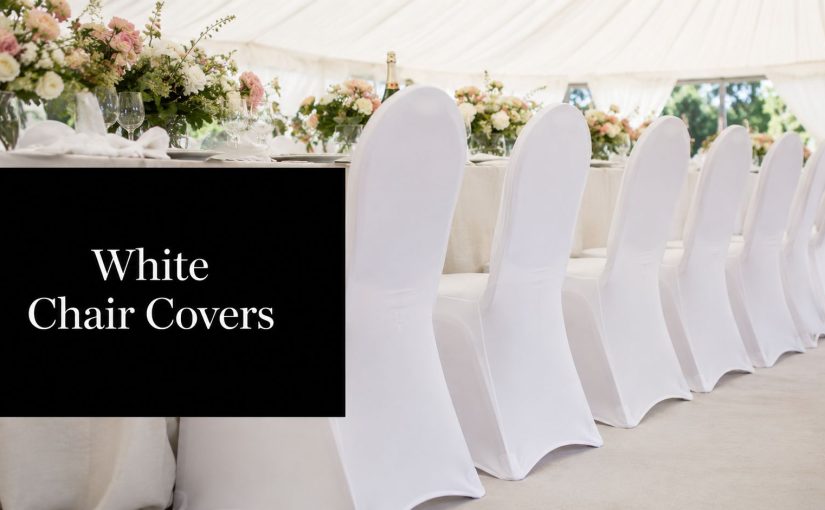
You arrive at a Cape Town venue and find three chair styles around the room: glossy plastic seats, older banquet chairs and a few bistro models from a previous booking. The tables are dressed, the lighting is ready, but the seating looks accidental. Fitted white chair covers can bring the room together quickly, provided the fabric, fit and installation are right. Poorly chosen covers do the opposite, showing dark chair edges, pulling at seams and bunching where the seat meets the back.
Introduction to White Chair Covers for Stylish Events
White chair covers remain a practical choice for weddings, corporate functions, matric dances and milestone celebrations across Cape Town and the Winelands. They give mismatched seating a consistent appearance, reflect available light and create a clean base for sashes, table linen and florals. For a formal reception, that visual uniformity can make the room feel organised before guests notice any individual décor detail.
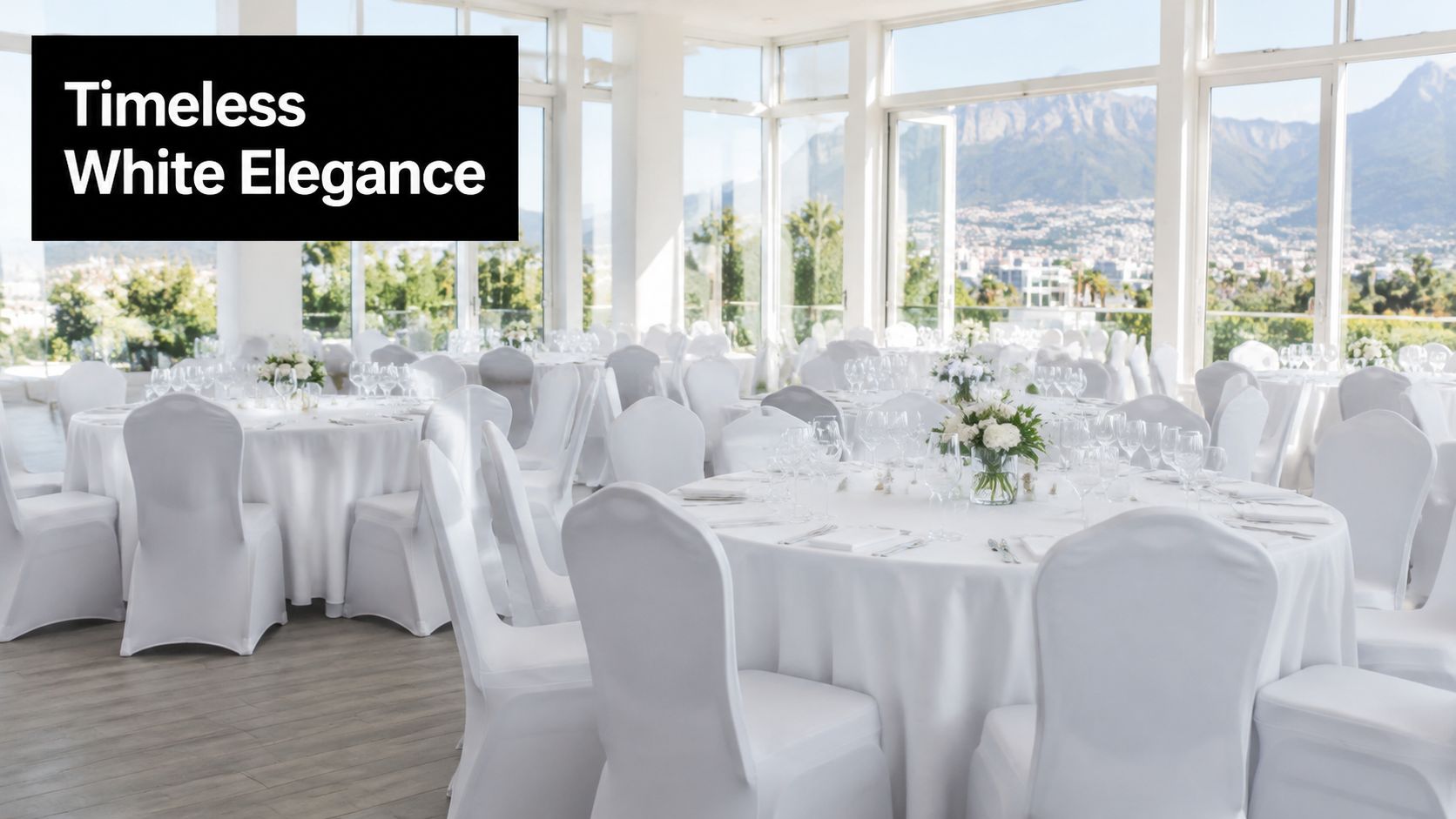
The demand isn't based only on fashion. Statistics South Africa reported 102,373 registered marriages and unions in 2024, compared with 105,123 in 2023 and 143,279 in 2015, according to this summary of the official release from South Africa's 2024 marriage trends. That recurring wedding and formal-event pipeline keeps chair dressing relevant for hire companies, venues and planners, even as couples become more selective about where they spend on décor.
White covers make the most sense when the existing chairs are serviceable but visually inconsistent, when a venue needs a formal finish, or when a planner wants one neutral foundation across different table settings. They're less convincing when the chairs themselves are attractive, textured or part of the design. Cape Town trend coverage points towards linen, rattan, cane and softer lounge styling rather than rows of identical, flat seating, so a covered chair shouldn't be treated as an automatic upgrade.
The practical difference comes from site work. A cover must match the chair envelope, tolerate handling, photograph without obvious transparency and arrive clean enough to need little correction. For broader planning support, the event planning playbook for professionals is useful when coordinating suppliers, schedules and venue responsibilities around the décor installation.
How to Choose the Right White Chair Cover Fabric and Fit
The fabric decision affects the finish more than a decorative sash does. A lightweight stretch cover may fit quickly, but it can reveal a darker chair underneath. A heavier construction can look more substantial, yet it may take longer to handle, wash and dry. Choose according to the chair, venue and event duration rather than selecting the cheapest white option.
Comparing the main fabric choices
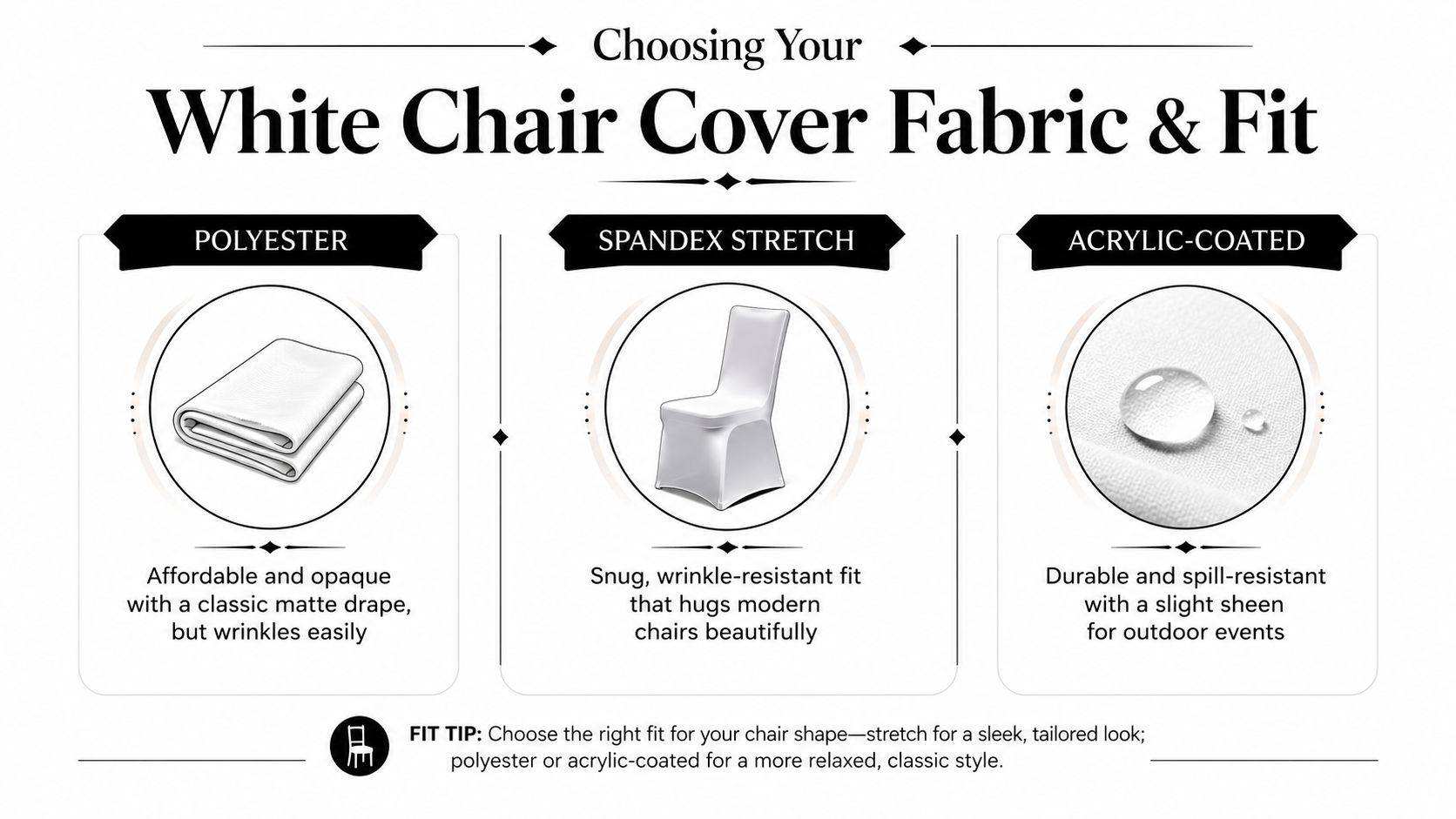
Polyester usually gives a familiar matte appearance with a stable drape. It works well for formal indoor settings when the cut is generous enough and the fabric isn't too thin. Its weakness is creasing, especially after transport or when covers have been packed before they're fully dry.
Spandex stretch hugs the chair and can produce a neat, contemporary silhouette. It's useful when the chair profile is consistent across the room and the installer needs to move efficiently. Stretch isn't a substitute for measurement, though. A cover that is forced over a wide or sharply edged chair will show stress at the seams and may sit unevenly around the legs.
Acrylic-coated polyester offers a more structured option. A Cape Town chair-cover sample is specified at 240 g/m² acrylic-coated polyester, while imported banquet covers are often around 160 GSM spandex, and South African upholstery suppliers list white fabrics in a broader 222 to 510 g/m² range, as documented in this South African fabric-weight comparison. The heavier end generally offers better opacity, drape and wrinkle recovery, which matters under daylight and flash.
| Fabric Type | Weight Range | Best For | Watch Out For |
|---|---|---|---|
| Lightweight spandex | Around 160 GSM | Short indoor functions with matching modern chairs | Transparency, overstretched seams and seat bunching |
| Acrylic-coated polyester | Around 240 g/m² in a Cape Town sample | Repeated handling, branded or more structured installations | Slight sheen and a less relaxed drape |
| Upholstery-weight fabric | Roughly 222 to 510 g/m² in ZA supplier listings | Higher-opacity finishes and demanding repeated use | More handling weight, storage volume and care effort |
Practical rule: If you can see the chair colour through the fabric before installation, daylight and camera flash will make the problem more obvious.
For faster fitting, look for a fitted construction with a centre-back Velcro closure where the chair design allows it. The closure can reduce reworking during a large setup, but it still needs to match the chair model. For outdoor events, prioritise a fabric that handles spills and movement, then confirm the supplier's cleaning and weather policy. For branded functions, choose opacity and shape stability before adding a logo or colour accent.
Measuring Your Chairs and Getting a Perfect Fit Every Time
“Universal fit” is one of the costliest assumptions in event hire. Chairs that look similar across a venue can have different back heights, widths, seat depths and leg positions. Measure the actual chair batch, not the photograph supplied by the venue.
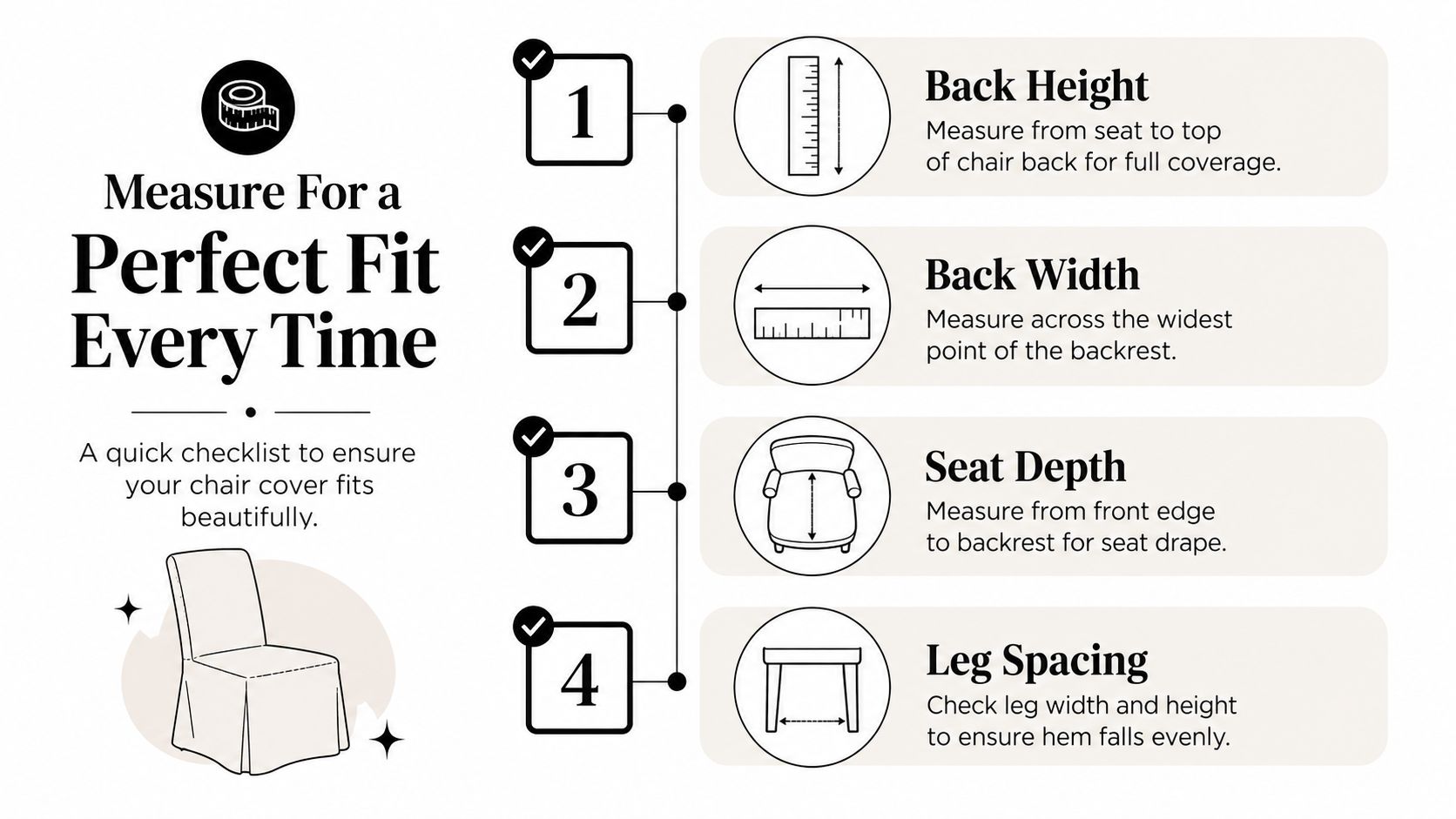
Use a four-point measuring workflow
- Measure back height. Start at the seat and measure to the highest point of the back. This tells you whether the cover will reach the top without pulling upwards from the seat.
- Measure back width. Measure across the widest part of the backrest. Some South African listings publish backrest widths around 41 cm, while other chair-cover envelopes are listed at 39 x 37 cm, so compare the supplier's specification with your chair rather than relying on a product name.
- Measure seat depth. Measure from the front edge of the seat to the backrest. This determines whether the fabric will lie over the seat or stop short and create a visible gap.
- Check leg spacing and height. Look at where the legs sit relative to the corners and measure the available clearance. A hem that lands unevenly will make an otherwise good cover look untidy.
The supplier's published envelope is a starting point, not proof of compatibility. Measure one chair in each profile, write the dimensions on a simple hire sheet and label the batches as bistro, banquet or plastic. That staging step prevents a common installation error, where a team reaches for the nearest white cover and gradually creates different tension across the room.
Trial-fit before committing
Fit one cover before unpacking the full batch. Pull it evenly over the back, settle the fabric around the seat and inspect the legs from the front and side. Check for stretched seams, exposed chair colour, diagonal pulling, loose fabric at the corners and a hem that rises on one side.
If the cover uses Velcro, close it without forcing the edges together. The closure should sit centrally and remain flat when the chair is pushed under the table. For plastic chairs, the guidance in ABC Hire's guide to chair covers for plastic chairs is a useful reference when comparing profiles and fitting requirements.
Do the trial fit in the same lighting the guests will see if possible. A cover can look acceptable in a dim storeroom and appear translucent beneath a bright marquee or direct window light. Approve the complete look only after the test chair has been viewed from the aisle, table edge and photography position.
Styling White Chair Covers for Weddings and Corporate Events
A plain white cover works best when the rest of the room has a clear visual direction. The mistake is adding a sash, bow, runner, flower and contrasting napkin to every chair until the seating becomes busy. Choose one strong chair detail, then let the tables and room carry the remaining colour.
Match the styling to the event
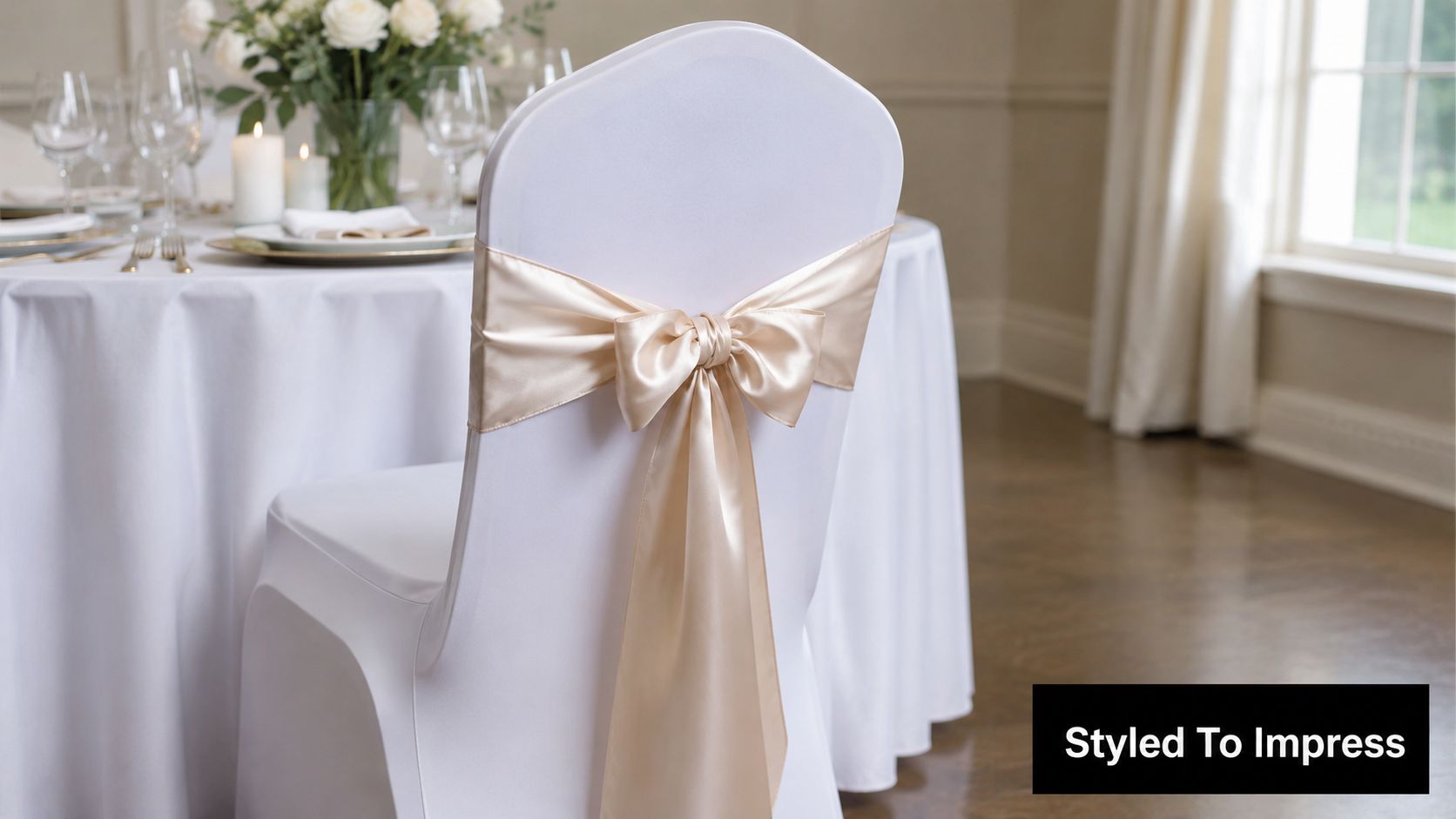
For a Winelands wedding, a soft linen sash, muted sage tie or natural-texture accent can stop white seating from feeling too stark. A satin champagne bow creates a more formal finish, but it needs consistent placement and tension. Uneven bows are easy for guests and photographers to notice, particularly along a long table.
Corporate events usually benefit from restraint. Use the brand colour in a narrow sash, table runner or napkin rather than covering every chair with a large branded panel. White provides a clean background for a launch, networking function or awards evening, but the chair treatment shouldn't compete with signage or stage content.
Matric dances can handle more contrast, especially with coordinated lighting and reflective table details. Check the fabric under the actual venue lighting, because warm festoon lights can make white covers appear creamier while daylight exposes creases and transparency.
White seating should create rhythm across the room, not become the loudest décor element.
Before finalising a wedding palette, planners can use resources such as plan your wedding décor with Wedding Vendors to compare décor categories and supplier questions. If the venue already has a strong chair profile, compare the covered look with white Tiffany chairs before hiring covers. A visible frame, cane texture or shaped back may provide more character with less fabric handling.
Keep the photographer's viewpoint in mind. Walk the room from the entrance, head table and dance floor, then correct any chair where the bow twists, the cover rides up or a dark edge shows. Those small corrections protect the overall finish more effectively than adding another decorative layer.
Care Cleaning and Hire Versus Buying Tips for Cape Town Hosts
White covers show handling marks quickly, so care begins before the event. Store clean covers completely dry, away from direct sunlight and anything that can transfer colour. Fold them consistently, keep fabric types separate and don't compress damp pieces into a sealed bag. Moisture trapped in storage can create odours and marks that are difficult to remove before a booking.
Steaming is usually safer than pressing directly with a hot iron, particularly for stretch fabrics and coated surfaces. Use a garment steamer to relax transport creases, keep the head moving and test an inside area first. Spot-clean food, makeup and dust according to the hire company's instructions, and don't apply bleach or aggressive stain removers unless the fabric owner approves them.
Make the hire decision on operations
Hiring is usually sensible when the event is occasional, when storage is limited or when the chairs vary from venue to venue. Buying can make sense for a planner with repeat demand, a dedicated storage area and a reliable cleaning process. The purchase price isn't the whole calculation. Add sorting, washing, drying, steaming, repairs, packing and the labour needed to fit every chair.
South Africa's imported furniture and textile ecosystem also affects availability and pricing. Imports accounted for about one-third of South African furniture sales, with imported goods estimated at about R1.5 billion per year, while imports of carpets and other textile floor coverings were valued at US$42 million in 2023, according to South Africa textile floor-covering import data. These figures don't price a specific chair cover, but they show why replacement costs, fabric variety and supplier lead times can be influenced by imported inputs.
For Cape Town, Stellenbosch, Franschhoek and Paarl bookings, ask whether delivery includes collection, whether cleaning is included, how covers are packed and whether setup labour is available. Confirm access times, stairs, loading zones and the venue's strike deadline before accepting a low hire rate. The practical questions in this guide to hiring chair covers can help you compare a simple collection booking with a managed installation.
If you're fitting a large venue yourself, price the labour fairly. A cover that saves money on the invoice can still become expensive when several people spend the setup trying to correct the wrong size or remove deep creases.
Final Checklist Before You Dress Your Chairs
White chair covers are the right choice when the existing seating is sound but inconsistent, when the event needs a formal neutral base and when the covers can be fitted without visible strain. They're not automatically the right choice for a venue with attractive timber, rattan or cane chairs, or for a Winelands design built around texture and relaxed lounge groupings.
Before confirming an order, check the following:
- Fabric: Choose opacity and wrinkle recovery for the lighting, duration and handling demands.
- Measurements: Record back height, width, seat depth and leg spacing for every chair profile.
- Trial fit: Approve one fully dressed chair before accepting the complete batch.
- Staging: Keep bistro, banquet and plastic chairs separated and labelled.
- Styling: Select one chair accent, then coordinate it with table linen and the room palette.
- Care: Confirm cleaning, steaming, packing, storage and stain procedures.
- Logistics: Agree delivery access, setup responsibility, collection timing and labour before event day.
South Africa's registered marriage pipeline remains substantial enough to keep formal chair dressing relevant, even though the official marriage rate has declined from its earlier average, as reported in the 2024 marriages and unions release summary. That makes consistency and reusability more valuable than a one-event visual shortcut. A good hire partner should help you decide whether covers, white chair hire or a textured alternative suits the venue rather than forcing one finish onto every booking.
Start with one chair. Fit it, photograph it in daylight and under the event lighting, then inspect the seams, corners and hem from the guest's viewpoint. That small test prevents most last-minute surprises and gives your supplier a clear brief before the full delivery is packed.
ABC Hire supplies event furniture and white chair options for weddings, corporate functions and private events across Cape Town, Stellenbosch, Franschhoek and Paarl. Visit ABC Hire to discuss chair styling, delivery, setup and the practical fit requirements for your venue.