

You've got the venue, the décor brief, and a floor plan that looks generous on paper. Then the wedding lounge arrives, and the bean bag lounge chairs occupy more visual and usable space than expected. Guests need room to sit down, stand up, move between clusters, and keep clear of bars, stages, dining tables, and access routes.
That's why successful bean bag hire in Cape Town involves more than choosing attractive covers. Floor clearance, fire performance, child safety, fabric durability, transport, and cleaning all affect whether the seating improves the event or creates another operational problem. Used properly, bean bag lounge chairs can make a formal venue feel relaxed without making the event look careless.
Why Bean Bag Lounge Chairs Work for Modern Events
At a Winelands wedding, rows of standard chairs can make the reception feel fixed before guests have even arrived. They're useful for dining, but they don't always support the informal pauses between speeches, meals, dancing, and photographs. A lounge zone with low seating changes that rhythm. Guests can gather in smaller groups, face one another, and settle into a more relaxed part of the venue.
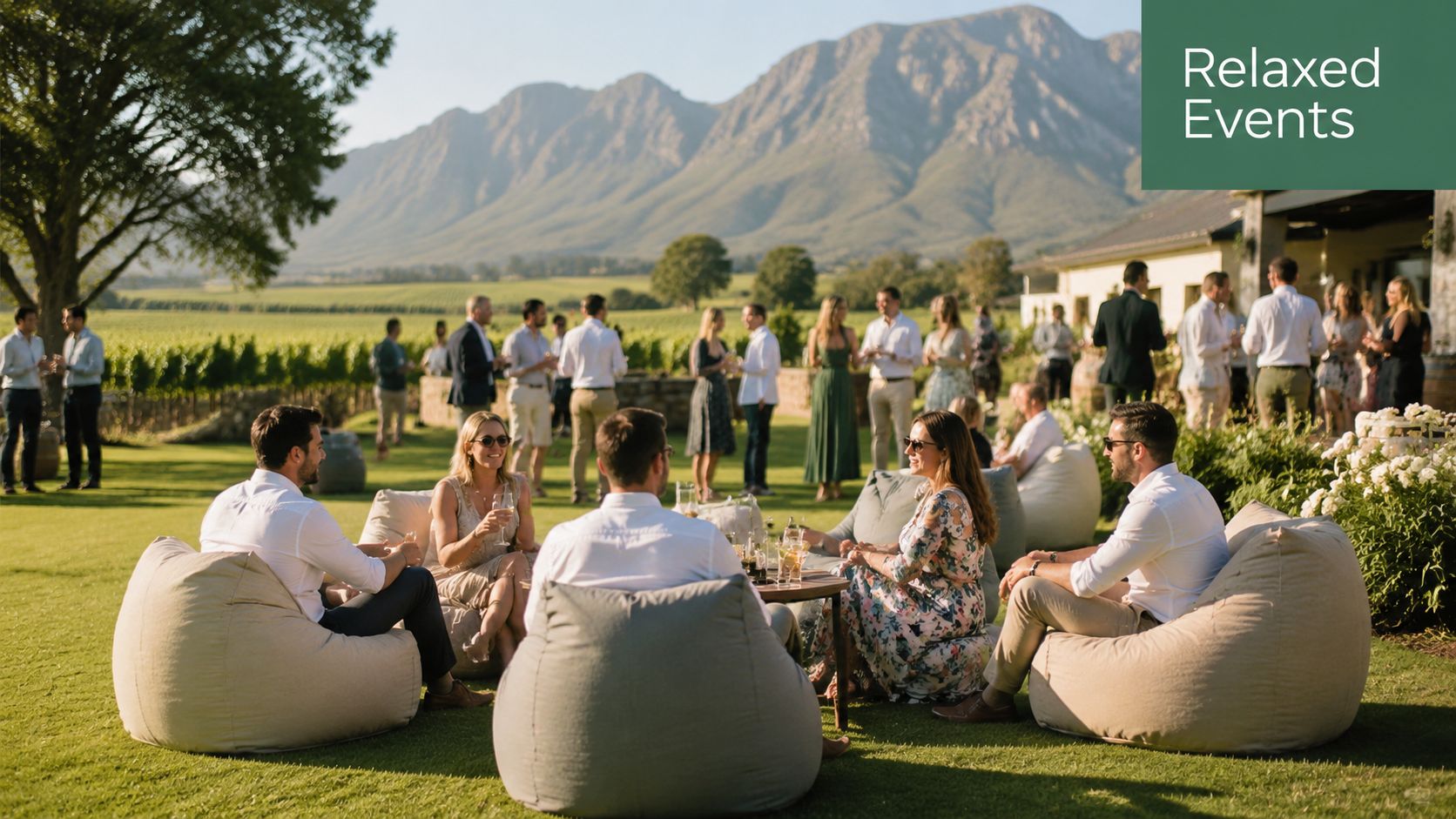
The same principle works at a corporate activation. A branded seating area gives visitors somewhere to pause without creating the formality of a meeting room. At a matric dance or private party, colourful covers can make the lounge feel intentional, while neutral or textured upholstery can sit comfortably alongside more polished event styling.
That shift reflects a broader change in how event furniture is specified. Seating is no longer judged only by whether it provides a place to sit. Texture, colour, flexibility, and photographic appeal now influence the atmosphere, particularly at venues where guests move between indoor rooms, courtyards, lawns, and terraces.
South Africa's bean bag chair segment is forecast to expand at more than 4.93% CAGR from 2025 to 2030, and indoor bean bag chairs are identified as the most popular type in major metropolitan areas including Johannesburg, Cape Town, and Durban (South African bean bag market context). That positions the category as part of an established urban furniture market, not merely novelty décor.
Practical rule: Treat the lounge as a programmed event zone, not spare furniture placed wherever the main seating doesn't fit.
For a more coordinated result, planners can also review ABC Hire's guidance on modern lounge furniture and brief the floral stylist early. A lounge cluster framed by considered event floral design services can look integrated rather than like a separate rental addition.
Choosing the Right Size and Style for Your Event
Start with the footprint, not the colour. A practical single-seat hire benchmark for Cape Town events is approximately 120 cm × 75 cm × 75 cm, based on local rental listings and useful for estimating floor space, transport volume, and seating density (Cape Town bean bag hire context).
That measurement describes the unit, not the complete zone. Guests need additional room to approach, lower themselves into the seat, turn, and leave without colliding with a table or another person. Place the bags on the scaled floor plan before confirming quantities.
Match the configuration to the activity
A single bean bag lounge chair suits a reading corner, a quiet wedding seating pocket, or a brand activation where guests circulate frequently. Double and triple configurations create a stronger social anchor, but they're less flexible once the event starts and more awkward to move through narrow access points.
| Configuration | Best For | Recommended Fabric |
|---|---|---|
| Single | Matric dances, reading corners, brand activations | Water-resistant, easy-clean upholstery |
| Double | Wedding lounges, private parties, relaxed corporate areas | Durable textured fabric or wipeable cover |
| Triple | Large chill zones, viewing areas, hospitality lounges | Heavy-duty upholstery with removable or cleanable cover |
For children's parties, prioritise a cover that can handle food, drink, and muddy hands. A wipeable material is usually more practical than a delicate pile or highly textured finish. For weddings, premium-looking fabric can lift the appearance, but only if the supplier can explain how it responds to spills, grass contact, and damp conditions.
South African retail listings show a mature local supply chain. One major marketplace displays 1,028 bean bag chair listings, while a South African furniture retailer lists bean bag chairs and loungers from R 3,500.00 (South African bean bag listings). The listings also include standardised product dimensions, which makes comparison easier than buying an undefined novelty item.
Don't order only for the number of people you expect to sit at once. Order for the way the event behaves. A corporate launch may need several small, moveable clusters, while a wedding may benefit from fewer, more deliberate groupings near the dance floor or bar. ABC Hire's information on large bean bags is useful when deciding whether generous seating will suit the venue or overwhelm it.
When comparing upholstery, the same principle used for durable furniture for NZ hospitality applies here: choose the material according to traffic, cleaning demands, exposure, and replacement risk, not just the sample seen in a showroom.
Designing Lounge Areas That Actually Flow
At a Cape Town wedding, a bean bag left beside the bar can quickly become a trip point, a queue obstruction, or a seat exposed to spilled drinks. Map the movement first, then place lounge furniture where it supports how guests use the venue.
Build around movement
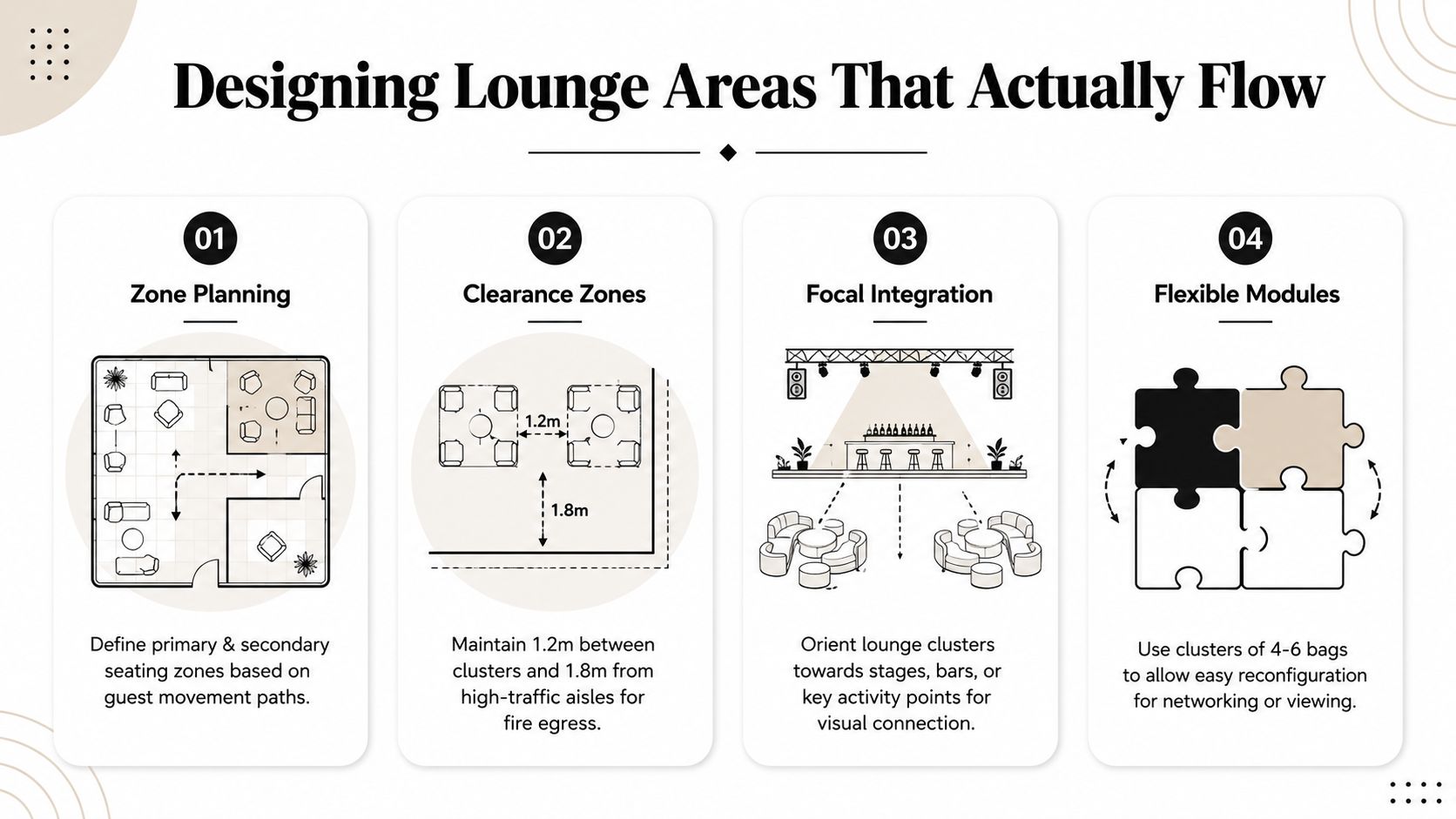
Mark the bar, stage, dance floor, buffet, toilets, entrances, and emergency routes before setting out a single bag. Lounge clusters should face the activity guests are watching, while a clear route remains behind or beside the seating. Low furniture keeps sightlines open, but it still takes up usable floor space and can narrow circulation.
Use 1.2 m between clusters and 1.8 m from high-traffic aisles for fire egress as planning references, then confirm the arrangement with the venue (flammability and event furniture guidance). The venue's access and fire plan takes priority, particularly indoors. Refer back to the flammability guidance cited earlier when checking the supplier's documentation.
For a small wedding reading nook, place six compact seats around a low coffee table, angled inward rather than lined up against a wall. At a corporate team-building event, several groups of four to six bags let guests reconfigure the area for conversation, presentations, or viewing. A single large mass may photograph well, but staff will struggle to move it once guests settle in.
Add supporting pieces carefully
Ottoman cubes provide a place for drinks and help guests change position. Low coffee tables make the setting feel finished, but every extra piece reduces clearance. Keep LED furniture, cables, and power supplies outside sitting and walking paths, especially during evening activations.
Outdoor ground conditions need checking before delivery. On grass, inspect hollows, wet patches, irrigation points, and uneven areas. On decking, test whether the cover or base slides when someone sits down. Open lawns and terraces in the Western Cape can catch wind, so ask the supplier how the units are secured and whether their covers resist damp and repeated handling.
A scaled drawing should show each bean bag's footprint, supporting furniture, and walking routes. Allow space for children to move around the cluster rather than placing seats beside an unprotected edge or service route. If the layout works only while every guest stays seated, it will fail during a real event. Adjust the number of bags until staff can clear the area without lifting occupied seats.
Safety and Compliance Requirements You Cannot Ignore
At a school activation, a child can unzip a chair faster than staff can react. At a wedding or corporate event, one damaged seam can expose filling, create a trip hazard, or leave the supplier with a compliance problem. Treat every bean bag lounge chair as upholstered event equipment, not just décor.
South African upholstered-furniture guidance places beanbags and floor cushions under full requirements. Polystyrene-bead products can complicate testing because the cover may melt and loose beads can spill out and smother a flame. An attractive outer cover does not prove compliant construction. Request the supplier's documentation before confirming the hire, especially when a venue, school, university, or corporate client has formal procurement checks.
Ask precise compliance questions
A rental supplier should answer these points clearly:
- What classification applies? Confirm whether the item is supplied as a beanbag or floor cushion. Separate floor cushions above approximately 60 cm × 60 cm may fall into a distinct category, so the classification should be documented.
- What has been tested? Ask for fire-performance documentation covering the cover construction and, where applicable, the complete product.
- What happens to the filling during testing? For polystyrene-bead models, the supplier should explain how the cover and inner containment limit bead escape.
- How is the filling secured? Look for sealed seams and a child-resistant closure, not an easily accessible zip.
- What is the event use policy? Confirm whether children may use the chairs, whether supervision is required, and which uses are prohibited.
Independent bean bag safety guidance identifies choking and suffocation hazards when children can reach the filling. Child-resistant closures, durable seams, and warning labels provide practical controls.
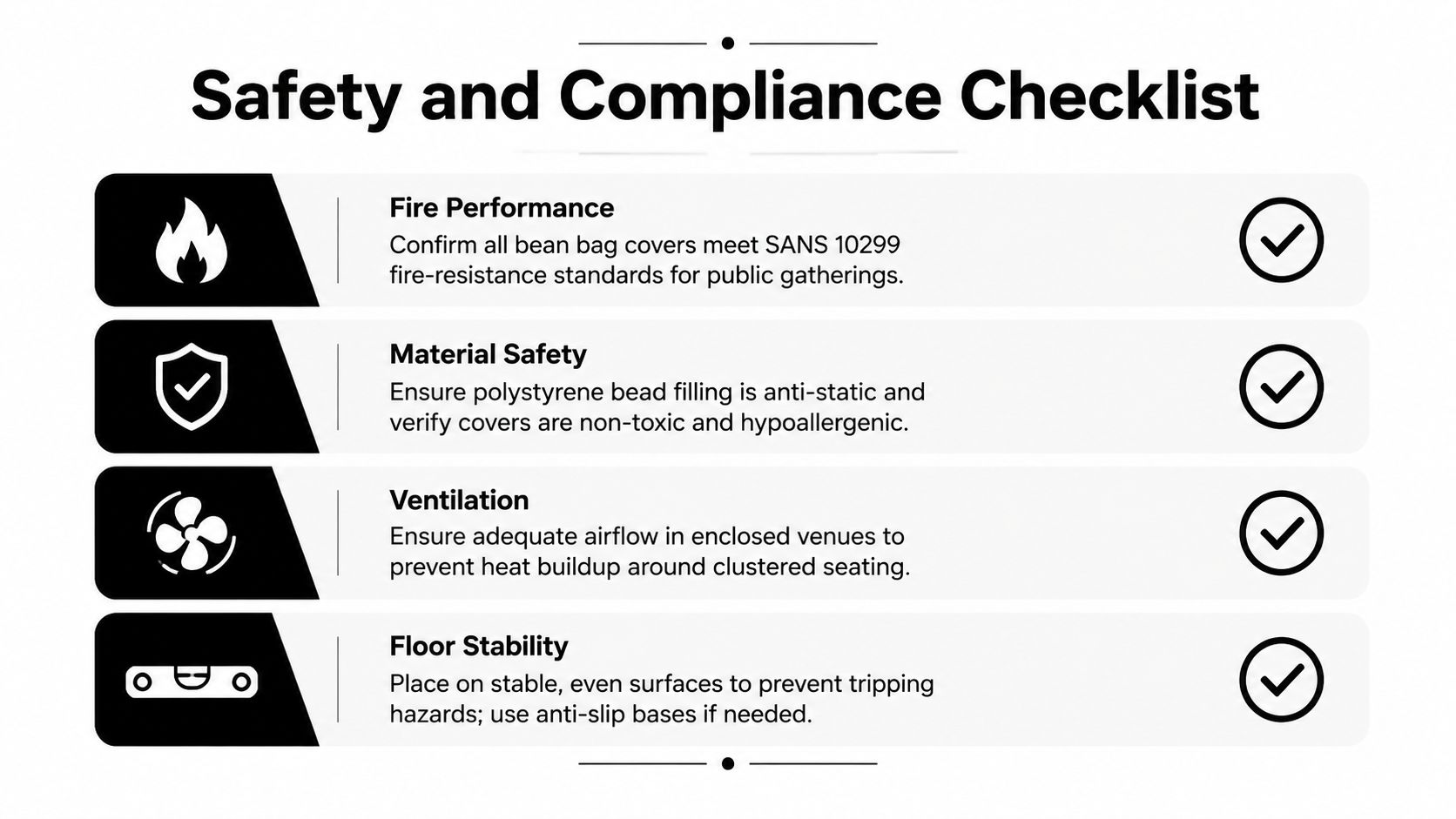
Inspect the actual hire units at delivery. Documents may be correct while an individual cover has a damaged seam or broken zip. For school events and family weddings, position the lounge where supervising adults have a clear view. Remove any unit with an opening, loose stitching, or exposed filling before guests use it.
Cleaning and Maintenance During and After Events
Hire-ready seating starts with a pre-event inspection, not with the delivery truck arriving at the venue. Check every cover for loose seams, damaged zips, flattened areas, moisture, odour, and marks that may become more visible under event lighting.
Before guests arrive
Confirm the filling level and shape each unit so the seating looks consistent across the lounge. Check the floor beneath the bags for dampness, stones, plant debris, or grit that could transfer into the cover. For outdoor events, inspect the weather forecast and agree on a rain response with the venue and rental team before setup.
Keep a small response kit nearby, but match the product to the fabric. A clean, absorbent cloth is safer than aggressive rubbing on most covers. Use a mild, fabric-appropriate cleaner only after testing it on an inconspicuous area, and avoid saturating the filling. Wipeable leather-look or vinyl covers generally support faster spot treatment, while textured textiles may hold dust and liquid more readily.
During the event, remove a badly marked unit from the guest area rather than repeatedly scrubbing it in public. Blot spills, lift solids without spreading them, and record any damage immediately. This protects the guest experience and gives the supplier an accurate handover report.
After the event
Separate dry covers from damp or dirty items as soon as the hire returns. Clean according to the supplier's instructions, then allow the cover to dry fully before storage. Cape Town's weather can change quickly, and a cover that feels only slightly damp can develop an odour or mould problem in a closed vehicle or storage room.
Grass stains and dust need different treatment from food and drink. Brush off dry debris first, then use controlled spot cleaning. Don't store outdoor units compressed under heavy equipment, and don't leave them exposed to sudden rain while waiting for collection.
A sensible maintenance record should note the unit number, visible damage, cleaning performed, and whether the closure and seams passed inspection. That simple record helps a rental operator keep inventory consistent and helps planners distinguish normal event wear from a pre-existing problem.
Hiring Versus Buying for Your Event
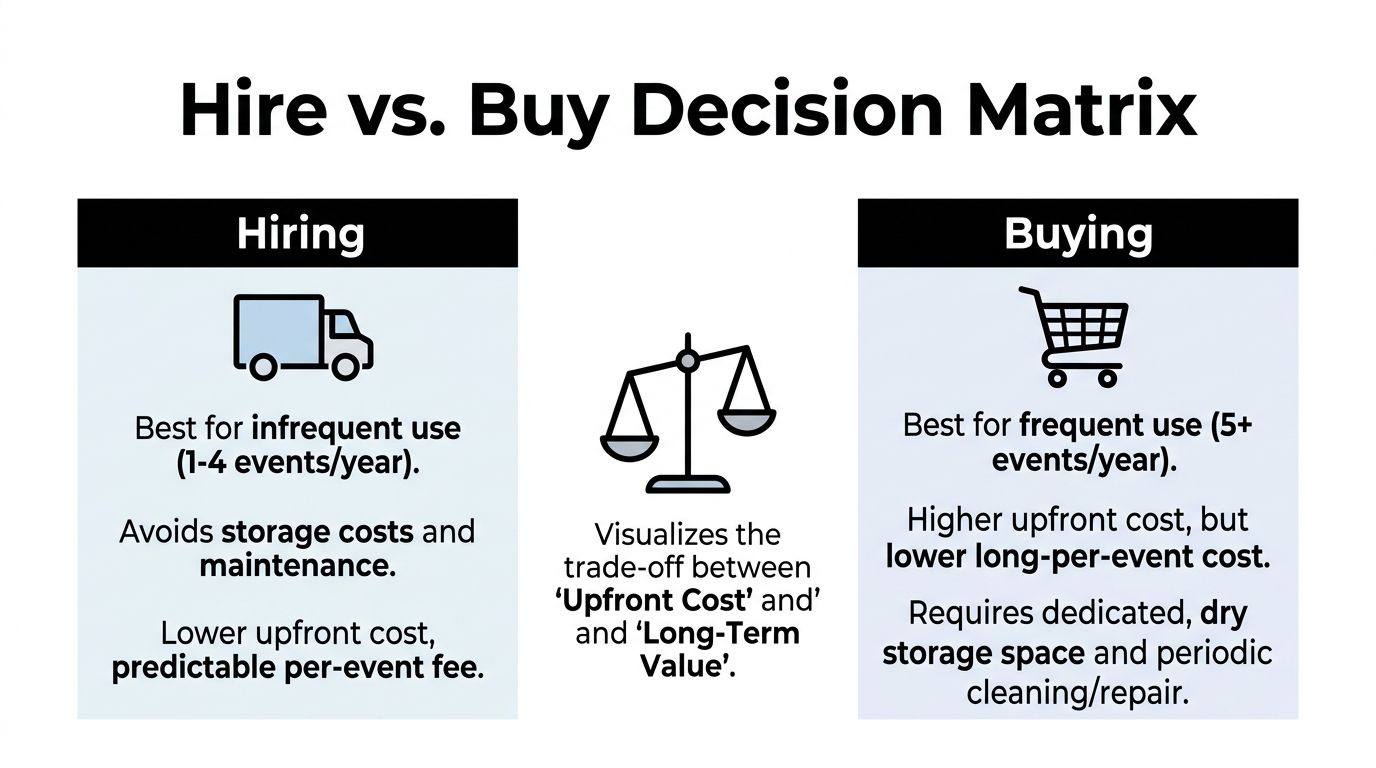
For a one-off wedding in Stellenbosch, a travelling corporate activation, or a design that changes between venues, hiring usually keeps the operation simpler. Buying can suit a school common area, corporate break room, or permanent hospitality installation where the same seating stays in place and receives regular use.
Ownership extends beyond the purchase price. You need dry storage, suitable transport, cleaning capacity, repairs, replacement covers, filling management, and a process for damage between events. In the Western Cape, damp storage and sudden weather changes can shorten a cover's useful life, while outdoor use exposes fabric to dust, grass, and heavier wear. Floor space also matters. Purchased units occupy storage between events, whereas hired stock leaves with the supplier.
A practical comparison
Hiring provides access to maintained stock, coordinated delivery, and different colours or configurations for each brief. A reliable rental company should inspect units between hires, manage cleaning, and explain its damage process. You pay per event, but avoid converting a venue, office, or storeroom into a furniture warehouse. Confirm that the supplier can provide fire-performance information and child-use guidance before the venue deadline.
Buying gives you control over availability and long-term styling. It becomes more practical when the furniture has a fixed home, frequent users, and a responsible team for cleaning, repairs, and inspections. It is harder to justify when equipment travels between Cape Town, Stellenbosch, Franschhoek, and Paarl without dedicated transport or storage.
The wedding lounge furniture hire guide helps planners compare lounge pieces before committing to ownership. For outdoor-event logistics, the Venue Finder NZ gazebo hire guide highlights delivery, site access, weather, and setup questions that also belong in a furniture-hire discussion.
Before signing, confirm delivery coverage, setup and collection times, cleaning expectations, replacement liability, weather arrangements, and the definition of damage. Ask who handles child-related damage, where units may be placed, and whether fabric or filling restrictions apply. A clear agreement prevents a late compliance issue or an unsafe placement on event day.
Your Event Seating Action Plan
Use this sequence when briefing a supplier:
- At the initial enquiry: Share the event type, venue, guest movement, indoor or outdoor location, and preferred seating mood.
- During the floor-plan stage: Mark each lounge cluster, the chair footprints, supporting tables, access routes, and clearance requirements. Use the published unit dimensions rather than estimating from photographs.
- Before confirming the order: Choose the configuration and cover for the actual use case. Prioritise wipeability for children's events and durability for lawns, terraces, and high-traffic activations.
- Before load-in: Request fire-performance information, confirm classification, inspect closure and seam requirements, and agree on the child-use policy.
- On delivery: Check condition, count the units, photograph existing marks, and confirm placement with the venue team.
- After collection: Record spills or damage promptly and ensure damp items aren't sealed into storage.
This approach turns a bean bag lounge chair from a decorative afterthought into a properly planned event asset. The right cluster can soften a formal venue, improve guest flow, and create a memorable place to pause without compromising safety or practicality.
ABC Hire supplies bean bags, couches, LED furniture, tables, chairs, and other event equipment for weddings, corporate activations, school functions, and private celebrations across Cape Town and the Winelands. Visit ABC Hire to discuss seating configurations, delivery requirements, and lounge furniture suited to your venue.