
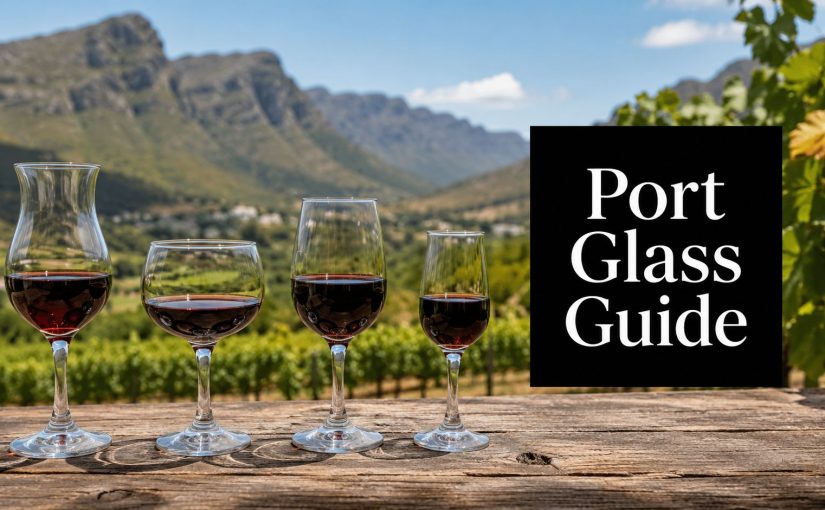
Most advice makes port drinking glasses sound like a specialist purchase for sommeliers and collectors. That's overkill for a Cape Town wedding, a Winelands tasting, or a corporate dinner. If you're hiring glassware for service on the floor, the question isn't whether the glass has a proper pedigree, it's whether it looks right, pours cleanly, stacks sensibly, and survives a busy night.
My blunt recommendation is simple. For most South African events, a small dessert-wine stem does the job better than a dedicated port glass, unless the brief is highly formal or the photo aesthetic is very specific. The old rule about tiny, tulip-shaped service still matters, but planners don't need to buy into tasting-room theory to make a good rental call. A practical port guide from McLaren Vale Cellars port guide makes the same basic point in another context, port is a serving style first, and a glass choice second.
Why Port Glasses Are Simpler Than the Internet Makes Them
Port glass advice gets inflated because people talk about it like a connoisseur problem. On a venue floor, it's a logistics problem. If your inventory already includes a small dessert-wine stem or a modest white-wine stem, you're probably closer to the right answer than you think.
The rental decision is about fit, not ceremony
Port has always been a compact pour. Antique references describe traditional service in very small vessels, often around 2–3 fluid ounces, roughly 60–90 mL, in 18th-century London records (Scottish Antiques). That's the old logic behind the shape, a small bowl, a controlled pour, and enough room for aroma without turning the glass into a splash zone.
For planners, that history matters less as nostalgia and more as a sizing clue. You do not need a giant red-wine goblet for port. You need something that reads as refined, sits neatly on a formal table, and doesn't look absurd once half-filled.
Practical rule: if the glass looks right beside dessert cutlery and espresso cups, it will usually work for port service too.
The other thing people forget is that most guests aren't there to analyse stem geometry. They're there to finish a meal well. If the drink arrives clean, measured, and elegant, the glass has done its job.
Use the smallest sensible stem you already hire
If I were building a rental brief from scratch, I'd start with a small dessert-wine stem before I'd special-order dedicated port glassware. It's easier to source, it photographs well, and it blends into mixed service without calling attention to itself. That matters on a table where the champagne flute, water goblet, and coffee service are all competing for visual space.
Dedicated port glassware is still useful for a heritage-heavy tasting or a formal dessert service, but it's not mandatory. In practice, the choice often comes down to whether the event needs a specialist look or a reliable serving solution. Most Cape Town clients need the second one.
Where Port Glasses Came From and Why the Size Matters
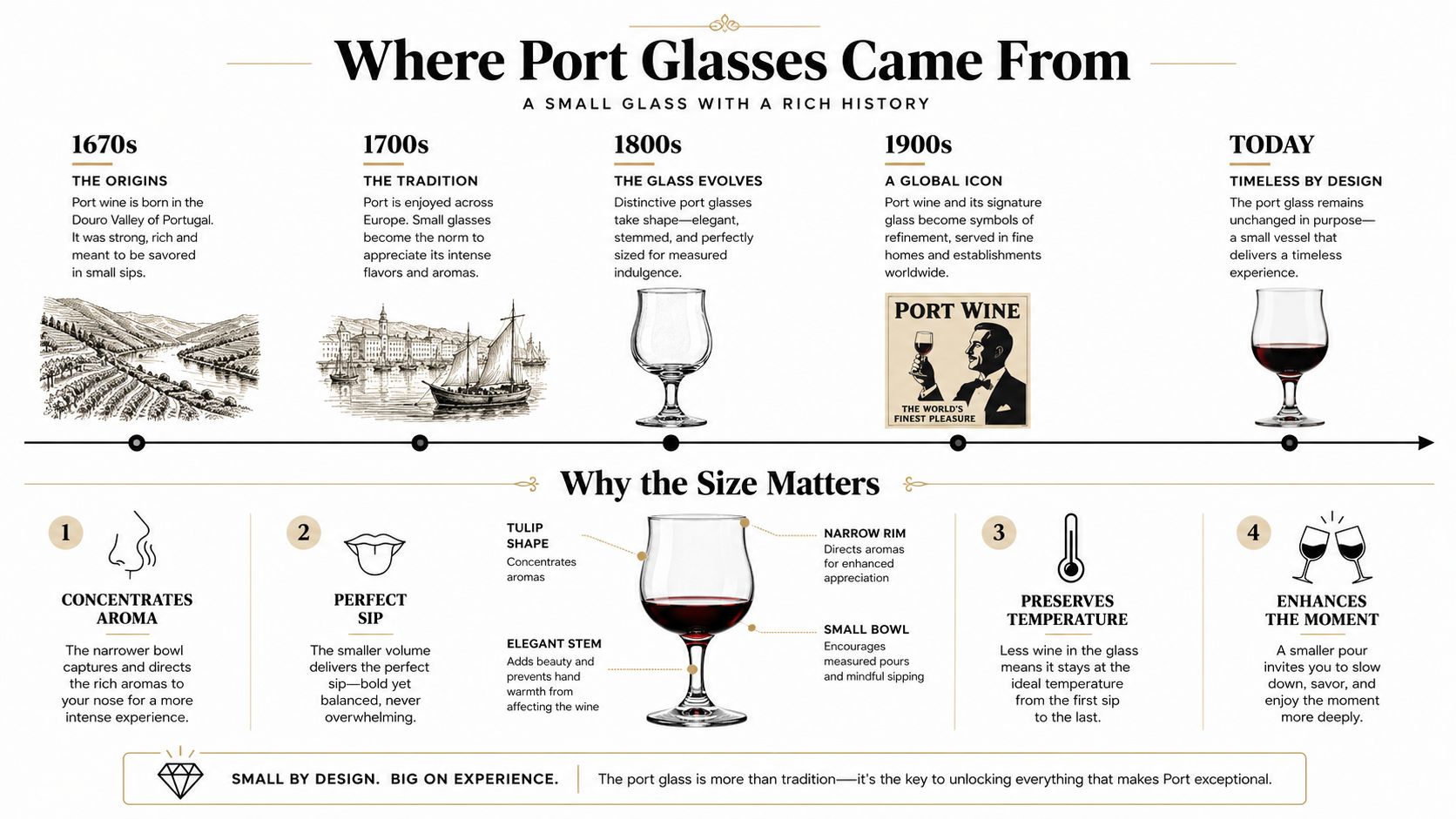
Port drinking glasses did not start as decorative overkill. They came out of the late 17th and 18th centuries, when British trade with the Douro Valley expanded and port settled into the after-dinner routine of elite homes. Once the wine was fortified with brandy to survive shipping, the service style followed the same logic, smaller pours, smaller vessels, less fuss.
The old service style still tells you what works
Those older London references are useful because they show the original brief. Port was served in very small measures, about 60–90 mL, which matched both its fortified strength and its dessert-wine role (Scottish Antiques). That is why a modern port glass still reads as restrained beside a standard wine goblet.
For rental work, the useful benchmark is the vessel, not the mythology. The practical capacity sits at 14–18 cL, with a usual pour of 5–6 cL and about one-third of the glass filled so the aroma stays concentrated (Limonadier). A glass in that range keeps the wine focused without forcing service staff to top up constantly.
Bigger wine glasses are the wrong instinct for port
The wider wine-glass trend in England is the warning sign. A Cambridge/BMJ study measured average wine-glass volume rising from 66 mL in 1700 to 449 mL in 2017, nearly 7 times larger. That shift suits still wine service. It works against port.
Port is fortified, sweeter, and usually poured with more control. A large bowl exposes too much surface area and makes the drink look lost on the table. For event work in South Africa, the better choice is a neat tulip shape in the 120–150 mL range, especially when the brief includes dessert, tasting notes, or a formal dinner finish. In practical terms, the best-looking option is often a small dessert-wine stem rather than a dedicated port glass, because it stacks better, survives service better, and fits mixed table settings without drawing the wrong kind of attention.
The supplier benchmark backs that up. Olympia's examples sit at 120 mL and 150 mL, with the taller version reaching 151 mm (Olympia crystal port glass). That is the size family I would trust for formal South African service, not because it is fussy, but because it lands well on a dressed table and holds up in rental stock.
The Four Glasses You Can Hire for Port Service
Not every event needs a dedicated port glass, and not every glass that can hold port should be used for it. The right choice depends on how formal the room is, how much stock you need to move, and whether the table setting has to carry a premium look. For rental work, I think in four practical options.
Dedicated tulip port glasses
This is the cleanest solution when the event is formal. A 120–150 mL tulip bowl gives you the right visual proportion, and the narrow top helps hold aroma while the pour stays controlled (Olympia crystal port glass). Fill it to about one-third, which keeps the wine concentrated and avoids the heavy, overexposed look of a larger stem.
Sherry glasses
Copita-style glasses and other small sherry forms sit in the 90–120 mL zone and work well when you want a compact, traditional pour. They're not identical to a classic port tulip, but they're close enough for many tastings, especially when the service is seated and the guest count is manageable. If the venue already keeps sherry or aperitif glassware in rotation, that stock can solve the port problem without another line item.
Small white-wine stems
A small white-wine stem around 180–220 mL is the flexible compromise. It's larger than ideal, but still acceptable when you need consistency with the rest of the tableware or you're serving mixed after-dinner drinks. If the port pour is only one element in a broader beverage plan, this is often the easiest hire decision.
Small dessert-wine glasses
This is the option I reach for most often in real event work. A small dessert-wine stem feels polished, rents easily, and fits with bread-and-butter service, petit fours, or cheese plates without reading as specialist kit. It's also the most forgiving choice when you're matching existing glassware instead of building a dedicated port set.
| Glass type | Capacity | Typical fill | Best event fit |
|---|---|---|---|
| Dedicated tulip port glass | 120–150 mL | About one-third, 5–7 cL | Formal tastings, cellar dinners, plated dessert service |
| Sherry glass | 90–120 mL | Small controlled pour | Aperitif-style service, intimate tastings |
| Small white-wine stem | 180–220 mL | Modest pour, not full | Mixed table service, flexible hire inventories |
| Small dessert-wine glass | Varies by supplier | Light pour, usually one-third or less | Weddings, corporate dinners, general rental use |
The best port glass in theory is not always the best one in a hire shed. The right answer is the one that matches the rest of the room and doesn't create a mismatch at service.
Stemmed vs Stemless and Crystal vs Toughened Glass
Rental reality takes over fast. Guests notice the drink, but the floor team notices breakage, packing, and whether the glassware survives the run from warehouse to venue and back again.
Stemmed glassware looks cleaner, stemless glassware handles pressure better
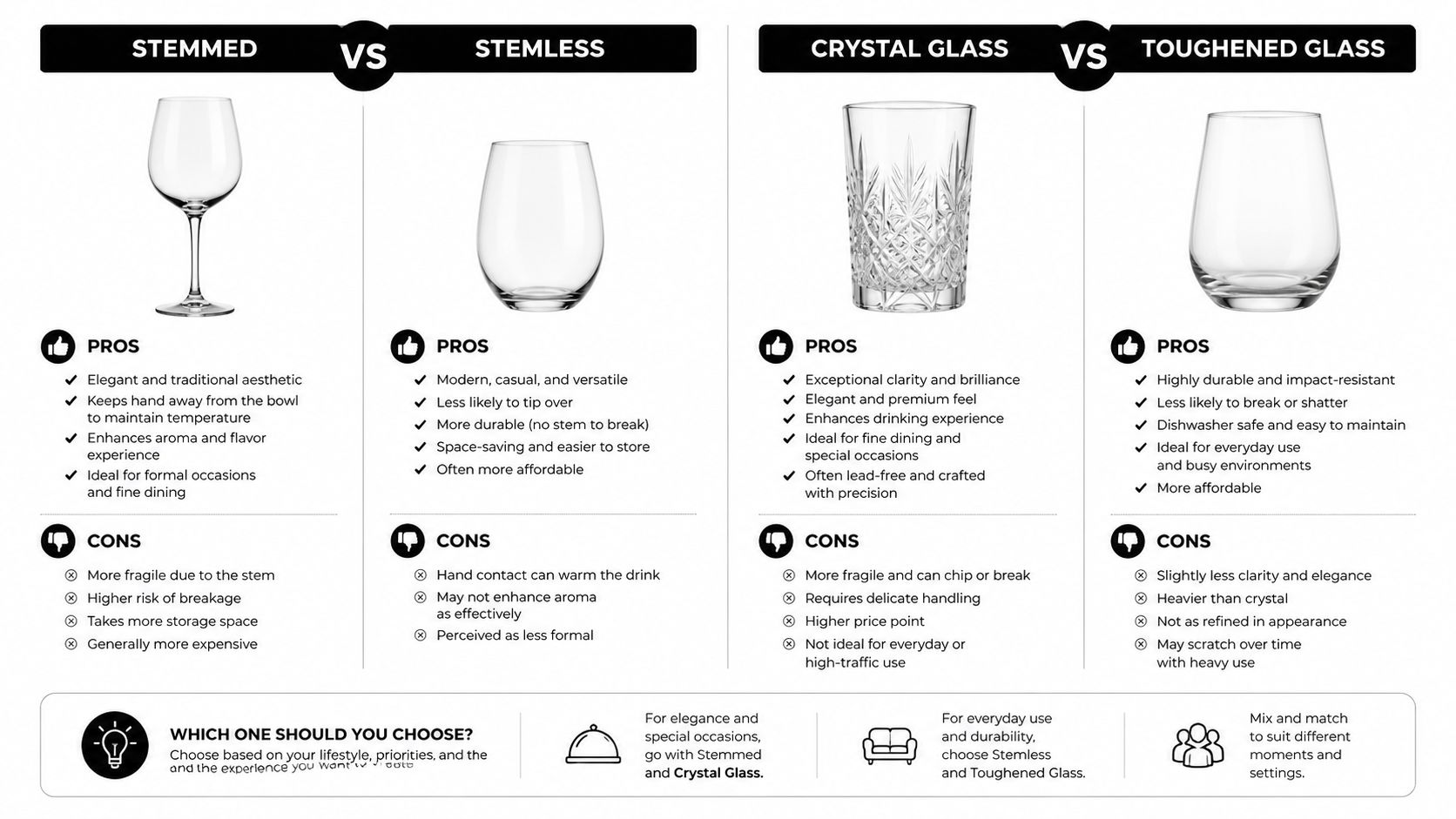
A stemmed glass photographs better. It keeps hand heat off the wine and gives a formal table a more deliberate finish. The trade-off shows up at setup and pack-down, because stems stack awkwardly, need more care in transit, and chip more easily when staff are moving quickly between prep, service, and breakdown.
Stemless glassware is tougher and packs more tightly, so it often wins for large guest counts, informal receptions, and venues with tight storage. It warms the pour faster and reads more casual, which works for a relaxed after-dinner setup and falls short at a polished estate dinner.
Crystal brings finesse, toughened glass brings practical value
Crystal gives you clarity, sparkle, and the kind of finish people associate with premium service. It is more fragile and more expensive to replace when the inevitable knock happens, so it suits a formal tasting or a small VIP dinner where the room can justify the extra care.
For most Cape Town weddings, matric dances, and corporate functions, toughened soda-lime glass is the sensible answer. You want stock that can handle transport, stacking, and repeated washing without fuss. If you want a useful reference point for the visual difference and overall glassware positioning, the ABC Hire article on wine glasses crystal gives a clear sense of why crystal gets chosen for style, even when tougher stock makes more operational sense.
The glass that breaks least is usually the glass the floor team trusts most.
Use the setting to decide, not personal preference alone
A whiskey tasting brief makes the same point from another angle. For layered aroma and controlled nosing, the vessel shape matters, but rental choice still comes down to service style and durability as well as the drink itself. A useful comparison appears in the discussion of glasses for scotch whiskey tasting, where shape and practicality are treated as a working pair rather than separate goals.
If you are running a high-contact event, choose the glass your staff can handle with confidence. If the room is formal and the guest count is contained, choose the one that flatters the table. The best-looking glass in a catalogue is useless if it creates headaches on the floor.
Matching Port Glasses to Cape Town and Winelands Events
The same pour lands differently depending on the room. A glass that looks perfect in a cellar can look fussy on a rooftop, and a casual stem can undercut the whole mood at a plated wine estate dinner. That's why I don't recommend one universal port glass for every South African event.
Stellenbosch tasting, go formal and narrow
A Stellenbosch tasting in a working cellar or estate venue calls for a proper tulip shape. The room already does part of the storytelling, so the glass should support that language instead of fighting it. Crystal or a very clean small stem works here because the setting rewards precision and the pours are usually slower and more deliberate.
Cape Town corporate dinner, keep it efficient
A Cape Town corporate year-end dinner needs neatness more than theatre. Small dessert-wine stems are the sweet spot because they fit into mixed tableware, align with broader beverage service, and don't look overdesigned beside plated dessert or coffee service. The room might be a rooftop, a hotel ballroom, or a gallery space, so the glass has to hold up across styles.
Franschhoek wedding, match the mood of the evening
A Franschhoek wedding often sits between formal and relaxed. If port is being served after dessert or near a fireplace, stemless can work if the rest of the styling is soft and the couple wants something less precious. If the brief leans elegant and the photographs matter, I'd still push for a small stemmed option.
Rule of thumb: the more the venue already feels like a wine experience, the more a dedicated tulip glass makes sense.
I also think guest count should shape the decision as much as the menu. The bigger the event, the more you should bias towards glassware that packs well, washes easily, and blends into the rest of the service line. In the Winelands, that usually means hiring for operational confidence first and romance second.
Serving, Pouring and Pairing Port the Right Way
Port service falls apart when staff treat it like ordinary wine. It needs a smaller pour, a cleaner hand, and a glass that suits the pace of the end of the meal. For most South African events, that usually points to a small dessert-wine stem rather than a dedicated port glass, because the ultimate test is whether it works on the floor, not whether it wins a tasting-room argument.
Pour small and keep the glass under control
The safest approach is still the one-third fill. A small stem gives enough bowl space for aroma without turning the pour into a heavy, sloshing serve. Keep the measure controlled and leave air above the wine so the service feels deliberate, not casual.
Keep the wine slightly cool, not icy
Port should sit below room temperature, but it should never be treated like a chilled white or a cocktail build. Ruby and tawny styles usually do well in a moderate temperature band, while vintage styles can sit a little warmer, so the bar team should resist the urge to over-ice the bottle or chill the glass aggressively. The point is balance, not brute cold.
Pair with the right plate
Dark chocolate, blue cheese, cured meats, nut tarts and dried fruit all hold their own beside port. Those flavours match the wine's sweetness and intensity without being flattened by it. If dessert already includes one of those elements, the port service feels like part of the course instead of a separate extra.
For event planners who want the service to feel tied to a real wine destination, a curated Porto itinerary gives useful context, even if the event is happening in Cape Town. If you are also building out the rest of the service setup, the practical notes on ice buckets and stands are worth keeping close, because port service usually sits inside a wider drinks station, not in isolation.
If the pairings are too sweet, the port feels heavy. If they are too sharp, the wine feels flat.
If your bar team needs one simple instruction sheet, keep it blunt. Open the bottle properly, measure the pour, and serve it in a glass with enough airspace for the bouquet to open.
Handling, Cleaning and Rental Logistics in Cape Town
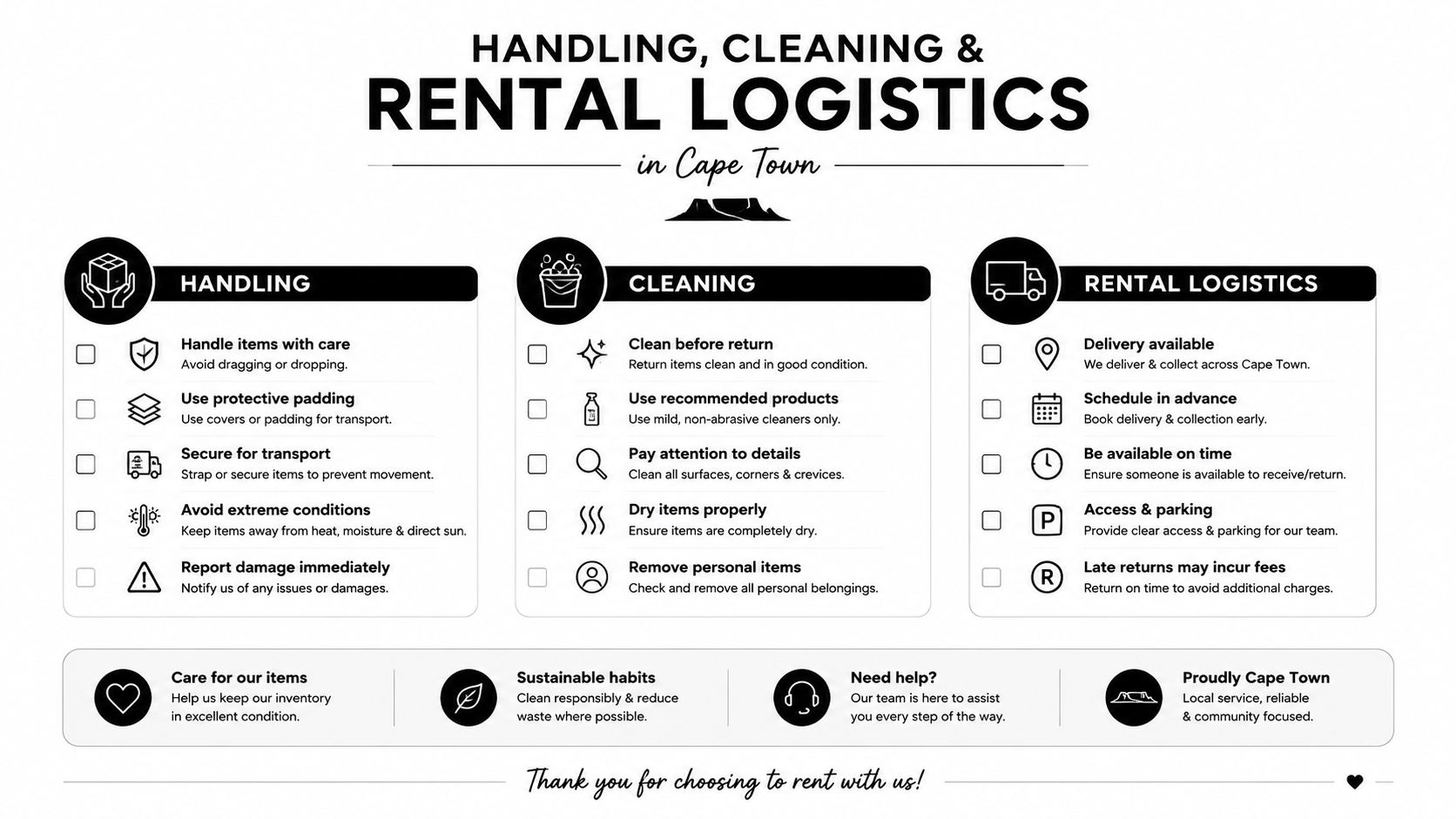
Even the right glass goes wrong if the logistics are sloppy. Port service depends on clean, chip-free stems, sensible counts, and a rental plan that doesn't leave the venue manager chasing missing stock after midnight.
Count for staggered service, not worst-case panic
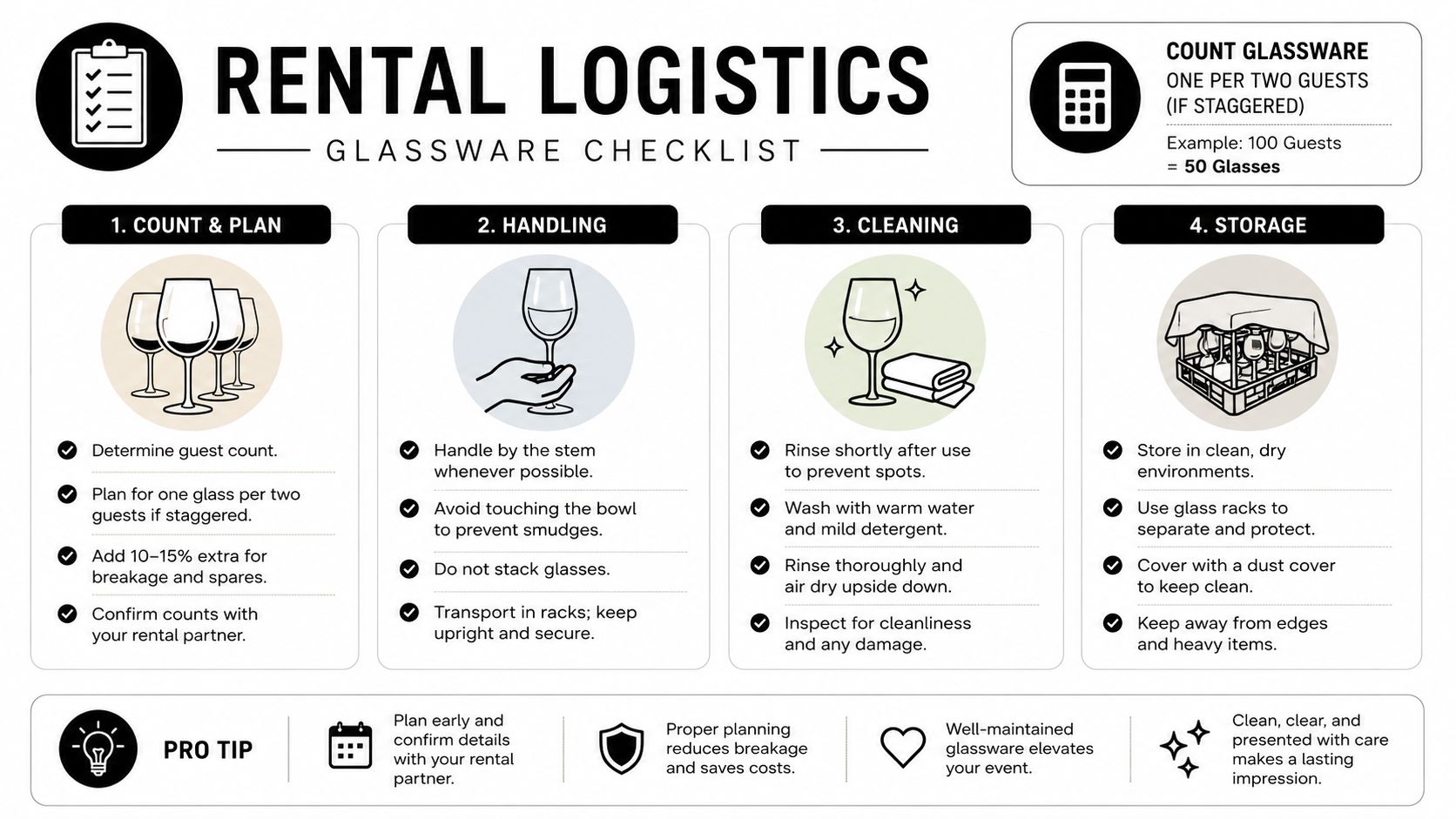
If port is being served after dessert rather than all at once, a practical count is one glass per two guests. That keeps stock sensible while still giving the service team enough headroom to replace a damaged or missing piece during the evening. For mixed events, that approach is easier to manage than over-ordering a full second set.
Inspect, polish and pack like the venue matters
Check every glass for chips and stress cracks before it leaves the warehouse. Polish with a lint-free cloth, not a rough towel, or you'll end up with water marks that show under warm lighting. Pack by size and style so the same glasses come back together, especially if the venue has a narrow service lift or a tight load-in window.
Work with a rental partner that understands event flow
A good supplier should be able to handle delivery across Cape Town, Stellenbosch, Franschhoek and Paarl, then collect on the schedule the venue needs. For multi-day hires, turnaround on washing and repacking needs to be clear from the start. If you're comparing broader hire categories, the ABC Hire guide to cutlery and crockery hire is a useful reminder that glassware should be briefed as part of the whole table service, not as an afterthought.
ABC Hire also carries glassware as part of its event hire range, which matters if you're trying to keep the drink service consistent across water, wine, and after-dinner pours. That's the kind of practical overlap that saves time on a floor plan.
Putting Together Your Rental-Ready Glassware Brief
A good port brief is short. It should tell the supplier what glass style you want, how many guests you're serving, where the venue is, and whether the pour is formal, casual, or tied to a dessert course. If you can fit the service logic on one page, the hire order is usually clear enough for everyone involved.
Start with the glass choice. For most Cape Town and Winelands events, I'd write small dessert-wine stem or small tulip port glass, then add the style and capacity if the venue is being precise about presentation. After that, note the delivery suburb, access limits, and whether the glassware needs to match existing table settings.
Then add the service instructions. Say whether port will be poured seated, after dessert, or as a standing reception pour, and whether the bar team should expect staggered serving or a single round. Finish with a clean breakage expectation and any wash-back requirements if the event runs over more than one day.
If you keep it that tight, the rental company can do the rest without guesswork. That's the primary job here, not arguing over the perfect shape on paper. The best setup is the one that lands cleanly on the table and disappears into the service.
ABC Hire supplies glassware as part of its Cape Town event hire range, so if you need port service that matches the rest of your tables, they can help you build the order around the full floor plan. For weddings, tastings, and corporate dinners in Cape Town, Stellenbosch, Franschhoek, or Paarl, visit ABC Hire and ask for a glassware brief that fits your guest count, venue access, and service style.