
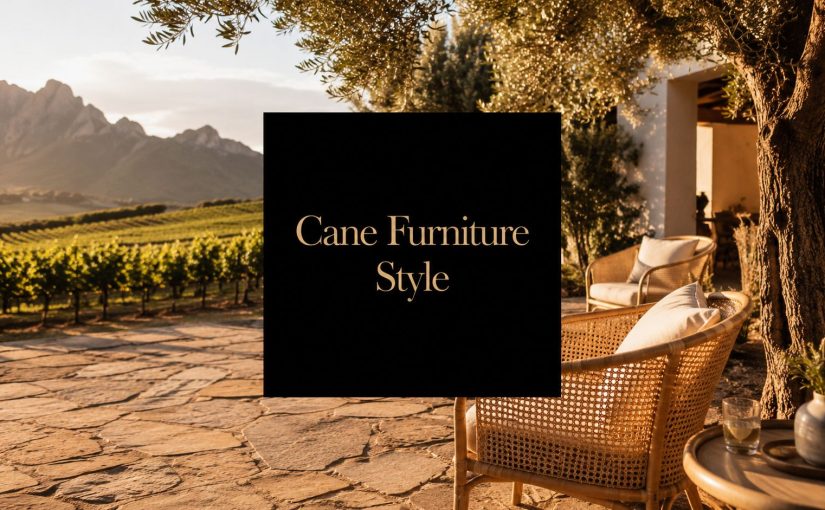
You're probably trying to land a very specific look. Not generic “event furniture”, but a room that feels polished, relaxed, layered, and worth photographing from every angle.
That's usually where Malawian cane furniture enters the conversation. In Cape Town and the Winelands, it solves a styling problem that planners run into all the time. Banquet seating can feel too formal. Contemporary lounge pieces can read cold. Rustic timber can tip too far into farm-style if it isn't handled carefully. Cane sits in the middle and does the hard job well.
It softens a marquee, gives structure to a vineyard terrace, and makes a corporate lounge feel less transactional. It also has to survive real event conditions. Deliveries on tight schedules, movement between ceremony and reception areas, dry inland heat, coastal air, and guests who don't treat furniture like museum pieces. That's where experience matters more than mood boards.
The Timeless Charm of Malawian Cane Furniture
A planner might start with a brief like this. The couple wants elegance, but they don't want the wedding to feel stiff. The venue has stone, oak, lawn, and mountain views. Standard conference chairs are out. Heavy upholstered lounge seating feels wrong. They need something that belongs in the surroundings rather than competing with it.
That's why Malawian cane furniture has become such a dependable choice for refined events in the Western Cape. It brings handwoven texture into a setting without making the space feel over-styled. A single pair of cane lounge chairs can warm up a ceremony signing table area. A full lounge cluster can give shape to a pre-dinner drinks space that would otherwise feel scattered.
Why it works so well in Cape settings
Cape Town and the Winelands reward furniture that looks settled in natural light. Cane does that beautifully. It catches sun without glaring, reads well against linen and timber, and doesn't flatten out in photographs the way some plastic or metal event furniture can.
For planners building layered spaces, it also bridges styles that don't always sit easily together:
- Wedding styling: soft florals, natural rugs, candlelight, neutral upholstery
- Brand launches: clean signage, structured seating zones, edited colour palettes
- Private celebrations: relaxed conversation areas that still feel curated
For anyone shaping a venue with warmth and restraint, this wider conversation around designing authentic rustic interiors is useful because it shows how natural materials keep a room grounded without making it feel themed.
Cane works best when the rest of the room isn't fighting it. Let it be the texture that softens the hard edges.
More than a passing trend
The reason it keeps returning season after season is simple. It doesn't rely on novelty. It has heritage, visual lightness, and enough personality to carry a space without becoming the whole story.
That matters at events. Trend-led pieces date quickly. Good cane doesn't. It feels right at a vineyard wedding, a luxury garden lunch, a panel discussion, or a milestone birthday under a stretch tent. It's one of the few furniture categories that can look relaxed and still read premium.
What Defines Authentic Malawian Cane Furniture
At a site visit, authenticity shows up long before a guest sits down. It shows in how a chair lifts, how the frame holds its shape, and whether the weave still looks calm after loading, stacking, and a bumpy run out to the Winelands. For rental use, that distinction matters more than the label on a product listing.
Authentic Malawian cane furniture is usually identified by two things. The first is a solid timber frame, commonly made with blue gum. The second is handwoven cane that forms part of the chair's working structure, not just a decorative skin. That combination gives the piece its light visual profile and its practical strength.
Start with the frame
I check the frame before I check the pattern of the weave. If the frame is weak, the chair may still photograph well, but it will struggle in a real event cycle.
A good frame earns its keep in three places:
Repeated handling
Chairs are loaded, unloaded, carried across gravel, and reset more than once in a busy week. The frame needs to stay square and balanced.Uneven surfaces
Lawns, historic venues, timber decks, and tent flooring all place different pressure on the legs and joints. A stable frame copes better with those shifts.Seasonal movement
Cape Town and the Winelands are hard on natural materials. Dry heat inland and damp coastal air can expose weak construction quickly.
That is why I treat authentic cane and generic woven seating as separate categories. If you want a broader view of what works outdoors, this guide to wicker furniture for outdoor event use is a useful companion.
Then inspect the weave
The weave tells you whether the piece was made for use or made to imitate the look. Authentic Malawian cane rarely has the overly perfect, pressed-flat finish you see on factory copies. The tension feels consistent, but the surface still has the small variations that come with handwork.
Those details matter in rentals because the weave takes real pressure. Guests shift in their seats. Lounge setups run for hours. Furniture is moved by different crew teams, not handled like a showroom sample.
Use this quick check on site or in a warehouse:
- Look for slight variation in the weave: hand-finished work has character without looking messy.
- Check where cane meets timber: weak replicas often start separating at stress points.
- Press the seat and back gently: the response should feel supportive, not brittle or hollow.
- Turn the chair over: quality often shows underneath, where poor copies cut corners.
Practical rule: If the underside looks rushed, the chair will usually underperform in rentals.
Why the making process matters
Material preparation affects how the chair behaves after a season of use. Cane that has been handled and woven properly keeps a better balance between flexibility and support. Poorly prepared cane tends to dry out, loosen, or crack sooner, especially once it moves between storage, trucks, and outdoor venues.
That point gets missed in a lot of event buying decisions. Planners often focus on silhouette, colour, and price per unit. Rental teams deal with the after-effects. We see which chairs come back looking sound, and which ones start failing at the joins after a short run of events.
How to spot the difference in practice
A side-by-side comparison usually makes the choice clear.
| Feature | Authentic Malawian cane | Lower-grade imitation |
|---|---|---|
| Frame feel | Stable and well-balanced | Light, but often less secure |
| Seat response | Flexible with support | Too rigid or already sagging |
| Finish | Handmade character | Repetitive, machine-flat appearance |
| Rental use | Suited to frequent handling | Better kept for light decorative use |
For event planners, authenticity is a performance question as much as a design one. The right piece holds up in transport, sits well on mixed venue surfaces, and stays presentable through a Cape season that can shift from hot sun to damp air in the same week.
Built for Beauty and Durability in the Cape Climate
One of the most common questions I hear is simple. It looks good, but will it cope outdoors in the Cape?
That's the right question. A lot of imported furniture performs well in a studio or showroom and then struggles once it meets a real South African event calendar. Summer in Stellenbosch is dry and hot. Atlantic-facing venues can turn damp and windy. Garden events move between sun and shade all afternoon. Furniture has to absorb those shifts without becoming unreliable.
Why authentic cane performs better than lookalikes
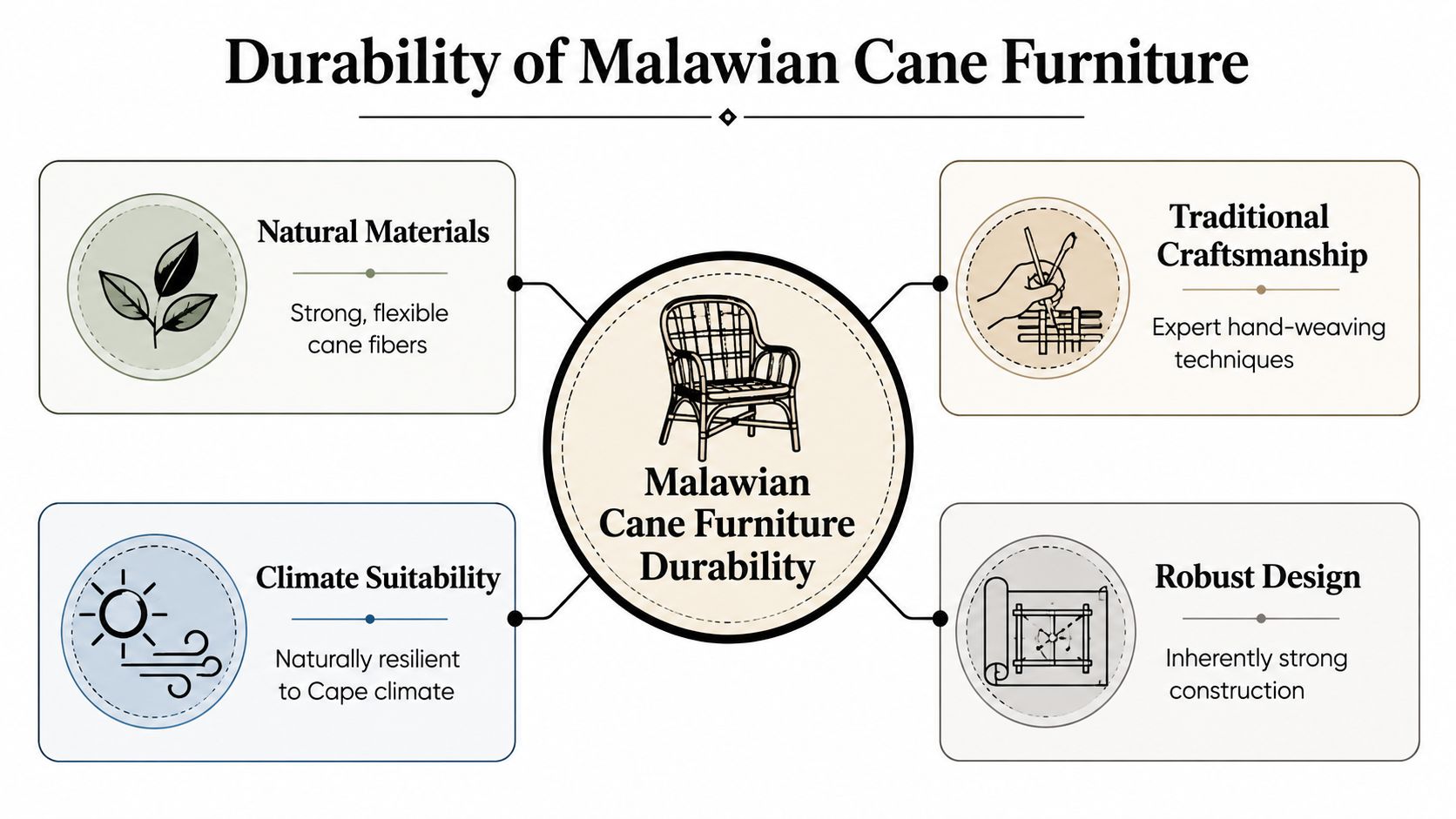
The local concern isn't whether cane is stylish. It's whether it can stay presentable and functional through changing coastal and inland conditions. That concern is justified. Smith Honig's Malawi cane chair listing highlights that existing content often misses how furniture behaves in South Africa's hot and sometimes humid coastal climates, while noting that authentic Malawian cane is better equipped than other imported rattan because of its material composition.
In practical terms, that means planners should stop grouping all woven furniture into one category. “Rattan-look” is not a performance standard. Construction decides the result.
For a useful companion read on placement and weather considerations, this guide to outdoor wicker furniture use helps frame the broader decisions around exterior event styling.
What works on local venues
Authentic Malawian cane works well in these situations:
- Ceremony lounges under partial shade: the furniture keeps visual softness without looking bulky.
- Covered terraces near the coast: it suits the environment better than glossy or over-upholstered pieces.
- Indoor-outdoor transitions: cane doesn't feel visually jarring when guests move between spaces.
- Winelands reception breakaway areas: it complements stone, timber, grass, and vineyard backdrops.
What doesn't work is careless placement. Any natural-fibre furniture will suffer if it's left exposed for extended periods in punishing conditions without thought for timing, cover, or handling. Good planners don't ask furniture to do the impossible. They match the product to the site and the schedule.
Use cane as premium event seating, not as permanent outdoor furniture abandoned to the weather.
The local trade-off
Here's the honest version. Malawian cane furniture is durable, but it isn't indestructible. That's a strength. It performs because of a balanced construction that combines support with flexibility. Furniture that feels rock-hard can crack, split, or age badly. Furniture with some elasticity often handles event use more gracefully.
For Cape events, that balance is exactly what you want. It gives you furniture that looks refined in photographs and behaves sensibly on the ground, which is a better outcome than choosing something purely on trend value.
Styling Ideas for Weddings and Corporate Functions
The best results come when cane furniture is styled with intent. It shouldn't be dropped into a venue as a generic “lounge option”. It needs supporting pieces, spacing, and texture around it so the whole zone feels resolved.
A Winelands wedding lounge that feels soft, not sloppy
At a vineyard wedding, cane usually earns its place in one of three areas. The pre-ceremony arrival zone, the drinks lounge after the vows, or a quiet corner near the reception where guests can settle with a glass in hand.
The strongest layouts use a mix of single chairs and occasional tables rather than one oversized cluster. Cane already has visual texture. If you overfill the area, it starts to feel busy.
A wedding combination that works well:
- Two or four cane chairs facing inward for conversation
- A small side table for candles, menus, or welcome drinks
- A natural-fibre rug to anchor the grouping
- Loose cushions in ivory, clay, oat, sage, or muted blush
- Layered florals that feel garden-grown rather than tightly formal
The key is restraint. Soft linen cushions and one or two throws are enough. Once every chair has a bow, tassel, and oversized floral tie-on, the furniture loses its sophistication.
Wedding styling should feel collected. If every element is shouting “rustic luxury”, the room starts to look staged instead of elegant.
For evening receptions, I like cane paired with warm lamps, candle clusters, and low arrangements rather than high centrepieces nearby. That keeps sightlines open and lets the woven detail show in the lighting.
A corporate setup that doesn't feel like a conference foyer
Corporate teams often want warmth but worry that cane may feel too informal. It doesn't, if the styling is disciplined.
At a product launch or media event, cane works best in deliberate zones. Think registration waiting area, speaker green room, panel seating with personality, or networking lounges that break up a large venue. The furniture softens the atmosphere and encourages guests to stay longer in conversation areas.
A cleaner corporate formula looks like this:
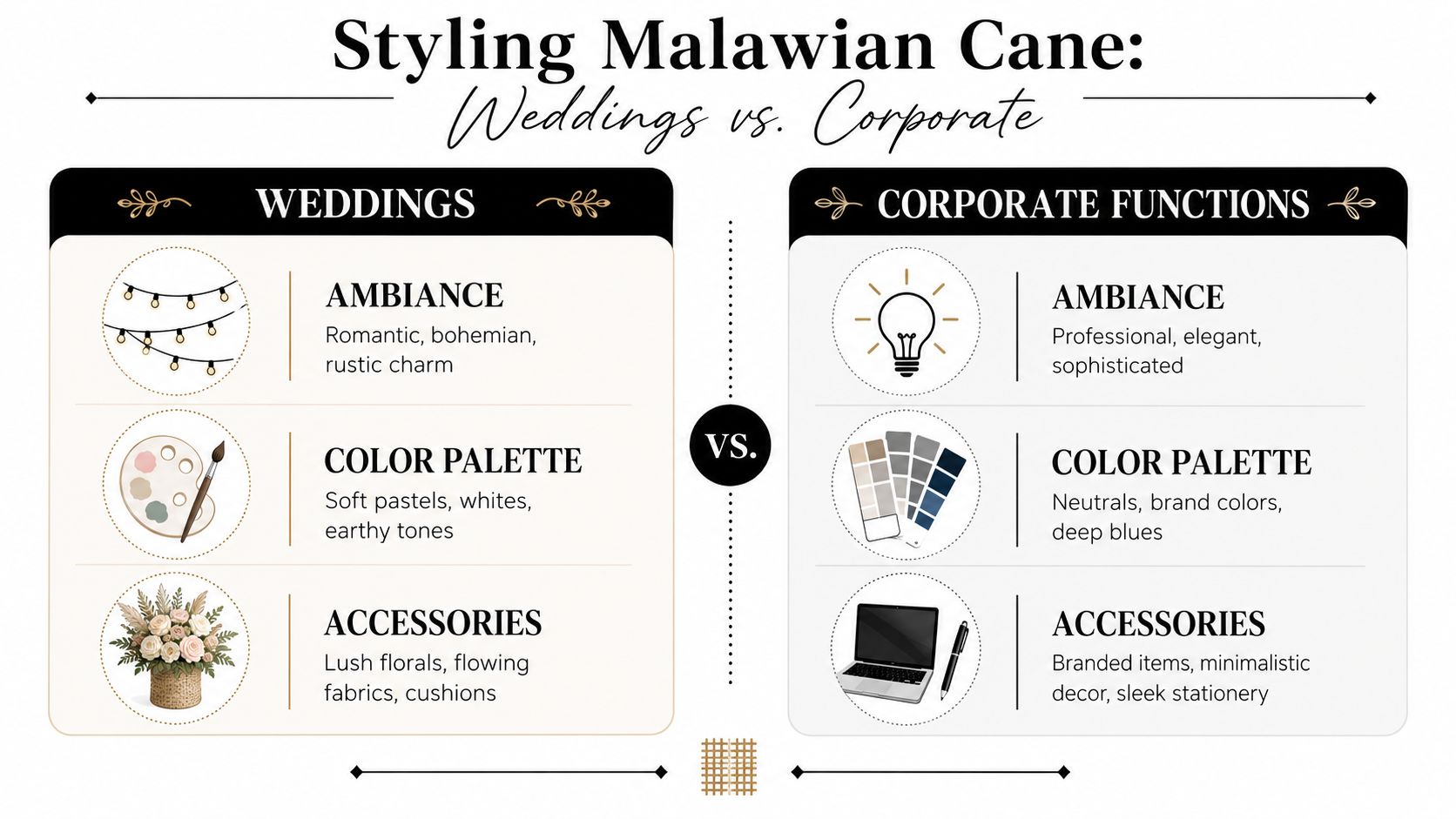
| Element | Wedding approach | Corporate approach |
|---|---|---|
| Palette | Soft neutrals and pastels | Neutrals with one or two brand colours |
| Textiles | Linen, soft layering | Minimal cushions, tailored finishes |
| Tables | Candles, florals, signage | Branded collateral, sleek tabletop styling |
| Lighting | Romantic and warm | Focused, polished, architectural |
One useful reference point for planners shaping guest movement, arrivals, and premium presentation is this broader piece on 2026 corporate event planning. It's not about furniture specifically, but it does reinforce how transport, staging, and comfort all affect the final experience.
If you're leaning into a heritage, editorial, or textured event look, this guide to vintage furniture styling in Cape Town also helps position cane within a fuller event design language.
Pairings that lift the furniture
Some combinations consistently work better than others.
- Best with cane: travertine-look tables, timber side tables, linen upholstery, neutral ceramics, woven rugs
- Use carefully: mirrored plinths, chrome cocktail tables, ultra-gloss finishes
- Usually too much: heavy boho overload, dense macramé, excessive dried grass installations around every cluster
The furniture already brings pattern and depth. Your job is to edit around it so guests notice the room, not just the props.
Your Guide to Renting in Cape Town and the Winelands
A planner signs off a beautiful cane setup for a Franschhoek wedding, then the venue confirms a narrow cellar entrance, a short load-in window, and a lawn that turns soft after morning mist. That is usually where rental decisions get tested. In the Cape, the right cane furniture is not only about style. It has to arrive on time, fit the access route, and still look sharp after setup in wind, dust, or damp coastal air.
That is why I always advise clients to book by venue conditions first, then by look. Cane photographs well, but a successful hire depends on stock consistency, maintenance standards, and a supplier who knows the difference between loading into a CBD hotel and striking from a wine estate after midnight.
What to ask before you book
Start with the questions that affect the event day, not only the quote.
Ask how the furniture is stored between hires, whether the pieces are closely matched, and how the team handles last-minute venue changes. In the Winelands, access can shift quickly because of weather, farm operations, or revised floorplans. A supplier who has worked those venues before will usually spot problems early.
A good rental partner should answer clearly on:
- Inventory consistency: are the chairs and loungers close enough in tone and shape for a polished setup?
- Condition control: how are frames, weaving, and finishes checked after each hire?
- Delivery timing: can the team work within venue access windows and alongside florists, technical crew, and caterers?
- Collection planning: what happens if speeches run late or the strike starts after guests have cleared slowly?
- Venue familiarity: has the supplier delivered to beaches, estates, private homes, and central city venues with restricted access?
Choose by zone, not by single piece
Clients often begin with one standout chair, then discover the room still feels incomplete. Cane works best when it is planned as part of the guest flow.
That usually means choosing where people will sit, wait, gather, or take photos. A ceremony entrance needs a different quantity and layout from a pre-drinks terrace or a speaker lounge at a conference.
Typical hire approaches include:
Accent seating only
Best for a signing table area, entrance moment, or styled photo corner.Small lounge clusters
Useful for cocktail hour, shaded verandas, and relaxed networking spaces.Repeated seating zones
Best for larger weddings and corporate functions where guests spread across several areas.
If you need a wider view of quantities, layouts, and mixed furniture options, this guide to furniture hire in Cape Town is a practical place to start.
What a well-run delivery actually looks like
The strongest setups are planned backwards from the venue. That includes gate access, stairs, gravel drives, lift restrictions, cellar doors, weather cover, and the time other suppliers need on the floor.
Cape Town and the Winelands add their own pressures. South Easter wind can delay outdoor placement. Coastal damp can leave furniture needing a quick wipe before guests arrive. On farms and estates, long carry distances and uneven ground slow crews down if the plan was too optimistic.
The suppliers worth booking usually have the same habits:
- A placement plan confirmed before dispatch
- A realistic setup window based on the venue
- One clear onsite contact
- A count and placement check on arrival
- A collection time that matches venue strike rules
If a supplier is vague about how delivery will run, expect problems later.
Booking instinct that usually proves right
Beautiful product shots are not enough. The better question is whether the supplier can protect the look once the furniture leaves the warehouse and hits a real Cape Town event site.
Malawian cane is a strong rental choice here because it brings warmth, texture, and a premium finish without feeling heavy or over-styled. But it performs best when the hire company understands local weather, transport routes, venue access, and turnaround pressure. That local knowledge is what keeps the furniture looking refined from first placement to final guest departure.
Event Day Care and Transport Guidance
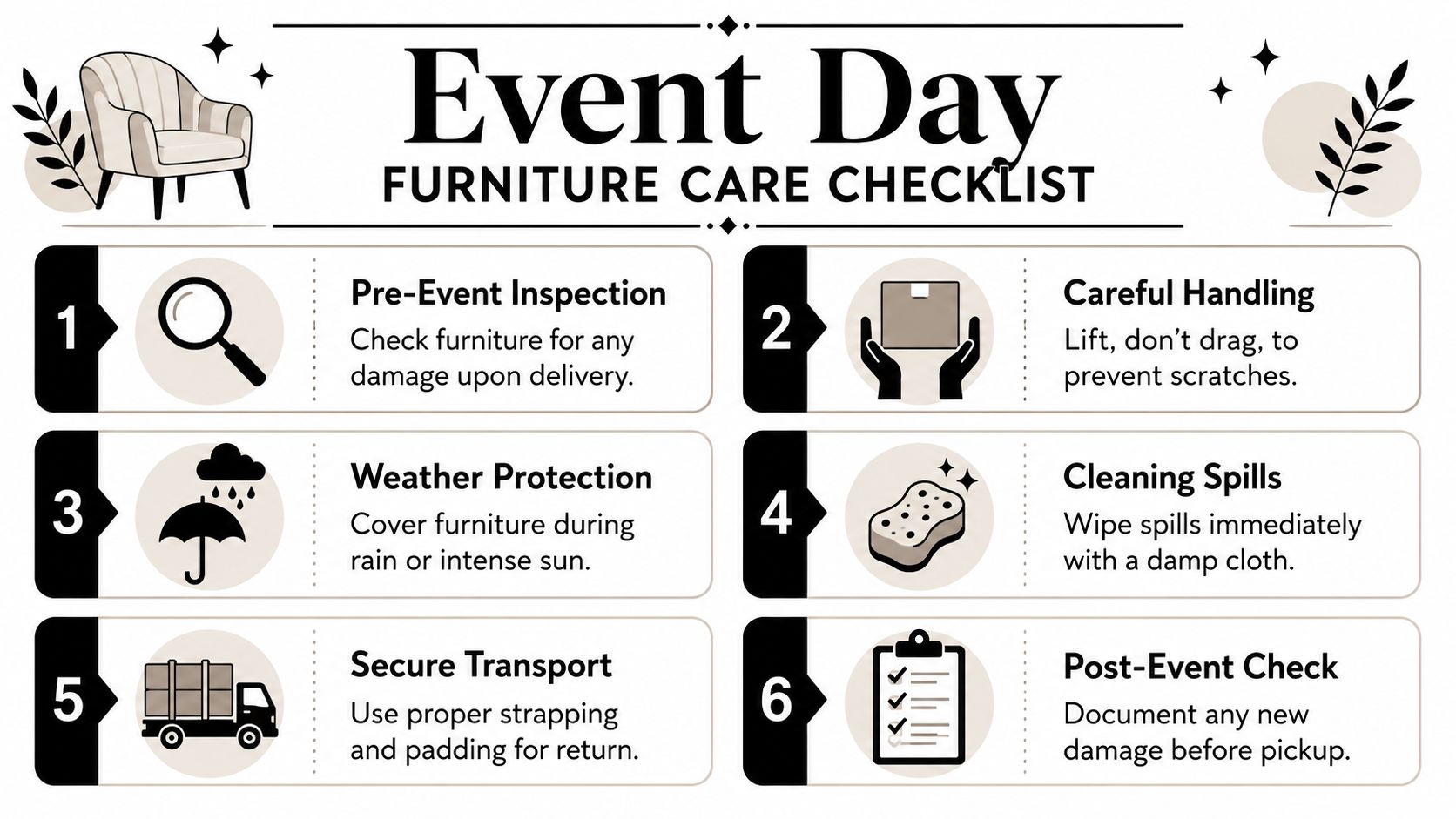
A cane chair can leave the warehouse in excellent condition and still arrive on the floor looking tired if the crew handles it badly. On Cape Town event days, the pressure points are predictable: quick room turns, damp morning air, lawn setups, and return loading after dark. Good handling protects both the finish and the shape.
What crews should do on site
Authentic pieces are practical to work with because they are light enough to place efficiently and comfortable enough for guest areas, as noted in Malawi Furniture's care guidance. That advantage disappears if teams grab the woven seat, drag the base across stone, or leave pieces exposed while waiting for the rest of the install.
- Lift from the frame: hands should be on the solid structure, not the woven seat or back.
- Set each piece down on firm, level ground: this matters on lawns, gravel courtyards, and farm venues with uneven surfaces.
- Wipe moisture and spills promptly: coastal damp, condensation from drinks, and light rain all need quick attention with a soft damp cloth.
- Stage outdoor pieces as late as the schedule allows: less time in direct sun and wind means less cleaning and fewer last-minute touch-ups.
- Use covers during holding periods: if furniture is waiting in a loading zone or under partial shelter, keep dust and moisture off it.
One habit saves a lot of damage. Carry cane furniture the way specialist antique movers handle older timber pieces: supported from the strongest points, never by the decorative or woven sections.
Common mistakes during setup and strike
The problems I see most often are not dramatic breakages. They are small handling errors that add up over a busy season.
- Don't stack pieces unless that design is meant for stacking.
- Don't use arms, woven edges, or backrests as tie-down points in the truck.
- Don't place soaked florals, ice buckets, or dripping drink tubs directly on cane surfaces.
- Don't leave furniture standing uncovered through a weather change if guests are still hours away.
Cape weather is the ultimate test. A dry, hot setup in the Winelands can leave pieces dusty by guest arrival. A coastal job can bring mist, salt air, and damp cushions before the first person sits down. Teams that work here regularly plan for both.
What proper rental maintenance looks like
Well-kept cane comes from routine conditioning, careful storage, and disciplined loading. It also needs periodic polishing to top and bottom cane surfaces with the right oil-based product, applied sparingly, as noted earlier in the same care guidance.
That is the difference between furniture that photographs well once and furniture that keeps its finish across repeated hires. Guests may never notice the maintenance standard directly. They notice the result immediately.
Your Malawian Cane Furniture Questions Answered
Can it be used outdoors for a Cape Town event?
Yes, if the setup is sensible. Cane works well for outdoor ceremonies, covered terraces, lawn lounges, and transition spaces between indoor and outdoor areas. The important part is placement, timing, and weather awareness. It's event furniture, not something to leave exposed without a plan.
Is it actually comfortable for guests?
Yes. Good cane chairs feel supportive rather than stiff, which is why they work for lounges, waiting areas, and conversation settings. They're also visually lighter than bulky upholstered options, so you don't sacrifice comfort to get the look. If the event runs long, adding cushions improves comfort and helps tie the furniture into the wider palette.
How far in advance should we book?
Book as early as you can once your venue and date are confirmed. Cane is one of those categories that gets requested for weddings, launches, private celebrations, and styled shoots, often by clients chasing a similar aesthetic. Early booking gives you a better chance of getting matching pieces and the exact quantities you need.
What should we ask a rental company before saying yes?
Ask about condition consistency, transport procedures, cleaning standards, and how they handle venue access restrictions. If your event includes premium or fragile décor, it's also worth understanding whether the supplier approaches loading and movement with the same care you'd expect from specialists who handle delicate pieces, similar to the standards described by professional antique movers.
The short version is this. Malawian cane furniture is a strong choice when you want warmth, elegance, and a more thoughtful event environment. The result depends on choosing authentic pieces and working with a team that understands how they should be handled in local conditions.
If you're planning a wedding, launch, private celebration, or formal event in Cape Town or the Winelands, ABC Hire can help you source event furniture that looks right and works hard on the day. Browse the range, confirm availability early, and build a setup that feels as polished in person as it does on your mood board.