
You've probably had this brief before. The venue is beautiful, the client loves the look, and then the floorplan lands in your inbox and everything gets awkward. The farmstead dining room has thick walls and narrow pinch points. The courtyard is charming but uneven. The marquee has poles exactly where you don't want them. Or the city venue looks generous online, then feels tight the moment you start placing chairs.
That's where the small round table stops being a filler item and starts doing real work. In Cape Town and the Winelands, the right small table can rescue circulation, soften a rigid room, and make guests feel more comfortable without making the event look improvised. It's one of those pieces that planners tend to underestimate until a difficult venue reminds them why shape matters.
Why a Small Round Table is Your Secret Weapon
A small round table earns its keep in spaces that aren't perfectly square, perfectly flat, or perfectly forgiving. That describes a lot of Western Cape venues. Historic farm buildings often have awkward corners, old thresholds, and support elements that punish rigid layouts. A round table gives you more freedom to shift, rotate, and open up traffic lanes without the whole room looking off-balance.
It also changes the way people behave. Guests don't have to negotiate “head” positions, and conversation starts more naturally when everyone sits on an equal curve. At a wedding in Franschhoek, that matters. At a CBD brand launch where people are circulating between drinks, canapés, and short conversations, it matters just as much.
Why planners keep coming back to them
Its value isn't only visual. It's operational.
- They fit difficult rooms better: Small rounds slide into alcoves, between poles, and beside dance floors with less visual heaviness than square or rectangular options.
- They encourage interaction: Guests can make eye contact more easily, which helps at intimate dinners, networking events, and private celebrations.
- They soften the room: In venues with lots of stone, glass, steel, or timber, a circular top breaks up hard lines and makes the setup feel less formal.
- They adapt well: You can use them for two guests with drinks, for a three-person seated setting, or as part of a mixed-format event.
Practical rule: If the venue feels tighter in person than it did on the site visit photos, a small round table usually gives you more recovery options than a hard-cornered layout.
There's also a styling advantage. A small round table can look polished with very little on it. A cloth, a low arrangement, the right chair, and suddenly the setup feels deliberate instead of sparse. If you're comparing timber options and finishes, a good reference point is this guide to a wood round table for events.
For planners who work across weddings, matric dances, launches, and home functions, that versatility is the secret. One furniture choice solves layout, flow, and atmosphere at the same time.
Sizing and Spacing Your Tables Correctly
You feel spacing mistakes fastest at guest level. A chair clips the waiter carrying mains. Someone near the barn door has to stand to let the row behind them out. On a calm floorplan, everything looked fine. In a real Cape Town or Winelands venue, especially one with thick walls, uneven patios, or a breeze pushing people under cover, that layout can tighten up very quickly.
The fix starts with footprint, not guest count. I plan small rounds by the space they occupy once chairs are pulled out and staff are moving, not by the maximum number a brochure says they can seat. That matters even more at older Stellenbosch and Franschhoek properties where door openings are narrow, verandas steal usable width, and one support pillar can ruin an otherwise tidy grid.
For Cape Town event rentals, a practical method comes down to three checks. Allow enough room for chair pull-out and proper walkways, as noted in this table and chair rental layout guide. Match the diameter to how guests will use the table. Then test the pressure points near doors, bars, buffet lines, and dance floors, because those are the first places a pretty plan fails.
Start with the working footprint
A small round table always needs more room than the top suggests. The timber or cloth edge is only the centre of the problem. Chairs, handbags, servers, camera operators, and guests standing to greet each other are what turn a compact setup into a congested one.
In practice, a 900mm round usually suits two to four guests, and three feels comfortable if there are proper place settings, glassware, and a centrepiece. A 1200mm round can take four to six, but it needs more breathing room around it and gets awkward quickly if the venue has tight circulation. I use 900mm rounds often for tasting rooms, courtyards, and side sections of larger receptions because they give more recovery options if the room starts feeling crowded.
| Table Diameter | Cocktail Standing | Seated Guests (Comfortable) | Required Floor Space (incl. clearance) |
|---|---|---|---|
| 760mm | 2 | Not ideal for full dining | Allow for standing circulation and service access |
| 900mm | 2 to 4 | 3 | Allow for chair pull-out plus walkway space |
| 1200mm | Limited use for standing | 5 | Needs a wider operating footprint than 900mm |
Plan the room in the right order
I pressure-test layouts in this sequence:
Mark fixed obstacles first
Doors, fireplaces, bars, service stations, stages, poles, DJ booths, heaters, and garden steps decide the layout before the tables do. Historic farm venues are notorious for this. The room may be charming, but alcoves and old wall thickness can steal usable metres.Draw guest and staff routes
If staff and guests are forced into the same narrow path, service slows and the room feels busy. This gets worse in the Winelands during winter when everyone drifts indoors, and in summer when the Cape Doctor pushes outdoor guests toward sheltered edges.Place the smallest table that still fits the event
A 900mm round usually buys cleaner movement than a larger top. That extra bit of clearance matters more than planners expect, especially near dance floors and on patios where chair legs can catch on grout lines or lawn edges.Check edge cases by hand
Open the chair positions properly. Stand where a server would stand. Test the route to the bathroom and bar. A plan can pass on paper and still fail once real bodies start moving through it.
Tight layouts usually break down at the edges. Corners, thresholds, buffet approaches, and the first row beside the dance floor are where guests notice bad spacing first.
Match the size to the event format
Different functions need different tolerances. A seated dinner needs elbow room and service access. A brand launch or wine tasting can run a little tighter if guests are circulating. A wedding in a cellar or farmhouse dining room often needs a mixed approach, with some fully seated tables and some lighter satellite rounds near the perimeter.
Use 900mm rounds where conversation matters and the room is doing you no favours. Use 1200mm rounds only if the venue can carry the extra chair movement without pinching walkways. For mixed-format events, small rounds work best as pockets of seating, not a dense field of identical tables.
That is usually the difference between a room that feels intimate and one that feels cramped.
Choosing Your Table Style for Cape Town Events
The table that looked perfect in a showroom can fail badly at a Cape Town venue. I see it most often at sea-facing properties, courtyard receptions, and old Winelands farmsteads where the setting is beautiful but the conditions are hard on furniture. Salt in the air, damp morning setup windows, hot afternoon sun, and the Cape Doctor all expose weak finishes and light bases very quickly.
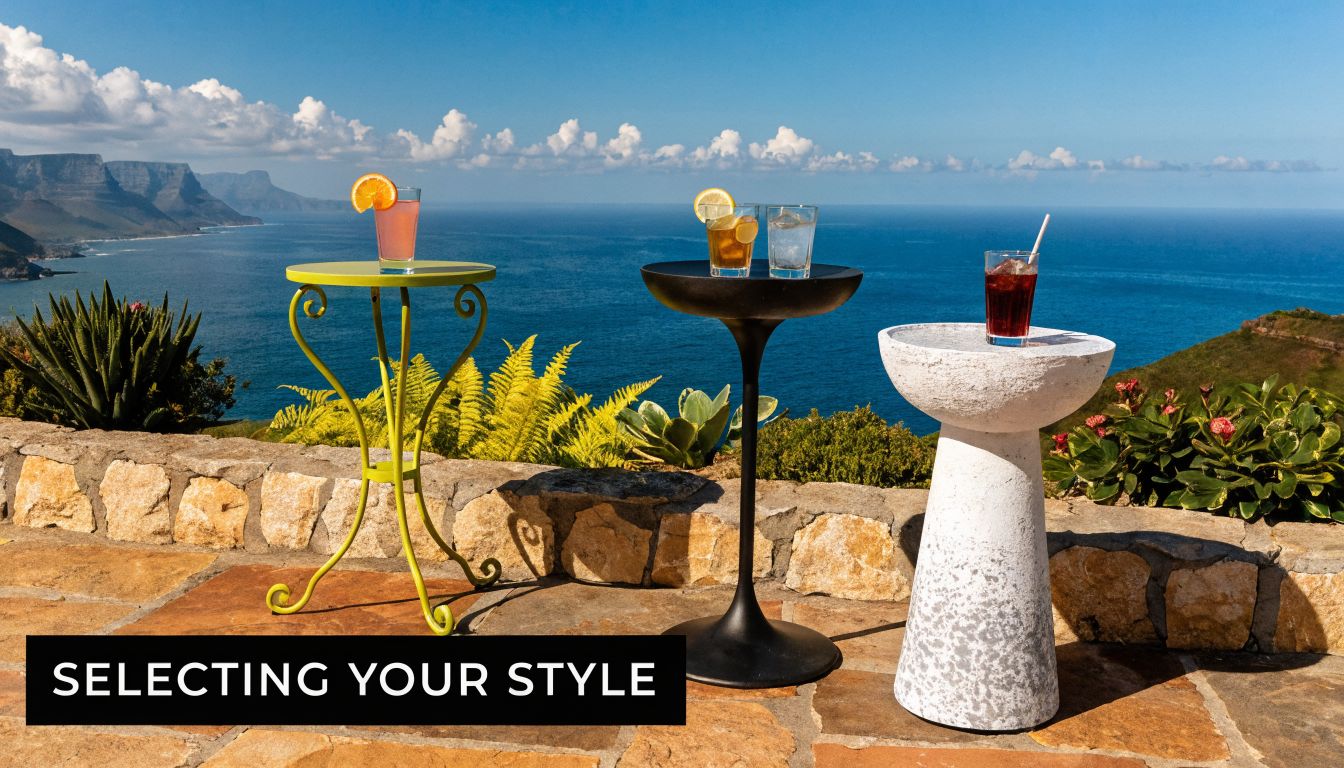
Style choice starts with the venue, not the mood board. At an old Stellenbosch manor with narrow doorways and uneven stone, I would rather use a simpler table that carries safely and stands firm than a prettier piece that arrives scratched and wobbles by canapés. In my experience, a surprising amount of rental stock looks good in photos but struggles once it has to be loaded in, set on imperfect surfaces, and left outdoors for six hours.
Timber tops for warmth and character
Timber works well in the Winelands. It suits cellar doors, barns, garden lunches, and farmhouse courtyards where you want texture without heavy linen. A good timber small round table can also carry a table setting with less decoration, which helps if the room already has enough character.
The trade-off is condition control. Poorly sealed timber marks easily from chilled glasses, shifts with temperature swings, and can pick up wear fast during summer season. At venues in Franschhoek or Paarl, that matters even more if the tables are set the night before or exposed during a long build.
Ask what finish is on the top. Ask how often the stock is refinished. Ask whether the rental company uses protective pads during transport. Those details tell you more than the product photo.
Metal and mixed-material tables for harder-working setups
For corporate functions, gallery spaces, and brand events, metal-base tables usually make service easier. They read cleaner, sit comfortably with monochrome or branded palettes, and generally cope better with frequent handling. I also prefer them for venues in the CBD where load-in often involves lifts, ramps, and tight turnaround times.
But metal is only as good as its coating and hardware. Cheap powder coating chips. Base plates rust around the bolts. Adjustable feet seize up if they are neglected, which is a real problem on old paving or sloped terraces. A heavier base is usually worth the extra handling time if the event is outdoors or exposed to wind.
| Style | Best fit | Strength | Watch for |
|---|---|---|---|
| Timber small round table | Weddings, private dining, farm venues | Warmth, texture, softer visual feel | Surface movement and marking if the finish is poor |
| Metal-base round table | Corporate events, city venues, activations | Clean lines, dependable rental performance | Rust, chipped finishes, weak hardware |
| Acrylic or LED feature table | Night events, parties, branded moments | Strong visual impact | Weather exposure, visible scratches, power planning |
A premium look means very little if the table rocks during speeches or shifts every time a guest rests an elbow on it.
When feature tables make sense
Feature tables work best in controlled doses. One or two can define a lounge pocket, a VIP area, or a branded drinks zone without making the whole floor feel busy. That approach suits Cape Town venues especially well because many of them already have strong architectural character, from rough plaster walls to old oak beams to mountain-facing terraces.
Contrast usually does the heavy lifting. A crisp modern top can sharpen an old farm venue. A warmer textured top can soften a contemporary space in Woodstock or on the Atlantic Seaboard. The right call depends on what the room already gives you, and what the weather is likely to do on the day.
For exposed sites, practical performance comes first. If the event sits near the coast, on gravel, or on heritage paving, choose the table that stays stable, carries cleanly, and still looks good after setup. That is usually the better style choice in the Western Cape.
Creative Layouts for Intimate Conversations
A small round table earns its keep when guests can settle into a real conversation without feeling stranded from the rest of the room. In Cape Town and the Winelands, that usually means working around awkward old walls, deep verandas, uneven courtyards, and wind that shifts guest behaviour by the hour. A layout that looks balanced on paper can feel tight, exposed, or underused once the South Easter starts pushing people off the terrace and back inside.
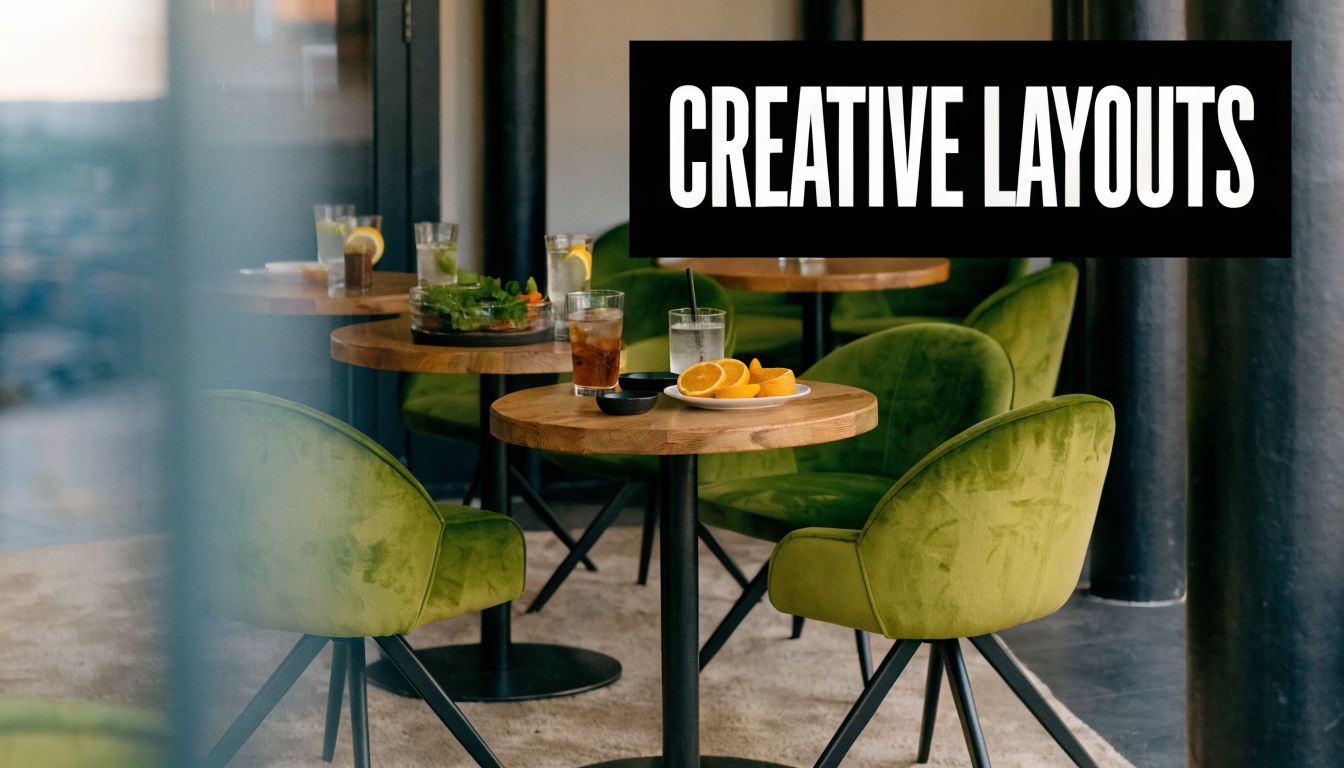
For short-stay seating, keep the scale honest. A 760mm cocktail table suits 2 people for a close conversation. A 900mm round works for 3 to 4 guests if they are standing or sitting briefly between speeches, tastings, or networking loops. On old farm paving, quarry tile, or cobbles, choose tables with adjustable levellers. That is not a luxury extra in the Western Cape. It is the difference between a table that stays planted and one that rocks every time someone puts down a wine glass.
The constellation layout for weddings
This layout works well in long barns, courtyards, and werf-style spaces where a rigid grid makes the room feel too formal. Instead of lining up every table perfectly, place small rounds in loose clusters with slight offsets between them. The room immediately feels softer, and conversations happen in smaller, more natural pockets.
It also helps with sightlines. Guests still catch the couple's table, the dance floor, or the mountain view, but they do not feel parked in rows.
I usually leave more open centre space than the planner first expects. At Boschendal, Cavalli, or an older Stellenbosch farmstead, that buffer gets used fast by photographers, servers, and guests drifting toward the action. If you close it up too early, the room feels blocked long before dinner starts.
Clustered rounds for launches and networking
For launches, tastings, and mixed-format corporate events, clustered rounds usually outperform fully seated plans. Guests need a place to stop, put down a drink, and speak without committing to one spot for the whole event. The trick is to create pockets, not obstacles.
A practical setup looks like this:
- Use 760mm tables near bars, tasting stations, or activation points for quick two-person chats.
- Set 900mm rounds just off the main traffic line so groups can gather without clogging service routes.
- Build pause zones near branding moments or view lines but keep entrances and venue pinch points clear.
- Use weighted bases or sheltered positions outdoors if the Cape Doctor is likely to hit the terrace.
Guests do not read a floorplan the way planners do. They notice whether a space lets them stop comfortably, rejoin the flow easily, and avoid standing in the wind with a full glass.
If the event includes linen, table spacing needs even more discipline. Full-drop cloths can visually bulk up a layout and tighten walkways faster than many planners expect. This guide to choosing a round table cloth for event use is useful if you are balancing look against clearance.
Cabaret curves for presentations
In venues with a speaker, panel, or tasting host, small rounds work well in a cabaret-style curve. Turn each grouping so the open side faces the presentation point. That keeps guests engaged with the front of the room while still allowing side conversation before and after the formal segment.
This is especially effective in city venues with broad open floors, and in Winelands halls where one end naturally becomes the stage wall. It gives guests somewhere to set notebooks, tasting glasses, or coffee without forcing the room into a classroom feel.
For evening functions, feature tables can help mark the bar edge, lounge pocket, or entrance zone, but use them sparingly. A few lit rounds can pull people through a dark room. Too many make the space feel busy, and outdoors they add one more weather and power check to the setup list. For Cape summer conditions, look for an IP54 rating or higher if those tables may sit near open sides, terraces, or courtyard edges.
Styling and Decorating Your Tables
A small round table looks best when the styling respects its scale. Too many planners treat it like a reduced version of a large banquet table and then wonder why it feels cramped. The table is smaller, the guest circle is tighter, and every object on top competes directly with glasses, plates, elbows, handbags, and sightlines.
The first rule is simple. Leave breathing room. If guests have to move florals just to reach water glasses, the styling has gone too far.
Get the linen right
Linen changes the whole read of a small round table. It can make a basic hire item feel formal, romantic, modern, or casual depending on fabric, fall, and finish. It can also make the table look underdressed or clumsy if the drop is wrong.
For a clean event look, use cloths that suit the table diameter and the function of the event. You want enough drop to feel intentional, but not so much fabric that it pools into chair legs or catches on shoes in tight layouts. If you're comparing options, this guide to a round table cloth for event use is a useful starting point.
A few practical rules help:
- For exposed timber tops: Skip the cloth if the table surface is attractive and the event style is relaxed or rustic.
- For formal settings: Use a full drop or near-full drop that gives the table presence without feeling bulky.
- For cocktail use: Keep linen neat and secure, especially outdoors where wind can turn loose fabric into a nuisance.
- For mixed layouts: Repeat one cloth style across the room so the smaller tables still feel connected to larger feature tables.
Keep centrepieces low and honest
Small rounds reward restraint. A low floral bowl, compact bud vase grouping, candle cluster, or simple lamp often works better than one tall arrangement. Guests don't want to peer around a structure to speak to the person opposite them.
If the event needs height, create it elsewhere. Put drama on the bar, the entrance, the ceremony backdrop, or suspended installations. Let the table stay useful.
A good centrepiece on a small round table should finish the setting, not dominate it.
Choose details that support conversation
The most successful tablescapes usually solve two jobs at once. They look polished, and they make guests comfortable. That means thinking about what sits on the table during the event.
Consider these combinations:
| Event style | Best table styling direction | What to avoid |
|---|---|---|
| Winelands wedding | Soft linen, low florals, warm candlelight | Tall arrangements that interrupt sightlines |
| Corporate dinner | Crisp cloth, clean stationery, minimal centrepiece | Overdecorating that crowds plates and branded items |
| Birthday or private party | Textured layers, coloured glassware, playful lighting | Too many props competing for surface space |
Candles can work beautifully indoors, especially in cellar venues or evening receptions, but outdoors they need protection. If the weather is uncertain, enclosed lighting or stable LED alternatives are often easier to manage. The table should still look complete even if the wind picks up.
A small round table is one of the few pieces that can look expensive with very little added. Good linen, one scaled arrangement, and disciplined editing usually beat a table loaded with “extras”.
The Ultimate Cape Town Rental and Logistics Checklist
The trouble usually starts at load-in. The tables fit the floorplan, but the truck can't get close to the courtyard, the crew is carrying folded furniture over gravel, and the afternoon south-easter has started pushing through the oaks. That is a normal Cape Town setup problem, especially at older Winelands properties and compact city venues.
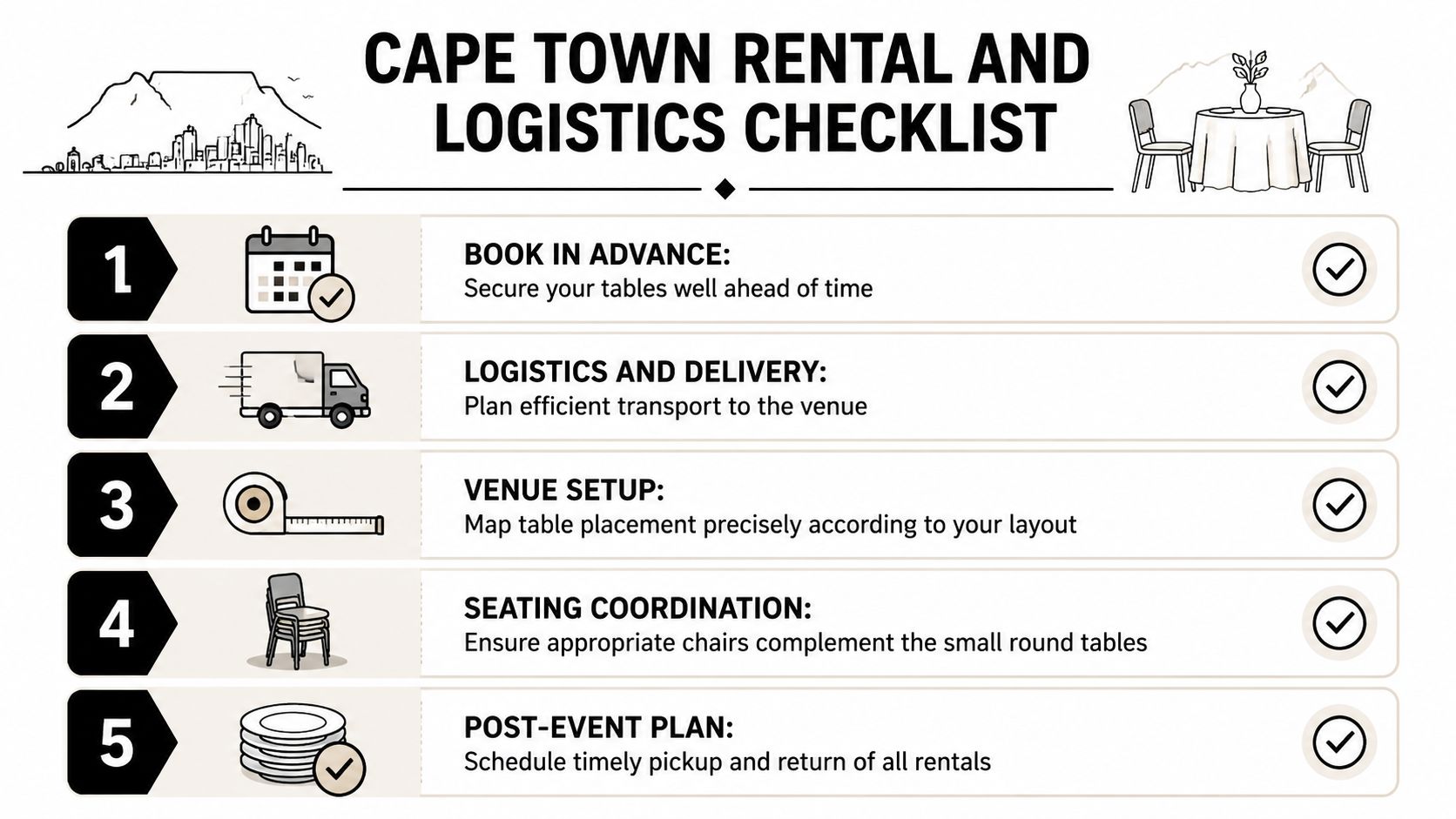
Small round tables work well in these spaces because they are easier to place in narrow rooms, around pillars, and through awkward access points. They also give a crew more flexibility on site if the final layout changes after the coordinator sees the room dressed. From a hire side, that flexibility matters as much as the look.
I have seen the same issue repeat at farm venues near Stellenbosch and Franschhoek. A table can be perfect on paper and still be the wrong choice if it has to go through a kitchen passage, over uneven brick, or into a courtyard that catches the Cape Doctor by mid-afternoon. The checklist needs to cover the route, the surface, and the reset plan, not just the guest count.
Before you book
Start with the room and the access route, then look at price.
- Measure the usable space, not just the venue size: Exclude bars, dance floors, DJ positions, fireplaces, pillars, and service paths.
- Ask for entry measurements: Door widths, passage turns, lifts, stairs, and side gates decide what can be delivered without delays.
- Confirm the table height and chair pairing: Slight mismatches look untidy and feel awkward once guests are seated for a full meal.
- Ask how the tables fold and stack: Our internal hire experience shows that stack-friendly designs save time on loading, unloading, and multi-stop deliveries.
- Check whether the setup is indoors, under cover, or fully exposed: Wind changes what works for courtyards, lawns, and terrace dining.
If the venue is a historic farmstead, ask where the crew may trolley and where they must hand-carry. That one answer often tells you more than the brochure.
Before delivery day
A floorplan helps. A proper access brief saves the day.
Older Cape Town and Winelands venues often have details that do not show up on the first venue visit. Gravel that shifts under load. Steps near the cellar entrance. A gate that is wide enough for guests but awkward for stacked furniture. If the event is outdoors, add weather timing to the plan. Morning deliveries can be calm, then the wind picks up by lunch.
Use this pre-delivery checklist:
- Confirm the delivery window with the venue and planner
- Check the exact drop-off point for the truck or bakkie
- Flag gravel, lawn, cobbles, stairs, and narrow passages
- Set aside a holding area for stacked furniture during setup
- Match chairs to tables before dispatch
- Note any outdoor sections that may need levelling wedges or a layout adjustment
- Confirm who is on site to sign off quantities at delivery
The best setups usually look over-prepared on paper. That is what keeps the install calm when access is tight and three suppliers arrive at once.
On-site setup and post-event collection
Test every table before linen goes on. A cloth hides a wobble. Guests find it later when they lean in for speeches, coffee, or a crowded plated service.
This matters even more outside. Courtyards at Paarl and Franschhoek venues can look level from a distance and still shift from one table position to the next. Check each leg. Recheck after placement. If wind is expected, keep centrepieces contained and avoid leaving folded linens or lightweight tabletop items unattended during setup.
For breakdown, make collection easy on the crew and kind to the venue:
- Clear florals, candles, and stationery early: Decorative items slow stacking and increase breakage risk in low light.
- Group furniture by type: Keep tables, chairs, and linen in separate collection points.
- Keep access routes open after dinner service: Wet lawns, muddy paths, and dark passages slow the strike.
- Leave space for collection vehicles and other suppliers: This is a common pressure point at shared venue exits.
- Check for damage before the truck leaves: It is easier to resolve on site than the next morning.
Good event logistics are quiet. The tables arrive, sit flat, survive the weather, and leave without scraping a heritage doorway or blocking a midnight strike.
If you're planning a wedding, launch, matric dance, or private event in Cape Town or the Winelands, ABC Hire can help you match the right small round table to your venue, style, and setup logistics. Their range covers practical event furniture for city venues, farm settings, and after-dark functions, with local delivery experience across Cape Town, Stellenbosch, Franschhoek, and Paarl.