
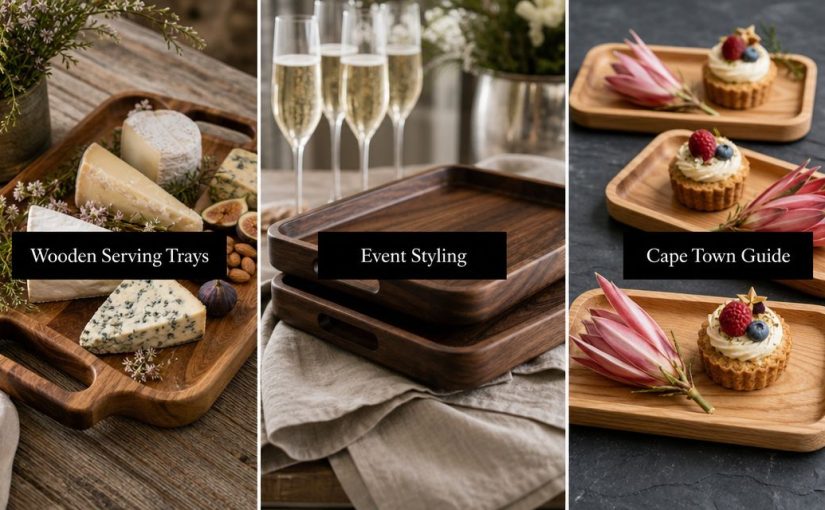
You've finalised the menu, the florals are on brief, the venue is locked in, and then the styling still feels a touch flat. That usually happens in the serving layer. Food can be excellent and the room can still miss that polished, considered look if everything lands on generic platters.
In Cape Town and the Winelands, guests notice presentation. They notice the difference between a canapé round that feels purely functional and one that looks like it belongs in the setting. Wooden serving trays help close that gap because they carry food, but they also carry mood. They soften modern venues, add texture to crisp table settings, and make catered service feel more intentional without pushing the budget into custom décor territory.
Why Wooden Trays Elevate Any Event
A wedding lunch in Stellenbosch often has this exact problem. The tables are beautiful, the mountain backdrop does the heavy lifting, and then the service pieces come out looking too standard for the rest of the experience. Swap those plain platters for wooden serving trays and the event immediately feels warmer, more layered, and more rooted in place.
That's why event stylists keep coming back to wood. It works with vineyard venues, city launches, private homes, and formal dinners because it adds texture without competing with the menu. It can lean rustic, refined, contemporary, or heritage-led depending on the tray shape and finish.
They bring hospitality history into modern events
Wooden serving trays also don't read like a passing styling fad. Serving trays belong to a much older tradition traced to the 7th or 6th century BCE, with the earliest known tray form linked to Etruscan black earthenware. In England, flat trays called salvers became common in the mid-17th century and were associated with silverware and wealthy households, which is part of why trays still carry a formal entertaining feel today, as outlined in this history of serving trays.
For Cape Town and the Winelands, that heritage matters. Local events often blend hospitality, décor, and formality in a way that makes presentation part of the guest experience, not an afterthought.
They help define the atmosphere
A few styling shifts happen the moment wooden trays enter the room:
- Warmth replaces sterility. White china can look sharp, but wood adds contrast and stops the setup from feeling too clinical.
- Food photographs better. Grapes, pastries, canapés, breads, and cheeses usually look richer against natural grain than against flat synthetic surfaces.
- The venue feels more cohesive. Estate weddings, cellar tastings, and outdoor celebrations already have natural textures. Wooden trays echo that environment.
Wooden trays work best when they look like they belong to the venue, not like they were added at the last minute to “make things pretty”.
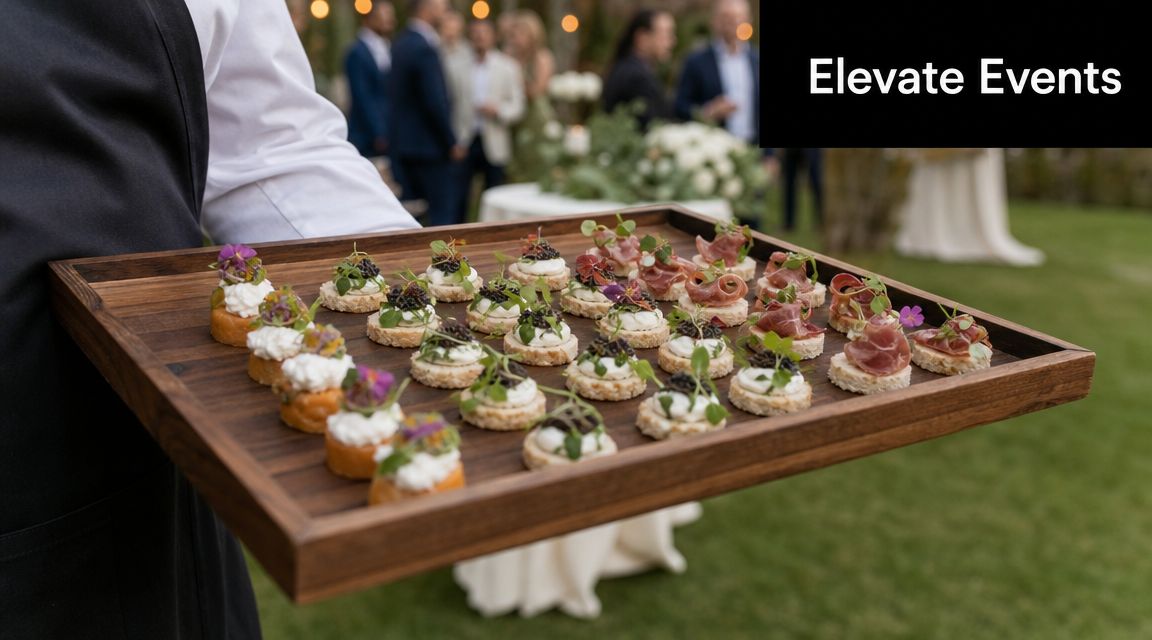
They're also useful beyond food service. A tray can ground candles, welcome drinks, ceremony cones, or a layered table centrepiece idea without needing extra props. That's its main value. One item can solve styling and function at the same time.
Selecting the Perfect Wooden Serving Tray
The right tray depends on what it's doing. A tray for passed canapés is not the same tray you want for a dessert display, and neither is ideal for a welcome station. Choosing well comes down to matching style, finish, weight, and use.
Start with the event type
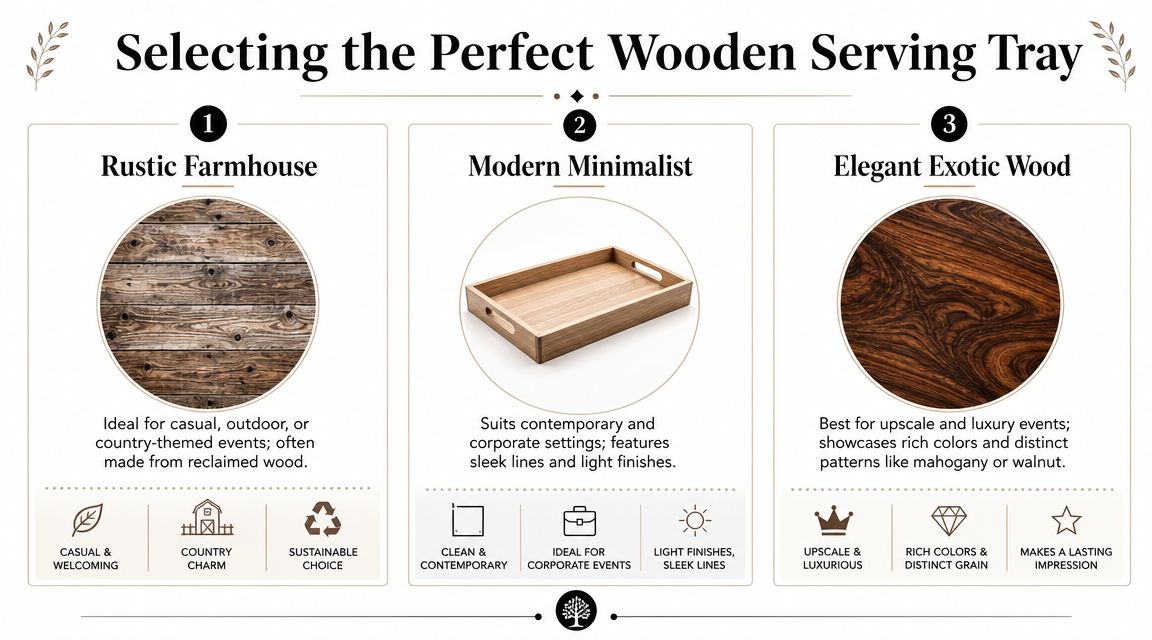
In practice, most event professionals choose from a few broad directions.
- Rustic farmhouse styles suit harvest tables, vineyard lunches, outdoor celebrations, and country weddings. They pair well with loose florals, linen runners, and abundant food styling.
- Modern minimalist trays work better for product launches, conference catering, and black-tie spaces where the tray should support the food rather than dominate it.
- Elegant darker woods fit premium dinners, private wine events, and more formal receptions where the serveware needs visual weight.
A kitchen tea can carry smaller, round, lighter-toned trays beautifully. A CBD cocktail event usually needs clean lines and easier handling for staff moving through tighter floorplans.
Check the finish before you admire the look
Many planners struggle with this: A tray can look perfect in photos and perform badly on event day.
A higher-end wooden serving tray for food service is often made with a solid hardwood body or a hardwood-and-resin composite. In maker guidance, quality depends heavily on process control. The wood should be sealed first, the surface kept level, and epoxy poured slowly to reduce bubbles and leaks. The same guidance warns that lower-quality products often use particle-board cores with thin veneer, and those can delaminate quickly under stress, as noted in this technical epoxy tray guide.
That matters because event stock takes knocks. It's moved between venues, stacked into vans, wiped down quickly, and reused often. A weak core won't stay beautiful for long.
Use a simple selection checklist
When choosing trays, run through these questions:
- What's being served? Dry pastries, cheese, breads, and wrapped items are more forgiving. Saucy, oily, or sticky foods demand a properly sealed surface.
- How often will staff carry it? If servers are circulating constantly, integrated handles and balanced weight matter more than decorative detail.
- Will guests see it up close? Registration desks, harvest tables, and cake stations need stronger visual impact than back-of-room service points.
- Does it suit the rest of the tableware? Wood should connect with the palette, not fight it.
For food presentation ideas that sit between tray and board styling, this guide to a wooden serving board for events is useful.
What works and what usually disappoints
A few practical calls save a lot of frustration:
| Tray choice | Works well for | Common problem |
|---|---|---|
| Light natural wood | Garden events, daytime weddings, brunches | Can look washed out against pale linen if there's no contrast |
| Dark stained wood | Corporate evenings, premium dining, whisky or wine service | Shows crumbs and fingerprints more clearly |
| Raw or unfinished look | Styled shoots, rustic tablescapes | Often harder to clean and maintain in real service |
| Resin-accent trays | Feature stations, luxury gifting tables | Need careful levelling and sealing to stay premium-looking |
Practical rule: If a tray is hard to clean, awkward to carry, or too precious to stack, it's not event-ready no matter how attractive it looks online.
Creative Styling for Maximum Impact
Once the trays are sorted, the main work starts. Good event styling doesn't come from filling every surface. It comes from creating controlled focal points. Wooden serving trays are excellent for that because they create boundaries and give objects a visual home.
Use trays to build levels and rhythm
A table looks expensive when the eye moves across it naturally. If everything sits at one height, even good styling can feel flat.
Try these combinations:
- Large tray at the base for breads, shared starters, or clustered bud vases.
- Smaller tray layered nearby for butter dishes, olives, preserves, or place cards.
- A raised element behind or beside such as candles, florals, or bottles to create height variation.
This works especially well on long banquet tables in the Winelands, where repetitive styling can become monotonous if every setting is too symmetrical.
Think beyond food service
Some of the best uses for wooden serving trays have nothing to do with canapés.
- Welcome stations. Use one tray to hold name badges, programmes, pens, or guest gifts so the entrance feels organised.
- Bathroom baskets and amenity styling. A wooden tray under hand towels, scent diffusers, or small essentials makes a practical area look intentional.
- Bar and coffee moments. Group sugar bowls, stirrers, napkins, and cups on trays instead of scattering them across the counter.
- Lounge areas. On side tables, trays help contain candles and small florals so breakaway spaces still feel finished.
If the event includes a photographer or content team, trays also help create neater visual zones for detail shots. For planners who need a simple way to collect and organise guest media after the day, these solutions for wedding event media can slot neatly into the broader planning workflow.
Style the food with texture, not clutter
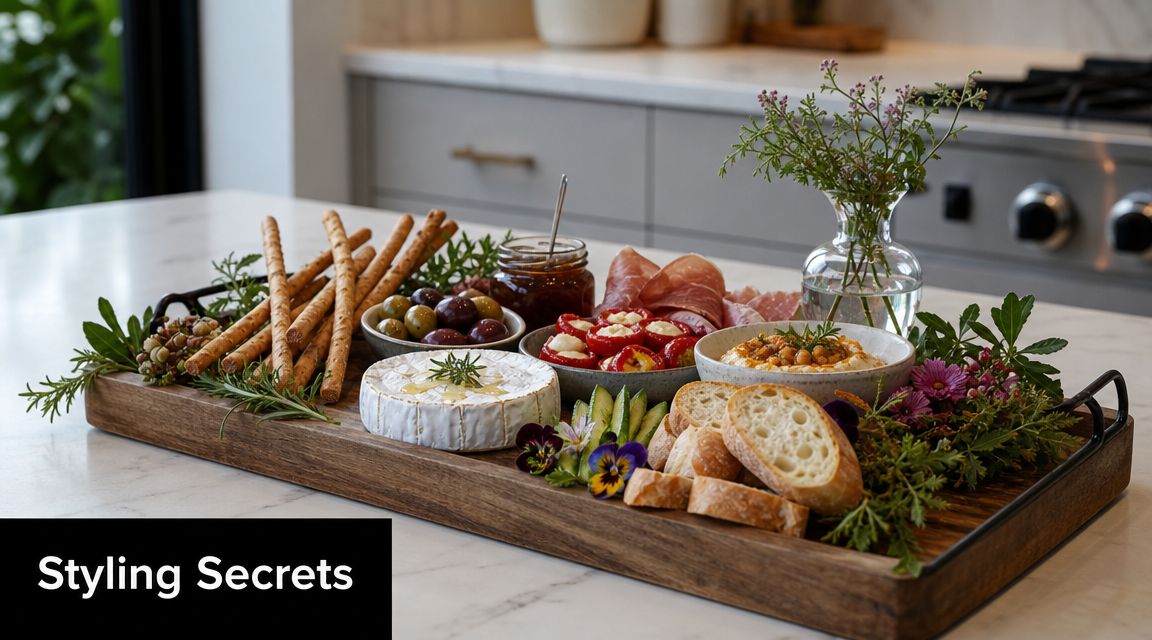
A cheese or grazing tray usually looks strongest when it has contrast. Soft cheeses next to crisp crackers, dark grapes against pale linen, green olives near warm-toned bread. The tray already brings texture through the grain, so you don't need to overfill it.
A few rules make a big difference:
- Leave breathing room. Not every centimetre needs food.
- Group in odd clusters where possible, because the arrangement looks more natural.
- Use garnish with purpose. Herbs, figs, citrus, or edible flowers should support the menu, not act as filler.
- Wipe edges constantly. A tray can go from polished to messy very quickly once crumbs, drips, or smudges build up.
For guest-facing service, the tray edge matters almost as much as the food. Clean lines read as quality.
Match the styling to the venue, not the trend
At a Franschhoek estate, weathered timber can look right at home. In a modern gallery or city showroom, the same tray may feel too theme-heavy. The best event styling usually borrows from the venue's own architecture and materials.
That's also how you stay budget-conscious. Instead of buying lots of extra décor, use wooden serving trays as anchors. They can carry food, signage, candles, florals, and guest touchpoints while still keeping the setup cohesive.
Renting vs Buying Trays The Smart Choice
For most event professionals, buying looks sensible at first. You own the stock, you can use it whenever you like, and you don't need to book around availability. Then real operations start interfering. Storage fills up, finishes wear unevenly, transport causes chips, and suddenly the “asset” needs maintenance, space, and replacement planning.
That's why the rent versus buy decision should be based on use patterns and hidden costs, not only purchase price.
Event logistics matter more than catalogue photos
In actual event work, aesthetics are only one part of the equation. Stackability, weight, and chip resistance all affect whether trays perform well across repeated transport and service. In the South African events market, there's also pressure to control losses and extend inventory life. Rustic or unfinished trays can look excellent in photos but become poor rental or ownership choices if they absorb moisture, stain easily, or need refinishing after events, as discussed in this serving tray logistics perspective.
Cape Town conditions make that even more relevant. Coastal moisture, cellar venues, outdoor setups, and tight turnarounds between events all put pressure on natural materials.
A practical comparison
| Factor | Renting from ABC Hire | Buying Your Own |
|---|---|---|
| Upfront spend | Lower immediate commitment for the event | Higher upfront outlay before first use |
| Style flexibility | Easier to match different briefs and venues | You're limited to what you've purchased |
| Storage | No long-term storage burden | Requires shelf space and stock management |
| Maintenance | Less day-to-day upkeep for your team | Cleaning, refinishing, and monitoring become your job |
| Transport wear | Shared across the hire cycle | Every chip or stain lands on your books |
| Scalability | Easier for large or irregular events | Harder when guest counts or service needs shift |
| Consistency | Event-ready stock can simplify presentation | Mixed ageing across owned stock can look uneven |
Buying makes sense only in specific cases
Owning trays can still work if your business runs a narrow event format. A venue with the same style week after week may justify buying a consistent set. So might a caterer with fixed menu formats and secure storage.
For everyone else, variety creates the problem. Wedding planners need one look for a Constantia garden ceremony and another for a black-tie dinner in town. Brand teams often need a specific finish for one activation and a completely different tone for the next. Private hosts may only need trays once.
A broader look at renting furniture for events makes the same point. Rental works because event needs change faster than owned stock can.
Renting protects flexibility. Buying only works cleanly when your style brief, storage setup, and maintenance capacity stay consistent.
Keeping Wooden Trays Event-Ready
Whether a tray is hired in or part of your own stock, condition is paramount. Guests may not inspect the joinery, but they will notice rough edges, stains, chips, or warped surfaces. Caterers and planners notice even faster, because those flaws affect service speed and presentation.
Hygiene matters just as much as appearance. In South Africa, food-contact materials need to be safe for intended use, and damaged, cracked, or porous surfaces are generally treated as higher-risk because they're harder to sanitise effectively. That becomes especially relevant for repeated event use in humid coastal conditions, where moisture absorption and drying time can affect maintenance, as outlined in this overview of wood tray hygiene considerations.
What to inspect before service
A quality wooden tray for hospitality use usually shows care in the build. Practical workshop guidance recommends pre-drilled fastener locations and sanded hand-contact edges with at least a small roundover. Common failure points include rough edges, misaligned screws, and poor sanding before glue-up, all of which hurt the premium finish expected in event rental stock, according to this maker process guide for serving trays.
Use this quick inspection list:
- Run a hand along the edges. If the tray catches skin or fabric, it's not ready for guest use.
- Check corners and handles. Loose or badly aligned fasteners become obvious under weight.
- Look at the surface in side light. That reveals greasy patches, scratches, and uneven finish.
- Smell the wood. A musty odour often signals moisture retention.
Care rules that actually matter
A lot of tray damage happens after the event, not during it.
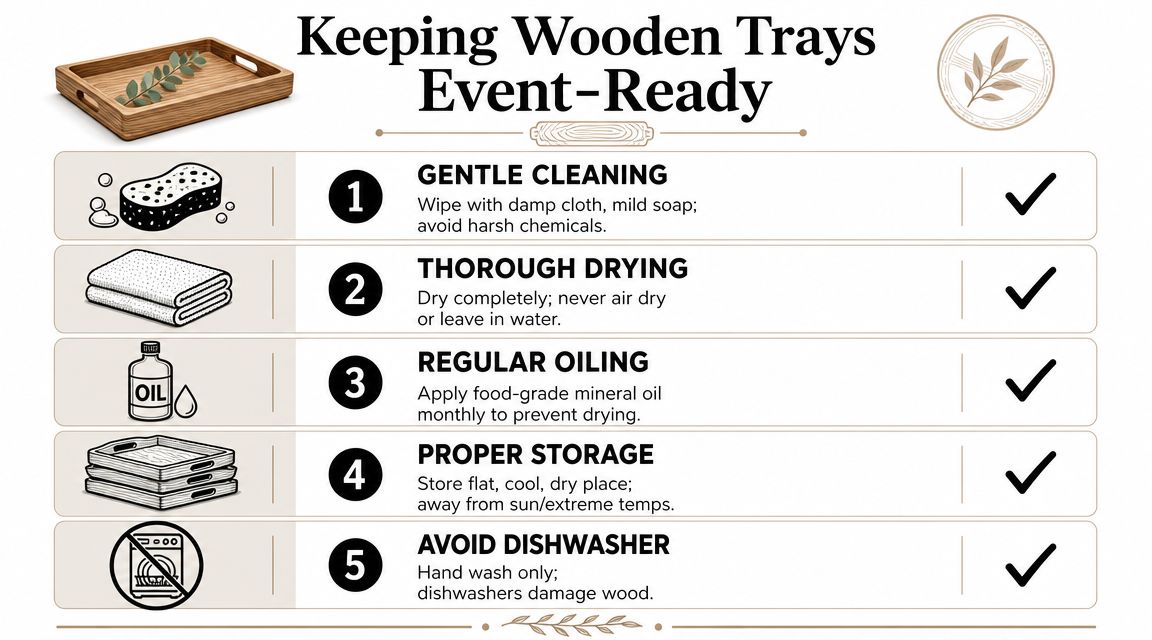
- Clean gently with a damp cloth and mild soap, especially after contact with oils, sauces, or sweets.
- Dry immediately and thoroughly. Don't leave trays wet on prep counters or stacked while damp.
- Avoid soaking. Water sitting in seams or around handle cutouts usually leads to trouble.
- Store flat in a dry place so the wood doesn't twist or pick up pressure damage.
- Separate stacked trays if possible to reduce rubbing and finish wear.
If a wooden tray is cracked, deeply stained, flaking, or visibly porous, stop using it for direct food presentation.
What doesn't work
Dishwashers are out. Harsh chemicals are out. So is pretending a rough, “organic” finish is acceptable just because the event theme is rustic. In professional service, rustic still has to be clean, sealed, and comfortable to handle.
That's the standard guests expect, and it's the standard event teams should insist on.
Your Partner for Event Rentals in Cape Town
Wooden serving trays earn their place because they solve two problems at once. They improve presentation, and they help organise service. Used well, they can warm up a sleek venue, sharpen a grazing table, tidy a welcome station, and make the entire event feel more considered.
For Cape Town and Winelands events, skill lies in choosing trays that suit the brief and survive the logistics. The best-looking option isn't always the smartest one. Weight, finish, edge quality, hygiene, transport, storage, and maintenance all affect whether a tray adds value or creates more work.
That's why renting often makes more sense than buying. It gives planners, caterers, venues, and private hosts the freedom to match the style to the event without carrying the long-term burden of stock ownership. It also helps keep the focus where it belongs. On the guest experience, not on where to store, repair, or replace serveware after every function.
If you're building events across Cape Town, Stellenbosch, Franschhoek, Paarl, or the surrounding Winelands, the strongest results usually come from working with a rental partner that understands both aesthetics and operations.
Need event-ready pieces that look sharp and work hard on the day? ABC Hire supplies quality event and party rentals across Cape Town and the Winelands, including furniture and accessories that help planners, venues, couples, and corporate teams pull together polished events without the hassle of owning everything themselves.