
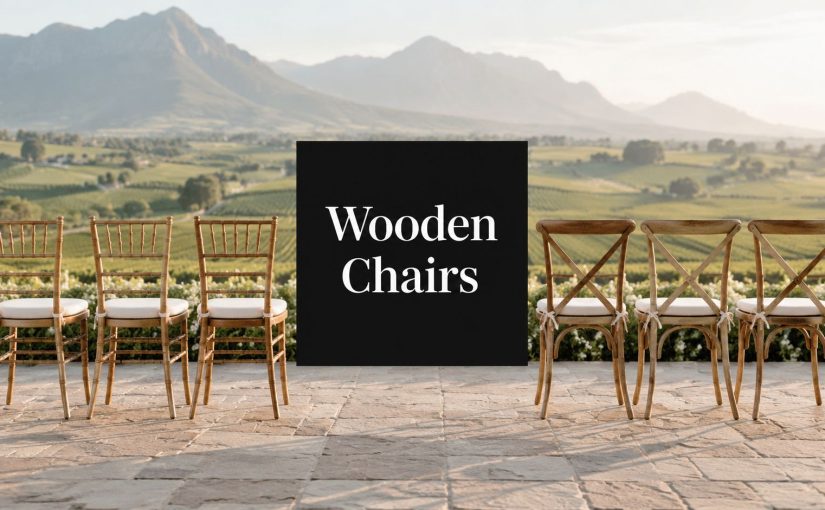
You're finalising a seating plan while the venue team asks about access times, the florist wants aisle width confirmed, and the forecast hints at wind in the afternoon. That is usually the point when chairs stop being a background detail and become a practical event decision.
A search for wooden chairs for sale often pushes clients toward looks first. For Cape Town and Winelands events, I'd start with handling conditions instead. Chairs get loaded into trucks, moved across brick, gravel, lawn, and cellar floors, then reset between ceremony and reception. If the frame marks easily, loosens at the joints, or struggles with damp coastal air and repeated transport, the problem shows up on site, not in the showroom.
That is why the better question is not only which chair suits the table setting. It is which chair can still present well after high-turnover use, quick crew handling, and a full day of guests sitting, shifting, and standing through speeches and dinner service.
Wooden seating remains a strong part of hospitality and event furnishing, but scale alone does not help you choose well. Product listings can make many chairs look interchangeable. In practice, timber type, finish quality, weight, stackability, and repairability make the difference between a chair that works for one styled shoot and one that performs reliably across a real event season. If you want a useful primer before comparing products, it helps to learn about different hardwood types so you can read listings with a more critical eye.
For most events, rental is the safer decision. You get chairs selected for commercial use, matched quantities, delivery planning, setup support, and one less storage and maintenance problem after the last guest leaves.
Understanding Wooden Chair Materials and Finishes
Not all wood is equal at an event. A chair that looks beautiful in a showroom can fail fast once it's loaded onto a truck, carried across gravel, stacked after midnight, and used again the next morning.
Why hardwood matters
For commercial wooden chairs, hardwood selection is a structural requirement. Fine Woodworking advises using hardwoods in areas exposed to shocks and abrasion, and notes that repeated impact at the leg-to-stretcher and seat-rail joints is where failure usually starts. That's the exact stress pattern event chairs deal with during transport, stacking, and repeated set-up cycles, as explained in Fine Woodworking's guidance on chair timber selection.
In plain terms, dense woods such as beech or oak usually cope better with event use than lighter softwoods. Softwood can work in decorative settings, but when the frame is doing hard commercial work, lighter timber often shows wear faster at the joints and corners.
If you want a useful primer before comparing products, it helps to learn about different hardwood types so you can read listings with a more critical eye.
Practical rule: Judge the chair from the joints outward. If the leg-to-seat connection looks light, exposed, or poorly braced, the style won't save it.
What to inspect before you commit
A wooden event chair should be checked in the same order every time:
- Frame first: Look at the thickness of the legs, stretchers, and rails.
- Joint quality: Repeated use exposes weak joinery quickly.
- Surface resilience: A chair used at events needs a finish that handles hands, glassware, dust, and cleaning cloths.
- Repairability: Scratches happen. What matters is whether the chair can be touched up without looking patched.
Shortlisted a chair? Ask how it behaves after multiple handling cycles, not just how it looks on day one.
Finishes that work in real venues
Finish changes everything. Stain changes colour. Oil can give a natural look. Varnish or a tougher sealed finish usually offers better day-to-day resistance to spills and surface scuffs. For event stock, appearance alone isn't enough. You need a finish that can be wiped clean and still present well under changing light.
There's also a health and compliance angle that buyers often miss. Many listings for wooden chairs focus on price or appearance but say very little about low-VOC finishes, formaldehyde content, or enclosed-space suitability, even though South Africa's policy framework recognises indoor air pollution as a health issue, as discussed in this overview of wooden chair buying considerations. That matters for schools, indoor functions, childcare venues, and any event where people sit close together for hours.
Choosing Your Wooden Chair Style
Style changes the tone of a room before the flowers, menus, or lighting do. The same table can feel rustic, formal, modern, or relaxed depending on the chair beneath it.
A quick visual comparison helps when you're narrowing down options.
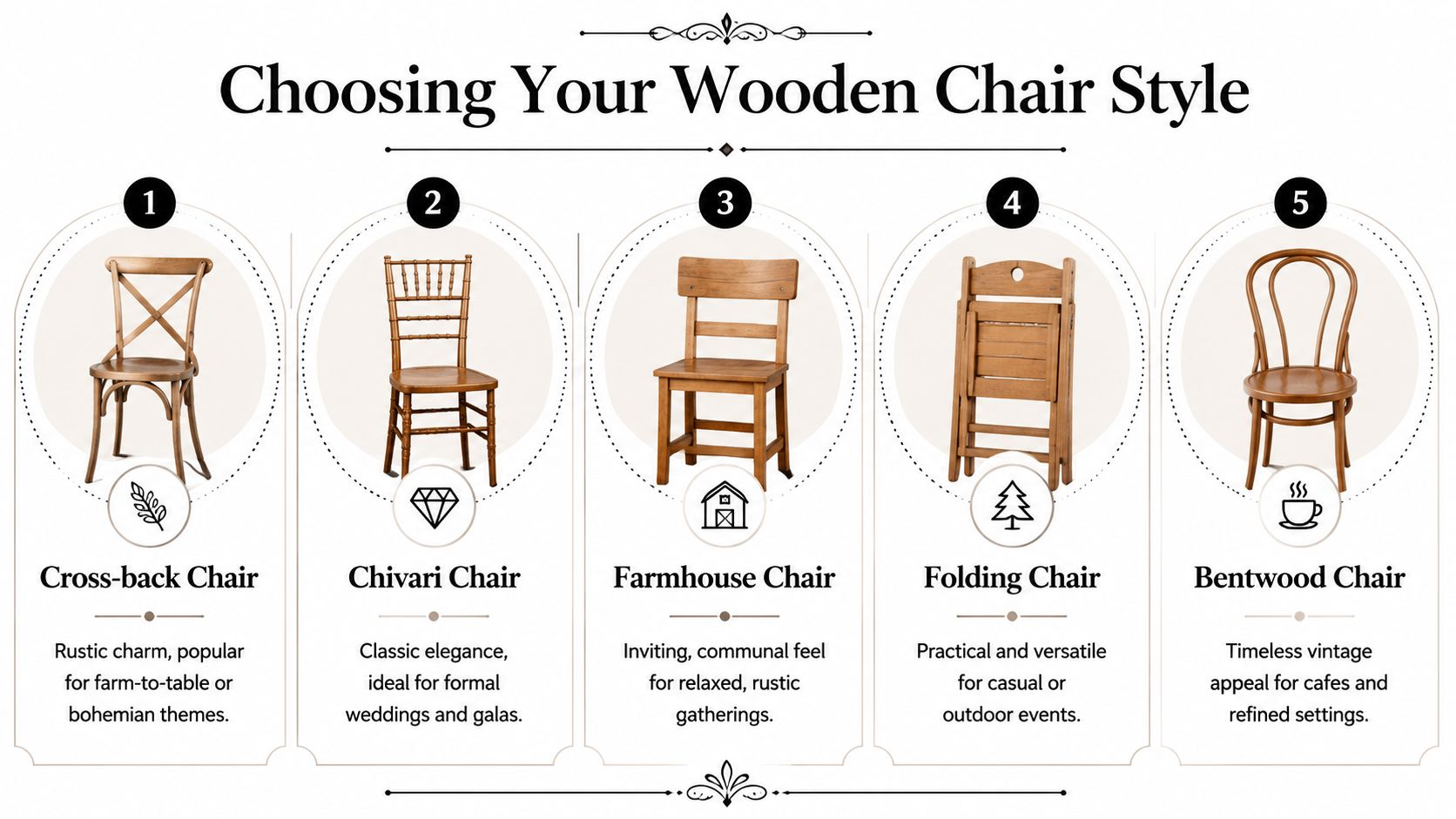
Five common styles and where they fit
Cross-back chairs suit Winelands weddings, harvest tables, and venues with stone, timber, or vineyard views. They add warmth and texture. They don't try to disappear.
Chiavari chairs are more formal. They work well for ballroom weddings, gala dinners, awards evenings, and polished black-tie layouts. Their strength is visual lightness. You can seat many guests without making the room feel heavy.
Farmhouse chairs create a communal feeling. They're less dressed-up than Chiavari and less stylised than cross-back. If the brief is relaxed but still curated, this style often lands in the sweet spot.
Folding wooden chairs are practical for ceremonies, lawns, and events that need a fast room flip. They're easier to move and store, which matters when the ceremony and reception share one venue.
Bentwood chairs carry a café or heritage feel. They suit intimate receptions, long-table dining, wine estates, and editorial-style events where character matters more than strict symmetry.
Wooden chair styles at a glance
| Chair Style | Best For (Event Theme) | Key Feature |
|---|---|---|
| Cross-back | Rustic, vineyard, bohemian | Warm visual texture |
| Chiavari | Formal weddings, galas, classic receptions | Elegant, lightweight profile |
| Farmhouse | Relaxed celebrations, communal dining | Simple, sturdy presence |
| Folding Chair | Outdoor ceremonies, flexible layouts | Easy transport and quick set-up |
| Bentwood | Vintage, café-inspired, refined dining | Curved silhouette and heritage feel |
For clients comparing tables and seating together, this guide to wooden tables and chairs for event layouts is useful because the chair style always reads differently once it's paired with the tabletop.
A good event chair doesn't just match the theme. It supports the room's pace. Formal chairs slow the visual rhythm. Rustic chairs soften it. Folding chairs keep it adaptable.
What works and what doesn't
What works is choosing a chair that suits the venue architecture and the service style. Cross-back chairs under exposed beams make sense. Chiavari at a polished corporate awards evening makes sense. Bentwood in a clean convention setting often feels too café-driven unless the concept is intentionally relaxed.
What doesn't work is picking a chair only from a close-up product photo. You need to ask how it looks in rows, around full tables, and from a distance. Guests see the room in wide angle, not in catalogue crop.
Ensuring Guest Comfort and Practical Sizing
The chair can look perfect and still perform badly. Guests notice comfort long before they notice timber species.
Start with seat height
A key benchmark for event seating is the 18-inch seat height, which is about 46 cm, because that standard aligns with common dining table heights and helps keep guest ergonomics predictable at banquets and receptions, according to Dutch Craft Furniture's chair sizing reference. If the seat is too low, guests hunch over the table. Too high, and dining becomes awkward.
That single measurement matters more than many people realise. At weddings, guests sit, stand, and resettle repeatedly. At conferences or speeches, they may stay seated for much longer. In both cases, the wrong seat height creates a low-grade discomfort that affects the whole event.
Bare wood or cushioned seat
There isn't one universal answer. It depends on duration and format.
- Bare wooden seats: Better for short ceremonies, quick turnover dining, and outdoor layouts where simplicity matters.
- Fixed cushions: Good when you want a more finished look and a bit more comfort without adding separate accessories.
- Seat pads: Worth considering for long services, formal dinners, conferences, or venues with older guest demographics.
Comfort also depends on seat width and back shape. A visually delicate chair can still be comfortable if the back supports the sitter properly and the seat doesn't feel cramped. A bulky chair can still be poor if the proportions are wrong.
Common sizing mistakes
The most frequent planning errors are simple:
- Mixing chair heights across one room and ending up with inconsistent table fit.
- Ignoring guest dwell time and choosing hard seating for an event with long speeches.
- Using decorative chairs for dining when they were better suited to ceremony rows.
If guests are seated for the meal, don't treat the chair as décor only. It becomes part of the dining experience.
For practical planning, test one full place setting before final approval. Put the charger, cutlery, glassware, and linen on the table, then seat someone in the chair. That quick trial reveals spacing issues fast.
Renting vs Buying Wooden Chairs for Your Event
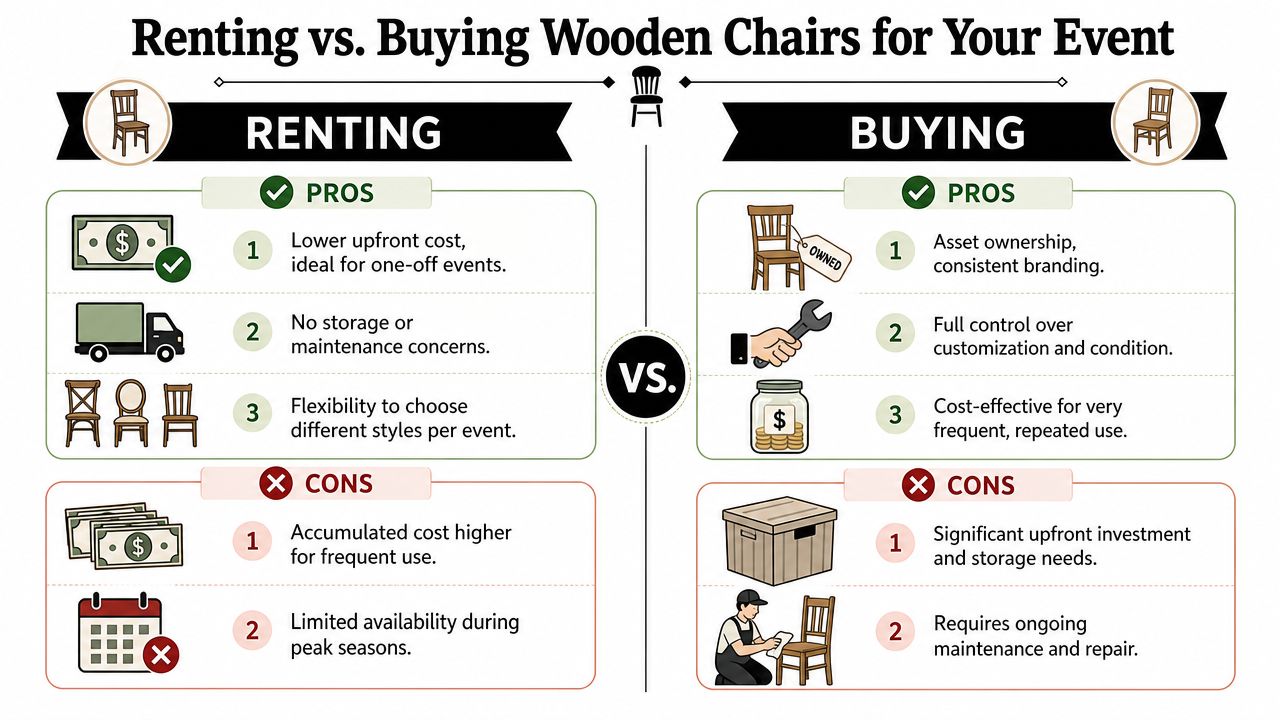
A Stellenbosch wedding in summer and a Cape Town corporate dinner in winter can both call for wooden chairs, but the practical demands are different. That is why the main decision is rarely about ticket price alone. It is about who carries the storage, transport, cleaning, repairs, and replacement risk after the event ends.
What buying really involves
Owning chairs makes sense on paper until the stock has to survive real event use in the Cape. Timber reacts to humidity changes, sea air, dust, and repeated loading. A chair that looks fine in a showroom can start showing loose joints, finish wear, and scuffed edges after enough trips between storeroom, truck, lawn, and venue floor.
Buying also means taking responsibility for:
- Storage: Dry, secure space with enough room to stack chairs properly without damaging finishes.
- Transport: Suitable vehicles, loading crews, tie-downs, and protection between jobs.
- Maintenance: Cleaning, tightening, touch-up work, and removing damaged units before guests see them.
- Replacement matching: Finding new stock later that still matches the original batch in colour, finish, and build quality.
That last point catches many buyers out. Timber tones shift between production runs, and imported lines are not always available again when a few chairs need replacing.
Why rental suits most event clients
For one-off events, rental usually gives you a better result with less operational strain. You choose the chair that fits that specific brief, then hand back the storage, upkeep, and damage management to a supplier set up for high-turnover use.
This matters even more in the Winelands and greater Cape Town area. Venues often involve gravel drives, lawns, cellar floors, stair access, or long setup distances from parking to dining space. Folding options are often the practical answer for ceremonies and quick room turns. If you are comparing those formats, this guide to folding wooden chairs for events is a useful starting point.
I usually advise clients to rent unless they are running events often enough to justify the operational side of ownership. A single wedding, awards dinner, product launch, or family celebration rarely needs year-round chair stock sitting in storage.
When buying can make sense
Buying works better for venues, schools, churches, or organisations that use the same chair style repeatedly and already have staff, vehicles, and storage in place. In that setup, the chairs are part of ongoing operations rather than a once-off event purchase.
Even then, durability matters more than appearance alone. Chairs need to stack or transport well, cope with frequent handling, and stay presentable after regular use. Hospitality operators looking at long-term fit and finish standards can Explore our hospitality projects for a broader view of how furniture performs in working environments.
A practical middle ground
Many event businesses keep a core quantity in-house and rent the balance or any specialist style as needed. That approach works well when event profiles shift through the year. A Franschhoek wedding, a CBD conference dinner, and a private garden ceremony do not place the same demands on inventory.
ABC Hire is often part of that flexible model for clients who need event furniture without owning every style themselves. For most event scenarios, rental remains the smarter choice because it protects flexibility and reduces the hidden workload that comes with timber seating.
Styling Wooden Chairs for Memorable Events
A chair can fade into the background or carry part of the design. The difference usually comes down to restraint. The strongest styling choices support the venue and the table setting instead of fighting them.
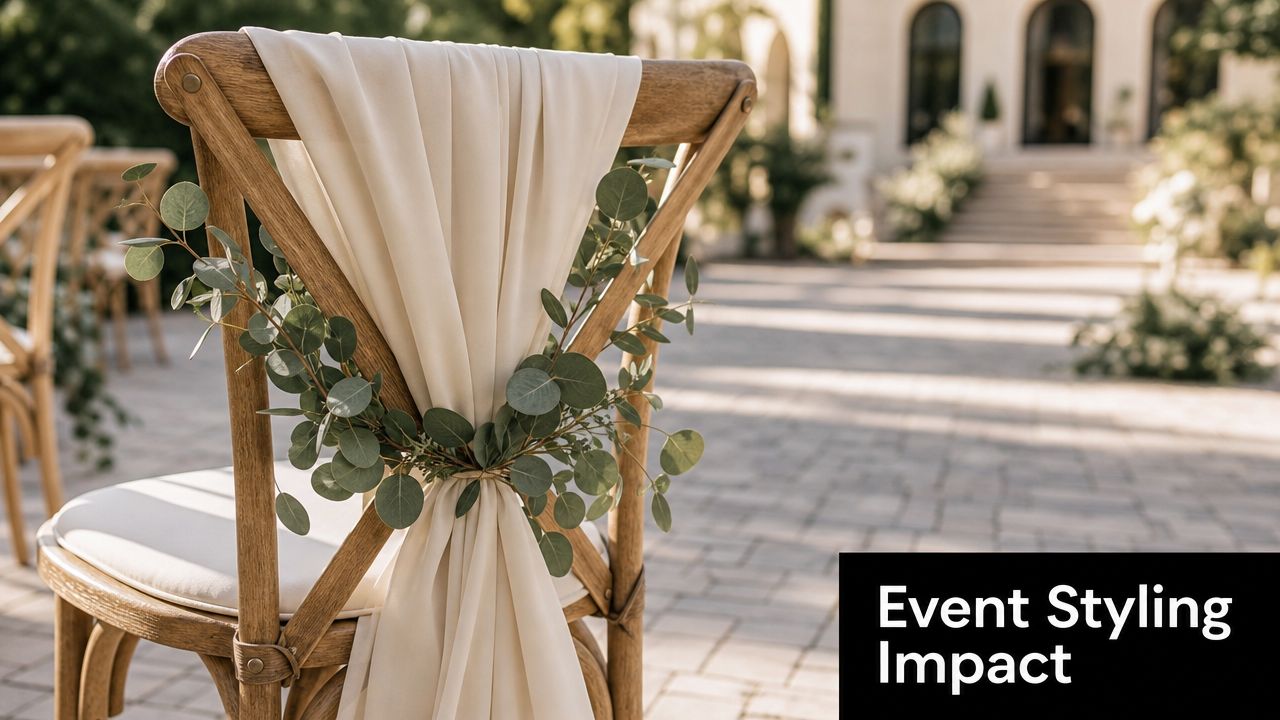
A Winelands wedding setting
At a vineyard venue, cross-back or farmhouse-style chairs usually do more work than heavily dressed seating. Natural timber complements the surroundings. Add soft fabric only where it has a purpose, such as aisle-end chairs, the couple's seats, or the outer chairs at a harvest table. Fresh greenery works because it doesn't overpower the wood grain.
What tends not to work is decorating every chair identically with bulky bows or dense florals. It can make a relaxed venue feel overworked. Timber chairs already bring texture, so they often need less dressing than metal or plastic alternatives.
A Cape Town corporate evening
City events often need a tighter finish. Darker timber tones or cleaner silhouettes suit product launches, dinners, and awards functions where branding, stage lighting, and table symmetry matter more than softness. In that setting, styling is usually about precision. Straight rows. Consistent spacing. Minimal accessories.
If you want inspiration from real commercial environments where timber furniture helps define a hospitality setting, it's worth taking a look at Explore our hospitality projects. It's a useful reference for how wood furniture can shape atmosphere without relying on excessive decoration.
Simple styling choices that hold up on the day
- Aisle chairs: Dress only the outer chairs or alternate rows.
- Reception chairs: Let the napkin, menu, and glassware carry colour if the chair already has character.
- Corporate seating: Keep chair dressing minimal so the room looks organised, not busy.
- Photo zones: Use a distinct chair style in a lounge or signing area to create a focal point.
The more textured the chair is, the less styling it needs. The plainer the chair is, the more carefully you can accessorise it.
Event Logistics in Cape Town and the Winelands
The Western Cape rewards good planning and punishes assumptions. A chair that looks straightforward on paper can become awkward when the truck reaches a steep gravel driveway, a CBD loading bay with time limits, or a lawn softened by recent weather.
Delivery starts with the venue map
Before confirming any chair order, check four things with the venue:
- Access route: Can a delivery vehicle reach the drop point directly?
- Surface type: Grass, gravel, paving, stairs, or mixed terrain all change handling time.
- Storage window: Is there a secure place to hold chairs before guest arrival?
- Turnaround plan: Must the team flip the space from ceremony to reception?
Those details affect which wooden chairs are practical, not just which ones are attractive. Folding options can simplify ceremony installations. Stackable dining stock can reduce labour pressure. Heavier framed chairs may look excellent but take longer to move across difficult ground.
Climate changes the maintenance equation
The Western Cape's humidity and coastal air create durability challenges for wooden furniture. Wood movement, swelling, and finish degradation are affected by humidity swings, which makes material selection and ongoing maintenance particularly important for event stock in the region, as noted in this overview of wooden furniture and environmental exposure.
That matters in practical terms. A chair used near the coast doesn't age the same way as one kept in a dry interior venue. Finishes can dull faster. Joints can loosen over time if the stock isn't maintained properly. For outdoor planning, this guide to weather-resistant outdoor furniture choices helps frame which items cope better in exposed settings.
What smooth event logistics look like
A well-run chair install is usually quiet and boring. That's a compliment. Good crews count stock correctly, place rows evenly, avoid scraping surfaces, and remove surplus units before guests arrive.
The best planning questions are practical:
- How do these chairs stack or fold?
- How many handling stages are involved from truck to final position?
- Can the same chair stay in place all day, or must it be moved between spaces?
- Will the finish still look clean under daylight and evening lighting?
Cape Town and the Winelands often involve movement between indoor and outdoor zones. The less fragile and fussy the chair, the easier the day runs.
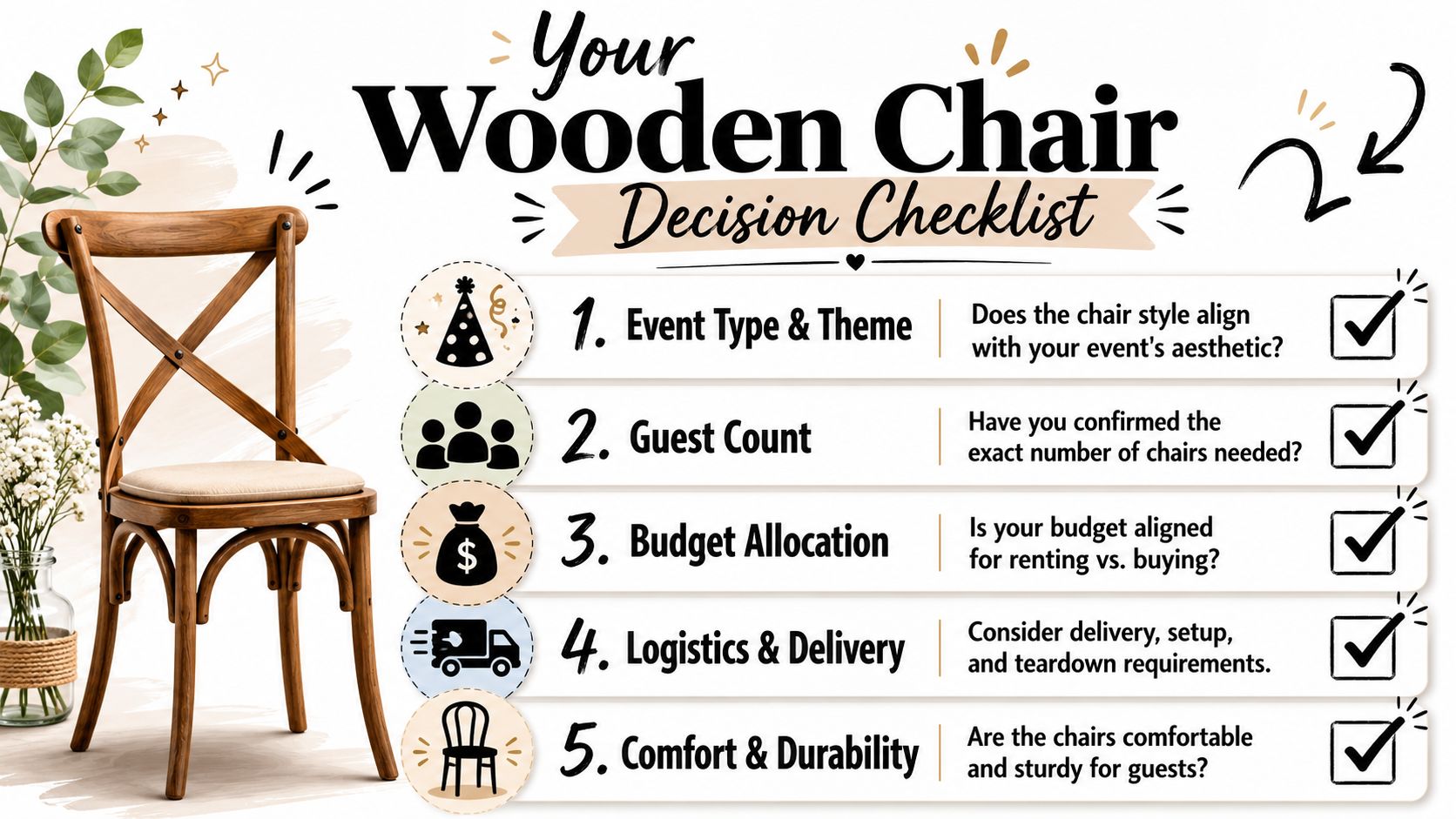
Your Wooden Chair Decision Checklist
A wooden chair choice usually becomes clear at the point where the event plan meets real site conditions. In Cape Town and the Winelands, that means looking past appearance and checking how the chair will handle loading, unloading, grass, gravel, cellar floors, salt air, and a full day of guests getting in and out of it.
Quick checks before you confirm
For weddings and private celebrations:
- Match the setting properly: Timber tone and profile should suit the venue, but also the surface the chairs will stand on. A chair that looks right in a tasting room may be less suitable on uneven lawn.
- Check comfort against event length: A 20-minute ceremony and a five-hour reception do not ask the same thing of a chair.
- Keep styling under control: Flowers, ribbons, and signage should add to the table plan, not hide the chair you paid for.
For corporate planners and schools:
- Prioritise consistency: Matching heights, clean sightlines, and uniform rows make the room feel organised straight away.
- Choose chairs that are practical to handle: High-volume setups need stock that crews can carry, place, reset, and collect without slowing the schedule.
- Plan transport early: Multi-stop deliveries, restricted access times, and venue changeovers run better when the team understands the basics of streamlining delivery operations.
For any host searching wooden chairs for sale:
- Ask what ownership adds after the event: Storage, cleaning, touch-ups, breakage, and transport usually cost more time than people expect.
- Check how the chair will age in local conditions: Coastal moisture, cellar humidity, and frequent handling all show up quickly on lower-grade timber and softer finishes.
- Compare buying against renting: If you need chairs for one event, or only a few dates a year, rental is often the more practical option because the stock, maintenance, and logistics stay with the hire company.
The right decision is usually the chair that arrives in good condition, fits the tables properly, stays comfortable through the event, and leaves without creating extra work.
If you need help matching chair style, venue logistics, and guest comfort for a Cape Town or Winelands event, ABC Hire can help you narrow the options and plan the furniture side with less guesswork.