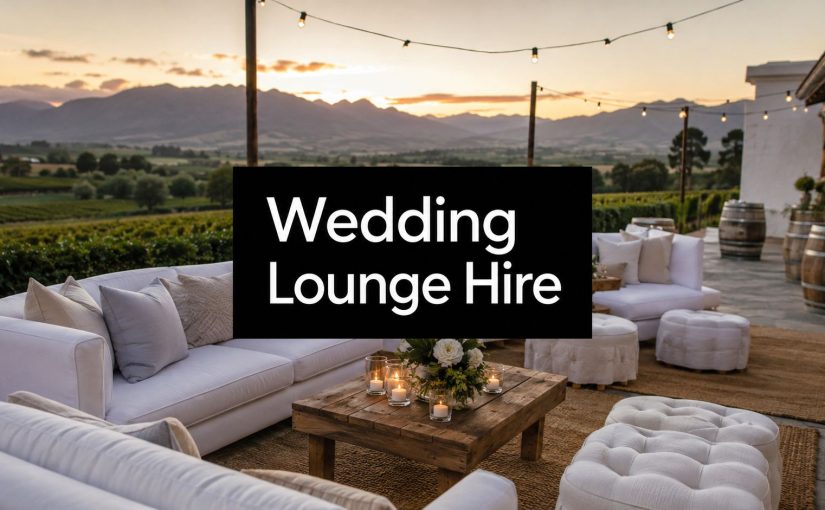
Wedding Lounge Furniture Hire: A Cape Town Planning Guide

You've chosen the venue, narrowed the colour palette and probably saved more lounge inspiration than you can use. Then the floor plan arrives, and the practical questions start: Where will guests sit between the ceremony and dinner? Can the delivery vehicle reach the terrace? Will the sofas block the bar queue, the photographer's sightline or the dance floor?

In Cape Town and the Winelands, wedding lounge furniture hire is a logistics decision that happens to produce a styled space. The right pieces give guests somewhere comfortable to pause, keep the celebration moving between formal moments and make a large venue feel intentionally zoned. The wrong pieces arrive too late, sit on unstable ground or look beautiful in photographs while obstructing the event.

What Wedding Lounge Furniture Hire Does

A reception plan can look complete on paper while leaving guests with nowhere to pause. Ceremony chairs face forward, dining tables keep people seated for a meal, the bar serves a queue and the dance floor needs open space. Lounge furniture fills the gap between those fixed functions, giving guests a place to talk, rest, watch the celebration and move comfortably between stages of the event.

That makes lounge furniture a zoning tool before it becomes a décor choice. A lounge pod can receive guests after the ceremony, mark the change from drinks to dinner, or give non-dancers a comfortable view of the dance floor. It also supports guests who may need a quieter place to sit during a long summer evening, including older guests, children and people who are not drinking.
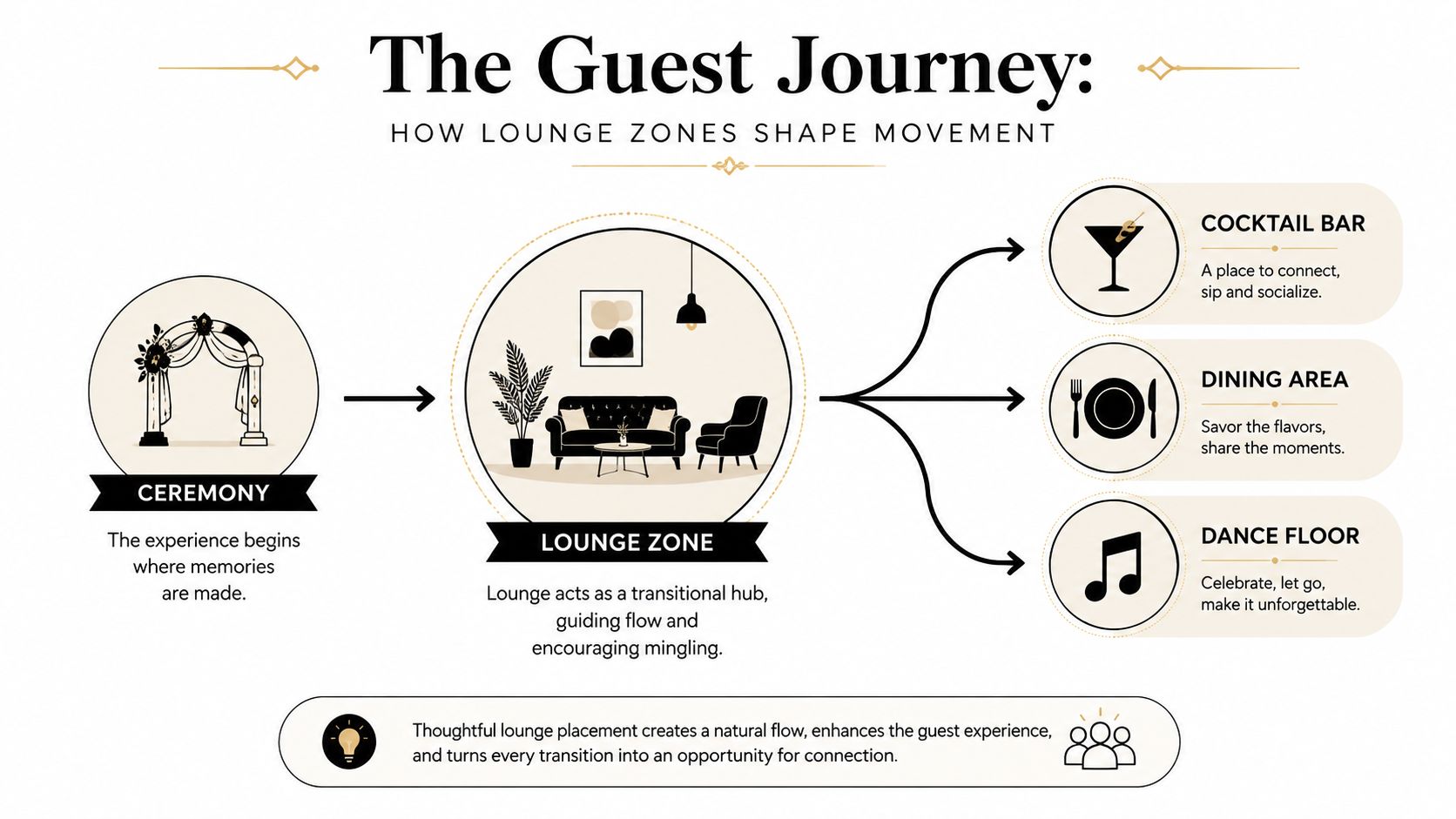
An infographic illustrating the guest journey at a wedding, starting from the ceremony to the lounge zone.

Lounge furniture has a different job from ceremony seating

Ceremony chairs point guests towards a focal point. Banquet chairs support dining. Lounge furniture supports conversation and flexible movement, with guests facing one another instead of a stage, altar or top table.

A practical lounge package may include:

  • Sofas and couches: Seating anchors for a conversation pod.
  • Occasional chairs: Extra capacity without forming a heavy block.
  • Ottomans and cube seats: Movable perches for changing zones.
  • Coffee and side tables: Surfaces for drinks, programmes and personal items.
  • LED furniture: An evening feature where power and cable routes can be managed safely.
  • Rugs and accessories: Visual boundaries, provided the surface and weather suit them.

Begin with the venue plan, not the furniture catalogue. Mark the route from the ceremony exit to the bar, from the bar to dinner and from dinner to the dance floor. Place lounge zones beside these routes, leaving enough clearance for guests, staff and service movement. Check the loading approach and setup window at the same stage, because a layout that cannot be delivered or assembled on time is not a workable layout.

Practical rule: If a lounge pod forces guests to walk around it to reach the bar, move it.

Lounge hire will not solve poor catering flow, a shortage of dining chairs or an undersized dance floor. It also cannot guarantee that every seat will be used. Hire it for a defined purpose, such as conversation, rest, arrival, photography or a transition between spaces. Furniture added only to fill an empty corner may leave the budget better spent elsewhere.

Choosing the Right Lounge Style for Your Wedding

Style should follow the venue, the light and the lounge's role in the evening. A dramatic piece can be the right choice for a night-time after-party and the wrong choice beside a pale Cape Dutch building at midday.

Contemporary LED

LED sofas, cubes and occasional tables create a strong evening feature. They work particularly well in urban venues, modern hotels and reception areas where the lounge is meant to remain visible after sunset. They can also help define an outdoor zone when the surrounding area becomes dark.

The trade-off is operational. LED pieces need dependable power access, safe cable routing and a clear decision about who switches, charges or manages the equipment. Don't place illuminated furniture where guests will cross cables to reach the bar or toilets. If the lounge is used in daylight, the lighting effect may contribute less than expected.

Vintage and classic

Velvet, structured armchairs and traditional sofas bring weight and formality to heritage buildings, estate interiors and refined hotel spaces. They photograph well against timber, plaster, stone and formal gardens, especially when the room already has architectural character.

Vintage upholstery is less forgiving outdoors. Dust, damp grass and wind can affect fabrics, while delicate finishes may suffer during movement across gravel or uneven ground. Keep these pieces under cover and use them where guests can sit without dragging them across the site.

Boho and natural

Rattan, cane, woven textures and relaxed linen suit wine farms, garden venues and outdoor cocktail areas. These materials echo natural surroundings without competing with vineyard views or mature planting. Regional trend coverage has also highlighted linen, rattan, cane and marble-top lounge pieces as popular choices for Cape Town weddings, while wider event-furniture commentary points towards comfort and locally crafted or reclaimed materials (Cape Town wedding furniture trends).

The warning is maintenance and weather. Pale textiles can mark easily, woven pieces need stable placement and lightweight furniture may need protection in exposed areas. Choose washable covers and heavier bases where the terrace catches wind.

Modern neutral

Neutral modular sofas, simple occasional chairs and restrained tables are the safest supporting cast. They suit almost any venue and leave room for florals, signage, candles or a strong bar installation. This is often the most useful direction when the venue already supplies visual drama.

Lighting will decide whether neutral furniture feels warm or flat after sunset. A thoughtful guide to why wedding lighting matters is useful when deciding whether the lounge needs built-in illumination, ambient lighting or better placement near existing fixtures.

Before choosing stock, ask three questions: What does the venue already provide? When will guests use the lounge? Is the lounge the hero feature or a supporting zone? For a practical comparison of proportions and materials, review this guide to modern lounge furniture for Cape Town events. The answers will usually narrow the choice faster than browsing a trend gallery.

Lounge Layouts and Capacity Planning

A lounge plan should begin with the guest journey, not the item catalogue. South African wedding reporting puts many weddings at around 100 guests, while larger cultural weddings can exceed 250 guests (South African wedding tourism and venue context). Those formats need different zoning decisions, even when the couple chooses the same sofa collection.

Use the available floor area as a planning allowance rather than trying to squeeze in the maximum number of seats. A lounge needs space around each piece for people to sit, stand, carry drinks and pass through. The exact requirement depends on furniture dimensions, table sizes, service routes and whether the zone is indoors or outdoors.

A practical zoning sequence

  1. Mark fixed elements first. Add the bar, food stations, DJ position, dance floor, toilets, entrances and emergency routes before placing a single sofa.

  2. Choose the number of pods. A compact wedding may need one arrival and conversation area. A larger celebration can use an arrival pod, a quieter fire-pit or garden pod and a dance-floor-adjacent pod.

  3. Keep service paths direct. Guests should reach the bar and food without weaving through low tables or ottomans. Staff should also have a route that doesn't cut through the main conversation area.

  4. Protect sightlines. Don't put a tall chair, high table or oversized sofa directly between the ceremony exit and the photographer's preferred angle. Keep the dance floor and DJ visible from nearby seating.

Working allowances by guest count

The table below is a planning framework, not a supplier quotation. Lounge seats means usable places to sit or perch within the designated zones, not every wedding guest seated at once.

Guest Count Lounge Seats Number of Zones Approx. Floor Space
80 16 to 24 1 to 2 Allow a compact conversation area with circulation around it
100 20 to 30 2 to 3 Allow two clear pods, or three smaller zones if the venue is spread out
150 30 to 45 2 to 3 Allow separate arrival, dining transition and dance-floor zones
200 40 to 60 3 to 4 Allow distributed seating so one lounge doesn't carry the whole event
250 50 to 75 3 to 4 Allow generous service routes and a weather fallback for outdoor areas

Two useful examples

For a 100-guest wine-farm wedding, one arrival pod near the ceremony exit can hold the first wave of conversation, while a second pod sits near the bar but outside the queue. If the dance floor is visible from both, guests can move towards the party without abandoning comfortable seating. A third small photo or garden pod only earns its space if the venue has a genuine pause point there.

For a 200-guest Winelands estate, distribute the furniture. A single lounge area near dinner will become crowded, while distant guests may never use it. Place one pod near arrival, one beside the cocktail route and one near the dance floor, keeping the DJ rig, catering access and photographer's main sightline clear.

Matching Lounge Furniture to Cape Town and Winelands Venues

Venue character should narrow the stock list before colour does. A lounge that works on polished concrete may wobble on lawn, while a pale woven set that looks relaxed in a sheltered courtyard can become difficult on an exposed coastal terrace.
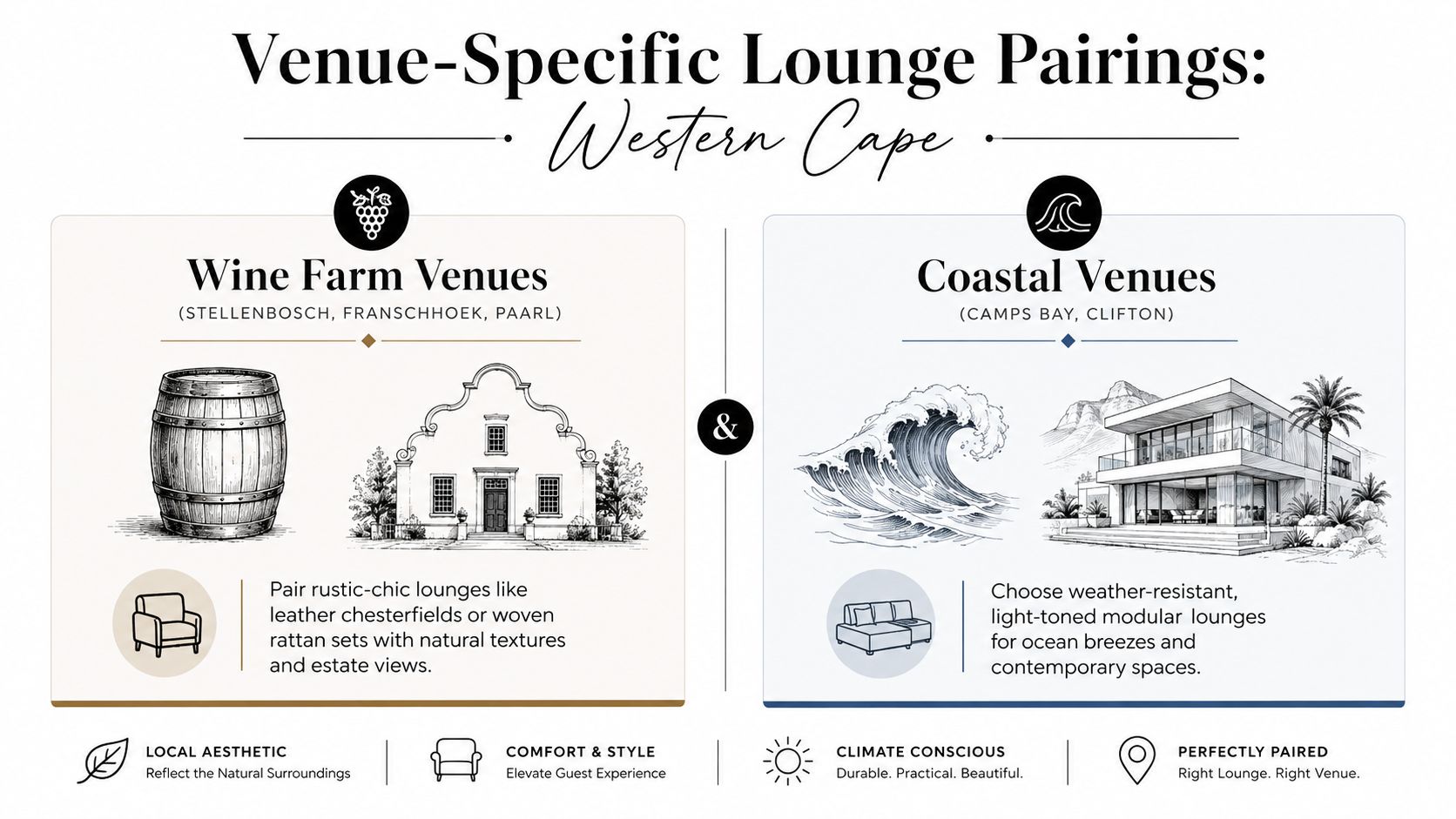
An infographic showing Western Cape venue-specific lounge furniture pairing suggestions for wine farms and coastal locations.

Wine farms around Stellenbosch, Franschhoek and Paarl

Estate venues already offer vineyards, mountain views, textured walls and natural planting. Rattan, woven seating, leather chesterfields and neutral upholstered pieces tend to sit comfortably within that setting. Use natural textures for a lounge that feels connected to the property rather than imported into it.

Gravel access is the first operational concern. Confirm whether the delivery vehicle can approach the setup point, where furniture can be unloaded and whether the route crosses loose stone, steps or narrow gates. On grass, check for level ground before placing coffee tables or low ottomans. A beautiful lounge that rocks every time someone sits down will lose its appeal quickly.

Open terraces also need a wind decision. Lightweight chairs, loose cushions and decorative side tables may need sheltered positioning, weighting or a covered alternative. Don't assume that an estate view means every piece can safely sit outside.

Camps Bay and Atlantic Seaboard venues

Coastal venues benefit from light-toned, weather-conscious modular pieces that suit contemporary architecture and ocean views. Keep the palette visually clean, but prioritise stable bases and fabrics that can tolerate active use.

Wind exposure can change during the event, especially when the lounge is planned for late afternoon and remains in place after sunset. Ask where cushions will be stored if conditions deteriorate, whether the venue has a covered fallback and how staff can move the furniture without disrupting guests.

Urban hotels and Cape Town lofts

Urban venues usually offer smoother surfaces and better control over lighting, but loading access can be stricter. Measure lifts, doors, corridors and loading-bay restrictions before selecting deep sofas or oversized chairs. LED pieces can work well here when outlets and cable routes are confirmed in advance.

Gardens and forest venues

Gardens reward lighter, natural styling, but uneven surfaces and changing light create practical limits. Choose broad-based pieces, keep low tables away from root lines and check how the area will be lit after sunset. Furniture that disappears into a dark garden won't support guest flow unless the venue supplies suitable illumination.

Budgets, Packages, and What Lounge Furniture Costs

A wedding lounge quote covers more than sofas and chairs. Separate the furniture package from the labour and access requirements needed to place it properly. Suppliers may charge by item, by pod or against the broader event brief. A pod can include a sofa, chairs, ottomans, a coffee table and a rug. An itemised quote gives you tighter control, but you must plan each zone and confirm that the pieces work together.

A local example shows why lounge hire needs its own budget line. ABC Hire's South Africa event-rental guide cites R15,000 for a lounge pod package at a wedding reception, compared with R4,500 for a 50-guest workshop (event furniture hiring solutions and planning guidance). These are examples rather than a standard tariff. Stock availability, venue location, loading access, delivery timing and labour can all change the final quote.
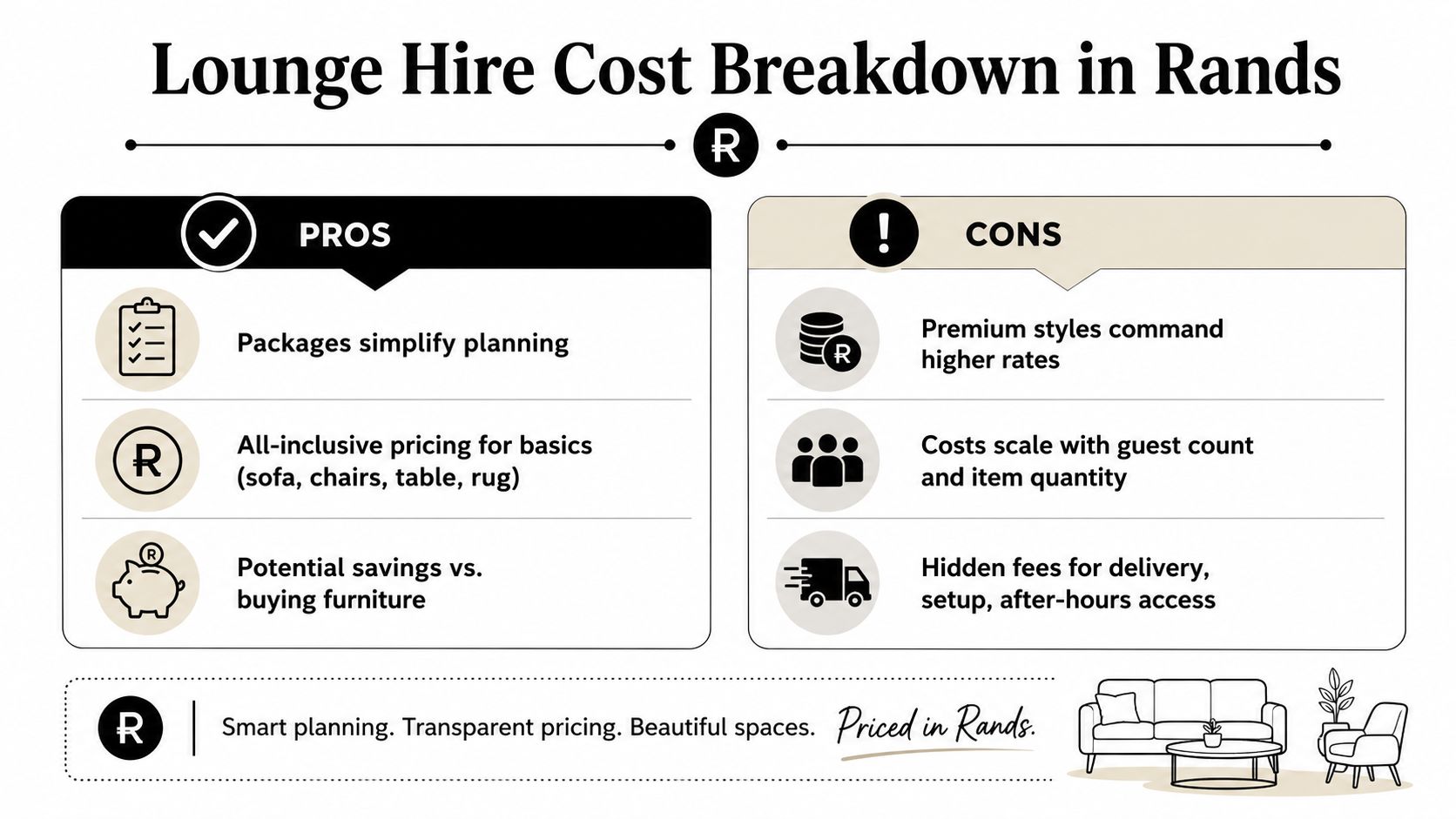
An infographic detailing the pros and cons of lounge furniture hire costs in South African Rands.

What the quote should reveal

Request a cost breakdown before approving the booking.

  • Furniture contents: Confirm the exact number of sofas, chairs, ottomans, tables, rugs and accessories.
  • Delivery and collection: Check the service window, travel distance, weekend arrangements and any after-hours charge.
  • Setup and breakdown: Establish whether the crew places every item to the floor plan or unloads everything at one point.
  • Weather protection: Ask about covered placement, anchoring, sandbags and relocation if an exposed area becomes unsuitable.
  • Damage terms: Confirm responsibility for stains, breakage, missing pieces and cleaning before signing.

Packages make planning faster when the included pieces suit the room and guest flow. Itemised hire is often better when several lounges need different proportions, or when the floor plan cannot absorb unnecessary stock. Buying may seem attractive for repeat use, but it also leaves you with storage, transport, maintenance and resale responsibilities.

Use this guide to find a fair price for furniture lounge suites when comparing quotes. The useful test is practical: does the lounge improve comfort, keep guests close to the celebration, support the venue plan and justify its transport and setup cost?

Prioritise lounge hire where guests face long transitions, several social zones, older attendees, a destination programme or a large venue footprint. It is harder to justify when dinner seating already serves the social function, the venue is compact or the lounge would sit away from the main activity.

Delivery, Setup, and the Timeline That Works

A lounge can be styled perfectly and still fail if the truck arrives after guests, the route crosses a service queue or the crew cannot reach the planned zone. Treat hire as a logistics project with clear handovers, from enquiry and quotation through selection, floor-plan confirmation, access checks, delivery, setup and collection. Assign one person to confirm each decision.

A workable project timeline

At around 12 weeks out, request a quote with the venue, guest count, preferred style, delivery address and likely lounge zones. By around eight weeks out, confirm the furniture and booking terms, while the stock you want is still available.

At around four weeks out, complete a site check or send a measured floor plan. Record the distance from the loading point to the lounge, door widths, lift dimensions, stairs, surface conditions and any place where furniture can wait before setup. These details affect labour, vehicle access and the time needed on site.

One week before the wedding, confirm the final guest count, delivery window, collection time, floor plan and on-site contact. Mark whether the lounge sits beside the bar, under trees or inside the reception room, rather than leaving placement to the crew on arrival.
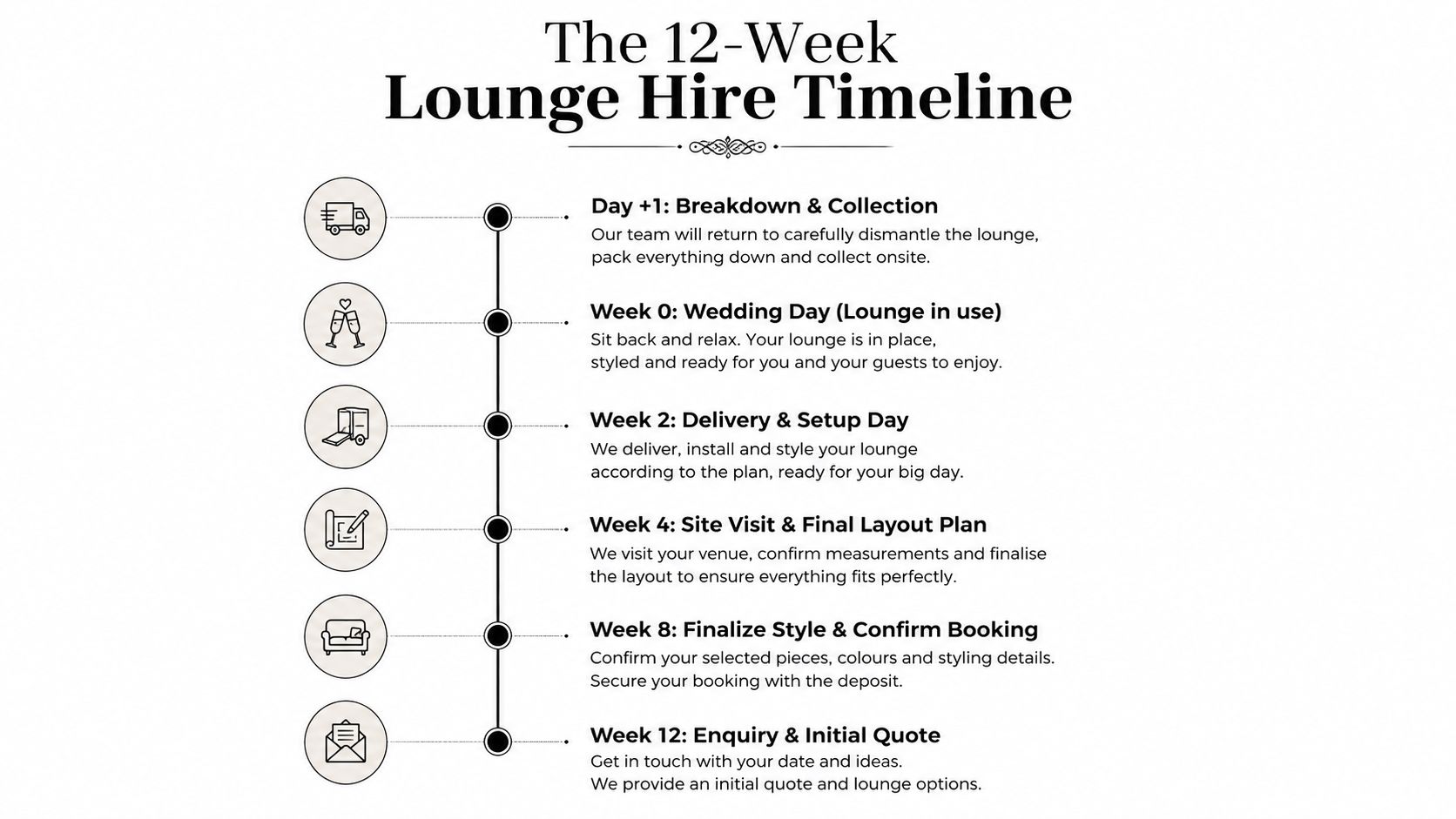
A 12-week timeline infographic outlining the process for professional wedding lounge furniture hire and styling services.

The access details that prevent failure

Cape Town and Winelands suppliers commonly work with scheduled deliveries and collections, not walk-in flexibility. A local operations guide notes that weekend warehouse walk-ins are not allowed and that deliveries and collections are scheduled (South African event furniture hire operations). Plan around the confirmed window instead of relying on a last-minute collection or replacement.

Send the floor plan to the venue and rental team early. Verify loading-bay height and time restrictions, the route to the setup point and who will meet the crew. The on-site lead should carry the supplier's contact details, final plan and authority to approve safe placement.

Transport timing affects every supplier. These event transport timing success tips help clarify arrival sequencing, access and handover responsibilities, especially where furniture shares a loading area with catering, lighting or décor teams.

Keep a Plan B for wind, rain, delayed trucks and damaged pieces. Identify the indoor area that can receive the lounge, acceptable substitutions and the person who will communicate changes to the couple, venue and photographer. For wider operational considerations, review this guide to same-day furniture delivery, then confirm whether the venue and booking can support that timing.

Sample Layouts and a Pre-Booking Checklist

Use these sketches as planning conversations, not fixed packages. The furniture count must follow the venue's dimensions, access route and surface conditions.

A 100-guest wine-farm wedding

Create two principal pods. Place a conversation lounge near the ceremony exit with a sofa, two occasional chairs, ottomans and a coffee table. Position a second, slightly smaller pod near the cocktail bar but outside the service queue. If the garden has a natural pause point, add a compact photo perch only when it doesn't obstruct vineyard views or circulation.

Deliver the lounge before guests arrive, with the final placement checked against the ceremony-to-cocktail route. Keep the dance floor visible from the second pod.

A 150-guest estate reception

Use three zones, arrival, dining transition and dance-floor edge. Keep the arrival zone visually calm, use the dining transition lounge for conversation after the meal and place the final pod close enough to the dance floor for guests to feel involved without narrowing the DJ or service route.

A site visit is particularly valuable here because estate rooms often connect several surfaces and doorways. Confirm each zone rather than instructing the crew to “place the furniture around the room”.

A 200-guest multi-day celebration

Plan one coordinated furniture language across the welcome dinner, ceremony hospitality area and after-party. The pieces don't need to occupy every location at once, but the supplier must know which items move, when they move and who authorises the change.

Schedule the first delivery around the earliest event, then confirm whether collection, reset or additional handling is required between functions. A shared inventory list prevents a sofa intended for the after-party from being left at the ceremony site.

Before booking, take this checklist into the venue walk-through:

  • Floor plan: Mark every lounge pod, service path, bar route, dance-floor edge and photography sightline.
  • Access: Confirm vehicle approach, loading-bay restrictions, doors, lifts, stairs and surface conditions.
  • Inventory: List each sofa, chair, ottoman, table, rug, LED item and accessory.
  • Timing: Record signed delivery, setup, collection and breakdown windows.
  • Site lead: Name one person who will meet the crew and approve placement.
  • Weather plan: Identify covered storage, indoor relocation space and protection for cushions or electrical items.
  • Budget: Separate furniture, transport, labour, protection and damage terms.
  • Multi-event reset: Document any movement between welcome dinner, ceremony, reception and after-party.

For Cape Town and Winelands weddings, ABC Hire can help you source lounge pieces such as couches, bean bags, LED furniture and indoor or outdoor event furniture around a confirmed floor plan. Visit ABC Hire with your venue details, access notes and preferred delivery window so your lounge hire is planned as a workable installation, not just a collection of attractive items.
Rustic Wedding Supplies: Your Cape Town & Winelands Guide

You've probably saved a dozen images already. Long harvest tables under old trees. Cross-back chairs on a lawn. Candlelight against timber. Maybe a barrel bar, a welcome sign, some linen runners, and that soft, layered look that feels relaxed but still polished.

That vision works beautifully in Cape Town and the Winelands. It also falls apart fast if nobody has thought through wind, transport, power, setup access, collection times, and what happens to bulky décor once the wedding is over. Rustic weddings look effortless when the supply plan is tight. They look messy when couples try to build the whole thing from scattered purchases and last-minute DIY.

The good news is that rustic style is well suited to Western Cape venues. Farm spaces, vineyards, courtyards, barns, and garden settings already give you the architectural base. The job is choosing the right rustic wedding supplies, then using them with restraint and purpose.

Defining Your Cape Town Rustic Wedding Dream

A Cape Town rustic wedding usually starts with a clear visual: timber tables, soft evening light, natural textures, and a setting that doesn't need heavy decoration. That instinct is a good one. Rustic isn't a fringe look anymore. In The Knot's 2025 Real Weddings Study, 15% of surveyed couples described their wedding as rustic, which confirms that this is a durable wedding category rather than a short-lived aesthetic.

Know what rustic actually means

At its best, rustic style is built around natural materials and a sense of ease. Think wood, stone, linen, warm light, and details that feel collected instead of manufactured. In the Winelands, that translates naturally because the venues already offer oak trees, vineyard views, old cellar walls, gravel courtyards, and farm-style reception spaces.

Rustic often gets mixed up with boho and farmhouse, but they're not the same.

Style What leads the look What to avoid
Rustic Timber, linen, candles, stone, simple florals Overcrowding the tables with every “rustic” prop at once
Boho Layered textiles, softer shapes, more free-form styling Letting it drift too far from the venue's architecture
Farmhouse Cleaner lines, practical furniture, pared-back décor Making it feel too plain or canteen-like

If you're getting married in Stellenbosch, Franschhoek, or Paarl, rustic usually works best when it responds to the venue instead of fighting it. A working wine farm doesn't need theatrical styling. It needs editing.

Rustic looks strongest when the venue already carries part of the mood.

Build a usable vision, not just a mood board

The most useful starting point is to choose three anchors:

  • Your material anchor. Usually timber, cane, linen, or stone.
  • Your light anchor. Festoon lighting, lanterns, candles, or warm LED lighting.
  • Your colour anchor. Neutral tones, soft greens, earthy shades, or muted seasonal colour.

Those anchors help every decision that follows. They also stop the classic problem where the ceremony looks boho, the reception looks farmhouse, and the stationery belongs to another wedding entirely.

A practical rustic wedding also includes the guest experience. If you're planning personalised welcome details, thank-you gifts, or keepsakes for the bridal party, it helps to look at ideas for unique customizable wedding presents early so those details feel connected to the style instead of added at the end.

Match the dream to the region

In the Western Cape, rustic styling succeeds because it fits local venues. It also needs to fit local conditions. Heat changes floral choices. Wind changes candle and signage choices. Load-shedding changes lighting decisions. Delivery access matters when a venue is on a farm road and setup windows are tight.

So define the dream clearly, but define it in operational terms too. A beautiful rustic wedding isn't only about what guests see. It's about whether the styling can be delivered, installed, protected, and cleared without chaos.

Your Essential Rustic Wedding Supplies Checklist

Most couples don't need more inspiration. They need a checklist that turns a look into an order list. Rustic wedding supplies are easiest to manage when you group them by function, not by Pinterest category.

The style's core elements are well established. Mason jars, burlap, twine, wooden tables, mismatched chairs, string lights, and vintage props show up repeatedly because they create the handmade, natural feel people associate with rustic weddings.

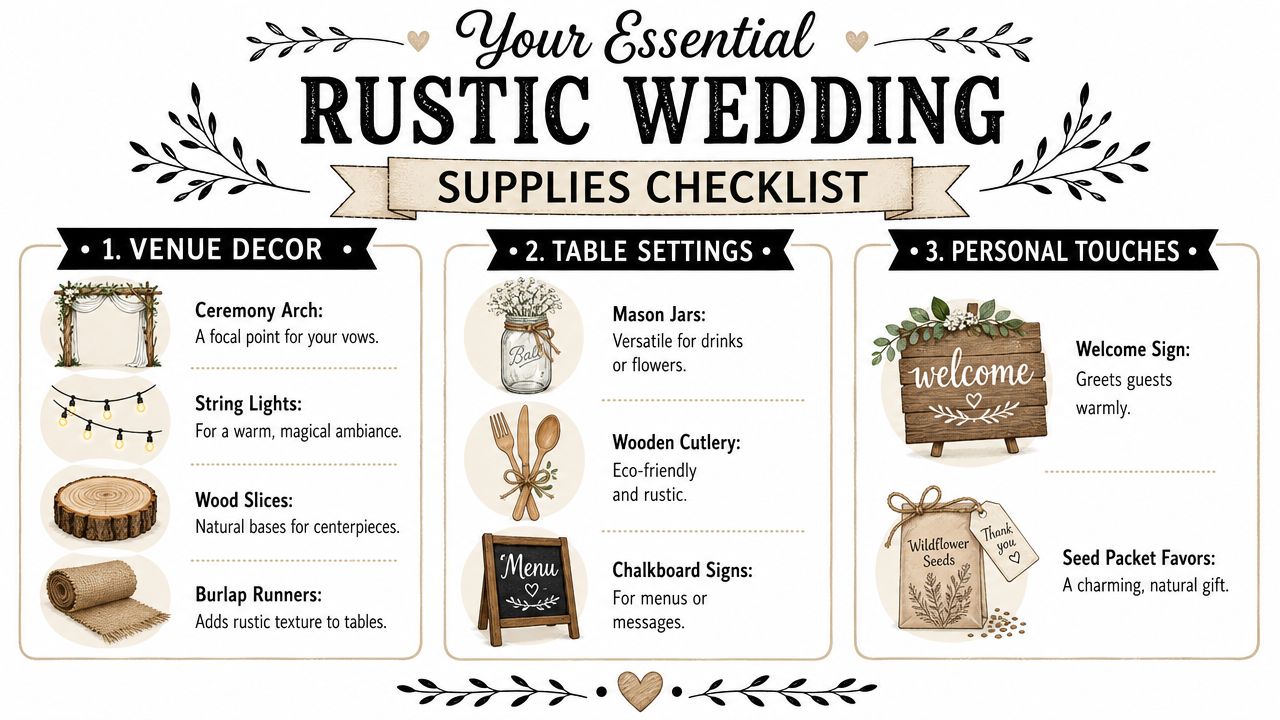
Here's a visual way to think about the essentials:

An illustrated checklist for planning a rustic wedding, featuring decor, table settings, and personal touches.

The core hire list

Start with the big pieces first. These shape the room before any small décor item goes down.

  • Tables. Long wooden banquet tables usually do more for a rustic reception than heavily dressed round tables. If the venue allows, exposed timber tops create instant warmth.
  • Chairs. Cross-back, bentwood, or carefully chosen mixed chairs all work. Random mismatching only works when there's still a colour and material thread tying everything together.
  • Ceremony focal pieces. Arches, plinths, wine barrels, signing tables, and aisle markers should relate to the reception furniture.

If you're considering barrels as part of your ceremony entrance, bar area, or cake display, it helps to understand how they function in real event setups. This guide on wine barrels for sale and event use is useful for seeing where they add value and where they can become visual clutter.

Tabletop and linen supplies

At this stage, many rustic weddings either become elegant or start looking themed.

Consider this your essentials layer:

  • Linen runners in textured, natural fabrics
  • Napkins in soft tones that don't fight the table
  • Matte ceramics rather than glossy formal crockery when the venue style allows
  • Glassware that looks consistent across the table
  • Cutlery in a finish that suits the warmth of the room
  • Candles or LED candle alternatives
  • Simple vessels for florals or foliage

Practical rule: If every item on the table demands attention, nothing reads as intentional.

Lighting and atmosphere

Rustic weddings rely heavily on ambient light. The right lighting can make a plain courtyard or barn feel layered and intimate.

Use a mix of:

  • Festoon lights for overhead warmth
  • Lanterns at entrances or pathways
  • String lights in trees, beams, or around bar areas
  • Table light sources that are low and steady
  • Lounge lighting if you're creating outdoor seating pockets

Props that actually earn their place

Props should either solve a function or strengthen the room. Keep the decorative layer selective.

Useful rustic props include:

Supply type Best use
Crates Product displays, welcome areas, favour stations
Barrels Cake table bases, bar counters, signage stands
Chalkboards or timber signs Directional signage, seating plans, menus
Vintage items Small accent pieces, not full-table overload
Wood slices Controlled use under candles or small centrepieces

Personal detail items

These are often left too late, yet they help the wedding feel finished:

  • Welcome sign
  • Table plan display
  • Place cards or escort cards
  • Favours
  • Blankets for evening chill
  • Bathroom baskets and practical guest comforts

A strong checklist keeps the look coherent. It also gives your suppliers something concrete to quote against, which is far more useful than saying, “We want something rustic but elevated.”

Sourcing Your Supplies Budgeting and Rentals

Buying rustic wedding supplies sounds sensible at first. Timber items feel reusable. Crates seem affordable. Candle holders look harmless enough. Then costs start stacking up.

Most wedding advice stays on the styling side, but one of the biggest gaps is the logistics behind the look. Delivery, collection, damage waivers, and storage for bulky items like crates, barrels, and wooden furniture are where many DIY supply plans start to go wrong.

This is the practical side couples often don't see until the week of the wedding.

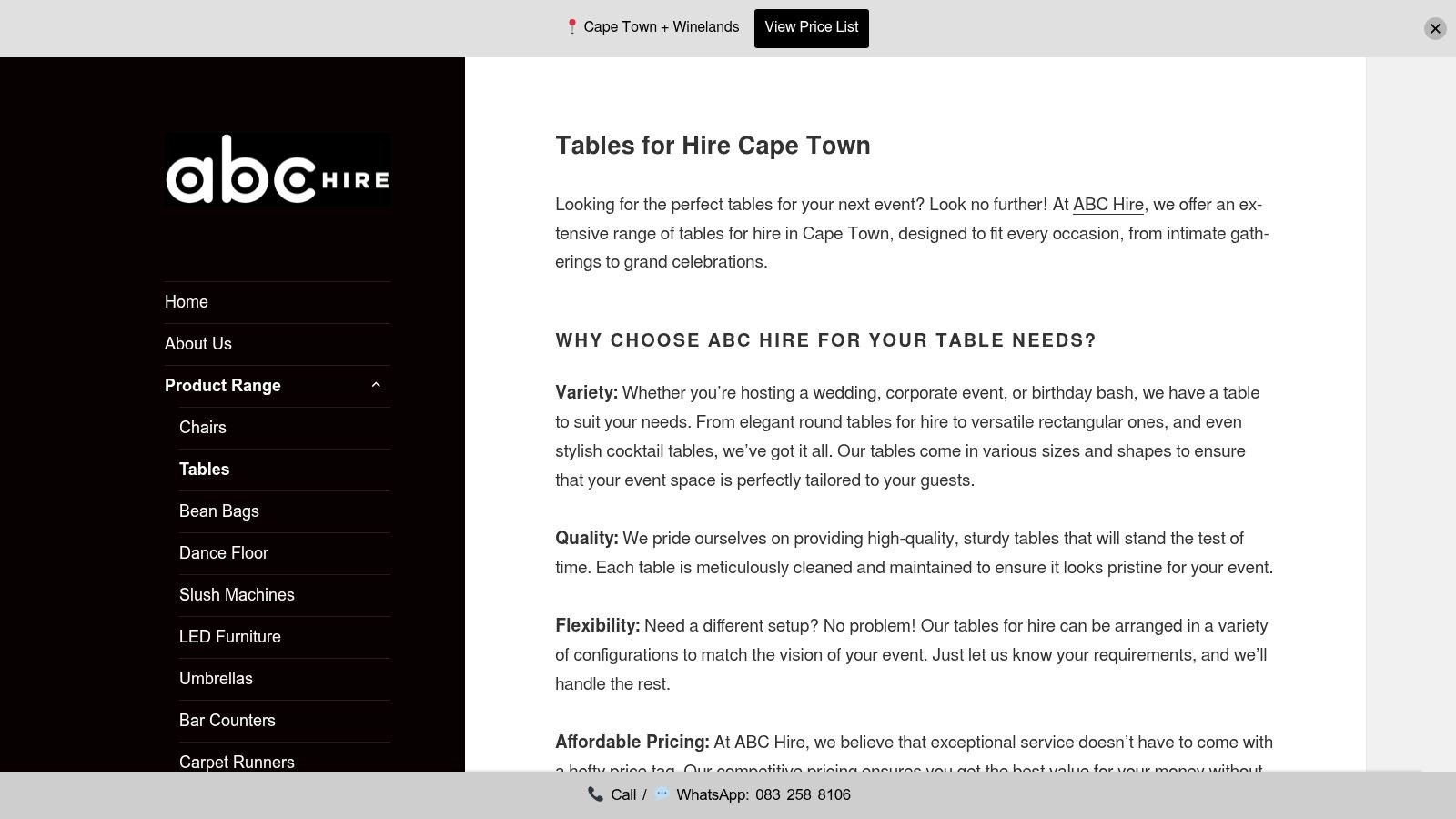
Screenshot from https://abchire.co.za/tables-for-hire-cape-town/

What buying really means

When you buy, you're not only paying for the object. You're taking on the full chain around it.

That usually includes:

  • Transport planning for collection and return trips
  • Storage before the wedding and after it
  • Cleaning if the items arrive dusty or leave stained
  • Repair risk when timber, glass, or lighting gets damaged
  • Disposal or resale once the event is over

That's manageable for small items. It becomes exhausting for furniture, lighting, and structural décor.

What's usually worth renting

A good rule is simple. Rent anything bulky, uniform, fragile, or difficult to move. Buy only the pieces you want to keep, personalise, or repurpose after the wedding.

Good rental candidates

  • Tables
  • Chairs
  • Bar units
  • Lounge furniture
  • Large lighting pieces
  • Ceremony structures
  • Heaters or climate-control equipment
  • Major décor props

Often better to buy or make

  • Stationery
  • Personal signage
  • Favours
  • Guestbook details
  • Small sentimental items

If you're weighing the broader pros and cons of hired event inventory, this guide to renting furniture for events gives a helpful framework for thinking beyond the purchase price.

Budget where guests will feel it

Rustic weddings reward smart allocation. Spend first on items that shape the guest experience and the room itself.

Prioritise in this order:

  1. Seating and tables, because every guest interacts with them for hours.
  2. Lighting, because it changes the mood more than most décor pieces.
  3. Service-friendly table styling, because beautiful tables still need to work for food, wine, and conversation.
  4. Entrance and focal areas, such as the ceremony backdrop, bar, and seating plan.
  5. Decorative extras, only once the basics are solved.

Don't build a rustic look on top of weak infrastructure. Fix the room first.

Ask suppliers the questions that save stress

When reviewing quotes, ask plain operational questions:

  • Who delivers and who collects?
  • What's the access window at the venue?
  • Who sets up what?
  • What happens if rain or wind changes the plan?
  • What counts as damage?
  • Does the quote include cleaning?
  • Can one supplier cover multiple categories so fewer trucks arrive?

If you're considering potted succulents or small desert-style accents as favours or styling pieces, it's worth reading a practical sourcing guide like the Cactus Outlet wholesale guide before committing. Living décor can work beautifully in rustic settings, but only when transport, water, heat, and post-event handling have been thought through.

The smartest rustic wedding supply plan usually isn't the one with the most purchased items. It's the one with the fewest logistical surprises.

Styling Your Venue The Rustic Way

Styling is where rustic weddings often tip in one of two directions. They either feel layered, calm, and generous. Or they feel crowded with every rustic symbol people could find. The difference usually comes down to restraint.

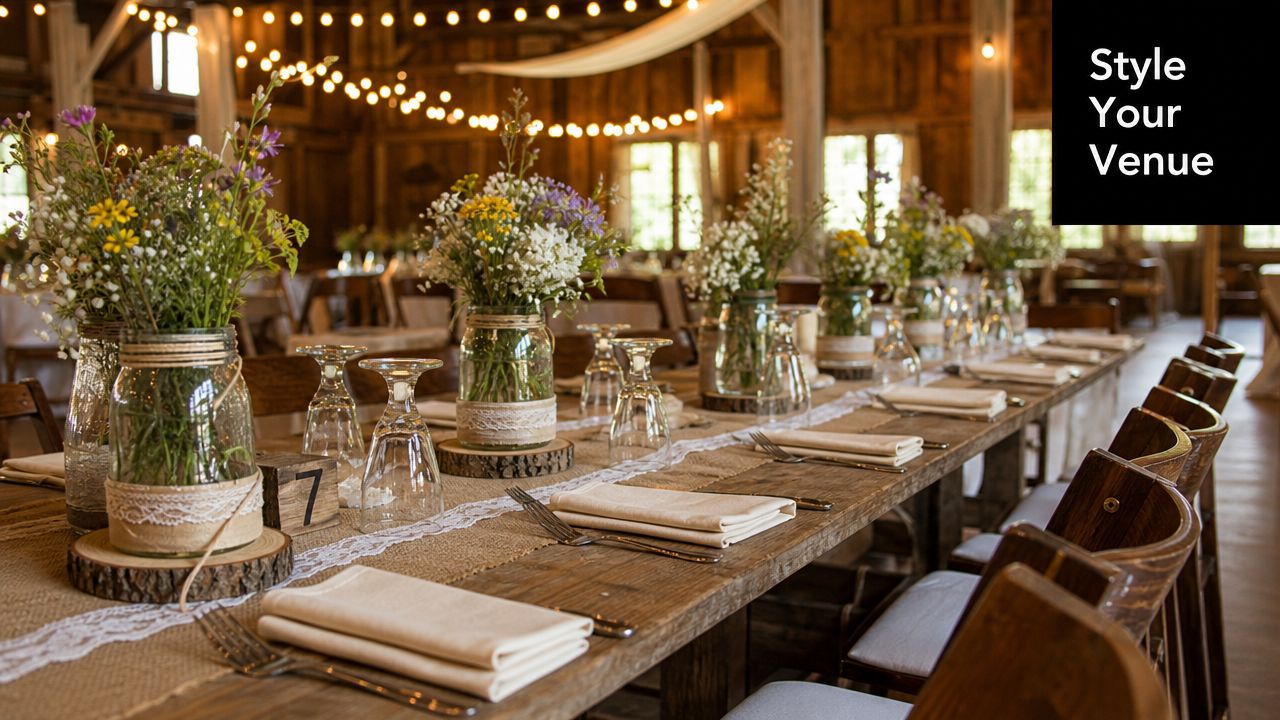
One of the most reliable methods is a low-glare, mixed-material tablescape. The idea is simple: combine a small set of textures that sit well together, then repeat them consistently across the room. According to guidance on rustic barn décor styling, using a neutral textile, a timber base, and a single glass type helps avoid visual clutter on long farm-style tables.

A good rustic table should feel generous without becoming busy.

A long wooden dining table set for a rustic wedding reception with floral centerpieces and burlap runners.

Build one table formula and repeat it

Use a repeatable structure for every guest table. That keeps the room cohesive, speeds up setup, and avoids random styling decisions on the day.

A strong formula looks like this:

Layer Best choice
Base Exposed timber table or timber-look surface
Textile One linen or natural-fibre runner
Vessels One glass style or one ceramic style
Light Tea lights, lanterns, or warm LED alternatives
Florals Low centrepieces with open sightlines
Accent One dominant texture, not five

The point isn't to make every table identical. The point is to give each one the same grammar.

What works and what doesn't

What works:

  • Low centrepieces that allow conversation across the table
  • Matte finishes that soften the overall look
  • Warm metals used sparingly
  • Consistent glassware
  • Natural texture from timber, cane, stone, linen, or foliage

What usually doesn't work:

  • Mason jars, bottles, crates, twine, burlap, logs, and dried florals all on the same table
  • Centrepieces so tall or wide that guests can't see each other
  • Too many prop styles in one room
  • A beautiful table that leaves no space for platters, wine, or service

A rustic table should still function as a dining table.

Style beyond the dining setup

Rustic styling isn't only about the reception tables. The best weddings carry the material language into every guest-facing area.

Use the same approach in these spaces:

  • Ceremony area with timber markers, simple florals, and grounded textures
  • Welcome zone with one strong sign and a clean display surface
  • Bar area using timber, warm lighting, and simple shelving or display props
  • Lounge corners with sofas, ottomans, rugs, and side tables
  • Gift or favour table that feels integrated, not leftover

If you like the warmth of raw timber details, inspiration around pallet wood furniture and event styling can be useful, especially for lounge areas, bars, and feature corners where texture matters more than formal finish.

Edit harder than you think

Most couples need fewer props than they think. Rustic design is strongest when the furniture carries the look and the décor supports it. If the venue already has old walls, vines, beams, views, or established trees, let those do part of the work.

That's the difference between amateur rustic styling and professional styling. Professionals don't add everything. They remove what the room doesn't need.

The Cape Town Reality Check Practical Solutions

A rustic wedding in the Western Cape needs more than taste. It needs resilience. Generic wedding blogs often assume a calm indoor setting, but local conditions ask different questions. Which candles stay lit outside? Which signs won't fall over in afternoon wind? What still looks beautiful if the power drops?

That's why one of the biggest gaps in rustic wedding advice is practical guidance for heat, wind, and load-shedding, including the use of LED alternatives, weighted décor, and non-wax candles for more resilient setups in the region, as discussed in this event-planning reference on climate-aware rustic choices.

Wind changes more than you think

Cape Town wind doesn't only affect the ceremony arch. It affects every loose, light, top-heavy, or flame-based styling choice.

Use a wind-aware filter when selecting rustic wedding supplies:

  • Weighted signage instead of lightweight easels on exposed lawns
  • Secured table runners rather than loose lengths of fabric
  • Low, stable centrepieces instead of tall narrow vessels
  • Lanterns or enclosed light sources rather than open flames
  • Solid place card holders that won't scatter during setup

The rustic look can still feel soft. It just can't be flimsy.

Heat punishes fragile décor

Summer weddings in the Winelands often begin in beautiful daylight and carry on through warm afternoons. That sounds ideal until candles soften, florals droop, and dark surfaces become uncomfortable to touch.

Focus on supplies that tolerate exposure:

Challenge Better choice
Direct sun Shade structures, parasols, or covered seating pockets
Hot tables Linen runners and insulated bases under delicate items
Melting candles LED candles or enclosed alternatives
Wilt-prone styling Hardier foliage, dried elements, or later floral placement

A rustic wedding doesn't need to look dry or severe to survive heat. It needs materials that age gracefully over the course of the day.

Load-shedding needs a design response

Couples often treat power backup as a technical issue. It's also a styling issue. Rustic weddings depend heavily on atmosphere, and atmosphere drops quickly when lighting isn't planned properly.

Good backup-friendly rustic choices include:

  • Battery-powered candles
  • Warm LED table lights
  • Rechargeable lanterns
  • Lighting that doesn't rely on one central decorative source
  • Layout plans that still read well in lower ambient light

If your evening look depends on one power source, it isn't a styling plan. It's a gamble.

Think in systems, not individual items

This is the local planning shift that makes the biggest difference. Don't ask whether an item is pretty in isolation. Ask whether it works in the venue, in the weather, at the setup time, and under local infrastructure constraints.

That mindset leads to better decisions across the board. A weighted lantern may be less romantic on a supplier list than a wax taper in a delicate holder. On a breezy wine farm, it's usually the smarter and better-looking choice by sunset.

Your Rustic Wedding Timeline and Final Touches

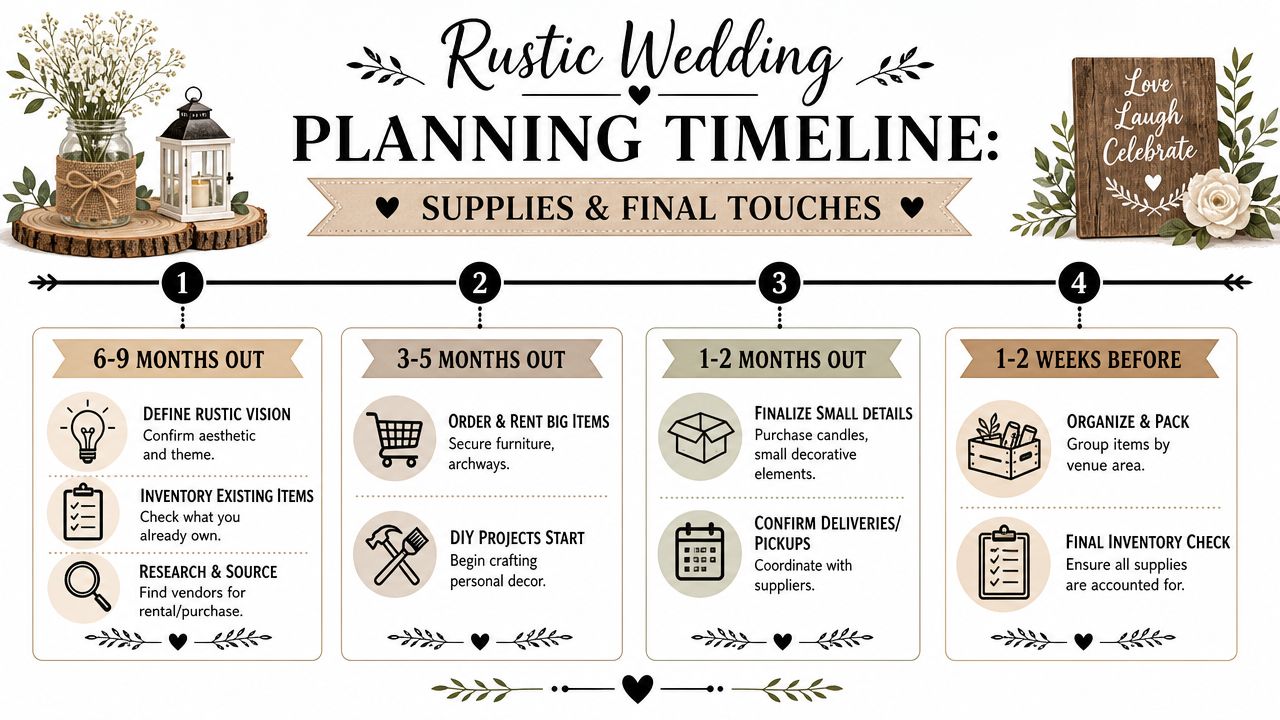
A rustic wedding comes together well when decisions happen in the right order. Leave too much until late in the process and you end up trying to style a room with whatever's still available. Get the sequence right and the whole day feels calmer.

This timeline works well for couples planning around rented furniture, layered décor, and a venue with outdoor elements.

A rustic wedding planning timeline infographic outlining tasks from nine months out to one week before.

Early stage decisions

Once the venue is confirmed, lock in the visual backbone of the wedding. That means furniture style, ceremony direction, and how formal or relaxed the reception should feel.

At this stage, decide:

  • Whether you want exposed timber tables or fully dressed tables
  • What chair style suits the venue
  • How much of the wedding is outdoors
  • Which major props are necessary

This is also the moment to stop collecting random inspiration and start selecting only images that resemble your real venue.

Mid-planning choices

A few months later, narrow the decorative layer. Confirm your tablescape formula, your lighting approach, and your practical guest-comfort items.

Key items to finalise:

  • Runners, napkins, and table vessels
  • Bar styling and signage
  • Ceremony décor
  • Lounge pockets or waiting areas
  • Backup lighting for the evening

A simple planning habit helps here. Group everything by zone: ceremony, welcome, reception, bar, lounge, and bathrooms. That makes setup faster and reduces forgotten items.

Final week checks

The week before the wedding should be about confirmation, not creative reinvention.

Run through this checklist:

  • Delivery window confirmed
  • Collection plan confirmed
  • Venue access shared with suppliers
  • Wet-weather and wind plan understood
  • Lighting charged or tested
  • Small décor boxed by area
  • One person assigned to answer supplier questions on the day

The final week is for tightening details, not redesigning the wedding.

The finishing touches guests remember

Guests rarely remember every prop. They do remember whether the room felt warm, whether the seating was comfortable, whether the lighting softened the evening, and whether the styling felt coherent.

That's why the final touches that matter most are often simple:

  • A clean welcome display
  • A well-lit table plan
  • Blankets for later in the evening
  • Soft ambient lighting near pathways and lounges
  • One thoughtful personalised detail at each place setting or guest area

A strong rustic wedding doesn't come from buying more. It comes from selecting well, hiring smartly, styling with restraint, and planning for real Cape Town conditions.


If you're sourcing rustic wedding supplies for a Cape Town or Winelands celebration, ABC Hire can help you pull the practical pieces together. From tables, chairs, and lighting to furniture that suits farm, vineyard, and outdoor venues, having one experienced rental partner makes setup simpler, cleaner, and far less stressful on the week of your wedding.