
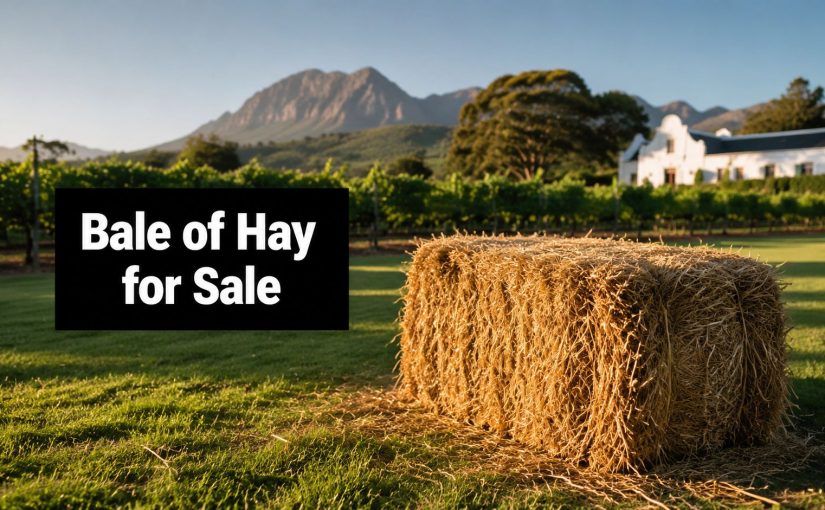
You're halfway through a supplier call for twenty bales at a Stellenbosch wine farm when the quoted price stops sounding useful. The bales look affordable, but nobody has confirmed whether they're feed-grade or decorative, who'll carry them from the truck, how the delivery vehicle will reach the lawn, or who'll remove the straw after the last guest leaves.
That's the problem with searching for a bale of hay for sale in Cape Town. The listed price is only one part of the decision. For a wedding, shoot, school function, or brand activation, you need the right format, a reliable delivery plan, clean presentation, and a clear answer on what happens after the event.
What a Bale of Hay Really Costs You in Cape Town
A planner ordering hay for a Winelands ceremony should ask three questions before accepting any quote:
- What format are you receiving? A small square bale, a compressed decorative bale, or a jumbo unit will carry very different handling requirements.
- How far is the farm from the venue? A farm-gate price says little about the final cost once the load travels through Cape Town, Stellenbosch, Franschhoek, or Paarl.
- Who handles the bales? Confirm whether the driver drops them at the gate, unloads them, places them, and returns for collection.
South African marketplace listings show broad price dispersion, from about R120 to R900 per bale, depending on bale type, order quantity, and whether delivery is included. Those listings are useful for understanding the market, but they aren't a complete event quote.
Build the landed price before you compare suppliers
| Cost line | Typical range (ZAR) | Notes |
|---|---|---|
| Bale purchase | R120 to R900 | Varies by type, quantity, and delivery arrangement |
| Delivery | Supplier-specific | Distance, vehicle size, access, and timing affect the quote |
| Offload and placement | Supplier-specific | Confirm whether bales are carried beyond the truck |
| Collection or disposal | Supplier-specific | Some venues require same-evening removal |
| Surface protection | Supplier-specific | Grass, gravel, and damp ground may need coverings or pallets |
The cheapest supplier often transfers the labour to you. A lower bale price can become poor value if your team hires a bakkie, moves every bale by hand, pays for offcuts, or returns to the venue after the reception to clear the lawn.
Ask for one written figure showing bales, delivery, offload, placement, collection, and disposal. If you're comparing several delivery scenarios, tools such as browse haulage software pricing can help you think through transport planning rather than treating haulage as an afterthought.
Practical rule: Compare the total delivered and removed cost, not the farm-gate price.
For a Stellenbosch wedding, get the venue's access instructions before you book. An estate may require a narrow delivery window, a small vehicle, or complete removal that evening. Those conditions should shape the quote from the start.
Understanding Bale Types and Sizes for Events
A hay bale is compressed dried grass or straw bound with twine or net wrap. Agricultural buyers usually care about feed value, moisture, and storage life. Event planners care about those issues too, but they also need consistent shape, low shedding, clean surfaces, manageable weight, and a finish that won't ruin linen or formalwear.
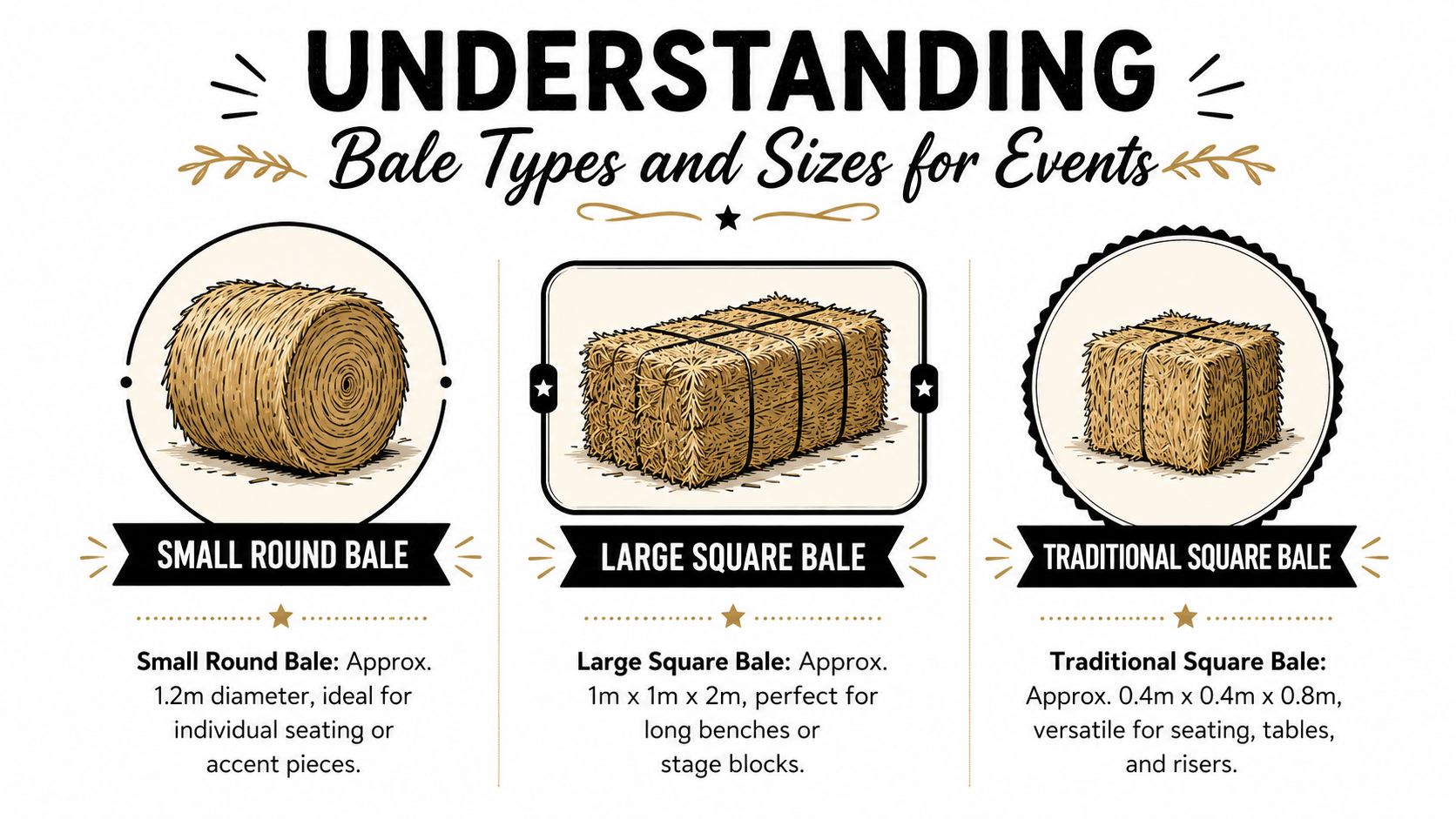
The three formats most relevant to event work are small quarter bales, standard multi-string bales, and large jumbo bales. Local South African listings show packaged hay formats ranging from about 20 to 30 kg for quarter bales to approximately 250 to 430 kg for larger multi-string or jumbo bales. The market reference illustrates why “one bale” isn't a sufficient specification.
Match the format to the job
- Quarter bales: Small rectangular blocks are easiest for a crew to carry and reposition. They work well for ceremony seating rows, low display plinths, and flexible lounge layouts.
- Multi-string bales: These are the practical workhorses for many Cape Town weddings. They provide a stable rectangular base for seating, leaners, and stacked styling, provided the twine is intact and the bale is evenly compressed.
- Jumbo round or square bales: These need loading equipment and a proper access plan. They can define a children's zone or agricultural display, but they're usually excessive for guest seating and awkward on a manicured lawn.
Choose the material for guest contact
Lucerne is a feeding hay with a distinctive green appearance and strong agricultural character. Teff can look softer and lighter, while oat and barley straw are often more suitable for decorative seating where colour, texture, and lower guest contact matter more than feed quality.
For public-facing events, specify whether the bales are for feeding or decoration. Decorative straw may be the better choice for a rustic seating arrangement, but it still needs to be dry, clean, secure, and free from excessive loose strands. Cover seating with linen, hessian, blankets, or purpose-made caps so guests aren't sitting directly on rough material.
Don't approve a bale from a photograph alone. Request the format, approximate weight, covering method, and a current image of the actual stock.
How the South African Hay Market Shapes Your Order
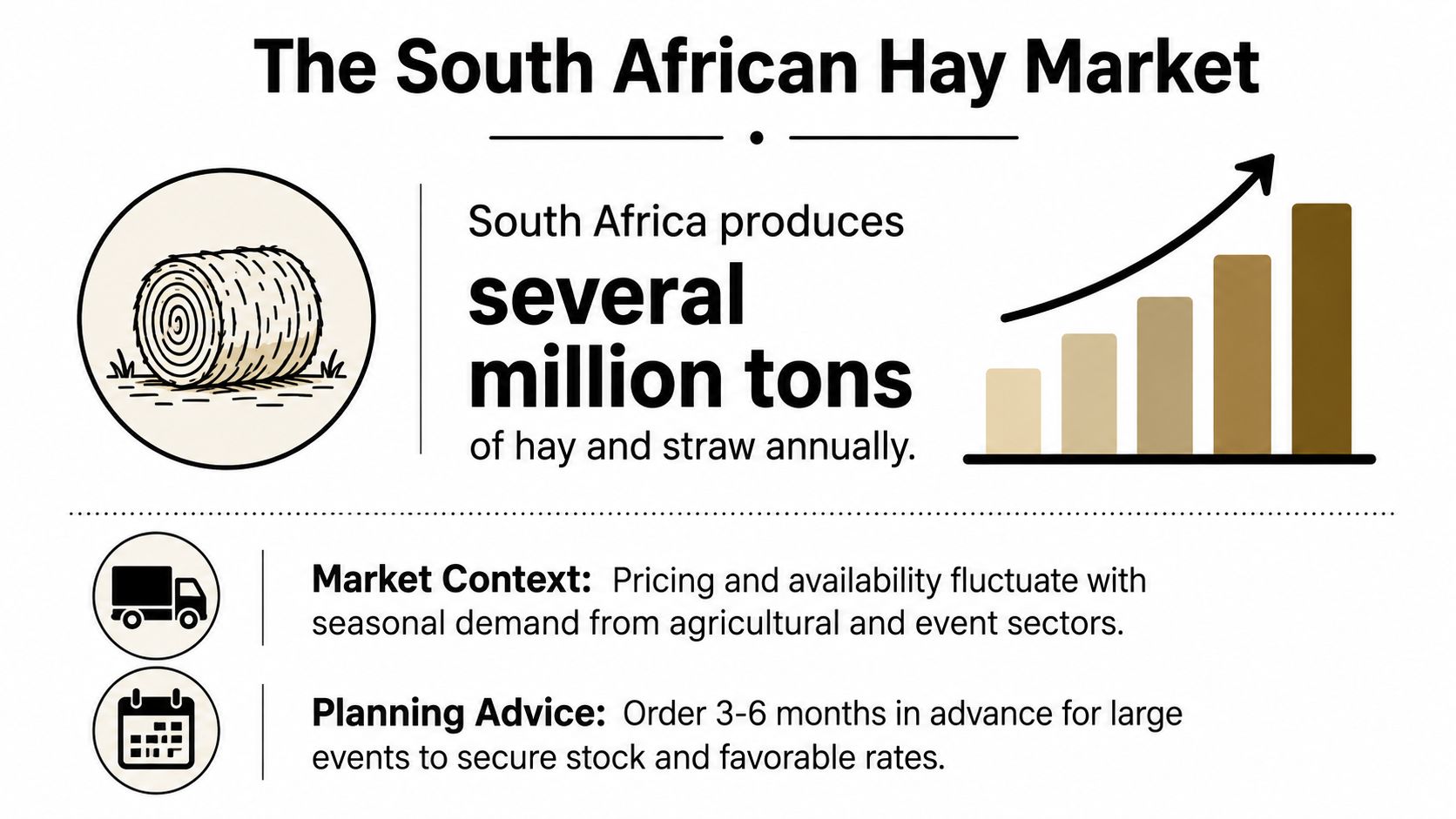
South Africa's lucerne market is substantial enough to support a formal bale trade. The country produces over 1.5 million tonnes of lucerne hay annually, while only about 400,000 tonnes are officially graded each year, meaning roughly 27% enters the formal domestic or export market. Industry reporting on South African lucerne shows why a marketplace search doesn't represent the full supply picture.
South Africa also exports around 160,000 to 240,000 tonnes annually, mainly to neighbouring countries and the Middle East, and the Department of Agriculture, Land Reform and Rural Development estimated the gross value of lucerne production at R5,771 million in 2022. Those figures matter to an event planner because local availability is connected to agricultural demand, export commitments, grading, and production conditions.
What this means around Cape Town
A buyer in the Western Cape isn't shopping in an isolated micro-market. Irrigated production and long-running regional research help support forage availability, particularly in established agricultural zones. The Western Cape government's Outeniqua Research Farm was founded in 1953 and covers about 300 hectares, including 114 hectares under permanent irrigation. The farm-bale reference demonstrates how irrigation and agronomic infrastructure support more consistent forage systems.
For your order, ask about lot consistency and grading, not just colour. An event requires bales that look clean and uniform across the installation. A dusty, weathered, or mismatched batch may still be usable as farm feed, but it can fail beside white linen, polished timber, or formal floral work.
Plan around production and demand
Supply can tighten after difficult growing conditions or when agricultural and export demand absorbs available stock. Older bales may dominate listings when fresh, brighter material is harder to source. Book early for large events, then reconfirm the exact bale type and condition closer to delivery.
Don't assume that a listing marked “hay” guarantees an event-ready product. Send the supplier your venue, intended use, guest-contact requirements, and desired colour. That information lets the seller recommend stock that performs on site rather than moving whatever is available.
Safety and Storage Essentials Before the Bales Arrive
A bale can photograph beautifully and still be unsuitable for a public event. Before it reaches a Paarl loading dock or Franschhoek lawn, set a clear acceptance standard for moisture, structural integrity, storage, fire separation, and loose material.
Grain SA recommends drying hay to 15% to 20% moisture before baling. South African grasses also cure at different speeds. Oulandsgras and teff may be ready within a day, while Smutsvinger, Rhodes, and white buffalo grass can require up to three days in the sun. The South African moisture guidance explains why a dry-looking outside doesn't prove that the centre is safe.
Check the bales on arrival
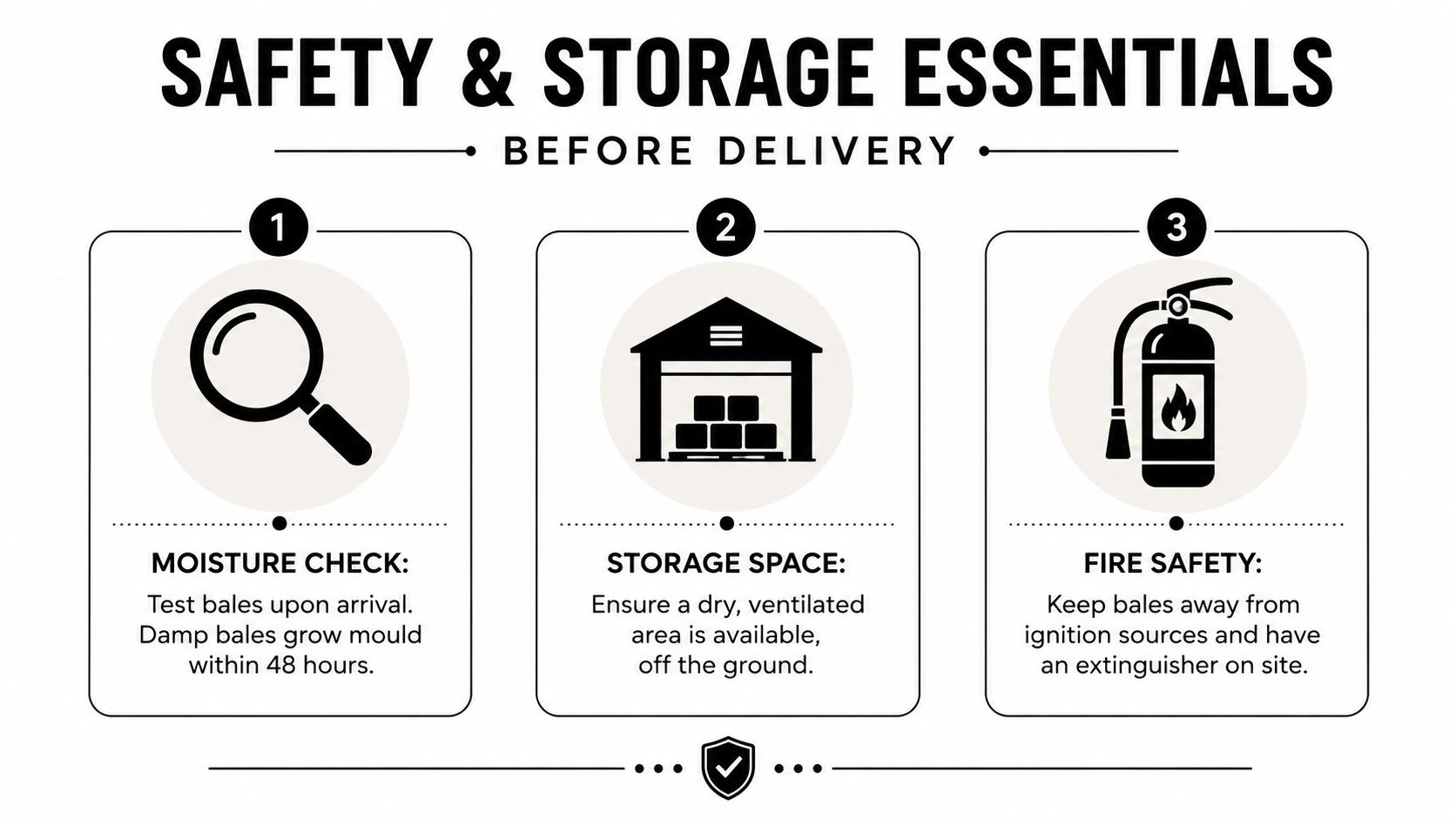
Use a moisture meter if the supplier can provide one or arrange testing. Reject bales that feel damp, smell musty, show visible mould, or have soft, hot-feeling sections. A bale that has heated during storage shouldn't be placed under canvas beside guest seating.
Inspect the twine or net wrap next. Loose binding means the bale can collapse during movement, while broken edges shed straw across walkways. Rotate poor-looking units away from guest contact, and don't hide damaged bales under fabric where they can still destabilise a bench or stack.
Store them above ground and away from ignition
Dry, ventilated storage matters more than a sealed tarpaulin. Covered raised storage can keep short-term dry-matter losses to roughly 2% to 4%, while exposed ground storage can reach 5% to 20% or more. University of Minnesota Extension storage guidance supports using a raised, covered, ventilated arrangement rather than leaving bales on wet turf.
Keep bales away from candles, lanterns, braais, gas heaters, kitchen equipment, generators, and smoking areas. Sweep loose chaff from paths and seating, secure stacks against movement, and follow the venue's fire plan. For additional context on a related Cape Town event feature, review boma and fire-pit safety in South Africa.
Hay is décor only after it has passed the same safety checks as every other temporary event installation.
Renting Versus Buying Hay Bales for an Event
For a one-off wedding, renting usually makes more sense than buying from a farm or marketplace listing. The rental fee may look higher than a bare bale price, but an event-hire supplier can consolidate delivery, inspect the stock, manage handling, and remove the material afterwards.
Buying becomes attractive when the client has dry storage, suitable transport, staff to move the load, and a genuine use for the bales after the event. That might mean garden mulch, livestock feed, or repeat functions at the same property. Without those conditions, ownership leaves you with a removal problem.
Compare the whole job
| Factor | Rent from event-hire company | Buy from farm or marketplace |
|---|---|---|
| Total landed cost | One coordinated quote may include delivery and collection | Purchase price is separate from transport, handling, and disposal |
| Condition on arrival | Supplier should manage event-ready presentation | Buyer must inspect and accept the stock |
| Logistics effort | Delivery and removal can be assigned to the hire team | Planner or client coordinates the full movement |
| Venue suitability | Format can be selected for the installation | Available stock may not match the venue or styling |
| Post-event responsibility | Collection is normally agreed in advance | Client must store, return, mulch, or dispose of the bales |
Ask whether the rental supplier protects the bales during transport and whether the collection window matches the venue's closing requirements. Ask a farm seller whether the price includes loading, but don't treat loading as delivery to the ceremony lawn.
A bakkie hire, extra crew, offcut disposal, and venue charges for leaving straw behind can erase the apparent saving. If the venue applies a mulch or cleanup surcharge, include it before approving the purchase.
My recommendation: Rent for weddings, styled shoots, and brand activations. Buy only when the client owns the storage and has a clear post-event use.
If you're assessing a longer-term ownership arrangement for furniture and event assets, rent-to-own furniture guidance offers a useful comparison point, although hay still needs its own moisture and storage checks.
Event Styling Ideas That Work With Hay Bales
Hay works best when the format follows the function. A bale should look intentional, remain stable on the chosen surface, and avoid direct contact with formal clothing wherever possible.
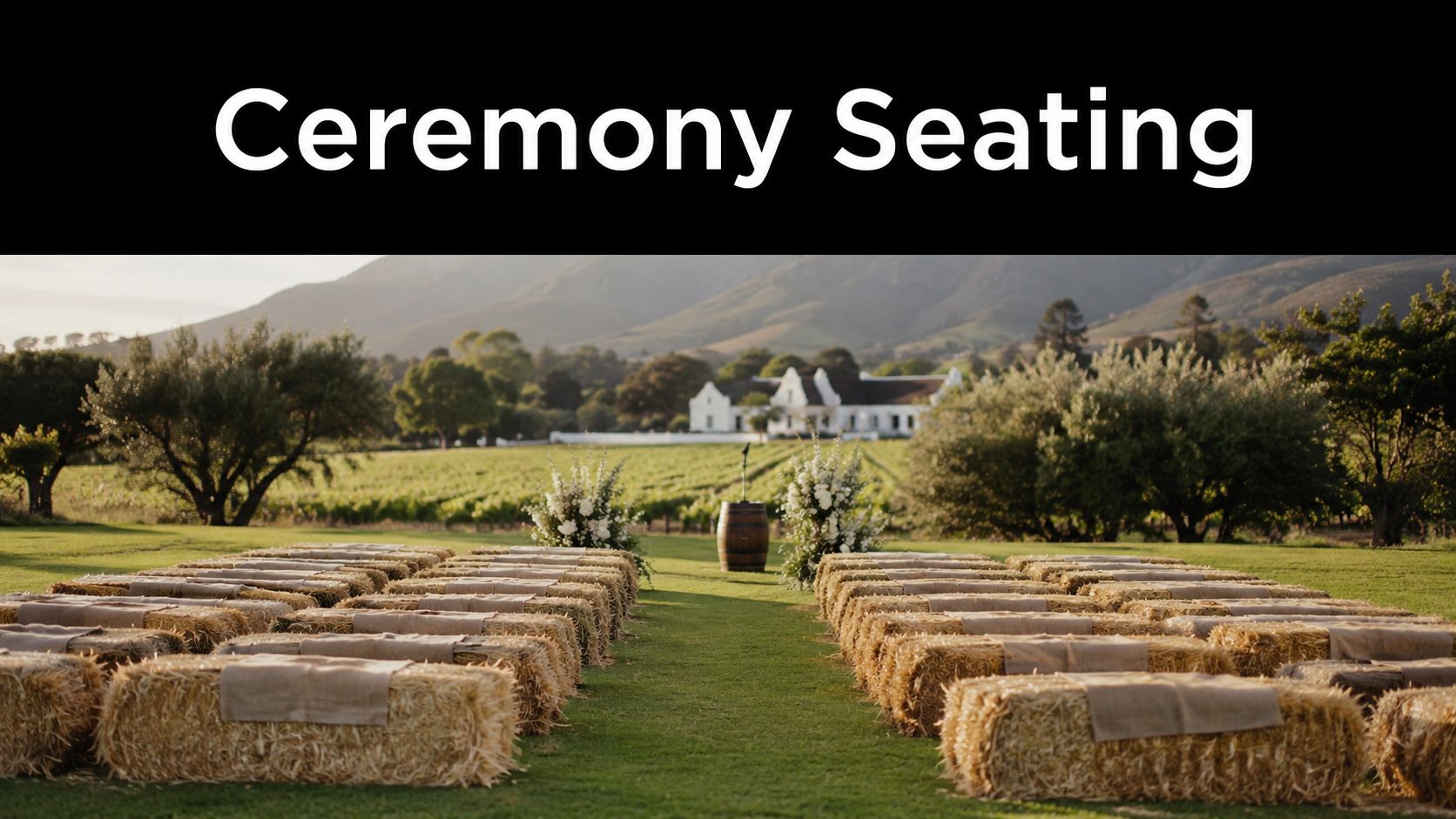
Ceremony seating on a Stellenbosch lawn
Quarter bales create tidy rows without forcing a crew to wrestle with oversized units. Cover each seat with a folded blanket, linen runner, or fitted cap, then place the rows across the lawn with enough clearance for skirts, bouquets, and service staff.
Winter rain can soften grass and leave wheels or bale corners pressed into the turf. Use a dry weather plan, protect the contact points, and ask the venue whether bales may sit directly on the lawn.
Golden-hour photo stacks in Franschhoek
For couple portraits, stacked small square bales create height and texture beneath oak trees or against vineyard lines. Keep the stack low and stable, cover the top surface, and check the background for loose twine and bright plastic wrap before the photographer arrives.
The strongest photographs come from controlled texture, not random farm clutter. Remove torn edges, inconsistent colours, and visibly dusty units from the frame.
Bar leaners on a Paarl gravel terrace
Multi-string bales make practical bases for timber boards, rustic bar fronts, and low cocktail tables. Gravel offers firmer support than wet grass, but uneven stone can still rock a bale. Level the base, test the board under load, and use a non-slip layer where guests will lean.
A supplier used to property-styling deliveries can also help planners think through access, placement, and collection. Property stylist transport service is a useful example of the kind of logistics detail that event teams should clarify before booking.
Children's play zones with jumbo bales
Jumbo bales can form a visible boundary around a supervised play area, but they aren't automatically soft or safe. Secure the perimeter, cover exposed edges, keep the zone away from vehicle routes, and make sure children can't climb an unstable stack.
For broader rustic event combinations, rustic wedding supplies can help you coordinate hay with timber, fabric, and other natural textures without making the installation look improvised.
Venue Considerations Across the Winelands
The same bale order behaves differently at a Cape Town garden venue, an older Stellenbosch estate, a Franschhoek farm, or a Paarl terrace. Access determines labour, and labour affects the landed cost more than most listings reveal.
Older Stellenbosch properties often have tighter lanes, low branches, gates, and turning areas that don't suit a flatbed or large delivery vehicle. Paarl and Franschhoek may offer more direct farm-track access in some locations, but every venue needs a site-specific route check. Never assume that a vehicle reaching the property entrance can reach the setup area.
Confirm the venue's operating rules
Ask the coordinator for:
- Delivery windows: Confirm the approved load-in period and whether a cool-down or quiet window limits vehicle movement.
- Surface restrictions: Wet lawns may require smaller vehicles, protective boards, or hand-carrying from a hardstanding area.
- Vehicle access: Get the permitted vehicle size and weight in writing, especially for winter installations.
- Removal terms: Establish whether the supplier collects, farm staff move the bales, or the planner must clear them.
A water-saturated lawn can become unusable after one heavy vehicle pass. Even where an 8-tonne vehicle restriction applies during wet winter conditions, the venue may impose stricter limits for a particular lawn or access road. Treat the venue instruction as the controlling rule.
Plan for wind and moisture
Late-summer Berg wind can lift loose covers, scatter straw, and disturb lightweight styling. Secure blankets, hessian, and vinyl caps without creating trip hazards. Franschhoek's narrower valley conditions can hold moisture longer than sunnier Paarl locations, so ventilate stored bales and avoid sealing damp material under plastic.
Combine hay with existing venue furniture rather than forcing it to do every job. Use venue chairs for older guests, hay seating for a designated ceremony zone, and existing tables or benches to reduce the number of bales that must be delivered, placed, and removed.
Your Pre-Order Checklist for a Smooth Load-In
Run this checklist 48 to 72 hours before delivery, then repeat the physical checks when the truck arrives.
Confirm the order
- Bale count: Match the confirmed quantity to the floor plan, including spares for damaged or unsuitable units.
- Bale format: Reconfirm quarter, multi-string, or jumbo format, plus the intended use.
- Condition: Ask for recent photographs or written confirmation that the stock is dry, clean, and securely bound.
- Delivery scope: Confirm whether the quote includes transport, offload, placement, collection, and disposal.
Confirm the venue route
- Delivery slot: Give the supplier the exact arrival window and the name of the venue contact.
- Gate access: Provide the gate code, load-in card, parking instructions, and a phone number that works on site.
- Offload point: Mark where the vehicle may stop and whether the crew must carry bales to the setup area.
- Ground conditions: Check whether grass protection, pallets, boards, or a smaller vehicle are required.
Confirm the exit plan
Get collection instructions in writing. Some Winelands venues require same-evening removal, while others may allow collection the following day. Confirm who sweeps loose straw, removes damaged wrap, and pays any venue cleanup charge.
On arrival, inspect every bale before it moves into position. Check the surface for dampness or mould, test the twine integrity, smell for mustiness, and remove anything unstable from guest areas. Finish with a fire-risk scan around candles, lanterns, heaters, braai areas, kitchens, and generators.
For Cape Town and Winelands events, ABC Hire can help coordinate hay-bale seating and rustic styling with the wider furniture, delivery, and venue setup plan. Visit ABC Hire to discuss a practical hire solution that accounts for presentation, load-in, and collection, not just the bale price.