Battery Operated Lamps: The Cape Town Event Guide

You're halfway through setup, the speeches are queued, the glasses are polished, and then the venue lights dip because the schedule says it's load-shedding time. The music keeps going, but the room suddenly needs practical light, not panic. That's where battery operated lamps earn their keep in Cape Town and the Winelands, because they give you usable light without tying the plan to wall sockets, extension cords, or a last-minute scramble for candles.

For event work, I treat them as operational gear first and décor second. If you're planning a wedding in Stellenbosch, a product launch on the V&A Waterfront, or a milestone dinner in Constantia, cordless lighting lets you place light where the layout needs it, not where the power happens to be. That freedom matters in a region where the power situation can interrupt service, break atmosphere, and force ugly compromises.

Why Battery Operated Lamps Are Essential for Cape Town Events

A Cape Town reception can look perfect at 7 pm, then go flat the moment the lights cut during speeches. I've seen that happen at outdoor dinners, tented weddings, and corporate activations where the whole design depended on low, warm lighting. The teams that recover fastest are the ones that planned with battery operated lamps from the start, not as a backup afterthought.

The real job these lamps do

Battery lamps solve three problems at once. They remove the need for nearby power, they keep the design flexible, and they let you keep guests comfortable when the venue's supply isn't reliable. That is exactly why portable electric lighting became useful in the first place, after the first practical battery in 1800, the first electric arc lamp in 1802, and the first practical flashlight patent in 1899 made self-contained lighting feasible for real work and portable use timeline of lighting history.

For Southern African events, that historical shift matters in a practical way. The move from flame lighting to battery-powered underground safety lamps in the early 20th century shows the same logic I use at events now, safer light, placed exactly where it's needed, with less dependence on a fixed infrastructure Smithsonian underground lighting history.

Practical rule: If a light has to work during service, speeches, and teardown, don't treat it like décor. Treat it like a dependency.

Why Cape Town planners should care

In Cape Town and the Winelands, cordless lamps are not a novelty. They're a control tool. A table lamp can anchor a reception table without a cable running under linen. A floor lamp can define a lounge area on a terrace. A compact uplight can give a dance floor shape without sending someone hunting for a plug behind a hedge.

ABC Hire supplies rechargeable table lamps for hire, which is the right kind of product for this market because it supports placement wherever the design calls for it, not just near a socket. That matters most when the floor plan is beautiful, the venue power is limited, or the event is outdoors and every cable looks like clutter. For a host, the value is simple, the lights are portable, predictable, and easier to build into the rest of the event plan.

Types of Battery Operated Lamps and Key Specifications
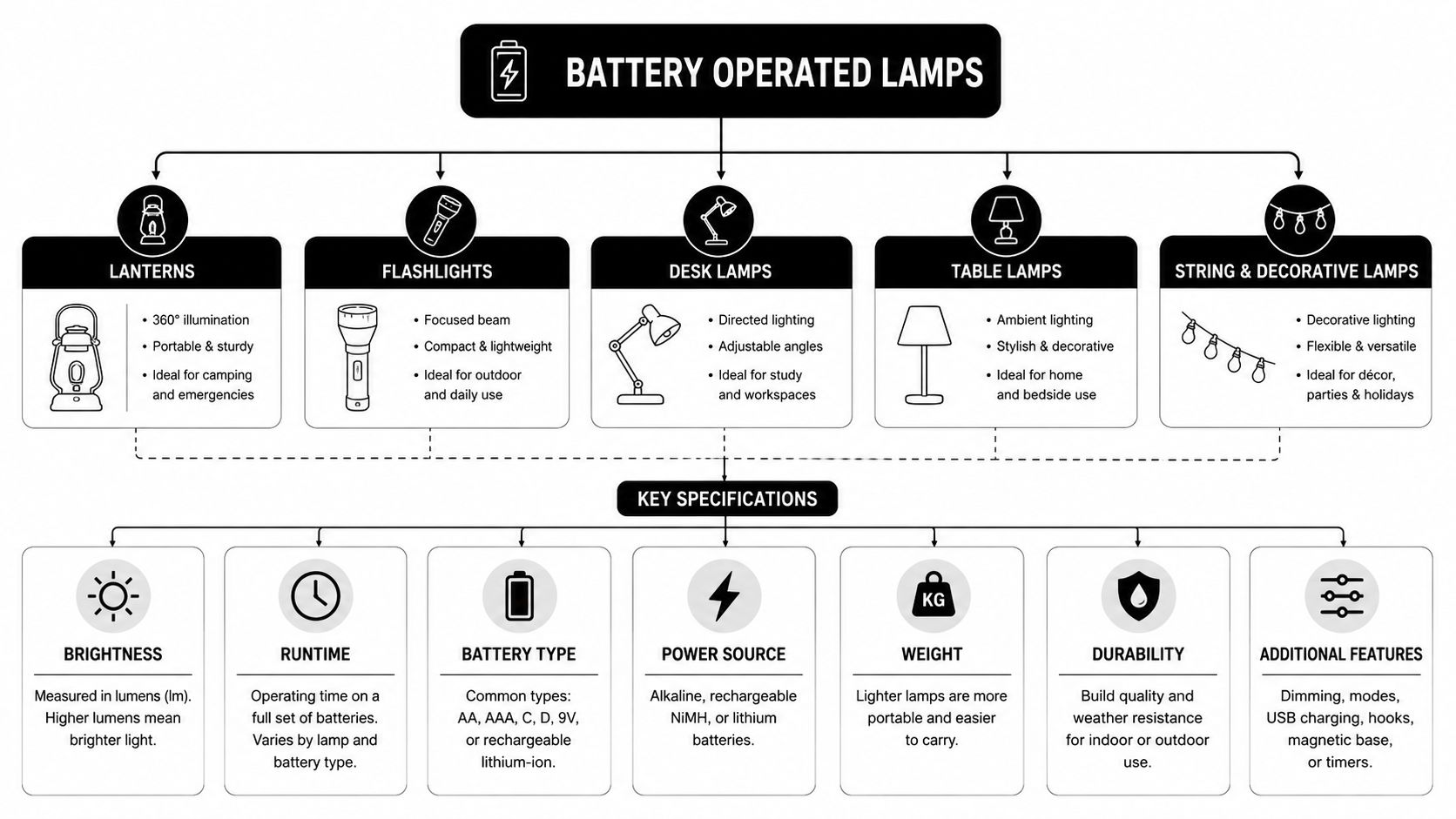
A comprehensive infographic illustrating different types of battery operated lamps and their key product specifications.

Start with the job, not the styling shot. A lamp that looks good online can still be useless on a dining table, beside a lounge chair, or against a wall where the venue needs lift. Match the category to the function first, then worry about finish and colour.

Match the lamp type to the use case

Table lamps fit dining tables, registration desks, and side tables where guests need focused light and the room needs warmth. They create intimacy and keep the layout tidy, which is why they work so well for dinner service and lounge zones.

Floor lamps suit spaces where height and atmosphere matter. I use them for cocktail corners, indoor lounges, and terrace seating because they add layers to a room instead of leaving it flat. They also work well where the light has to be visible from across the venue.

LED cubes and spheres have a stronger visual role. They suit brand activations, photo moments, and contemporary installations where the lamp itself forms part of the design. Fairy light strings are better for softer decorative washes, especially in trees, tents, and around architectural features. Uplighters belong against walls, pillars, and backdrops when the brief is to shape the venue rather than light a table.

Focus on the numbers that matter most

Brightness is measured in lumens, and that is the first spec I check because it tells you how much visible light the lamp can deliver. Colour temperature comes next. A warm white lamp, on the softer end of the spectrum, suits weddings and dinners. A cooler tone makes more sense for corporate launches, clean product displays, and spaces where you want a sharper look.

Runtime per charge is where event planners get caught out. A lamp can look perfect on a product page and still fail a service if it cannot last through the programme. Charging method matters too, whether it is USB, a dock, or another recharge setup, because venue turnaround is easier when charging is simple and repeatable. For outdoor work, an IP rating matters if the lamp may face moisture, wind-driven spray, or a damp terrace.

Use the spec sheet as an event planning tool, not a shopping list. If the product does not tell you brightness, runtime, and charging method clearly, it is not ready for event work.

For a detailed product-focused starting point, the guide to rechargeable table lamps is useful because it keeps the discussion on cordless placement and practical event use rather than home décor trends. That is the lens you need here.

Understanding Runtime and Brightness Trade-Offs
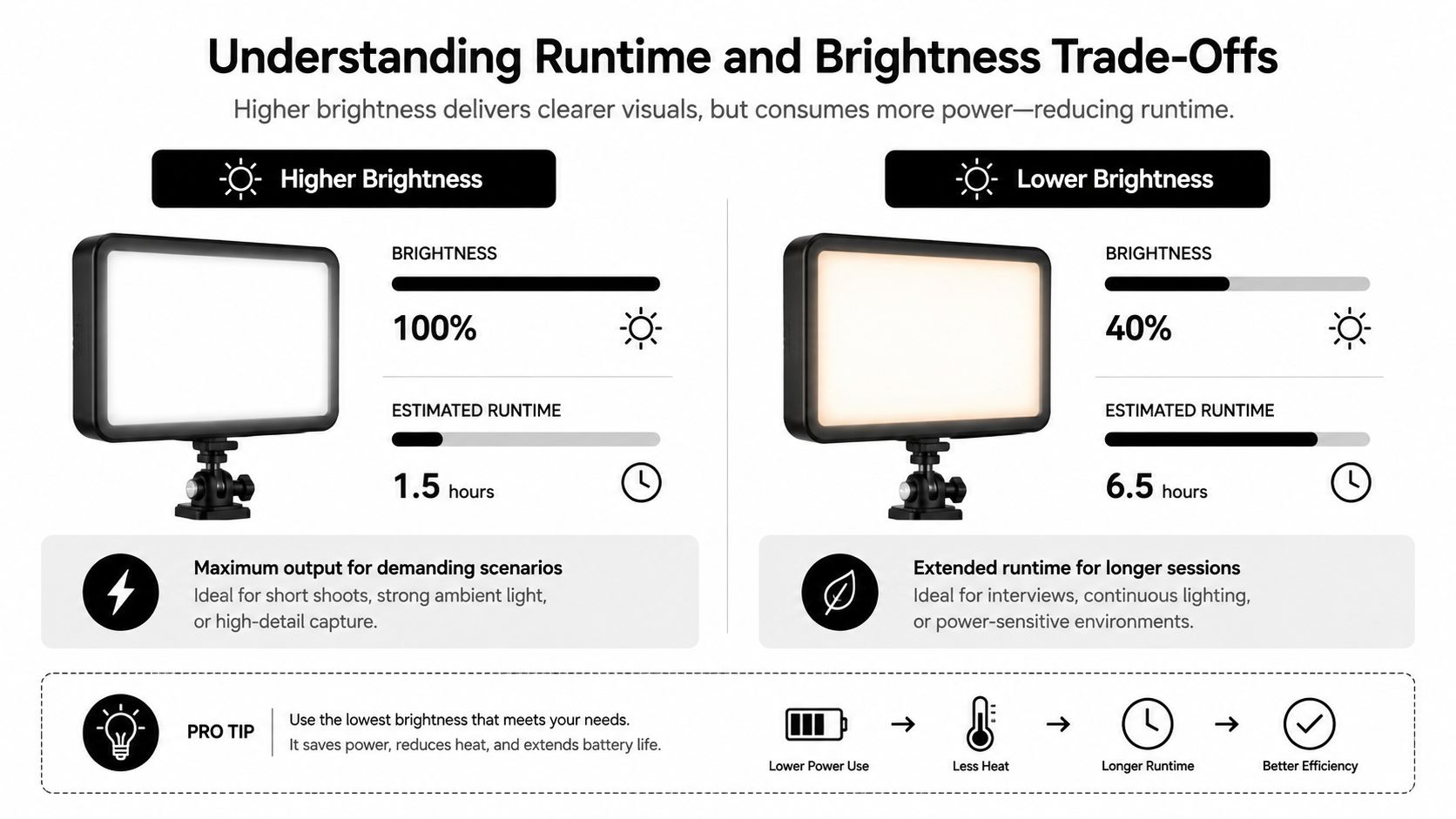
An infographic illustrating the trade-off between brightness levels, power consumption, and battery runtime for portable LED lights.

The biggest mistake I see is simple, people buy for the biggest runtime claim on the box and ignore what the light looks like at the setting they'll likely use. That's the wrong instinct. In events, usable runtime at useful brightness is what counts, because a lamp that runs forever at a dim setting doesn't help a dinner service or a speech.

Bright light drains faster, and that is the trade-off

A useful engineering benchmark is an ANSI-rated battery-operated LED work light with a 2 x 3 V supply and 10 W total output. It produced up to 700 lm, with runtime of about 2 hours on both spotlights or about 4 hours on one spotlight work light runtime benchmark. That example makes the point clearly, higher output pulls more power, so runtime falls as brightness rises.

For Cape Town events, that trade-off maps directly to the evening programme. Welcome drinks need enough light for faces and glasses. Dinner needs softer, flatter light across the table. Speeches need reliable output for the full segment. Teardown just needs enough usable light to keep staff safe. One lamp setting rarely serves all four moments well.

Plan for the whole evening, not the first hour

South African load-shedding changes the buying question. You're not asking whether a lamp can look good for a photo. You're asking whether it can last through service, speeches, and the final stretch of the night. Product guidance in the cordless-lamp market often notes that runtime varies by model and brightness level, and that longer use usually comes from lower settings rather than constant high output battery lamp runtime guidance.

A good habit is to size your lamps against the event's weakest point, not its most optimistic one. If the room needs the lamps to carry a full dinner and a speech block, don't accept a product that only looks strong in bright mode for the first part of the evening. Multi-mode fixtures are the smarter choice because they let you turn the brightness down once the atmosphere is set.

If the specification sheet only talks about “long battery life” without explaining the brightness level behind that claim, I'd pass on it.

South African solar-home specifications show the same logic from another angle. A government tender specified 12 V, 75 Ah tubular lead-acid batteries for systems using 9 W CFL lamps rated around 600 lumens, with at least 75% of rated capacity expected between full charge and load cut-off, and 0.8 A maximum current consumption for the lamp at 12 V solar home system tender. That tells you the same thing event planners already know, lower-current lamps last longer and put less stress on the battery.

Choosing the Right Lamps for Your Event Type

A Cape Town event can fall apart fast if the lighting does the wrong job. A wedding needs warmth. A brand activation needs clean definition. A matric dance needs strong photo output. A private birthday needs lamps that can shift with the evening and still cope if the venue plan changes.

Weddings

For weddings in Stellenbosch, Franschhoek, or Paarl, I prefer warm table lamps on dining tables and soft uplighting around the dance floor or key walls. The light should flatter skin, soften linen, and keep the room from looking clinical. If the venue already has a romantic feel, use the lamps to support that mood rather than fight it.

Corporate events and brand activations

Corporate events need cleaner lines. I'd use LED cubes, spheres, or crisp floor lamps when the goal is brand visibility, product focus, or a polished contemporary look. Cooler light usually works better here because it makes the room feel sharper and more structured. A launch at a convention venue is not a candlelit dinner, so do not force the wrong mood onto it.

School formals and matric dances

These events live or die on how they look in photos and video. Choose lighting that creates shape, highlights entrances, and makes the dance floor obvious. Statement lamps and colour accents work better than tiny decorative pieces that disappear once the room fills up. If students are spending money on dresses, suits, and content, the lighting has to show that off properly.

Private milestone parties

A 50th birthday in a garden or courtyard needs flexibility. Lamps should move easily, survive varied placement, and keep the space usable as the evening shifts from drinks to dinner to dancing. For these events, cordless options make sense because the layout often changes during the night itself. If you are comparing practical table options, the rechargeable table lamps guide is a useful place to start.

Event type Best lamp approach What to avoid
Wedding dinner Warm table lamps, soft uplighting Harsh cool light
Corporate launch LED cubes, spheres, floor lamps Overly decorative mixes
Matric dance Statement lighting, photo-friendly placement Tiny lights that vanish in photos
Milestone party Flexible cordless lamps, mixed heights Heavy pieces that are hard to move

Let the event goal decide the lamp style, not the other way round. If the lamp does not suit the room, it will look like a rental decision instead of part of the design.

Setup, Placement and Styling Tips for Maximum Impact
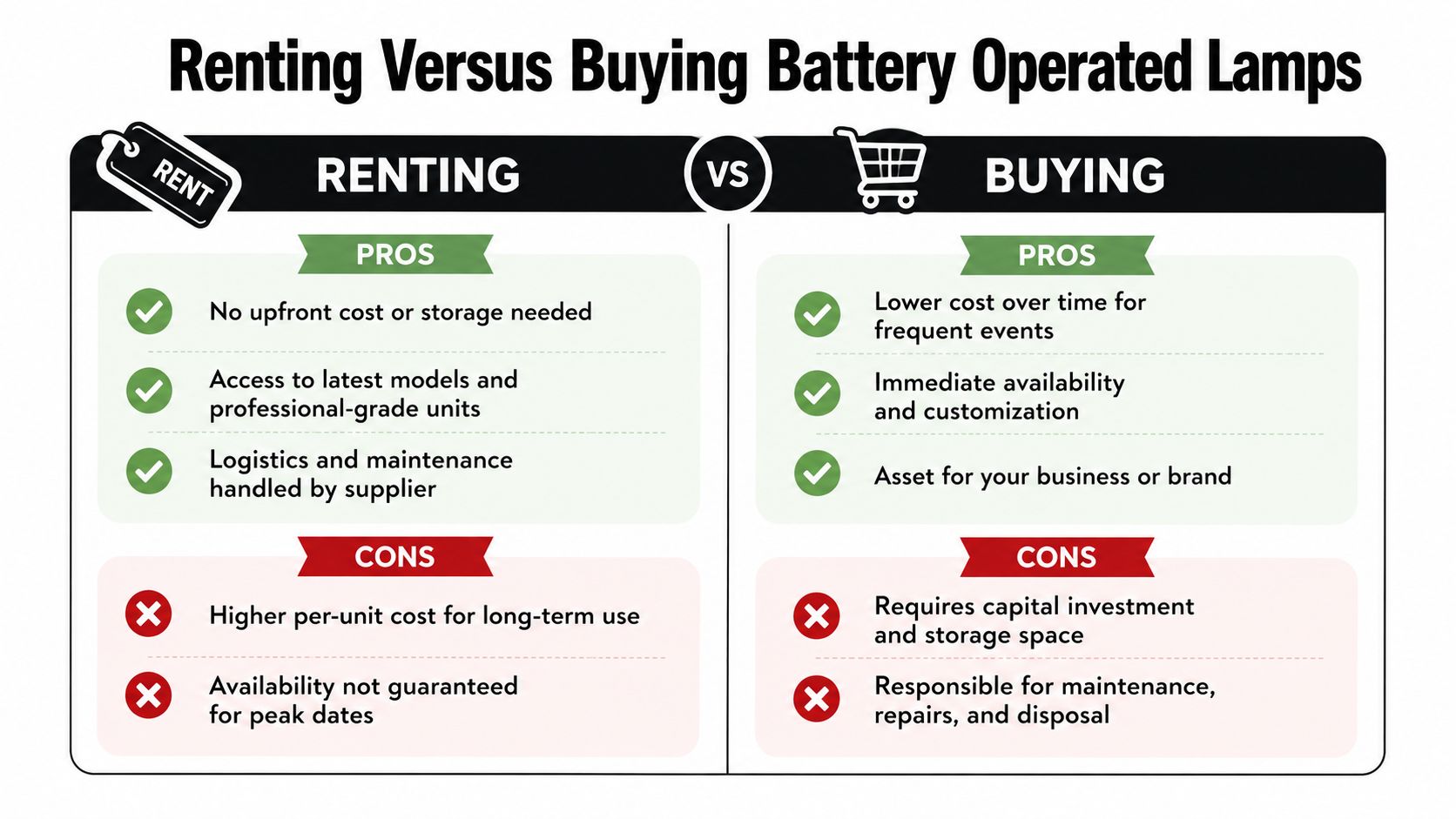
A comparison chart highlighting the pros and cons of renting versus buying battery operated lamps for events.

Placement does more for atmosphere than fancy product styling ever will. A good lamp in the wrong place still looks awkward. A modest lamp in the right spot can shape a table, a walkway, or a corner into part of the design.

Build light in layers

Start with the lowest practical level of light, then add height. Table lamps anchor guest zones. Floor lamps lift the eye. Uplighters push texture onto walls or foliage. That layering adds depth, and depth is what makes a venue feel finished rather than just lit.

For long banquet tables, space lamps so they support conversation without crowding the centrepiece. On cocktail tables, keep them compact and stable. In gardens, use lamps to mark routes and define edges so guests can move without guessing where to walk. On dance floors, do not scatter them randomly. Place them to frame the space and keep the centre clear.

Battery life matters here as much as appearance. A lamp that looks strong at setup can fade before the last round of speeches if the runtime was overstated or the brightness setting was too high. For a plain explanation of how curtain-style lighting can shape a room without cluttering it, the event fairy light curtain guide is useful.

Style with restraint

Use odd-number groupings when you want a more natural visual rhythm. Pairing every lamp creates a rigid look, while an uneven cluster feels more relaxed. Match lamp colour to the event palette, but do not force exact colour matching if it hurts legibility. The room still needs to function after the photos are taken.

One mistake I see often is over-lighting. Event teams place too many lamps because they worry the room will not be bright enough, then the whole atmosphere flattens out. Another mistake is putting lamps where guests will brush past them. If a lantern or floor lamp is likely to be bumped, move it or anchor it properly.

Good placement beats extra quantity. A few well-placed lamps usually do more for the room than a dense scatter of weak ones.

For one-off Cape Town or Winelands functions, keep the styling simple and the logistics honest. If you are renting, ask how the units will be spaced, charged, and checked before guests arrive. If you are buying for repeated use, the setup has to suit your usual room sizes, not just one polished test run.

Renting Versus Buying Battery Operated Lamps
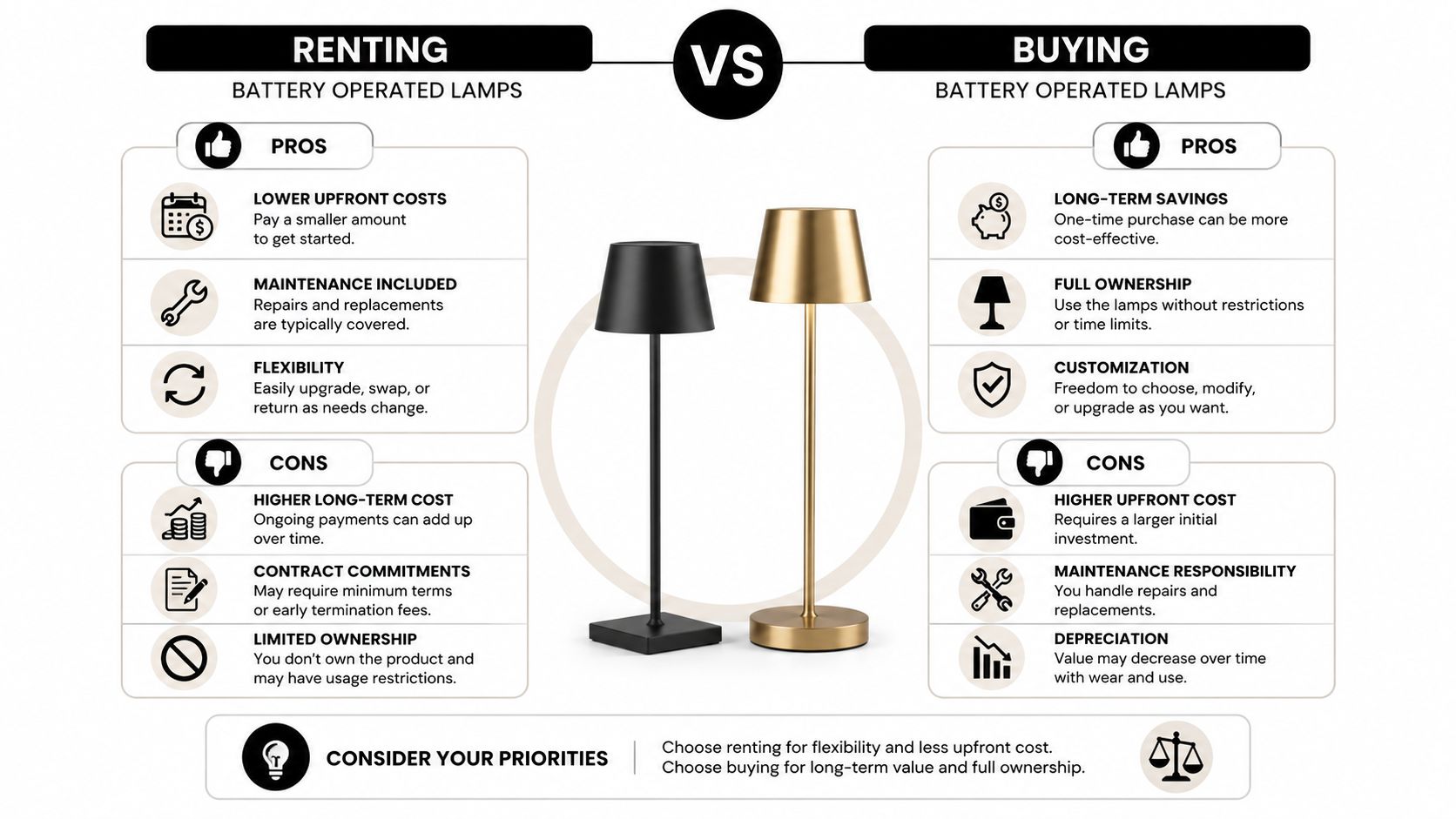
A comparison chart outlining the pros and cons of renting versus buying battery operated lamps.

For a one-night wedding, a single corporate activation, or a family celebration, I'd rent almost every time. Buying only makes sense when you'll use the lamps often enough to justify the capital, the storage, the charging routine, and the replacement risk. Most private hosts don't get there.

Why rental wins for most Cape Town events

Rental removes the hidden work. You don't have to buy enough lamps for every table, then figure out where to store them, how to charge them, or what to do when one battery starts fading. You also get a coordinated package that's easier to match across the whole event, which matters when the venue layout is tight or the design is complex.

Buying makes more sense only if the lamps become a regular business asset. If you host events repeatedly, reuse the same style of setup, and have somewhere to store and maintain the units, ownership can start to make sense. But that's a business decision, not a default event-planning decision.

The break-even point isn't useful for one-off hosts unless you already know you'll run multiple events with the same equipment. Once you include charging time, storage space, and upkeep, rental usually beats ownership for occasional use, especially in Cape Town and the Winelands where venues vary and transport logistics matter.

The practical procurement test

Ask three questions before buying:

  • How often will we reuse them? If the answer is only for a single function, rent.
  • Who charges and checks them? If that responsibility falls on you, ownership adds work.
  • Where do they live between events? If storage is a problem, rent again.

ABC Hire is one of the rental options that fits this use case because it provides rechargeable table lamps for event placement without forcing you to manage the equipment afterward. That's the kind of arrangement that makes sense for a single event with a fixed date and a fixed brief.

Battery Care, Safety and Pre-Event Planning Checklist

Battery care starts before guests arrive. Charge lamps in a dry, ventilated area, then test each one on the setting you plan to use. If a lamp is going to work through dinner, don't discover at service time that it only lasts on its lowest brightness.

Keep lamps away from water features unless they're rated for that exposure, and secure floor lamps on terraces where wind can move them. Outdoor venues need extra attention because a lamp that looks stable indoors can become a hazard once the floor shifts, the breeze picks up, or guests start moving between zones.

For battery handling and disposal, use a compliant recycling path rather than treating dead batteries as ordinary waste. If you need a general reference for responsible handling, the EPA universal waste compliance guide from Reworx Recycling is a useful starting point for understanding how battery-related waste streams are commonly managed.

Use this final checklist before load-in:

  • Charge and test every lamp on the exact brightness you'll use.
  • Pack one or two backups for any high-stakes zone like speeches or entrances.
  • Confirm placement so nothing blocks movement or service routes.
  • Check the weather and venue conditions for wind, damp, or exposed edges.
  • Match the lamp plan to the event schedule so lights hold through the full run of show.
  • Print the event checklist and assign one person to sign off each lamp zone. The event planning checklist template is a useful companion if you want a tighter pre-event process.

The best battery lamp setup is the one that disappears into the event because it just works. If you're planning a wedding, corporate function, or private celebration in Cape Town or the Winelands, speak to ABC Hire about rechargeable lamp hire that fits your floor plan, your timing, and your load-shedding reality. Visit ABC Hire to line up the right cordless lighting for your next event.
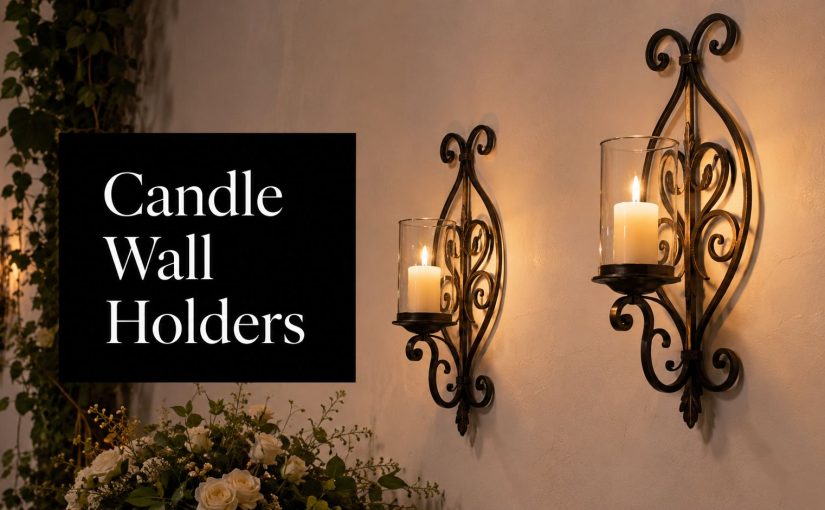
Candle Wall Holders for Events: Styling, Safety, Sourcing

You're standing in a venue in the Winelands with linen on the tables, candles already approved, and a blank stretch of wall that still looks flat and unfinished. That's the moment candle wall holders earn their keep. They lift the room visually, pull the eye upward, and give you a lighting layer that feels intentional instead of added at the last minute.

For weddings, corporate dinners, and milestone celebrations, candle wall holders sit in a sweet spot between décor and function. They belong to the wider family of wall-mounted light fixtures, or sconces, and that heritage matters because wall-mounted candle lighting has never just been about prettiness. It comes from a long decorative tradition of bracket lights fixed to walls and other vertical surfaces, and the basic idea of safely elevating flame goes back thousands of years, including candle-holder artifacts from ancient Egypt's Fourth Dynasty, around 2575 to 2130 BCE, as noted in the historical record on sconce and candle-holder history).

Why Candle Wall Holders Transform Event Spaces

A Cape Town reception can look polished on paper and still feel visually underpowered once guests sit down. Put candlelight on the wall, and the whole room changes. The tables stay clear, the sightlines open up, and the venue starts to feel taller, warmer, and more layered.

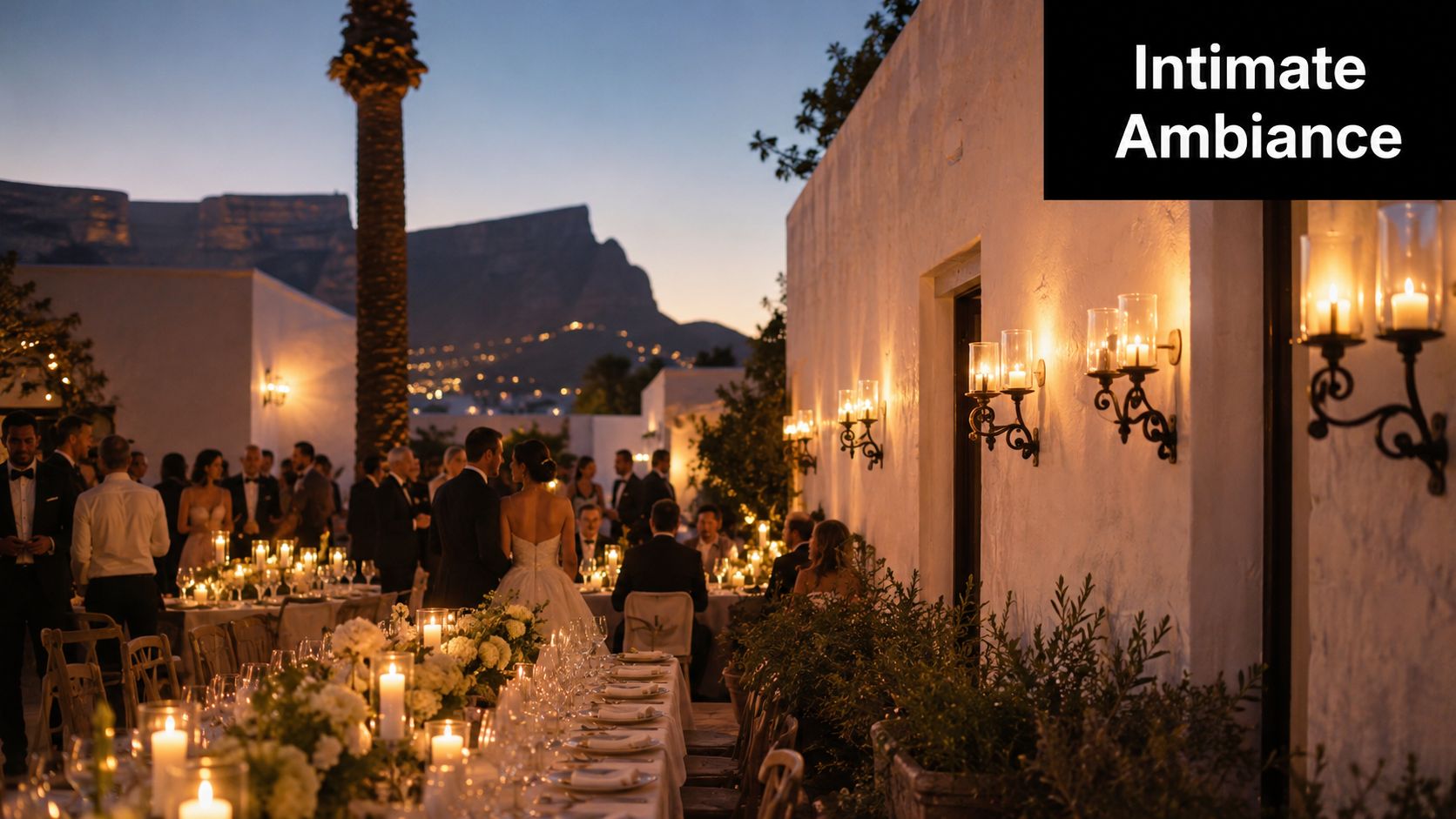
Elegant wedding dinner party with candle wall holders creating an intimate ambiance under a sunset mountain view.

Why wall-mounted flame reads better than tabletop clutter

Table centrepieces compete with plates, menus, glassware, and florals. Wall-mounted candlelight does the opposite, it frees the table and uses the venue itself as part of the design. In rooms with high ceilings, long corridors, or exposed stone, that vertical glow gives you the drama a low centrepiece never will.

This is why I recommend candle wall holders for venues that already have architectural character. They frame arches, entrance walls, stair landings, and dining zones without eating into guest space. If you've ever wanted a room to feel finished without overloading the tables, this is the cleaner move.

For a useful lighting parallel, the way interior wall sconces can upgrade rooms with wall sconces translates directly into events, especially when the goal is atmosphere rather than brightness. The same logic applies in a marquee, wine cellar, or manor house reception. Wall light adds visual rhythm, and rhythm is what makes a space feel designed rather than decorated.

The strongest event lighting choices solve two problems at once, they improve the look of the room and they keep service areas uncluttered.

Why the format fits South African event spaces

South African venues often balance heritage, hospitality, and practical turnover. That means a lighting solution has to work on a wall, photograph well, and leave the tables free for food and conversation. Candle wall holders do all three when they're chosen with the venue's scale in mind.

They also suit the kind of event styling people book here, including intimate weddings, formal dinners, and brand evenings where a soft glow feels more expensive than a full table setup. In my view, that's the value. You're not buying a candle accessory. You're buying a way to make a venue feel deliberate.

Types and Materials for Every Event Style

A wedding reception in the Winelands can look polished on paper and still fall flat on the wall if the holder is wrong for the room. Choose the wrong finish, the wrong depth, or the wrong mounting method, and venue staff will spot the problem before guests do. Candle wall holders need to suit the surface, the service flow, and the fire rules of the venue.

The main styles and where they fit

Taper holders are the sharpest choice for formal dining. They keep the profile slim, work well in pairs, and suit banquet rooms where you want the eye to move cleanly along a wall. A technical listing for taper wall candle holders shows a 21 mm to 22 mm fit to reduce wobble, wall projection options from 5 cm to 25 cm, and a load capacity of up to 2.5 kg per holder at this product specification. That tight fit matters because any wobble shows up fast once guests start moving past the wall.

Pillar candle sconces give you a fuller, heavier look. They suit rustic farms, wine estates, and reception spaces that need more visual weight on the wall. If the room has stone, timber, or exposed plaster, this style usually feels right from the first glance.

Glass-enclosed lantern styles are the safest visual choice where flame protection matters. They shield the candle better, reduce draft issues, and work well in rooms with drapery, hanging florals, or narrow walkways. Prioritize glass-enclosed lanterns for venues with heavy drapery or floral arrangements. For a closer look at the format, see glass candle holders for event use.

LED-compatible alternatives are not a second-best option in South Africa. They make sense when load-shedding, venue fire rules, or late service rules out open flame. A good LED candle inside a wall holder still gives you the vertical glow clients want, without adding the risk that comes with a live flame.

For a rustic finish, you can find cozy candle holders, but rental teams still need to check the finish, weight, and mounting style against the actual venue wall before signing off on the look.

Materials should follow the venue, not the mood board

Wrought iron is the best rental material for repeated use. It is sturdy, visually timeless, and handles event turnover well. A common technical example uses solid wrought iron construction, one-screw mounting, a footprint of 16.5 in high x 5 in wide x 3 in deep, and a 1.5 lb unit mass. That structure matters because the holder sits off the wall and creates torque at the fastener, especially on temporary installs with mixed wall surfaces as shown in this product example.

Brass works well in classic interiors and polished heritage rooms. It reads warmer on camera than chrome and pairs neatly with cream, deep green, and glass.

Wood only works when the venue is dry, the finish is fire-conscious, and the styling is deliberately rustic. It is softer visually, but I would not use it as the first choice for busy event walls where guests, staff, and décor all compete for space.

Acrylic has a place in modern décor, but I would keep it selective for event rentals. It can look sleek, yet it rarely carries the same visual authority as metal in a formal room.

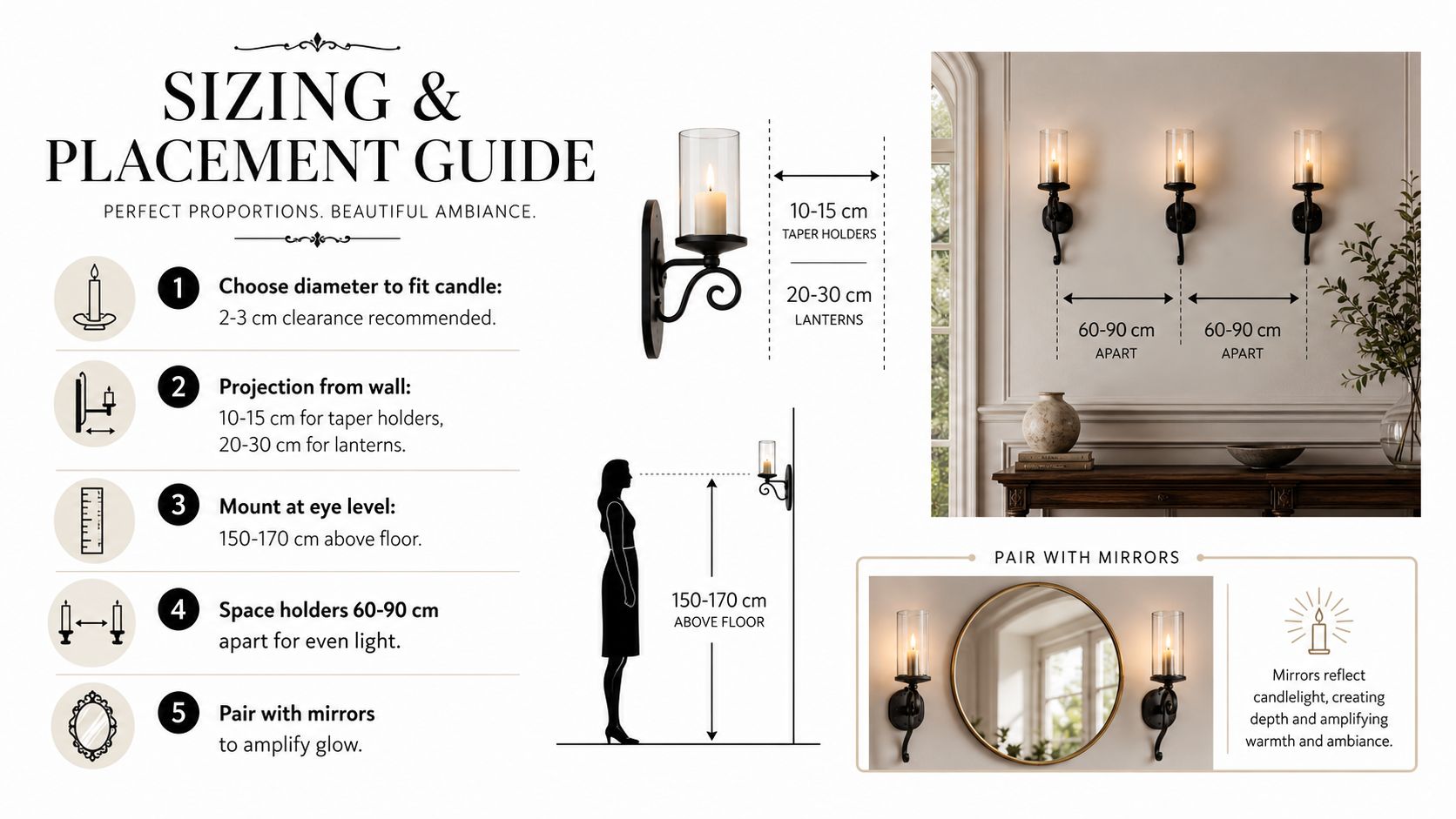
An instructional infographic detailing the optimal sizing and placement guidelines for installing candle wall sconces.

Sizing and Placement for Maximum Impact

The wrong size holder makes a good venue look awkward. Too small, and the wall looks empty. Too deep, and guests brush past it all night. The safest, neatest installs are the ones where the holder fits the candle properly and respects the traffic flow.

Start with fit, projection, and load

A good candle-diameter tolerance keeps the candle upright and reduces wobble. That matters more than people think, because wobble drives uneven wax runoff and unstable flame behaviour. The taper holder spec above uses a 21 mm to 22 mm fit, and that narrow range is exactly the kind of detail you want in a rental checklist.

Projection from the wall changes both appearance and risk. Shorter projection reduces stress on the anchor point, which is useful in busy event spaces. The product data cited earlier gives a range from 5 cm to 25 cm, which tells you how much these holders can vary in visual presence.

Practical rule: if guests will pass close to the wall, choose the slimmer projection. Style should never outrank circulation.

Place holders where they frame, not fight, the room

Mount holders where they support the architecture. A corridor wall wants rhythm. A dining room wall wants balance. A staircase wants repetition that guides the eye upward. In each case, avoid random spacing and keep the pattern consistent.

The one measurement that event teams should treat seriously is mounting height. A common design guideline for visual comfort is to keep wall accents in the eye-line zone, not too high to disappear and not so low that they compete with guests. For events, that translates into careful alignment with mirrors, doorways, and seating zones rather than a one-size-fits-all number.

If the room has mirrors, use them. Reflected candlelight multiplies the glow without adding more flame or more hardware. That's a better design choice than increasing the number of holders.

Safety and Installation Essentials for Venues

Open flame at an event is never a styling-only decision. It's a venue decision, a liability decision, and often a fire officer decision. The venue team will care less about your mood board than about wall substrate, evacuation routes, and what happens if a guest brushes past the installation.

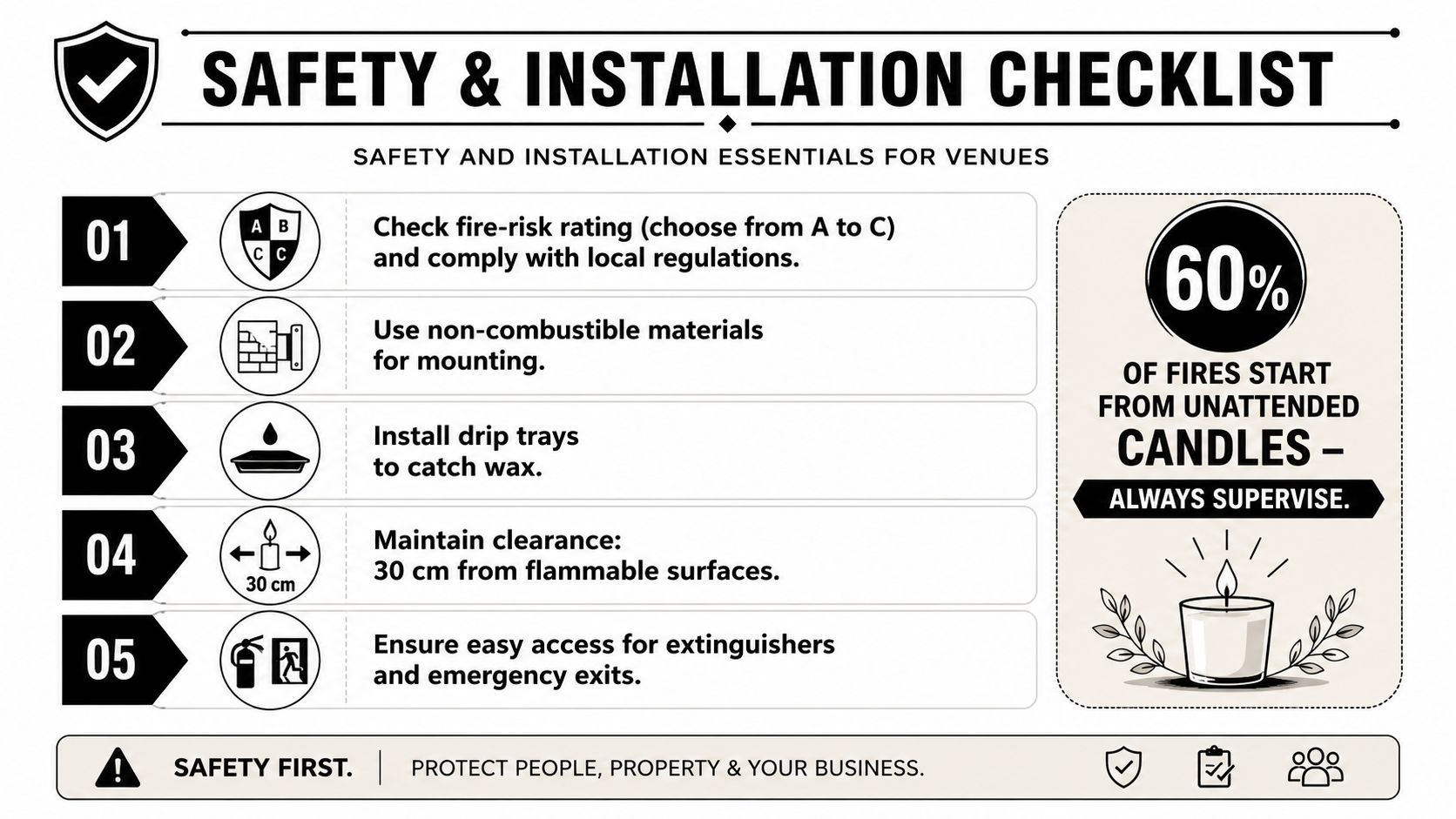
A safety checklist infographic for venue installations featuring tips for candles, extinguishers, and fire prevention regulations.

Fire risk is not theoretical

Candles have a real fire history. In the U.S. during 2020 to 2024, candles caused an estimated annual average of 5,894 home structure fires, with 63 civilian deaths, 532 injuries, and $286 million in property damage, and over half of candle fires started when flammable décor was too close to the flame according to the fire-safety data in this collection. You don't need those exact numbers to know the conclusion. You need distance, supervision, and the discipline to keep flame away from drapery, paper, and dried florals.

South African event guidance points in the same direction, keep open flame away from combustible materials and use stable, non-combustible supports. That's why I prefer holders with enclosed glass or secure brackets for venues with heavy décor, and LED alternatives when the site is tight on safety margin. If you need to think through extinguisher placement alongside the rest of your risk planning, a practical resource is cabinet fire extinguisher for businesses, because the conversation around flame is never just about the candle.

Temporary mounting has to respect the wall

Plasterboard, masonry, and heritage surfaces are not the same thing. A holder that feels solid on brick can fail or damage a fragile wall finish. That's why the anchor and bracket matter as much as the candle itself.

For temporary installs, use the lightest hardware that still gives you real stability, and test the bracket before guests arrive. The one-screw mounting example above shows how compact metal frames are typically stabilised, but the venue substrate still decides what is safe. On heritage walls, I would rather use fewer holders and a safer fix than force a decorative pattern that leaves marks.

You should also work with the venue manager on removal. Wax residue, screw holes, and adhesive damage can wipe out any goodwill you built during setup. If the venue is strict, switch to LED candles and keep the wall décor purely structural.

For broader rental planning around candles in wedding settings, this internal guide on candles for wedding is useful because the same safety logic carries through to table and wall styling. The rules are simple. Secure mounting, non-combustible materials, visible access to extinguishers, and no open flame near soft finishes.

What a responsible install looks like

A clean install has three traits. The holder is stable. The flame is supervised. The venue can say yes without hesitation. If any one of those is missing, change the plan.

Styling Ideas for Weddings and Milestone Events

The best wall candle styling doesn't shout. It creates a corridor of glow, a softened entrance, or a dining wall that feels finished before the first course lands. In Cape Town and the Winelands, that usually means working with the venue's own materials instead of trying to fight them.

Weddings and formal dinners

At a wine estate reception, I'd run candle wall holders along a feature wall behind the couple's table or beside the bar, then keep the table centrepieces lower and looser. That avoids visual clutter and gives photographers a clear, layered backdrop. If the room already has stone, timber, or aged plaster, let the wall texture do half the work.

For a ceremony-to-dinner transition, wall-mounted candlelight is especially useful in entrance passages and pre-dinner lounges. Guests feel the shift from daylight to evening immediately, and the room doesn't need heavy florals to make the point.

Corporate functions and brand activations

Corporate hosts should be more restrained. Use matching holders, repeat them evenly, and keep the finish consistent with the brand palette. A black metal frame reads sharper and more modern than a heavily ornate brass piece, which is why sleek event walls often work better with simple sconces than with statement candelabras.

For launches or awards evenings, a narrow band of wall candlelight can define a networking zone without blocking signage or sponsor walls. That's the sort of detail senior clients notice because it feels controlled, not busy.

Milestone events and school formals

For birthdays, anniversaries, and matric dances, the job is mood, not extravagance. Add wall candle holders where you want people to pause, then combine them with flowers or draping only if the venue can handle the extra visual load. If the venue is already ornate, keep the holders simple and let the room speak.

Keep the wall styling quieter than the table styling. If both compete, the room starts to feel overworked.

If you want the whole event to feel cohesive, repeat one finish in the holders, glassware, and any LED furniture nearby. That gives you continuity without forcing every design choice to match.

Renting vs Purchasing Candle Wall Holders

For most one-off events, renting is the better decision. Buying makes sense only if you use the same style repeatedly, have storage space, and can inspect, clean, and transport the pieces properly. Most hosts don't.

Renting wins on flexibility and logistics

Rental stock gives you more room to match the venue. One wedding might need slim wrought iron holders for a cellar wall, while the next needs enclosed glass pieces for a marquee. Purchasing locks you into a single style and shifts storage, maintenance, and replacement risk onto your side.

Rentals also reduce pressure on the day. You're not solving finish quality, missing brackets, or candle fit yourself. A good supplier should deliver condition-checked holders that are ready for the venue team to approve.

Purchase only if you'll reuse them properly

If you buy, you need somewhere to store them, protect the finish, and keep the mounting hardware together. That sounds simple until you're moving between events and the brackets are missing or bent. For most couples and corporate hosts, that's just unnecessary friction.

A rental conversation should cover delivery, collection, damage deposits, and whether the holder is suitable for the specific wall. Don't leave that to the night before. Ask early, because venue rules can change the whole plan.

The simple decision rule

If the event is one night, rent.
If the style needs to change by venue, rent.
If the holder will live in storage for months, don't buy it just because it looks beautiful.

The only real case for buying is repeated use in a controlled setting. For everyone else, renting is cleaner, cheaper in practice, and easier to align with venue requirements.

Sourcing and Renting Locally in Cape Town and the Winelands

Local sourcing matters because candle wall holders are not generic décor items. They have to travel well, fit the venue, and arrive with the right mounting hardware. In Cape Town, Stellenbosch, Franschhoek, Paarl, and nearby areas, the rental partner you choose should understand walls, fire rules, and event timing, not just product availability.

What to ask before you book

Start with the basics. Ask whether the holders are suitable for temporary installation, what wall types they can be fixed to, and whether the supplier provides hardware that won't damage the venue. If they can't answer clearly, keep looking.

Then ask about flame management. A supplier should be able to discuss open flame, glass-enclosed options, and LED alternatives without hesitating. If your venue is strict or your schedule is tight, that flexibility matters more than an ornate finish.

Why local partners are easier to work with

A Cape Town or Winelands supplier can respond faster to venue changes, load-shedding concerns, and last-minute layout shifts. That's not a luxury, it's operational sanity. The closer the partner is to the event zone, the easier it is to solve collection, replacement, and on-site coordination.

If you're still comparing providers, this guide on event decor hire near me is worth reading because location, transport, and service radius all affect whether the rental works on the day. That's especially true for wall-mounted lighting, where a missing bracket or wrong fit can derail the whole look.

How to brief the rental partner

Send the venue name, wall surface type, event date, and whether the holders need to work with real flame or LED candles. Include a reference photo if you have one. The better the brief, the fewer surprises on install day.

Load-shedding also deserves a plan. If the event may lose power, choose holders that still look good with LED candles or enclosed glass. That gives you a design that survives the outage instead of collapsing into a half-finished setup.

For couples and hosts who want the room to feel polished without guesswork, the right local rental partner saves time, protects the venue, and keeps the candle styling under control.


If you're planning a wedding, corporate function, or milestone celebration in Cape Town or the Winelands, speak to ABC Hire about event rentals that work with your venue, your safety rules, and your design brief. They can help you choose practical candle wall holder options that suit the day, especially when you need reliable local support and a setup that looks polished on arrival.