
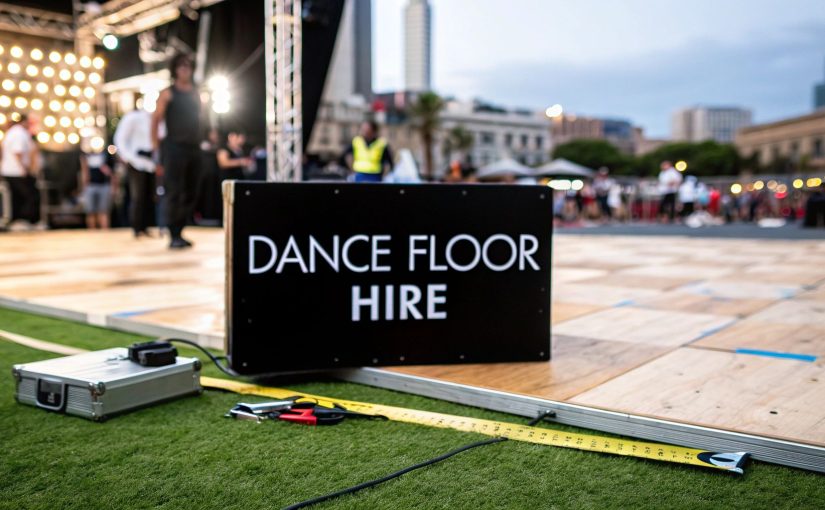
When you hire a dance floor, you’re not just renting a surface for people to move on. You’re creating the heart of your event, the central point where all the energy gathers. The right material and style can completely transform the atmosphere, guiding how your guests feel and act. It’s a core design element, and getting it right is crucial.
Matching Your Dance Floor to Your Cape Town Event
Picking a dance floor is a creative choice that has to click with your event’s theme, your venue, and the exact mood you’re going for. Here in the Western Cape, with its incredible variety of backdrops, the floor you choose can either melt into the scenery or stand out and make a real statement.
Think about a classic wood parquet floor. It brings a sense of warmth and tradition that feels right at home in a historic Stellenbosch wine estate, perfectly matching that rustic charm.
On the other hand, a modern, high-gloss white seamless floor offers a kind of timeless elegance that’s perfect for a sophisticated wedding in Franschhoek. It does a brilliant job of reflecting light, which makes any space feel bigger and brighter. It also gives you a clean slate for creating dramatic lighting effects, which is why seamless floors are so popular for both classic and contemporary events.
The Impact of Colour and Finish
Don’t underestimate the power of colour and finish. These are your tools for shaping the vibe of the event. A standard black floor, for instance, can ground a really large space and has a formal feel that works well for corporate events. Want something a bit more fun? A checkered black-and-white floor instantly brings a cool, retro energy that’s perfect for themed parties.
And if you really want to make an impression, an LED dance floor can turn a corporate gala at a venue like the CTICC into a totally immersive experience. You can program these floors with amazing colours and patterns that sync up with the music, creating an electric atmosphere that will keep your guests on their feet all night long.
Your dance floor isn’t just a passive piece of equipment; it’s an active participant in your event’s design. Treat it as a foundational element that supports your vision, not as an afterthought.
A great starting point is to look at the different options available and see what sparks your imagination.
Popular Cape Town Dance Floor Options
Here’s a quick look at some of the most popular dance floor hire options around Cape Town to help you decide what might work best for your event.
| Floor Type | Best For (Event Type) | Aesthetic | Key Consideration |
|---|---|---|---|
| Wood Parquet | Weddings, anniversaries, traditional functions | Classic, warm, traditional | Excellent for rustic or vintage themes, especially in winelands venues. |
| White Seamless | Modern weddings, corporate events, high-end parties | Sleek, elegant, minimalist | Creates a bright, open feel. Perfect for custom decals or monograms. |
| Black & White Chequered | Themed parties (50s, retro), birthdays | Fun, vibrant, high-contrast | Instantly adds a playful, nostalgic vibe to the celebration. |
| LED/Starlit Floor | Corporate galas, milestone birthdays, club-style events | Dynamic, high-tech, immersive | The ultimate statement piece for creating a party atmosphere. |
Each of these options brings something different to the table, and the best choice is the one that aligns perfectly with your event’s unique personality.
Aligning with Venue Aesthetics
The real key is to work with your venue’s existing decor and architecture, not against it. For a marquee wedding looking out over the Paarl mountains, a simple, elegant floor makes sure that the incredible view stays the star of the show. But an edgy, industrial-chic venue in Woodstock might call for a sleek, dark floor to complete its aesthetic.
The event industry in South Africa has certainly seen this need for flexibility, with a noticeable 10-15% increase in the use of portable dance floors since 2020. Around 65% of this market is for indoor rentals, which shows a clear preference for controlled environments. You can dig deeper into these trends over at DataHorizzon Research.
Ultimately, the best choice is one that elevates your decor without stealing the spotlight. A great dance floor hire feels deliberate and perfectly integrated, sending a clear invitation to your guests to come and celebrate. This kind of strategic thinking is what great planning is all about. For more expert tips on putting together a flawless event, check out our detailed guide to event management in Cape Town.
Calculating the Right Dance Floor Size for Your Guests
One of the biggest mistakes we see when people plan an event is getting the dance floor size wrong. If it’s too small, it feels cramped and no one wants to get up. But a dance floor that’s too big can make the room feel empty and completely kill the party vibe. When it comes to the hire of a dance floor, getting the dimensions just right is everything.
The secret isn’t just your total guest count; it’s figuring out how many people will actually be on the dance floor at any one time. From our experience, a good rule of thumb is that only 30% to 40% of your guests will be dancing at the peak of the party. Use this as your starting point to create a space that feels buzzing with energy, but not restrictive.
This simple visual helps break down the main things you need to think about.

As you can see, your venue, the overall vibe, and your guest numbers all work together to point you towards the perfect dance floor.
Adjusting for Vibe and Entertainment
That 30-40% rule is just a baseline. You really need to think about the unique energy of your event. The music and entertainment you choose will have a huge impact on how many people hit the floor.
- Live Band Energy: A fantastic, high-energy live band—a popular choice for weddings at Stellenbosch wine farms—will almost always pull a bigger crowd. You might want to bump your estimate up to 50% of guests dancing.
- DJ and Genre: A great DJ spinning popular dance tracks will keep the floor full all night. On the other hand, a more chilled-out jazz trio at a corporate event in Paarl will likely see fewer people dancing, probably closer to 20-30%.
- Event Type: It goes without saying that weddings and 21st birthday parties have a much bigger dance culture than a formal corporate gala. Always consider the main reason people are gathering.
Don’t just plan for the number of guests; plan for their energy. A lively crowd needs more room to celebrate, and giving them that space is one of the keys to a truly successful event.
By thinking beyond a simple headcount and considering these factors, you can make sure your dance floor hire becomes the vibrant heart of your event—perfectly sized to create an incredible atmosphere for everyone.
Why a Site Survey Before Setup Is Essential
You’ve found the perfect dance floor—maybe a classic parquet or a show-stopping seamless white—but what’s underneath it is just as important. The success of your event, and the safety of your guests, literally rests on the foundation. This is where a professional site survey becomes a non-negotiable part of the hiring process, especially for events in Cape Town’s unique and varied venues.
Think about a gorgeous marquee wedding on a lush lawn in Constantia, or a cocktail party on the historic cobblestones of a Franschhoek wine estate. As beautiful as these settings are, the ground is almost never perfectly flat. A quick site visit lets your supplier spot any potential problems before they turn into a day-of disaster.
Assessing Ground Level and Surface Compatibility
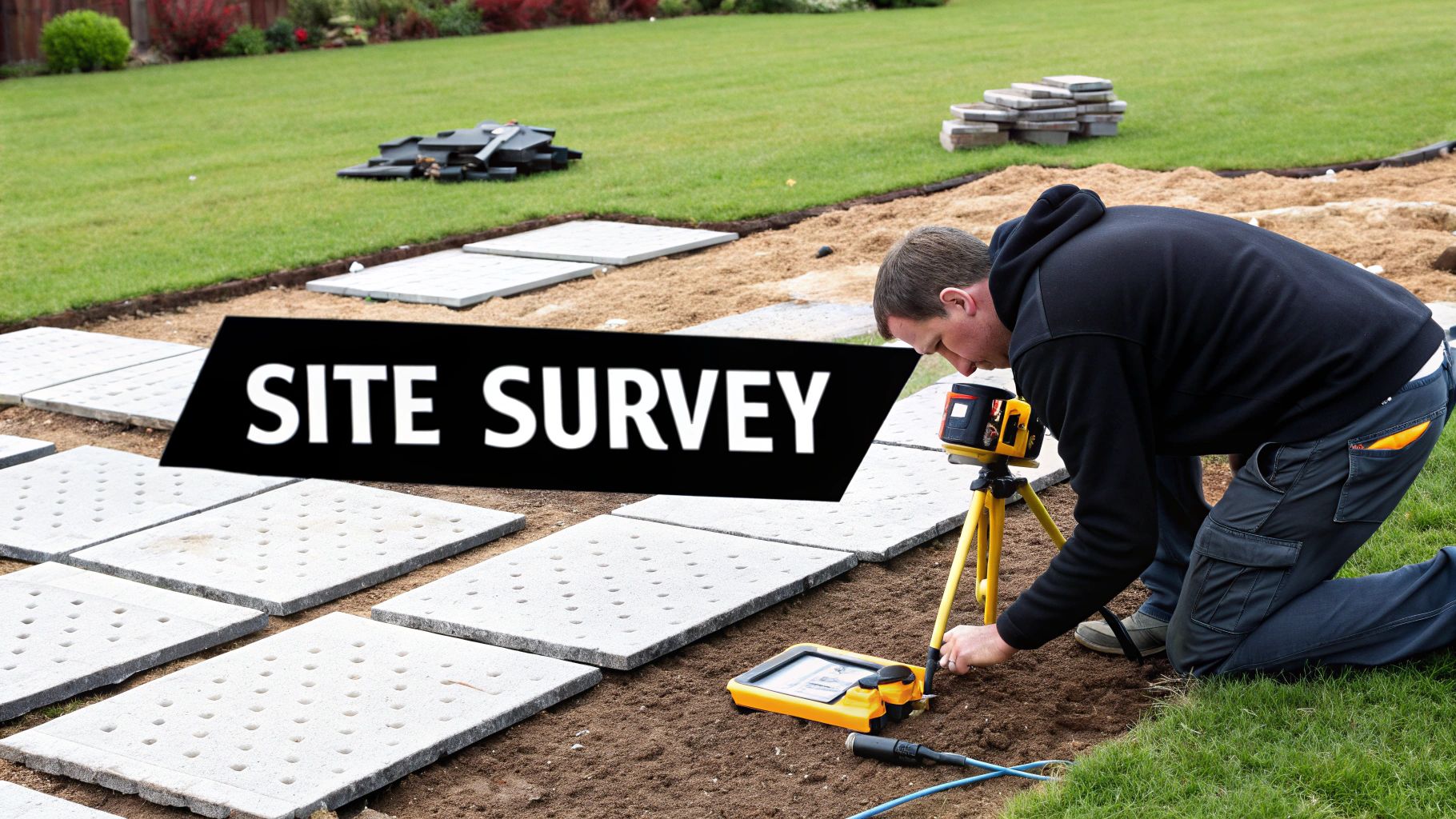
The main reason for a site visit is to measure how level the ground is. Even a gentle slope that you might not notice while walking can create a wobbly, unstable, and downright dangerous dance floor. A professional team will assess the surface to figure out exactly what’s needed to build a solid base for the party.
This is a huge deal for outdoor events, particularly those under a gazebo or marquee. Getting the entire setup right from the ground up is key. If you’re planning an outdoor celebration, you can find some great advice in our guide on gazebo hire in Cape Town to make sure your whole structure is secure.
For dance floors on tricky surfaces, the answer is often a subfloor. This is a purpose-built, interlocking system that goes down first, creating a perfectly flat and stable platform. It smooths over any dips, bumps, or slopes in the ground below, protecting your guests from tripping and preventing any damage to the venue’s lawn or paving.
A site survey isn’t just a box-ticking exercise; it’s a vital risk assessment. It ensures the supplier arrives with the right gear—like an adjustable subfloor—to guarantee a flawless installation on any surface, from pristine grass to rustic gravel.
Beyond the Surface: Logistics and Access
A thorough site survey isn’t just about looking at the ground. It also covers all the practical details that can make or break your event day schedule. Your supplier needs to plan exactly how they’re going to get the heavy floor panels from their truck to your venue space.
During the visit, they’ll check for:
- Delivery Access: Are there any narrow gates, steep driveways, or flights of stairs that will make carrying equipment a challenge?
- Loading Zones: Where can the delivery truck park without blocking guest access or disrupting the venue’s daily operations?
- Power Availability: If you’ve chosen an LED or starlit floor, is there a reliable power source close by?
Sorting these details out ahead of time means no last-minute delays or unexpected labour costs on the day. By investing a little bit of time in a site visit, you’re ensuring the hire of your dance floor is a smooth, stress-free part of your event planning.
Understanding the True Cost of Dance Floor Hire
When you start budgeting for a dance floor, the quote you first see is really just the starting point. To get a real handle on the final cost, you have to look past the basic rental fee and dig into all the little things that can shift the price. Thinking about these factors upfront is the best way to compare quotes properly and dodge any last-minute budget surprises.
The biggest driver of cost? The material you choose, hands down. A classic wood parquet floor is often the most wallet-friendly choice, giving you that timeless look without breaking the bank. But if you’ve got your heart set on something more dramatic, like a gleaming seamless white floor or even one with custom-printed vinyl, the price will naturally go up to reflect the premium materials and the specialised skills needed to install it.

Beyond the Base Price
There are a few other elements that add to the total cost. It’s so important to chat through these with your supplier to make sure your quote is the full picture.
- Customisation: Want to add a personal touch? A custom vinyl monogram, your company logo, or even a full-floor wrap will bump up the cost. It’s a fantastic way to make a statement, but it comes with extra fees for the design, printing, and application.
- Subflooring: If your venue is a marquee on a lawn or has an uneven surface like old cobblestones, a subfloor isn’t just a nice-to-have—it’s essential for safety. This extra layer adds to the rental cost, but for a stable, secure setup, it’s non-negotiable.
- LED and High-Tech Floors: Those incredible starlit or interactive LED floors sit at the top end of the price range. They need specialised technicians and dedicated power, all of which is factored into the hire fee.
Your final quote is a combination of the floor itself and the labour required to make it perfect. Always ask for a detailed breakdown so you know exactly what you are paying for, from the panels themselves to the team that builds them.
Uncovering Logistical and Hidden Costs
Logistics can really move the needle on your budget, especially for events happening across the Western Cape. These are the expenses that often get overlooked, but they can creep up if you don’t plan for them.
A huge factor is delivery distance. It makes sense that a wedding in central Cape Town will have a lower delivery fee than one tucked away in a Paarl valley or at a stunning Franschhoek wine estate. Always check if delivery is included in the quote and what the specific charges are for your venue’s location.
Then there’s the timing of setup and pack-down. Many venues have strict rules, meaning your crew might have to install late at night or pack down in the wee hours of the morning. These after-hours labour charges can add a fair bit to your final bill. The same goes for venues with tricky access—think stairs, narrow hallways, or a long haul from the loading bay. You might see an extra fee to cover the extra time and manpower needed.
In South Africa, you can expect rental rates for a quality modular dance floor to range from ZAR 10,000 to ZAR 50,000 per event, depending on the size, material, and tech involved. You can dive deeper into these market trends in this research on event infrastructure.
Your Essential Booking and Logistics Checklist
Getting the perfect dance floor for your event isn’t just a one-off decision; it’s a process that starts months before the first song plays. A solid timeline and a good checklist are your secret weapons for a smooth hire, saving you from last-minute panic and making sure every little detail is nailed down.
To get your head in the game, start by getting organised. Our own event planning checklist template is a brilliant starting point to structure your entire event.
When should you book? Well, that really depends on your event date. If you’re planning a wedding during the peak Western Cape season (that’s roughly October to April), you need to get moving six to nine months in advance. The best suppliers get snapped up fast, especially for popular items like those gorgeous seamless white floors. For corporate functions or off-season parties, you’ve got a bit more breathing room—a three-to-four-month lead time usually does the trick.
Your Hire Checklist: From Quote to Pack-Down
Once you’ve got a few potential suppliers in your sights, it’s time to dig into the details. This checklist breaks down the process, so nothing important slips through the cracks.
First Moves: Quotes & Comparisons (6-9 Months Out)
- Get in touch with at least three different suppliers for detailed quotes.
- Make sure every quote is comprehensive. Does it cover the dance floor hire, subflooring (if you need it), delivery, installation, and collection fees?
- Always compare the total, all-in cost, not just the attractive base rental price.
Locking It In: Contract & Booking (5-7 Months Out)
- Read the fine print. Go through the terms and conditions with a fine-tooth comb, paying special attention to the cancellation policy, payment deadlines, and liability clauses.
- Once you’re happy, pay the deposit to officially confirm your booking.
Getting Practical: Logistics & Layout (1-2 Months Out)
- If your venue or floor choice needs it, get that site survey scheduled.
- Finalise the delivery and installation times with both your supplier and the venue manager.
- Give your supplier a clear floor plan showing exactly where the dance floor needs to go.
Final Touches: Last Checks (1-2 Weeks Out)
- Settle the final payment according to your contract.
- Double-check the setup and pack-down times one last time to prevent any clashes.
- Make sure your on-the-day coordinator has your supplier’s contact details handy.
The Make-or-Break Questions for Your Supplier
Before you sign anything, asking a few smart questions can save you a world of pain later. How a supplier answers these will tell you a lot about their professionalism and experience.
Don’t be afraid to ask the tough questions. A reliable supplier will have clear, confident answers about their safety protocols, insurance, and what they’ll do if things go wrong. It’s a sure sign they’re as invested in your event’s success as you are.
Here’s what you need to find out:
- “What’s your public liability insurance coverage?” You’ll want to get a copy of their certificate for your own records and for the venue.
- “What’s your plan B?” What happens if their delivery truck breaks down or a crucial piece of the floor is damaged on the way?
- “What are your safety procedures during installation?” This covers everything from taping down cables to making sure every single panel is flush, level, and securely locked in place.
By ticking off this checklist and asking the right questions, you can book your dance floor with total confidence, knowing every logistical detail is sorted for a flawless event.
Got a Few More Questions About Your Dance Floor?
As you get closer to your event date, a few final questions always seem to pop up. Making sure you have the right answers is key to a stress-free setup. Here are some of the most common queries we get from event planners and couples planning their big day across the Western Cape.
What Happens if it Rains?
This is a big one, especially for those beautiful marquee weddings in Stellenbosch or a garden party in Franschhoek. What’s the plan if the weather turns?
Our professional outdoor dance floors are built to be weather-resistant. When we install them with a proper subfloor, they can handle a bit of dampness and still provide a solid, safe surface for your guests.
But the real MVP here is your marquee or stretch tent. Your primary cover needs to be totally secure and waterproof. No dance floor, no matter how tough, is meant to sit in a direct downpour—it would quickly become a serious slipping hazard.
Does an LED Dance Floor Need Special Power?
Another great question we hear all the time. The short answer? Yes, absolutely. An LED or starlit floor needs its own dedicated, stable power source to light up your night safely and without any flickering.
When we do a site survey or chat during the booking process, we’ll need to confirm there’s a suitable power outlet close to where you want the dance floor. It’s super important that this circuit isn’t shared with other power-hungry equipment, like the DJ’s speakers or the caterer’s warming trays. The last thing you want is a power trip right in the middle of the first dance!
Top Tip: Get your venue manager and your dance floor supplier on a quick call or email chain to chat about power. Sorting this out early saves a massive headache and a last-minute scramble for generators later on.
Are There Any Venue Restrictions I Should Know About?
Sometimes, yes. Many of the stunning historic wine estates and venues with delicate original floors have rules to protect their property. They might insist on protective matting or even say no to certain types of dance floors to avoid scuffs, scratches, or damage.
It’s always a good idea to clarify these points with your venue:
- Surface Protection: Do they require any specific underlayment or protective covers to go under the dance floor?
- Weight Limits: Some older buildings, decks, or raised platforms might have weight restrictions. It’s good to know this upfront.
- Access Times: When can our team get on-site to set up? And when do they need to be out by? Confirming the exact times avoids any clashes with other suppliers.
Ticking these practical questions off your list early on makes the whole process smooth and simple. It gets everyone on the same page and leaves you free to enjoy the party.
Ready to create an unforgettable event with the perfect centrepiece? ABC Hire offers a premium selection of dance floors and event furniture for hire in Cape Town and the Winelands. Explore our options and get a quote today at https://abchire.co.za.