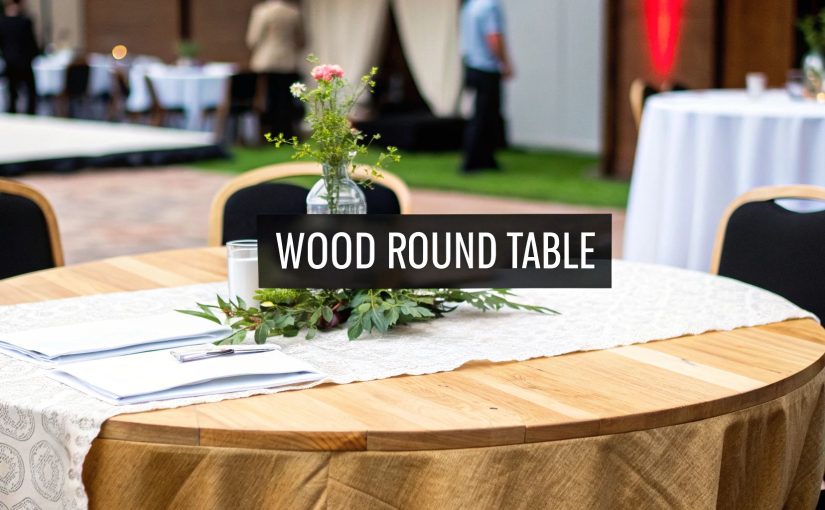
A wood round table is so much more than just a place to sit. It’s the heart of your event, a centrepiece that creates a warm, inviting, and genuinely interactive atmosphere. The magic is in its shape; a circle naturally does away with the formal, rigid feel of a rectangular table, encouraging a more communal and engaging vibe for everyone. This simple fact makes it a fantastic choice for any occasion, from weddings to corporate get-togethers.
Why a Wood Round Table Elevates Any Event
There’s a good reason event planners here in Cape Town and beyond keep coming back to the classic wood round table. Unlike long, straight tables that can feel a bit like a boardroom and limit conversation to the person next to you, a round table pulls everyone together. This simple change in geometry has a huge impact on the feel of an event.
Think of it this way: a rectangular setup is like a lecture hall, while a round table is like gathering around a campfire. One feels formal and structured, the other encourages shared stories and makes sure everyone is part of the conversation. Every guest can see everyone else, so interactions feel more natural and inclusive. This is absolute gold for events where connection is key, like weddings, anniversary dinners, or even collaborative workshops.
The Power of Inclusive Design
A circle is democratic by its very nature. There’s no head of the table, which means every seat is just as important as the next. This subtle detail is brilliant for breaking down social barriers and creating a relaxed, communal mood. Guests stop being just attendees and become part of one big, connected group.
Beyond the social perks, wood round tables are incredibly versatile when it comes to style. The natural grain and texture can be used to create all sorts of looks:
- Rustic Charm: An unfinished or reclaimed wood table is the perfect anchor for a farm-style wedding or an outdoor event in the beautiful Cape Winelands.
- Modern Elegance: A sleek, dark-stained wood table brings an organic warmth to a slick, contemporary corporate gala.
- Bohemian Flair: Lighter woods, like pine or ash, look amazing dressed up with eclectic runners and centrepieces for a chilled, chic celebration.
A round table’s design inherently promotes interaction. By eliminating sharp corners and a designated 'head,' it creates a continuous flow that makes every guest feel equally included in the conversation and the celebration.
At the end of the day, choosing a wood round table isn't just about logistics; it's a deliberate design choice. It shows you want to create an event built around warmth, connection, and shared experiences – setting the stage for a truly unforgettable day.
Choosing the Right Size for Your Guest List
Getting the table size right is one of those make-or-break decisions when you're planning an event. It's not just about fitting everyone in; it's about the entire vibe of the day. A table that's too small feels cramped and uncomfortable, but one that’s too big can make even a lively gathering feel a bit empty and disconnected.
The trick is finding that sweet spot. You want a setup that feels welcoming and makes it easy for guests to chat and move around. Before you book anything, take a moment to picture the kind of experience you're trying to create.
A casual, stand-up cocktail party can get away with a cosier arrangement. But if you're planning a formal wedding dinner with multiple courses, you absolutely have to give your guests enough elbow room. It's all about matching the table size to what the event actually needs.
Decoding Table Dimensions and Seating Capacity
Standard wood round tables come in a few key sizes, and each is designed to seat a different number of guests. Knowing these dimensions is your first step to a flawless floor plan. A classic mistake we see is people trying to squeeze in the maximum number of guests, which almost always ends up feeling a bit tight.
Take the 1.8-metre (or 6-foot) diameter table – it's the workhorse of the event world for a reason. This size is perfect for seating 8 to 10 guests. Eight guests will have plenty of space, which is ideal for a formal dinner. If you push it to ten, you create a more buzzy, intimate feel that’s great for social get-togethers.
If you're working with smaller groups, a 1.5-metre (5-foot) diameter table is a fantastic choice, comfortably seating 6 to 8 guests. These are brilliant for creating little conversation zones within a larger event or for those more intimate celebrations where you want everyone to feel connected.
This infographic really nails why round tables are such a go-to choice for creating a great atmosphere.
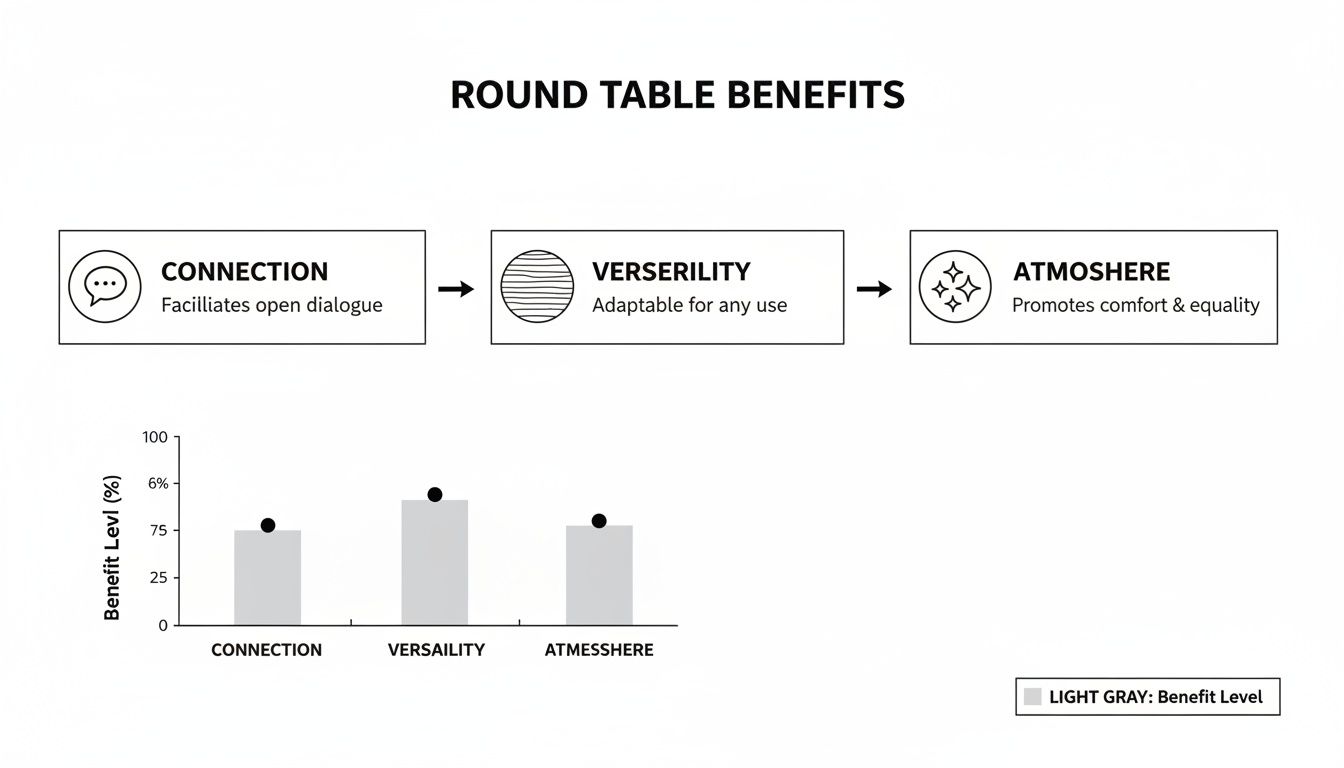
As you can see, the shape itself naturally encourages conversation and just works with so many different styles and themes.
Pro Tip: Don't forget to account for your centrepieces! A big, beautiful floral arrangement will eat up table space. You might need to seat one less person per table or just go for the next size up to make it work.
To make things a bit easier, here’s a quick guide to help you choose the right wood round tables for your event.
Wood Round Table Seating Capacity Guide
This little chart is your cheat sheet for matching our standard table sizes with how many guests they can comfortably accommodate.
| Table Diameter (cm) | Comfortable Seating (Guests) | Maximum Seating (Guests) | Ideal For |
|---|---|---|---|
| 150 cm (5 ft) | 6-7 | 8 | Smaller gatherings, intimate dinners, breakout areas |
| 180 cm (6 ft) | 8-9 | 10 | Weddings, corporate galas, standard event seating |
| 210 cm (7 ft) | 10 | 12 | Large celebrations, maximising venue space |
Keep this handy when you’re sketching out your floor plan – it’ll save you a lot of guesswork!
Calculating Your Space and Table Count
Okay, so you've got your guest count and you know which table size you prefer. Now it's time to map it all out. It’s not just about squeezing the tables in; you have to think about the chairs and, most importantly, the space people need to walk around. A good rule of thumb is to leave at least 1.5 metres of space between each table.
This buffer zone is non-negotiable, and here’s why:
- Guest Movement: It lets guests pull their chairs out without knocking into someone behind them.
- Service Flow: Waiters and catering staff need clear paths to serve food and clear plates without a fuss.
- Accessibility: It ensures everyone can get to the dance floor, restrooms, or the bar without having to squeeze past other tables.
To figure out how many tables you’ll need, just divide your total number of guests by how many people you're seating at each table. For instance, if you have 120 guests and you want to seat 8 people comfortably at each table, you'll need 15 tables (120 ÷ 8 = 15). If you end up with a decimal, always round up. It’s far better to have an extra table with slightly fewer people than to cram everyone in. A little bit of planning here goes a long way in making your setup feel both beautiful and practical.
Exploring Different Wood Types and Finishes
The real heart and soul of a wood round table comes from the timber it’s made from and how it’s been treated. This choice goes way beyond just how the table looks; it dictates its weight, how durable it is, and the entire feeling it brings to your venue.
Think of the wood as the table's personality. Is it light and cheerful, or rich and formal? It's all about matching the material to your event's aesthetic. Each wood has its own grain, colour, and texture, giving you a completely different canvas for your tablescape. A rustic, textured wood might be perfect for a wedding in the Cape Winelands, while a sleek corporate function in the city centre probably calls for something more polished and uniform.
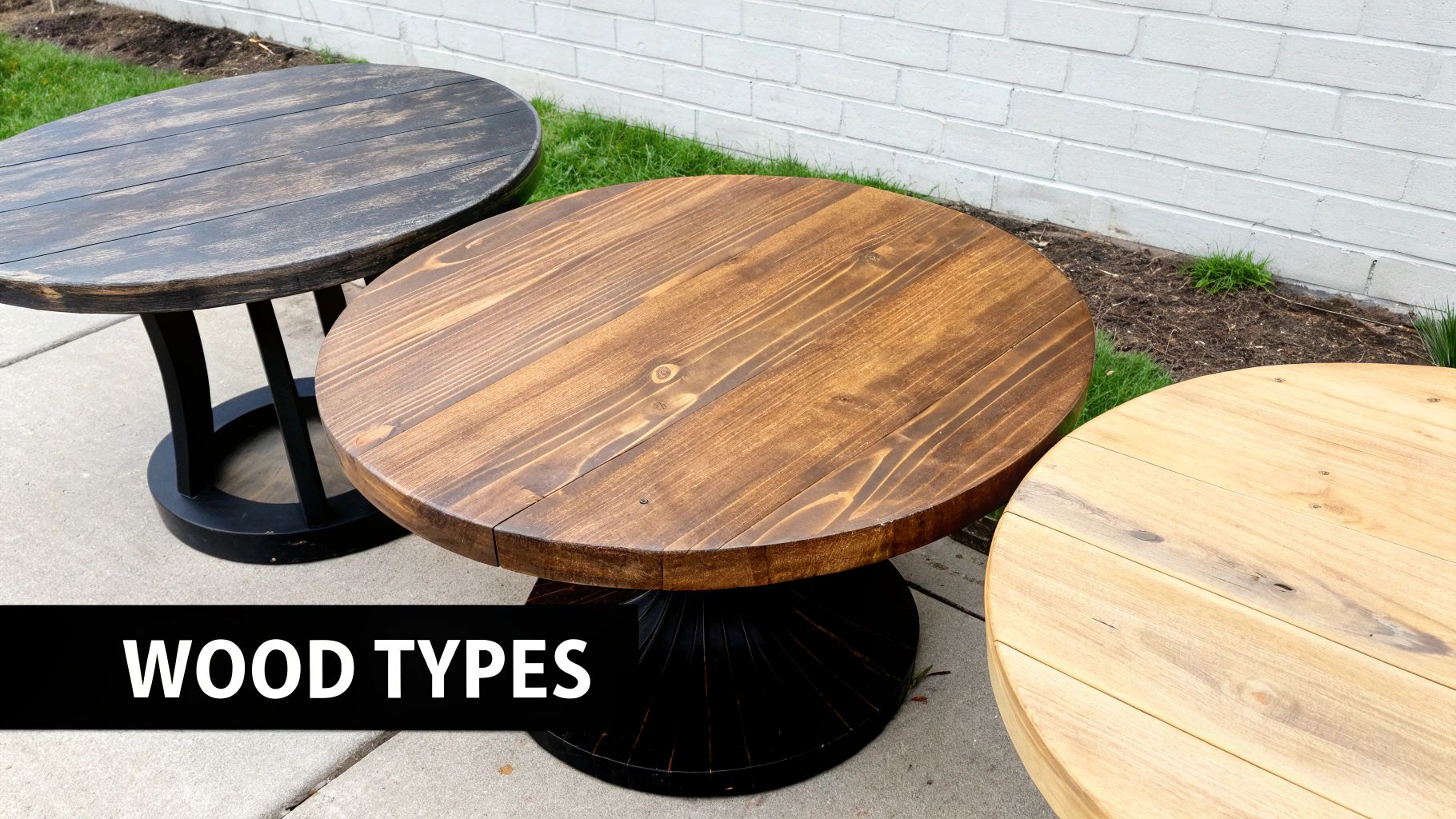
Common Woods for Event Tables
Here in South Africa, we're lucky to have access to some incredible local timbers for event furniture. Pine is a hugely popular choice for a wood round table, loved for its light colour and affordability. It’s a softer wood, which gives it a charming, rustic look—especially when it shows a few signs of character from past celebrations.
Oak, on the other hand, is a classic hardwood. It's known for its strength, heavier weight, and beautiful grain patterns. An oak table feels substantial and traditional, bringing a sense of timeless elegance to any setting. It's tough, so it can handle the hustle of countless events, making it a reliable and sophisticated choice.
Locally, our timber industry is a big deal. In a single year, South Africa produced around 18.21 million cubic metres of timber, with pine and eucalyptus leading the charge. This strong local supply, especially from regions like Mpumalanga and KwaZulu-Natal, means we have a steady stream of beautiful materials to craft our event tables.
Understanding Finishes and Their Impact
The finish is what truly brings the wood to life. It protects the timber, but more importantly, it defines the final look. This is what makes a table feel raw and organic or refined and luxurious. The finish can completely transform the mood of your event.
Here are a few common finishes you’ll come across:
- Natural/Unfinished: This style is all about celebrating the wood in its raw state. It’s perfect for rustic, bohemian, or outdoor themes where you want to highlight natural textures.
- Stained: Stains change the wood's colour while letting the natural grain show through. This can be anything from a light wash to a deep, dark espresso, allowing you to perfectly match the table to a specific colour scheme.
- Polished/Varnished: A clear varnish or lacquer adds a protective layer and a noticeable sheen. A high-gloss polish creates a formal, reflective surface, while a satin or matte varnish offers protection with a more subtle, modern feel.
The finish on a wood round table does more than just protect the surface; it sets the tone. A rustic, matte finish invites a casual, communal atmosphere, while a dark, polished gloss suggests formality and elegance.
The choice of finish is a powerful styling tool. A dark-stained wood round table, for instance, can anchor a dramatic, moody theme, while a light, natural finish keeps the space feeling bright and airy. It’s crucial to think about how the table’s finish will play with your lighting, linens, and centrepieces to create a cohesive look. When you understand the various options, selecting the perfect wooden tables and chairs for your event's theme becomes so much easier.
Ultimately, it’s the combination of wood type and finish that gives each table its unique identity. By considering these elements, you can pick a wood round table that not only does its job but also becomes a key part of your décor, perfectly aligning with your event’s vision.
How to Style Your Table with Linens and Centrepieces
This is where the magic happens. Styling your wood round table is where its personality truly shines, turning a beautiful piece of furniture into a show-stopping focal point that sets the tone for your entire event. Your first big decision? Linens. This choice will fundamentally shape the table's final look.
How you approach linens can range from covering the table completely to letting the natural wood be the star of the show. Each option creates a totally different vibe, so the right path really depends on the theme and formality you're aiming for at your Cape Town gathering.
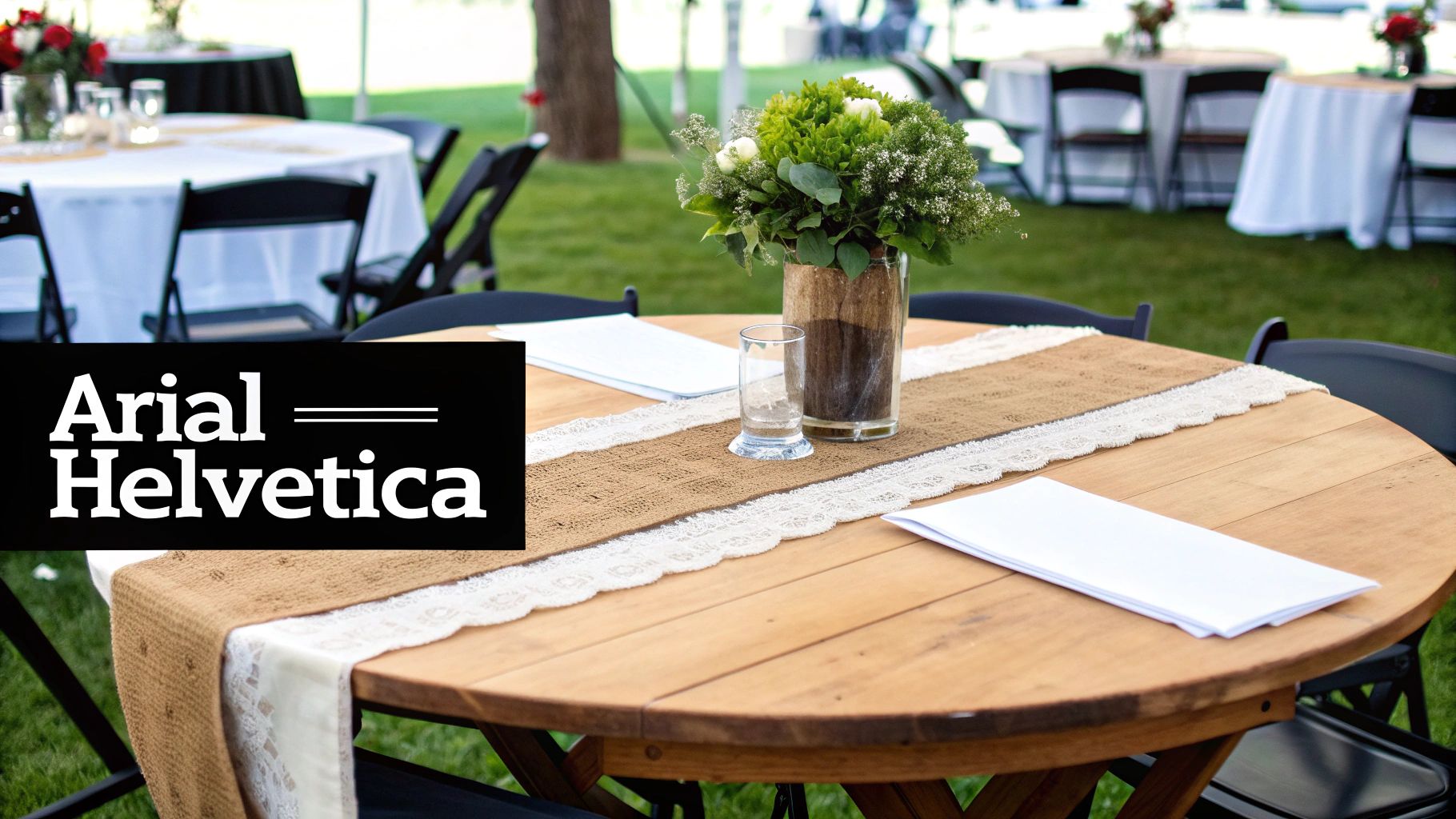
To Cover or Not to Cover: The Linen Decision
When you've hired a gorgeous wood table, deciding whether to cover it is all about balancing elegance with authenticity. You've really got three main options, and each brings its own unique flavour.
- Full Tablecloth: This is your go-to for classic, formal events like weddings or corporate galas. A crisp, floor-length tablecloth in white, ivory, or even a bold colour adds a layer of sophistication and creates a clean, polished look across the room.
- Table Runner: We love a runner—it's the perfect compromise! You get to add a pop of colour and texture down the middle while still letting that beautiful wood grain peek through on the sides. This works brilliantly for semi-formal events or rustic-chic themes.
- Bare Wood: Sometimes, less is more. If you've chosen a table with a stunning grain or a unique rustic finish, letting the wood speak for itself creates an organic, warm, and effortlessly cool look.
Your choice of linen is a key styling moment. A full cloth signals formality and tradition. A bare table feels modern and connected to nature, celebrating the material itself.
For a rustic farm wedding, a simple hessian runner or one of these beautiful natural round linen tablecloths can be the perfect touch. On the other hand, a sleek corporate dinner might demand the sharp, clean finish of a full, dark-coloured tablecloth. If you're still on the fence, our complete guide on tablecloths for round tables has plenty more tips to help you decide.
Choosing the Perfect Centrepiece
Once your linen choice is sorted, the centrepiece is the crowning glory. A round table is practically made for a central arrangement, but it does come with one challenge: making sure your guests can still see each other!
The goal is to create a visual impact without building a floral wall that kills conversation. A great centrepiece draws the eye and ties the theme together, but never gets in the way of your guests connecting.
When you're picking a centrepiece, think in terms of two height options:
- Low and Lush: Arrangements that stay below eye level are always a safe—and beautiful—bet. Think sprawling garlands of eucalyptus, clusters of pillar candles at different heights, or a collection of small bud vases with single, delicate stems.
- Tall and Slender: If you want drama, the trick is to go above your guests' sightlines. Use tall, slim vases with minimal fuss at the base. This lets the main floral feature float high above the table, creating that wow-factor without blocking anyone's view.
Styling Inspiration for Your Event Theme
Your event's theme is your North Star for all styling decisions. When everything on the table tells the same story, your event feels thoughtful, cohesive, and completely immersive.
To get your creative juices flowing, we’ve put together a quick guide to matching your styling to your theme.
Linen and Styling Choices for Different Event Themes
| Event Theme | Recommended Linen | Centerpiece Idea | Best Wood Finish |
|---|---|---|---|
| Rustic Farm Wedding | Hessian Runner or Bare Wood | Wildflower bouquet in a mason jar, lantern cluster | Natural or Reclaimed |
| Modern Corporate Gala | Black or White Full Tablecloth | Single tall orchid in a slim vase, geometric candles | Dark Stain, Polished |
| Bohemian Celebration | Macramé Runner, Coloured Gauze | Eclectic mix of bud vases, scattered tea lights | Light Pine or Ash |
| Elegant Formal Dinner | Ivory Full Tablecloth | Low, classic rose arrangement, silver candelabra | Cherry or Oak, Varnished |
Ultimately, styling your wood round table is about creating harmony. The wood, the linens, the centrepiece—they should all work together to bring your vision to life, making your tables more than just a place to sit, but a key part of a beautiful, unforgettable experience.
Mastering Your Event Layout and Logistics
Having the perfect wood round table is one thing; knowing how to arrange them to create a space that feels both beautiful and effortless is another game entirely. The layout is the invisible architecture of your event's atmosphere. A well-planned floor plan gets your guests mingling, ensures service runs like clockwork, and makes the whole venue feel balanced and intentional.
On the flip side, a poor layout can create frustrating bottlenecks, awkward empty pockets, or a cramped feeling that kills the mood. You're aiming for a design that not only looks incredible but also works for every single person in the room, from your guests to the catering staff. It’s all about creating flow.
This isn't just about plonking tables down wherever they fit. It’s a strategic game that considers traffic routes, sightlines to key spots like the stage or dance floor, and the overall guest experience.
Crafting the Perfect Floor Plan
Every venue in Cape Town, whether it’s a historic wine estate in Stellenbosch or a slick city centre ballroom, has its own unique footprint. The first rule is to work with the venue's dimensions, not against them. A great layout makes the most of the space while respecting its natural flow and features.
The priorities for your floor plan will change depending on the kind of event you're hosting.
- Weddings: Here, the layout needs to feel romantic and connected. Think about arranging tables so everyone has a great view of the head table and, of course, the dance floor. You’ll want to create clear pathways to the bar, bathrooms, and any outdoor areas to avoid guest traffic jams.
- Corporate Galas: For these events, the focus might be on a stage or presentation area. A tiered or chevron-style arrangement is brilliant for ensuring clear sightlines for all attendees. The layout should feel professional and organised, with plenty of room for networking.
- Conferences: If you're running workshops or collaborative sessions, grouping a few wood round tables together can create fantastic breakout zones. This encourages small-group discussion while still keeping everyone connected to the main event.
A successful floor plan is all about pathways. Try to imagine tracing the journey of a guest from their arrival to their seat, over to the bar, and then to the dance floor. If that path is clear, easy, and logical, you've nailed it.
No matter the event, always prioritise movement. A good rule of thumb is to keep at least a 1.5-metre gap between tables. This isn't just for comfort; it’s absolutely essential for efficient food service and lets guests move around freely without bumping into others.
Nailing the Logistics in Cape Town
Once your floor plan is sorted, the focus moves to the practical side of things: getting your tables on-site and set up perfectly. This is where clear, upfront communication with your rental supplier—like us here at ABC Hire—is non-negotiable for a stress-free experience.
Coordinating the logistics well in advance saves you from any last-minute chaos. You need a solid plan for delivery, setup, and breakdown that works with your venue’s specific rules and your event's timeline.
Key Logistical Steps
- Coordinate Delivery Times: Pin down a precise delivery window with your vendor and the venue. Make sure someone is on-site to receive the tables and guide the delivery team according to your floor plan. This simple step stops tables from being dropped in the wrong spot.
- Plan for Setup: Don't underestimate how long setup takes. Placing each wood round table, arranging the chairs, and then dressing the tables with linens and centrepieces all add up. Schedule this with plenty of buffer time before guests are due to arrive.
- Handle with Care: Wooden tables, especially ones with beautiful finishes, need to be handled carefully to avoid scratches or dings. Check that the setup crew knows how to move and place them correctly to protect both the furniture and the venue's floors.
- Organise Breakdown: The end of the night needs just as much planning. Coordinate a pickup time that suits the venue and have a clear process for breaking down tables and stacking them for collection. A smooth exit is just as important as a grand entrance.
Getting these logistical details right means the vision you created on paper becomes a flawless reality, letting you relax and focus on hosting an event to remember.
Budgeting for Your Table Rentals in Cape Town
Let's be honest, figuring out the budget is a massive part of planning any successful event here in Cape Town. When it comes to hiring a wood round table, the final cost isn't just a single number. To avoid any nasty surprises, you need to understand what actually goes into that price.
Think of it this way: the price is a mix of the table's unique features and the services you’ll need. Things like the type of wood, the table's diameter, the finish you choose, and how long you need it for all play a big role. It makes sense, right? A huge, solid oak table with a fancy polished finish is naturally going to cost more to hire than a smaller, rustic pine one.
Key Factors Influencing Rental Costs
To put together a budget that actually works, you need to break down what you're paying for. It’s less about a single price tag and more about a handful of variables you can often tweak to fit what you want to spend.
Here are the main things to keep in mind:
- Table Size and Type: Bigger tables that can seat more guests simply use more material and are heavier to move around, and the rental price reflects that. Likewise, premium woods like oak will always be a bit pricier to hire than more common options like pine.
- Finish and Condition: If you're after a table with a special finish, like a dark stain or a high-gloss varnish, expect to pay a little more than for one with a simple, natural look.
- Rental Duration: Most companies work on daily rates, but if you're planning a multi-day event, you can often negotiate a better overall price for a longer hire period.
- Delivery and Collection Fees: This is a big one that people often forget. The cost here depends on how far your venue is from the supplier's warehouse, how easy it is to get to, and whether you need them to deliver or collect outside of normal business hours.
When you're budgeting, always, always ask for a fully itemised quote. This transparency is your best friend. It shows you exactly where your money is going and helps you spot any potential hidden costs, like damage waivers or setup charges, before you've signed anything.
A great way to get a handle on your budget is to gather a few quotes from different suppliers. You can easily obtain a table quote to start comparing your options. Getting a full picture of the costs is so important, and our guide on tables and chair rentals dives even deeper into this.
Renting Versus Buying A Wood Round Table
For most one-off events like weddings or corporate functions, renting is almost always the smarter move, both financially and logistically. Buying a whole set of high-quality wood tables is a massive upfront cost, and that's before you even think about where you'll store them, how you'll maintain them, and how you'll get them to your venue. Renting just makes all that hassle disappear.
The furniture market in South Africa is also growing. The national market was valued at around US$2.47 billion in 2024 and is expected to keep climbing. This will likely push up the demand for timber and could affect both the cost and availability of a new wood round table if you were looking to buy.
Renting gives you incredible flexibility. You get access to a huge range of styles without the long-term commitment. This means you can pick the absolute perfect table for your event's theme, and when the party's over, it simply gets taken away. It’s a practical, wallet-friendly solution for creating a beautiful event space.
Your Questions Answered
When you're in the final stages of planning your event, a few last-minute questions always seem to come up. It's completely normal! Getting these details sorted is the key to booking your wood round table hire with total peace of mind.
Here are a few of the things we get asked most often.
How Far in Advance Should I Book?
This is a big one. For the best selection, especially during Cape Town's peak wedding season from October to April, we always suggest booking your tables at least 3 to 6 months ahead. This gives you a much better chance of securing the exact style and number of tables you've got your heart set on.
Rental and Logistical Details
What about the practical side of things, like delivery and setup? We’ve got you covered. We offer a full delivery and collection service across Cape Town and the beautiful surrounding Winelands. While setup isn't included as standard, we can absolutely arrange it for an extra fee to make sure your floor plan comes to life just as you pictured it.
And what if something gets damaged? We get it, accidents happen! Your quote includes a standard damage waiver to cover the usual minor wear and tear. If something more significant happens, we’ll simply chat about the repair or replacement cost as laid out in your rental agreement.
A quick tip from our team: Always double-check venue access times with your coordinator before you finalise delivery and collection slots with us. It’s a simple step that saves a world of stress on the day.
Finally, let's talk linens. While our passion is beautiful furniture, we know the right tablecloths and runners complete the look. We’ve built up a great network of trusted local suppliers and we’re more than happy to point you in the right direction. Just ask, and we'll help you find the perfect linens to go with your chosen wood round tables.
Ready to create an unforgettable atmosphere for your next event? For the finest selection of event furniture in Cape Town, explore the beautiful range at ABC Hire. Find your perfect tables and chairs today at https://abchire.co.za.