

You've chosen the venue. The florist is sorted. The menu is nearly final. Then you look at the tables and realise the room still feels unfinished.
That usually happens when the large items are in place, but the tables don't yet carry the mood of the event. Crisp white cloths can look polished, but on their own they often feel flat. Strong floral work helps, but it can't do all the visual lifting. Faced with this, people often start searching for table runners for sale, hoping for a quick decorative fix.
A runner can do much more than fill empty space. It can introduce colour without overwhelming the room, bring in pattern without changing every linen item, and tie together stationery, candles, florals and furniture. In Cape Town and the Winelands, it also solves a very local styling challenge. Many clients want the elegance of a formal event, but they also want something with identity. Not generic hotel linen. Not a copied Pinterest look. Something refined, but still personal.
More Than Just Fabric An Essential Event Detail
I've seen this most often at weddings and corporate dinners where the brief sounds simple. The client wants a clean, luxurious setting, but also wants the tables to feel memorable. White linen goes down first, the cutlery is beautiful, the chairs are right, and yet the space still doesn't hold attention. A runner often becomes the missing layer.
Used properly, it defines the centre line of the table and gives the eye somewhere to land. It can soften a hard modern setting, sharpen a rustic one, or create a link between a formal reception and local design details that matter to the host. That's why runners aren't just accessories. They're one of the easiest ways to make a room feel considered.
If you're browsing options and want to compare a polished retail style, you can shop our elegant table runners as a reference point for what a refined finish looks like. And if you're still shaping the broader table concept, this guide to decor on table styling ideas helps place the runner in the context of candles, glassware and centrepieces.
Why runners change the room faster than most decor
A table runner works because it affects several things at once:
- Colour control: You can introduce a tone or print without committing to full tablecloths.
- Visual rhythm: Repeating the same runner across guest tables makes the room feel organised.
- Theme clarity: Rustic linen, sleek satin, textured cotton or local print all send different signals.
- Budget discipline: One layer can shift the whole mood without replacing every base linen.
Practical rule: If the table setting looks correct but still feels forgettable, the problem is often layering, not furniture.
For Cape events, this matters even more. Light changes quickly, indoor-outdoor spaces are common, and many venues already have strong architectural character. The runner becomes the detail that connects the venue to the client's style instead of fighting it.
Choosing The Right Table Runner Material
Material choice is where good intentions either hold up beautifully or fail on the day. The wrong fabric can crease in transit, slide out of place, look too shiny under daylight, or feel too casual for the room. The right one does the opposite. It settles the table and supports everything placed on top of it.
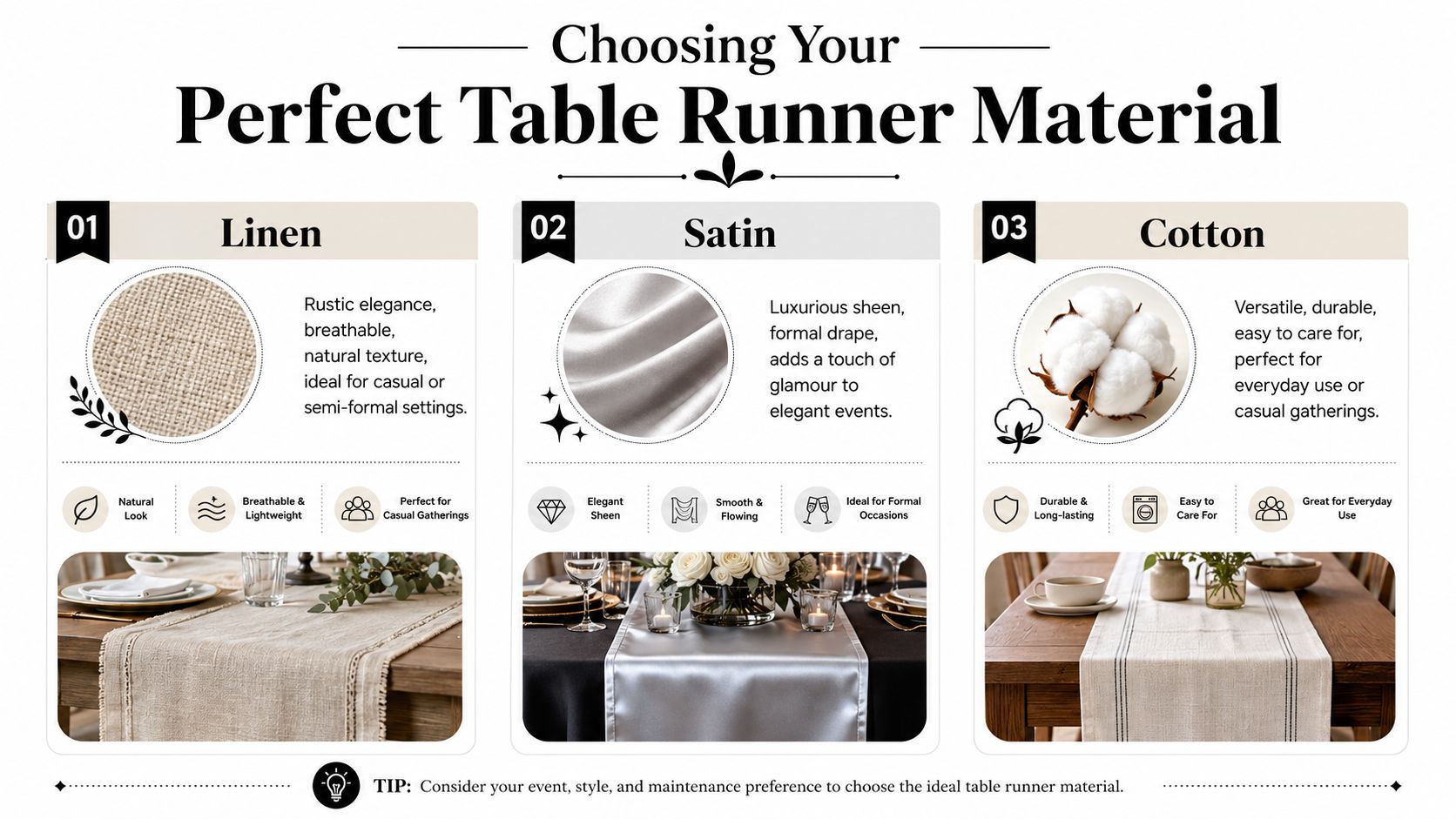
Linen satin and cotton each create a different mood
Linen is the easiest way to get understated elegance. It works especially well for vineyard weddings, long harvest tables and venues with stone, oak or mountain views. Linen has natural texture, so it doesn't need much help. The trade-off is that it creases easily, which can look charming in relaxed settings and untidy in strict corporate layouts.
Satin suits formal dinners, gala functions and glossy evening receptions. It reflects light well and gives the table a more dressed look. The risk is overuse. If the florals, charger plates and chair treatments are already highly decorative, satin can push the table into visual overload.
Cotton sits in the middle and is more versatile than people expect. It takes colour and print well, folds neatly and is generally easier to handle than more temperamental fabrics. For practical event use, that balance matters.
A useful technical reference comes from regional product analysis of Satinette Cotton. It notes a density of approximately 0.89 g/cm³ and a tensile strength of 42 N, making it suitable for outdoor Winelands use where moisture resistance and wrinkle recovery matter (technical specification analysis for Satinette Cotton). That kind of information sounds niche until you're setting up in damp morning air or light wind and need fabric that still behaves professionally.
For readers comparing textures with other tabletop elements, these notes on woven table mats and table layering can help you avoid mixing materials that compete with each other.
Materials that work well in specific event styles
Some fabrics make the decision easier because they clearly belong to certain settings.
- Cheesecloth: Best for soft, romantic styling. It pools well and suits intimate weddings. It's less useful when you want a crisp corporate line.
- Velvet: Strong for winter functions, dramatic evening tables and moody colour palettes. It adds depth, but it can feel too heavy for midday events.
- Sequinned runners: Effective in celebration spaces where you want sparkle and high contrast. They need restraint elsewhere on the table.
- Burlap or jute-style textures: Fine for informal farm-style events, but too rough for most black-tie or luxury briefs.
- Printed local cottons: Excellent when you want personality and place. The trick is controlling where the print sits and what surrounds it.
If you're considering a custom route or want to understand fabric combinations before commissioning anything, The Fabric Company's table runner kits are a useful reference for how pattern and material can be assembled intentionally.
Table Runner Material Comparison
| Material | Best For (Vibe) | Formality Level | Typical Cost | Durability/Care |
|---|---|---|---|---|
| Linen | Natural, refined, vineyard elegance | Medium to high | Varies by weave and finish | Creases easily, best steamed on site |
| Satin | Glamorous, polished, evening formality | High | Varies by quality | Can snag, shows spills quickly |
| Cotton | Balanced, versatile, adaptable | Low to high depending on print and finish | Varies widely | Easier handling, practical for repeat use |
| Cheesecloth | Romantic, soft, editorial | Medium | Varies | Delicate drape, less structured |
| Velvet | Luxe, winter, dramatic | High | Usually premium | Heavier, needs careful storage |
| Sequinned | Festive, bold, high-impact | High | Usually premium | Decorative only, not subtle |
| Burlap/jute look | Rustic, casual, farm-style | Low to medium | Often accessible | Textural, but less refined |
Choose material for the venue conditions first, then for the look. Beauty that doesn't survive setup isn't useful.
Getting The Size and Measurements Right
The fastest way to make a beautiful runner look cheap is to get the scale wrong. Too narrow and it disappears. Too wide and it starts behaving like a tablecloth. Poor overhang makes even good fabric look accidental.
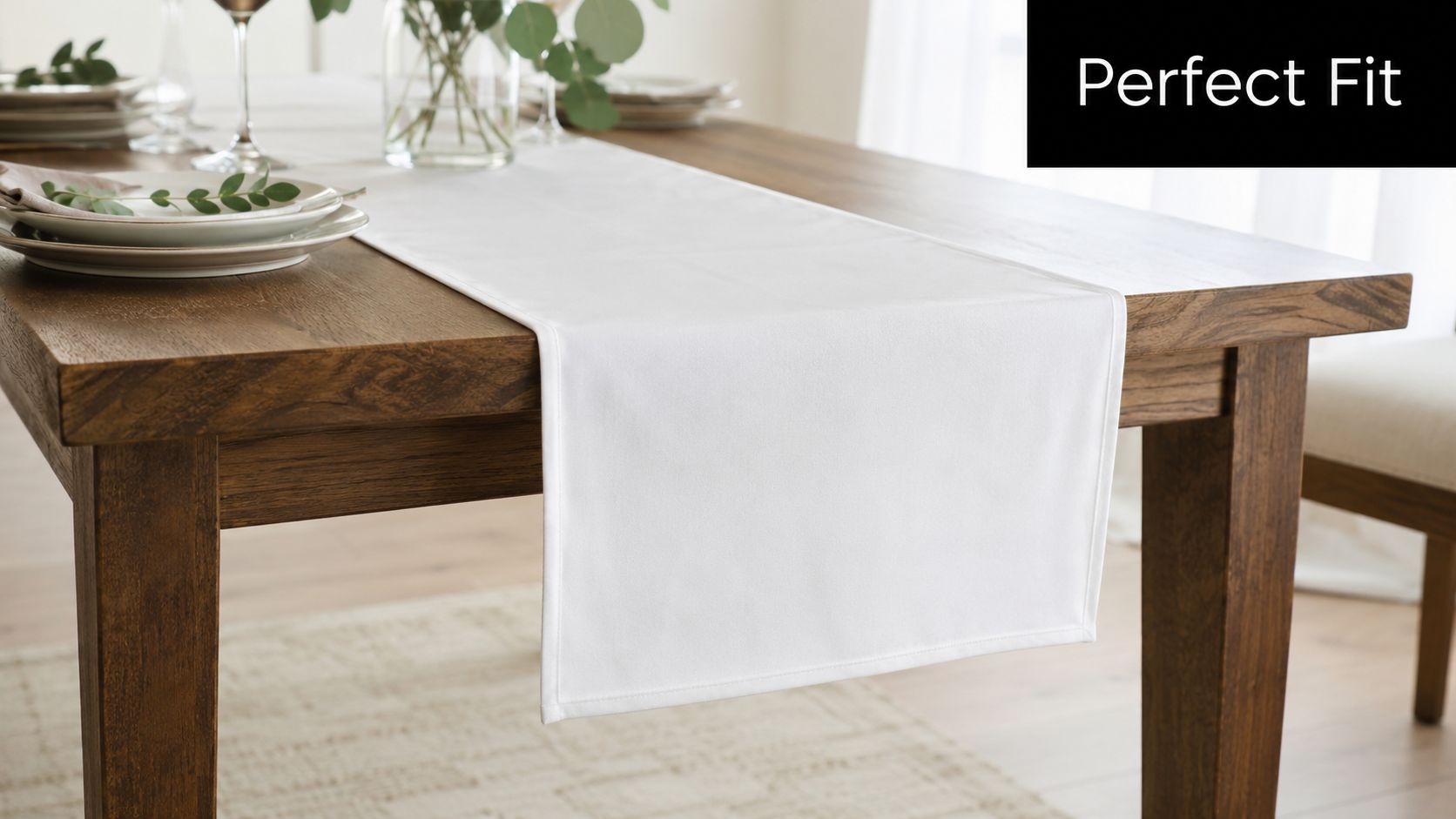
The cleanest benchmark is straightforward. Expert sizing guidance recommends a 1:3 width-to-table ratio, with 15 to 30 cm overhang on each end. For a typical 90 cm South African event table, a 30 cm wide runner creates professional balance (expert benchmark data for runner sizing).
A simple way to measure properly
For rectangular tables, start with the table width. Divide that width by three to get your target runner width. Then measure the full table length and add the amount of overhang you want on both ends.
For round tables, decide whether the runner will run straight across the diameter or whether you're using crossed runners for layered place settings. For a single straight runner, use the same visual principle. Keep the width proportionate and add enough drop to make it intentional rather than skimpy.
Use this checklist before placing an order:
- Measure the actual hired tables: Venue estimates are often wrong.
- Confirm whether there's a base cloth: A naked timber table changes the visual weight.
- Decide on the mood: Shorter drop feels neat and contemporary. Longer drop feels more formal.
- Test with your centrepieces: Low florals and candles allow more visible runner. Dense arrangements hide most of it.
For anyone planning round guest tables, this practical guide to tablecloths for round tables helps you coordinate the runner with the base linen, especially when both fabrics need to share the same visual space.
The drop changes the tone
The end overhang is not a small detail. A shorter finish maintains a refined look and works well for corporate breakfasts, product launches and modern receptions. A longer drop suits weddings, milestone dinners and more dramatic banquet styling.
Sizing note: Don't choose the runner in isolation. The width of the table, the bulk of the centrepiece and the line of the chairs all affect how large or delicate it appears.
One more practical point. If your runner has a bold local print, scale matters even more. A busy pattern on a runner that's too wide can dominate the whole table and drown the floral design.
Styling Table Runners for Maximum Impact
Most styling problems don't come from choosing a bad runner. They come from asking one runner to do too many jobs. A runner can carry colour, pattern, texture or formality. It shouldn't be forced to carry all of them at once.
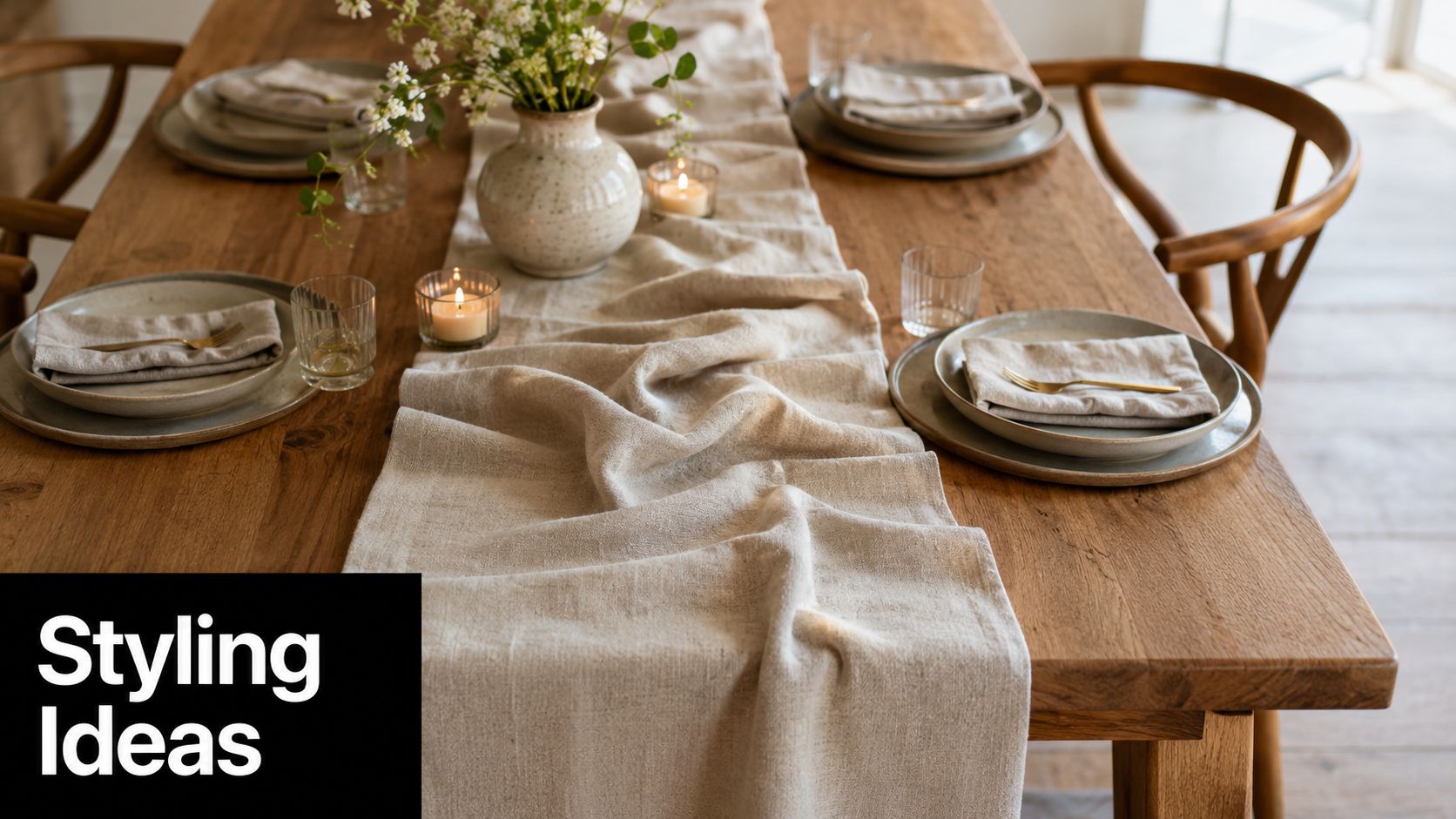
One of the strongest approaches for formal Cape events is layering. Put a plain base runner down first, usually in white, stone, sand or muted flax. Then place a narrower decorative runner over it. This gives you the personality of colour or print without letting it overpower the place settings.
Ways to style runners without cluttering the table
A few arrangements work repeatedly because they give structure.
- The centred layered look: Best for weddings and formal dinners. Use a wide neutral base, then add a slimmer accent runner.
- Cross-table placement: Instead of running the fabric down the full length, place short runners across the width of the table for paired place settings or tasting events.
- Soft gathered ends: Good for romantic styling, especially with cheesecloth or lighter cottons.
- Precise flat finish: Better for executive dining, award functions and brand events where every line should feel precise.
Colour discipline matters just as much as fabric. If the runner carries pattern, reduce visual noise elsewhere. Keep napkins plain. Use cleaner glassware. Let florals echo one or two tones from the print rather than trying to match every colour in it.
Bringing South African prints into formal events
Many beautiful ideas often fall short. Clients love the richness of local design, but the event still needs to read as elegant. That tension is real. Marketplace and social inspiration often celebrate South African table runners for “global flair”, while projected 2026 trend language also points to “personalised and illustrated” runners replacing “traditional white linens”. At the same time, there's very little practical advice on how Cape Town and Winelands planners should balance those vivid fabrics with luxury white linen in high-end settings (projected trend and market styling gap noted here).
The answer is restraint around the print, not restraint in the print itself.
Use a bold DSA African Vibes or TeiBL style runner as the statement, then keep the surrounding pieces disciplined:
- White or ivory tablecloths: They act as negative space and make the print look curated.
- Controlled florals: Choose flowers that repeat a single colour family from the runner.
- Natural chargers or clear glass: They don't compete with pattern.
- Black accents sparingly: Useful for evening events, especially if the print already has depth.
A local print looks luxurious when the rest of the table gives it room. It looks busy when every item tries to be noticed.
Candles also help settle a colourful table. If you want ideas on softer centrepiece lighting that won't compete with patterned textiles, this guide to ambient candle decor for home is a helpful visual reference for floating and floral combinations.
Should You Buy or Rent Your Table Runners
It's often assumed that buying table runners for sale is the practical option. Sometimes it is. If you host often, need a consistent house style, or want a custom printed runner for repeated branded use, ownership makes sense. For most one-off events, it usually creates more admin than value.
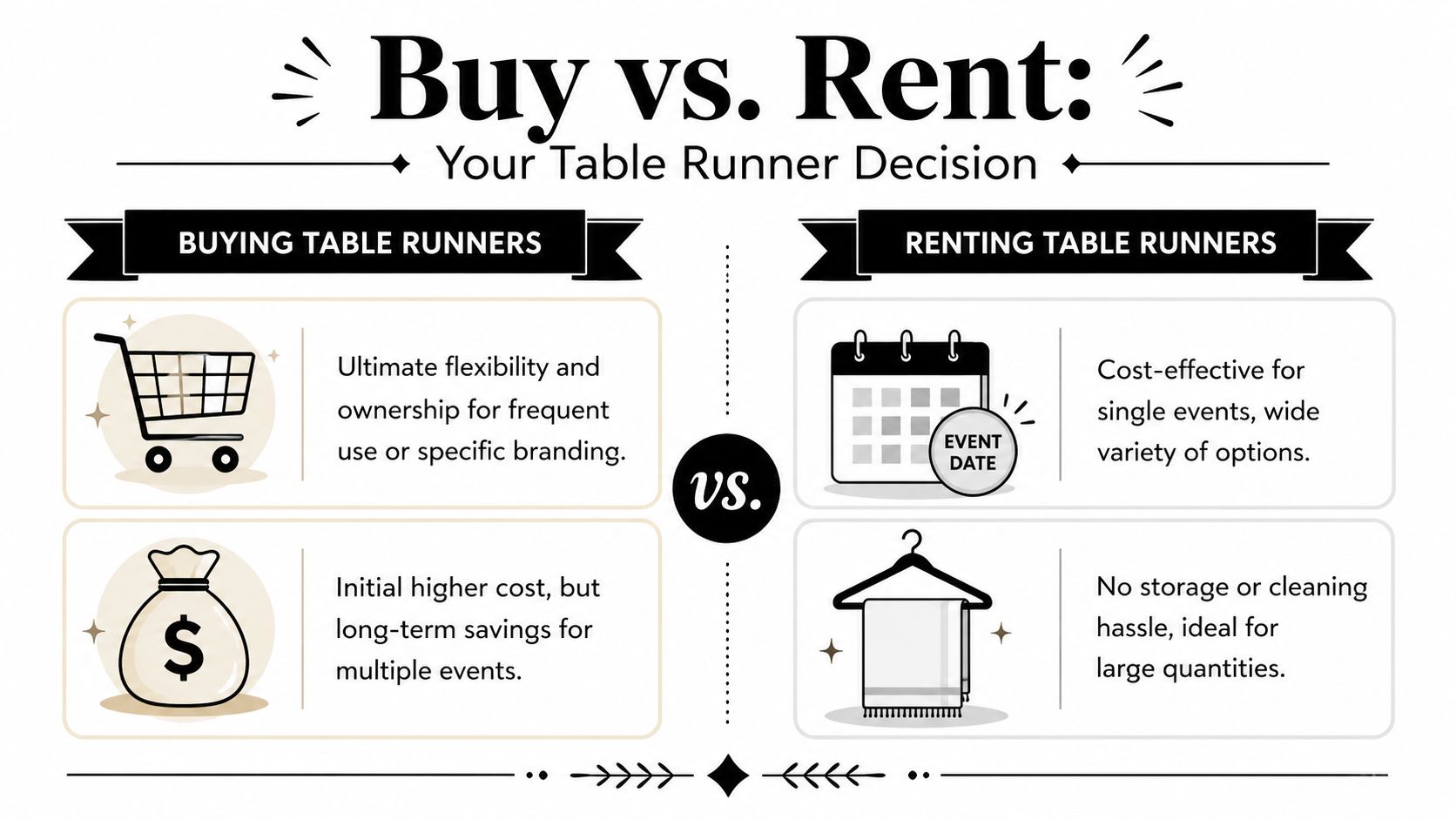
In Cape Town, Stellenbosch, Franschhoek and Paarl, event setups often involve transport, weather shifts, venue access windows and late-night breakdowns. Owning runners means you're also taking responsibility for storage, steaming, laundering and checking each piece after the event. That burden is easy to underestimate when you're comparing prices online.
When buying makes sense
Buying works best in a few clear cases.
- You need a specific print or branded finish: Especially for launches, activations or venue styling that repeats.
- You'll use them often: A planner, caterer or venue can justify ownership if the same look recurs.
- You want full control over sourcing: This matters when colour matching is strict.
The downside is that you carry the risk. If the shade is wrong, the fabric behaves badly, or the quantity falls short, there's no fallback built into the purchase.
Why renting is often the smarter event decision
For weddings, matric dances, milestone birthdays and company dinners, renting is usually the cleaner option. You choose the look for that event, use it once, then move on without a box of stained linen sitting in storage.
The budget issue is also more complicated than the purchase price suggests. Budget runners are available from R50, but planners still lack reliable information about cost-per-use and durability for hard-use events. That matters because renting a luxury runner for one night can avoid the purchase cost and the risk of a lower-cost item fading or failing when the room needs to look sharp (cost and durability concern for budget runners).
That point is especially relevant for school formals and large receptions. A cheap runner that arrives creased, slides around, or photographs poorly doesn't save money in any meaningful way.
Here's the practical comparison most clients should use:
| Decision factor | Buying | Renting |
|---|---|---|
| Custom branding or unique print | Strong option | Limited unless arranged specially |
| Single-use wedding or dinner | Often inefficient | Usually the easier choice |
| Storage after event | Your responsibility | Not your problem |
| Cleaning and pressing | Your responsibility | Usually handled by supplier |
| Large quantity consistency | Harder to manage alone | Easier if stock is available |
Decision shortcut: If the event matters more than future reuse, rent. If future reuse matters more than this one event, buy.
Setup Care and Post-Event Cleaning
Even a well-chosen runner can look disappointing if it arrives crushed or gets thrown onto the table five minutes before guests walk in. Setup discipline makes a visible difference.
Before guests arrive
Transport runners rolled or folded with as few hard creases as possible. Keep them clean and dry, especially if you're moving between locations or setting up outdoors. If the fabric creases easily, have a handheld steamer on site and use it before centrepieces go down.
On the table itself, smooth the runner by hand from the centre outward. Check alignment from the room entrance, not only from the side of the table. What looks straight during setup can read skew once chairs, candles and crockery are in place.
A quick setup routine helps:
- Lay base linen first: The runner should never be adjusting for a crooked cloth.
- Centre from both ends: Don't eyeball only one side.
- Secure when needed: Lightweight runners may shift on slick cloths or in breezy venues.
- Place decor after final adjustment: Moving heavy vases later often pulls the fabric out of line.
After the event ends
Cleaning is where purchased runners stop feeling romantic. Satin may show marks quickly. Linen often needs proper pressing. Heavier decorative fabrics need careful handling during pack-down so embellishments don't catch or crush.
The safest habit is to sort pieces immediately after collection. Keep damp or stained items separate. Don't leave used runners bunched in plastic bags overnight if you can avoid it. That's how marks set and mildew starts.
If you've bought your own runners, ask your supplier for care instructions before the event, not after it. Some fabrics tolerate normal laundering. Others need more careful treatment. If you skip that step, replacement costs can sneak up on you faster than the original order did.
The part many hosts appreciate only afterwards is this: rental removes almost all of that post-event labour. No washing. No steaming the next day. No finding cupboard space for thirty pieces of fabric you may never use again.
If you'd rather keep your focus on the event than on linen logistics, ABC Hire can help with stylish event rental solutions across Cape Town, Stellenbosch, Franschhoek and Paarl. Their range supports weddings, corporate functions, private celebrations and formal school events, making it easier to create a polished setup without the storage, cleaning and sourcing stress that comes with buying everything yourself.