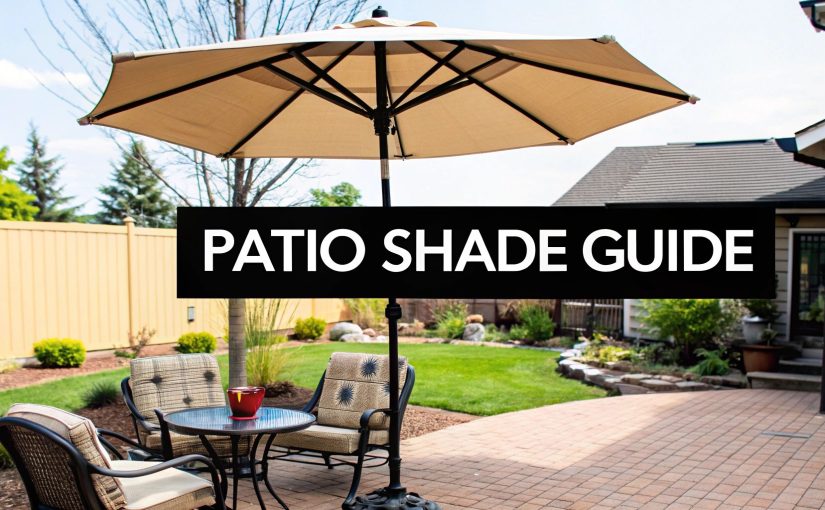
Your Guide to a Patio Umbrella with Stand

A patio umbrella with a stand isn't just a piece of outdoor furniture; it's the complete package you need for reliable shade and stability. This pairing is non-negotiable for safety and proper function, making sure your umbrella stays put when the wind picks up, all while creating a cool, comfortable retreat in your garden or on your balcony.

Finding Your Perfect Outdoor Shade Solution
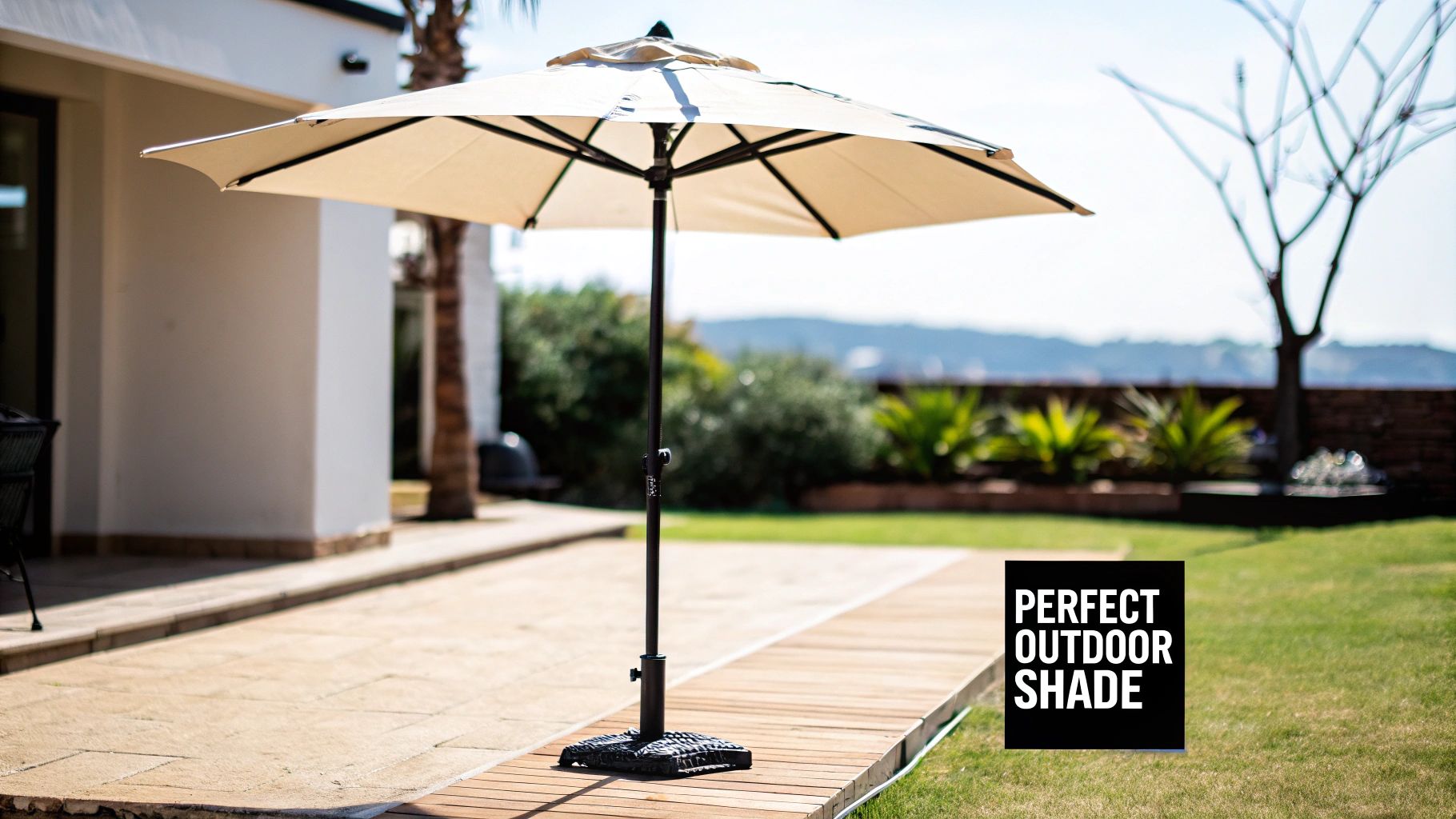
A large beige patio umbrella with a dark stand provides shade over a comfortable outdoor seating area.

Welcome to your ultimate guide for picking the right patio umbrella and stand. This is about more than just blocking out the sun—it's about adding a real centrepiece to your outdoor living space. An umbrella and its stand are a team; one simply can't work safely or effectively without the other.

Think of it this way: the umbrella’s canopy is like a ship's sail, and the stand is its anchor. A flimsy anchor leaves the ship at the mercy of the wind. In the same way, an underweight or poorly matched stand can turn your lovely shade-maker into a genuine hazard during a sudden gust. To avoid that drama, it’s vital to understand the key parts that work together to keep your space safe and looking great.

The Core Components You Need to Know

To make a smart choice, let’s get familiar with the basic anatomy of any patio umbrella with stand:

  • Canopy: This is the fabric part that gives you shade. Its size dictates how much coverage you get.
  • Ribs: These are the structural ‘bones’ that hold the canopy’s shape and let it open and close.
  • Pole: The main support shaft that connects the whole canopy assembly to the base.
  • Base (or Stand): This is the heavy-duty foundation that anchors the entire umbrella to the ground.

This blend of style and safety is a big deal for South African homeowners. In fact, the local patio umbrella market is seeing steady growth, with a projected annual increase of 5.6% from 2025 to 2031. This trend is all about people investing more in their outdoor areas, wanting both good looks and practical function.

Whether you're buying for your home or renting for an event, getting these basics right is key. For those planning a special occasion, checking out a guide on Cape Town umbrella hire can give you some great ideas on choosing the right gear for any venue.

Exploring Different Patio Umbrella Types
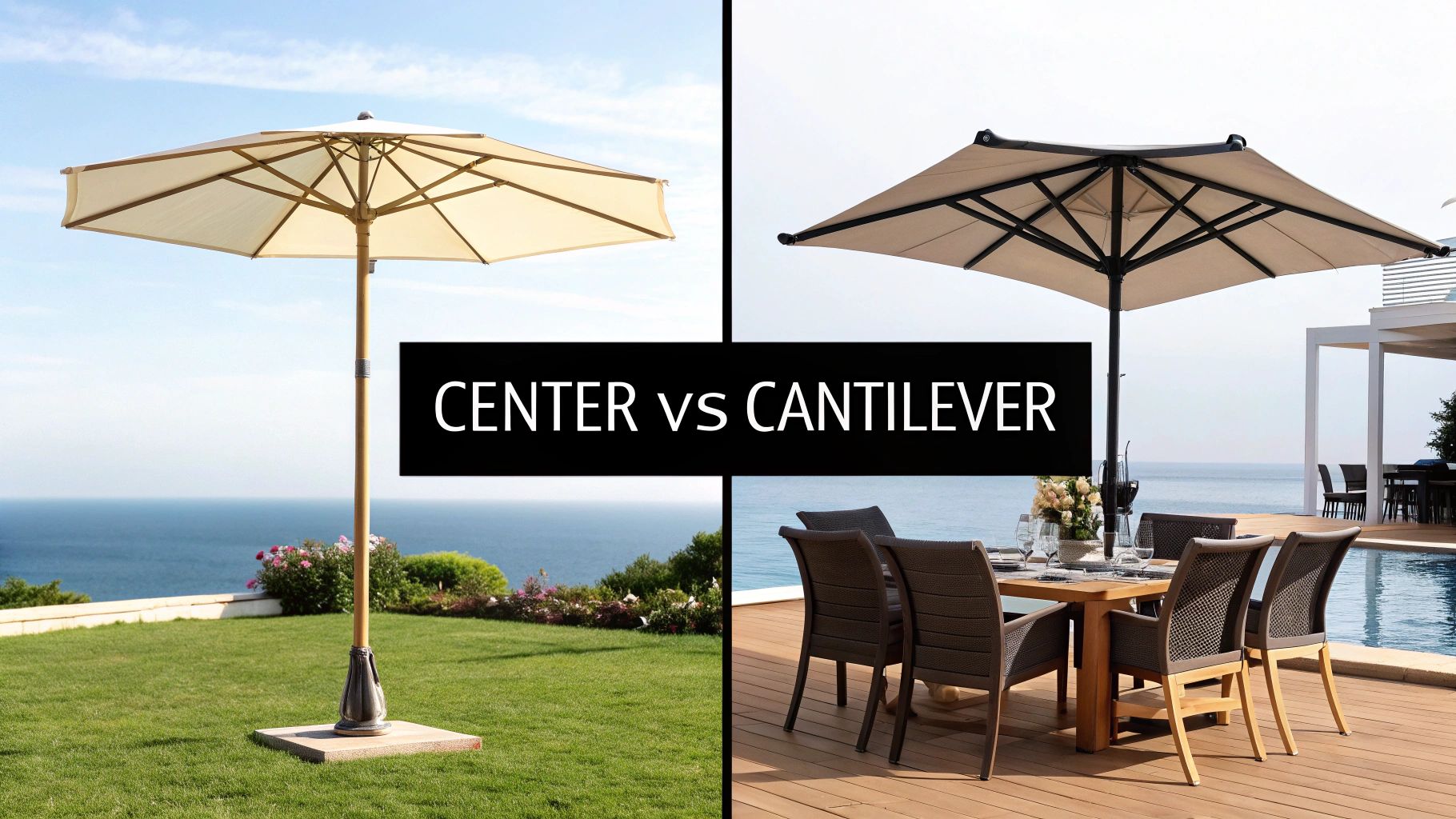
A large, beige cantilever patio umbrella shades an outdoor seating area by a pool.

Not all patio umbrellas are created equal. Choosing the right design can completely change the feel and function of your outdoor space, so it pays to know what you’re looking for.

The two main players you'll come across are the traditional centre-pole umbrella and the more modern cantilever (or offset) umbrella. Understanding how they differ is the first step to finding your perfect shade solution.

The centre-pole umbrella is that classic design everyone pictures. Its pole runs straight down from the middle of the canopy into a weighted base. This style is the perfect partner for a patio dining set, as it’s designed to slot neatly through the hole in the centre of a table.

This setup creates a wonderfully intimate and shaded environment for meals and long conversations. The table itself even adds extra stability to the patio umbrella with stand, making it a secure and hugely popular choice for dedicated dining zones.

The Versatile Cantilever Umbrella

On the other hand, the cantilever umbrella takes a completely different approach. Its pole is positioned off to the side, with a supportive arm arching out to suspend the canopy over your desired area.

This clever design is a real game-changer for spaces where a central pole would just get in the way. Think poolside lounge chairs, comfy outdoor sofa sets, or even a kids' play area. The cantilever provides a wide, uninterrupted patch of shade, giving you maximum flexibility and an open, uncluttered feel. Because they are freestanding and cover a much larger area, you can discover more about these large outdoor umbrellas to see if they’re the right fit for your event or home.

A good way to think about it is this: a centre-pole umbrella defines a specific zone (like a dining spot), while a cantilever umbrella liberates the space beneath it, allowing for more dynamic furniture arrangements.

Advanced Features for All-Day Shade

Beyond the basic design, many modern umbrellas come with nifty features that give you greater control over your shade as the sun moves across the sky. These functions are crucial for staying comfortable from morning till evening.

Here are a few key features to look for:

  • Tilt Mechanism: This lets you angle the canopy to block that low-hanging morning or afternoon sun. It’s usually operated with a simple push-button or a crank handle.
  • 360-Degree Rotation: Found mostly on cantilever models, this feature lets you swing the entire canopy around its base. It's incredibly useful for shading different parts of a large patio without having to move the heavy stand.

Imagine this: with a rotating cantilever umbrella, you could shade your lounge chairs in the morning and then, with a simple push, swing it over to cover the kids' paddling pool in the afternoon. These adjustable features ensure your patio umbrella with stand is a practical and highly functional investment for any outdoor setting.

Choosing Materials Built to Last

Think of a quality patio umbrella with a stand as an investment in your outdoor comfort. How long that investment lasts comes down almost entirely to the materials it's made from. The canopy and frame are its armour, and picking the right combo is key to making sure it can handle the harsh sun, surprise downpours, and general wear and tear for years.

The canopy is your first line of defence against the elements. Its main jobs are to throw shade, fight off fading, and keep the rain out. When you start comparing fabrics, you'll generally find three main options, each with its own pros and cons.

Understanding Canopy Fabrics

Different fabrics give you different levels of durability and performance. Getting this choice right is crucial if you want your umbrella to look good and work well season after season.

  • Polyester: This is a very common and wallet-friendly choice. It’s naturally good at resisting stretching and shrinking, but its colour can fade faster than the more premium fabrics unless it’s treated with a top-notch UV-resistant coating.
  • Olefin: A brilliant mid-range option. Olefin is a synthetic fabric known for being tough against stains, mildew, and general abrasion. It also holds its colour really well, making it a durable choice that offers fantastic value.
  • Acrylic: Often seen as the gold standard for outdoor fabrics, solution-dyed acrylics are incredibly resistant to fading and sun damage. The colour is literally part of the fibres, not just a surface dye, so it won’t wash out or get bleached by the sun.

When you see a UPF (Ultraviolet Protection Factor) rating on a canopy, it's telling you how much UV radiation the fabric blocks. A UPF of 50+, for instance, means the fabric stops over 98% of the sun's harmful rays – that’s excellent protection for your skin.

Selecting the Right Frame and Pole

Just as crucial as the canopy is the frame holding it all up. The pole and ribs give your patio umbrella with stand its structural backbone. The material you go for will determine its strength, weight, and how much looking after it’s going to need.

Aluminium is a top pick for a good reason. It’s light but strong and won't rust, making it a superb, low-maintenance option, especially for coastal or humid areas. Many aluminium poles also get a powder-coated finish for extra toughness and a splash of colour.

Steel frames offer serious strength and are a great shout for really large or commercial-grade umbrellas that need to handle a lot of stress. The catch is that steel is heavier and can rust if its protective coating gets scratched or chipped, so you need to keep a closer eye on it.

Lastly, there are wood frames, often made from teak or eucalyptus. These have a timeless, classic look that fits beautifully into natural garden settings. While they look stunning, wood does need more upkeep, like an occasional sealing, to protect it from moisture and stop it from weathering to that silvery-grey colour over time. It’s all about balancing the look you love with the maintenance you’re prepared to do.

Getting the Size and Base Weight Right

Choosing the right size for your patio umbrella and its stand is where function and safety truly connect. An umbrella that’s too small for your table offers patchy, ineffective shade. Even worse, a base that’s too light is a genuine hazard, ready to tip over or take flight in a sudden gust of wind.

It’s a bit like picking the right tyres for a bakkie. You wouldn't put tiny, thin tyres on a heavy-duty vehicle; it would be completely unstable and unsafe. In the same way, your patio umbrella with stand needs a perfectly matched duo to stay put and provide great coverage.

Matching Umbrella Size to Your Space

A simple rule of thumb can help you figure out what canopy size you need. For proper shade, the umbrella should extend about 60 centimetres beyond the edges of your table or seating area on all sides.

  • For a small bistro set (2-4 people): A canopy with a 2 to 2.5-metre diameter is usually just right.
  • For a standard 6-person dining table: You’ll want to look for something around 2.7 to 3.3 metres wide.
  • For larger lounge areas: A canopy of 3.5 metres or more will be necessary to shade the whole seating arrangement.

Getting the shade right is a huge part of creating a comfortable outdoor space. If you're planning a complete patio makeover, our guide to choosing outdoor lounge sets can help you pull the whole look together.

The Critical Role of Base Weight

Once you’ve settled on a canopy size, you can work out the minimum weight for its stand. And this isn't just a suggestion—it's a critical safety measure. The weight you need changes drastically depending on one key factor: whether the umbrella will stand alone or be supported by a table.

A freestanding umbrella acts like a massive sail, catching every bit of wind. It needs a much heavier base to counteract that force. An umbrella placed through a sturdy patio table, however, gets a lot of extra stability from the table itself, so the base doesn’t have to work quite as hard.

Using a base that’s too light for a freestanding setup is one of the most common—and dangerous—mistakes people make. It’s an accident waiting to happen.

To make it simple, we've put together this guide to help you choose a safe and secure patio umbrella with stand.

Recommended Umbrella Base Weight Guide

This table provides a clear breakdown of the minimum base weight you'll need, depending on both the size of the canopy and whether it's going through a table or standing on its own.

Canopy Diameter (Metres) Minimum Base Weight (Through Table) Minimum Base Weight (Freestanding)
2.0 m 15 kg 25 kg
2.7 m 20 kg 40 kg
3.3 m 25 kg 55 kg
4.0 m 35 kg 70 kg+

Remember to always check the manufacturer's recommendations, as these are just the minimums. If you live in a particularly windy area, it's always smart to go heavier than recommended just to be on the safe side. Taking this simple step ensures your beautiful new shade solution remains a source of comfort, not a cause for concern.

How to Assemble and Care for Your Umbrella

A good patio umbrella is an investment in your outdoor comfort, and like any investment, it pays to look after it. That all starts with getting the assembly right from day one and follows through with some simple, routine care. A proper setup isn't just about stability; it's about making sure every part works as it should without unnecessary strain.

Putting it together is usually a breeze. First things first, place your weighted base exactly where you want the umbrella to live. Once you're happy with the spot, slide the bottom half of the umbrella pole into the base. You'll notice a hand-turn knob or screw on the stand—tighten it firmly against the pole until there’s no wobble at all. This connection is the key to keeping everything steady.

Setting Up and Opening the Canopy

With the pole secure, attach the top section of the umbrella if it's a two-part pole. Before you eagerly crank it open, take a second to make sure the canopy fabric isn't snagged on any of the metal ribs. Gently pull it free, then use the crank or push mechanism to slowly open it up to its full, glorious span. A little bit of patience here can save you from a torn canopy or a bent rib.

Speaking of a secure setup, the base weight is non-negotiable. As this chart shows, there's a huge difference between what you need for a freestanding umbrella versus one supported by a table.
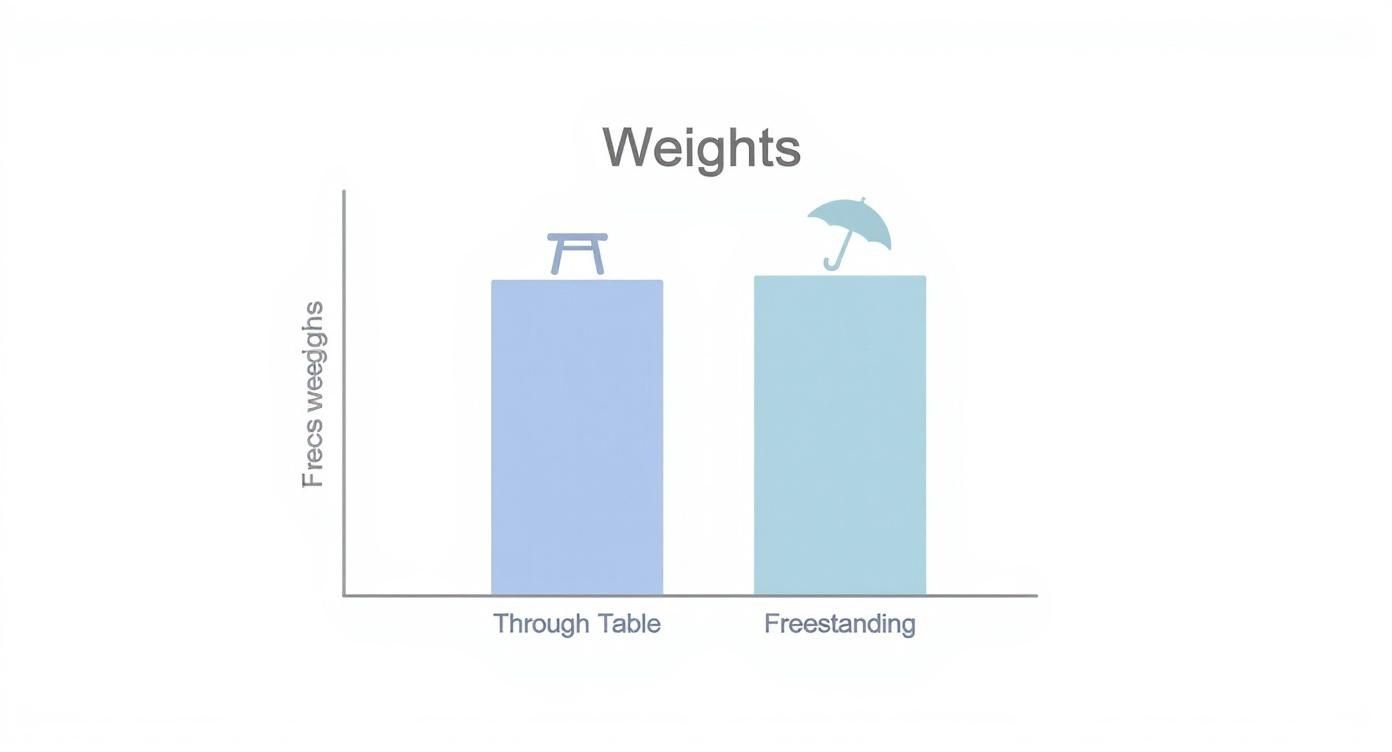
Infographic about patio umbrella with stand

It’s pretty clear: a freestanding umbrella needs a much, much heavier base to stay put. It doesn't have the extra stability that a patio table provides, so the base has to do all the heavy lifting.

Long-Term Maintenance and Care

To keep your patio umbrella with stand looking fantastic for years to come, a little bit of maintenance goes a long way. This isn't complicated stuff—just a few simple habits will fend off common problems like mildew, rust, and sun-faded fabric, making sure your umbrella is ready for action every season.

Stick to this simple checklist for lasting performance:

  • Clean the Canopy Regularly: Grab a soft brush, some mild soap, and lukewarm water to gently scrub off any dirt, dust, or pollen. This stops stains from setting in and prevents mildew from getting a foothold, especially in damp weather.
  • Inspect the Frame: Every so often, give the moving parts a quick once-over. Check the crank, the tilt mechanism, and any locking pins. Tighten up any loose screws and keep an eye out for rust on steel frames. If you spot a scratch, a quick touch-up with rust-resistant paint will do the trick.
  • Store It Smartly: When the off-season rolls around or a big storm is on the way, always close the umbrella and use its tie to secure it. For longer-term storage, a protective cover is your best friend. It’ll guard against moisture, pests, and sun damage.

A well-maintained umbrella doesn’t just look better; it lasts significantly longer. A few minutes of care each month can easily add several seasons to its life, turning a good purchase into a great one.

Got Questions? We've Got Answers

Even after covering all the bases, there are always a few lingering questions people have before picking out the perfect patio umbrella. It's totally normal. Getting these last few things cleared up will give you the confidence to make the right choice—one that’s safe, looks great, and is ready for our South African sun.

Let’s tackle some of the most common questions we get from homeowners and event planners.

How Much Wind Can a Patio Umbrella Really Take?

This is probably the most important question of all, and the honest answer is: it depends. The quality of the umbrella and, crucially, the weight of its base are everything. A good quality, well-anchored patio umbrella can usually handle winds up to 30-40 kilometres per hour. But that's not a guarantee.

Think about cantilever umbrellas—with those huge, offset canopies, they act like a ship's sail, catching every bit of wind. That's why it's always smart to close any umbrella when the wind starts to really kick up. You should never, ever leave an umbrella open and unattended, especially when a storm is brewing. A heavy-duty frame and a properly weighted stand are your first line of defence, but your best safety tool is plain old common sense.

Here's the golden rule we live by: When in doubt, close it. It takes literally seconds to lower the canopy, but it could save you the headache of a broken umbrella or, worse, a flying projectile causing damage.

What’s the Best Way to Clean the Canopy?

Keeping the umbrella fabric clean isn’t just about looks; it helps stop mildew from setting in and prevents the material from breaking down too soon. The good news is, it's a simple job that doesn't need any harsh chemicals.

For a quick clean, just follow these steps:

  1. Brush Off Loose Dirt: Grab a soft-bristled brush and gently sweep off any dust, dried leaves, or spiderwebs.
  2. Mix Up a Mild Soap Solution: A little bit of mild soap (like a gentle laundry detergent) in some lukewarm water is all you need. Steer clear of harsh detergents or bleach—they can strip the fabric's protective coating.
  3. Scrub and Rinse: Use your soft brush and soapy water to clean the canopy in sections. When you're done, give it a good rinse with a hose to get all the soap off.
  4. Let It Air Dry Completely: This part is key. Leave the umbrella open in the sun until it's totally dry. This stops mould and mildew from getting a foothold.

Doing this once or twice a season will keep your patio umbrella with stand looking as good as new.

Can I Just Leave My Umbrella Outside All Year?

Look, high-quality outdoor umbrellas are built tough, but leaving them out in the elements 24/7, all year round, will definitely shorten their lifespan. Sun, rain, and changing temperatures will eventually wear down even the best materials.

During the seasons you're using it a lot, getting into the habit of using a protective cover overnight or during rainy patches is a game-changer. It shields the canopy from UV damage and keeps it clean.

When the colder months roll in and you’re not spending as much time outside, we strongly suggest storing your umbrella. If you can, pop it in a dry, sheltered spot like a garage or a shed. This protects it from the worst of the winter weather and makes sure it’s ready to go when the sun comes back out. A little bit of off-season care makes a huge difference.


Ready to create the perfect shaded oasis for your next event? At ABC Hire, we provide a wide range of high-quality patio umbrellas and stands to ensure your guests stay cool and comfortable. Explore our event rental options at https://abchire.co.za and let us help you make your gathering a success.
Your Guide to Outdoor Lounge Sets in South Africa

Picture this: your patio, transformed from a simple patch of paving into a chic, comfortable retreat. It’s the perfect spot for your morning coffee or for hosting friends on a lazy afternoon. Outdoor lounge sets are the key to making this happen. They’re not just furniture; they’re the building blocks for extending your living space right into your garden, giving you a cohesive and stylish area to enjoy for years.

Designing Your Ultimate Outdoor Oasis

Turning a garden or patio into a genuine outdoor living room is about more than just buying a few chairs. It’s a design process, and the lounge set you choose is the centrepiece that pulls it all together. A well-chosen set can take an overlooked corner of your property and make it the most inviting spot in your home. Let’s walk through how to create an outdoor space that’s a true reflection of your style and fits how you live.

First things first, take a good look at your space. Do you have a sprawling deck by the pool, or are you working with a cosy urban balcony? Understanding the layout, how much sun it gets, and what you actually want to do there is the starting point for everything.

Before you even think about styles, consider these practical points:

  • Function Over Form: What’s the primary use? Is it your quiet reading nook, the spot for big family braais, or where you’ll be serving sundowners?
  • Get the Scale Right: Whip out the measuring tape. You need to ensure the set fits comfortably, leaving plenty of room to walk around. There’s nothing worse than furniture that completely overwhelms a space.
  • Create Harmony: Your outdoor area should feel like a natural extension of your home. The furniture’s style should complement your home’s architecture and your interior décor to create a seamless flow.

This infographic gives you a great visual idea of how the right lounge set can anchor your perfect outdoor sanctuary.

Infographic about outdoor lounge sets

As you can see, clever arrangement and a minimalist approach can create an incredibly relaxing and stylish atmosphere. This isn’t just a design trend; it’s part of a bigger shift we’re seeing all over South Africa towards embracing outdoor living.

More and more, people want to maximise their living space, and that means a growing demand for durable, weather-resistant, and good-looking lounge furniture. This growth is really fuelled by increasing urbanisation and our collective desire for comfortable, stylish outdoor living. If you’re interested, you can learn more about the outdoor furniture market in South Africa and its impressive growth.

Choosing Materials That Survive the SA Climate

In South Africa, our intense sun and often unpredictable weather can be really tough on furniture. When you’re picking out outdoor lounge sets, choosing the right material is about more than just a look that catches your eye; it’s about making a smart investment that will last.

The material you go for will dictate how much care it needs and how well it will hold up, whether you’re dealing with the humid, salty air in Durban or the dry Highveld sun. A wrong move here can mean faded colours, rust stains on your patio, or even furniture that falls apart after just one or two seasons. You’ve got to match the material to your home’s specific climate.

Let’s get into what really works out there.

Metal Frames for Durability

Metal is a brilliant choice if you’re going for a modern vibe. It’s strong, sleek, and holds its shape well. But not all metals are up to the challenge, especially when faced with coastal breezes or Highveld thunderstorms.

Powder-coated aluminium is pretty much the champion for South African conditions. For starters, it’s lightweight, so moving your setup around for a braai is no big deal. More importantly, it’s naturally rustproof. The powder-coating finish is the real hero, though, adding a tough layer of protection against scratches and UV damage, so the colour stays looking fresh.

Here’s a key tip: The finish on the metal is just as crucial as the metal itself. A quick paint job will just chip and peel, but a proper powder coat actually bonds to the metal, giving it far better resistance to the elements.

The Timeless Appeal of Wood

There’s something about wood that just brings a natural warmth and classic feel to an outdoor space. How well it performs, though, comes down entirely to the type of timber you choose. Cheaper softwoods might seem like a good deal, but they just don’t have what it takes to survive outdoors for long.

Teak is the gold standard for a reason. It’s packed with natural oils that make it incredibly resistant to water, rot, and pesky insects. It does need a bit of upkeep to maintain that lovely honey-brown colour, but many people actually prefer the distinguished, silvery-grey look it gets when you let it age naturally. If you’re weighing up different timber styles, our guide on the benefits of wooden furniture for events offers some great insights.

Modern Synthetics That Last

If you want stylish furniture without the fuss, modern synthetics are a fantastic way to go. These materials are literally engineered to handle the great outdoors.

A real standout is high-density polyethylene (HDPE) wicker, which you’ll often see called “all-weather wicker.” Unlike natural rattan that breaks down fast when left outside, HDPE is built to resist UV rays, moisture, and cracking. It gives you that classic, comfy wicker look but with far greater longevity and barely any maintenance required.

To make things a bit clearer, we’ve put together a quick comparison of the top materials for outdoor lounge sets in South Africa.

Outdoor Lounge Set Material Comparison

Material Pros Cons Best For
Powder-Coated Aluminium Lightweight, rust-proof, low maintenance, modern look. Can get hot in direct sun, lighter pieces can be moved by strong winds. Coastal and inland areas; anyone wanting a sleek, contemporary style.
Teak Extremely durable, naturally weather-resistant, beautiful ageing process. Requires occasional oiling to maintain colour, higher initial cost. Creating a classic, natural aesthetic that works in any climate.
HDPE Wicker Very low maintenance, UV-resistant, comfortable, versatile style. Quality can vary greatly between brands, not a natural material. Those wanting a low-fuss, comfortable setup that mimics a classic look.

Choosing the right material is all about balancing the climate you live in, your personal style, and how much time you’re willing to spend on upkeep. A smart choice means your outdoor lounge will be the go-to spot for relaxing and entertaining for many years to come.

Styling Your Outdoor Lounge for Maximum Impact

An outdoor lounge set gives you the bones of a great patio space, but it’s the styling that really brings it to life and makes it an inviting retreat. Getting the accessories and details right is what turns a simple patio into a seamless extension of your home—a spot you’ll want to use from sunrise to sunset.

Think of an outdoor rug as the foundation of your entire setup. It does more than just add a splash of colour; it defines the lounge zone, separating it from the rest of the garden or patio. A good outdoor rug, usually made from tough polypropylene, anchors the furniture and adds a crucial layer of texture, making the whole area feel more like a proper room.

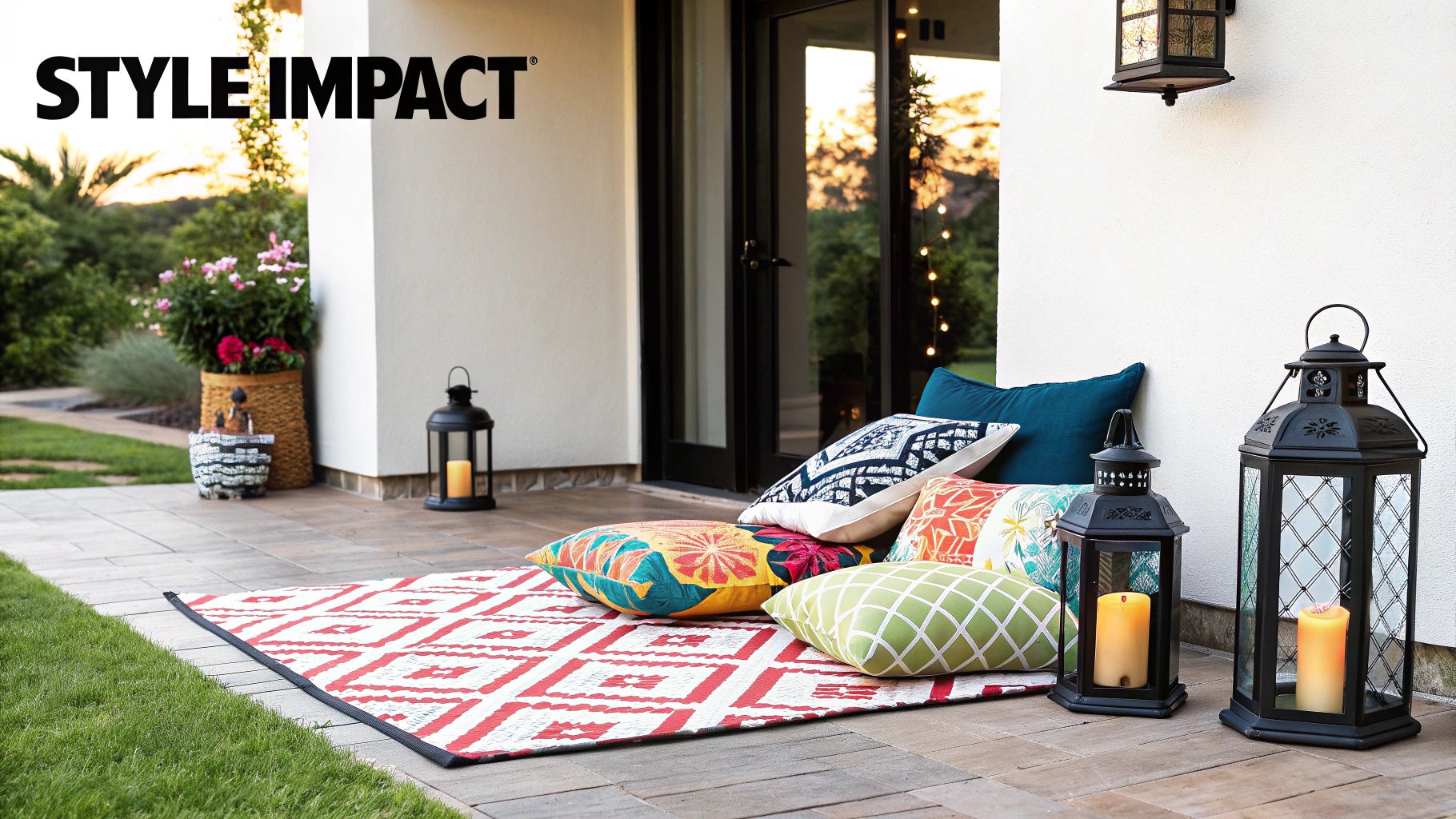
A stylishly decorated outdoor lounge set with cushions, a rug, and ambient lighting.

Adding Personality with Textiles and Lighting

Once your rug is down, it’s time to layer in comfort and colour. Weather-resistant cushions and throws are your best friend here—this is where you can really inject some personality into your outdoor lounge sets. Don’t be shy about mixing patterns and textures to create a bit of visual buzz.

For a chilled-out boho vibe, try combining earthy tones with geometric prints. If you’re after a more modern look, stick to a monochrome palette with a single, bold pop of colour.

When evening rolls around, lighting becomes everything. The right lighting design can make your outdoor lounge feel absolutely magical and keeps the space usable long after the sun goes down.

A classic mistake is to just have one harsh overhead light. Layering your light sources is the key to creating depth and warmth. It’s what makes a space feel intimate and professionally designed, not like a stadium.

Try combining a few of these for a layered effect:

  • Ambient Lighting: Solar-powered lanterns or string lights draped across a pergola give off a soft, all-over glow.
  • Task Lighting: A stylish, portable outdoor lamp on a side table is perfect if you fancy reading outside.
  • Accent Lighting: Use small uplighters to highlight a beautiful feature plant or interesting architectural details around your lounge area.

For a truly enchanting look, a beautiful fairy light curtain can create a sparkling backdrop for your seating area. This is a brilliant way to define the space and add a touch of elegance for evening get-togethers.

Finishing Touches and Style Examples

The final details are what pull the whole look together. Accessorising with things that are both functional and decorative is how you make the space feel curated and personal.

Bring in some greenery at different heights using a mix of planters. Large pots with architectural plants can frame the lounge area nicely, while smaller pots on side tables add a more delicate touch. And speaking of side tables, they’re not just for drinks—they’re the perfect spot to display candles or small sculptures.

Need some inspiration? Here are two popular styles to get you started:

  1. Modern Minimalist: Go for a sleek, low-profile lounge set in grey or black. Keep accessories simple with solid-coloured cushions in charcoal and white, a clean geometric rug, and a few large, structural plants in concrete planters.
  2. Relaxed Boho: Start with a lounge set made from teak or all-weather wicker. Then, layer it up with cushions in warm, earthy colours like terracotta and mustard, add a textured jute-style rug, and finish it off with string lights and macramé plant holders.

By putting a bit of thought into these elements, your outdoor lounge set becomes so much more than just furniture—it becomes the heart of a stylish and functional outdoor escape.

Smart Strategies for Buying Furniture Online

Gone are the days when you needed a friend with a bakkie just to get a new sofa home. Buying bulky items like outdoor lounge sets online has become surprisingly simple, putting a massive selection right at your fingertips. Still, clicking “add to cart” on such a big purchase needs a bit of smart planning to make sure you get it right.

This move to online shopping isn’t just a passing phase. In fact, the eCommerce part of South Africa’s outdoor furniture market is expected to pull in US$14.83 million in revenue in 2025. It’s a clear sign that people are getting more and more comfortable buying their patio furniture from a website. If you’re interested, you can explore more insights into the South African eCommerce furniture market to see just how big this shift is.

Of course, the biggest challenge with online shopping is that you can’t see or touch the product. That’s why careful research is your best friend here.

Mastering the Art of Measurement

The number one mistake people make when buying furniture online? Getting the scale completely wrong. That lounge set that looks perfect in a professionally shot photo can either swallow your patio whole or look comically tiny once it arrives.

First things first: measure your space properly. Then, grab some masking tape and outline the dimensions of the lounge set you’re eyeing right there on the ground. This little trick is a total game-changer. It helps you truly visualise how much floor space the set will take up and, more importantly, how much room you’ll have to walk around it.

Always double-check the product dimensions listed online against your own measurements. Pay close attention to the height, width, and depth. A sofa’s height, for example, can completely change your view or make a space feel more or less open.

Checking Out Retailers and Reading Reviews

Once you’ve got your measurements sorted, it’s time to shift your focus to the online retailer themselves. Not all online shops are created equal, so a little bit of homework now can save you a lot of headaches later.

Here’s a quick checklist of what to look for before you buy:

  • A Physical Address and Contact Number: A real business makes it easy for you to get in touch. Look for clear contact details on their website.
  • Detailed Return Policies: What happens if the set shows up damaged or just isn’t what you expected? A clear, fair return policy is an absolute must.
  • Warranty Information: Good quality outdoor furniture should come with a warranty. Make sure you understand what it covers—like the frame or the fabric—and for how long.

But don’t just take the retailer’s word for it. This is where genuine customer reviews come in. They offer the kind of real-world feedback you just can’t get from a product description. Don’t just glance at the star rating; dive into the comments. Look for reviews that talk about the quality of the materials, how accurate the online photos are, and what the customer’s experience was with delivery and assembly.

These firsthand accounts are gold. By combining careful measurement with solid research, you can buy your dream outdoor lounge set online with total confidence.

Renting Lounge Sets for Unforgettable Events

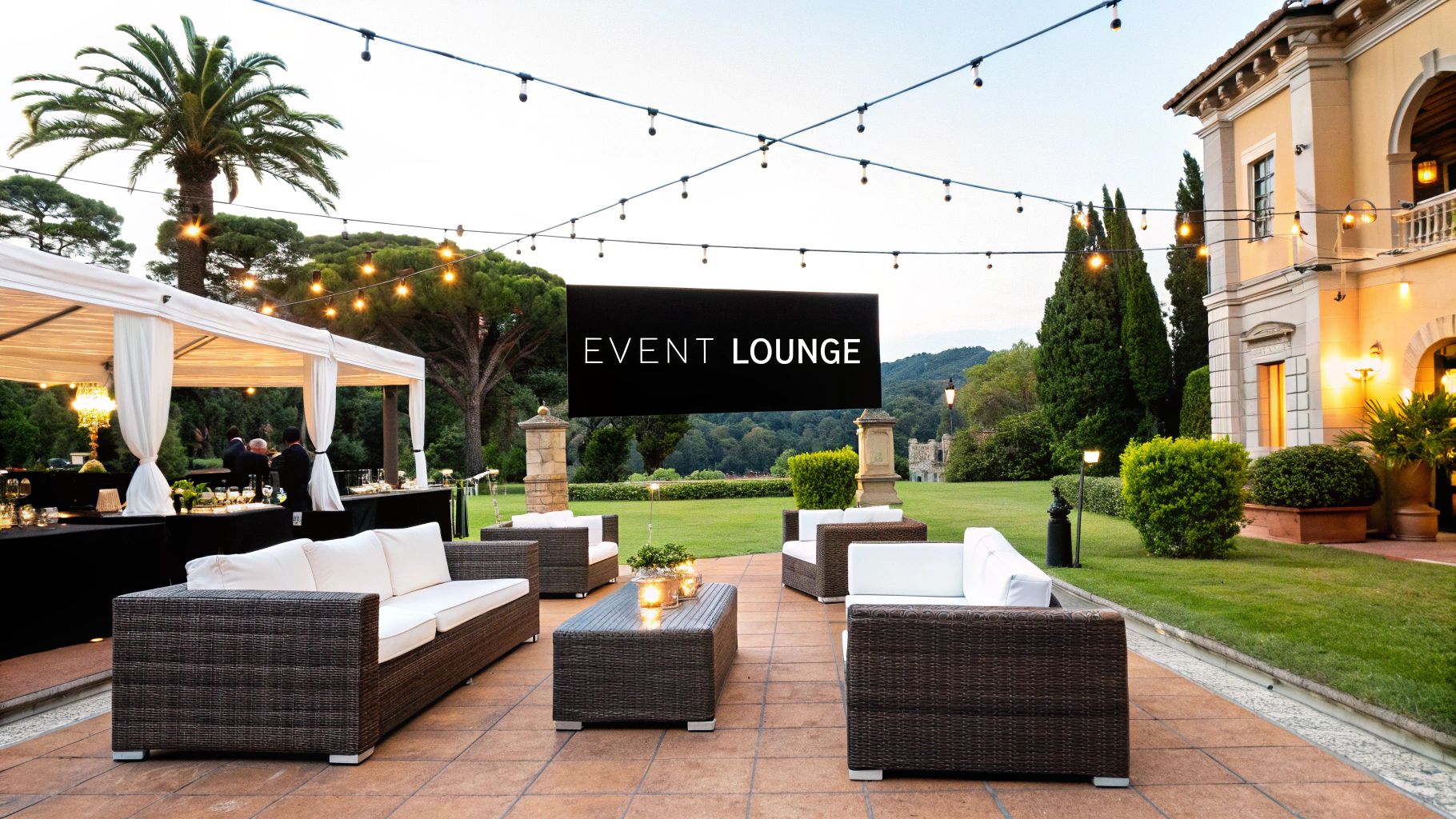
An elegant outdoor event with rented lounge sets arranged for guest comfort.

Whether you’re planning a wedding, a corporate launch, or a big birthday bash, creating an atmosphere that feels both comfortable and stylish is everything. Renting outdoor lounge sets is one of the smartest ways to instantly elevate your event. It gives your guests a chic space to relax, mingle, and properly soak in the occasion. This simple move takes you way beyond the standard setup of tables and chairs, crafting a sophisticated experience people will actually remember.

Instead of a cookie-cutter layout, renting gives you the freedom to design an environment that perfectly matches your theme and guest list. A few well-placed lounge pieces can transform any open space into a series of inviting social hubs.

Planning Your Perfect Event Layout

First things first, you need to match the furniture to your vision. What’s the mood you’re going for? A sleek, modern cocktail party will have a totally different feel to a relaxed, bohemian garden gathering. The style of the lounge sets you hire will do a lot of the heavy lifting in setting that tone.

For a contemporary vibe, think about modular sofas in crisp, neutral colours. If you’re after something more casual and rustic, you can’t go wrong with wicker or rattan sets piled high with plush cushions.

Next up, do the maths. A good rule of thumb is to have enough relaxed seating for about 25-30% of your guests at any one time. Not everyone will be sitting down at once, but you definitely want enough comfortable spots for those who need a break from the dance floor or just want to chat.

To break up the space and get people talking, play around with different configurations:

  • Conversation Pits: The classic setup. Arrange two sofas facing each other with a coffee table in the middle. It’s a perfect little nook for encouraging small group chats.
  • Cocktail Corners: Try combining a few stylish armchairs with a cluster of small side tables. This is great for guests who want to put their drinks down and socialise more freely.
  • Relaxation Zones: If you have the space, place a large sectional sofa slightly away from the main hustle and bustle. It offers a quieter retreat for guests who want a moment of calm.

Vetting Your Rental Company

Choosing the right rental partner is just as crucial as picking the perfect furniture. A reliable company makes the entire process smooth and stress-free, while a bad one can cause headaches you just don’t need. Before you sign on the dotted line, it’s vital to ask the right questions.

Don’t just look at the price per item. The real cost includes delivery, setup, and collection fees. Always ask for a fully itemised quote so you know exactly what you’re paying for.

Make sure you get clear answers on these key points from any potential supplier:

  1. Delivery and Collection Logistics: When exactly will they drop off and pick up? Does their service include setting up and arranging the furniture, or will their team just leave it stacked for you to handle?
  2. Weather Contingency Plan: This is South Africa—the weather can turn in an instant! What’s their policy for rain? Can the furniture handle a light shower, and what happens if the event has to be moved or cancelled?
  3. Damage Policy: Accidents happen. You need to understand their policy on normal wear and tear versus actual damage. Find out what the costs are for things like spills, stains, or breakages.

Getting these details sorted will give you massive peace of mind. For a deeper dive, our guide on what you need to know about renting furniture for events has a super helpful checklist. By planning ahead and working with a professional company, you can use outdoor lounge sets to create a genuinely unforgettable atmosphere for your guests.

Got Questions About Outdoor Lounge Sets?

Thinking about getting an outdoor lounge set is exciting, but it’s smart to have a few questions. From dealing with our unpredictable South African weather to making sure you get the most out of your furniture, getting the right answers upfront makes all the difference. We’ve pulled together the most common questions we get asked to help you feel confident about your choice.

This is your go-to guide for handling maintenance, planning your space, and protecting your investment so you can enjoy your patio furniture for years to come.

How Do I Protect My Outdoor Lounge Set During Winter?

Making sure your lounge set survives the off-season is key to its longevity, especially with our mixed climate. For materials like aluminium or synthetic wicker, good quality, weather-resistant covers are your best bet. Look for one that’s breathable – a cover that traps moisture is a recipe for mould and mildew.

If you have wooden furniture, it’s a good idea to apply a seasonal sealant or oil before you cover it up for winter. This adds an extra layer of protection against moisture that can cause wood to warp or rot.

No matter what the frame is made of, always bring your cushions and textiles inside. Storing them in a dry spot like a garage or a storage chest will keep them free from mildew and pests, ready for the next sunny season. If you have the space, moving the entire frame indoors is the ultimate protection.

What Is the Best Way to Clean Outdoor Furniture?

How you clean your outdoor lounge sets really depends on the material – you don’t want to cause any accidental damage. For most metal and synthetic wicker frames, a simple mix of mild soap and warm water with a soft brush does the job perfectly. Steer clear of harsh chemical cleaners or high-pressure washers, as they can easily strip off protective finishes and harm the material.

When it’s time to clean wood, always grab a cleaner made specifically for outdoor timber. This helps preserve its natural oils and finish.

Cleaning fabrics is usually pretty straightforward:

  • Removable Covers: Most cushion covers can be unzipped and popped into the washing machine on a cool, gentle cycle.
  • Spot Cleaning: For spills or non-removable covers, a good fabric spot cleaner will work wonders.
  • Drying is Key: This is a big one. Always let every part—the frame and the cushions—dry completely in the sun before putting it all back together.

How Much Space Do I Really Need for a Lounge Set?

One of the easiest mistakes to make is underestimating just how much room an outdoor lounge set takes up. It’s not just about the footprint of the furniture itself; you need to leave enough space for people to walk around it comfortably.

A good rule of thumb is to leave at least 75cm of clear walkway space around the main seating area. This keeps the space from feeling cramped and makes it much more functional. Also, think about the layout. A modular L-shaped sofa can be a fantastic space-saver when tucked into a corner, whereas a traditional 4-piece set gives you a bit more freedom to play with the arrangement.

Here’s a pro tip: before you buy anything, use masking tape on your patio or deck to mark out the dimensions of the set you’re considering. It’s a simple trick that helps you really visualise the scale and see how it will affect the flow of your outdoor area, saving you from any surprises after it’s delivered.


Ready to create a stunning, comfortable atmosphere for your next celebration? At ABC Hire, we provide a wide range of stylish and high-quality outdoor lounge sets for rent, perfect for any event in Cape Town and surrounding areas.

Explore our event furniture rental options and elevate your gathering today!

View full rental catalogue