
You've got the venue, the guest list is moving, and one question keeps sitting in the background. Will people hear what matters?
That pressure is real. At a wedding, it's the vows and speeches. At a corporate launch, it's the presenter, the video playback, and the timing. At a birthday or school function, it's the difference between music that fills the room cleanly and a system that sounds harsh, uneven, or too weak. In Cape Town and the Winelands, that gets more complicated because venues vary wildly. One event is in a compact city space with reflective walls. The next is in a marquee in Stellenbosch, or on a wine estate where wind, power, and access all change the job.
That's why speakers for rent are usually the right starting point. Not because buying is impossible, but because event audio works best when the system matches the venue, the guest count, and the programme for that specific day.
Why Renting Speakers is Your Smartest First Step
Most first-time planners underestimate how specialised event sound becomes once real guests arrive. A system that seems fine in a lounge or office can fail fast in a hall, courtyard, or outdoor ceremony space. Speech gets lost. Music sounds thin. Guests at the back hear less than guests at the front.
Renting avoids that trap and keeps your budget focused on the event rather than the hardware. The South African events industry was estimated at USD 6.04 billion in 2024, with audio-visual rental as a core service, which tells you this isn't a fringe option but part of normal event operations in a large market (South African speaker rental market context). The same source notes that a small PA package can start around R1,500 per day, while buying a similar system could cost over R20,000.
What renting actually solves
A rental isn't just a pair of boxes on stands. It solves several practical problems at once:
- Equipment matching: The system can be sized to the guest count and venue instead of forcing one fixed setup onto every event.
- No storage burden: You don't need to keep bulky gear after a once-off wedding or annual function.
- No maintenance stress: Cables fail, batteries die, settings get changed. Rental stock is meant to be checked and turned around for events.
- Less transport hassle: Speakers, stands, subwoofers, and mixers take up more vehicle space than many people expect.
Practical rule: If you're planning a one-off event or a seasonal run of events, renting is usually the safer decision because you're paying for fit-for-purpose sound, not ownership.
For planners who want a broader view of how portable systems are typically hired and packaged, this expert guide to portable PA hire is a useful comparison point.
If your event includes furniture, layout, and party equipment alongside sound, it also helps to think in packages rather than isolated items. A practical example is this guide on how to rent for a party, because audio usually works best when it's planned with the rest of the event footprint.
Matching Speakers to Your Event
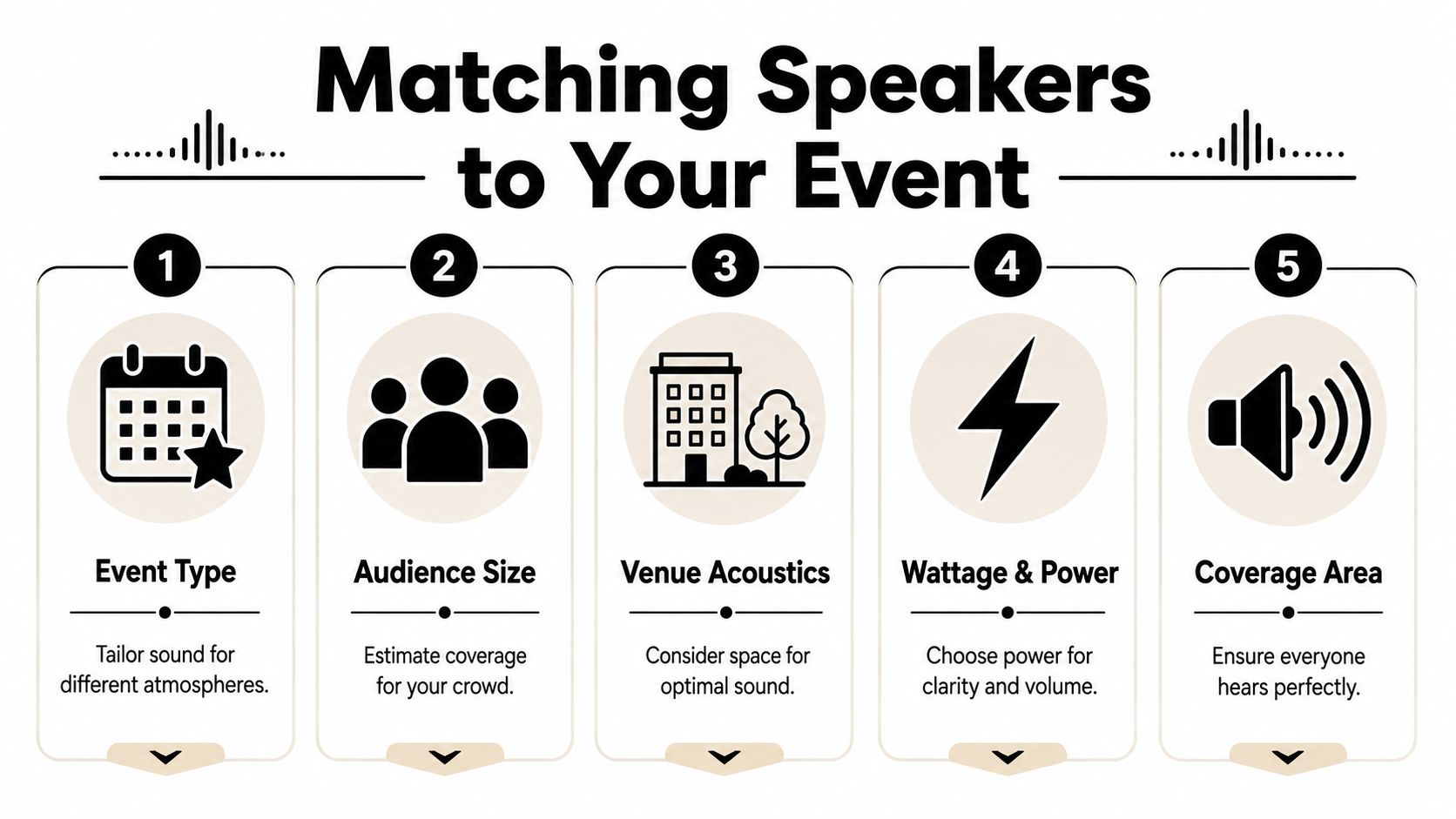
The simplest way to size speakers for rent is to answer three questions in order. How many people are coming? What kind of space are you using? What does the sound need to do?
That sequence matters. Many people jump straight to wattage, but wattage on its own doesn't tell you whether guests at the side, rear, or dance floor will hear properly.
Start with guest count
A useful sizing guide recommends approximately 1,000 to 2,000W RMS for events up to 100 people and 3,000 to 4,000W RMS for up to 300 people (sound system sizing guide). That same guidance makes an important point. Wattage alone is misleading, because speaker placement and dispersion affect whether the room has loud hot spots or quiet dead areas.
For a small ceremony, dinner, or speech-driven event, that lower range can be enough when the speakers are positioned well. For a larger function, the extra power helps, but only if the coverage pattern suits the room or outdoor footprint.
Then look at the space
A 100-person function in a low-ceilinged room in Cape Town isn't the same job as a 100-person ceremony in an open-sided Winelands marquee.
Hard walls, glass, and stone can make speech reflections worse. Open air does the opposite. Sound escapes, wind interferes, and the back rows lose clarity faster. That's why two smaller speakers placed correctly often work better than one larger speaker trying to cover everything from a single point.
Don't ask only, “How loud is it?” Ask, “How evenly will it cover the room?”
Finally decide the audio focus
Speech, background music, dancing, and live performance all pull the system in different directions.
- Speech-first events need clarity, microphone stability, and even coverage.
- Background music needs gentle fill without overwhelming conversation.
- Dance floors and DJs need stronger low-end support and usually a more deliberate front-of-house layout.
- Mixed-format events need flexibility, because the same system may handle speeches at one point and music later.
Speaker sizing guide by guest count and venue
| Guest Count | Venue Type / Audio Focus | Recommended Speaker Setup |
|---|---|---|
| Up to 50 | Indoor room, ceremony, speeches, presentation | Compact powered PA with speaker stands and at least one microphone |
| Up to 100 | Small hall, restaurant, courtyard, wedding ceremony plus light music | Two powered speakers for balanced left-right coverage |
| Up to 100 | Outdoor ceremony, beach setup, open-sided marquee | Two powered speakers on stands, placed for speech coverage rather than maximum volume |
| Up to 300 | Banquet hall, school function, corporate event | Medium PA with multiple microphones and mixer support |
| Up to 300 | Marquee, estate lawn, activation space with music focus | Medium PA plus subwoofer support if dancing or fuller music playback is important |
| Larger-format event | Large outdoor or complex programme | Full PA design with placement plan, mixer, multiple microphones, and more setup time |
The sizing mistakes that cause problems
Three mistakes show up repeatedly:
Choosing by wattage alone
A bigger number doesn't fix bad placement.Ignoring venue shape
Long narrow spaces, L-shaped rooms, and outdoor lawns need different layouts.Booking for music when the primary priority is speech
Wedding vows and keynote audio need clarity first. Bass can be added. Lost speech can't be recovered in the moment.
When you speak to a rental company, give them the guest count, venue type, and programme order. That gets you closer to the right answer than asking for “a speaker loud enough for 150 people”.
Choosing the Right Speaker Technology
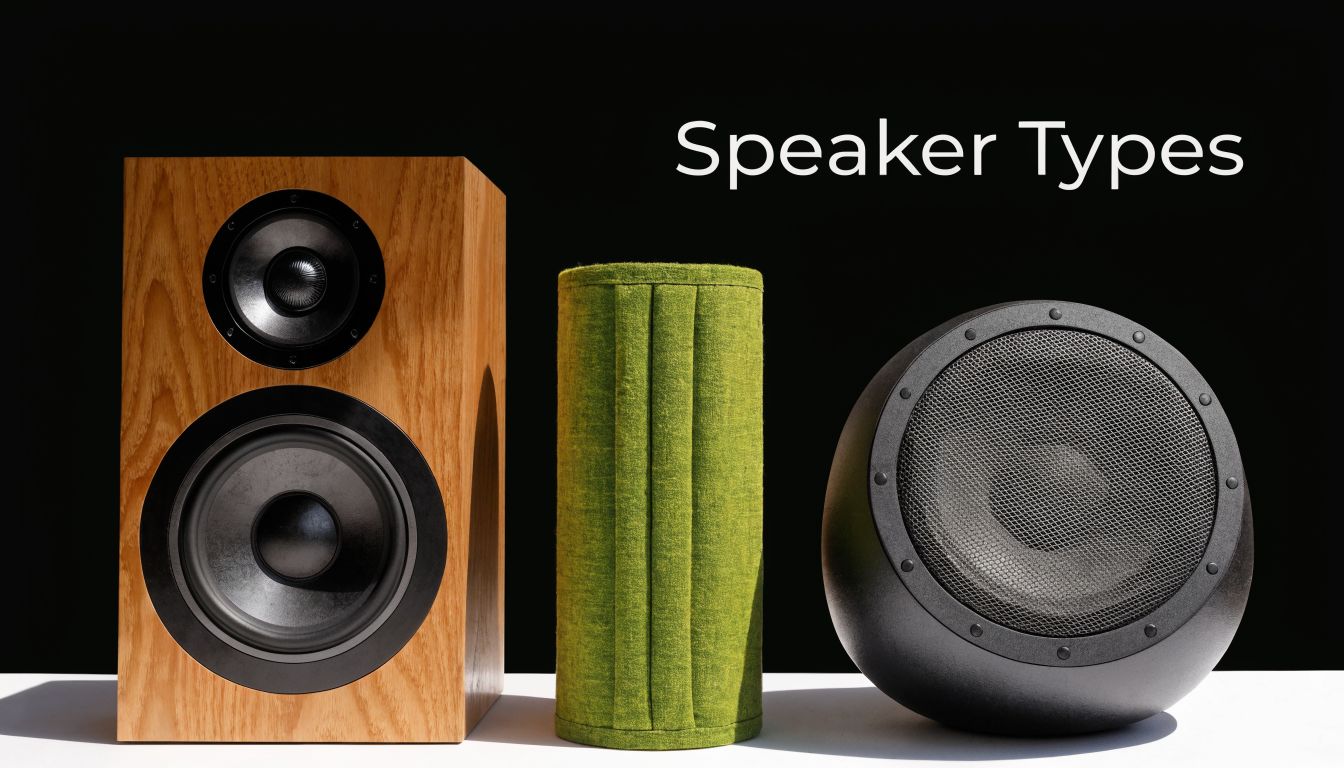
Once you know the rough size of the system, the next decision is the speaker type. For most event rentals, the practical choice is powered speakers, also called active speakers.
Powered versus passive
Powered speakers have the amplifier built into the cabinet. Passive speakers need a separate external amplifier.
That sounds like a small detail, but on event day it changes a lot.
- Powered speakers reduce cabling complexity and speed up setup.
- Passive speakers can work well in larger or more specialised systems, but they add more hardware, more routing, and more room for setup mistakes.
- Many powered rental speakers also include DSP, which helps optimise sound and suppress feedback for non-technical users (powered speakers and DSP overview).
For first-time planners, schools, private hosts, and many wedding applications, powered speakers are usually the safer route. Fewer separate components means fewer points of failure.
When a subwoofer helps
Not every event needs a subwoofer. Some absolutely do.
A subwoofer is worth adding when:
- the event includes a DJ or dance floor
- you want fuller music playback
- the room is larger and needs more low-end support
- the event shifts from speeches into a party format later in the evening
A subwoofer is often unnecessary when the job is mainly:
- ceremony audio
- speeches and toasts
- conferences
- panel discussions
- school prizegivings
More bass doesn't automatically mean better sound. For speech-led events, too much low-end can make the system less intelligible.
Connectivity matters more than people expect
Most audio issues on the day aren't caused by the speaker itself. They start at the input.
Before booking, confirm how your audio will connect:
- Bluetooth is convenient for simple playback, but it isn't always ideal where reliability matters.
- AUX or direct cable from a device is often more stable for playlists and presentation audio.
- XLR connections are standard for microphones and professional audio gear.
- Mixer-fed input is the right approach if multiple sound sources need to be managed.
If you're running a wedding ceremony playlist from a phone, that's one thing. If you're combining a lectern mic, handheld mic, laptop audio, and background music, the system should be planned like a proper PA, not treated like a home speaker.
Microphones and Mixers Explained
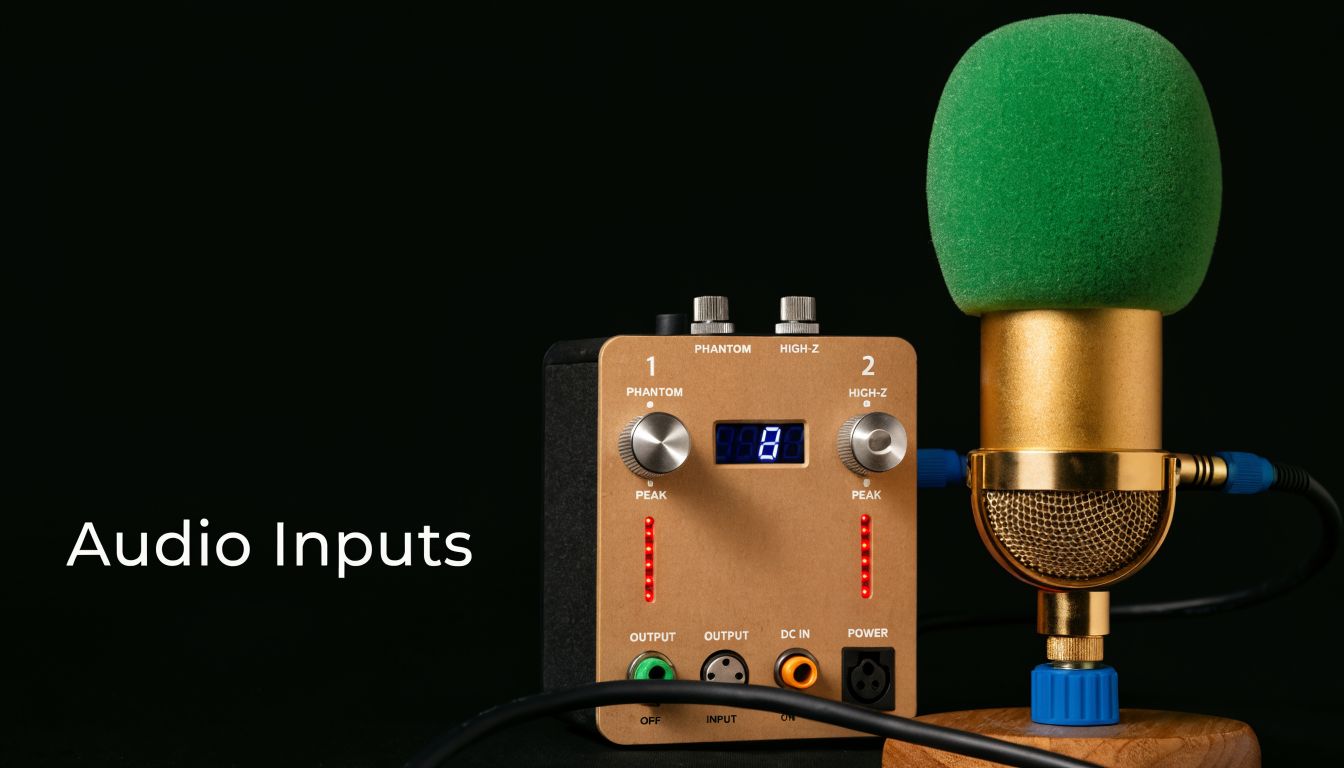
The speaker gets most of the attention, but the input side is where many event problems begin. A poor microphone choice or a missing mixer can make a good speaker system sound average very quickly.
Pick the microphone for the job
The easiest way to choose is by movement and speaking style.
Handheld microphone
Best for speeches, toasts, MC work, and announcements. It's simple, visible, and easy to pass between speakers.Lapel microphone
Useful when a presenter needs both hands free. Good for ceremonies, presentations, and some corporate speaking formats.Lectern microphone
Best when the speaker stays fixed in one place and the event has a podium or lectern setup.Wired versus wireless
Wired mics are straightforward and dependable when the speaker stays localised. Wireless mics are cleaner visually and allow movement, but they need proper battery management and testing.
When you need a mixer
If you have only one microphone and one music source, a simple setup may work without much adjustment. Once the event has several inputs, a mixer becomes important.
A mixer lets the operator:
- balance multiple microphones
- control presentation audio from a laptop
- lower music under speeches
- manage sudden level changes without touching the speaker itself
This matters at weddings where one moment is a quiet welcome speech and the next is walk-in music. It matters at conferences where panel mics, video playback, and Q&A all need different levels.
A mixer doesn't make the system more complicated for the planner. It makes the event easier to control when the programme changes.
Music choice matters too. If you're planning the listening experience carefully, this visual on curating the perfect party soundtrack is a useful reminder that song selection and sound delivery work together. A well-built playlist still needs the right microphone and playback structure around it.
The safe question to ask your rental provider
Don't ask only for “a microphone”. Ask this instead:
- Will there be speeches, and from where?
- Does the speaker need hands free?
- Are there multiple presenters?
- Will music and microphones run at the same time?
- Who will mute, unmute, and balance levels during the event?
Those answers usually reveal whether you need one mic, two mics, or a full small mixer setup.
Booking and Logistics The Smart Way
The rental quote can look simple at first. Then event-day details become apparent. Access times, delivery distance, stairs, power points, technician hours, and late-night collection all affect whether the hire stays smooth or becomes stressful.
A key point for Western Cape events is that the speaker price is only one part of the total. Beyond the daily rental fee, renters should budget for transport, technician support, deposits, and possible insurance, and technician support can add R1,000 to R5,000 depending on complexity (Western Cape sound rental cost factors). The same guidance notes that distance is a major cost driver, which matters when your event is in central Cape Town one week and Franschhoek the next.
What usually changes the final cost
The biggest variables are operational, not cosmetic.
Distance to venue
Cape Town CBD, Paarl, Stellenbosch, and Franschhoek don't carry the same transport implications.Setup complexity
A simple drop-off is one thing. A full install with microphones, mixer, testing, and strike later that night is another.Technician attendance
If someone needs to stay on-site for cues, speeches, and troubleshooting, labour needs to be built in.Venue access
Narrow loading zones, stairs, long carry distances, or strict setup windows can add time and cost.
Questions that prevent surprises
Use this list before you approve any quote:
What is included in the package?
Confirm speakers, stands, microphones, cables, mixer, and playback connections.Is delivery included?
If not, ask how transport is calculated for your area.Who handles setup and collection?
Drop-off only and full setup are not the same service.What power is needed on site?
Confirm socket locations, extension needs, and whether the venue has reliable supply.What happens if the programme runs late?
Late collections and after-hours labour should be clarified before event day.Is there a deposit or damage policy?
You want that in writing.
If the venue is large, spread out, or has limited plug points, plan power distribution early. Something as basic as extension planning gets overlooked often, and this guide to a 20 metre extension cord for event setups is a useful reminder that cable reach can shape your speaker placement options.
Booking earlier than feels necessary
In peak wedding and function periods, the best speaker packages are often committed early, especially once the event also needs microphones, staging support, or delivery to the Winelands. The later you leave it, the more likely you are to compromise on timing or configuration.
The smartest booking isn't the fastest quote. It's the quote that clearly states what arrives, who installs it, when it's tested, and how it leaves the venue.
Your Cape Town & Winelands Event Checklist
Generic speaker advice misses what catches people out locally. Cape Town and the Winelands bring beautiful venues, but they also bring specific risks that should shape your rental decisions.
Check the venue against local realities
Run through this before you confirm speakers for rent:
Wind exposure
Outdoor ceremonies, lawns, beach-facing spaces, and open marquees need speaker placement that protects speech clarity. Wind can thin out coverage and make microphones harder to manage.Room acoustics
Historic venues, wine cellars, and stone-heavy interiors can bounce speech around. Cleaner placement matters more than an increase in volume.Noise restrictions
Some estates and residential-adjacent venues are strict about sound levels and finish times. Confirm those limits before choosing a music-focused setup.
Plan for power properly
In South Africa, frequent power interruptions from load shedding have made backup power a real event-planning concern, and that has increased demand for battery-powered PA options or systems that are compatible with on-site generators, especially in more remote Winelands settings (backup power and event audio planning).
That means you should ask:
- Is battery operation available for this event format?
- If the venue has a generator, is the audio system suitable for it?
- Will the sound provider test the setup with the available power source?
If the venue is remote, don't treat backup power as a bonus. Treat it as part of the audio plan.
Think beyond the speaker itself
Local event success usually depends on coordination. Speaker placement affects guest seating. Power routes affect décor and walkways. Setup windows affect caterers, florists, and venue staff.
A broader planning tool helps. This event planning checklist template is useful because sound shouldn't be handled in isolation from power, floorplan, timing, and weather backup.
The planners who avoid last-minute problems usually do one thing well. They ask venue-specific questions early instead of assuming every space behaves the same.
Frequently Asked Questions About Speaker Rentals
Can I play music from my phone?
Usually yes, but don't assume every system is meant for casual plug-and-play use. Ask in advance what connection is best for your playlist and whether the package supports phone or laptop playback cleanly.
What if it rains at an outdoor event?
You need a weather backup plan before setup starts. That might mean moving the sound system under cover, repositioning speakers, or having a secondary indoor plan with the venue. Electronics and sudden rain don't mix well.
Is speaker rental equipment insured?
Policies differ, so ask what the renter is responsible for in cases of theft, accidental damage, or weather exposure. Get that in writing rather than relying on verbal assumptions.
How much time should I allow for setup and soundcheck?
Allow more time than you think you need. Small systems are quicker, but larger systems and events with microphones, multiple inputs, or outdoor placement need proper testing before guests arrive. Rushed soundchecks are where feedback, dead cables, and weak coverage get missed.
Do I need one speaker or two?
For most events, two well-placed speakers give better coverage than one speaker trying to throw sound across the whole space. That's especially true for ceremonies, halls, and long seating layouts.
Should I get a technician on site?
If the event includes live speeches, multiple microphones, presentation cues, or a busy run sheet, a technician is often worth it. Someone needs to manage levels when real people start using the system.
If you're planning an event in Cape Town, Stellenbosch, Franschhoek, Paarl, or the surrounding Winelands, ABC Hire can help you coordinate the event essentials around a smoother setup day. From furniture and layout items to practical event hire support, the team works with planners, venues, and private hosts who want fewer surprises and a more organised event from the start.