

When you're planning an outdoor event, you're really in the business of managing the elements. Your best friend in this fight? A solid outdoor umbrella with stand. We're going to move past the pretty pictures and get into what actually matters for a professional setup: safety, stability, and making sure it all looks seamless.
Choosing the Right Outdoor Umbrella for Your Event
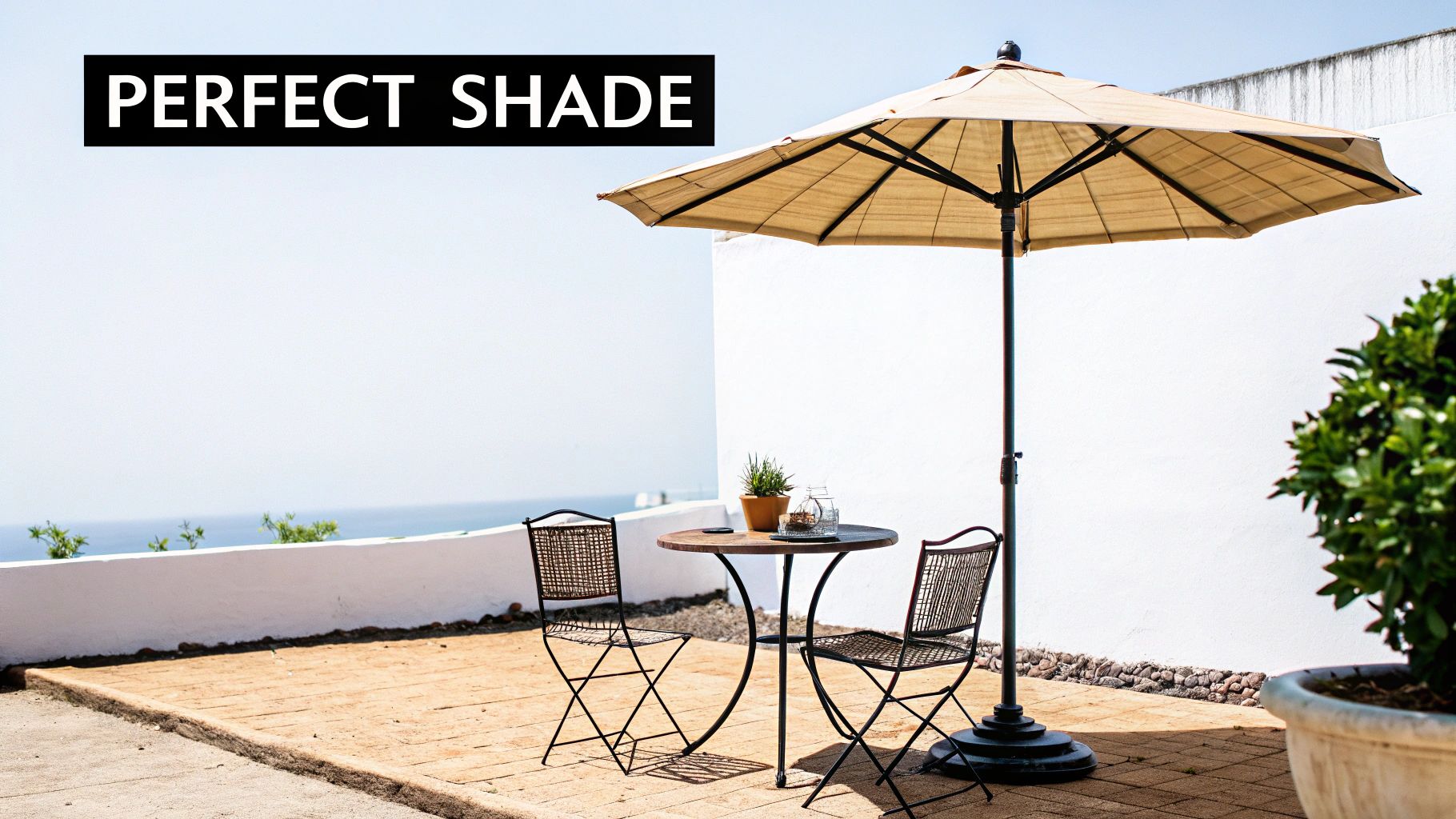
An outdoor umbrella isn't just a bit of shade. It's a crucial piece of your event's infrastructure. It carves out spaces, keeps your guests comfortable, and holds the whole atmosphere together.
As an event planner, picking the right one is a strategic move. You have to weigh up your venue, how many people are coming, and what the weather is likely to do—especially here in Cape Town, where things can change in a heartbeat.
The real goal is to find a unit that not only looks the part but is also built to last and do its job properly. Make the wrong choice, and you're looking at flapping canopies, wobbly bases, or worse, a real safety hazard when the wind picks up. But get it right, and that perfect outdoor umbrella with stand becomes a silent hero, giving guests pockets of cool shade or shelter from a passing shower.
A Framework for Your Decision
Before we get bogged down in the nitty-gritty of canopy fabrics and base weights, it helps to have a simple framework. Every choice you make should tick these four boxes:
- Guest Comfort: First and foremost, are people protected from the sun and a bit of rain?
- Event Flow: Are the umbrellas going to get in the way of people moving around or block important sightlines?
- Operational Practicality: How easy is this for my team to set up, take down, and lug around?
- Uncompromising Safety: This is the big one. The umbrella and its base have to be stable and wind-resistant. No exceptions.
Think of this guide as your roadmap to making these calls with confidence. We’ll start by breaking down the core decisions, from the type of umbrella and its size to the science of what makes a base stable enough for our Cape Town winds.
To get us started, here’s a quick overview of the key things you’ll need to consider.
Core Umbrella Decision Framework
This table breaks down the essentials you need to think about when choosing an umbrella for a professional event.
| Factor | Key Considerations |
|---|---|
| Umbrella Type | Decide between centre-pole for individual tables and cantilever for open, unobstructed spaces. |
| Size & Coverage | Calculate the required shade area based on your furniture layout and guest count. |
| Materials | Evaluate canopy fabric for UV protection and frame material for durability and wind resistance. |
| Stand & Stability | Match the base weight to the canopy size and consider anchoring methods for your specific venue surface. |
Keep these four points in mind, and you're already on the right track to making a smart, safe choice for your event.
Understanding Umbrella Types and Sizes
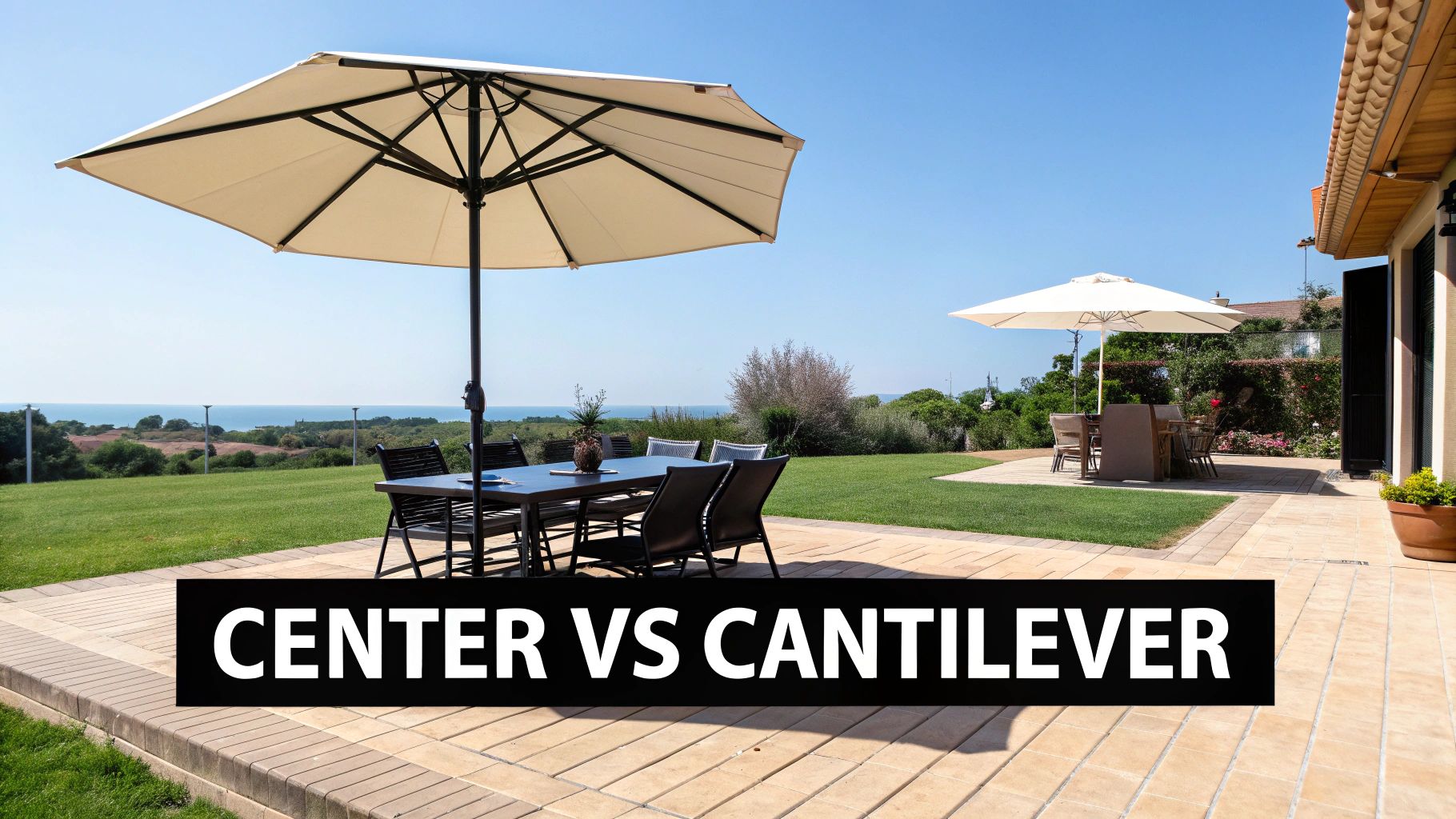
When you're looking for an outdoor umbrella with stand, your first big decision comes down to two very different designs. This isn't just a style choice; it will directly shape your event's flow, how you use your space, and the overall atmosphere you're trying to create.
Let's get into the two main styles you'll be choosing between.
The Classic Centre-Pole Umbrella
This is the design everyone pictures when they think of an umbrella. The mast runs straight down from the middle of the canopy into the base. It’s a classic for a reason and works brilliantly in certain situations.
Think of it as the perfect tool for creating neat, defined zones. It’s the go-to for shading individual café tables or small bistro setups, especially when the pole can slide through a purpose-built hole in the table. This adds a ton of stability and gives you that clean, orderly look for a seated dining or cocktail area.
The trade-off, of course, is that the central mast is an obstruction. While it's great for tables, it’s not so practical for open areas like lounge seating or a kids' play zone where you need an uninterrupted floor plan for people to move around freely.
The Versatile Cantilever Umbrella
The cantilever, or offset, umbrella is an event planner's best friend when it comes to maximising usable space. The pole is positioned off to the side, with a sturdy arm extending out to hold the canopy exactly where you need it.
This design is the secret to creating those beautiful, wide-open shaded areas. Picture a stylish lounge with sofas and coffee tables, or a long banquet table, all sitting comfortably under a single canopy without a single pole getting in the way. That’s what a cantilever umbrella brings to the party.
Cantilever umbrellas offer incredible flexibility. Many models can tilt and rotate a full 360 degrees, which lets you adjust the shade as the sun moves across the sky—an absolute lifesaver for all-day events.
This adaptability makes them unbelievably useful. You can shade a seating area in the afternoon, then simply swing the canopy over to cover the bar as evening sets in, all without having to drag a heavy base around.
Centre-Pole vs Cantilever Umbrella Comparison for Events
To make the choice a bit easier, here’s a straightforward comparison of how each type stacks up in a real-world event setting.
| Feature | Centre-Pole Umbrella | Cantilever (Offset) Umbrella |
|---|---|---|
| Best For | Shading individual dining tables, creating uniform rows of coverage, bistro-style seating. | Large lounge areas, long banquet tables, poolside seating, covering irregular spaces. |
| Space Usage | Creates a central obstruction; you have to plan furniture around the pole. | Provides a completely clear, open space under the canopy for maximum flexibility. |
| Adjustability | Limited; some models offer a tilt function but can't rotate to follow the sun. | Highly adjustable; most can tilt and rotate to provide targeted shade all day long. |
| Footprint | Requires a smaller, less obtrusive base. | Needs a larger, heavier base to counterbalance the offset weight, taking up more floor space. |
Ultimately, the right choice depends entirely on your floor plan and what you want your guests to experience.
Choosing the Right Umbrella Size
Once you’ve settled on a style, the next question is size. The goal is to provide plenty of shade without the canopy feeling like it’s swallowing your event space. A simple rule of thumb is that your umbrella’s diameter should be at least 1.5 metres wider than the table or area it’s covering.
For example, a standard 1.2-metre round table that seats four to six guests needs an umbrella that's at least 2.7 metres across. This ensures that as the sun moves, your guests aren't left scrambling for the shady spot.
Here in South Africa, we've seen a clear trend towards larger sizes, and for good reason. Umbrellas over 3.2 metres have become popular for their generous coverage, making them ideal for commercial venues and bigger events. You can actually explore more about these market trends and how they affect event planning.
Sizing is about more than just measurements; it's about the guest experience. For more detailed advice, our guide to using large outdoor umbrellas for events can help you calculate the perfect shade footprint for any layout. Getting the size right shows thoughtful planning and a real commitment to keeping everyone comfortable.
Right, let's talk about what holds your umbrella together and keeps your guests comfortable. Beyond just the size and style, the materials you choose for the canopy and frame are what separate a one-season wonder from a long-term investment. This isn't just about looks; it's a practical decision that directly affects durability, safety, and ultimately, your bottom line.
Think of the canopy as the umbrella's skin. Its job is to fend off the harsh African sun, shrug off an unexpected downpour, and keep its colour without fading. The frame, meanwhile, is the skeleton. It’s the backbone providing all the strength needed to stand up to a gusty Cape Town afternoon.
What to Look for in Canopy Fabrics
When you start looking at canopy options, you'll come across a few key players. Each offers a different mix of performance and price, so it helps to know what you're paying for.
-
Polyester: This is a very common, budget-friendly choice. While it does a decent job of repelling water, basic polyester can fade over time with constant sun exposure. It’s a solid option for events where the umbrellas won't be out in the blazing sun day after day.
-
Olefin: A definite step up from polyester, olefin is a synthetic fabric that’s fantastic at resisting stains, mildew, and fading. It’s a great middle-ground option, giving you much better durability and colour-fastness without the top-tier price tag.
-
Solution-Dyed Acrylics: Honestly, this is the gold standard for outdoor fabrics. Brands like Sunbrella® are famous for a reason. With these fabrics, the colour pigment is mixed into the fibre before it’s even spun into yarn. This means the colour goes all the way through, making it incredibly resistant to fading. They also offer top-notch UV protection and water resistance.
What Are UPF Ratings?
The Ultraviolet Protection Factor (UPF) tells you how much UV radiation a fabric lets through. A canopy with a UPF of 50+ is excellent, blocking at least 98% of the sun's rays. It's a crucial feature for keeping your guests safe and comfortable.
Choosing the Best Frame Material
The frame is the unsung hero of a good outdoor umbrella. It needs to be tough enough to handle a breeze but manageable for your crew to set up and take down. The material makes all the difference.
Aluminium
Lightweight, completely rustproof, and easy on the wallet, aluminium is the go-to for most commercial-grade event umbrellas. Its natural resistance to corrosion makes it perfect for our coastal climate here in Cape Town. Look for a powder-coated finish for an extra layer of protection against scrapes and scuffs.
Steel
Steel frames are the heavyweights. They're stronger than aluminium and offer better stability when the wind picks up. The catch is that steel can rust if the protective coating gets chipped. Stainless steel is an option that won't rust, but it does come with a higher price tag.
Wood
There's no denying the classic, upmarket look of a wooden frame, often made from teak or eucalyptus. They are heavy and sturdy, which is great for stability. The downside is the upkeep; wood needs to be sealed or oiled regularly to stop it from weathering, rotting, or getting damaged by insects.
Here in South Africa, there’s a growing demand for umbrellas that can handle our diverse weather, offering serious UV protection and wind resistance. It’s no longer just a nice-to-have; a quality outdoor umbrella is becoming essential for ensuring comfort and safety at any outdoor venue. You can read more about this growing market demand on MarketGrowthReports.com.
Mastering Stability with the Right Umbrella Stand
Let's be blunt: an unsecured umbrella at an event isn't just a nuisance, it's a massive liability. When it comes to an outdoor umbrella with stand, the science of keeping it grounded starts and ends with the base. A stunning canopy is completely useless if it decides to take flight with the first gust of that famous Cape Town wind.
Think of your umbrella stand as an anchor. It’s not just a lump of dead weight; it’s a calculated counterbalance against some pretty powerful forces. The wind doesn't just push an umbrella sideways—it gets under the canopy, creating lift and trying to turn it into a giant, expensive kite. Your stand's one and only job is to be heavier than that upward force.
Calculating Your Base Weight
There's a simple rule of thumb that we event pros live by to keep everyone safe. The wider the umbrella canopy, the heavier its base needs to be. This isn’t a friendly suggestion; it’s a non-negotiable principle of physics that keeps your guests safe and your equipment where it belongs.
For every 30cm of canopy diameter, you need about 4.5kg of base weight. So, for a standard 3-metre umbrella, you’re looking at a minimum base weight of 45kg. If you’re in a notoriously windy spot, always play it safe and go heavier.
This quick calculation is your starting point. It takes the guesswork out of the equation and helps you make a solid, informed decision based on your specific umbrella size, ensuring your outdoor umbrella with stand setup is secure from the get-go.
This diagram helps simplify the material choices you'll face for the frame and canopy.
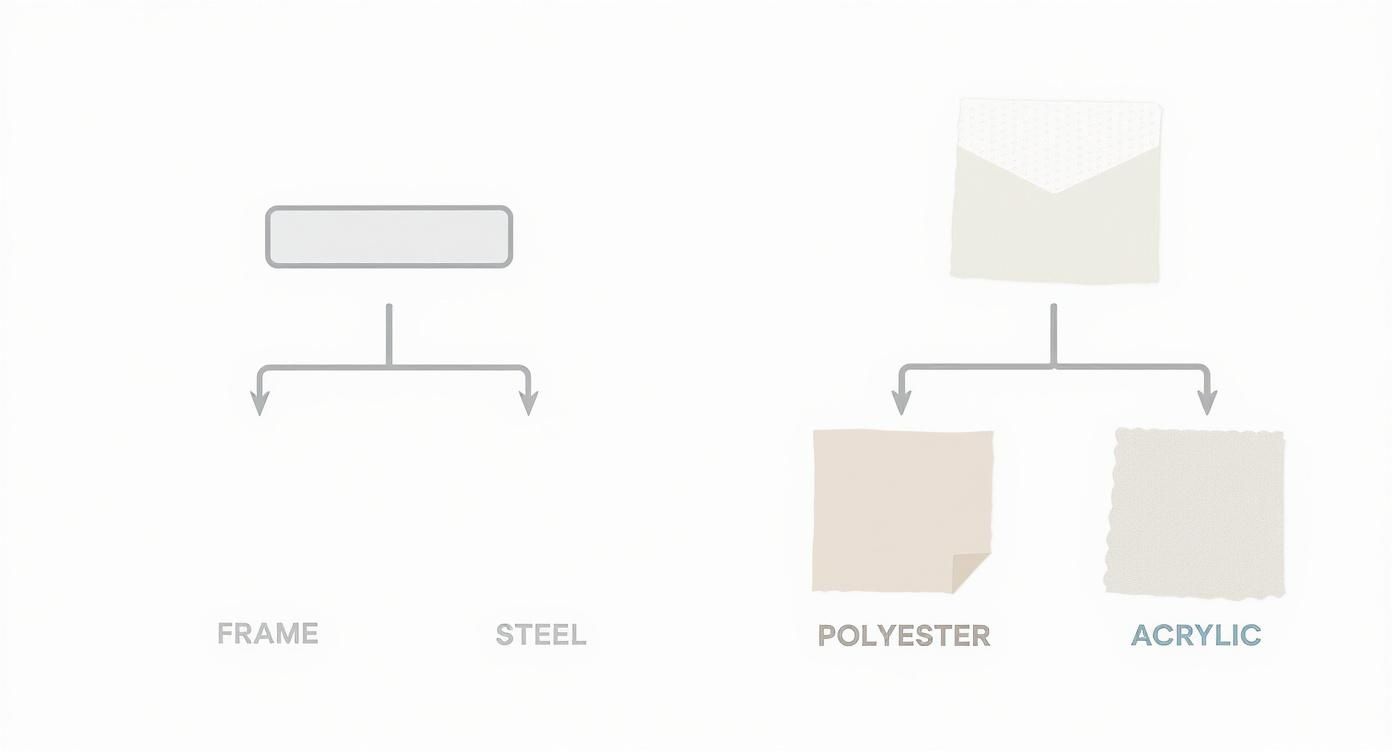
As you can see, it breaks down the core components, showing how a frame material like aluminium gives you portability, while a canopy fabric like acrylic offers top-tier durability against the elements.
Choosing the Right Type of Umbrella Stand
Not all stands are created equal, and the right one really depends on your event's location, how long it's running, and what your team can realistically handle logistically.
Fillable Bases (Water or Sand)
These are often the go-to for temporary events. They’re light and a breeze to transport when they’re empty, and you simply fill them up with water or sand once you’re on-site.
- Pros: Super portable, budget-friendly, and easy to pack away.
- Cons: Can sometimes leak (water-filled) or be a real mission to empty (sand-filled). They might not pack enough punch for the really big cantilever umbrellas.
Solid Bases (Concrete, Granite, or Cast Iron)
For rock-solid security, especially in places you know get a bit of wind, you can't beat a solid base. These stands bring some serious, unmoving weight to the party, offering the best stability you can get.
- Pros: Incredibly stable and built to last, plus they have a more premium, professional look.
- Cons: They are seriously heavy and a pain to move around, requiring some muscle to transport and set up.
Think of it this way: a polished granite base is perfect for that high-end winelands wedding, while a simple, heavy concrete base provides the brute strength you need for a big outdoor festival. It’s all about matching the stand to the gig.
Anchoring Strategies for Tricky Surfaces
Your stability plan doesn’t stop once you've picked a heavy base. The ground you’re setting up on throws its own challenges into the mix. A smart anchoring strategy is your final line of defence.
- On Grass or Soft Ground: Never, ever rely on just the base weight. You need to use heavy-duty ground stakes hammered through the base and deep into the soil. This gives you fantastic resistance against both sliding and tipping.
- On Paving or Decks: Since you can't stake into these surfaces, extra weight is your best mate. Grab some dedicated, heavy-duty weight bags (at least 20kg each) and drape them over the stand. They wrap snugly around the pole and add a ton of low-profile stability without creating a new tripping hazard.
- Coastal and Windy Conditions: For any event around Cape Town, you need to double down. Use the heaviest base you can, and add the weight bags on top. It is always, always better to be over-prepared.
At the end of the day, mastering stability comes down to a simple philosophy: respect the wind, understand the forces you're up against, and never, ever cut corners on weight. The right outdoor umbrella with stand, properly anchored, is a sign of a true professional who's committed to safety.
Renting Versus Purchasing Your Event Umbrellas
For any event planner, the big question eventually comes up: do you rent or buy your outdoor umbrellas with a stand? This isn't just about the initial hit to your wallet; it's a strategic decision that affects your storage, maintenance, and how nimble you can be. Getting this right means your equipment strategy actually supports your business goals and keeps your clients happy.
At first glance, renting seems like the easy way out. There's no big upfront investment, and you don't have to figure out where to stash a dozen bulky umbrellas between gigs. Plus, you can pick and choose different styles for different events. If you only do a few outdoor functions a year or are just getting your feet wet in the industry, renting is usually the smartest move.
But here's the catch: those rental fees start to add up, fast. This is where a little bit of maths can save you a lot of money.
Finding Your Financial Break-Even Point
Think of buying an umbrella as a long-term investment. To see if it's worth it, you just need to compare the full purchase price (don't forget the base!) to what you'd pay for a single rental.
Let's say a good commercial-grade outdoor umbrella with a stand costs you R5,000. To rent a similar one for an event costs R500. A quick calculation shows your break-even point is 10 events. Once you hit that tenth event, the umbrella has paid for itself. Every event after that is pure savings.
By owning your own gear, you're turning a constant expense into a real business asset. It not only saves you money down the line but gives you far more control over your inventory and last-minute event needs.
This simple exercise takes the guesswork out of the equation and lets you make a decision based on how many events you realistically have lined up.
The Hidden Factors in the Rent or Buy Debate
Of course, the decision isn't just about the numbers. There are a few other things to chew on that can swing you one way or the other.
Why Renting Might Be Right for You:
- Variety without the Commitment: Need ten elegant cantilever umbrellas for a wedding this weekend, and twenty little bistro umbrellas for a market next month? Renting gives you that amazing flexibility.
- No Maintenance Headaches: You can forget about scrubbing canopies, checking for rust, or fixing a wobbly stand. The rental company takes care of all that.
- Zero Storage Costs: Storing big, heavy umbrellas and their bases takes up a surprising amount of secure space. Renting means that's not your problem.
Why Buying Could Be the Better Bet:
- Always Available: When you own them, they're yours. This is a lifesaver for those last-minute bookings or when a client suddenly adds to their guest list.
- Long-Term Value: A quality umbrella is an asset that pays for itself over and over, especially as rental prices creep up over the years.
- Brand Consistency: Owning your inventory means you can even customise it. More importantly, it ensures a consistent look and quality across all your events, which clients will notice.
The event industry is definitely seeing more planners invest in their own durable, stylish gear to guarantee guest comfort. Online suppliers have made it easier than ever to buy a quality outdoor umbrella with a stand, often with features like better durability and UV protection. You can see how this plays out in the wider market with these umbrella market trends and consumer preferences on VerifiedMarketResearch.com.
So, what's the verdict? It really comes down to your business model. If you've got the storage space and a steady calendar of events, buying is a smart investment. But if your needs change all the time or you're short on space, renting is a practical, flexible solution. For anyone planning events in our beautiful but often gusty city, our guide on Cape Town umbrella hire has some specific advice to help you weigh your options.
Enhancing Ambiance with Accessories and Lighting
A quality outdoor umbrella with stand is a brilliant starting point, but the real magic happens when you start treating it like a piece of décor. It’s more than just shade; it’s a canvas. With the right extras, you can transform a simple umbrella from a practical necessity into a centrepiece that shapes the entire mood of your event, especially as the sun goes down.
Think about it: as evening arrives, your umbrellas shouldn't just fade into the darkness. They should become beacons of warm, inviting light. A little thoughtful illumination doesn't just help guests see their drinks; it adds a layer of sophistication and wonder to the whole affair.
Illuminating Your Event Space
Lighting is hands-down one of the best ways to lift the atmosphere under your umbrellas. And thankfully, we're long past the days of clunky, awkward lighting rigs. Today’s options are slick, simple to set up, and made specifically to work with umbrellas.
- Rechargeable LED Lights: These are a planner's best friend. They’re just so convenient. Many are designed to clip straight onto the umbrella pole or its ribs, casting a lovely downlight over your tables without any trailing cables to worry about.
- Solar-Powered Lights: A smart and green choice. These lights soak up the sun all day and then pop on by themselves as dusk settles in. They're perfect for events that run from afternoon into the evening, giving you seamless light without the cost.
- String and Fairy Lights: For that truly dreamy, enchanting vibe, you just can't beat the charm of string lights. Weaving tiny fairy lights through the umbrella’s canopy creates a stunning, starry effect that makes any space feel more intimate and special. For some great ideas on pulling this off, have a look at our guide on using a fairy light curtain for events.
By simply adding light, you're massively extending the useable hours of your outdoor area. A beautifully lit umbrella space encourages people to stick around, chat, and enjoy themselves long after the sun has set.
Practical Accessories for Enhanced Comfort
Lighting is fantastic, but other accessories can seriously upgrade your guests' comfort and add a whole new level of function to your setup. These are the little details that show you've thought of everything and can be a real lifesaver when the weather decides to be unpredictable.
Side Walls for Added Protection
Attachable side walls or panels are an incredibly clever addition. They’re perfect for blocking that low, late-afternoon sun that always seems to get in everyone's eyes, or for shielding guests from a nagging, chilly breeze. This one simple accessory can keep a whole area comfortable when it would otherwise be a write-off.
Umbrella-Mounted Heaters
For those cooler evenings, especially in places like the Cape Winelands, you can get discreet electric heaters that mount right onto the umbrella pole. These are a game-changer. They send a gentle warmth downwards, keeping everyone at the table perfectly comfortable without the need for those bulky, freestanding heaters that eat up precious floor space. It’s a touch that shows you genuinely care about your guests' comfort, and they'll definitely remember it.
Here are the answers to the questions we get asked most often by event planners on the ground. When you're in the middle of a setup, you need quick, practical answers to get the job done right.
How Many Umbrellas Do I Need for My Event?
Figuring out the right number of umbrellas is a bit of an art. As a rule of thumb, plan for one large umbrella for every 6-8 person table if you're doing a dining setup. For more casual lounge areas, try spacing them about 1.5 metres apart. This creates a nice, continuous shaded zone where guests can mingle comfortably.
Honestly, the best way to do it is to sketch out your furniture layout on a floor plan. Work out the total square metres you need to cover, then divide that by the shade area of the umbrella model you've chosen. Pro tip: using a few medium-sized umbrellas often gives you more flexibility to chase the sun as it moves through the day, compared to relying on one or two giant ones.
What's the Safest Way to Secure an Umbrella in the Wind?
When it comes to safety, there are no shortcuts. Always, and I mean always, use a base that meets or exceeds the manufacturer’s minimum weight for your umbrella size. If you're not sure, go heavier. This is especially true here in Cape Town, where the wind can pick up out of nowhere.
Your securing strategy needs to change based on the surface:
- On grass or other soft ground, you absolutely have to use heavy-duty ground stakes to supplement the base.
- On paving or other hard surfaces, use hefty sandbags (at least 20kg each) and place them right over the stand.
It's crucial to have a clear wind policy in place before the event starts. Assign someone on your crew to keep an eye on the weather. Decide on a firm wind speed, say 30 km/h, where all umbrellas get closed and secured immediately. No exceptions.
How Should I Clean Commercial Umbrellas Between Events?
Looking after your gear is what keeps it looking professional and protects your investment. Once an event is over, a quick wipe-down of the frame with a damp cloth will get rid of any dust or spills.
For the canopy, start by brushing off loose dirt with a soft brush. You can tackle any stubborn spots with a simple solution of mild soap and lukewarm water. Make sure to rinse the fabric thoroughly with clean water afterwards and let it air dry completely while it's still open. This is key to preventing mildew. Never, ever store a damp umbrella – it's a surefire way to ruin it.
Can I Use a Table to Help Secure an Umbrella?
Look, a heavy patio table with a built-in umbrella hole does add a bit of stability, but it should never be your main line of defence. The table adds some weight and lowers the umbrella's centre of gravity, which is helpful, but it's no replacement for a proper, heavy base.
Even when you're putting an umbrella through a table, you still need to use a standalone base that meets the minimum weight requirements. Just relying on the table, especially with a big canopy, is a major safety risk in even a light breeze. Think of the table as an extra layer of support, not the foundation of your setup.
Ready to create perfectly shaded, stylish, and safe outdoor spaces for your next gathering? ABC Hire offers a premium selection of event furniture, including a wide range of outdoor umbrellas with stands, perfect for any occasion in Cape Town and the Winelands. Explore our inventory and get a quote today at https://abchire.co.za.