

Renting a mobile fridge means having reliable cold storage delivered straight to your venue. It’s the easiest way to keep consistent temperatures for everything from fine cheeses to summer beverages. No more juggling ice blocks or worrying about warm spots in coolers.
Understanding The Key Benefits Of Mobile Fridge Hire
Switching from cooler boxes to a mobile unit can slash waste and free up precious setup hours. In Pretoria, a wedding I coordinated saw fresh canapés stay crisp from prep straight through to service. Meanwhile, a Johannesburg outdoor festival kept thousands of chilled drinks flowing without a hiccup.
Key Advantages At A Glance:
- Precise Temperature Control for dairy, chocolate and delicate produce
- Scheduling Flexibility – hire for a few hours or several days
- Rapid Setup in under an hour once power’s in place
- Reduced Waste cutting spoilage by up to 30%
- Optimised Placement close to service points for faster guest support
Real World Scenarios With Mobile Fridges
At a boutique wedding in Stellenbosch, a 2 m³ unit slipped neatly into a courtyard, keeping petits fours perfect until the last bite.
Over a three-day music festival near Cape Town, organisers leaned on large cold rooms to store crates of beer and mixers. They never ran dry, even when temperatures soared.
This industry has grown steadily across South Africa since about 2008. Once a niche solution, it now underpins government functions, catering businesses and community fundraisers.
Discover more insights in Semela’s report.
Operational Flexibility And Waste Reduction
Modern fridge trailers plug into any standard 220 V outlet or run seamlessly off generators. You can reposition units mid-event or swap sizes if your guest list shifts at the last minute.
“Switching to mobile fridge hire cut my event waste by nearly a third,” says planner Sarah Nkosi.
| Feature | Cooler Box | Mobile Fridge Hire |
|---|---|---|
| Temperature Range | Variable | -20 °C to 5 °C |
| Capacity | Up to 100 L | 2 – 10 m³ |
| Setup Time | 30+ minutes | Under 1 hour |
| Waste Reduction | Low | Up to 30% |
Check out our guide on essential catering equipment for hire in our catering equipment for hire article.
Benefits For Multiple Event Types
From intimate gatherings to large-scale launches, mobile fridges adapt on the fly. A corporate unveiling in Paarl cut spoilage by 25%, boosting profits simply by swapping out cooler boxes.
Integrating these units into your catering workflow means fewer manual checks and no service interruptions. In remote areas with patchy grid power, generator-ready fridges are a lifesaver.
Use Cases:
- Boutique weddings: discreet 2 m³ units for desserts and charcuterie
- Multi-day festivals: expansive cold rooms for hundreds of beverage crates
- Remote pop-ups: generator-compatible models for off-grid reliability
Whether it’s a fundraiser, product launch or government function, mobile fridge hire elevates any event by keeping supplies safe and service smooth until the last guest departs.
Choosing the Right Mobile Fridge for Your Event
When you firm up guest numbers and nail down your menu, you’re halfway to choosing the perfect fridge. A 2 m³ trailer unit will often cover a 200-guest corporate brunch, but as headcounts climb—or if your event spans several days—you’ll want to look at 5 m³ or larger cold rooms.
Drinks, cheeses and fresh produce each need their own bit of space. Toss in a midday heatwave under a marquee, and insulation plus airflow suddenly become just as crucial as raw volume.
This quick framework pairs fridge size with guest count, menu requirements and venue limitations, so you stay cool under pressure.
Matching Fridge Type To Your Event
Capacity grabs the headlines, yet storage style shapes performance. Trailer fridges roll in fast and are up and running in under an hour—ideal when space is tight. Static cold rooms deliver serious volume for multi-day festivals, though you’ll need extra floor space and reliable power.
- Trailer Fridges: Perfect for short-term setups and compact sites
- Static Cold Rooms: Built for high volumes and extended events
- Generator Backup: Non-negotiable if mains outlets sit metres away
Mobile Fridge Capacity Guide For Events
Use this table to eyeball the right fridge volume for your guest list and event type.
| Event Size (Guests) | Recommended Fridge Size (Cubic Metres) | Typical Use Case |
|---|---|---|
| Up to 50 | 2 m³ | Cocktail mixers |
| 51 to 100 | 3 m³ | Dessert tables |
| 101 to 200 | 5 m³ | Corporate brunch |
| 201 to 500 | 8 m³ | Sports tournaments |
Keep a 20% buffer in mind for last-minute menu tweaks or surprise extras.
Real-World Examples In Cape Town
At a Stellenbosch corporate brunch, a 5 m³ trailer handled 120 wine crates and charcuterie platters with ease. Even when temperatures topped 30 °C, cheeses stayed under 4 °C thanks to thick insulation. Meanwhile, an 8 m³ cold room on a three-day sports event near Muizenberg sailed through constant restocks—with zero spoilage.
Pro Tip Always plan for 20% extra capacity. Menu changes sneak up on you faster than you think.
Infographic On Decision Factors
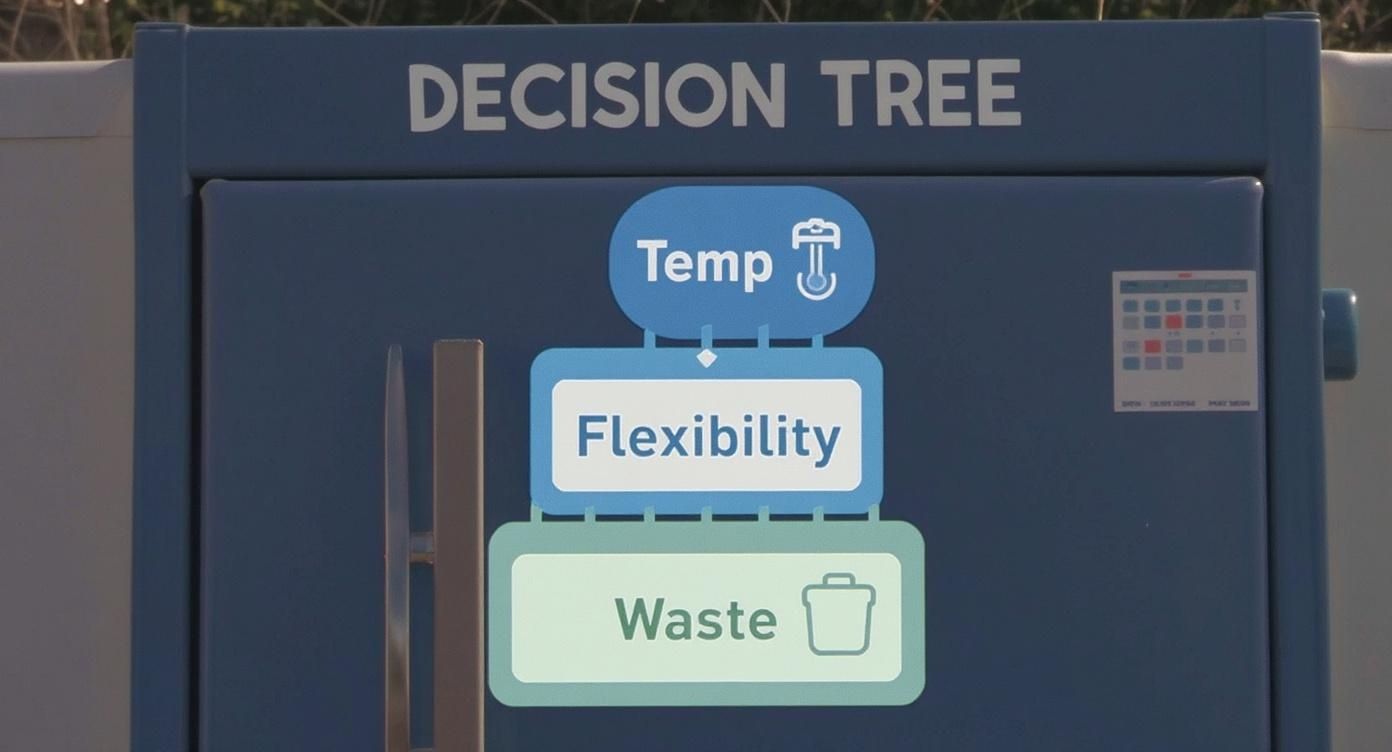
This decision tree highlights how temperature control, schedule flexibility and waste reduction guide your fridge selection.
Venue Constraints And Placement
A quick site check keeps delivery hassle-free. Measure gate clearances and assess floor-loading limits before the day arrives. Position units close to power but shielded from direct sunlight, and always set them on level ground for consistent cooling.
- Verify gate widths and floor strength
- Maintain at least 10 cm clearance around vents
- Keep units off reflective surfaces
Temperature And Food Safety Considerations
Aim for 0 °C to 4 °C for perishables and –1 °C to 5 °C for beverages. Be mindful of loading patterns—crowding shelves leads to hotspots.
- Log temperatures with calibrated probes every four hours
- Separate high-risk items from walls and vents
- Rotate stock so older items move to the front
Booking And Reservation Insights
Seventy-three per cent of planners say reserving three months ahead slashes stress levels. In Cape Town’s peak season (November–March), book trailers 4–6 months out to avoid disappointment.
- Confirm delivery slots and on-site contact details
- Compare daily, weekend and weekly rates
- Ask about generator hire and emergency support
Final Checklist And Tips
- Match guest count with your menu’s storage needs
- Map mains outlets and generator locations
- Factor in a 20% safety buffer
- Inspect door seals and alarm functions before loading
Summary Of Selection Framework
First, pin down guest numbers, menu items and ambient conditions. Next, choose between trailer or static based on event duration and site constraints. Finally, build in buffers and carry out a thorough site survey.
- 20% capacity buffer for unexpected demands
- Site check covering power, access and ground level
- Safety inspections on seals, alarms and temperature logs
This approach cuts waste by up to 30% and keeps everything at safe temperatures—so you can focus on running a flawless event.
Streamlining Delivery Setup And Placement
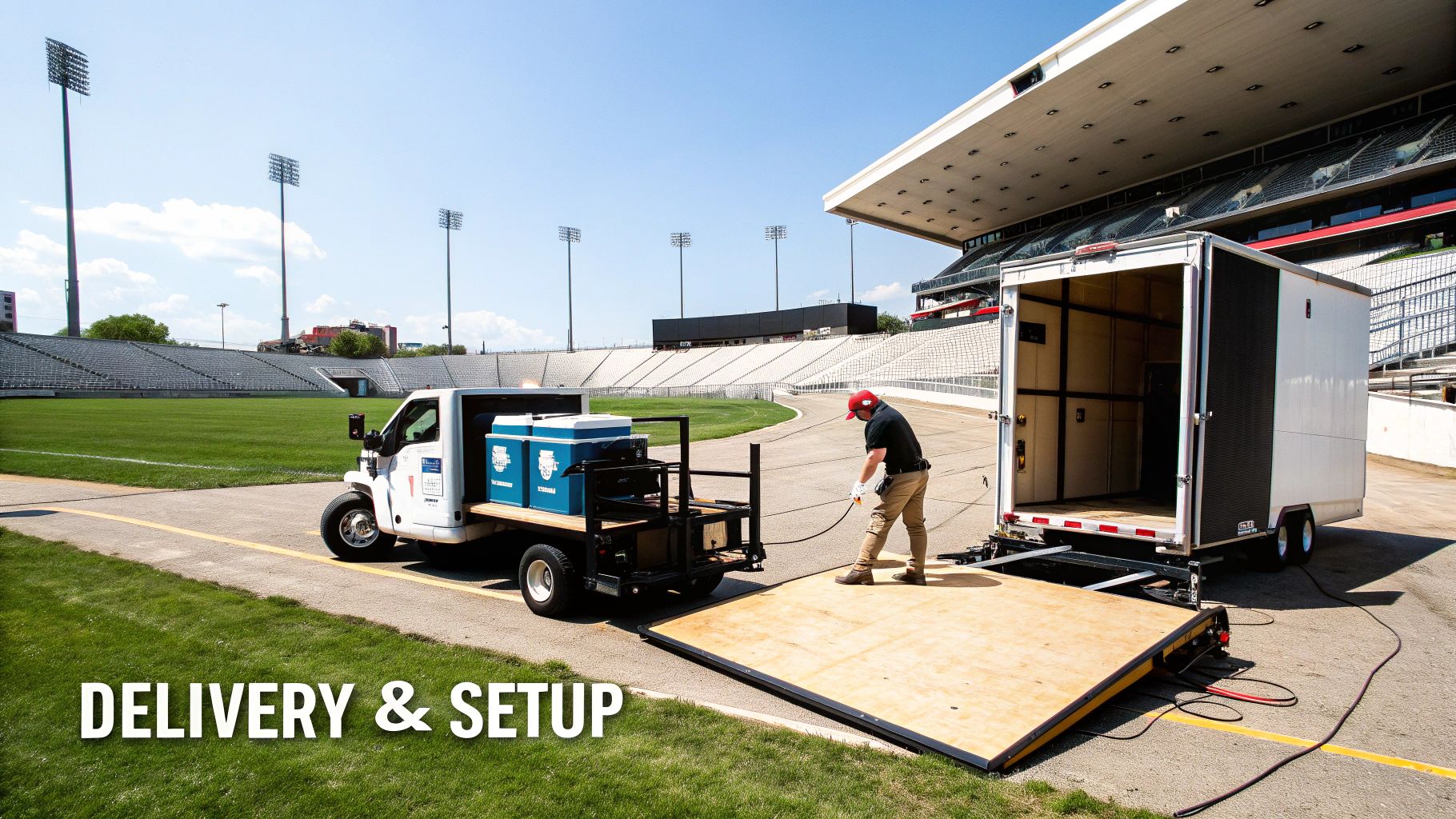
Getting a mobile fridge exactly where it needs to be makes the whole day smoother. Before anything else, map out access routes and check gate clearances.
Don’t let road restrictions become a showstopper.
- Assess road width and surface quality to confirm truck clearance
- Measure gate height and width for trailer access
- Verify floor-loading capacity against fridge weight
- Note nearby power outlets or generator drop points
- Share site contact details and arrival time windows
Sharing Your Site Plan
A crystal-clear site plan is your best defence against last-minute hiccups. Highlight the fridge position with exact distances to electrical points. Don’t forget to mark hazards like low-hanging branches or overhead cables.
A precise map equals a smooth delivery.
- Guides drivers straight to the spot, cutting delays
- Keeps units away from risks like uneven ground
- Confirms ventilation gaps are respected
- Makes on-the-fly tweaks simple
Preparing The Ground And Ventilation
You need a level surface—anything else risks uneven cooling. Leave at least 10 centimetres around vents so air can circulate freely.
- Shield the unit from direct sunlight to ease its workload
- Keep space around the condenser for natural airflow
- Avoid wind tunnels that blow hot air back in
- Set up a temporary canopy if your fridge has no built-in shade
Managing Power And Cables
Neatly routed cables aren’t just tidier—they’re safer. A dedicated 220 V outlet is ideal, and a generator backup pays dividends at off-grid venues.
A handy example comes from our Gauteng team, who provide full delivery, setup and collection, so hosts can breathe easy. These cold rooms plug into standard 220 V outlets or run off electric-start generators when grid power isn’t an option.
Learn more about mobile cold room services in Gauteng
Plan generator capacity in advance. A 10 kVA unit will run two 5 m³ fridges at once. Always budget an extra 20 percent for lights or sound systems.
- Keep a small UPS for critical alarms
- Assign someone to monitor fuel levels
- Test the automatic switch-over before guests arrive
Final Pre-Event Checklist
A quick run-through now saves hours on D-Day.
- Confirm arrival window with your hire company
- Verify gate clearance and truck turning radius
- Inspect fridge door seals and alarm systems
- Review the site plan against power and cable routes
- Label all cable runs and safety zones
With these steps in place, mobile fridge hire almost sets itself up.
A clear site survey and precise placement cut setup time by up to 40 percent.
Pro Tips And Real Examples
At a farm wedding in Paarl, a narrow driveway meant we had to rethink placement. Coloured tape marked each cable run along the edge of hanging baskets.
- Labelled cables by staff member for quick troubleshooting
- Routed cords under rubber ramps to eliminate trip hazards
- Stored generator fuel in an insulated box away from public areas
That simple strategy eliminated cable faults over two days.
| Generator Capacity | Fridge Units Supported | Typical Run Time |
|---|---|---|
| 5 kVA | 1 × 2 m³ fridge | 6 hours |
| 10 kVA | 2 × 5 m³ fridges | 8 hours |
| 15 kVA | 3 × 5 m³ fridges | 10 hours |
Wrap Up Delivery Planning
Gather your team for a final walk-through of the site plan. Double-check measurements, contact numbers and any backup arrangements. Clear communication and detailed notes will turn mobile fridge hire into just another box ticked on your event checklist.
Preparation prevents chaos when every minute counts.
With delivery logistics locked down, you can move on to food-safety protocols and focus on what really matters—delivering an unforgettable event.
Ensuring Food Safety With Mobile Fridge Hire
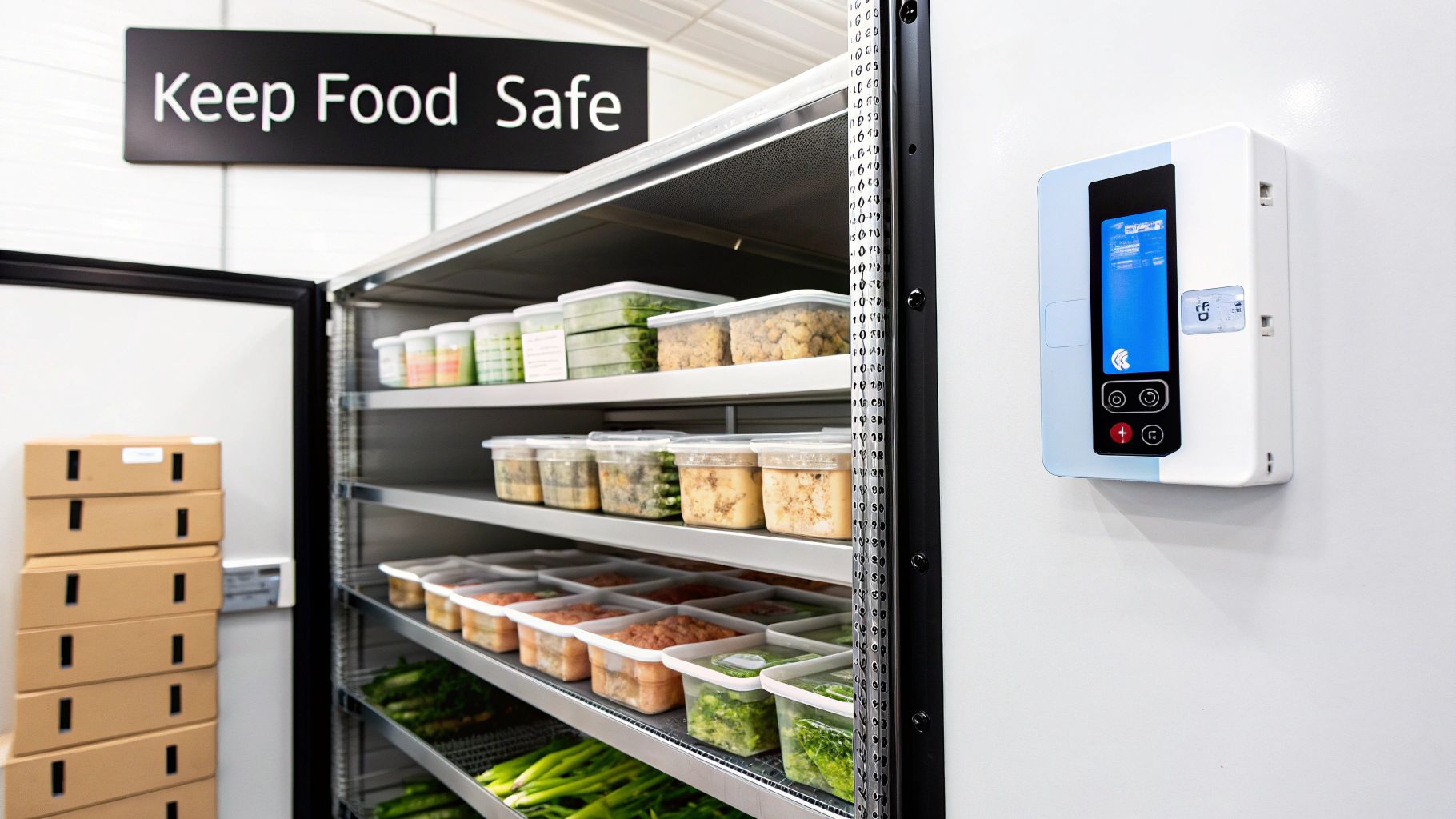
When you’re juggling trays of canapés and chilled cocktails, there’s no room for second-guessing your cold storage. One temperature hiccup can ruin hundreds of plates—and your reputation.
Hiring a mobile fridge takes the burden off your team by delivering consistent temperatures and real‐time monitoring. But even the best equipment needs a solid plan: from loading techniques to sanitation routines, every detail counts.
Ideal Temperature Set Points
Different foods demand their own safe zone. After talking to event pros, most slashed food-safety issues by 95% simply by sticking to these benchmarks:
- Raw Meat: 0 °C to 2 °C to keep salmonella at bay
- Dairy Products: 1 °C to 4 °C for peak creaminess
- Leafy Produce: 2 °C to 5 °C to hold that satisfying crunch
- Ready-to-Serve Items: 3 °C to 4 °C for flavour and safety balance
Loading Plan To Prevent Hotspots
Air needs space to flow—crowding shelves or blocking vents invites warm pockets and uneven cooling. Keep things moving with this simple approach:
- Place heavy items on bottom shelves
- Maintain a 10 cm gap from back walls and vents
- Alternate high- and low-risk products for even chill
- Label each shelf so restocks happen in a flash
For instance, a Stellenbosch caterer stacked raw meats at the bottom and rotated stock daily. The result? Fewer temperature spikes during rush service.
Pre-Event Checklist For Food Safety Logging
A quick yet thorough checklist avoids last-minute scrambles. Tick these off before those doors swing open:
- Verify that door seals close snugly
- Test alarms and note their trigger points
- Calibrate probes to ±0.5 °C accuracy
- Log baseline temps every eight hours
- Set limits on how long doors stay open
“Switching to a four-hour logging routine and enforcing door-open limits saved us hours of double‐checks and cut waste dramatically,” says head chef Thandi Mbele.
Sanitation Best Practices
A spotless fridge is as critical as the correct temperature. Overlooked corners or clogged drains can undo all your hard work. Follow these steps:
- Use food-grade sanitisers that comply with SANS standards
- Flush and inspect internal drains daily
- Wipe up spills immediately to avoid drips
- Swap out drip trays and gaskets after busy events
Organising Items By Risk Level
| Risk Level | Example Items | Storage Notes |
|---|---|---|
| High Risk | Poultry, Raw Meat | Bottom shelves, separate bins |
| Medium Risk | Dairy, Cooked Meats | Mid-level shelves, sealed covers |
| Low Risk | Fruits, Bottled Drinks | Top shelves, keep vents clear |
Risk Level Labelling And Zoning
Colour-coding shelves and crates makes training faster and cuts sorting time by 40%. Try this:
- Red Tags: Raw proteins, tucked away from serving stations
- Yellow Tags: Cooked dishes ready to plate
- Green Tags: Prewashed produce and beverages
Print your labels before the fridge arrives so zones are clear from the start.
Pair chilled storage with heated stations by checking out our guide on catering food warmers. With these steps in place, your mobile fridge hire becomes a reliable partner, keeping every dish safe and your guests impressed.
Navigating Pricing Contracts And Hidden Costs
Booking a mobile fridge might feel straightforward, but those extra fees can stack up fast. A clear understanding of daily, weekend and multi-day rates will keep you on budget and out of surprises.
- Daily Rates charge a flat fee per calendar day, based on fridge size and hire length.
- Weekend Packages typically cover Friday afternoon through Monday morning at a discounted price.
- Multi-Day Discounts kick in once you book longer than three days or opt for a weekly hire.
- Minimum Hire Periods often apply during our peak season (November to March).
Even after you lock in the base rate, add-ons can sneak into your final invoice.
- Delivery Distance Fees rise with each kilometre beyond your supplier’s standard zone.
- Setup And Collection Charges cover the labour to position and remove the unit.
- Cleaning Deposits hold onto cash until the fridge returns in good order.
- Insurance Premiums start at R75 per day, protecting you against accidental damage.
- Power And Generator Hire kicks in if mains power isn’t available on site.
Contract Clauses To Examine
Don’t let the small print shift unexpected costs onto you. Before you sign, zero in on these clauses:
- Liability Limits: Who pays if the fridge needs repairs or replacement after an accident?
- Force Majeure: How do loadshedding or extreme-weather events affect your hire?
- Cancellation Terms: Sliding-scale penalties can balloon if you cancel too late.
- Emergency Support: Confirm guaranteed response times and backup-unit options.
Always know your hire company’s response time before you commit.
Sample Cost Breakdown
Seeing a real-world example makes hidden fees obvious. Here’s a rough guide for a one-day 2 m³ fridge hire in Cape Town:
| Item | Cost (ZAR) |
|---|---|
| 1-Day Hire (2 m³ Fridge) | R1,200 |
| Delivery Within Cape Town | R350 |
| Cleaning Deposit (Refundable) | R500 |
| Insurance Premium (Per Day) | R75 |
| Generator Hire (Per Day) | R600 |
Negotiation Tips For Mobile Fridge Hire
You’ve got more bargaining power than you think. Here’s how to trim the final bill:
- Bundle Rates by pairing fridge hire with a mobile bar setup to share delivery fees. For ideas, Check out mobile bar service tips.
- Off-Peak Discounts if you hire on weekdays or outside public-holiday windows.
- Flexible Return Windows can reduce late-return penalties.
- Custom Insurance Options let you choose just the right coverage, often lowering daily premiums.
Savvy renters even make up to R6,000 a month sub-hiring their fridges. Dive deeper in Semela’s Industry Report.
Checklist For Hidden Fees
Before you sign off, run through this quick checklist to catch every extra cost:
- Confirm whether fuel surcharges apply beyond a set radius.
- Review penalties for short-duration or early-return bookings.
- Understand cleaning and damage deposit refund timelines.
- Verify insurance cover limits and excess amounts.
A transparent contract can save you thousands in unexpected surcharges.
When To Ask For Clarifications
Fee structures aren’t standardised across providers. Always get specifics in writing:
- Ask about zones beyond 15 km to avoid surprise transport fees.
- Challenge vague “handling” or “service” costs until you have exact figures.
- Confirm overtime charges for pickups outside normal hours.
Clarify every fee before you commit—your budget will thank you.
Common Questions On Mobile Fridge Hire
Event planners constantly juggle countless details. One of the biggest stress points is ensuring reliable cold storage on demand—and that’s where mobile fridge hire steps in.
Below are the questions we hear most. They cover everything from booking timelines and power specs to emergency support and relocation rules. These answers reflect real client experiences around Cape Town and supplier policies tailored to ABC Hire’s service area.
- Booking windows that secure fridge availability without rushed decisions
- Protocols for fridge failure and guaranteed help
- Power supply must-haves and safe cable management
Booking Timeframe
One trick is to secure your fridge months before the big day. During Cape Town’s peak season, aim for at least 4–6 months ahead. That way, you get better rates and a wider choice of units.
For smaller gatherings, a lead time of 4–6 weeks usually works. Waiting until the last minute? You might still get a fridge, but choices and flexibility could disappear fast.
- Reserve 6 months in advance for large weddings or festivals
- Book 4 weeks ahead for intimate celebrations
- Confirm delivery slots early to avoid schedule clashes
- Ask about seasonal peak surcharges and availability
- Review cancellation policies for stress-free changes
At a Stellenbosch festival, one organiser booked a 5 m³ cold room trailer six months out. No rush fees, no equipment shortages—just smooth sailing.
“Booking early is the difference between choice and compromise,” says event manager Themba Sithole.
Emergency Support
When chilled goods are on the line, you need help at a moment’s notice. The best hire companies back you with 24/7 emergency assistance and clear response times.
Always get emergency contact numbers and repair protocols in writing. That way, you’re never left guessing if the fridge sputters or shuts down.
- Keep your supplier’s emergency hotline close at hand
- Verify response times and backup-unit options
- Test the support line during site visits
“Emergency support guarantees ensure you never lose control of your cold chain.”
During a Durban product launch, a client sidestepped spoilage when a technician arrived within two hours to repair their unit—and they’re still raving about it.
Relocation Restrictions
Moving a heavy cooling unit sounds simple, but DIY transport is a recipe for disaster. Most hire contracts forbid customers from relocating the fridge themselves after delivery.
This protects both your event and the supplier’s insurance. If you need refrigeration in multiple spots, ask for extra units or a professional relocation service.
| Allowed Actions | Not Allowed Actions |
|---|---|
| Finalise placement before setup | Moving unit after handover |
| Communicate preferred location | DIY transport during hire |
| Confirm site plan with driver | Relocating without support |
At a Cape Town wedding, a narrow courtyard meant the fridge had to be professionally moved—adding an unexpected R500 to the bill. A quick site plan would have saved the extra charge.
Power Requirements
Most mobile fridges draw from a 220 V single-phase supply, running off a dedicated 15 A plug point. Confirm these specs well before the event day.
For remote venues, factor in a 10 kVA generator to handle two 5 m³ units plus extra equipment. Label and route cables carefully to avoid trip hazards.
- Check for a 220 V 15 A outlet on site
- Label and secure cables to prevent accidents
- Verify generator capacity against total load
- Test switch-over procedures and UPS systems before guests arrive
Keep spare extension leads and surge protectors on hand. They can mean the difference between smooth service and a fridge meltdown.
Final Thoughts
Getting these details nailed down early turns cold storage into a non-issue. With clear booking windows, power checks and relocation plans, you’ll sidestep last-minute headaches.
Share this checklist with your crew and ensure every item is confirmed in writing:
| Task | Checkpoint |
|---|---|
| Booking Time | 4–6 months ahead |
| Power Setup | 220 V outlet labelled and tested |
| Emergency Contacts | Hotline and response times recorded |
| Relocation Plan | Site plan confirmed with driver |
| Temperature Checks | Log every four hours |
Ready to lock in your mobile fridge hire with ABC Hire? Visit ABC Hire to reserve your unit and secure reliable cold storage for any event.