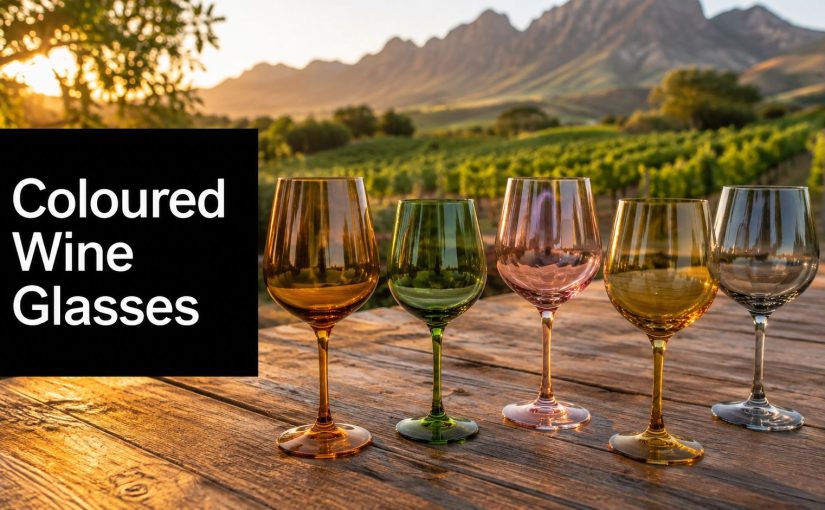
Coloured Wine Glasses for Events: A Practical Guide

You're standing in front of a hire quote, and the numbers look sensible until you realise the glassware line is doing two jobs at once. It has to suit the tablescape, survive transport to Stellenbosch or the Cape Town CBD, and still look tidy after a long sit-down, a few slammed toasts, and the last round coming back to the rack. That's where coloured wine glasses stop being a styling whim and start being a rental decision.

In Cape Town and the Winelands, planners often get pulled in two directions. The moodboard wants amber stems, green bowls, or a dramatic table moment for golden hour. The venue manager wants a setup that washes cleanly, matches replacement stock, and doesn't leave you with a pile of chipped oddments after the event.

Planning an Event Around Coloured Wine Glasses

A wedding coordinator in Stellenbosch gets the same call every week. The couple has a Pinterest board full of blush napkins, candlelight, and tinted stemware, then the hire quote lands and the pretty part collides with the practical part. The same thing happens with brand teams in the Cape Town CBD, only the brief is tighter, the launch palette is stricter, and nobody wants glassware that looks like a retail display instead of part of a live event.

Start with the room, not the glass

The right choice depends on what the guest sees first. A long table in the Winelands can carry soft amber or green accents because daylight, linen, foliage, and wine all work together. A dark evening function with LEDs needs stronger contrast, otherwise delicate tinting disappears and the table just reads as “plain glass”.

Practical rule: choose coloured glassware only if it earns its place in the room. If the colour won't show from a seated guest's eye line, it's not doing enough work.

The historical logic is useful here. The old shift from opaque coloured vessels to transparent wine service is why clear glasses became the default for wine evaluation, and the current expectation is still that the bowl should let you see the wine's colour. That's the standard the styling has to push against, not ignore, and the Oxford archaeology guidance captures that transition clearly in the history of glass as a display medium for wine itself Oxford archaeology guidance on glass.

For event planning, the decision is simple. Use coloured wine glasses when the palette needs a deliberate accent, when the table is large enough to justify a visual statement, or when the venue lighting supports it. Skip them when the wine list is central, the room is already busy, or the styling budget is tight enough that a cleaner glass choice would free money for candles, florals, or better linen.

What Counts as a Coloured Wine Glass
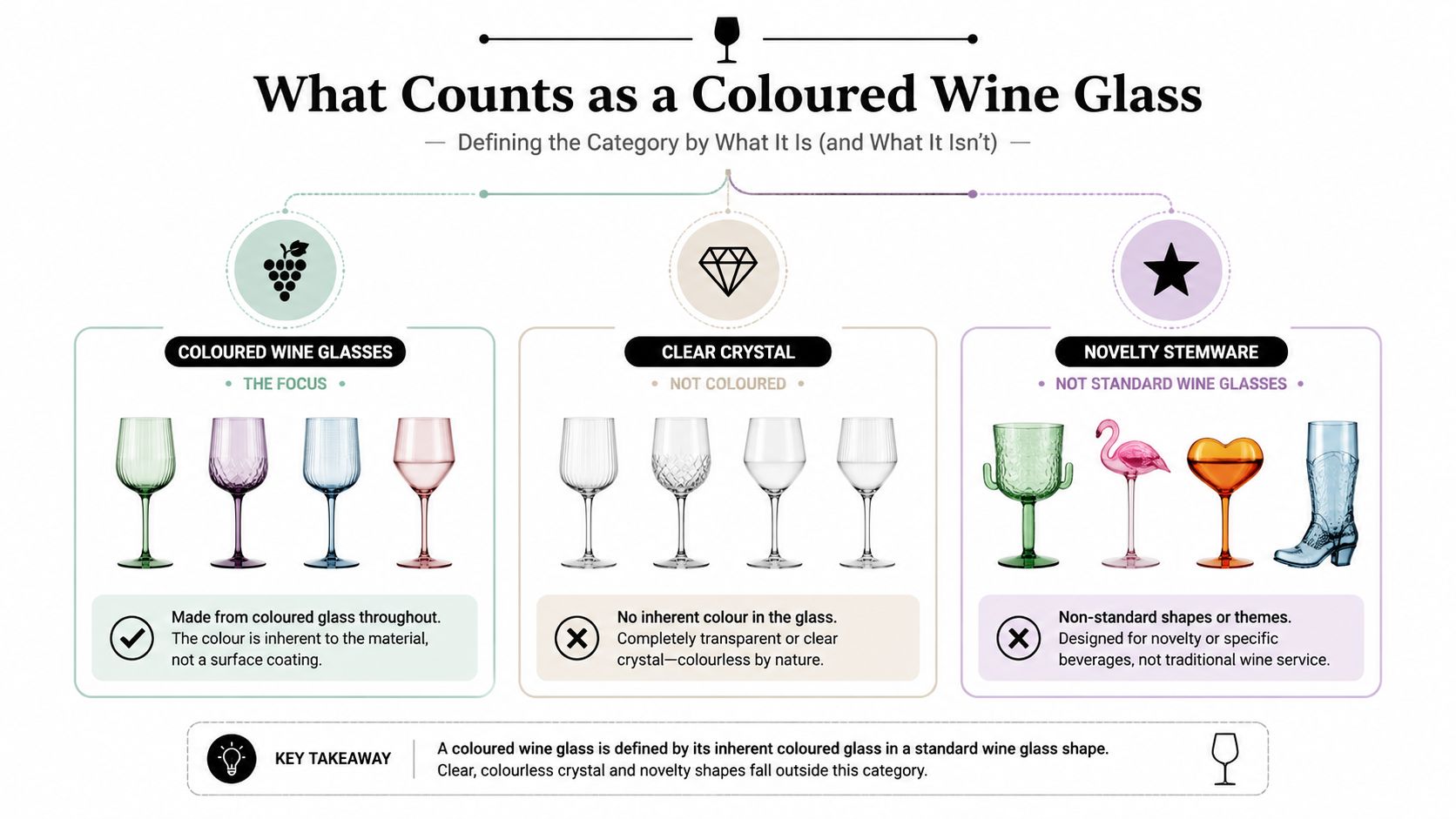
A visual guide explaining the classification of coloured wine glasses versus clear crystal and novelty stemware.

People use the term loosely, and that causes bad hire decisions. A coloured wine glass is not the same thing as a novelty goblet, a tinted tumbler, or a random mix of cut crystal left over from another function. For rental purposes, the category should stay narrow, because narrow categories are easier to source, wash, replace, and match on the day.

The three useful families

The first family is glass, which gives the most authentic feel and usually the cleanest look for a premium table. The second is acrylic, which is lighter and safer for some casual or high-traffic settings, but can look less refined under close inspection. The third is polycarbonate, which sits closer to event durability than to classic glass elegance and usually makes sense when breakage is the bigger problem than appearance.

Within those families, the colour treatment changes the brief. A fully tinted bowl gives the strongest visual statement. A rim-tinted glass reads subtle and modern. A stem-tinted option is easier to live with if you want colour without hiding the wine itself. Amber and green tones are the most practical because they still read as glassware rather than prop styling.

That distinction matters if you're comparing a wedding line with a corporate line. Premium weddings usually want coloured glass that still feels like proper stemware in the hand. High-volume activations can tolerate lighter materials if the event risk profile is high and the styling brief is more about impact than wine ritual. If you already know you want clear crystal for comparison, keep this crystal glassware guide open while you compare the options.

Glass vs Acrylic vs Polycarbonate Compared

A Cape Town planner does not choose coloured wine glasses by look alone. If the service has to survive packing, delivery, unloading, guest handling, collection, and wash-and-return, the material choice decides whether the line still looks sharp by the end of the night.

Material Feel and optics Breakage risk Best for
Glass Best clarity, best sound, most convincing on a dressed table Highest if handled badly Premium weddings, tastings, formal dinners
Acrylic Lighter in hand, less crisp visually, practical for casual service Lower than glass, but still needs care Home events, poolside setups, relaxed functions
Polycarbonate Tough, consistent, more functional than luxurious Lowest of the three High-traffic corporate events, school dances, outdoor bars

Glass still wins on presentation. It gives the cleanest optics, the most convincing hand-feel, and the right sound on a toast. For a formal wedding table or a seated dinner, that matters more than saving a few breakages. If you want clear stemware as the reference point for a premium line, keep this crystal glassware guide open while you compare options.

Acrylic is the practical middle ground. It is lighter, easier to move, and less punishing if staff are working fast, but it does not carry the same refined look under close inspection. Use it for casual functions, poolside service, and events where the glassware needs to survive a lot of handling without becoming the focus of the table.

Polycarbonate is a workhorse. It makes sense when breakage is the bigger problem than elegance, especially at high-traffic corporate events, school functions, and outdoor bars. It will hold up better than the other two materials, but it reads as utility first, style second. That trade-off is fine when the brief is controlled service and lower risk.

A wedding planner with 150 guests should normally start with glass if the table is formal and service is seated. A corporate planner running 500 guests should look harder at acrylic or polycarbonate, because the operational risk rises with volume and the bar gets more traffic. The table setting can still feel polished, but the material has to match the pace of the room.

A mixed approach works only if it is deliberate. Use glass where guests are seated and photographed, then move to a tougher material where staff need speed and breakage control. For a private braai, I would only use coloured glass if the table itself is the statement. For a matric dance, I would prioritise stock consistency and breakage control over fragile glamour, because the rental line has to survive the full service cycle without surprises.

Choose the material for the event you are running. If guests will lift the glass repeatedly and the table needs polish, use glass. If the event will be fast-moving, heavily serviced, or exposed to knocks, use acrylic or polycarbonate and budget for fewer headaches at collection time.

How Colour Changes the Wine Experience
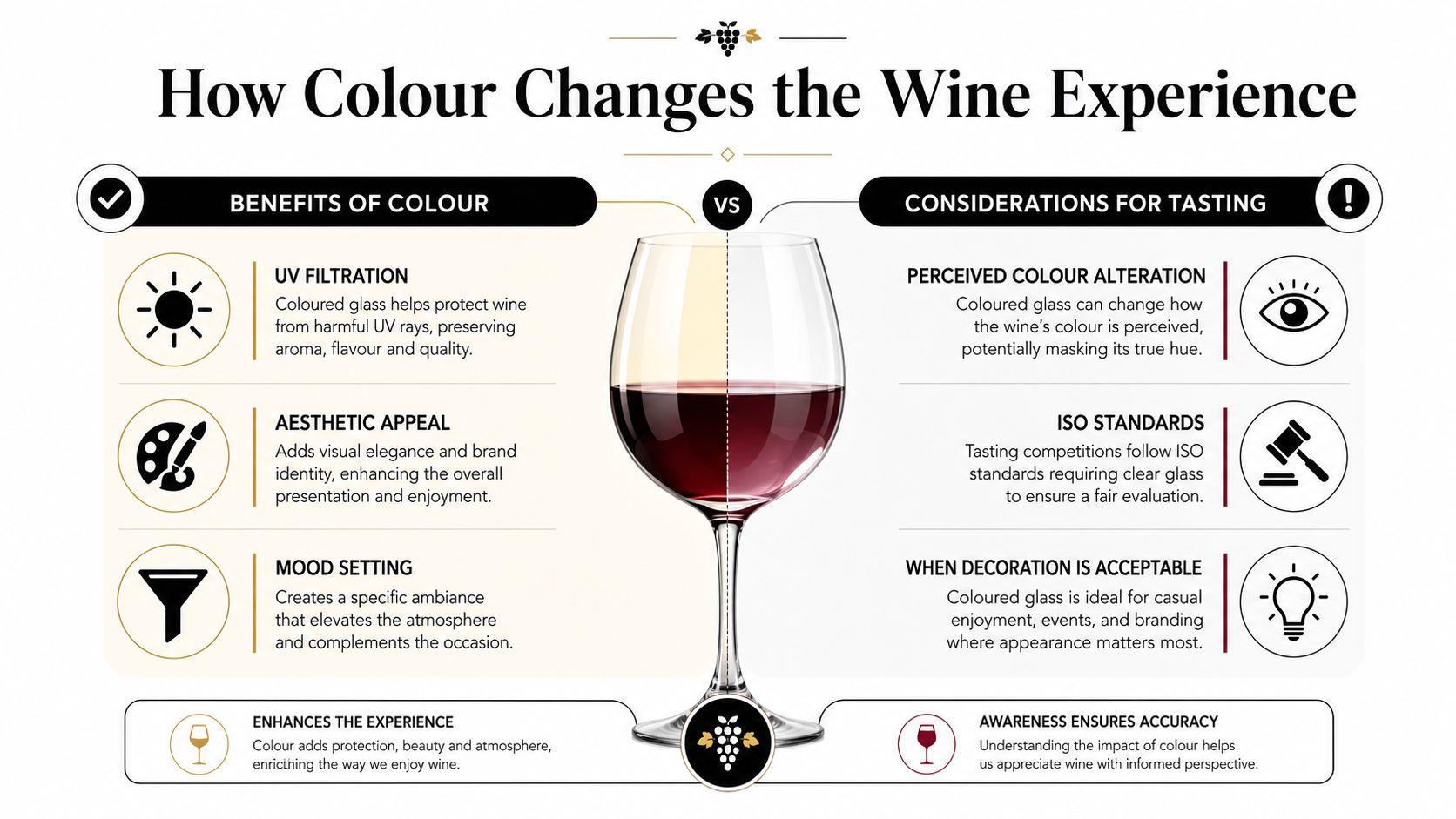
An infographic comparing the benefits and tasting considerations of using coloured glass for wine drinking.

Colour changes how wine reads on the table, and it changes what guests can judge before they even sip. The ISO 3591 tasting standard requires a colourless transparent glass so the wine's appearance isn't masked, although it also allows a highly coloured glass for special tests when the visual factor is being removed on purpose ISO 3591 preview. That tells you everything you need to know about the divide between tasting and styling.

Where colour helps

There's a practical side to coloured glass too. Technical notes on wine-bottle glass show that clear glass gives the weakest UV protection, while green and amber glass block more of the damaging wavelengths, with one note reporting clear glass transmitting about 90% of 350 nm light, green about 70% at 370 nm, and amber giving the strongest protection across the UV spectrum glass and UV note. For venues with bright hospitality lighting, that's relevant to presentation and storage around the bar, even if it's not a tasting argument.

The event translation is straightforward. A coloured rim gives a light accent and still leaves the bowl open. A coloured stem is easier to live with on a lunch table because the wine stays visible. A coloured bowl is the boldest choice, but it also hides the wine the most, so it belongs in themed functions, not in wine-led tastings.

A Stellenbosch long-table lunch can carry colour because the setting is generous and the daylight is softer. A Cape Town evening activation is different. LED light can flatten weak tints, so the glass either needs enough colour to register or it should stay clear and let the branding, lighting, and florals do the visual work.

The blunt rule is this. If the guest is meant to evaluate the wine, stay clear. If the guest is meant to enjoy the table as part of the brand or event story, colour is fair game.

Styling and Colour Pairing for Real Events
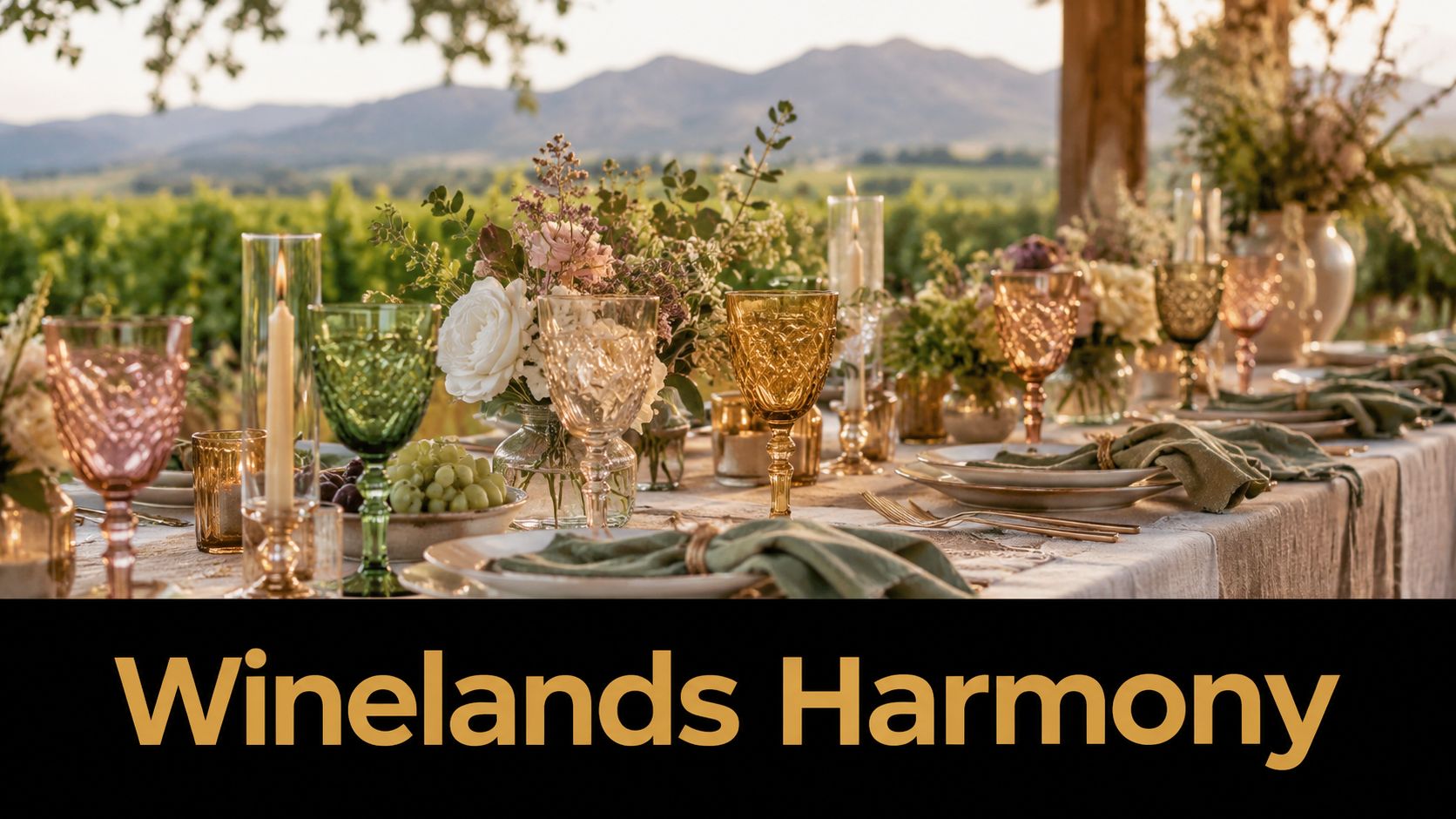
An elegant outdoor table setting featuring vibrant colored wine glasses and floral centerpieces against a vineyard backdrop.

A styling brief only works when it's specific enough for the florist, linen supplier, and rental team to follow without improvising. If you want the glassware to pull its weight, it needs to echo something already on the table, not arrive as a random accent. The easiest way to brief it is by palette, contrast level, and lighting condition.

Three pairings that work in Cape Town and the Winelands

For a soft Winelands wedding, use sage, blush, and amber. Choose amber or lightly tinted stems, keep the linen warm and matte, and let the flowers stay loose rather than tightly arranged. The glassware should show up most strongly at sunset and during the first toast, when the light catches the bowl and the table stops looking flat.

For a high-contrast Cape Town brand launch, go deep green and gold. Use stronger coloured stems or bowls, pair them with black or deep neutral linen, and keep floral work architectural rather than romantic. This is the kind of event where the glassware needs to read from across the room, especially around the bar and media wall.

For a school formal, lean into jewel tones under LED lighting. Use coloured glass only if the lighting plan is strong, because weak tinting gets lost fast. Keep the rest of the table controlled, or the room will look messy rather than intentional.

If you're looking for general decor direction beyond glassware, a bridal shower décor guide can help you think about palette, table focus, and how small colour decisions read in photos. And if your event leans more towards flutes and celebration service than wine service, compare the look with champagne coupe glasses before you lock the table plan.

My advice is plain. Pick one hero colour, one support colour, and one neutral base. If all three fight for attention, the glassware will look accidental, and the table will feel over-styled instead of polished.

Renting Coloured Wine Glasses in Cape Town and the Winelands

The rental side is where planners get caught out. You can love the styling and still lose the day if the stock count is thin, the replacement colour doesn't match, or the venue timing is vague. A serious rental brief should cover quantities, breakage, cleaning, and the delivery window before anyone confirms.

What to ask before you book

Start with the guest count, then work backwards from service style. For a seated course, plan one wine glass per guest per course plus a buffer, because the buffer is what saves you when a glass disappears or gets chipped before mains. If the supplier won't discuss a sensible breakage allowance in writing, keep shopping.

Ask for the exact delivery and collection windows, not just the date. That matters in Cape Town, Stellenbosch, Franschhoek, and Paarl because venue access can be tighter than the event plan suggests.

Cleaning and return handling matter just as much. A proper wash-and-return cycle should be clear about who rinses, who packs, and who takes the blame if stock comes back mismatched. If you're mixing coloured and clear pieces on one table, ask how they're being packed so the replacement stock on the day doesn't look like a different line.

If you want a practical planning reference for the broader glassware mix, keep Wedding Studio in mind as a venue and planning resource, then compare your glassware ask with ABC Hire's cutlery and crockery hire guide so the whole table is aligned. ABC Hire also carries event glassware, so it's one of the suppliers you can include when you're checking whether coloured lines can be coordinated with the rest of the hire order.

Budgeting and Pricing for Coloured Wine Glasses

Be honest with the budget before you fall in love with the look. Glass is usually the premium choice, acrylic sits in the middle, and polycarbonate is the functional option when breakage control matters more than the feel of the glass in hand. If you're planning a 150-guest wedding, the full hire quote should reflect the material, delivery, cleaning, and the buffer stock, not just the per-glass figure.

A useful budget should also include the bits planners forget. Collection fees, weekend handling, replacement costs for broken stock, and minimum-order rules on coloured lines all push the total up quickly. If a quote looks suspiciously cheap, it usually means one of those items has been left out.

For a real-world planning stance, I'd keep the budget conversation simple. Glass costs more because it looks better. Acrylic and polycarbonate save money and reduce risk, but they're not the same visual category, so don't pretend the cheaper option delivers the same table finish. Choose the material that matches the event, then spend the saved money on linen, florals, or lighting if the table still needs more impact.

Booking Coloured Wine Glasses from ABC Hire

Send four details with your quote request. Give the guest count, the event type, the venue location in Cape Town, Stellenbosch, Franschhoek, or Paarl, and your colour or material preference. Then ask for delivery time, collection time, breakage terms, and whether matching extras like coloured water glasses or champagne flutes are available in the same line.

If you're choosing quickly, use this rule. Glass suits formal weddings and tastings, acrylic suits relaxed private events, and polycarbonate suits high-traffic functions where durability comes first. Lock that in writing, or the hire order will drift.


If you're planning a wedding, corporate function, or private celebration and you want the glassware to look right without creating a headache, start with a proper hire quote from ABC Hire. They supply event glassware for Cape Town and the Winelands, so you can compare coloured options against the rest of your table hire in one place.

The Ultimate Guide to Champagne Coupe Glasses

Walk into any beautifully styled event in Cape Town, from a sun-drenched wedding in the Winelands to a chic corporate gala, and you'll likely spot a particular detail that whispers pure class: the champagne coupe glass. It’s so much more than just a vessel for bubbly. The coupe is a statement piece, a nod to timeless glamour that instantly elevates any celebration.

Why Coupe Glasses Define Modern Event Elegance

Three elegant champagne coupe glasses with clear liquid on a white table at an outdoor event.

The coupe’s return to the spotlight is no coincidence. This classic glass has firmly established itself as the top choice for event planners wanting to craft an atmosphere of sophisticated fun. There's something about its wide, shallow bowl that feels both wonderfully vintage and strikingly modern, setting a luxurious and festive tone from the moment guests arrive.

Unlike any other glass, the coupe carries a story. It brings to mind the vibrant buzz of Roaring Twenties jazz clubs, the sparkle of Hollywood's Golden Age, and grand European soirées. When your guests hold a coupe, they’re not just holding a drink—they’re taking part in a legacy of glamour.

A Symbol of Sophistication

For those of us planning events in and around Cape Town, the coupe gives us a real aesthetic edge. Its open shape is perfect for showing off the beautiful colour and lively bubbles of a great Cap Classique, and the elegant stem brings a touch of grace to the tablescape. Let's be honest, it’s a key piece of the décor, not just a functional item.

In this guide, we'll get into everything you need to know about using these iconic glasses for your events. We'll cover:

  • The coupe's rich, and often debated, history.
  • Its practical advantages over other glassware shapes.
  • Creative ideas for styling coupes at weddings and corporate functions.

By the time you're done, you’ll see exactly why hiring champagne coupe glasses is one of the smartest moves you can make to create truly unforgettable moments, whether you're planning an intimate gathering in Stellenbosch or a massive gala in the city centre.

Getting the glassware right is one of those details that makes all the difference, and knowing your options is the first step. For a wider look at event essentials, you might want to check out our guide to elegant party rentals, which explains how all the different pieces come together to create a stunning, cohesive look. It’s the kind of knowledge that helps you make decisions that perfectly match your event's vision.

The Surprising Story Behind the Champagne Coupe

You’ve probably heard the story. The one that says the champagne coupe was modelled on the breast of Marie Antoinette, the ill-fated Queen of France. It’s a wonderfully scandalous tale, painting a picture of a court so decadent they’d toast the queen’s health from a mould of her own body.

It's a fantastic story, isn't it? The only problem is, it’s not remotely true. But that little piece of fiction has certainly added to the glass's mystique over the years.

From English Invention to European Icon

So, if not from a French queen, where did champagne coupe glasses actually come from? The real story is a little less risqué but just as interesting. We have to go back to England in 1663, more than a century before Marie Antoinette was even on the scene.

This saucer-shaped glass was designed specifically for sparkling wine and quickly became the standard across Europe for nearly 300 years. It was the glass of choice for royal coronations, high-society weddings, and grand balls, cementing its association with pure luxury and celebration.

The coupe glass wasn't just a vessel; it was an emblem of an era. It represented a time of opulence and high-flown celebration, a tradition that modern events still tap into today when choosing this iconic glassware.

The Golden Age of Glamour

The coupe really found its moment in the Roaring Twenties. It became the signature glass of the entire Jazz Age—you can just picture it in the hands of flappers in underground speakeasies and at the extravagant parties described in The Great Gatsby. This was the era that defined the coupe as a symbol of joyous abandon and newfound prosperity.

Hollywood then immortalised its glamour. Think of all those classic black-and-white films where stars like Marilyn Monroe and Humphrey Bogart raise a coupe in a dramatic toast. The glass became shorthand for sophistication and silver-screen elegance.

That rich, glamorous history is being rediscovered right here. In South Africa, the coupe's 1920s allure has sparked a massive comeback, with its popularity in Cape Town's event scene jumping by 35% since 2020. This trend is part of a bigger demand for luxury experiences, with the country's glassware market expected to hit USD 119.07 million by 2033, driven largely by event rentals. You can explore detailed champagne glass industry insights to see the full picture.

Today, choosing champagne coupes for a wedding or corporate event in the Winelands isn’t just a style choice. It’s about weaving a story of glamour and history right into your celebration.

Coupe or Flute: Which Glass Is Right for Your Celebration?

Deciding between a champagne coupe and the classic flute is so much more than an aesthetic choice. It’s about the kind of experience you want to create for your guests. The glass you pick directly impacts the aroma, the bubbles, and the overall feel of your toast.

Think of it this way: each glass has its own personality and purpose.

The champagne coupe, with its wide, open bowl, is all about aroma. It exposes more of the bubbly to the air, letting those complex, beautiful notes of a fine Cap Classique or vintage champagne really open up and shine. If you’re planning a sophisticated tasting or a formal dinner where the quality of the wine is front and centre, the coupe is your best friend.

On the other hand, the tall, slender flute is a master at preserving bubbles. Its narrow shape keeps the surface area small, meaning the carbonation sticks around for much longer. This makes the flute absolutely perfect for standing receptions where guests might be mingling and holding their glasses for a while. No one wants their bubbly to go flat before the speeches are even done!

Aesthetics and Atmosphere

Beyond the practical science of it all, the look of the glass sets a distinct tone. The coupe just screams vintage glamour and festive fun. It feels celebratory and a little bit Gatsby, making it a brilliant choice for a themed party or a chic, modern wedding.

The flute brings a more traditional and formal elegance to the table. Its tall, statuesque shape is the classic symbol of celebration—crisp, clean, and timeless.

If you do lean towards the flute, you can add a wonderful personal touch to your event. Exploring options like personalized champagne flutes can turn the glassware into a beautiful keepsake for your guests to take home.

To help you visualise the choice, this simple flowchart breaks it down based on the vibe you’re going for.

A flowchart guiding glassware choice based on event vibe and drink type, featuring coupe and flute glasses.

As you can see, if a modern, chic atmosphere is what you're after, the coupe is a fantastic option. For those classic events where you really want to showcase the bubbles, the flute is still king.

Champagne Coupe vs Flute at a Glance

To make the decision even simpler, we've put together a quick side-by-side comparison. This table breaks down the key differences to help you choose the perfect glass for your needs.

Feature Champagne Coupe Champagne Flute
Aroma Excellent Limited
Bubbles Dissipates faster Preserves longer
Best For Tasting, cocktails, towers Toasts, standing events
Style Vintage, glamorous, chic Traditional, classic, formal
Stability Less stable, prone to spills More stable for mingling

Ultimately, there’s no single "right" glass—only the one that’s right for your event. If you want to highlight the rich aromas of a premium bubbly, the coupe is the clear winner. But if your priority is keeping that fizz alive for a long-lasting toast, you can’t go wrong with the flute.

Of course, glassware is just one piece of your tablescape puzzle. To create a truly cohesive look, you need to consider how your glasses will pair with everything else. For more tips on getting it just right, check out our detailed article on cutlery and crockery hire and make sure every element on your table works together beautifully.

Creative Ways to Use Champagne Coupes Beyond Bubbly

A collection of colorful cocktails in champagne coupe glasses and other glassware at a Beyond Bubbly event.

While the name gives away their most famous role, the real genius of champagne coupe glasses is just how versatile they are. Once you start thinking beyond bubbly, you’ll discover a whole world of creative uses that let you get incredible style and value from a single piece of rental glassware. That iconic shape isn’t just for fizz; it’s the perfect vessel for all sorts of drinks and even desserts.

This is exactly what makes them such a clever choice for any event planner. Why hire several different types of glasses when one can do the job beautifully across multiple courses? The coupe can be that stylish, consistent thread that runs through your whole event, from the first welcome drink to the last sweet bite.

Classic Cocktails and Speakeasy Chic

The wide, open bowl of a coupe is simply perfect for showing off cocktails that are served "up"—that is, chilled and strained without any ice. It gives the drink a generous surface area, which is fantastic for releasing all those complex aromas and showing off its true colour. It just feels sophisticated, instantly taking you back to the golden age of cocktails.

This makes them the natural choice for serving a well-chosen menu of classic drinks.

Just imagine your guests sipping on:

  • A Classic Daiquiri: The clean, crisp profile of this rum cocktail is beautifully framed by the coupe’s simple, elegant lines.
  • A Clover Club: You can’t beat the visual of that foamy, pale pink gin classic against the wide backdrop of the glass.
  • An Aviation: That stunning, soft violet-blue colour from the crème de violette is put on full display.

Using coupes is a shortcut to adding a touch of speakeasy glamour to your bar setup. It’s an effortless way to make your drink service feel more premium, especially if you’re bringing in a dedicated partner for a mobile bar service to craft these timeless drinks.

From Decadent Desserts to Dramatic Towers

But the coupe's talents don't stop at the bar—they extend right into the kitchen. That shallow, bowl-like shape is a surprisingly practical and beautiful way to serve individual desserts. Think of a rich chocolate mousse, a silky panna cotta with a bright berry coulis, or a fluffy lemon posset served in these glasses. It’s a simple change that makes the dessert course feel so much more luxurious.

And of course, we can’t talk about creative uses without mentioning the ultimate showstopper: the champagne tower.

A cascading champagne tower is so much more than a drink station; it's a piece of interactive theatre. It creates a stunning focal point for your celebration and guarantees an unforgettable photo opportunity for weddings and galas.

Building one is actually more straightforward than it looks. You’ll need a solid, perfectly level table to start. Create a square base with the glasses, making sure each one is touching its neighbours. Then, stack the next layer on top, placing the base of each coupe over the diamond-shaped gap formed by the four glasses beneath it. Keep going until you have a single glass at the very top. All that’s left is to slowly pour chilled bubbly into that top glass and watch the magic happen as it cascades down.

How to Style Your Event with Coupe Glasses

An elegantly styled outdoor event table with a floral centerpiece, candle, wine glass, and cutlery.

This is where the magic happens and your vision truly comes to life. Weaving champagne coupe glasses into your theme isn't just about placing them on a table; it's about crafting an atmosphere and an aesthetic that runs through the entire celebration. Their iconic shape makes them a surprisingly powerful styling tool.

The trick is to use the glasses to either lean into your chosen theme or create a beautiful contrast. Just think about how those elegant, curved lines can elevate your whole look.

For a ‘Great Gatsby’ or Art Deco-inspired party, for instance, the glamour of a coupe is practically non-negotiable. Imagine them paired with geometric patterns, beaded table runners, and rich gold or black cutlery. That combination alone instantly whisks your guests back to the Roaring Twenties.

Matching Coupes to Your Event Theme

But the coupe can also create a stunning sense of contrast. Picture a rustic wedding in the Cape Winelands: the sophisticated silhouette of a coupe sitting on a raw, natural wood table, nestled amongst soft florals and organic linen napkins. The mix of refined glassware with earthy textures is just so visually striking.

You’ll also want to think about how the glasses will play with your lighting. That broad surface area is brilliant at catching the light.

  • Evening Receptions: For an indoor or nighttime event, coupes will beautifully reflect the soft, warm glow of candlelight. It’s an easy way to dial up the intimacy and romance.
  • Daytime Events: At an afternoon garden party or a sun-drenched lunch, they'll catch the natural sunlight, adding a wonderful sparkle across your tablescapes.

The real artistry lies in using champagne coupe glasses not just as vessels, but as integral components of your design. They act as small, reflective surfaces that amplify the beauty of your lighting and table décor.

Creating a Cohesive Tablescape

To get that polished, intentional feel, it’s vital to think about the entire tablescape. The coupe is a key player, but it’s part of a team. You need to consider how it partners with the other elements to tell one cohesive story.

Start with your centrepieces. If you have tall, dramatic floral arrangements, the coupe's low profile brings a lovely balance to the table. For lower, sprawling centrepieces, the coupes add a touch of classic height without blocking anyone's view.

Then, look at your tableware and cutlery. A vintage-style coupe might look incredible with ornate, silver-plated forks and knives. A modern, minimalist coupe, on the other hand, could be the perfect match for sleek, contemporary plates. Every detail adds to the final picture, turning each setting into a small, thoughtful work of art.

Here is the rewritten section, crafted to sound completely human-written and natural, as if from an experienced event expert.


The Smart Way to Hire Glassware for Your Cape Town Event

When you’re pulling together a beautiful event in Cape Town or the Winelands, your to-do list can feel a mile long. Glassware is one of those details that can quietly chew through your budget and create a ton of logistical headaches. Honestly, for most celebrations, buying simply doesn't make sense.

Hiring your champagne coupes is almost always the smarter move. It takes the stress of storage, careful transport, and the dreaded post-event clean-up completely off your plate, letting you actually enjoy the party you’ve planned.

Calculating Your Needs and Understanding Policies

Here’s a tip straight from the trenches: never order just one glass per person. It’s just not enough. Drinks get misplaced, and guests will always appreciate a fresh, clean glass for the next round or a different cocktail. We always advise clients to budget for 1.5 to 2 glasses per guest. That way, you have a plentiful supply of pristine coupes for welcome drinks, the main toast, and whatever else you’re serving through the night.

When you hire, you're not just getting glasses; you're getting access to high-quality, event-durable glassware without the hefty price tag. In the incredible Cape Town event scene, champagne coupes have become a signature item. You can see this trend in the numbers—the South Africa Glassware Market was valued at USD 71.27 million in 2024 and is expected to jump to USD 119.07 million by 2033. This growth is massively influenced by upscale events where coupes are the go-to rental.

For us on the ground, this translates to huge demand from planners in hotspots like Stellenbosch and Franschhoek. In fact, around 80% of all event glassware is now hired, which can cut costs by up to 40%. You can discover more about the South Africa glassware market to see just how big this shift is.

Before you sign on the dotted line, make sure you’re crystal clear on the hire company's policies. There are two big ones to check:

  • Cleaning: Does the fee include cleaning? Most professional outfits like us handle all the washing. All you need to do is get the used glasses back to us.
  • Breakage: Accidents are part of any good party. Always ask about the replacement fee for broken or missing glasses so there are no nasty surprises on your final invoice.

Choosing a rental partner is about more than just price; it's about reliability. A good company offers transparent policies and dependable service, ensuring your event runs smoothly from start to finish.

Finally, nail down the logistics. Any reputable hire service in Cape Town should offer seamless delivery right to your venue, whether you’re in the city bowl, Paarl, or Somerset West. Don't forget to confirm the collection plan for the day after. Sorting these practical details out upfront is the real secret to a stress-free event and a flawless celebration.

Your Questions About Champagne Coupe Glasses Answered

Planning an event means juggling a thousand little details, and glassware is a big one. When it comes to something as distinct as a champagne coupe, you probably have a few practical questions. We’ve been there.

We’ve pulled together the most common queries we get from event planners, with straightforward answers to help you use these gorgeous glasses like a pro.

How Many Coupes Should I Hire?

Our go-to rule is to hire 1.5 to 2 glasses per guest. It might sound like a lot, but this number is your secret weapon. It easily covers guests who might wander off and forget where they left their drink, allows for a fresh glass for their second round, and gives you plenty of backup for building that show-stopping champagne tower.

Are Coupes More Prone to Spills?

Honestly, yes. That iconic wide bowl, as beautiful as it is, makes a coupe a bit easier to spill than a tall, narrow flute, especially when guests are mingling in a crowded space.

Because of their open design, coupes really shine when guests are seated for dinner or toasts, or at a cocktail hour with plenty of tables where drinks can be safely placed.

Can I Use Coupes for More Than Just Champagne?

Absolutely! This is where they prove just how versatile they are. Champagne coupes are the classic choice for any cocktail served "up" (chilled, with no ice). Think of iconic drinks like:

  • Martinis
  • Daiquiris
  • Manhattans
  • Sidecars

They’re also a wonderfully elegant way to serve individual desserts. Imagine a rich panna cotta, a scoop of light sorbet, or a decadent chocolate mousse presented in a coupe – pure class.

What if a Hired Glass Breaks?

Look, accidents happen when people are having a good time. Every event hire company has a breakage policy. Usually, you’ll be charged a set replacement fee for any glass that’s broken or goes missing. It’s always best to ask your rental partner about their specific policy before you finalise your booking, just so there are no surprises later.


Ready to bring that touch of timeless elegance to your next celebration? ABC Hire has a stunning selection of champagne coupe glasses and all the other party essentials to make your Cape Town event truly unforgettable.

Explore our full range of event hire options and get a quote today!