You've chosen the Winelands venue, saved the chair style you like, and received a hire quote that seems straightforward. Then the venue coordinator asks for a delivery plan, the supplier asks how many items must move between the ceremony and reception, and the estate mentions that trucks can't arrive whenever they please. Suddenly, wedding furniture hire in Cape Town looks less like a décor decision and more like a small logistics project.
That distinction matters. Cape Town's event economy has the scale to support professional rental operations. In 2023, the City of Cape Town reported that its Events Permit Office permitted more than 1,200 events, while the city's Events Support Process assisted more than 170 events. The city also said 20 events generated R1.9 billion in direct economic activity, and that top events attracted more than 1.3 million attendees that year. More recently, Cape Town reported that 2025 events drew more than 3.47 million spectators and participants, with 15 events generating over R2.5 billion in economic activity across 25 reviewed events. Cape Town's events economy reporting shows why reliable delivery, setup, and venue coordination matter well beyond the look of the furniture.
The Western Cape also remains a major formal wedding corridor. Statistics South Africa recorded 22,382 marriages and unions in the Western Cape in 2024, representing 23.0% of all registrations nationally, while South Africa recorded 102,373 marriages and unions overall. The available Stats SA reference material helps explain the recurring demand for chairs, tables, lounges, and reception infrastructure across Cape Town, Stellenbosch, Franschhoek, and Paarl.
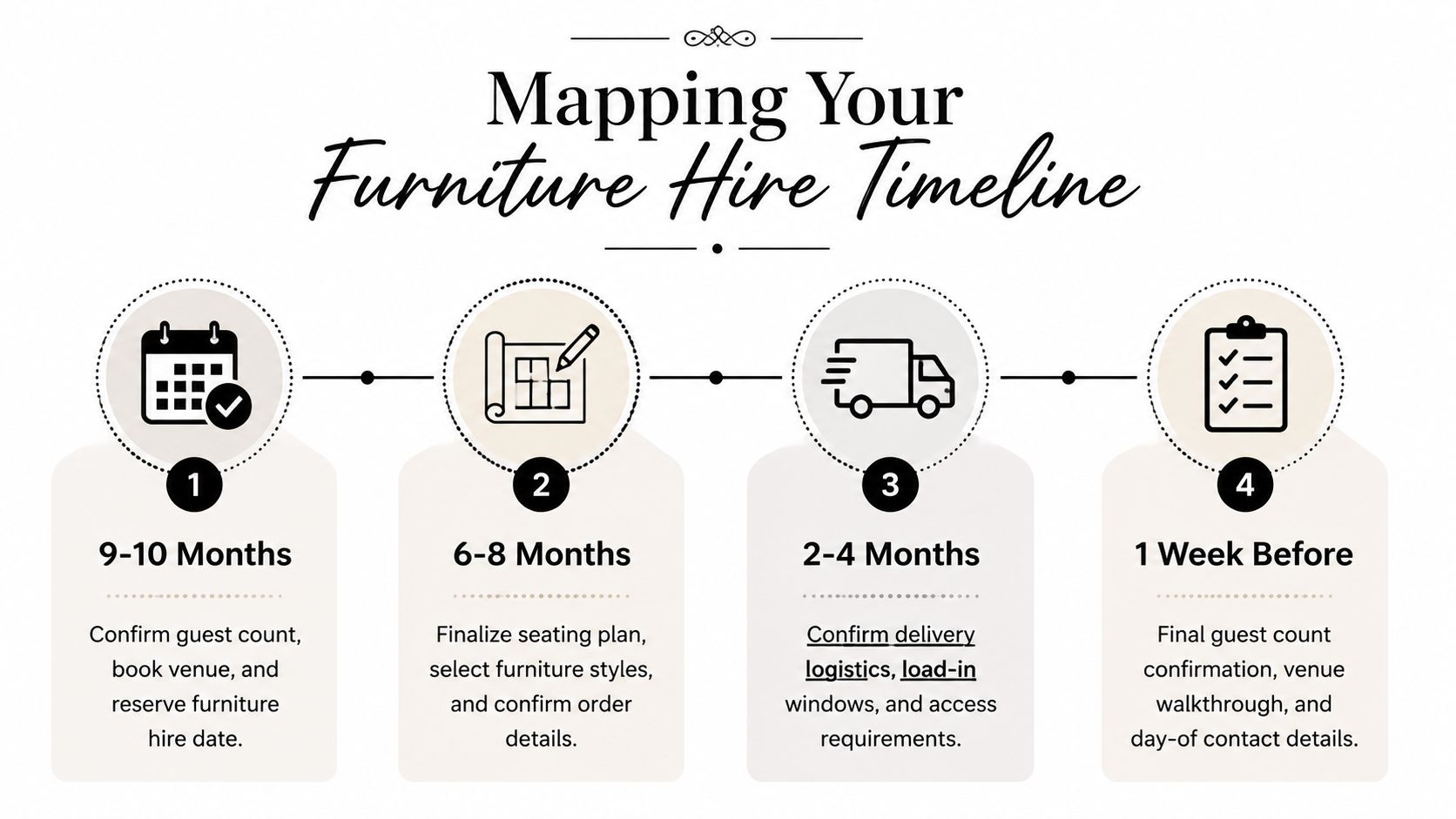
Mapping Your Furniture Hire Timeline
A smooth hire booking starts when the venue is confirmed, not when the styling mood board is complete. Furniture availability, venue rules, delivery distance, and the final floor plan all interact, so each decision should arrive at the right planning moment.
Start with the venue and guest count
At 9 to 10 months out, confirm the venue, approximate guest count, ceremony format, and reception style. Ask two or three suppliers for quotes that include delivery to the actual estate, not only a warehouse collection price. Babylonstoren, Lourensford, and other Winelands properties can have different access rules, parking areas, and unloading points, so a quote without a delivery scope is incomplete.
Send suppliers the venue name, event date, estimated guest count, preferred furniture style, and whether the same pieces need to serve the ceremony and reception. A practical wedding plan should also include furniture decisions alongside catering, décor, and supplier deadlines. The Cape Town wedding checklist from ABC Hire is useful for keeping those linked tasks in one place.
At 7 to 8 months, visit showrooms where possible, including suppliers operating around Epping or Paarl, and inspect the actual chairs, table finishes, cushions, and lounge upholstery. Once the main style is chosen, place the primary order and clarify the deposit, cancellation, substitution, and delivery terms in writing. Popular dates can place pressure on limited stock, especially when several weddings require the same chair family or lounge collection.
Turn the design into an operational order
At 5 to 6 months, draw the ceremony and reception layouts with the venue coordinator. Confirm where the supplier may unload, where the truck can park, how far items must be carried, and whether the furniture needs approval. Reserve specialty pieces at this stage, including statement bars, unusual tables, outdoor lounges, or climate-control equipment.
At 3 to 4 months, finalise table assignments, lounge groupings, accessibility requirements, and the number of ceremony seats. The furniture order should now reflect the actual floor plan rather than a loose item list.
At 2 to 4 weeks, reconfirm the delivery time, access route, site contact, weather procedure, and breakdown window. Provide the supplier with the final plan and ensure the venue has the same version.
Practical rule: Every furniture quote should answer three questions clearly: what arrives, who sets it up, and when the supplier may collect it.
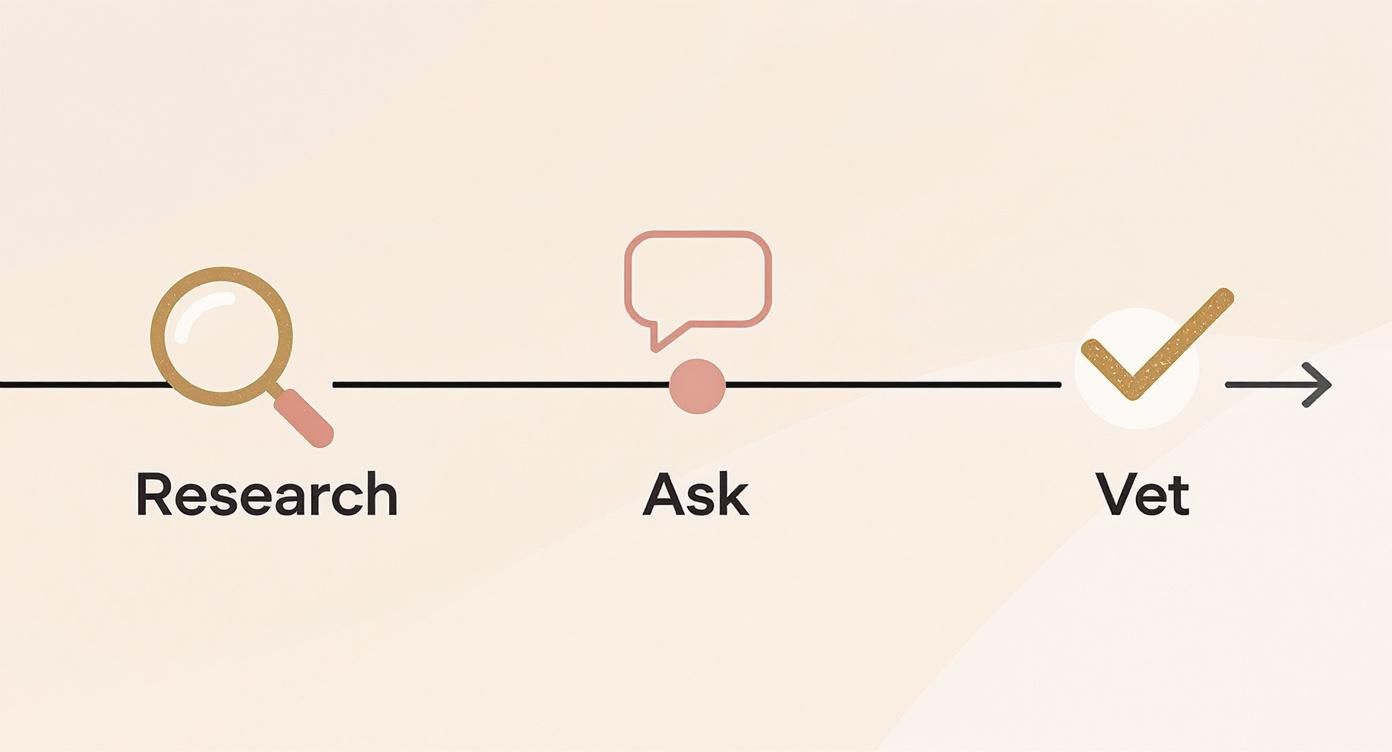
Use the following one-page timeline as a planning-board prompt:
If you're also planning photography, social-first coverage can help document the styling process and the finished venue. A specialist resource such as Social Media Wedding Content can help you think about how furniture details will appear in short-form content, not only in formal photographs.
Building a Realistic Cape Town Furniture Budget
Furniture hire pricing becomes difficult when couples compare item rates without comparing the service wrapped around them. A chair may look inexpensive on a spreadsheet, but the delivered cost can change once transport, setup, collection, venue restrictions, weather protection, and timing are included.
Ask every supplier to separate the quote into furniture, delivery, setup, collection or breakdown, and additional services. That structure makes it easier to compare an intimate city celebration with a larger estate reception without hiding operational charges inside a single total.
The variables that move the quote
Guest count affects the obvious quantities, but venue type changes the labour behind those quantities. A city venue with a nearby loading point may require less carrying than a Winelands estate where the crew must move items over gravel, lawns, or long paths. A heritage building may have narrow entrances, stairs, or strict protection requirements, while an outdoor estate may need weather-resistant pieces, floor protection, or climate-control equipment.
Distance also matters. Delivery to Stellenbosch isn't the same operational job as delivery beyond the main Winelands corridor, particularly when the supplier must schedule a dedicated vehicle and crew. Weekend and peak-season availability can affect the quote as well, while weekday or lunch formats may offer more scheduling flexibility. Local wedding coverage describes lunch weddings as potentially cost-effective because they can reduce the need for extensive lighting and late-night drinks, and it notes that winter dates may offer better deals. Cape Town Magazine's wedding trend coverage provides that broader context, but your supplier still needs to confirm the furniture implications for the specific venue.
Evening receptions can require more than dining furniture. You may need lounge seating for a late cocktail period, heaters for a cold evening, or fans and cooling equipment for a warm marquee. A late collection can also trigger an after-hours or overtime charge, so ask what happens if the venue only releases the furniture after the last guest has left.
Compare the whole package
For a smaller city wedding, modular furniture can make more sense than separate ceremony and reception inventories. Ceremony chairs can move into the dining room or lounge area, while a compact selection of side tables and ottomans creates useful comfort without filling every corner with hired stock.
For a larger estate reception, the unit price may look better when tables and chairs are ordered together, but transport and setup can become more significant. A useful comparison spreadsheet should include:
- Quantity assumptions: List guest seating, top-table seating, service tables, bars, lounges, and signage stands separately.
- Venue charges: Ask whether the venue charges for early access, late collection, storage, or supplier induction.
- Weather equipment: Price heaters, fans, covers, flooring, or a backup indoor layout where relevant.
- Labour scope: Confirm whether placement, room flips, collection, and rubbish removal are included.
- Damage exposure: Identify the deposit, damage waiver, and replacement process before payment.
A detailed event furniture rental guide can help you build the item list before requesting quotes. The most effective cost control usually comes from reducing duplicated layouts, not choosing the cheapest chair without checking whether it suits the venue or the supplier's delivery method.
Choosing the Right Style for Your Venue
Furniture should look as though it belongs at the venue, but it must also support the way guests move through the day. A rustic farm table may suit a vineyard perfectly, yet become awkward if the venue has narrow dining aisles or a formal plated service. A delicate-looking chair may photograph beautifully, but the wrong finish can clash with stone, timber, coastal wind, or a polished city interior.
Chair families
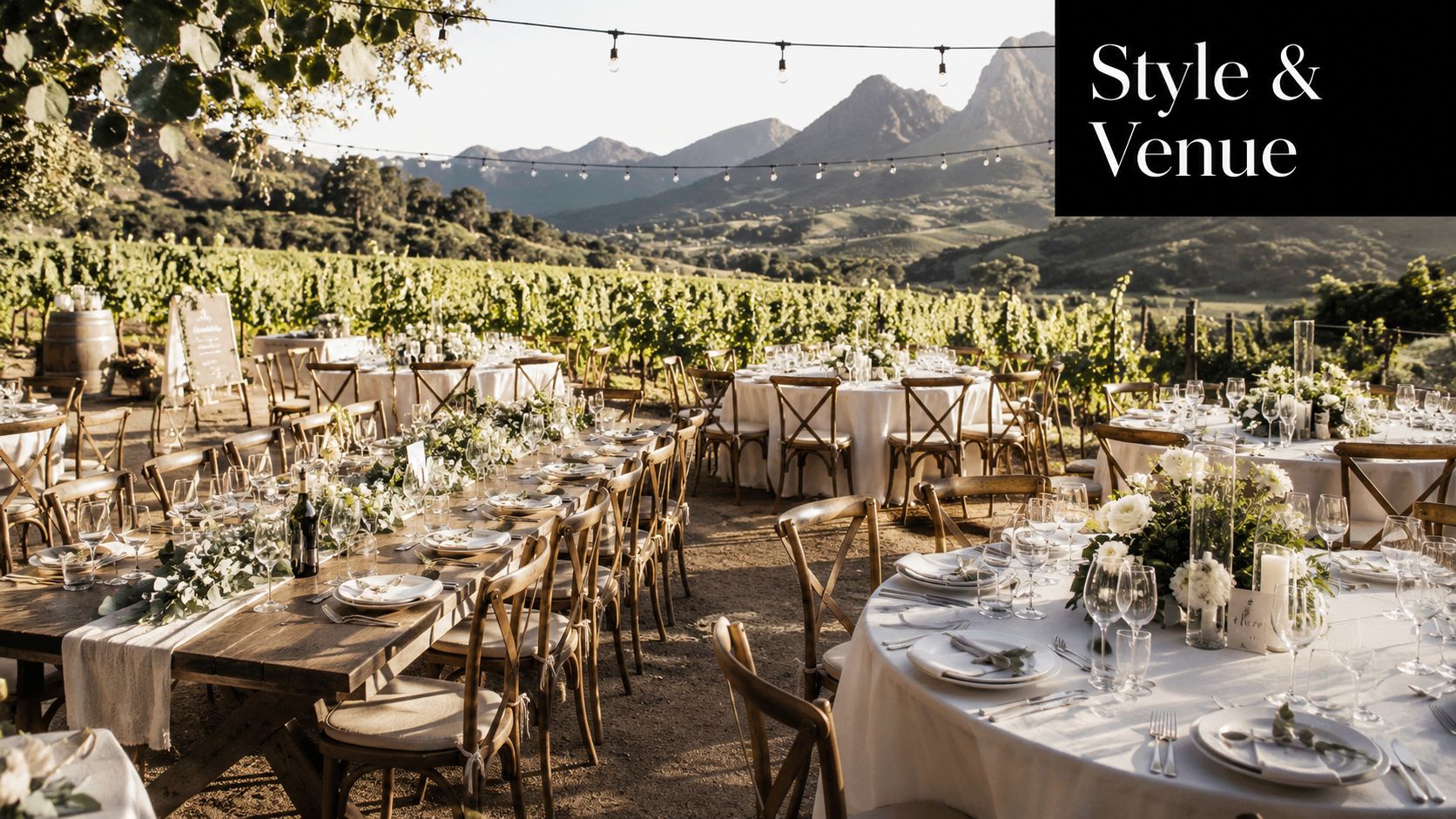
Cross-back wood chairs work naturally with Winelands estates, especially when paired with timber tables, neutral linen, and long communal dining. Their visual weight helps an outdoor setting feel grounded, but check the chair width and stacking method before committing.
Chiavari chairs create a more formal silhouette and pair well with round banquet tables, clean linens, and classic city receptions. They suit elegant styling, although gold, clear, or natural finishes can create very different results under evening lighting.
Bentwood chairs are softer and more contemporary. Their curved backs suit heritage venues, intimate dining rooms, and modern celebrations where the furniture should feel refined without looking overly traditional.
Table families
Rustic farm tables are the natural choice for vineyard estates and olive groves. They work well with family-style meals and floral runners, but their broad proportions can consume floor area quickly.
Round banquet tables support conversation and formal place settings. They suit heritage venues and ballrooms, provided there's enough clearance for guests and service staff to circulate.
Slim trestles are useful for coastal celebrations, city lofts, and smaller receptions. They create a long-table feeling without the visual bulk of a heavy farm table.
Lounge furniture needs its own decision. Leather chesterfields create a formal, club-like feel for evening dinners, while washed-linen daybeds and lighter occasional seating suit garden ceremonies and daytime cocktails. Include side tables, ottomans, and drink surfaces, or a lounge can look attractive but function poorly.
| Venue character | Seating choice | Table choice | Lounge direction |
|---|---|---|---|
| Winelands estate | Cross-back wood | Farm tables | Natural timber and soft upholstery |
| Heritage city venue | Bentwood | Round banquet tables | Leather or tailored fabric |
| Coastal or intimate modern venue | Chiavari or slim-profile chairs | Slim trestles | Light linen and compact pieces |
The strongest combinations respect the venue's architecture first, then add your colour palette through linen, cushions, flowers, and lighting.
Navigating Venue Logistics and Load-In
A furniture delivery can be perfectly scheduled at the warehouse and still fail at the venue. The usual causes are simple: the truck arrives at an unapproved time, the access route isn't suitable, the supplier wasn't included on the venue's vendor list, or the final layout blocks a required route.
Confirm the venue's rules in writing
Start with the venue coordinator. Send the supplier's legal name, contact details, vehicle information, staff list, insurance documents, and proposed arrival time. Ask whether the venue requires an induction, supplier approval, a Certificate of Authority, or a particular loading procedure.
The CTICC exhibitor manual states that the venue doesn't provide exhibition furniture and that exhibitors must bring their own or order it through a stand builder. While a wedding reception isn't an exhibition, the operational lesson is directly relevant: never assume a major venue supplies tables, chairs, or lounges by default. The CTICC exhibitor manual also reinforces the need to separate venue access, supplier scheduling, and assembly responsibilities.
Winelands estates may offer only a defined arrival window, particularly when other suppliers, guests, or venue operations share the access road. Ask for the exact window rather than accepting “morning delivery”. Check whether trucks can manage gravel, slopes, gates, tight turns, or narrow heritage streets, and confirm where the vehicle may wait after unloading.
Protect the surface and preserve the routes
Furniture legs can damage timber floors, polished interiors, wooden decks, and wet lawns. Ask the supplier and venue which protection is required, who supplies it, and whether it must remain in place during the event. Grass protection boards may be necessary for heavy items or repeated trolley movement, while a city venue may require felt, rubber, or protective sheeting.
Century City Conference Centre's exhibitor guidance requires aisles to emergency exits to remain clear, requires hired furniture to be approved by venue management, and identifies situations where carpeting may be required at the exhibitor's expense. Urban Tonic's venue information supports a practical checklist for wedding layouts: measure circulation paths, protect the floor, and obtain written approval for decorative or structural pieces.
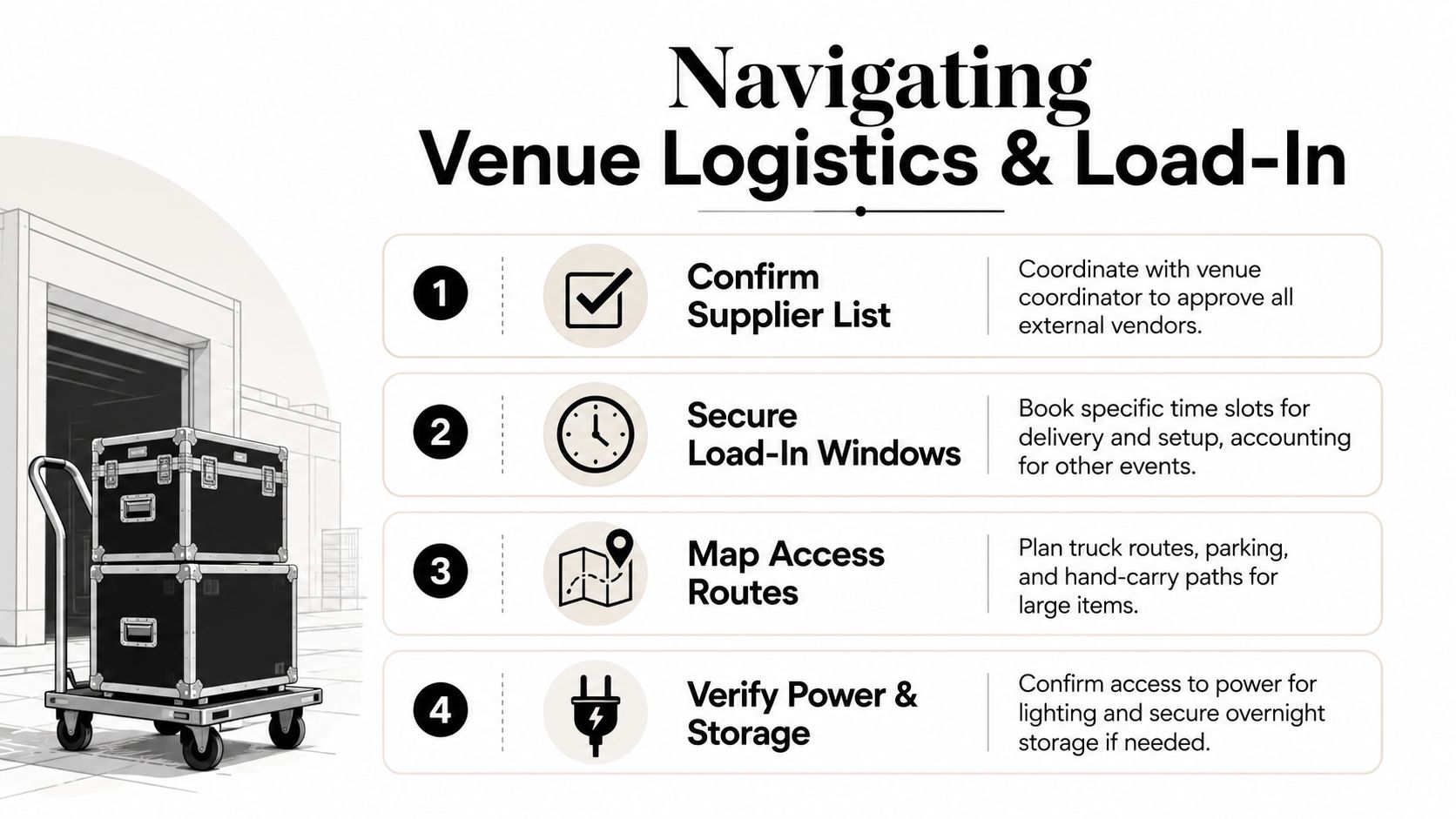
Send one shared email containing:
- Arrival details: Date, confirmed arrival window, vehicle access point, parking rules, and onsite contact.
- Layout documents: Scaled floor plan, furniture quantities, ceremony plan, reception plan, and any flip instructions.
- Safety requirements: Emergency exits, aisle clearances, surface protection, power points, and restricted areas.
- Crew documents: Public liability certificate, vehicle registration, staff identification, and venue induction status.
- Collection plan: Breakdown time, venue release procedure, storage arrangements, and the person signing off the load-out.
A same-day furniture delivery guide is helpful when timing is tight, but same-day service still depends on venue access and a clear handover. No supplier can solve an unapproved arrival window at the gate.
Designing Layouts That Work Twice as Hard
The most efficient wedding furniture plan is often the one that avoids a full reset. Reusing the same chairs, tables, and selected decorative pieces between ceremony and reception can reduce handling, protect the schedule, and make a smaller venue feel intentionally designed rather than crowded with duplicate stock.
This approach suits intimate Western Cape celebrations particularly well. South African wedding trend coverage points towards smaller guest lists, at-home or destination-style events, and more experience-led formats. The 2025 South African wedding trends overview also highlights growing interest in eco-conscious decisions and flexible celebrations, both of which support modular hire.
Build the furniture kit around movement
A rectangular banquet table can serve a ceremony signing area, then become a long dinner table with a revised linen and floral treatment. Ceremony chairs can be positioned in rows for the vows, then moved into lounge pockets or dining positions during canapés. An arch or backdrop can become a photo-wall base, a sweetheart-table feature, or a dessert display frame.
The important point is to design the transition before the furniture is ordered. Mark every item that moves, who moves it, where it goes, and how long the change takes. If the plan depends on the venue team, caterer, florist, and rental crew working together, give each person a drawing and a named responsibility.
A layout is only efficient if the crew can execute it without guessing.
Two practical layouts
Cape Town city loft
Ceremony: chairs in compact rows facing a floral backdrop.
Transition: the last row moves to the perimeter, creating a cocktail edge.
Reception: the same chairs serve slim trestle tables, while the backdrop becomes a photo point.
Franschhoek olive grove
Ceremony: cross-back chairs face a focal arrangement beneath the trees.
Transition: chairs cluster around two lounge zones, with selected pieces moving to the dining area.
Reception: farm tables occupy the central footprint, while the ceremony focal piece anchors the bar or dessert station.
Use a scaled plan and leave enough working space for the crew to move safely. Don't order separate furniture for every moment unless the venue, schedule, or guest experience requires it. Reuse reduces duplication, but it shouldn't force guests to wait while a complicated room flip takes place.
Contracts Insurance and Supplier Vetting
The deposit doesn't protect you from an unclear contract. Before signing, read the document as an operational plan. It should tell you what the supplier is delivering, when the team may access the venue, what setup includes, and who carries responsibility if another event delays the loading window.
Clauses that deserve close attention
Delivery scope should identify the address, access point, delivery date, time window, vehicle limitations, carrying distance, and whether delivery is to the venue entrance or the final setup location. “Delivery included” is too vague for a farm estate with gravel paths or a venue with stairs.
Setup and breakdown need separate wording. Confirm whether the supplier places every chair and table according to the floor plan, removes packaging, returns items to its own stock, and handles a ceremony-to-reception repositioning. Ask what overtime costs apply if the venue isn't ready.
Damage terms should distinguish fair wear and tear from actual damage, loss, staining, breakage, or unauthorised movement. A damage waiver may reduce your exposure, but it doesn't automatically cover negligence, misuse, or missing items. Clarify how the supplier assesses damage against the security deposit and whether you receive photographs, an inventory report, or an itemised invoice.
Weather and interruption provisions
Western Cape weather can change the furniture plan quickly. A coastal venue may need a wind procedure, while an open Winelands lawn requires a rain protocol and a clear decision deadline. The contract should say who makes the call, whether furniture moves indoors, whether additional labour is chargeable, and what happens if the alternate space has different dimensions.
Force majeure wording should address events outside either party's control, including official event restrictions, transport disruption, venue closure, and power interruptions that affect access or setup. Don't accept a clause that gives only the supplier discretion without explaining your refund, postponement, or rescheduling position.
For background on how liability arrangements can be assessed, GM GROUP Services' insurance overview offers useful general context. For a substantial wedding, ask the supplier for public liability cover, goods-in-transit protection, and the documentation the venue requires. If the venue specifies a minimum cover level, place that requirement directly into the supplier brief rather than relying on a verbal assurance.
Vet before you pay
Visit the warehouse if possible. Check whether the actual stock is clean, stable, and maintained, then request a recent Winelands client reference. Ask how substitute stock works if an item is damaged before loading, and whether the replacement must match the original style or only the function.
A supplier that communicates clearly about limitations is safer than one that promises every outcome without inspecting the venue.
Final Week Checklist and Common Questions
The final week should confirm decisions, not introduce them. By then, the furniture order, venue plan, supplier contacts, weather procedure, and breakdown arrangements should already exist in writing. Your job is to verify that the people handling the day are working from the same version.
The seven-day run-through
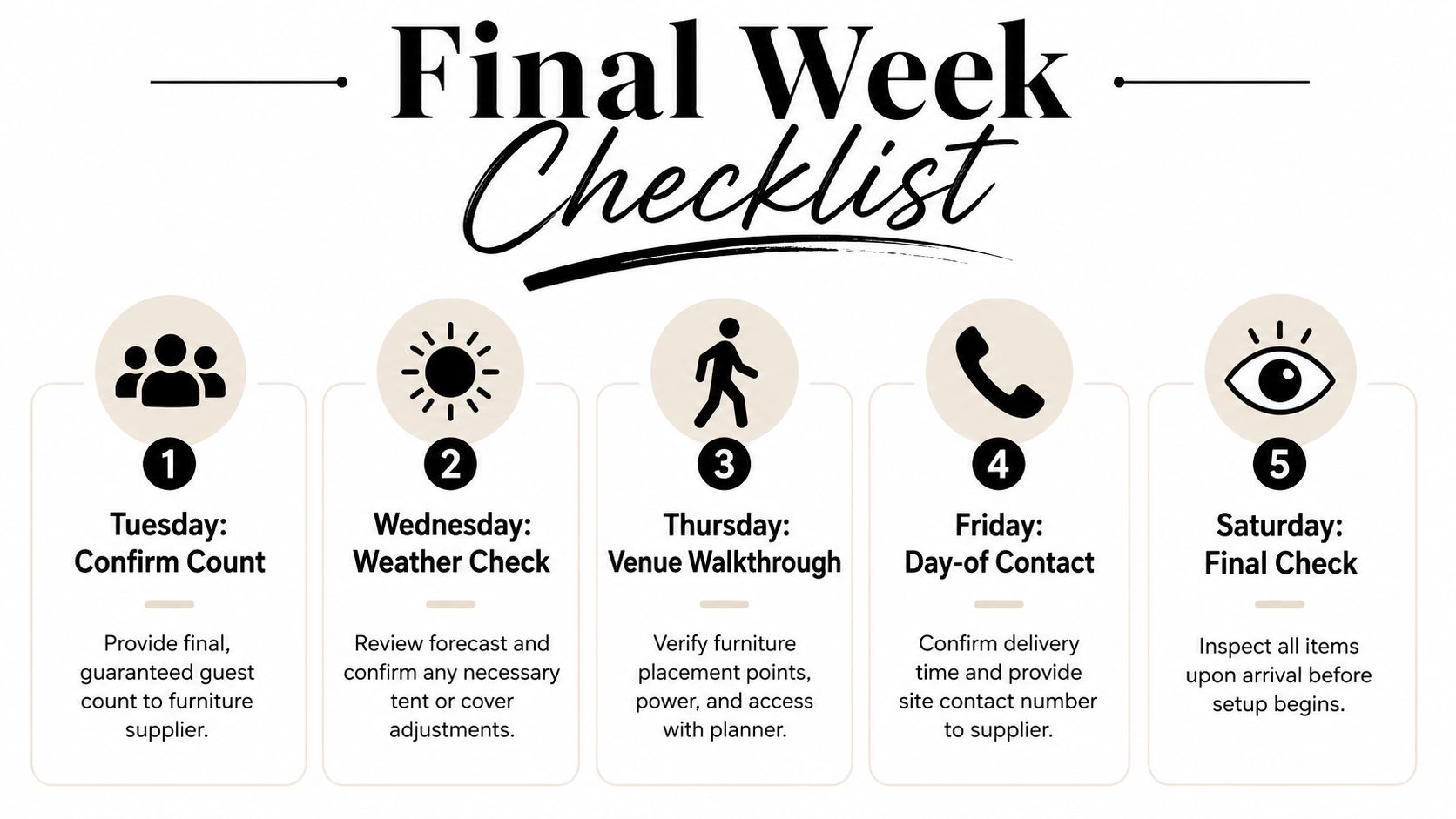
Tuesday, confirm the count. Send the final guaranteed guest number to the supplier and check the quantities for dining chairs, ceremony chairs, top-table seating, lounge pieces, ottomans, bars, and signage stands. Ask specifically about any changes to the head table or family table.
Wednesday, check the weather plan. Review the forecast with the planner and venue. Confirm whether covers, heaters, fans, a tent adjustment, or an indoor layout may be needed, and identify the decision deadline.
Thursday, walk the venue. Recheck the truck route, loading point, parking area, power points, floor protection, emergency exits, and furniture placement. Photograph tricky access points and send the images to the delivery lead.
Friday, brief the crew. Give the setup team a printed floor plan, a furniture inventory, the ceremony-to-reception movement plan, and the site contact's phone number. Confirm the arrival time and who signs off the delivery.
Saturday, inspect on arrival. Count and examine the items before the setup begins. Photograph visible damage immediately and report it to the supplier and coordinator before guests use the furniture.
Schedule breakdown according to the venue's release procedure. If collection is planned for Sunday morning, confirm that the venue has signed off the release and that the supplier knows where the stock will be staged.
Questions couples ask late in the process
How late can we change the guest count?
That depends on stock, loading schedules, and the contract. Ask for the latest guaranteed-change deadline, then treat any later request as subject to availability and extra delivery or labour charges.
What happens if rain prevents outdoor load-in?
The supplier should follow the written weather procedure. That may involve an indoor plan, a revised access route, protective coverings, or a postponement decision. Confirm who authorises the change.
Can the supplier move everything to a backup indoor area?
Only if the venue approves the space, the route works, and the supplier has enough labour and time. Estates such as MolenVliet or Babylonstoren may have different indoor layouts, so send the alternate floor plan before the wedding week.
How is a damage waiver applied to the deposit?
The contract should explain what it covers and what it excludes. Fair wear and tear, missing stock, stains, breakage, and negligent handling may be treated differently, so request the assessment process in writing.
ABC Hire supplies event furniture for Cape Town and surrounding areas, including tables, chairs, indoor and outdoor furniture, dance floors, LED furniture, and climate-control equipment. For a Winelands wedding, send your venue, guest count, furniture plan, access details, and preferred delivery window through ABC Hire so the team can help you build a hire order that works on the ground, not only in the styling brief.