
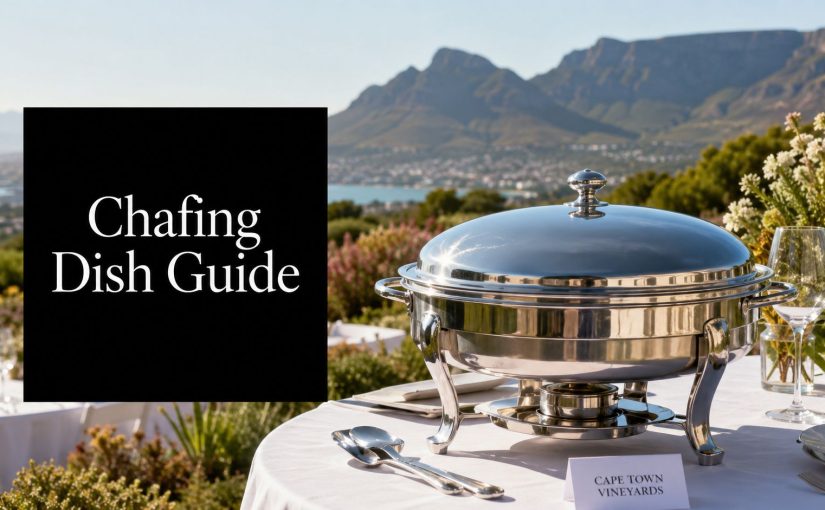
You're standing at the buffet table in the Winelands, the food is ready, the photographer is waiting, and the only thing between a smooth service and a messy one is the equipment under those gleaming domes. A round chafing dish looks simple, but in event rental terms it's a very specific tool, and the wrong choice shows up fast in cold sauces, awkward table gaps, and guests queuing too slowly.
If you're planning a wedding, corporate function, matric dance, or formal school event in Cape Town or the Winelands, treat the round chafer as a service decision, not a décor decision. It's there to hold soups, sauces, sides, and desserts at buffet temperature with indirect heat, while still looking polished enough for a formal setting. For a useful broader hosting reference alongside buffet planning, the holiday gathering hosting tips from SouthShore Fine Linens are worth a look, because the same discipline around flow, timing, and presentation applies here.
What a Round Chafing Dish Does at Your Event
A round chafing dish is a portable food warmer built around four parts, a stand, a water pan, a food pan, and a lid. The water bath creates indirect heat, so the food sits above the flame or heat source instead of cooking directly on it. That matters because round chafers are usually hired for dishes that need steady warmth without scorching, especially soups, sauces, vegetable sides, desserts, and smaller buffet portions.
What you are really hiring
In plain English, you're hiring a compact hot-holding unit that's designed to look good on a buffet line and behave properly in service. In South African event-rental use, round models are typically specified at 4 to 7 quarts, which is why they suit medium-volume stations rather than bulk mains. A 7-quart unit holds about 6.6 litres, which is enough to keep a plated buffet station moving without taking up the footprint of a large rectangular pan, according to the historical and practical reference in the chafing dish overview on Wikipedia.
That compact form is why planners keep choosing round units for Cape Town weddings and school functions. They feel formal, they read well on the table, and guests can serve from them easily from either side. If you're building a buffet with mixed dishes, round chafers usually belong on the items that need elegance more than sheer volume.
Practical rule: use round chafers for the dishes guests take in smaller portions, not for the main item that disappears fastest.
Menu fit and service flow
Round chafers work best when you want presentation and access rather than maximum tray length. They suit soup stations, dessert buffets, sauce points, and side-dish clusters at intimate or medium-sized events. A good caterer uses them where the buffet needs visual softness, not where the line needs to absorb heavy traffic.
That's why they show up so often in Cape Town and Winelands settings. They make sense when the event has style, but they still have to earn their place through function. If you're unsure what to choose, keep reading for fuel choice, sizing, setup, and styling, because those decisions change how well the chafer performs on the day.
Why Round Chafing Dishes Became Standard Catering Kit
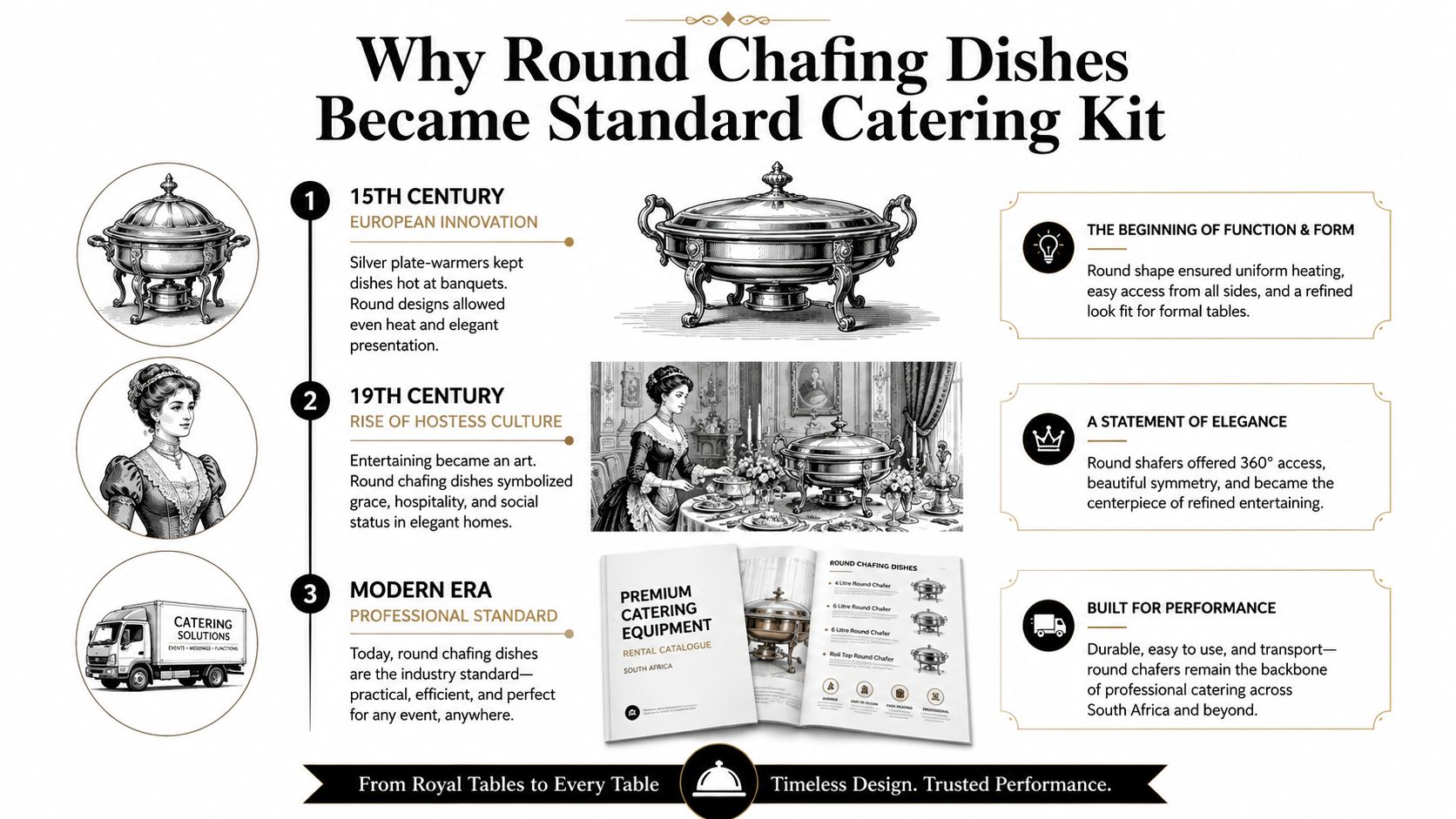
The round chafing dish did not appear because somebody wanted a prettier buffet. It grew out of a long catering tradition built around portability, hot holding, and controlled service. The form was already established in Europe by the 15th century, and by 1666 Samuel Pepys was ordering a silver chafing-dish for warming plates, according to the historical record in the FoodServiceNews archive article on the dish's history (FoodServiceNews).
From utility to presentation
By the late 19th and early 20th centuries, chafing dishes were described as being at a “near fever pitch” in popularity, and by the 1890s they had become indispensable to hostesses for luncheons, tea, and supper service, again in the historical account above. That matters because the round format kept its practical job while picking up a presentation role. It stopped being just a heating device and became service ware that also had to look right on the table.
That shift is exactly why the format still fits Cape Town weddings and formal hospitality. You're not just keeping food warm. You're trying to make the buffet look considered, coordinated, and expensive without making service awkward. The round dome does that well when the menu is compact and the visual standard is high.
The same historical source also notes modern experimental work on Byzantine-style chafing dishes, where a tested maximum water temperature of 380°C was recorded, with candles producing the highest average temperatures. That doesn't mean you need that level of heat in event service, but it does show why the basic engineering of a chafer has lasted so long, it's built around reliable warming, not novelty.
Why the round format still wins
For South African event work, the round chafer is now a refined, food-service-grade tool. It works because it gives you enough capacity for medium-volume service while staying compact enough for buffet styling and transport. It also signals a formal service standard, which is why it remains a staple in rental catalogues for weddings, corporate events, and school formals.
The point is simple. Round chafers stayed because they solve a real buffet problem, and they do it with a better visual finish than most bare service pans. That's why they still matter in today's hospitality market, especially where appearance and timing have to work together.
Choosing the Right Fuel and Heat Source
A round chafer only works properly when the heat source fits the venue. In Cape Town and the Winelands, that usually means choosing between gel fuel, wick or spirit lamps, electric warming plates, and induction. Get this wrong and service turns messy fast. Food cools, lids stay open too long, and staff spend the whole event fighting the setup instead of serving guests.
Match the fuel to the venue, not the other way round
Outdoor receptions are the toughest test. Wind will beat open flame every time if the setup is exposed, so gel, wick, and spirit options need shelter, a steady surface, and sensible placement, as general food-service guidance notes in the chafing dish buying guide. For an indoor reception with controlled ventilation, gel fuel is clean and simple. For a sheltered patio or a tented space, wick or spirit lamps can work if the service team keeps them stable and watched. Electric warming plates suit venues with reliable power and fully indoor service. Induction is the neatest option, but only if the chafer is induction-ready.
For Cape Town planners, the key decision is footprint and control. Flame-based setups are portable and do not depend on plugs, which helps at heritage venues, farms, and locations where load-shedding still shapes the day. Electric and induction units give steadier heat, but they also tie you to power and cable management, which matters on a crowded buffet line. If the wind is high or the site is exposed, choose a heat source that can survive the conditions, not one that only looks elegant on a catalogue page.
| Fuel type | Best venue | Wind tolerance | Power needed | Notes |
|---|---|---|---|---|
| Gel fuel | Indoor receptions | Low | None | Simple and portable, but not for exposed outdoor service |
| Wick or spirit lamp | Sheltered patios, tents | Moderate | None | Needs careful supervision and stable placement |
| Electric warming plate | Indoor buffets | High indoors, low outdoors | Yes | Good when venue power is reliable |
| Induction | Premium indoor buffet builds | High indoors, low outdoors | Yes | Only works with induction-compatible equipment |
What matters most on the day
Fuel choice does nothing for a bad setup. If the water bath runs dry, the food suffers no matter what is burning underneath. If the lid stays open, heat escapes faster than the fuel can recover it. That is why I tell clients to choose the venue first, then the heat source, then the serving layout.
Direct advice: if you are planning an outdoor Winelands function, stop focusing on the finish and ask how the flame behaves in wind.
The same logic applies to table layout in Cape Town and the Winelands. A round chafer takes less linear buffet space than a long rectangular pan, but it still needs breathing room for guests to serve themselves without crowding the table. If the buffet is tight, a compact heat source is the safer choice because it keeps cables, fuel canisters, and staff movement under control. If you want a practical rundown of warmer types before you book, ABC Hire's catering food warmers guide is a useful reference for comparing flame-based, electric, and induction options.
Use that comparison to decide whether your event needs portable heat, steady electrical control, or a system that can handle wind and uneven site conditions. The right answer depends on power, weather, and how much control you want your team to keep during service.
Sizing Your Round Chafing Dish by Guest Count
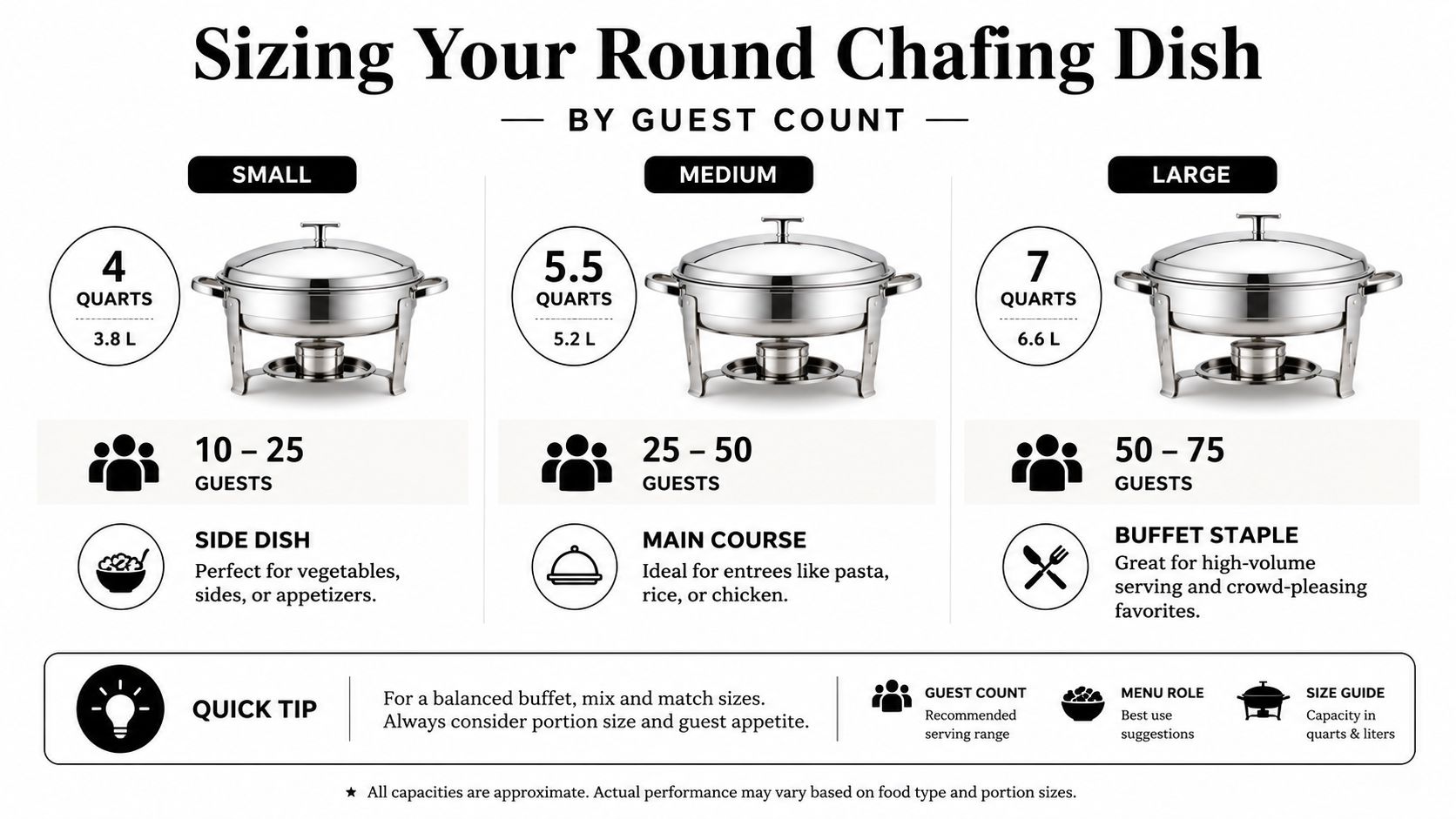
Round chafers are usually specified by usable volume, not outer diameter. That's the number that matters for planning, because the shape might look neat on paper while the internal capacity still limits what you can serve. In South African event rental, the common working band is around 6.0 to 6.9 quarts, or about 5.6 to 6.5 litres, which is the workhorse range for buffet service.
Read capacity before you read appearance
Commercial listings show compact footprints in the rough range of 420 to 496 mm wide and about 320 mm high, based on product sheet examples in the technical reference data. That footprint is useful on a crowded table, but it also tells you something else. A 6-litre round chafer is built for medium-volume items, not for the highest-turnover main dish on the line.
Here's the cleanest way to think about it.
- 4-quart units: use them for smaller side stations, sauces, and desserts where presentation matters more than bulk.
- 6.0 to 6.9-quart units: use them as the practical default for most Cape Town wedding buffets, because they carry enough food to stay worthwhile without crowding the table.
- 7-quart units: choose them when you want a little more service time from one pan, and the buffet station still has room for the round footprint.
Round versus rectangular on a real buffet table
Planners get caught. Round chafers look elegant and let guests serve from any angle, but they can leave dead space on a straight buffet line. Rectangular units use the table edge better, especially when you need tight packing and a clean run of trays. That trade-off is why round chafers work best on circular stations, clustered dessert points, and mixed-format buffets, while rectangular pans win on long, straight lines.
Rule of thumb: if your table is long and narrow, round is a style choice. If your table is tight and linear, rectangular is a space choice.
Use both formats if the menu needs it. Put round chafers on sauces, soups, and desserts, then let rectangular pans handle the mains and starches. That's the layout that usually behaves best in Cape Town venues where space is precious and service still has to feel polished.
Setting Up and Running Round Chafers Safely
A round chafer should be easy to run. If the team is stopping to improvise during service, the setup was weak from the start. Keep hot food above 135°F or 57°C while it is holding, and build every part of the station around that target. In Cape Town and the Winelands, that also means respecting wind, table placement, and the power situation at the venue, because a pretty buffet that loses heat is bad service.
The setup that works
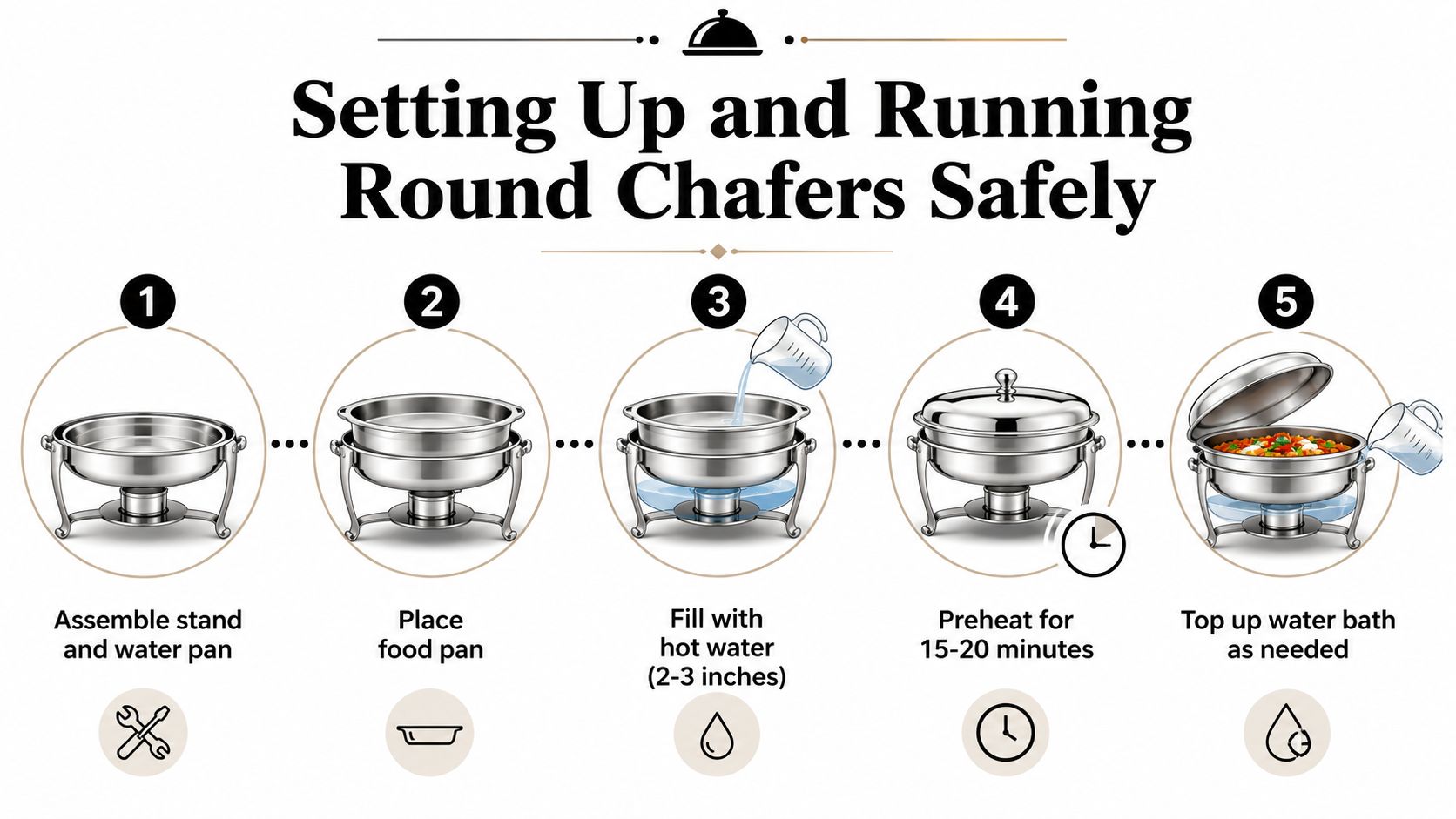
Start with the stand on a stable, heat-resistant surface. Add the water pan, then fit the food pan, then light or activate the heat source. Use hot water in the bath, not cold water, so the unit reaches service temperature faster and does not burn fuel warming up from scratch.
A clean workflow looks like this.
- Assemble the stand and water pan. Check that the base sits level and does not wobble.
- Place the food pan. Make sure it seats properly and does not tilt.
- Fill with hot water. Keep the bath deep enough to transfer heat evenly, but do not flood the unit.
- Preheat before service. Give the water time to stabilise before the first plate goes out.
- Top up the water bath as needed. If the level drops, heat transfer drops with it.
If you are running a buffet in a windy venue, use a sheltered table position and keep the chafer out of direct draughts. That small detail matters more than people want to admit. A round unit loses less heat than an open dish, but it still performs badly if the fuel is exposed and the lid is left standing open between servings. For a visual example of a polished rental finish, see ABC Hire's gold chafing dish guide.
Lid discipline matters more than people think
Keep the lid closed between servings. Use roll-top or soft-close lids where possible, especially models that open at 90° or 180°, because they cut heat loss during repeated use. That matters on a self-service buffet where guests come in short bursts. Every minute with the dome open lets heat escape and forces the water bath to work harder.
Practical rule: if the lid stays open, the chafer stops holding heat properly and starts wasting fuel.
Safety is blunt. Open flames need ventilation and supervision. Drip trays should stay in place, and tablecloths must not hang too close to burners. If a fuel can runs dry during service, replace it calmly and at once, then check that the water bath is still hot enough before you reopen the station. Use the right styling around the unit as well, because tidy presentation and safe spacing should work together, not fight each other. For planners who want to coordinate the buffet look with colour and candlelight, The Candledust color palette is a useful reference for keeping the table deliberate rather than cluttered.
Styling Round Chafers for Weddings and Functions
A round chafing dish can look sharp on its own, but styling is what makes it belong in the room. In Cape Town and the Winelands, the best-looking buffets don't try to hide the equipment. They coordinate it. That's the difference between a catered table and a considered station.
Build around the dome, not against it
Round chafers work well when you repeat the shape in the rest of the setup. Cluster them on a circular table for a hero dessert or sauce station, or line them along a rectangular buffet when the menu needs order. The round profile softens the line of the table, which is helpful in vineyard venues where the décor already leans organic and elegant.
Use simple trims instead of clutter. Greenery runners, ribbon wraps, and mirrored risers all work if they support the table rather than crowd it. For colour planning, the The Candledust color palette is a useful visual reference for planners working with soft candlelight and layered tones, because the overall mood around the buffet should feel deliberate, not improvised.
Lighting and local venue style
Uplighting the dome gives you a cleaner look than blasting it with bare bulbs. Polished lids reflect everything, including bad lighting, so keep the source controlled and warm. Candles at the base can look good in a formal setting, but only if the heat source and floral elements are kept apart.
The Winelands aesthetic is especially forgiving when you use round chafers with long vineyard tables, fynbos arrangements, and late-afternoon natural light. Stellenbosch and Franschhoek receptions often look strongest when the buffet feels understated rather than over-designed. The equipment should support the room, not compete with it.
If you're building a matching finish across the buffet, ABC Hire's gold chafing dish guide is a useful companion read because it shows how finish choice changes the visual weight of the station. Use that thinking to decide whether the round units should fade into the décor or act as part of the statement.
Rental Checklist for Cape Town and the Winelands
Hiring a round chafer is easy. Hiring the right one, on the right terms, for the right venue is where planners either look organised or end up firefighting. If your event is in Cape Town, Stellenbosch, Franschhoek, or Paarl, the rental brief needs to cover delivery access, quantity, finish, and what happens if something arrives damaged.
What to confirm before you sign
Start with logistics. Wine estates often have tighter loading access than city venues, and that affects delivery timing and drop-off points. If your event also depends on connectivity for RSVP management, supplier coordination, or digital guest lists, the wi fi events planning guide is a useful planning reference, because service staff and event managers need stable communication just as much as the buffet needs heat.
Use this checklist before booking.
- Rental partner selection: confirm the supplier stocks round chafing dishes, not just generic buffet ware.
- Delivery logistics: ask where the vehicle can unload at the venue and whether extra handling time is needed.
- Quantity planning: count stations, not just guests, because one buffet line can need multiple formats.
- Rental period: check collection and return times in writing.
- Condition on delivery: inspect lid fit, dome polish, and stand stability before setup.
Questions planners forget to ask
Ask whether fuel is included or charged separately. Ask what happens if a dome is cracked or a hinge fails mid-event. Ask if lids are replaced between hires and whether the supplier expects a clean return or handles post-event washing themselves. Those details sound small until you're standing beside a half-set buffet with guests arriving.
Best practice: treat the rental quote like an operations document, not a shopping list.
If you want one place to start comparing catering equipment categories, ABC Hire's catering equipment for hire guide is a sensible internal reference before you finalise the order. Use it to align the chafer hire with the rest of the buffet setup, especially if you're mixing serving gear, tables, and décor across multiple stations.
Common Mistakes and Quick Answers
The three mistakes that ruin round chafer service are predictable. A dry water pan kills indirect heat. The wrong fuel for the venue creates wind, smoke, or power problems. A lid left propped open drains temperature faster than realized.
For guest planning, don't order by headcount alone. Order by station count and menu role, then mix round and rectangular units where the buffet layout demands it. If the venue loses power during service, switch to your backup heat plan immediately, then keep the water bath topped up and the lids closed until the station stabilises.
A round chafer is a service tool, not a decorative extra. Treat it that way and it behaves.
If you're planning a Cape Town, Stellenbosch, Franschhoek, or Paarl event and want the buffet equipment sorted properly, speak to ABC Hire about catering gear that fits your layout and service style. Visit ABC Hire to check what's available, then lock in the round chafing dishes, tables, and supporting equipment before your event date gets tight.