
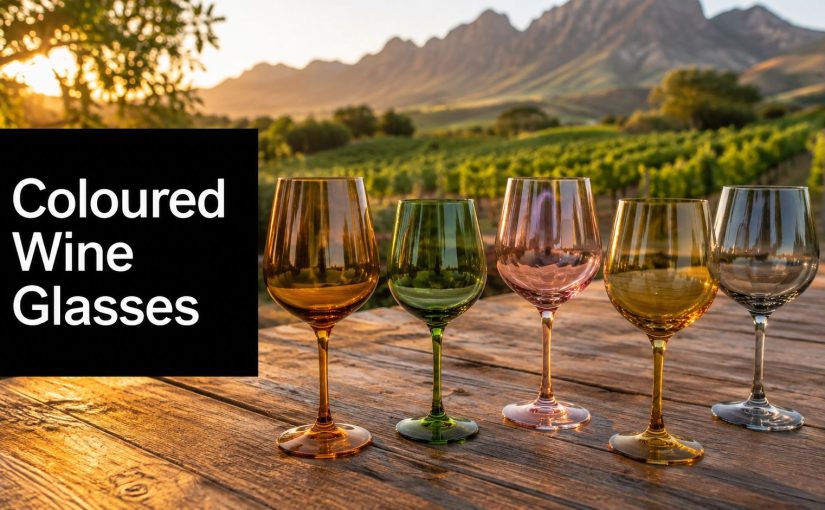
You're standing in front of a hire quote, and the numbers look sensible until you realise the glassware line is doing two jobs at once. It has to suit the tablescape, survive transport to Stellenbosch or the Cape Town CBD, and still look tidy after a long sit-down, a few slammed toasts, and the last round coming back to the rack. That's where coloured wine glasses stop being a styling whim and start being a rental decision.
In Cape Town and the Winelands, planners often get pulled in two directions. The moodboard wants amber stems, green bowls, or a dramatic table moment for golden hour. The venue manager wants a setup that washes cleanly, matches replacement stock, and doesn't leave you with a pile of chipped oddments after the event.
Planning an Event Around Coloured Wine Glasses
A wedding coordinator in Stellenbosch gets the same call every week. The couple has a Pinterest board full of blush napkins, candlelight, and tinted stemware, then the hire quote lands and the pretty part collides with the practical part. The same thing happens with brand teams in the Cape Town CBD, only the brief is tighter, the launch palette is stricter, and nobody wants glassware that looks like a retail display instead of part of a live event.
Start with the room, not the glass
The right choice depends on what the guest sees first. A long table in the Winelands can carry soft amber or green accents because daylight, linen, foliage, and wine all work together. A dark evening function with LEDs needs stronger contrast, otherwise delicate tinting disappears and the table just reads as “plain glass”.
Practical rule: choose coloured glassware only if it earns its place in the room. If the colour won't show from a seated guest's eye line, it's not doing enough work.
The historical logic is useful here. The old shift from opaque coloured vessels to transparent wine service is why clear glasses became the default for wine evaluation, and the current expectation is still that the bowl should let you see the wine's colour. That's the standard the styling has to push against, not ignore, and the Oxford archaeology guidance captures that transition clearly in the history of glass as a display medium for wine itself Oxford archaeology guidance on glass.
For event planning, the decision is simple. Use coloured wine glasses when the palette needs a deliberate accent, when the table is large enough to justify a visual statement, or when the venue lighting supports it. Skip them when the wine list is central, the room is already busy, or the styling budget is tight enough that a cleaner glass choice would free money for candles, florals, or better linen.
What Counts as a Coloured Wine Glass
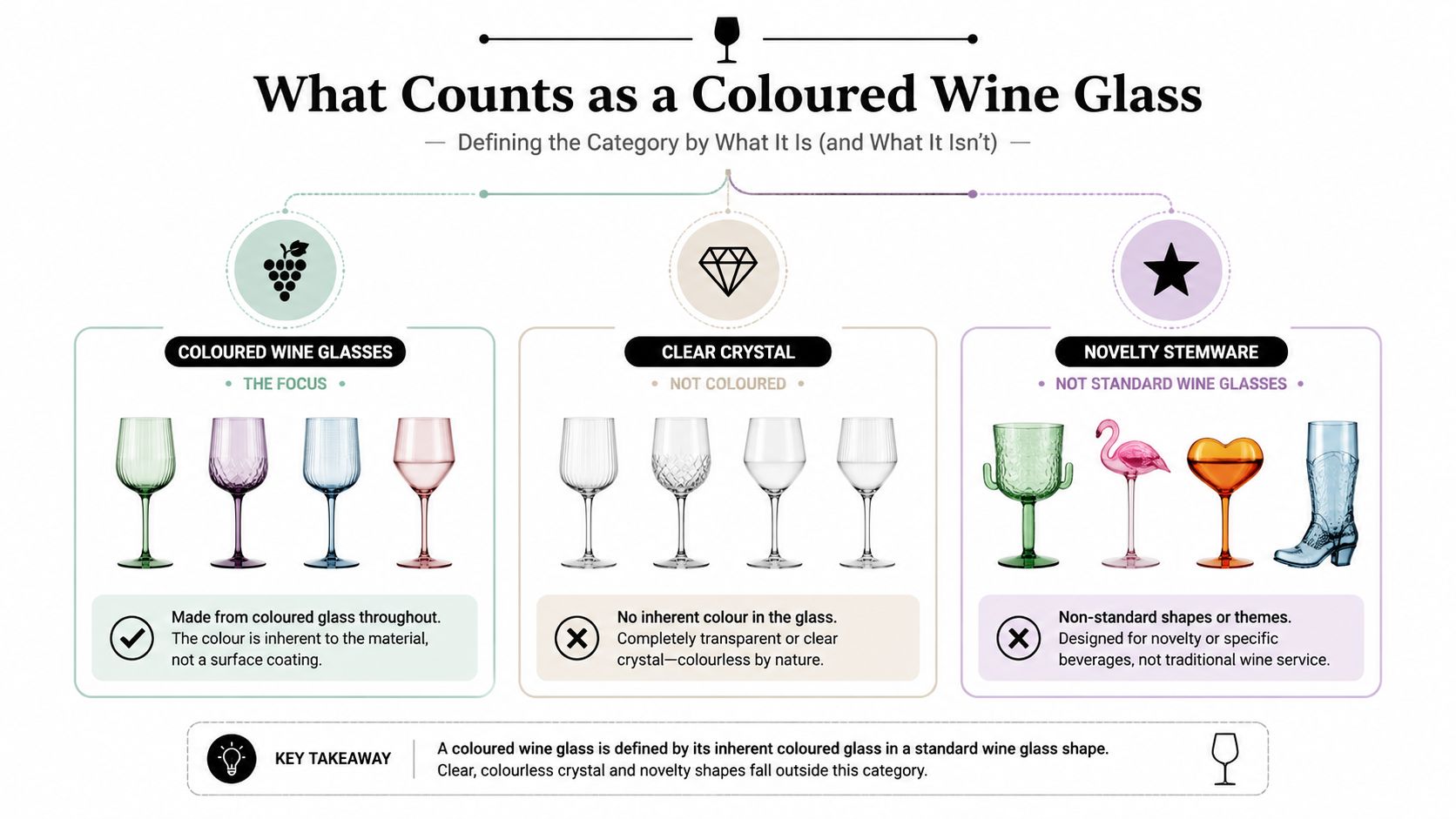
People use the term loosely, and that causes bad hire decisions. A coloured wine glass is not the same thing as a novelty goblet, a tinted tumbler, or a random mix of cut crystal left over from another function. For rental purposes, the category should stay narrow, because narrow categories are easier to source, wash, replace, and match on the day.
The three useful families
The first family is glass, which gives the most authentic feel and usually the cleanest look for a premium table. The second is acrylic, which is lighter and safer for some casual or high-traffic settings, but can look less refined under close inspection. The third is polycarbonate, which sits closer to event durability than to classic glass elegance and usually makes sense when breakage is the bigger problem than appearance.
Within those families, the colour treatment changes the brief. A fully tinted bowl gives the strongest visual statement. A rim-tinted glass reads subtle and modern. A stem-tinted option is easier to live with if you want colour without hiding the wine itself. Amber and green tones are the most practical because they still read as glassware rather than prop styling.
That distinction matters if you're comparing a wedding line with a corporate line. Premium weddings usually want coloured glass that still feels like proper stemware in the hand. High-volume activations can tolerate lighter materials if the event risk profile is high and the styling brief is more about impact than wine ritual. If you already know you want clear crystal for comparison, keep this crystal glassware guide open while you compare the options.
Glass vs Acrylic vs Polycarbonate Compared
A Cape Town planner does not choose coloured wine glasses by look alone. If the service has to survive packing, delivery, unloading, guest handling, collection, and wash-and-return, the material choice decides whether the line still looks sharp by the end of the night.
| Material | Feel and optics | Breakage risk | Best for |
|---|---|---|---|
| Glass | Best clarity, best sound, most convincing on a dressed table | Highest if handled badly | Premium weddings, tastings, formal dinners |
| Acrylic | Lighter in hand, less crisp visually, practical for casual service | Lower than glass, but still needs care | Home events, poolside setups, relaxed functions |
| Polycarbonate | Tough, consistent, more functional than luxurious | Lowest of the three | High-traffic corporate events, school dances, outdoor bars |
Glass still wins on presentation. It gives the cleanest optics, the most convincing hand-feel, and the right sound on a toast. For a formal wedding table or a seated dinner, that matters more than saving a few breakages. If you want clear stemware as the reference point for a premium line, keep this crystal glassware guide open while you compare options.
Acrylic is the practical middle ground. It is lighter, easier to move, and less punishing if staff are working fast, but it does not carry the same refined look under close inspection. Use it for casual functions, poolside service, and events where the glassware needs to survive a lot of handling without becoming the focus of the table.
Polycarbonate is a workhorse. It makes sense when breakage is the bigger problem than elegance, especially at high-traffic corporate events, school functions, and outdoor bars. It will hold up better than the other two materials, but it reads as utility first, style second. That trade-off is fine when the brief is controlled service and lower risk.
A wedding planner with 150 guests should normally start with glass if the table is formal and service is seated. A corporate planner running 500 guests should look harder at acrylic or polycarbonate, because the operational risk rises with volume and the bar gets more traffic. The table setting can still feel polished, but the material has to match the pace of the room.
A mixed approach works only if it is deliberate. Use glass where guests are seated and photographed, then move to a tougher material where staff need speed and breakage control. For a private braai, I would only use coloured glass if the table itself is the statement. For a matric dance, I would prioritise stock consistency and breakage control over fragile glamour, because the rental line has to survive the full service cycle without surprises.
Choose the material for the event you are running. If guests will lift the glass repeatedly and the table needs polish, use glass. If the event will be fast-moving, heavily serviced, or exposed to knocks, use acrylic or polycarbonate and budget for fewer headaches at collection time.
How Colour Changes the Wine Experience
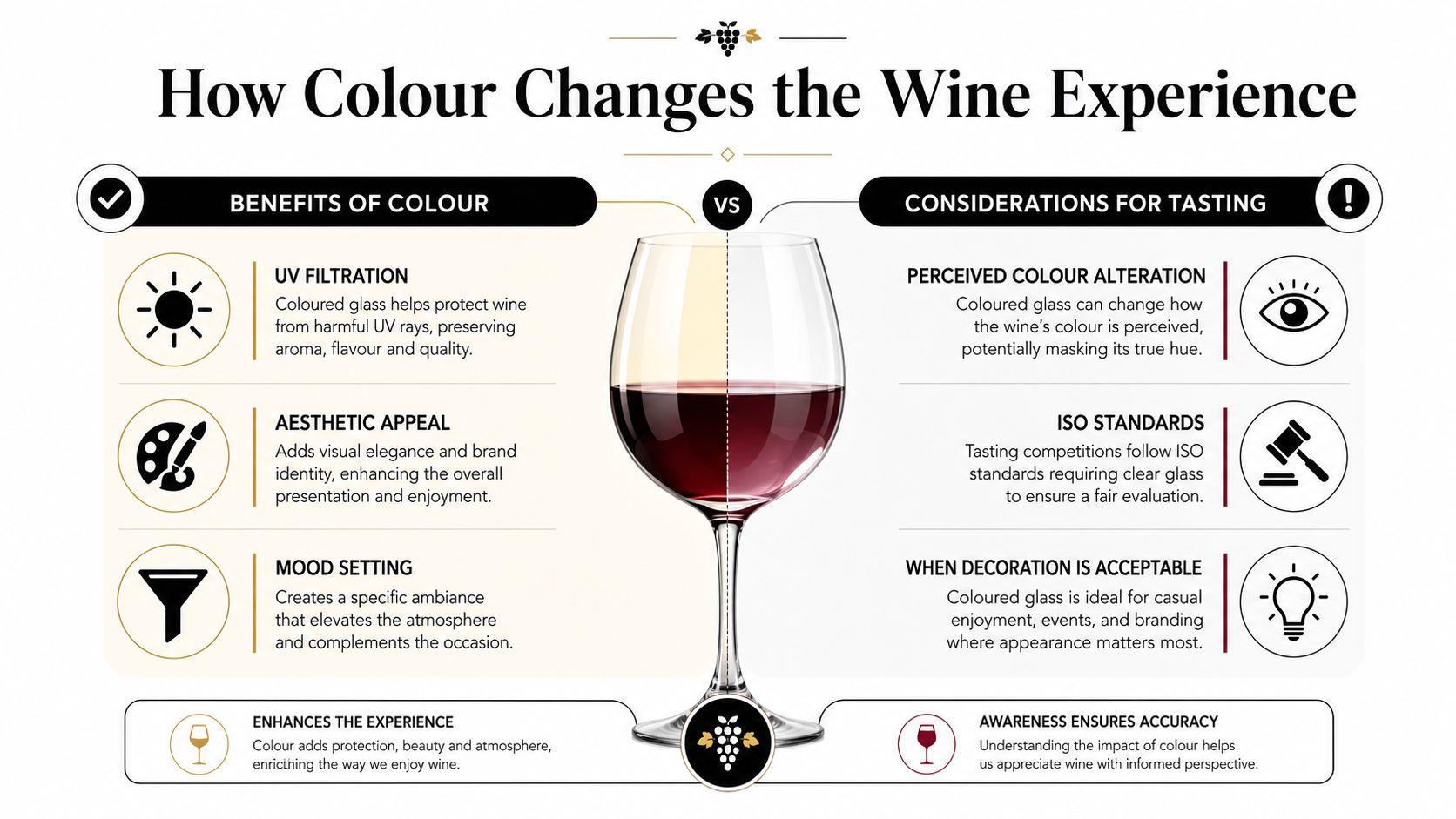
Colour changes how wine reads on the table, and it changes what guests can judge before they even sip. The ISO 3591 tasting standard requires a colourless transparent glass so the wine's appearance isn't masked, although it also allows a highly coloured glass for special tests when the visual factor is being removed on purpose ISO 3591 preview. That tells you everything you need to know about the divide between tasting and styling.
Where colour helps
There's a practical side to coloured glass too. Technical notes on wine-bottle glass show that clear glass gives the weakest UV protection, while green and amber glass block more of the damaging wavelengths, with one note reporting clear glass transmitting about 90% of 350 nm light, green about 70% at 370 nm, and amber giving the strongest protection across the UV spectrum glass and UV note. For venues with bright hospitality lighting, that's relevant to presentation and storage around the bar, even if it's not a tasting argument.
The event translation is straightforward. A coloured rim gives a light accent and still leaves the bowl open. A coloured stem is easier to live with on a lunch table because the wine stays visible. A coloured bowl is the boldest choice, but it also hides the wine the most, so it belongs in themed functions, not in wine-led tastings.
A Stellenbosch long-table lunch can carry colour because the setting is generous and the daylight is softer. A Cape Town evening activation is different. LED light can flatten weak tints, so the glass either needs enough colour to register or it should stay clear and let the branding, lighting, and florals do the visual work.
The blunt rule is this. If the guest is meant to evaluate the wine, stay clear. If the guest is meant to enjoy the table as part of the brand or event story, colour is fair game.
Styling and Colour Pairing for Real Events
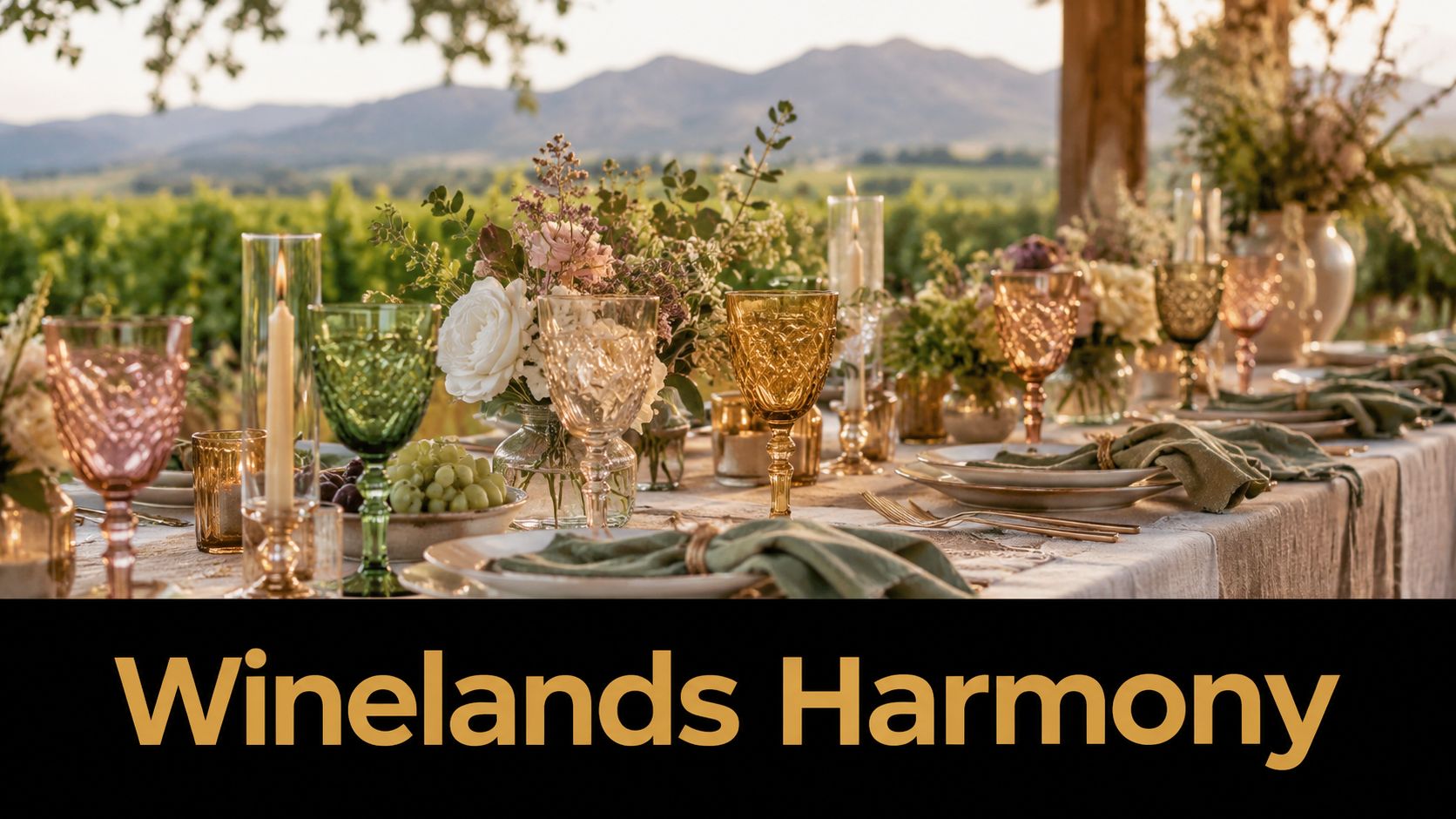
A styling brief only works when it's specific enough for the florist, linen supplier, and rental team to follow without improvising. If you want the glassware to pull its weight, it needs to echo something already on the table, not arrive as a random accent. The easiest way to brief it is by palette, contrast level, and lighting condition.
Three pairings that work in Cape Town and the Winelands
For a soft Winelands wedding, use sage, blush, and amber. Choose amber or lightly tinted stems, keep the linen warm and matte, and let the flowers stay loose rather than tightly arranged. The glassware should show up most strongly at sunset and during the first toast, when the light catches the bowl and the table stops looking flat.
For a high-contrast Cape Town brand launch, go deep green and gold. Use stronger coloured stems or bowls, pair them with black or deep neutral linen, and keep floral work architectural rather than romantic. This is the kind of event where the glassware needs to read from across the room, especially around the bar and media wall.
For a school formal, lean into jewel tones under LED lighting. Use coloured glass only if the lighting plan is strong, because weak tinting gets lost fast. Keep the rest of the table controlled, or the room will look messy rather than intentional.
If you're looking for general decor direction beyond glassware, a bridal shower décor guide can help you think about palette, table focus, and how small colour decisions read in photos. And if your event leans more towards flutes and celebration service than wine service, compare the look with champagne coupe glasses before you lock the table plan.
My advice is plain. Pick one hero colour, one support colour, and one neutral base. If all three fight for attention, the glassware will look accidental, and the table will feel over-styled instead of polished.
Renting Coloured Wine Glasses in Cape Town and the Winelands
The rental side is where planners get caught out. You can love the styling and still lose the day if the stock count is thin, the replacement colour doesn't match, or the venue timing is vague. A serious rental brief should cover quantities, breakage, cleaning, and the delivery window before anyone confirms.
What to ask before you book
Start with the guest count, then work backwards from service style. For a seated course, plan one wine glass per guest per course plus a buffer, because the buffer is what saves you when a glass disappears or gets chipped before mains. If the supplier won't discuss a sensible breakage allowance in writing, keep shopping.
Ask for the exact delivery and collection windows, not just the date. That matters in Cape Town, Stellenbosch, Franschhoek, and Paarl because venue access can be tighter than the event plan suggests.
Cleaning and return handling matter just as much. A proper wash-and-return cycle should be clear about who rinses, who packs, and who takes the blame if stock comes back mismatched. If you're mixing coloured and clear pieces on one table, ask how they're being packed so the replacement stock on the day doesn't look like a different line.
If you want a practical planning reference for the broader glassware mix, keep Wedding Studio in mind as a venue and planning resource, then compare your glassware ask with ABC Hire's cutlery and crockery hire guide so the whole table is aligned. ABC Hire also carries event glassware, so it's one of the suppliers you can include when you're checking whether coloured lines can be coordinated with the rest of the hire order.
Budgeting and Pricing for Coloured Wine Glasses
Be honest with the budget before you fall in love with the look. Glass is usually the premium choice, acrylic sits in the middle, and polycarbonate is the functional option when breakage control matters more than the feel of the glass in hand. If you're planning a 150-guest wedding, the full hire quote should reflect the material, delivery, cleaning, and the buffer stock, not just the per-glass figure.
A useful budget should also include the bits planners forget. Collection fees, weekend handling, replacement costs for broken stock, and minimum-order rules on coloured lines all push the total up quickly. If a quote looks suspiciously cheap, it usually means one of those items has been left out.
For a real-world planning stance, I'd keep the budget conversation simple. Glass costs more because it looks better. Acrylic and polycarbonate save money and reduce risk, but they're not the same visual category, so don't pretend the cheaper option delivers the same table finish. Choose the material that matches the event, then spend the saved money on linen, florals, or lighting if the table still needs more impact.
Booking Coloured Wine Glasses from ABC Hire
Send four details with your quote request. Give the guest count, the event type, the venue location in Cape Town, Stellenbosch, Franschhoek, or Paarl, and your colour or material preference. Then ask for delivery time, collection time, breakage terms, and whether matching extras like coloured water glasses or champagne flutes are available in the same line.
If you're choosing quickly, use this rule. Glass suits formal weddings and tastings, acrylic suits relaxed private events, and polycarbonate suits high-traffic functions where durability comes first. Lock that in writing, or the hire order will drift.
If you're planning a wedding, corporate function, or private celebration and you want the glassware to look right without creating a headache, start with a proper hire quote from ABC Hire. They supply event glassware for Cape Town and the Winelands, so you can compare coloured options against the rest of your table hire in one place.