

You’re probably choosing between looks, budget, and logistics at the same time. The venue wants something elegant. The client wants the photographs to feel warm, not clinical. The operations side wants quick load-in, quick strike, and no last-minute wobble when guests sit down.
That’s exactly where folding wooden chairs earn their place. In Cape Town and the Winelands, they solve a design problem and an event management problem at once. They suit vineyards, city venues, church halls, private estates, matric dances, and polished corporate functions. But only when the chairs are well built, correctly specified, and handled properly for local conditions.
A lot of generic chair advice falls apart the moment you apply it to a Stellenbosch lawn, a Franschhoek cellar door, or a CBD venue with a tight delivery window. Local planners need sharper guidance than “wood looks nice” or “store them dry”. They need to know what holds up, what photographs well, what moves efficiently, and what fails under pressure.
Why Wooden Folding Chairs Elevate Cape Town Events
A planner standing on a Winelands site visit usually sees the problem straight away. The setting is beautiful, but empty space can feel flat until the furniture gives it structure. Chairs do more than seat guests. They define the aisle, frame the ceremony, shape the dinner layout, and influence how formal or relaxed the event feels.
That’s why folding wooden chairs remain such a strong choice in the Western Cape. They bring warmth, texture, and visual discipline without making a venue feel overdesigned. A beach ceremony, a mountain-facing lawn, and a polished warehouse launch all ask for different styling, but timber adapts well across those settings.

Why the style works so often
Wooden folding chairs sit in a useful middle ground. They’re more refined than basic utility seating, but they don’t demand the formality of a banqueting chair with a cover. That makes them effective for planners who need one seating solution to carry a full event from ceremony to canapés to dinner.
They also have real local history. The history of folding chairs in South Africa notes that wooden folding chairs became staples in churches and community halls by the early 20th century, and by 1980 they made up 35% of rented event furniture in Cape Town and the Winelands, with over 50,000 units circulated annually.
Wooden folding chairs don’t just fill a venue. They give the event a visual rhythm that cheaper seating often misses.
Where they outperform other options
They’re especially effective when the brief calls for any of the following:
- A natural finish in the photographs that softens stone, steel, glass, or vineyard backdrops
- Fast transitions between ceremony and reception layouts
- A chair that can stand alone without needing a cover, sash, or heavy dressing
- Mixed-use events where one chair style needs to serve formal and informal moments
The mistake is treating all folding wooden chairs as equal. They aren’t. Some are built for repeated commercial use. Some are built for occasional light duty and start showing weakness quickly. That distinction matters far more than many new planners realise.
Understanding Wooden Chair Construction and Types
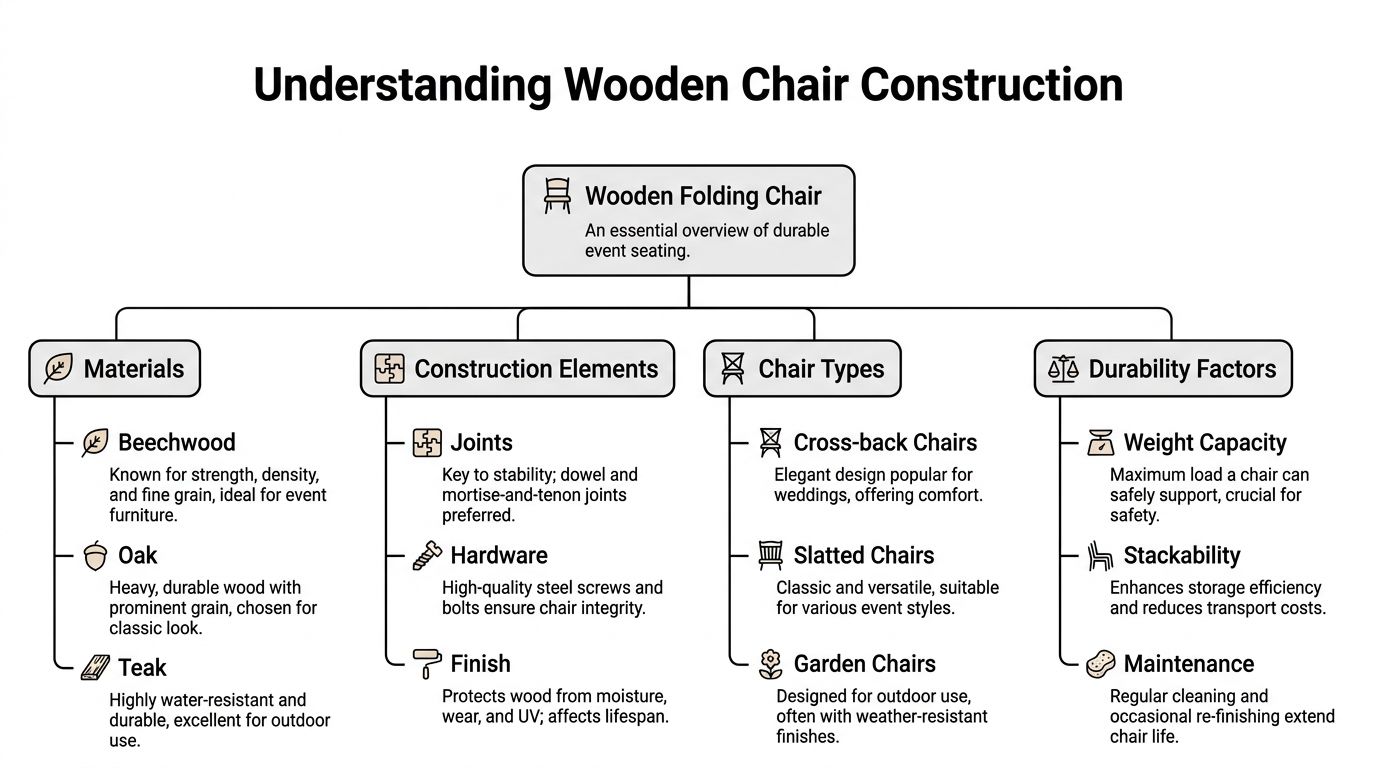
When you inspect folding wooden chairs properly, stop looking at the silhouette first and look under the bonnet. A chair can look polished on delivery and still be the wrong product for heavy event use. The key questions are about wood, joints, hardware, and finish.
Start with the frame, not the stain
A dark stain can make a weak chair look expensive. Don’t let colour distract you from build quality. In event work, the frame has to survive repeated loading, unloading, setup, strike, and storage.
The most important construction point is the joint. According to the wooden folding chair specification sheet from Forever Redwood, structural integrity depends heavily on joint construction methodology and wood thickness specifications. Premium versions use 2-inch thick boards with notched cross-piece connections rather than simple screw fastening, and the combination of wood glue and mechanical fastening can extend chair lifespan from an estimated 3 to 4 years for screw-only builds to 6 to 8 years for reinforced builds.
That matters because the first failure point in cheaper chairs is rarely the seat surface. It’s movement in the frame. You’ll hear it before you see it. A slight creak. A little side flex. Then one chair in a row becomes the chair nobody wants to sit on.
What to look for during inspection
Use this quick physical check when assessing stock:
- Check the joints first. If the frame relies only on visible screws without stronger joinery, treat that as a warning sign for high-frequency use.
- Test for lateral movement. Hold the backrest and seat and apply light pressure side to side. Excessive flex means trouble later.
- Inspect the finish closely. Chips, exposed edges, and rough touchpoints tend to worsen quickly during transport cycles.
- Look at the folding action. It should open and close smoothly without catching or forcing the frame out of line.
Practical rule: If a chair looks good but feels nervous when you handle it, it won’t improve on event day.
Common types and when they suit the brief
Planners often shop by look first, which is understandable. But style should follow use.
| Chair style | Best fit | Watch for |
|---|---|---|
| Classic slatted wooden folding chair | Weddings, formal dinners, school events | Finish quality and joint strength |
| Padded-seat wooden folding chair | Long ceremonies, conferences, dinners | Cleanliness and seat condition |
| Outdoor-focused timber look | Garden events, estate functions | Protective finish and moisture handling |
If you’re comparing timber seating with complementary furniture, it helps to see how the whole event palette works together. A useful reference is this guide to wooden tables and chairs for events, especially when you’re balancing chair finish against table style and venue mood.
The best planners don’t ask only “Does this match the mood board?” They ask, “Will this still be stable, clean, and presentable at the end of a long event day?”
Sizing Dimensions and Guest Comfort Factors
Guest comfort starts with the specifications. If the chair is too low, dining posture feels awkward. If the frame feels light but unstable, guests notice it immediately. If the folded profile is bulky, the logistics team pays for that problem all day.
A reliable benchmark comes from the commercial beechwood folding chair specification sheet. It lists a 300 lbs weight capacity, a 17.5 inch seat height, and folded dimensions of 17.5"W x 2.5"D x 35"H. It also notes that this compact profile allows approximately 40 chairs to fit on a standard storage shelf, reducing warehouse footprint by up to 60%.
The numbers that matter on site
The 17.5 inch seat height matters because it sits comfortably with formal dining tables and works well for ceremonies where guests may be seated for a while. A chair that’s too low looks stylish in isolation and becomes irritating during dinner service.
The 300 lbs weight capacity is the spec that separates decorative furniture from proper event stock. It signals that the chair is built for broad guest use, not just for lightweight occasional seating. New planners sometimes focus on colour and forget to confirm load rating. That’s backwards. Capacity should be confirmed before finish options are even discussed.
Comfort isn’t only about the frame
Padded seats aren’t always necessary, but they do change the guest experience in the right setting.
Use them when the schedule includes:
- Long ceremonies where guests won’t move for an extended stretch
- Corporate presentations that require people to stay focused and seated
- Multi-course meals where comfort affects how relaxed the room feels
Skip them when the event leans more casual, the seated portion is short, or the bare timber look is part of the design language.
There’s also a planning connection between chair comfort and room layout. Even a good chair feels cramped if the rows are too tight or the table spacing is off. If you’re refining flow and spacing, this guide on how to place furniture is a useful visual reference for thinking through circulation, focal points, and guest movement.
A comfortable chair in a bad layout still feels like a bad seating choice.
Why folded dimensions matter more than most planners think
Transport crews notice folded depth immediately. A slim folded profile speeds loading, reduces clutter in holding areas, and helps when venues offer limited back-of-house space. That’s particularly useful when ceremony chairs need to be cleared quickly before the reception reveal.
For planners, the lesson is simple. Ask for the exact chair spec, not just the finish name. “Wooden folding chair” is a category, not a standard.
Styling Wooden Chairs for Weddings and Corporate Functions
The reason folding wooden chairs stay relevant isn’t nostalgia. It’s range. They can blend into a minimalist setup or become part of the visual story when you dress them well.
For weddings, they create softness without fuss. For corporate events, they remove the coldness that standard conference seating often brings. The same chair can feel romantic, restrained, modern, or grounded depending on layout and styling choices.

Wedding setups that feel intentional
On a lawn ceremony, folding wooden chairs work best when the rows are crisp and the aisle is clearly defined. Don’t rely on the surroundings alone to do the visual work. The chair lines should create structure, especially in open venues where the eye needs an anchor.
A few styling approaches work consistently well:
- Leave the chairs mostly bare when the venue already offers strong scenery such as vineyards, mountains, mature trees, or stone buildings
- Add a small floral tie or fabric accent to selected aisle chairs rather than decorating every chair in the same way
- Use signage sparingly on the first row or selected reserved seats so the chair remains elegant rather than cluttered
For reception dining, wood pairs well with textured linen, tapered candles, and natural florals. If the planner starts layering too many decorative treatments onto the chair itself, the look can become busy very quickly.
Corporate use that doesn’t feel makeshift
Corporate teams often assume wooden folding chairs are only for weddings. That’s too narrow. In the right venue, they help a brand event feel considered and human rather than temporary.
They work particularly well for:
- Product launches in design-led spaces
- Panel discussions where standard conference seating would feel flat
- Team gatherings in the Winelands where polished but relaxed styling suits the setting
The trick is discipline. Straight rows. Consistent spacing. Clear sightlines. Enough legroom. Minimal branding on the chair itself.
A corporate event doesn’t need sterile seating to feel professional. It needs order, comfort, and a setup that matches the venue.
If you’re building a ceremony or reception look and want to compare seating styles more broadly, this guide to chairs for wedding events is a useful planning reference.
When not to overstyle them
Some chairs should be left alone. If the timber finish is attractive and the venue has character, extra décor can dilute the effect.
Avoid heavy chair dressing when:
- the aisle already has floral structures,
- the tablescape carries most of the detail,
- or the event leans modern and clean rather than romantic and layered.
The chair should support the room, not compete with it.
Rental Versus Purchase A Practical Cost Analysis
A planner booking 120 chairs for a Franschhoek wedding and a venue manager setting 120 chairs every weekend are solving two different problems. That is why the rent-versus-buy decision needs to start with usage pattern, not sticker price.
For many Cape Town planners, rental is the better financial decision because it keeps costs tied to confirmed events. Cash stays available for items that change from brief to brief, such as styling, transport, weather cover, and staffing. If you need a broader benchmark for local chair hire options for events, compare the quote against your expected annual usage, not against a single purchase invoice.
Why rental fits the Western Cape event market
The Western Cape has treated chair hire as a standard part of event operations for decades. As noted earlier in the article’s historical source, folding chairs have long been circulated through the Cape Town and Winelands rental market for weddings, community events, and venue setups.
That local pattern makes sense. Event formats here change fast. A planner can move from a beachside ceremony to a cellar dinner to a school function in the same month. Hiring lets you match chair quantity, timber finish, and seat style to the venue instead of forcing every event into one stockholding decision.
It also reduces exposure when guest numbers move late.
Understanding ownership costs
Buying starts to make sense when chairs are used often enough to justify storage, maintenance, and transport systems. That usually suits venues with regular in-house functions, estates with dedicated staff, and businesses running repeated setups from one base.
For everyone else, ownership tends to cost more than expected because the hidden work sits outside the purchase invoice:
- Storage space that stays dry, secure, and organised
- Cleaning between events, especially after dust, mud, wine spills, or coastal moisture exposure
- Maintenance checks for loose screws, worn feet, finish damage, and wobble
- Transport planning with suitable vehicles, loading protection, and labour on both ends
- Stock replacement when damaged chairs leave you with a mismatched set
In Cape Town and the Winelands, those costs show up quickly. A chair that lives in a damp storeroom near the coast ages differently from one kept in a dry, controlled venue store inland. A set used on gravel farm roads, lawn ceremonies, and frequent load-ins will need more touch-ups than many first-time buyers allow for in their budget.
When purchase does work
Purchase can be the right move for a venue with steady demand and a fixed event profile. If the same style is used week after week, the numbers can work. Control also improves. Your team knows the condition of the stock, the stacking method, and the setup standard.
But planners should be honest about volume. If you run occasional events, changing formats, or client-led styling, rental usually protects cash flow and avoids being locked into last year’s buying decision.
Choice has value. So does flexibility. In this region, both often matter more than ownership.
Managing Logistics and Care for Cape Town and Winelands Venues
A ceremony can start under clear skies in Franschhoek and end with chairs being rushed under cover twenty minutes later. On the Atlantic Seaboard, salt air settles on timber faster than many planners expect. In Cape Town, chair logistics are never only about quantity and style. Site conditions decide whether your setup stays clean, stable, and presentable through the event.

Handle the venue before you handle the chairs
The biggest mistakes usually happen before unloading starts. A planner approves a layout from photos, then the crew arrives to find a sloped lawn, loose gravel, a narrow gate, or a ceremony area far from the nearest vehicle access.
Check the route in practical terms. Where does the truck stop? Is the path firm enough for trolleys, or will every chair need to be carried by hand? Is there a shaded or covered holding area if the room is still being turned or the weather changes?
That matters even more in the Winelands. Many estates look easy on a site visit, but long farm roads, cellar entrances, and split-level lawns can slow setup and increase handling damage.
What actually protects wooden folding chairs on local sites
Bring chairs out as late as the run sheet allows. Early setup sounds organised, but hours of sun, wind, dust, or damp air create extra cleaning and a higher risk of finish wear before guests even sit down.
Use a simple event-day routine:
- Inspect the exact seating footprint before unloading the full batch
- Test a few chairs on the actual surface, especially on lawn edges and gravel
- Keep covers or moving blankets nearby if weather exposure is possible
- Assign one crew member to check row spacing and wobble by hand, not by eye alone
- Wipe down seats and top rails just before guest arrival
I advise planners to leave labour room for one reset. In this region, that buffer saves events.
Weather plans need a real fallback area
A weather plan is only useful if the fallback space is ready and reachable. "We can move inside if needed" is not enough if the inside room still has supplier cases stacked in it, or if staff need twenty minutes to clear it.
Choose the backup position in advance. Mark the route. Confirm who gives the move instruction. If wind picks up in Camps Bay or mist rolls in over a Stellenbosch lawn, hesitation causes more damage than the weather itself.
For planners comparing suppliers, this guide to chair hire for Cape Town events gives helpful context on matching stock and service levels to different venue types. Wedding teams juggling the wider reception schedule can also pair chair planning with this ultimate wedding reception planning checklist.
Post-event care decides how the next setup looks
Good-looking chairs are often lost at strike, not during service. Wet chairs get folded too soon. Chairs are stacked with grit between frames. Hardware gets forced by tired crew trying to load quickly at the end of a long day.
Dry each chair before stacking or returning it. Check for mud on the feet, moisture on the seat, and new scratches around hinges and top rails. Stack evenly, avoid over-tight load packing, and keep timber out of damp storerooms after coastal or rainy events.
That discipline is what keeps a wooden folding chair set presentable across a full Cape Town season.
Your Actionable Chair Hire and Staging Checklists
Good chair decisions rarely come from taste alone. They come from asking the right questions before booking, then running a clean setup on event day. These two checklists do exactly that.
Chair hire checklist for planners
Use this when speaking to any rental company.
- Confirm the build quality. Ask how the joints are constructed and whether the chairs are intended for commercial event use.
- Request exact specifications. Get the seat height, folded size, weight capacity, and whether the seat is padded.
- Ask about finish condition. Find out how the supplier checks for scratches, chips, wobble, and loose hardware before dispatch.
- Discuss venue conditions openly. Tell them if the event is on grass, gravel, paving, or indoors, and whether weather exposure is likely.
- Clarify delivery and collection timing. Tight venue windows need planning long before event week.
- Check contingency handling. Ask what happens if weather forces a timing or layout change.
For wedding clients managing a bigger planning workload, this ultimate wedding reception planning checklist is a useful companion resource because seating decisions are easier when they’re tied to the rest of the reception plan.
Event day staging checklist for your team
Run this on site before guests arrive.
Walk the seating area first
Check slope, soft ground, drainage risk, and wind exposure before placing a single row.Set the first row carefully
If the first line is crooked or unstable, every row behind it becomes harder to fix.Open and test sample chairs as you go
Don’t assume every chair in the batch is identical. Catch issues early.Keep spacing consistent
Guests notice uneven gaps immediately, especially in ceremony layouts and theatre-style setups.Do a final wipe and visual sweep
Remove dust, marks, leaves, and any chair that looks out of line with the rest.
The last ten minutes before guest arrival matter more than the first hour of setup.
- Break down with care
Fold properly, keep damp chairs separate if needed, and avoid dragging or stacking carelessly during strike.
If you need reliable event seating across Cape Town, Stellenbosch, Franschhoek, Paarl, and surrounding areas, ABC Hire can help you match the right chair style to the venue, layout, and occasion. Reach out for practical guidance on hiring furniture that looks right, handles well, and arrives ready for service.