Before you even start thinking about colour schemes and cushion fabrics, the most important decision you'll make is choosing the right material for your wicker furniture outdoor setup. Get this wrong, and you could be looking at faded, cracked, or mouldy furniture in just one season.
The secret is knowing that "wicker" isn't a material itself—it's the weave. The actual fibres used in that weave are what make all the difference, and they generally fall into two camps: natural and synthetic.
Your local climate, especially here in South Africa, plays a massive role. A sun-drenched patio in Cape Town has totally different needs than a misty, sheltered veranda in Durban.
Natural Wicker: Beautiful, But Needs Protection
There’s a certain charm to natural wicker that you just can’t replicate. Made from organic materials like rattan, cane, or bamboo, it brings an unmatched warmth and classic texture to a space. It’s elegant and lightweight, perfect for creating that inviting, laid-back feel.
But here’s the catch: it's a plant-based fibre.
That means it’s vulnerable to moisture and harsh sunlight. In a humid coastal area, it can easily absorb moisture, which leads to mould, mildew, and eventually, rot. Leave it out in the intense Highveld sun, and the fibres will dry out, become brittle, and start to crack and unravel.
Because of this, I only ever recommend natural wicker for fully covered and protected outdoor areas—think deep, shady verandas or enclosed sunrooms where it's safe from direct rain and sun.
Synthetic Wicker: The All-Weather Workhorse
For any truly open-air wicker furniture outdoor setting, modern synthetic wicker is the undisputed champion. It’s almost always made from high-density polyethylene (HDPE), a tough resin engineered to handle whatever the South African climate can throw at it.
Here’s why it’s become the go-to choice for event planners and homeowners alike:
- Built-in UV Resistance: Quality synthetic wicker has colour pigment running right through the strand, not just painted on top. This means it won't fade or become chalky, even after years of soaking up the African sun.
- Completely Moisture-Proof: As a type of plastic, it simply doesn't absorb water. Rain just beads up and runs off, so you never have to worry about rot, mould, or warping.
- Seriously Low Maintenance: Forget special treatments. A quick hose-down or a wipe with a bit of soapy water is all it takes to keep it looking new.
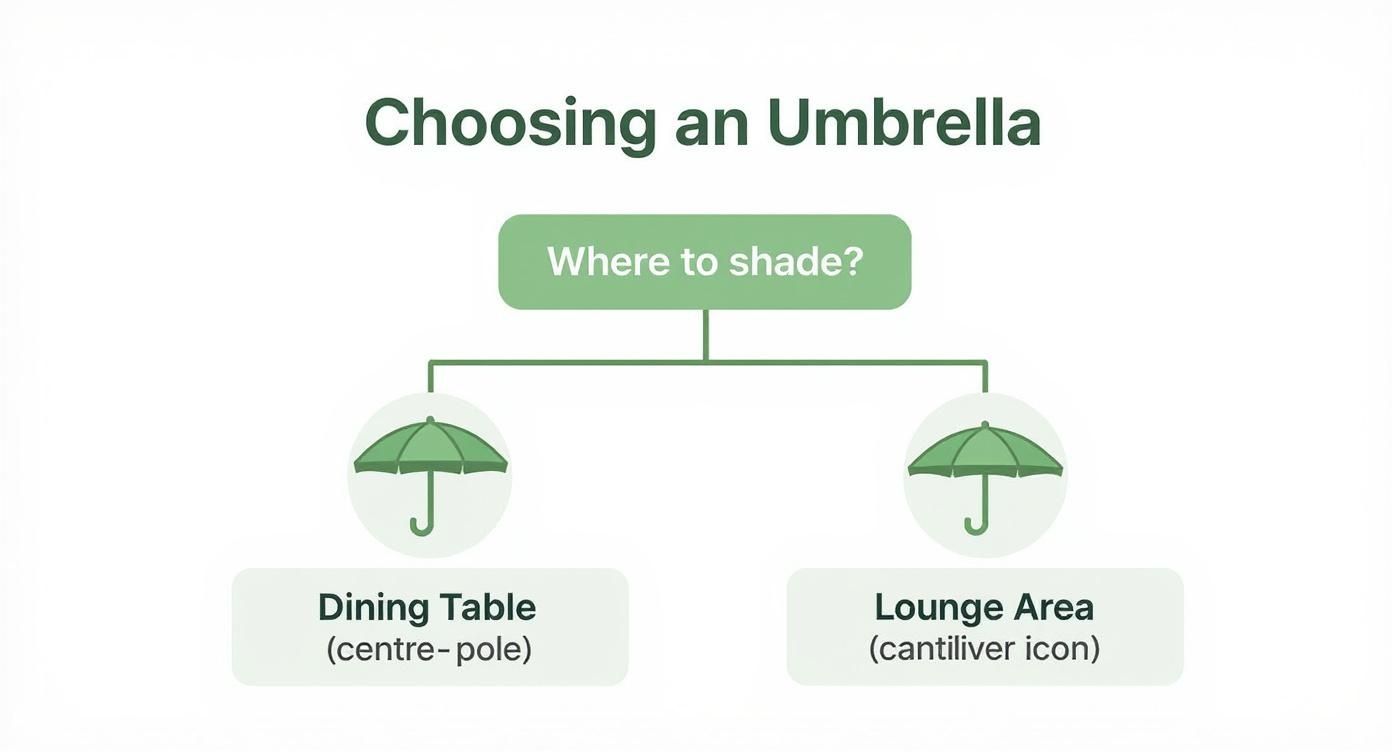
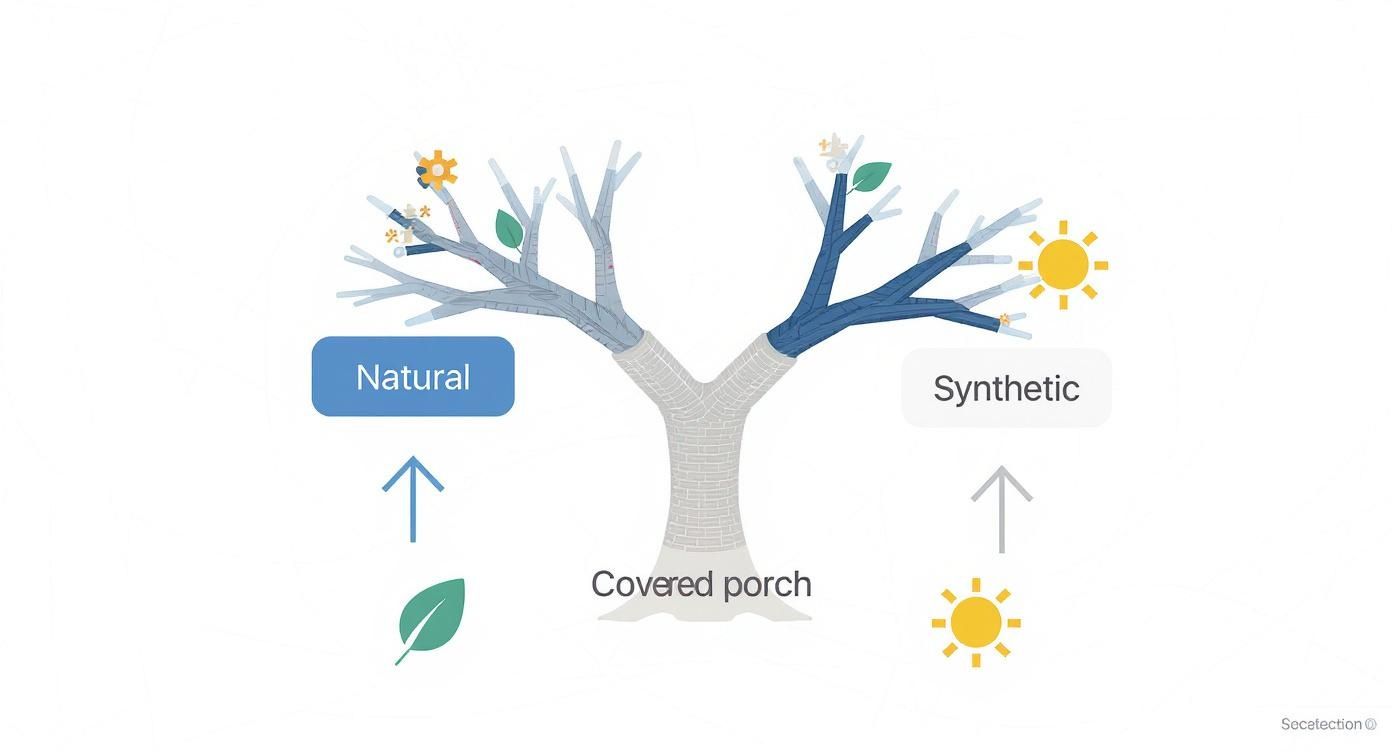
This diagram breaks down the choice perfectly. If your furniture will be exposed to the elements, synthetic is really your only practical option.
This quick table can help you decide at a glance which wicker type is best suited for your event space.
Natural vs Synthetic Wicker: A Quick Comparison
| Feature | Natural Wicker (e.g., Rattan) | Synthetic Wicker (e.g., HDPE Resin) |
|---|---|---|
| Best For | Covered patios, sunrooms, verandas | Open-air patios, pool decks, gardens |
| Weather Resistance | Poor. Damaged by sun and moisture. | Excellent. UV and moisture-resistant. |
| Durability | Lower. Can become brittle and crack. | High. Resists cracking, peeling, and fraying. |
| Maintenance | High. Requires sealing and regular cleaning. | Low. Easy to clean with soap and water. |
| Aesthetics | Classic, warm, organic texture. | Can mimic natural look; wide colour range. |
| Cost | Varies, but can be expensive for high quality. | Often more affordable and a better long-term value. |
Ultimately, for any outdoor event hire, synthetic wicker gives you peace of mind and a far better return on your investment.
What’s Hiding Underneath Matters Most
The quality of outdoor wicker furniture goes deeper than the weave. The frame is the backbone of the entire piece, and a cheap frame will fail long before the wicker itself ever does.
Always, always look for a powder-coated aluminium frame. It’s the gold standard for a reason: it's light, incredibly strong, and completely rust-proof—a total non-negotiable for outdoor use in our climate.
A sturdy, rust-proof aluminium frame is the hidden hero of high-quality outdoor wicker furniture. While the weave gets all the attention for its looks, the frame is what ensures your investment will last for more than a few seasons.
It’s no surprise that the demand for durable outdoor furniture is booming. The regional market, including South Africa, was valued at USD 3,144.9 million in 2022 and is set to grow even more. This shows a clear shift towards investing in quality materials that can stand up to our diverse climates.
When planning your setup, remember that even the toughest furniture benefits from good protection. To learn more about pairing your seating with the right kind of shade, see our guide on how to choose large outdoor umbrellas.
Designing Your Outdoor Layout for Comfort and Flow
Great wicker furniture outdoor collections look fantastic on their own, but their real magic is revealed in how you arrange them. A smart layout can turn a simple patio into a welcoming, easy-to-use space that just begs guests to kick back and connect. It’s all about creating an experience, not just plonking down chairs.
The trick is to design a space that feels both spacious and intimate, guiding people naturally while offering comfy spots to settle in. It’s a delicate balance between looking good and being practical.
Establish Clear Zones and Pathways
Before you move a single piece, think about how people will actually move around. You need clear, obvious pathways from the house to the garden, over to the bar, or down to the pool. One of the biggest mistakes we see is furniture blocking these natural routes, forcing guests into an awkward shuffle.
Try to keep your main pathways at least 90cm to 120cm wide. This gives enough room for two people to pass each other without interrupting a seated conversation. This is non-negotiable for events where staff are carrying trays or guests are mingling with drinks. A wicker sectional sofa is brilliant for this; its L-shape can create a soft barrier that defines a lounge area while keeping a clear walkway open behind it.
Create Conversation Pods
Don't just line your chairs up against a wall. The goal is to group them in a way that encourages people to talk. We call these 'conversation pods'—small, dedicated seating arrangements that feel like their own little zones. They’re an open invitation to sit and chat.
For something like a cocktail party, you could set up a few different pods:
- Two wicker armchairs with a small side table snuggled between them for a quiet, one-on-one chat.
- A wicker loveseat facing two armchairs around a coffee table, perfect for a group of four.
- A large circular wicker sofa arranged around a fire pit for bigger, more relaxed gatherings.
This strategy breaks a large, open space into more inviting sections, making the whole area feel cosier and much more organised.
The secret to a great outdoor layout isn't filling the space; it's defining it. Use your wicker furniture arrangements to create 'rooms without walls,' giving each area a clear purpose, whether it's for dining, lounging, or quiet conversation.
Use Rugs to Anchor Your Seating
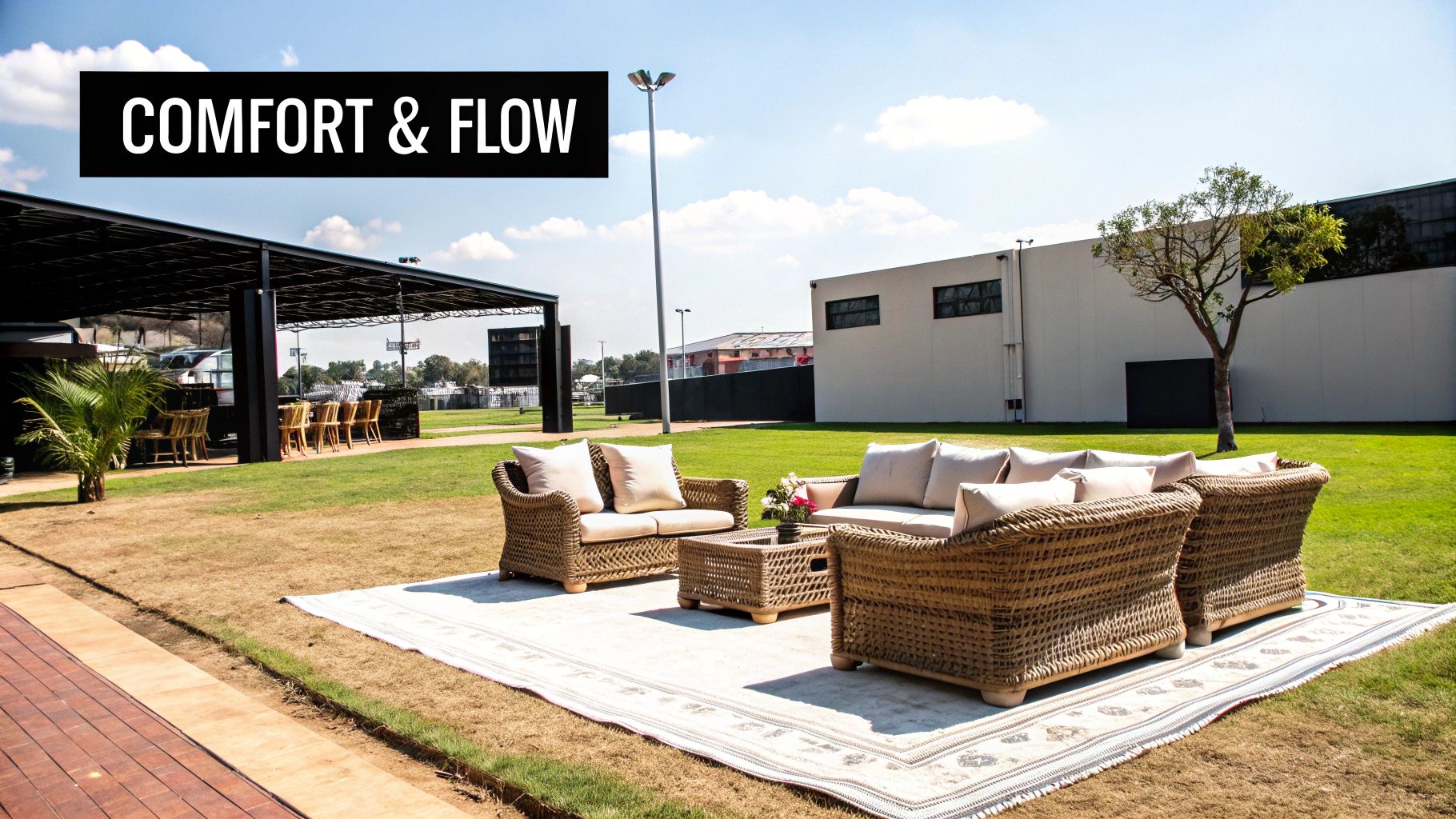
An outdoor rug is your best friend when it comes to layout design. It works exactly like an indoor rug, visually grounding your furniture and carving out a specific zone. The moment you place a large wicker sectional and a couple of armchairs on a rug, you’ve instantly created a designated lounge area.
Just make sure the rug is big enough. A good rule of thumb is to have at least the front legs of all your main seating pieces on the rug. If the rug is too small, the whole setup feels cramped and disjointed. It's a simple touch, but it ties everything together and makes your wicker furniture outdoor setup look deliberate and polished.
Calculate Seating Without Overcrowding
It’s so tempting to try and squeeze in as much seating as possible, but this almost always backfires, making the space feel chaotic and uncomfortable. You’re much better off being realistic about how many people can fit comfortably.
As a guide, leave about 60cm of "elbow room" per person for comfortable seating. For getting around, make sure there’s at least 45cm of space between a coffee table and a sofa so people can get in and out without any hassle. When you prioritise comfort and flow over cramming people in, you create a far more enjoyable vibe for your guests. The right arrangement doesn’t just look good—it makes the entire outdoor experience one to remember.
Styling Outdoor Wicker Furniture Like a Professional
The real beauty of wicker furniture outdoor settings isn't just about the pieces themselves—it’s about how you bring them to life. Think of your wicker furniture as a beautiful, neutral canvas. The magic really starts when you layer on colours, textures, and lighting to create a specific mood.
This is your opportunity to turn a simple patio setup into a memorable experience for your guests. Whether you're aiming for a vibrant party atmosphere or a relaxed garden retreat, the right styling choices are what make all the difference.
Choose Your Colour Palette and Fabrics
The quickest way to inject personality into your wicker setup is with cushions and fabrics. Since most wicker comes in neutral tones like grey, brown, or white, it’s the perfect backdrop for almost any colour scheme you can dream up.
For a bold, energetic vibe that’s perfect for a daytime celebration, go for vibrant, UV-resistant textiles in shades like turquoise, coral, or sunny yellow. These colours pop beautifully against the wicker’s natural texture and create an instantly festive feel.
On the other hand, for a more sophisticated evening event, you might lean towards an elegant, muted palette. Think deep charcoals, soft creams, or even sage greens. These tones create a calm, luxurious mood that feels both timeless and incredibly inviting.
Whatever you choose, always put outdoor-friendly materials first. Performance fabrics are designed to resist sun-fading and dry quickly, which is an absolute must-have for our unpredictable Cape Town weather.
Layer with Textures and Accessories
Great styling is all about creating depth and visual interest. You can easily achieve this by layering different textures. Don't just stop at the seat cushions! Adding a few thoughtful accessories can make your outdoor space feel as comfortable and put-together as an indoor lounge.
Consider bringing in these layering elements:
- Scatter Cushions: Mix and match cushions in different sizes, shapes, and patterns to add personality. Pairing a solid colour cushion with a patterned one in a complementary shade creates a stylish look without much effort.
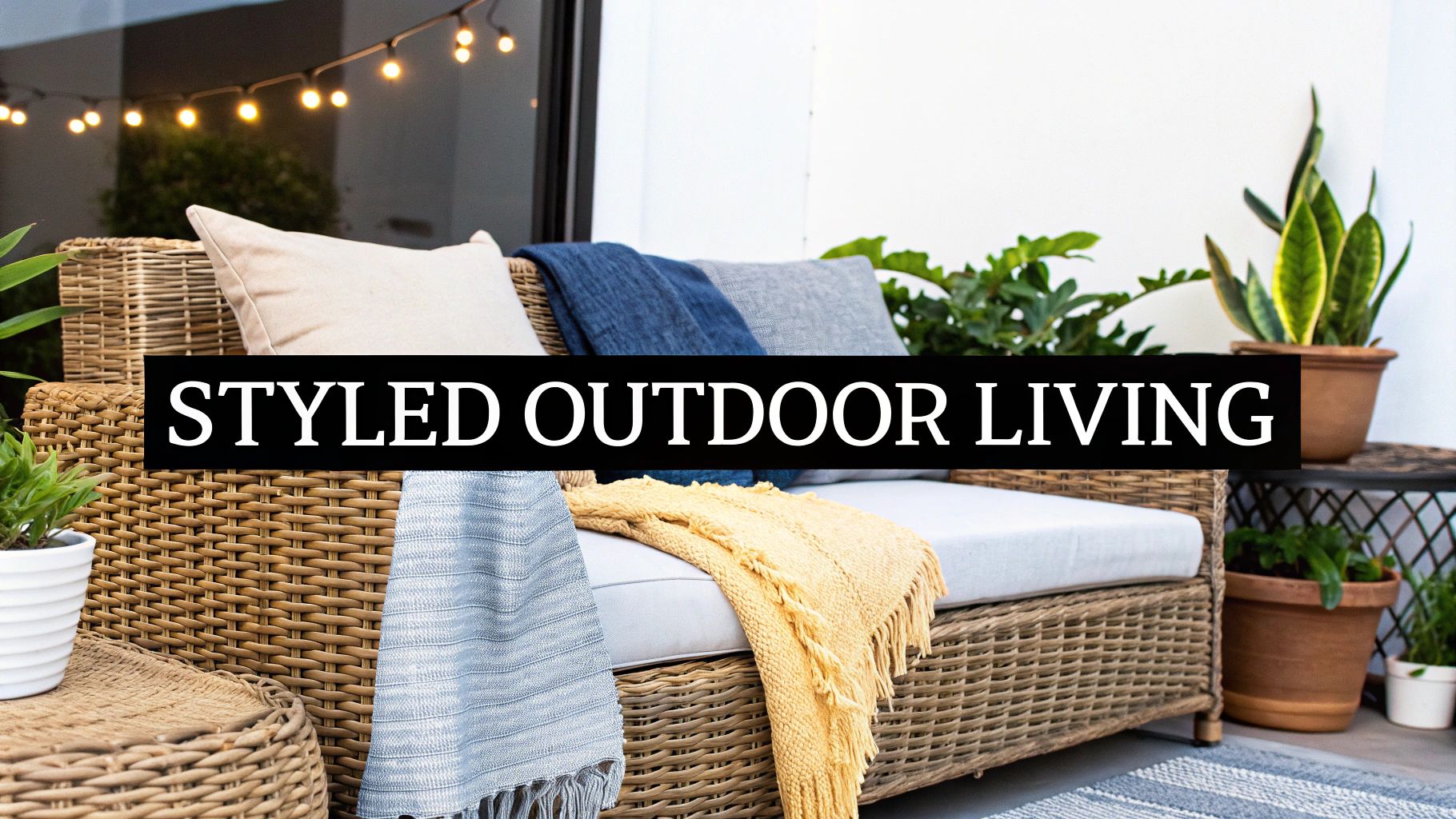
- Outdoor Throws: A lightweight throw casually draped over the arm of a wicker sofa adds a touch of colour and softness. It’s also practical for guests when the evening air gets a little chilly.
- Outdoor Rugs: As we touched on earlier, a good rug anchors the whole seating area. Choose one with a pattern or texture that complements your cushions to tie the entire design together.
The most memorable outdoor spaces feel complete and intentional. Layering textiles like throws and varied cushions on your wicker furniture is the secret to moving beyond a basic setup and creating a truly inviting, 'lived-in' atmosphere for your guests.
Set the Mood with Creative Lighting
Lighting is one of the most powerful tools you have for transforming the atmosphere of an outdoor space. The right lighting can make your wicker furniture glow, creating an enchanting and intimate setting after the sun goes down.
Forget about relying on a single, harsh overhead light. The trick is to think in layers.
String lights or festoon lights draped overhead can instantly create a magical, café-like ambiance. Solar-powered lanterns placed around the seating area or on side tables add warm, individual pools of light without you having to worry about cords. For a touch of drama, you can even use uplighters to highlight nearby trees or garden features, adding depth to the whole scene.
This mix of ambient and accent lighting makes the space feel dynamic and ensures every corner is beautifully illuminated. For more inspiration, our guide to designing with outdoor lounge sets has plenty more ideas.
Bring Your Styling Theme to Life
Tying all these elements together with a clear theme is what really elevates your styling. Your wicker furniture outdoor set is versatile enough to fit into just about any aesthetic you can imagine.
Here are a couple of popular themes to get you started:
- Chic Coastal Vibe: Pair white or light grey wicker furniture with cushions in shades of navy blue and crisp white. Accessorise with driftwood-inspired decor, striped throws, and lanterns to get that relaxed, elegant seaside feeling.
- Bohemian Garden Retreat: Start with natural-toned wicker. Layer it with earthy-coloured cushions in terracotta, mustard, and deep green. Add macrame details, plenty of potted ferns and succulents, and patterned rugs for a free-spirited, eclectic look.
No matter your theme, bringing in natural elements like potted plants is always a winning move. Placing large ferns, palms, or flowering plants around your wicker furniture helps to seamlessly blend your styled area into the garden, creating a truly harmonious outdoor oasis.
Keeping Your Wicker Looking its Best: Cleaning & Maintenance
Your gorgeous wicker furniture outdoor setup is more than just seating; it's an investment in your event's atmosphere. A little regular care goes a long way, ensuring it looks incredible for years to come. Don't worry, it's not complicated, but it's the key to protecting your furniture from the elements and keeping it guest-ready.
The game plan changes slightly depending on whether you're working with natural or synthetic wicker. For both, though, the first step is always the easiest.
The Basics of Wicker Care
First things first: get those cushions off. Grab your vacuum with a soft brush attachment and give the furniture a good once-over. This is the quickest way to get rid of the loose dirt, dust, pollen, and cobwebs that love to hide in that beautiful weave. If you do this regularly, you'll stop that gritty buildup before it even starts.
For a deeper clean on synthetic wicker, all you need is a bucket of warm, soapy water – a mild, pH-neutral soap is perfect. Wipe everything down with a soft cloth. Got some stubborn dirt stuck in the weave? An old, soft-bristled toothbrush is your secret weapon here.
Once it's clean, give it a gentle rinse with a garden hose on a low-pressure setting. You want to wash the dirt off, not drive it deeper in. Then, just let it air dry completely in the sun before you even think about putting the cushions back on.
Tackling Specific Problems
Even the toughest outdoor furniture will face a few challenges, especially in our climate. From a surprise mildew outbreak after a wet week to the relentless sun, sometimes you need a more targeted approach.
Dealing with Mildew on Natural Wicker
Natural wicker can be a bit sensitive to dampness. If it gets wet and doesn't dry out fast enough, you might see some fuzzy grey or black spots. If you do, act quickly.
- Mix a solution of 50/50 white vinegar and water in a spray bottle.
- Lightly mist the mildew spots – don't soak the fibres.
- Gently scrub the mildew away with a soft brush. The vinegar will kill the spores.
- Wipe the area with a clean, damp cloth, then immediately dry it with a soft towel. Pop it in a sunny, breezy spot to dry out completely.
Protecting Against Sun Damage
High-quality synthetic wicker is built to be UV-resistant, but let's be honest, nothing is completely immune to the harsh African sun year after year.
- Rotate Your Furniture: Every so often, just rearrange your layout. This ensures one side isn't always taking the full force of the sun, which helps keep the colour even.
- Use Furniture Covers: When you're not using the furniture for a while, good-quality, breathable covers are your best friend. They shield against sun, rain, and dirt, and will seriously extend the life of your wicker.
- Find Some Shade: If you can, position your setup under a large umbrella, a pergola, or on a covered patio. This not only protects the furniture but also makes the space much more comfortable for everyone.
A simple monthly routine is the secret here. Just 30 minutes of cleaning can stop grime from building up and fix tiny issues before they become big headaches. It’s all it takes to keep your outdoor wicker looking fantastic, season after season.
Your Seasonal Care Checklist
A little bit of prep work at the start and end of the season makes all the difference for your wicker furniture outdoor investment.
- Start of Summer: Give every piece a thorough clean to get rid of any dust from storage. It's also the perfect time to check the frames and weave for any signs of wear and tear and see if the cushions need a deep clean before the season kicks off.
- End of Summer: Clean everything again before you pack it away. Storing dirty furniture is an open invitation for pests and can let stains set permanently. Make absolutely sure every single piece is 100% dry before you cover it or move it into storage – this is crucial for preventing mould and mildew.
By following these simple tips, you’re making sure your wicker furniture stays beautiful, comfortable, and ready to be the centrepiece of your outdoor events for a long, long time.
Your Practical Checklist for Renting Outdoor Wicker
Renting outdoor wicker furniture is one of the smartest moves you can make for a wedding, corporate function, or any special event. It delivers that sophisticated, pulled-together look without the massive expense and hassle of buying. But to make sure it all goes off without a hitch, you need to know exactly what to look for and which questions to ask before you commit.
Think of this as your inside guide to getting it right. A few key checks can save you from hidden costs, last-minute panic, and the disappointment of furniture that doesn't live up to what you saw online.
Before You Sign Anything
That first chat with a rental company is where you lay the groundwork. Don't be shy about digging into the details—any decent company will welcome your questions and give you straight answers. This is your chance to get clarity on everything from the final bill to the logistics of drop-off and collection.
Here are the non-negotiable questions to ask:
- What's the all-in cost? Get a fully itemised quote. It should clearly show the rental fee, delivery, setup, and collection charges. Crucially, ask if VAT is included so there are no nasty surprises later.
- What’s your damage policy? You need to know what happens if accidents occur. Is there a damage waiver you can opt into, or are you on the hook for the full replacement cost if someone spills red wine?
- What are the exact delivery and collection times? Lock in a specific delivery window and find out when they plan to collect. You have to make sure this lines up perfectly with your venue's access times to avoid being stung with extra fees.
- Are cushions included and what's their condition? Double-check that the cushions in the photos are what you'll actually get. Ask if they're professionally cleaned after every event – it’s a huge indicator of a company’s quality standards.
Getting this right from the start is so important. To really get into the weeds, our complete guide on renting furniture for events has even more pro tips.
The Day of Delivery Inspection
When the delivery truck pulls up, don't just sign the paperwork and wave the team on. Take a few minutes to give every piece of wicker furniture outdoor a proper once-over. It’s far easier to flag an issue on the spot than to argue about it after the event.
Walk around each item and look specifically for:
- Structural Integrity: Check the frames and legs on every chair and sofa. Nothing should wobble. Give the arms and backs a gentle push to make sure they feel solid and secure.
- Weave Condition: Scan the wicker for any obvious unravelling, cracking, or fraying. A little bit of wear and tear is normal for rental stock, but you shouldn’t accept anything with significant damage.
- Cushion Quality: Inspect every cushion for stains, rips, or any musty smells. If you can, unzip them a little to check that the inner foam is in good shape.
Pull out your phone and take photos of every single piece as it comes off the truck. This gives you a time-stamped visual record of its condition on arrival and is your best protection against any disputes over pre-existing damage.
This quick, hands-on check ensures you’re getting the quality you’re paying for. South Africa has a thriving local furniture industry, accounting for 63.52% of all furniture exports from the continent. That means there are excellent, high-quality rental options out there, so there's no reason to settle for anything less than the best.
Final Checks and Regional Considerations
Lastly, think about your specific location. If your event is in a coastal city like Cape Town, you absolutely need to confirm the rental company is supplying synthetic wicker with rust-proof aluminium frames. Anything else will struggle with the salty, humid air. For an inland event, your main worry might be making sure the furniture arrives sparkling clean and free from dust.
By running through this checklist, you’re not just renting furniture; you’re buying peace of mind. You can finally relax and focus on hosting, confident that your outdoor wicker setup looks fantastic and is exactly what you planned.
Your Top Questions About Outdoor Wicker Furniture Answered
When you're looking at wicker furniture outdoor, a few key questions always pop up. It's only natural. Getting the right answers before you hire or buy is the difference between a picture-perfect event and a setup that doesn't quite hold up.
Let's walk through the most common queries I hear, so you can choose your wicker with total confidence.
Can Wicker Furniture Be Left Outside in the Rain?
This is the big one, and the honest answer is: it completely depends on what it's made of.
Your modern, synthetic wicker is built for the outdoors. It’s usually made from a high-quality resin like HDPE (high-density polyethylene), which is non-porous. Rain simply beads up and rolls right off. So if you're hiring for an event and a classic Cape Town southerly shower rolls in, synthetic wicker will be perfectly fine.
Natural wicker, though, is a different beast entirely. Because it's made from plant materials like rattan or cane, it will soak up water like a sponge. Leave it out in the rain, and you’re asking for trouble—think mould, mildew, and weakened fibres that will eventually rot and fall apart. Natural wicker belongs on a covered patio or veranda, full stop.
How Do I Protect My Wicker Furniture from Sun Damage?
That glorious South African sun can be brutal on outdoor furniture, and wicker is no different. Over time, those harsh UV rays will take their toll.
Natural wicker tends to dry out, becoming brittle and prone to cracking. The sun also bleaches its colour, leaving it looking faded and tired. You can give it a fighting chance with a good quality marine varnish that has UV protectors, but it's a constant battle.
Synthetic wicker is much tougher and more UV-resistant, but you still need to be smart. Cheaper PVC plastics will fade, get a chalky texture, and can crack after just a season or two. This is why we only stock high-grade synthetics.
The absolute best way to protect any wicker furniture outdoor is with shade. A simple furniture cover, a large umbrella, or placing the pieces under a pergola will do wonders for extending their life and keeping them looking sharp.
What Is the Difference Between Wicker and Rattan?
This one trips a lot of people up, but it's actually quite simple when you break it down.
- Rattan is the material. It’s a specific type of climbing palm vine, known for being strong yet flexible.
- Wicker is the method. It's the traditional crisscross weaving technique used to create the furniture.
So, you can have a chair made from rattan that has been woven in a wicker style. But you can also have wicker furniture woven from other materials, like bamboo, willow, or the modern synthetic resins we use for event hire. Just think of wicker as the craft, and rattan as one of the many materials a craftsman might use.
Is Outdoor Wicker Furniture Expensive?
The price tag on wicker can swing wildly, and it almost always comes down to the quality of the materials and the level of craftsmanship.
Genuine, hand-woven natural rattan furniture often commands a premium price. The raw material is costly, and the skilled labour required to weave it properly adds to the expense.
Synthetic wicker has a much wider price range. You'll find cheap options out there, but they're often made from PVC that just can't handle our sun. It becomes brittle and cracks, meaning you'll be replacing it before you know it.
Premium synthetic wicker, made from HDPE, is a bigger initial investment. But for that, you get something that looks fantastic, holds its colour, and is durable enough to last for years. For an event or a long-term home setup, it delivers far better value in the long run.
Ready to create a stunning outdoor setting for your next event? ABC Hire offers a premium selection of high-quality synthetic wicker furniture perfect for any occasion in Cape Town and the surrounding winelands. Explore our collection and let us help you design a memorable space. Find out more at https://abchire.co.za.