
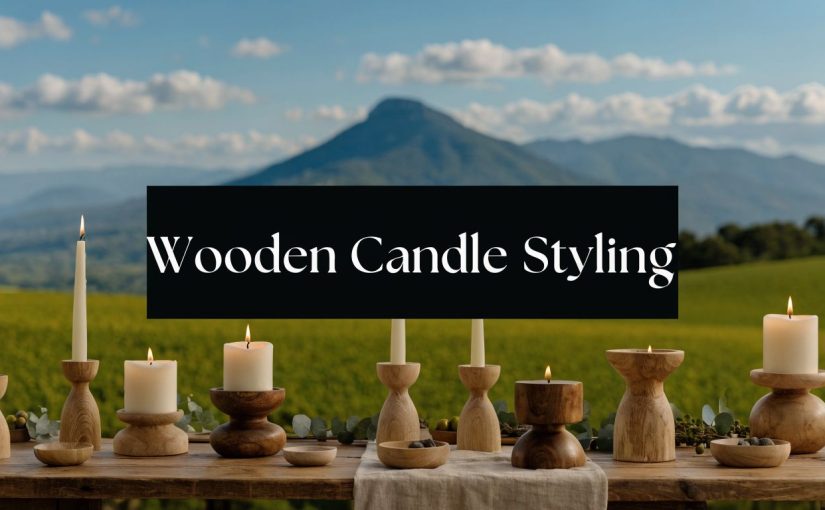
You’re often choosing between two pressures at once. You want candlelight because it softens a room, flatters tables, and makes a venue feel lived in. But you also need decor that travels well, suits the venue, won’t fight with Cape weather, and won’t create problems during setup, service, or breakdown.
That’s where wooden candle holders earn their place. In the Winelands especially, they bridge the gap between polished and relaxed. They can sit comfortably on a harvest table in Franschhoek, on a corporate dinner setup in Stellenbosch, or at a birthday under a sail tent where you need warmth without fuss.
Why Wooden Candle Holders Elevate Every Event
A good event rarely depends on one hero item. It depends on layers. Linen, flowers, glassware, chairs, lighting, spacing. Wooden candle holders work because they add warmth without shouting for attention.
In the Cape Winelands, that matters. Many venues already give you stone, timber beams, vineyard views, old plaster walls, or long farm tables. Glossy decor can feel disconnected in those spaces. Wood tends to settle in naturally. It doesn’t compete with the setting. It supports it.
There’s also a reason wooden candle holders never feel like a passing idea. The history of candlesticks recorded by Britannica notes that the earliest domestic candlesticks were often simple blocks of wood with an iron spike, and that form remained in use until the early 19th century because it was so practical. That history still shows in modern styling. Even when the piece is refined, the appeal comes from the same thing. Honest material, simple shape, useful glow.
Mood does more than decorate
At table level, wood changes the tone of candlelight. Metal can feel formal. Clear glass can feel airy and pretty. Wood adds weight and softness at the same time.
For weddings, that usually reads as intimate. For brand dinners, it can make a room feel less corporate and more considered. For private celebrations, it helps avoid the “hired everything yesterday” look.
A few situations where wooden candle holders work especially well:
- Long banquet tables: They break up repetition and stop a long table from feeling flat.
- Mixed centrepieces: They pair easily with fruit, foliage, bud vases, and textured runners.
- Day-to-night events: They still look good before candles are switched on, which matters for afternoon ceremonies and lunch events.
- Rustic-luxe styling: They bring in natural texture without making the table look rough.
If you’re still deciding how the centre of the table should carry the whole design, this guide to a centrepiece for table styling is a useful reference point.
Wooden candle holders don’t just fill space. They give a table visual temperature.
They help guests feel the event
The best decor choices don’t ask guests to notice them. They shape how the room feels. Wooden candle holders do that well because they add familiarity. People instinctively read them as grounded, tactile, and welcoming.
That’s why they work across very different event types. The same material can feel romantic with draped linen and roses, or editorial with black cutlery and structured florals. The holder doesn’t force the mood. It absorbs the rest of the styling around it.
Selecting the Right Wooden Candle Holders for Your Theme
Choosing wooden candle holders isn’t about picking “rustic” or “not rustic”. It’s about matching material, scale, and finish to the room you’re styling.

Start with the wood itself
Not all wood reads the same way. Some pieces feel raw and earthy. Others feel formal and architectural.
In the Winelands, locally rooted styling has gained real traction. A 2025 Cape Town Tourism survey found that 68% of wedding planners prioritise eco-friendly rentals, which is one reason wooden candle holders made from reclaimed timber or indigenous woods such as yellowwood have become more desirable in local event styling, according to this Winelands decor trend reference.
Here’s how I’d think about common looks:
- Rooikrans-style pieces: Best when you want texture and a more relaxed, natural finish. They suit farm venues, outdoor receptions, and tables with plenty of foliage.
- Yellowwood or smoother indigenous timber looks: Better for refined weddings where you still want warmth, but not a rough surface.
- Dark stained wood: Strong for winter dinners, whisky tastings, and corporate functions where you need depth against black, charcoal, or deep green.
- Reclaimed timber: Ideal when the brief leans sustainable and character matters more than perfect uniformity.
Match the holder to the candle type
This is where people often get it wrong. They fall in love with the holder first and only later realise it doesn’t suit the candle size, burn style, or event format.
A holder for a taper does a very different job from one designed for a votive, tealight, or LED pillar. If you’re comparing formats, this overview of different kinds of candles is useful because it helps you match candle behaviour to the setting instead of choosing on looks alone.
A practical rule:
- low holders create glow close to the table
- medium holders add rhythm
- tall holders create drama, but can interfere with guest sightlines if overused
Size should follow the table, not the Pinterest board
A large hall can handle stronger scale. A narrow restaurant table can’t. At a wine estate, that distinction matters because many reception layouts mix table shapes in one event.
Use this quick guide when you’re deciding:
| Setting | Holder size that usually works | What to avoid |
|---|---|---|
| Narrow guest tables | Low and compact holders | Wide bases that crowd glassware |
| Long harvest tables | Mixed heights in repeated clusters | Identical pieces spaced too evenly |
| Cocktail tables | One small statement holder or tight cluster | Tall pieces that feel top-heavy |
| Corporate dining | Cleaner profiles with controlled finish | Overly rustic pieces with rough edges |
Selection rule: If the holder looks better on its own than it does with cutlery, florals, and glasses around it, it’s probably too dominant.
Finish changes the message
Finish is often more important than shape. A matte, lightly weathered holder says relaxed vineyard lunch. A polished dark piece says evening launch dinner. A softly sealed natural timber piece says understated wedding.
Look at the other hard surfaces in the room:
- Timber tables: choose holders with contrast in tone or shape
- White linen tables: wood can be the grounding element
- Black or stone surfaces: lighter timber usually lifts the table visually
- Gold details: warmer wood tones tend to integrate better
- Chrome or acrylic styling: choose simpler, cleaner wooden forms so the contrast feels deliberate
For broader event furniture combinations, this guide to wooden tables and chairs for events helps when you’re trying to keep the whole room consistent rather than styling the holders in isolation.
Uniform or mixed
Uniform holders look organised. Mixed holders look collected and layered. Both can work.
Choose uniform when the event is formal, brand-led, or very symmetrical. Choose mixed when the room needs movement and softness.
What doesn’t work is accidental mismatch. If you mix shapes, keep one thing consistent, such as wood tone, candle colour, or overall silhouette. That’s usually enough to make the arrangement feel intentional.
Creative Styling and Arrangement Techniques
The strongest wooden candle holder styling usually comes from grouping, not from one piece placed in the middle and forgotten. You want movement across the table, not a single object doing all the work.
The deconstructed runner look
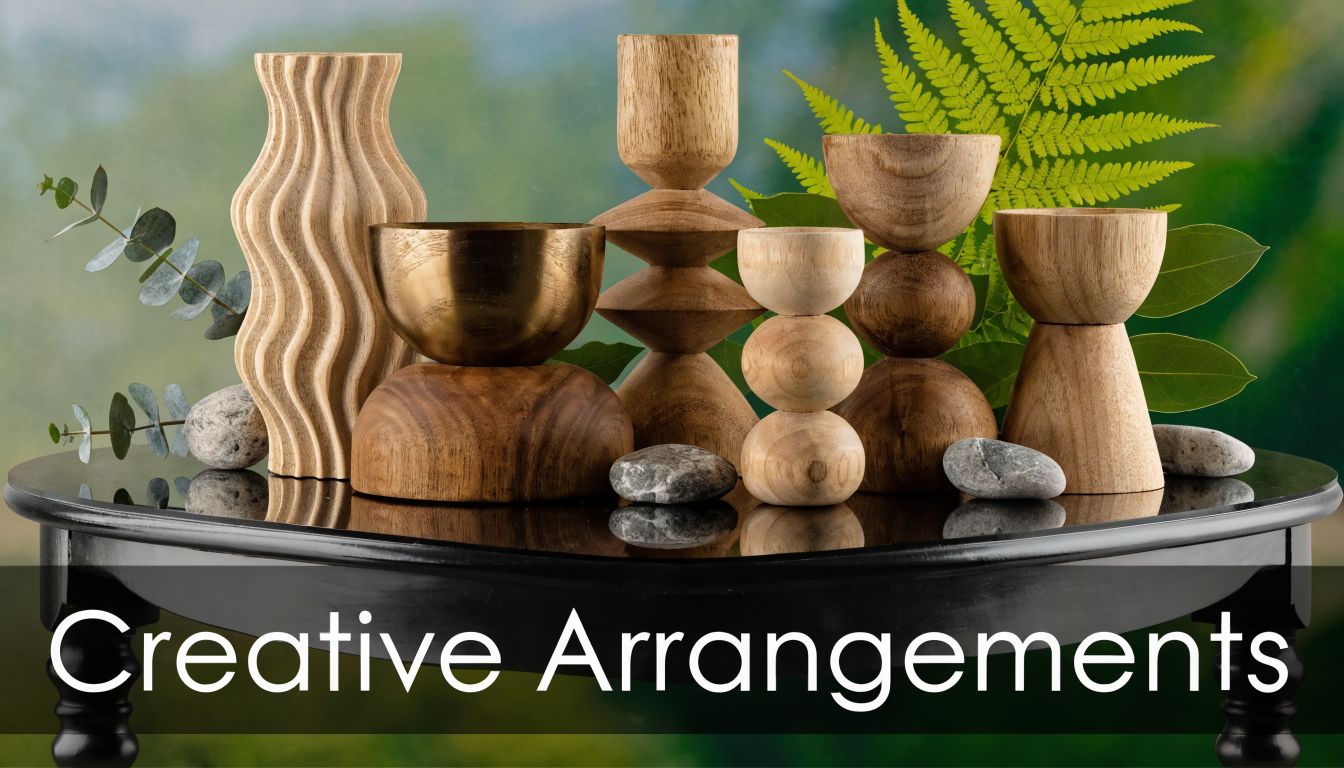
For long banquet tables, one of the most reliable approaches is a deconstructed runner. Instead of using a dense floral runner from end to end, place wooden candle holders in small repeating groups and let the table breathe between them.
A typical layout might use low holders, a few medium-height pieces, bud vases, and loose foliage. The spacing matters as much as the objects. Guests should see rhythm, not clutter.
This works beautifully at Franschhoek weddings because those venues often already give you visual richness in the architecture or natural surroundings. A table that’s too packed can start to feel heavy. Wooden candle holders help keep the centre line grounded while still allowing glass and flowers to catch the light.
Use an odd number of holders in each cluster when you want the arrangement to feel looser and more natural.
Pools of light for cocktail setups
Cocktail events need a different strategy. Guests move constantly, staff cross between clusters, and tables are smaller. Here, low-profile wooden candle holders are usually more effective than tall statement pieces.
On a high table, I’d rather see a tight cluster of compact holders with one small textural accent than a single oversized item. The effect is quieter, but better. Guests can still set down a drink, talk across the table, and move around it without bumping decor.
For evening corporate events in the CBD, wood also stops the setup from feeling too cold. If the venue has concrete, glass, or black finishes, the candle holders soften the palette without turning the event rustic.
Pairing wood with other textures
Wood becomes more refined when it isn’t asked to do all the visual work alone. The right companions matter.
Good pairings include:
- Stonewashed or textured linen: softens the overall table and gives the wood something matte to sit against
- Glass votives or bud vases: add reflection and stop the styling from feeling visually dense
- Brushed brass or antique gold cutlery: brings warmth without looking too shiny
- Ceramic vessels: useful when you want organic shapes without overloading the table with timber
- Fresh greenery: helps tie the holders into outdoor venues and vineyard settings
A few combinations are less successful. Very orange-toned wood with cool silver can look disconnected. Heavy log-style holders with oversized flowers can make the whole table read bulky. Ultra-sleek modern venues often need cleaner wooden silhouettes, not chunky rustic pieces.
Styling by event type
Different events call for different candle holder behaviour.
Wedding tables in the Winelands
For wedding receptions, I prefer layered softness. Wooden candle holders can sit among tapered linen runners, bud vases, and florals that spill lightly rather than stand upright in rigid domes.
The goal is glow, romance, and depth. If every holder is the same height and every arrangement is mirrored exactly, the table can feel stiff. Weddings usually benefit from a little asymmetry.
Brand dinners and launches
Corporate work needs discipline. Wooden candle holders can still be used, but the styling should feel edited.
Try a repeated pattern down the table. Keep finishes consistent. Limit colour shifts. Let the holders support the brand palette rather than introducing a separate story.
In polished corporate styling, restraint usually looks more expensive than abundance.
Private celebrations
Birthdays and anniversary dinners can handle more personality. Mixed woods, family-style serving platters, small florals, and layered candles often work well because the atmosphere is meant to feel convivial rather than formal.
The easiest mistake is overfilling the centre. Leave room for serving dishes, wine bottles, hands reaching across the table, and natural conversation.
Essential Safety Practices for Wooden Candle Holders
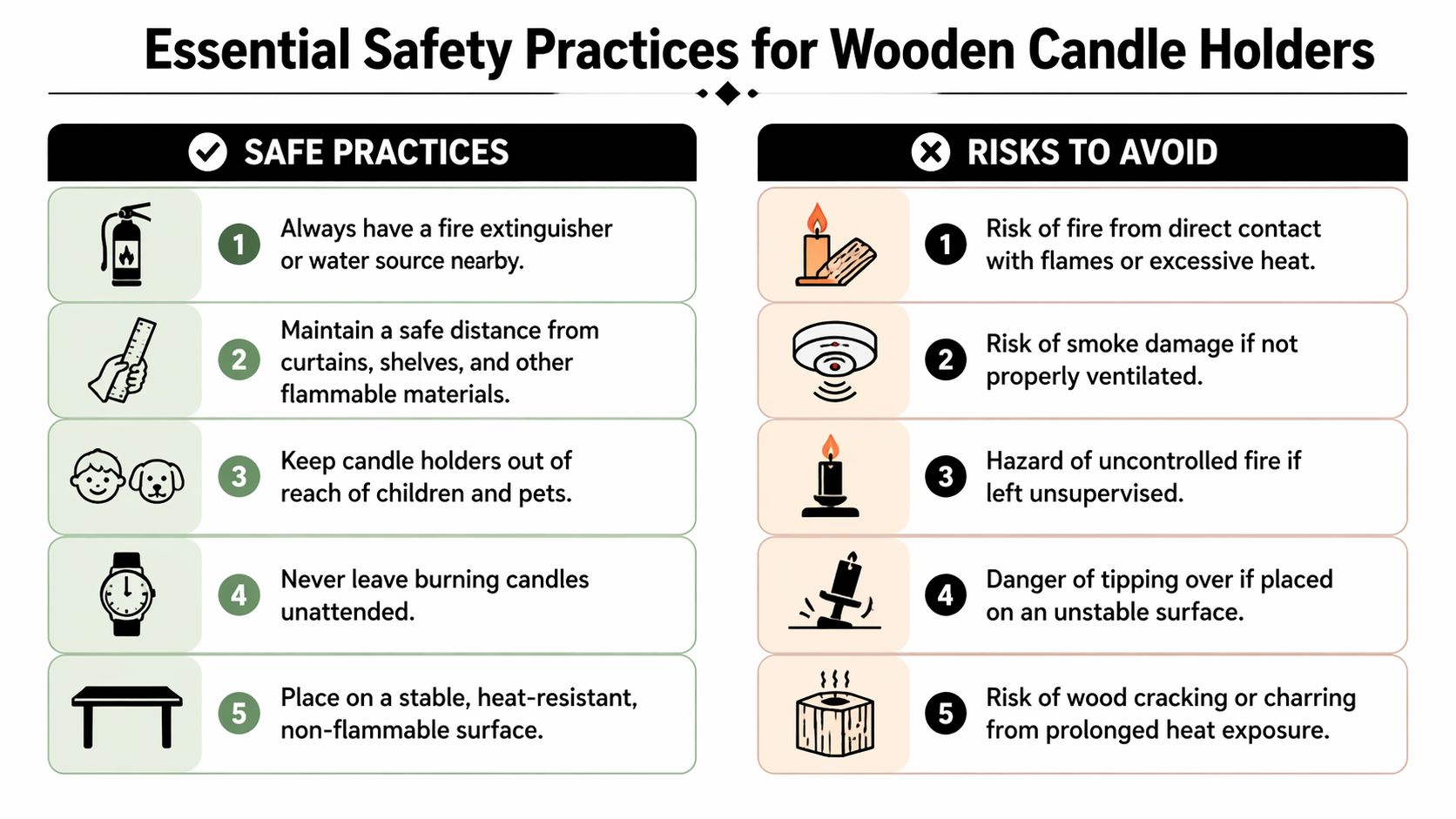
Real flame is beautiful. It’s also where styling stops being decorative and becomes operational.
That matters more with wooden candle holders than people sometimes admit. Wood is part of the charm, but it’s also the reason you can’t treat these pieces casually. Venue rules, airflow, guest movement, draping, dried florals, and service patterns all affect whether a table is safe or risky.
A local benchmark makes the point clearly. Western Cape Fire Services data linked 15% of event-related fires between 2024 and 2025 to untreated flammable decor, which is why holders with metal inserts, intumescent coatings, or LED candle pairing are the practical route for SANS 10400 compliance, as noted in this local fire safety reference.
Why LED is often the professional choice
For many indoor events, high-quality LED candles are the smartest answer. Not because they’re trendy. Because they remove several points of failure at once.
They don’t drip. They don’t scorch the holder. They don’t react to drafts from doors, air-conditioning, or evening wind. They also make setup easier when a room needs to be dressed well before guests arrive.
If you want the candlelit look without the operational mess, LED is often the better decision. That’s especially true in venues with dry floral installations, fabric-heavy styling, or strict safety sign-off.
For smaller glass-and-candle formats that often pair well with wood, this guide to votives with candles is worth reviewing alongside your broader table plan.
If using real candles, control the risk properly
There are events where real flame is still approved and suitable. When that happens, the holder itself must be only one part of the safety plan.
Key checks should include:
- Use inserts or protected cups: Never let flame sit directly against exposed timber.
- Keep distance from soft materials: Drapes, napkins, menus, foliage, and hanging installations need clear separation.
- Check stability on the actual table: A holder that seems fine in storage can wobble on uneven flooring, loose linen, or outdoor furniture.
- Factor in airflow: Cape wind doesn’t only affect outdoor events. It moves through marquees, verandas, and open barn doors too.
- Assign supervision: Someone on the floor needs to notice if a candle burns low, tips, or starts smoking.
Placement is not a styling afterthought
A beautiful arrangement can still be badly placed. Safety often comes down to where the holder sits in relation to everything else.
A few practical placement rules make a big difference:
| Placement issue | Better approach |
|---|---|
| Near draped fabric | Move the holder inward and lower the flame point |
| At table edge | Bring it into the centre line to reduce knocks |
| Under hanging florals | Switch to LED or relocate completely |
| In windy passages | Use enclosed or flameless options |
| Beside busy service zones | Keep decor compact and low |
Real flame should never be the default. It should be the option that survives every safety check.
What usually goes wrong
The biggest problems aren’t dramatic styling ideas. They’re ordinary oversights. A candle is placed too close to foliage. A holder is used without an insert. A coordinator assumes the venue allows open flame when the venue only permits enclosed candles. Someone adds decor late in the setup and changes airflow or spacing around the table.
Wooden candle holders can absolutely be used safely. But safe use comes from discipline, not optimism. If the room is complex, the weather is shifting, or the brief includes lots of fabric and dried material, LED isn’t a compromise. It’s the professional solution.
Managing and Maintaining Your Rented Holders
Most clients don’t see what happens after collection. They see the styled table, then the event ends, and everything disappears into crates. But rental stock stays beautiful only if clients and suppliers handle it properly.
Professional companies usually inspect each item on return. A 10-point inspection is common, and SA Event Rental Metrics 2025 shows that 78% of damage charges come from improper returns, including wax residue and water damage from incorrect cleaning attempts, according to this rental maintenance reference.
What clients should do after the event
The safest approach is simple. Don’t try to “fix” the holders yourself unless your rental provider specifically asks you to.
A good return process usually looks like this:
- Remove loose accessories: Take out LED units, batteries, inserts, or glass components if that was part of the handover instruction.
- Keep like with like: Group matching holders together so collection and recounting are faster.
- Leave wax alone: Don’t scrape hardened wax with knives or metal tools.
- Avoid soaking wood: Water and timber rarely end well together, especially after an outdoor event.
- Report breakage accurately: It saves time and usually prevents arguments about what happened.
What not to use
Clients often mean well and still cause the damage they were trying to avoid. Strong cleaners, dish soap, abrasive pads, and soaking methods can mark sealed finishes or swell the grain.
If you want a general sense of what wood surfaces respond to and what they don’t, these tips for cleaning wood furniture are a helpful baseline. Rental decor is its own category, but the same common-sense principle applies. Gentle handling beats enthusiastic scrubbing.
If a wooden candle holder comes back with untouched wax, that’s usually easier to manage than a holder that someone tried to clean aggressively.
Why rental policies can feel strict
From the client side, some return conditions can seem fussy. From the rental side, they’re usually there because wood remembers bad treatment. Heat marks, swollen fibres, chipped edges, and stained finishes don’t always show immediately, but they shorten the life of the piece.
That’s why the best client behaviour is cooperative rather than corrective. Stack carefully. Keep holders dry. Pack them as instructed. Leave specialist cleaning to the supplier.
Your Rental Checklist for a Flawless Event
When wooden candle holders are chosen well, they do more than decorate a table. They tie the venue, flowers, furniture, and lighting together in a way guests feel immediately. The key is asking the right questions before the booking is final.
Use this checklist when you speak to your rental provider.
Wooden Candle Holder Rental Checklist
| Item to Confirm | My Requirement / Question | Provider's Confirmation |
|---|---|---|
| Event type | Wedding, corporate dinner, private celebration, matric dance, launch event | |
| Venue style | Farm venue, cellar, restaurant, ballroom, marquee, private home | |
| Table format | Long banquet, round guest tables, cocktail tables, mixed layout | |
| Desired mood | Romantic, modern, rustic-luxe, heritage, minimal, formal | |
| Wood finish | Natural, reclaimed look, dark stain, smooth polished, textured | |
| Candle format | LED, votive, tealight, taper, enclosed flame option | |
| Safety compliance | Are these holders suitable for the venue’s fire rules and setup requirements? | |
| Insert protection | Do the holders have metal inserts or another protected flame barrier if needed? | |
| Outdoor suitability | Will they work in wind-prone or damp conditions? | |
| Height mix | Do I need low-only pieces, or a combination of heights? | |
| Sightlines | Will guests still be able to talk comfortably across the table? | |
| Linen and florals | Will these holders work with my planned runner, foliage, and centrepiece style? | |
| Quantity | How many holders are needed for the table count and layout? | |
| Setup responsibility | Who places the holders on site, and in what position? | |
| Candle supply | Are candles or LED units included, or rented separately? | |
| Return handling | What should be removed, packed, or left untouched after the event? | |
| Cleaning instructions | Should any wax or residue be left for the rental team to manage? | |
| Damage policy | What counts as normal event wear versus chargeable damage? | |
| Collection timing | When will breakdown and collection happen? | |
| Backup plan | What’s the alternative if open flame is not approved on the day? |
Final practical checks
Before the event, confirm three things in writing:
- Approval: the venue accepts your candle format
- Placement: the styling plan leaves enough room for service and guest comfort
- Fallback: an LED alternative is available if conditions change
That last point saves a lot of stress. Weather shifts, venue managers change instructions, and final safety walk-throughs can alter what’s possible on the day. The planners who stay calm are usually the ones who built in a workable Plan B from the start.
If you’re planning a wedding, corporate function, matric dance, or private celebration in Cape Town or the Winelands, ABC Hire can help you source event-ready decor and furniture that looks good in the room and works on the day. Reach out for practical guidance on styling combinations, venue suitability, and rental options that make setup smoother and the final result more polished.