
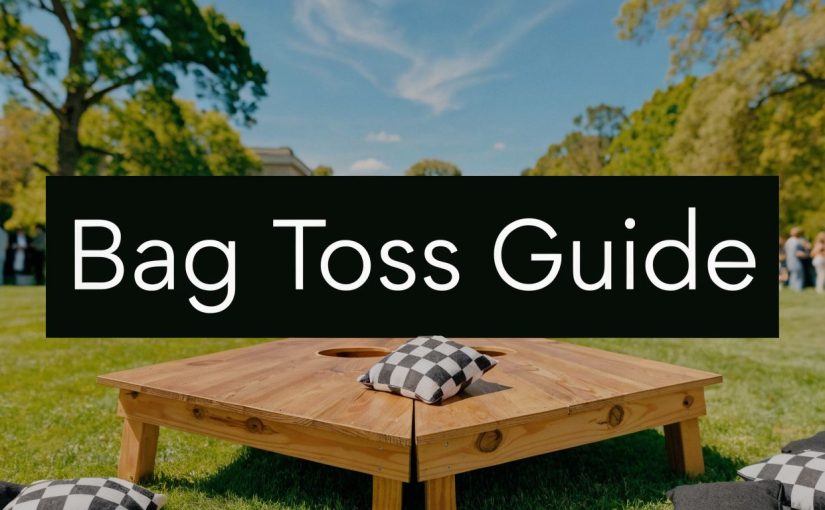
Guests have arrived. The drinks are poured, the music is right, and the room or garden looks polished. Then the awkward gap appears. One group hovers near the bar, another checks phones, and the people who don’t already know each other stay in their own corners.
That’s usually the moment planners start looking for an activity that doesn’t feel forced.
A bag toss game solves that problem better than most entertainment add-ons because it gives guests something to do without demanding too much from them. It’s easy to understand, quick to join, and relaxed enough for weddings, corporate functions, birthdays, matric events, and venue open days. In the Cape Town and Winelands event scene, that matters. You need activities that work in polished settings, outdoors or indoors, and with mixed-age guest lists.
The value isn’t just the game itself. It’s what the game does to the space around it. It creates a natural gathering point. People stop, watch, laugh, offer advice, take a turn, and stay a little longer. That’s useful when you’re trying to fill the lull during wedding photos, keep a corporate breakout area active, or give guests at a private party a reason to mingle beyond their own table.
An Introduction to the Ultimate Social Game
The bag toss game is simple on purpose. Players stand opposite a raised board and throw square bean bags toward a hole in the board. Some guests will know it as cornhole, others as bean bag toss. Either way, the appeal is the same. The rules are light, the learning curve is short, and the game doesn’t intimidate first-timers.
At events, that simplicity is a strength. Guests don’t need specialist clothing, prior skill, or much confidence to join in. Someone can watch one round and understand enough to play the next. That’s why it works so well across formal and casual environments, especially when the brief is to keep people engaged without turning the event into a sports day.
Why it works so well at live events
A good event activity should do three things. It should be visible, easy to join, and flexible enough to suit different energy levels. The bag toss game ticks all three.
- Visible from a distance because the raised boards and throwing action catch attention
- Easy to join midway because there’s no complicated setup for a new player
- Flexible in tone because it can be social and light, or structured into a mini-tournament
That mix is why planners often use it in cocktail spaces, networking zones, garden receptions, and casual lounge areas. It gives guests a low-pressure reason to interact.
Practical rule: If guests need an explanation longer than a minute, participation drops. Bag toss avoids that problem.
A game with real staying power
This isn’t a novelty that appeared out of nowhere. Cornhole, commonly called bag toss, gained documented traction in the US from the late 19th century. A 2022 Ipsos poll named cornhole America’s most played sport, surpassing bowling and swimming, and a 2017 championship broadcast on ESPN drew nearly 300,000 viewers according to the documented history of cornhole.
That matters for one reason. A game doesn’t reach that level of popularity unless it’s easy to replay, easy to watch, and easy to enjoy with a group.
For corporate planners, that social quality makes it a strong fit alongside broader team-building event ideas for corporate functions. For wedding coordinators, it gives guests something elegant but informal to do between formal moments. For private hosts, it fills dead air without needing an MC to drive the energy every minute.
Where it fits best in the Cape Town and Winelands market
In this region, the bag toss game works particularly well because so many events use indoor-outdoor flow. Guests move between lawns, terraces, courtyards, tasting areas, marquees, and reception spaces. A bag toss setup can sit comfortably inside that rhythm.
It doesn’t need a stage. It doesn’t need amplified sound. It doesn’t compete with the main event. It supports it.
That’s the difference between entertainment that looks good in a brochure and entertainment that helps a live event feel warm, active, and connected.
Mastering the Rules and Official Scoring
The best version of a bag toss game at an event is one that nobody needs to argue about. That starts with clear rules and visible scoring. When guests know exactly how to play, rounds move faster and the game keeps its casual energy.
The basic setup
A standard game uses two boards placed facing one another. Players throw from one side to the other, taking turns. You can play as singles, with one player on each side, or doubles, with partners standing opposite each other.
The official throwing distance is 27 feet. That’s the regulation spacing used for standard play. At events, some hosts shorten the distance slightly for children or for very relaxed social rounds, but if you want a proper competitive feel, keep the full setup.
How a round works
Each player throws all of their bags in turn toward the opposite board. Then the other player or team does the same from the other side. Once all bags have been thrown, you score the round.
The game feels intuitive once the first round starts, but a quick briefing helps. Keep it simple:
- Stand beside the board at your end.
- Throw underarm toward the opposite board.
- Alternate throws with the opposing player or team.
- Score after all bags land.
- Continue until one side reaches the agreed winning score.
For event use, a printed rules card beside the game helps a lot. It reduces staff interruptions and lets guests self-start.
The scoring system guests should know
Bag toss scoring is one reason the game stays engaging. A player can recover from a weak throw, block an opponent, or steal a round with a clean finish.
The standard points are:
- Bag on the board earns 1 point
- Bag through the hole earns 3 points
- Bag that misses or hits the ground first does not score
Many groups use cancellation scoring. That means one side’s points cancel out the other side’s points in each round, and only the difference is added to the score.
Here’s a simple example:
| Result in the round | Team A | Team B |
|---|---|---|
| Bags on board | 2 points | 1 point |
| Bags in hole | 3 points | 3 points |
| Total before cancellation | 5 | 4 |
| Score added after cancellation | 1 | 0 |
This method keeps matches closer and gives spectators more reason to stay interested.
A guest doesn’t need perfect technique to enjoy bag toss. They just need one good throw to feel part of the action.
Common terms worth using at events
You don’t need heavy tournament language, but a few common terms help guests follow along.
- Woody refers to a bag resting on the board for 1 point
- Hole-in or cornhole refers to a bag going through the hole for 3 points
- Blocker describes a bag that lands in a difficult spot and interferes with the opponent’s path
- Airmail means a throw that goes directly into the hole without touching the board
These terms are useful if you’re running a corporate challenge or MC-led wedding tournament because they make the game sound lively without making it complicated.
What works best for first-time players
Most beginners try to throw too hard. That usually sends the bag flat into the board or off the back. A softer toss with a controlled arc works better, especially on a regulation board.
Give guests these quick coaching points:
- Use a relaxed grip so the bag can leave the hand cleanly
- Aim for a smooth arc instead of a dart-like throw
- Release consistently rather than changing style every turn
- Play the board first if the hole feels too ambitious
For mixed-ability groups, don’t over-coach. A bag toss game is at its best when players feel free to improve casually while still chatting, watching, and rotating in and out.
Event-friendly rule adjustments
At formal events, strict rules don’t always help. The right adjustment depends on the crowd.
For weddings, shorter social rounds keep momentum up. For team-building, paired doubles usually work better than singles because they create more conversation. For schools and family events, a shorter throwing line makes the game inclusive without changing the feel too much.
The key is consistency. Once you choose the format for your event, keep it the same for everyone. That keeps the game fair and avoids confusion later.
Deconstructing the Game Equipment
At a Cape Town wedding, guests will forgive a lot. They will not keep queueing for a lawn game that feels awkward after the first few throws. Equipment quality decides whether bag toss becomes a natural social magnet or a prop people try once and leave.
What regulation boards look like
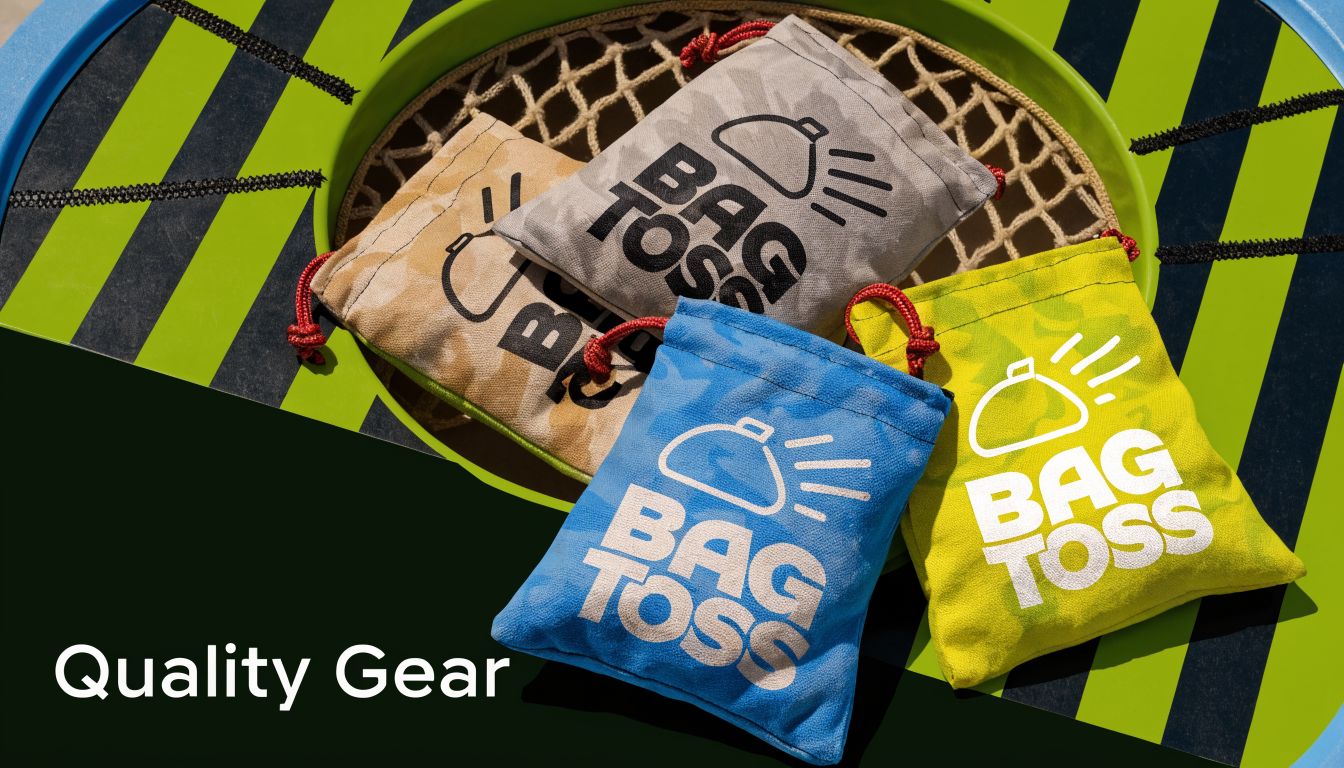
A proper set follows standard dimensions for a reason. Regulation bag toss boards are 48 x 24 inches, with a 6-inch hole centred 9 inches from the top, and regulation bags are typically 6 x 6 inches and 14 to 16.5 oz, as shown in these regulation bag and board dimensions.
Those measurements affect play in practical ways. A full-size board gives beginners enough landing area to stay engaged, while the correct hole position makes scoring feel earned rather than random. Bag weight matters too. Bags that are too light tend to flutter in wind or die on contact. Bags that are too heavy can hit the board hard and bounce away.
For event work, consistency matters more than technical purity. If one board grips and the other slides, guests assume the game is unfair.
Why board build quality changes the experience
Board construction changes how the game feels from the first round. Good sets sit firmly on grass, paving, decking, or temporary flooring, and the incline stays consistent once the legs are opened. Poor sets wobble, shift, or develop a soft bounce that makes accurate throwing harder than it should be.
Some event-grade boards are built from sealed wood for a more polished look. Others use moulded weather-resistant materials that travel better and need less care between hires. The trade-off is simple. Wood usually looks better at weddings and winery functions. All-weather sets generally cope better with repeated transport and mixed venue conditions.
Transport also affects setup time. Some units fold to 3-3/8 inches thick for easier loading and venue movement, according to this product specification for a 48×24 bean bag toss game board.
That matters for planners because it affects:
- Load-in efficiency at venues with limited access
- Reliable setup when staff need to build quickly before guests arrive
- Presentation quality in spaces where every visible detail counts
If you are comparing formats for family days or carnival-style zones, it also helps to look at games such as Kangaroo Toss. The visual style and target shape can change how quickly guests understand the game and decide to join.
Bags matter more than most hosts expect
The bags usually decide whether the game feels satisfying. A well-made bag should feel balanced in the hand, land with enough weight to hold its line, and react predictably on the board surface.
Cheap bags cause most of the frustration I see at private events. Loose stitching changes the shape. Inconsistent fill changes the flight. Slippery or rough fabric changes how the bag behaves once it lands. Guests do not describe those problems in technical terms. They just say the game feels off.
That is why matched sets matter. Four bags that feel one way and four that feel another way will slow down play and start unnecessary debates during a team challenge or wedding tournament.
Local conditions change equipment choices
Cape Town and the Winelands are harder on event gear than many generic guides admit. Afternoon wind in Stellenbosch, heat on a Franschhoek lawn, dust at a farm venue near Paarl, and damp morning setup conditions all affect how boards and bags perform over a full event day.
For local planners, the actual choices look like this:
| Equipment choice | Best use | Trade-off |
|---|---|---|
| Sealed wooden boards | Weddings, premium private parties, winery venues | Heavier to transport and more prone to cosmetic wear |
| All-weather boards | Corporate roadshows, schools, repeat hires, mixed indoor-outdoor use | Less natural in rustic styling schemes |
| Corn-filled bags | Traditional feel for short, dry events | Less practical in moisture or repeated outdoor use |
| Synthetic-filled bags | Reliable for varied weather and frequent handling | Slightly different feel from classic bags |
For a vineyard wedding, appearance and stable play usually matter more than shaving a few minutes off load-out. For a branded corporate activation, I would usually prioritise durability, easy cleaning, and a surface that can handle decals or logos cleanly. If guests will be seated nearby between rounds, adding picnic tables and benches for a relaxed game zone often improves dwell time and makes the area feel intentional instead of improvised.
The difference guests notice immediately
Guests may never ask about board dimensions or bag weight. They notice the result straight away. Solid boards, matched bags, and a surface suited to the venue make the game feel fair, inviting, and easy to join.
That is the standard worth hiring for. In live event conditions, better equipment reduces stoppages, keeps play moving, and gives the game a stronger return as a social feature.
Strategic Placement for Maximum Event Engagement
A bag toss game can be well chosen and still underperform if it’s placed badly. Location does most of the work. Put it in a dead corner and only the determined guests will find it. Put it in the middle of a tight walkway and you’ll create congestion instead of atmosphere.
The best placements invite people in without disrupting service, speeches, or circulation.
Weddings and cocktail-hour flow
At weddings, the strongest position is usually near the drinks reception or garden cocktail area, especially while the couple is in photographs or the room is being reset. Guests already have a drink in hand, they’re standing rather than seated, and they’re open to light interaction.
The game works best when it sits just outside the main catering path. It should be visible from the bar or canapé zone, but not so close that staff carrying trays need to weave around players. That balance turns the game into a social anchor rather than a traffic obstacle.
A nearby seating cluster helps too. Some guests want to play. Others want to watch, comment, and wait for a turn.
Corporate functions and networking zones
At corporate events, placement should support conversation. The bag toss game works well in breakout spaces, expo edges, terrace lounges, and activation zones where people naturally pause between sessions or presentations.
The game’s strength in South African event settings is its accessibility. Its simple rules and low physical barrier to entry let it fit into multi-generational, culturally diverse guest experiences, from formal weddings to casual team-building, as discussed in this article on mastering the art of cornhole.
That matters for networking because not everyone wants to begin a conversation face-to-face over a high table. A shared activity gives people something to do while they talk.
Placement rules that prevent common mistakes
A few practical checks make a big difference:
- Keep a clear throwing lane so players don’t feel rushed by passing guests
- Avoid direct alignment with entry points because bags and foot traffic don’t mix
- Use level ground where possible so the board sits correctly
- Leave spectator room because a game people can’t comfortably watch tends to stall
If you want the area to be self-explanatory, clear wayfinding helps. Good effective outdoor event signs can show where the game is, where to queue, or whether a branded challenge is in progress.
A bag toss game should sit where guests already slow down, not where you’re trying to force them to stop.
Private parties and milestone celebrations
For birthdays, anniversaries, engagement parties, and family celebrations, central visibility usually wins. Guests at private events are less likely to wander in search of activities, so the game should be placed where they’ll encounter it naturally.
Good locations include:
- A patio edge beside lounge furniture
- A lawn area visible from the main food and drinks setup
- A courtyard corner with enough room for a small crowd
- A side zone near relaxed seating for longer social rounds
If you’re building out a casual outdoor layout, pairing the game with nearby picnic tables and benches for event seating helps create a complete interaction zone instead of a standalone activity.
Local site realities in Cape Town and the Winelands
Regional venues often have beautiful but uneven outdoor spaces. Lawns slope. Gravel shifts. Wind picks up in open courtyards. Late afternoon sun can hit one player directly in the face. These are small details until gameplay starts.
Walk the throwing line before final placement. Check the sun direction, nearby glassware, service routes, and whether the surface stays stable under repeated foot traffic. If the game is close to a dance floor, consider noise carry and evening crowd movement as the event changes gear.
The best placement isn’t just about where the game fits. It’s about where the game helps the whole event feel more connected.
Brand Activation and Customisation Ideas
For corporate events, a bag toss game shouldn’t be treated as background entertainment only. Used properly, it becomes an interaction tool. It can draw people into a stand, create repeat engagement, and give your brand a physical presence that feels playful rather than pushy.
That’s especially useful when you need an activation to be approachable.
What to customise first
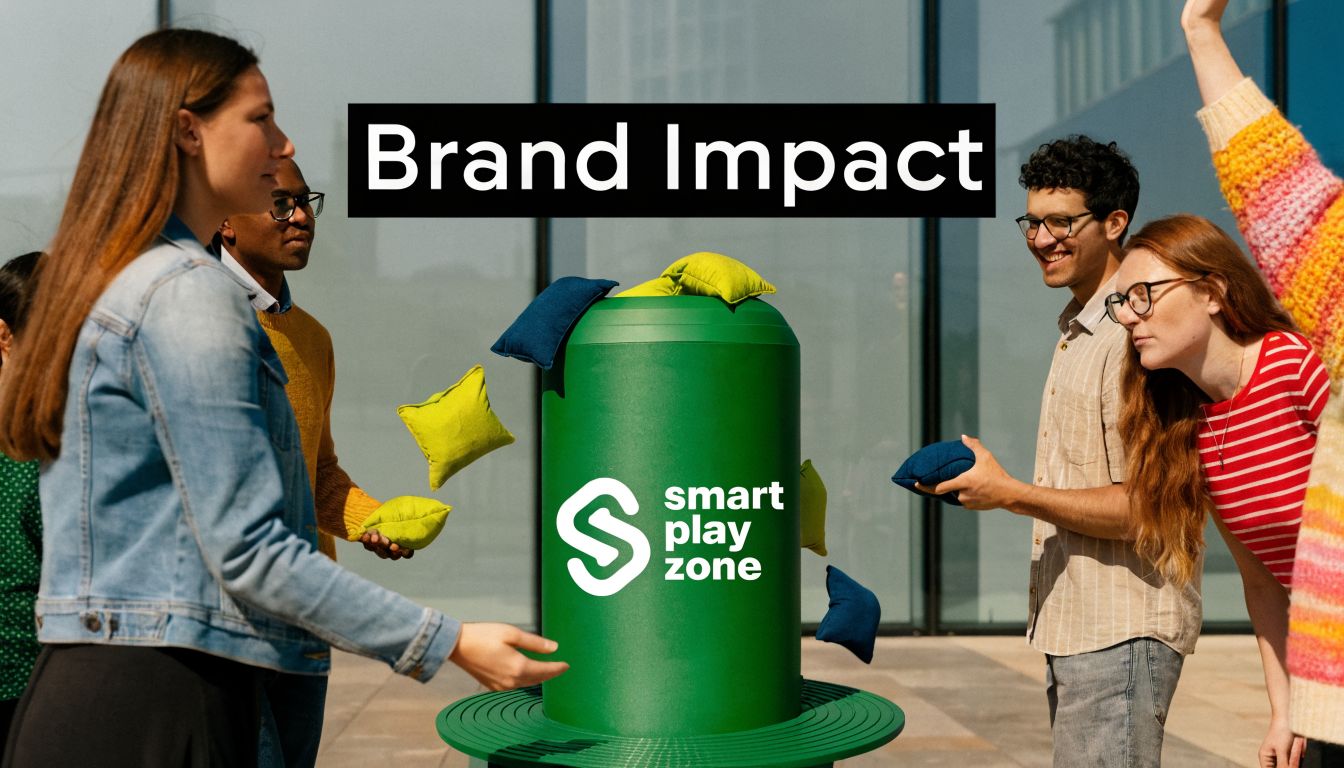
If the goal is visual brand recognition, start with the obvious elements. The board face is your main canvas. A branded wrap, colour palette, campaign slogan, or event-specific artwork makes the game read as part of the activation rather than a borrowed lawn toy.
Custom bags can support that look, especially when colours align with the stand design or team identities. Keep readability in mind. Strong contrast is usually better than overdesigned graphics that disappear at a distance.
Three customisation choices usually work best:
- Board graphics for the clearest visual impact
- Branded scoring signage so guests understand the challenge quickly
- Colour-coded bags for teams, departments, or campaign groups
Turn the game into a reason to engage
A branded game gets attention. A branded mechanic creates participation.
Instead of asking guests to “come chat”, give them a small challenge. Let them scan a QR code to join a throw-and-win moment. Use the game as a team station in a wider event trail. Reward participation with a branded item, leaderboard placement, or entry into a draw.
What works best depends on the audience:
| Event type | Useful activation idea |
|---|---|
| Expo stand | One-turn challenge after a product demo or QR registration |
| Internal company event | Department-versus-department doubles ladder |
| Product launch | Branded target zones linked to campaign messaging |
| Client appreciation event | Casual host-led mini matches with light prizes |
The point is to make the game support a business objective without making it feel like admin.
Guests engage more freely when the branded activity feels social first and promotional second.
Team-building applications that feel less forced
A lot of team-building activities lose momentum because they demand too much energy too quickly. A bag toss game avoids that because people can join at different levels. Some will compete seriously. Others will contribute as partners, scorers, or spectators.
That flexibility makes it useful for:
- Mixed-confidence groups where not everyone wants centre stage
- Open networking sessions where guests arrive at different times
- Short rotational formats where teams move between stations
- Leadership events where the tone should stay polished and relaxed
The game also works well when you need a visible focal point in a breakout lounge but don’t want amplified entertainment dominating the room.
Presentation choices that improve the result
Branding only works when the setup still looks clean and playable. Don’t over-clutter the zone with too many stands, flags, plinths, and prize tables. Guests need a clear line of sight to the board and enough room to throw comfortably.
Use branded elements that support the action:
- a simple rules board
- a compact leaderboard
- a defined waiting area
- one host who can explain the challenge without over-talking it
For premium corporate events in Cape Town, the strongest activations usually feel integrated into the event design. The game doesn’t sit off to the side as an afterthought. It becomes part of the guest journey.
Renting vs Buying The Smart Choice for Your Event
A planner books a wine estate in Franschhoek, adds lawn games for the cocktail hour, and then discovers the set still needs collecting, storage after the event, and a backup plan if the weather turns. That is usually the moment the rent-versus-buy question becomes practical instead of theoretical.
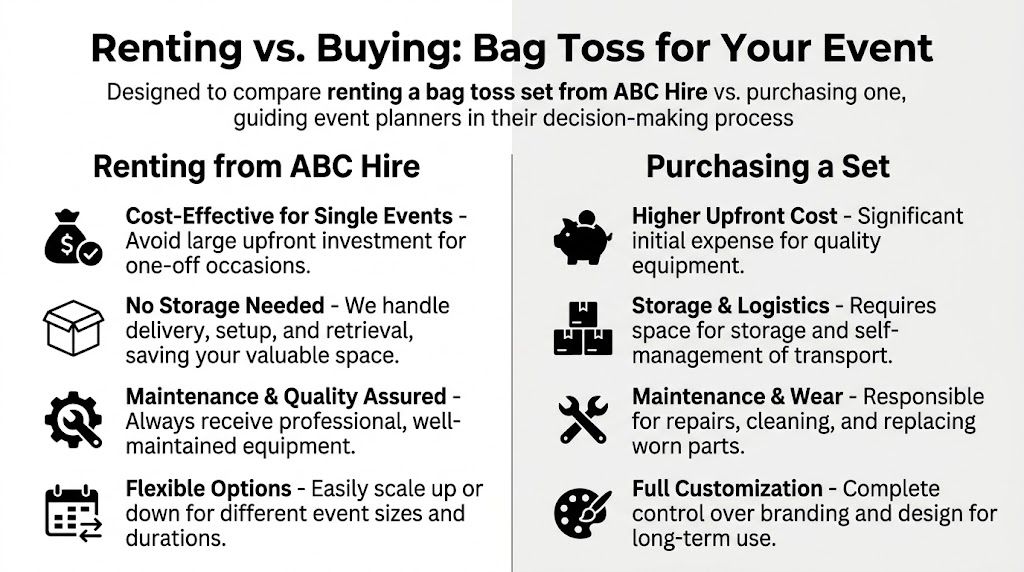
Buying a bag toss game can work. For most event planners, it only makes sense if the game will be used often enough to justify the storage space, transport effort, cleaning, and upkeep that come with ownership. For weddings, once-off parties, and occasional corporate functions, renting is usually the better operational choice because it removes tasks from an already crowded event schedule.
Local conditions matter more than planners expect
Cape Town and Winelands events put equipment under real pressure. Afternoon sun, dust on farm roads, damp morning air, and uneven outdoor surfaces all affect how a set looks and plays over the course of a season.
That is where ownership often gets misjudged. A retail set may look fine for casual home use, but repeated event use exposes weak stitching, faded graphics, chipped board edges, and bags that no longer feel consistent. For client-facing events, presentation matters as much as playability.
A side-by-side comparison
Here’s the practical comparison.
| Consideration | Renting from ABC Hire | Buying Your Own |
|---|---|---|
| Upfront commitment | Lower commitment for one-off and occasional events | Full purchase required before the first use |
| Equipment quality | Professional event-ready set selected for hire use | Quality varies widely by retailer and budget |
| Storage | No need to keep boards and bags between events | You need dry, clean storage space |
| Transport | Handled as part of event logistics | You manage collection, loading, and unloading |
| Maintenance | Wear, cleaning, and condition are managed for you | You clean, repair, and replace damaged parts |
| Weather resilience | Better suited to repeated outdoor use | Consumer sets may struggle outdoors over time |
| Scalability | Easier to add more sets for bigger events | Expansion means more purchases and more storage |
| Long-term custom branding | Less suitable if you need permanent ownership of branded stock | Better if the same branded set will be used repeatedly |
When buying makes sense
Buying suits a narrow but real set of cases. A venue that keeps games on site and has staff to maintain them can justify ownership. The same applies to an agency or brand that runs the same activation repeatedly and wants full control over colours, finish, and permanent branding.
In those cases, the numbers can work.
The trade-off is consistency. Owned equipment needs proper storage, routine checks, replacement bags, and transport protection. Without that, the set slowly drops below event standard even if it is still technically usable.
When renting is the practical choice
Renting suits planners who need the game to arrive ready, look polished, and leave without creating another admin stream after breakdown. That is why it tends to be the stronger option for wedding coordinators, corporate event teams, and private hosts managing multiple suppliers across one day.
Renting is usually the better fit when:
- The event is a once-off
- The layout changes from venue to venue
- You need equipment that still looks presentable in a premium setting
- Outdoor use is likely
- You may need more than one set for guest flow
- Your team does not want another item to transport and store
If you are comparing this decision against other event items, the same logic applies when you rent party equipment for an event. The useful question is whether ownership reduces work over time, or adds another asset to manage.
What planners often underestimate
Storage is the first issue. Boards are bulky, bags go missing, and branded extras such as scoreboards or signage rarely stay packed as neatly after the third or fourth use as they did on day one.
Condition is the second. A set that is "good enough" at home can look tired quickly at a wedding or corporate function, especially in the Cape Town and Winelands market where venues, décor, and guest expectations are often high.
For planners in Stellenbosch, Paarl, Franschhoek, and the broader Cape Town area, the smarter choice is usually the one that keeps the game easy to run on the day. Renting keeps bag toss in its proper role. A guest engagement tool, not another logistics problem.
Frequently Asked Questions
How much space does a bag toss game need at an event
For proper regulation play, the boards are set 27 feet apart. Beyond that, leave extra room around the throwing lane so players and spectators aren’t pressed into walkways or service routes. In practice, the game works best when it has a dedicated zone rather than being squeezed between furniture pieces.
Is the bag toss game suitable for children
Yes, as long as the setup matches the audience. Children usually enjoy it because the basic idea is easy to understand and each turn is short. For younger players, many hosts shorten the throwing distance and keep the atmosphere casual rather than score-heavy.
Can it be used indoors
Yes, provided the venue has enough clear space and the flooring is suitable. Indoor use often works well in halls, large reception rooms, covered terraces, and conference venues with breakout areas. The main checks are ceiling clearance, guest circulation, and whether nearby glassware or décor could be disturbed by off-target throws.
What happens if the weather turns
That depends on the venue and event plan, but the safest approach is to decide on a weather backup before the event begins. If you’re using the game outdoors in the Winelands, think about wind, strong sun, and the possibility of moving the activity under cover. A sheltered patio, marquee edge, or indoor backup zone usually solves the problem.
Does it work at formal weddings, or is it too casual
It works very well at formal weddings when placed and styled correctly. The bag toss game doesn’t need to dominate the look of the event. On elegant lawns, terraces, and cocktail areas, it can feel refined and inviting, especially when used during the transition between ceremony and reception.
Can multiple sets be used for larger events or tournaments
Yes. Multiple sets work well for corporate family days, school events, university socials, and large private functions. If you’re planning a tournament, keep the rules, spacing, and signage consistent across each lane so guests don’t get confused from one game area to the next.
What kind of surface is best
Level grass, paving, decking, and hard flooring can all work. The main issue is stability. If the board rocks, leans, or shifts during play, guests will notice immediately. Always test the final position before guests arrive.
Is the game only for competitive guests
Not at all. That’s one of the reasons it works so well. Some people will play to win, but many join because it gives them a reason to stand, chat, laugh, and take part without much pressure. It’s one of the few event games that supports both competition and conversation at the same time.
If you’re planning a wedding, corporate function, party, or activation in Cape Town or the Winelands, ABC Hire can help you add a polished bag toss game setup that fits your event flow. From practical rental guidance to the wider furniture and event equipment that supports the space around it, the team makes it easier to create an occasion that feels lively, organised, and guest-friendly.